bookmark_borderTrump, Debt, and the Art of Losing Other People’s Money
Company Profile

Donald J. Trump (DJT) Hotels & Casinos was an entertainment company that owned and operated the Trump Plaza Hotel and Casino, Trump Taj Mahal Casino Resort, Trump’s Castle Casino Resort and Trump Indiana.

Besides revenues from gambling, the properties offered other forms of entertainment. The Taj Mahal was an experience unto itself. Just the entrance had $1 million in 24-karat gold leaf… and, millions of dollars worth of German crystal chandeliers sparkled over the lobby’s Carrera marble-floor.

I’m an economist. In the 1990s, I conducted a moral and ethics experiment involving the stock DJT for a widows and orphans fund, during which Trump misappropriated the funds. A business bankruptcy impacts more people than a personal bankruptcy and is seen as a more significant violation of business ethics and morals.

The original stock with the ticker symbol DJT belonged to Trump Hotels & Casino Resorts (THCR), a company founded by Donald Trump in the 1990s. It operated various casinos and resorts, including Trump Plaza, Trump Taj Mahal, and Trump Marina in Atlantic City. THCR faced ongoing financial difficulties, which eventually led to four major bankruptcies. In 1995, the company went public under the ticker DJT, aiming to raise funds to refinance debts and expand its casino ventures. However, the company quickly became over-leveraged with high-interest debt, which plagued its operations.

The first bankruptcy in the timeline occurred in 1991, before DJT went public, when Trump’s Taj Mahal casino filed for Chapter 11 bankruptcy after failing to generate enough revenue to service its over $1 billion debt from junk bonds. Trump had to give up half of his ownership in the Taj Mahal but retained control of the casino. In 2004, Trump Hotels & Casino Resorts (by then public under DJT) filed for bankruptcy a second time due to its massive debt load and struggling casino operations. During this bankruptcy, Trump gave up more control of the company to creditors, though he stayed on as chairman.

In 2009, the company, rebranded as Trump Entertainment Resorts, filed for Chapter 11 again, marking the third bankruptcy. Trump resigned as chairman and left the board of directors, maintaining only a small ownership stake. Despite these efforts, the financial situation worsened, and in 2014, the company filed for bankruptcy a fourth time, leading to the closure of the Trump Plaza and Trump Taj Mahal casinos. This final bankruptcy signaled the end of Trump’s casino ventures, though his name remained on some properties through branding agreements.

The successive bankruptcies decimated the value of DJT stock, and Trump’s stake in the company dwindled over time. By the time of the 2014 bankruptcy, Trump had little control over the company. Eventually, DJT stock ceased to exist as the company’s assets were sold off. The bankruptcies are often cited as part of Trump’s controversial financial history, where he used bankruptcy laws to restructure debts, often at the cost of shareholders and creditors.

Conclusion

It’s difficult to determine the exact number of corporate bankruptcies associated with Donald Trump’s business ventures, in part because of how some analysts count them. In this particular case, there were four separate bankruptcy filings, though many analysts count them collectively as a single event. Broadly, most sources agree that Trump’s companies have filed for bankruptcy at least six times, with some estimates — depending on how repeat filings by the same entity are treated — placing the total closer to 12 to 14.

In each instance, critics have argued that Trump personally profited despite the financial losses borne by shareholders, lenders, and employees. These allegations typically focus on patterns of aggressive debt use, questionable fiscal management, and the transfer of risk from Trump to investors and creditors.

Now, he is doing it worldwide.

As one economist put it:

“Trump didn’t just pick a trade war — he picked one with the entire planet.”

A Crisis of This Magnitude Has Not Been Seen in Nearly 100 Years

While past recessions were driven by financial collapses (such as 2008’s mortgage crisis or the dot-com bubble in 2000), this economic crisis is entirely policy-driven. The sheer scale of the tariffs, combined with global retaliation and the isolation of the U.S., has created a trade collapse not seen since the 1930s. If history is any guide, the consequences could be severe, with prolonged economic hardship, market instability, and lasting damage to U.S. credibility in global trade.

Capital Preservation During Trumpenomics

Trumpenomics: The Decline of the US

bookmark_borderEconomic Survival 101: Liquidity & Long-Term Strategy

by Daniel Brouse

Capital Preservation is Survival Rule #1

Capital preservation has always been important — but in today’s economic environment, it has become absolutely critical. The phrase dominating Wall Street has been “The Wealth Effect.” Normally, the stock market and the real economy are loosely connected — the ups and downs of stock prices don’t immediately ripple through everyday life. But these aren’t normal times.

The sharp contraction in wealth is not just a stock market story anymore — it’s spreading. It’s affecting real people, real spending, and real businesses.

This is The Wealth Effect in action.

Why It Matters

When people feel poorer, they spend less — not just on luxuries, but on everything. Airline stocks, hotel chains, cruise lines, car companies, and even high-end retailers are feeling the squeeze. Discretionary spending is collapsing.

Remember: the stock market is often called a “leading indicator” — it signals where the economy is heading, not where it’s been. But right now, it’s more like a real-time broadcast of wealth destruction.

Preserving capital was the first step.

Now comes step two:

Liquidity Testing: What Good Are Assets If You Can’t Use Them?

Liquidity is a word investors throw around, but in times of crisis, liquidity becomes survival.

Liquidity simply means: How fast — and with how little friction — can you turn something into usable cash?

But here’s the catch: liquidity isn’t just theoretical. You need to test it.

Practical Liquidity Drills

  1. Bank Accounts:
    Can you access your money digitally (debit card, online transfer)?
    Can you physically withdraw it (ATMs, branch visits)?

  2. Brokerage Accounts:
    Sell a single share of stock.
    Move that money to your checking account.
    Then, physically withdraw it.

See how long that takes. Time every step. Note every fee. Every delay. Every “unexpected problem.” This is your liquidity test.

  1. Retirement Accounts:
    Try withdrawing $1. Even if there’s a penalty, learn the process now — not when you’re desperate.

  2. Alternative Assets:
    Gold: Can you sell an ounce and get cash today? Where? How?
    Bitcoin or Crypto: Can you convert $1 worth to local currency — and then get that in your hand?

  3. Physical Cash:
    Do you have enough for at least 2-4 weeks of emergency needs — but not so much that it creates storage and theft risk?

This is not paranoia. This is rehearsal. When you’re hungry, the person with practice will eat first.

Long-Term Economic Survival Planning

Liquidity is for short-term survival. But what about the long-term?

There’s an uncomfortable possibility investors need to consider: If current economic policies — particularly those championed by Trump and his allies — stay in place, we could be heading toward intentional dollar devaluation.

Trump has openly said he favors a weaker dollar to juice exports and reduce debt burdens. That sounds fine on cable news. But in the real world, a falling dollar means your savings buy less and less — possibly very quickly.

What Happens If The Dollar Weakens Dramatically?

In that environment, capital preservation shifts from holding dollars to holding value — and that’s a very different skillset.

But each alternative comes with its own risks:

Asset Challenge
Gold Heavy, hard to store, risk of theft
Bitcoin Not physical, depends on electricity/internet, no intrinsic value
Real Estate Illiquid, maintenance costs, tax exposure
Commodities (Food/Fuel) Perishable, storage issues, not scalable
Foreign Currencies Complex, geopolitical risks
Precious Metals (Silver, Platinum) Similar to gold, but less portable

Bottom Line: Adapt or Lose

→ First, protect your assets. Preserve what you have.
→ Second, test your liquidity. Don’t assume. Verify.
→ Third, begin developing an exit strategy from the dollar — not out of fear, but out of discipline.

This is Economic Survival 101.

The people who survive economic storms are not always the richest. They’re the most prepared, the most adaptable, and the most liquid.

Are you?

RESOURCES:

Capital Preservation

Trumpenomics: The Decline of the US

bookmark_borderTariff Theater: Trump’s Economic War on the World — Including Penguins

by Daniel Brouse
April 5, 2025

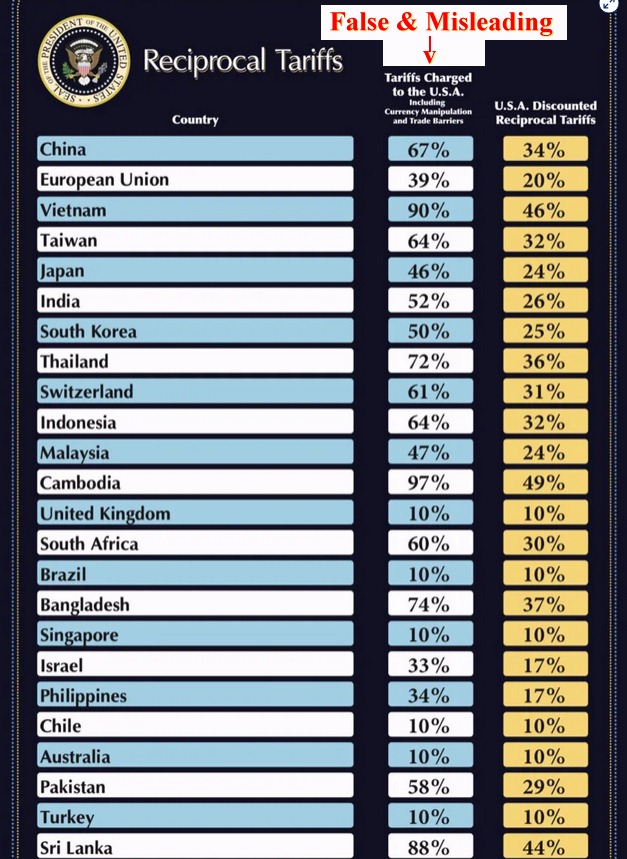
The tariffs announced on what Trump dubbed “Liberation Day” featured a chart titled Tariffs Charged to the U.S.A., purporting to show the crushing rates foreign countries supposedly impose on American goods. But these numbers were completely fabricated — not grounded in trade data or economic principles. Instead, Trump’s team appears to have confused tariffs with trade deficits, using the size of the U.S. trade deficit with each country to create a fictional “tariff rate.”

This fundamental misunderstanding is emblematic of much of Trump’s economic worldview — one that runs counter to decades of established economic theory.

In reality, U.S. trade deficits have long benefited American consumers by allowing access to cheaper foreign goods, while the strength of the dollar fuels domestic spending. The U.S. essentially trades inexpensive paper money for real goods — raw materials, finished products, and even luxury items — while foreign countries often recycle those dollars back into U.S. Treasuries, helping finance America’s debt.

Yet Trump continues to argue that trade deficits equal theft.

Trump’s Trade Narrative: Economic Victimhood

In speeches and social media posts in April 2025, Trump has claimed:

“For too long, corrupt foreign leaders — even from the poorest countries — have slapped massive tariffs on American products while flooding our markets with their goods, often duty-free. It’s been a one-sided scam — they’ve taken our jobs, stolen our industries, and destroyed entire American communities.”

Trump alleges that:

  • Foreign tariffs make U.S. farmers and manufacturers uncompetitive.

  • The U.S. has been the “piggy bank” of the world.

  • New tariffs will “level the playing field” and force “fair deals.”

Supporters call this economic justice. Critics call it economic vandalism.  Wall Street has already rebranded “Liberation Day” as The Big Mistake.

Tariff Theater: Trump’s Economic War on the World — Including Penguins

Lesotho: Targeting One of the World’s Poorest Nations

Among the most striking examples of Trump’s tariff policy is Lesotho — a tiny, landlocked kingdom in southern Africa and one of the poorest nations in the world. The U.S. has imposed a staggering 50% tariff on its exports — the highest tariff applied to any sovereign country.

Lesotho’s economy depends heavily on textiles exported under the African Growth and Opportunity Act (AGOA), and diamond exports to the U.S. are another vital revenue source. In 2024, Lesotho exported about $237 million in goods to the U.S.

The 50% tariff threatens to devastate Lesotho’s fragile economy, potentially wiping out thousands of jobs in a country where nearly half the population already lives below the poverty line.

Tariffs on Penguins: Heard and McDonald Islands

In perhaps the most surreal example of Trump’s trade war, a 10% tariff was imposed on the Heard and McDonald Islands — an uninhabited Australian territory in the sub-Antarctic populated only by penguins and seals.

With no human population and no meaningful exports, the islands became a global punchline. Memes exploded online mocking Trump’s “penguin tariff” as the ultimate symbol of policy absurdity.

Economic Isolation — and Global Backlash

Trump’s tariff strategy has triggered a wave of retaliatory measures, trade disruptions, and diplomatic backlash. Analysts warn that the U.S. is rapidly isolating itself from global supply chains, allies, and markets.

The economic damage has been swift and severe — not just abroad but at home, as higher consumer prices, supply shortages, and market instability ripple through the U.S. economy.

As one critic put it:

“Trump didn’t just pick a trade war — he picked one with the entire planet.”


RESOURCES:

Dumbfoundingly Dumb Tariffs

China Hits Back: 84% Tariff Targets U.S. Farmers First

Protectionism 101: Trump Economics

Capital Preservation During Trumpenomics

bookmark_borderMarket Chaos: VIX Surges 39.56% Amid Escalating Trade War Fears

by Daniel Brouse
April 3, 2025

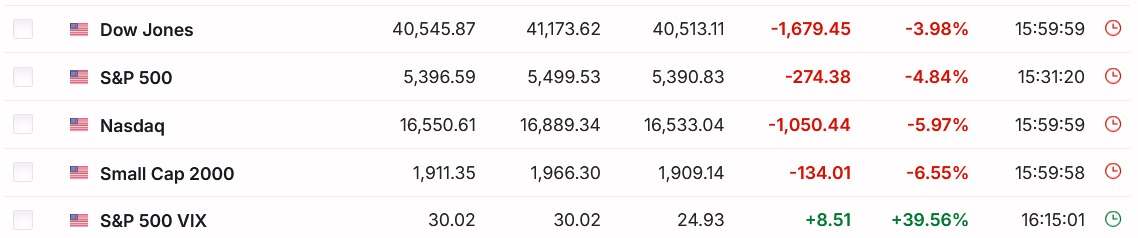
The VIX (Volatility Index), often called the “fear gauge,” measures market expectations of volatility over the next 30 days. A 39.56% spike in the VIX is highly significant and suggests extreme uncertainty and fear among investors.

Key Implications of Today’s VIX Surge:

  1. Panic Selling & Market Turmoil – A spike of this magnitude indicates that investors are rushing to hedge against potential losses, suggesting widespread concern about the stability of financial markets.

  2. Unprecedented Trade War Concerns – This surge likely reflects the market’s reaction to the sweeping tariffs imposed by the U.S. on 180 countries, which could disrupt global supply chains, increase costs, and slow economic growth.

  3. Historical Context – The last time the VIX saw a spike of this scale was during major economic crises, such as the 2008 financial meltdown or the COVID-19 market crash in 2020. This suggests that investors believe the current trade war could have long-term recessionary effects.

  4. Liquidity & Credit Market Strain – Rising volatility can impact corporate borrowing, investment decisions, and economic confidence, potentially leading to tighter credit conditions and reduced consumer spending.

  5. Potential for a Bear Market – If this volatility persists, it could mark the beginning of a prolonged downturn similar to what was seen in the Great Depression or the 2008 financial crisis.

In short, today’s 39.56% VIX spike signals extreme fear and uncertainty, with investors bracing for significant market disruptions due to escalating trade tensions.

VIX Surges 39.56% Amid Escalating Trade War Fears


  • On April 2, President Trump unilaterally declared a trade war against the rest of the world, imposing protectionist tariffs on 180 countries—calling it “Liberation Day.” This action was taken without congressional approval and in direct violation of the Constitution.
  • US Vs. Everyone
    A coalition of world leaders from diverse countries has come together to voice concerns about the U.S. tariff policies under President Donald Trump. Countries such as Australia, Canada, Japan, New Zealand, Taiwan, South Korea, and other major U.S. partners have not only condemned Trump’s actions but have also voiced the potential economic damage these tariffs could inflict. These nations are now positioning themselves to take collective action, highlighting a shift in the global dynamic that risks isolating the U.S. on the international stage.European Commission President Ursula von der Leyen was particularly vocal in her remarks, emphasizing the far-reaching consequences of these trade policies. “The consequences will be dire for millions of people around the world. We are ready to respond,” she declared, signaling Europe’s readiness to take countermeasures. The European Union, along with other countries, is preparing a coordinated response to the tariffs, which could include retaliatory tariffs. economic sanctions, and boycotts.


Trumpenomics: The Decline of the US

bookmark_borderTrade War!

by Daniel Brouse
April 3, 2025

On April 2, President Trump unilaterally declared a trade war against the rest of the world, imposing protectionist tariffs on 180 countries — calling it “.” This action was taken without congressional approval and in direct violation of the Constitution.

A coalition of world leaders from diverse countries has come together to voice concerns about the U.S. tariff policies under President Donald Trump. Their unified response signals the growing unease surrounding the economic fallout of the administration’s trade strategies, with several nations, including some of the U.S.’s closest allies, standing in opposition.

Countries such as Australia, Canada, Japan, New Zealand, Taiwan, South Korea, and other major U.S. partners have not only condemned Trump’s actions but have also voiced the potential economic damage these tariffs could inflict. These nations are now positioning themselves to take collective action, highlighting a shift in the global dynamic that risks isolating the U.S. on the international stage.

European Commission President Ursula von der Leyen was particularly vocal in her remarks, emphasizing the far-reaching consequences of these trade policies. “The consequences will be dire for millions of people around the world. We are ready to respond,” she declared, signaling Europe’s readiness to take countermeasures. The European Union, along with other countries, is preparing a coordinated response to the tariffs, which could include retaliatory tariffs. economic sanctions, and boycotts.

The economic impact of these tariffs is already being felt globally. While the U.S. has claimed that the trade war aims to level the playing field and protect American workers, the reality is that the tariffs have resulted in price hikes for goods ranging from electronics to agricultural products. U.S. businesses that rely on imported components have seen their production costs rise, and consumers are beginning to feel the pinch as goods become more expensive.

In response to these actions, other global powers are turning to alternative trade agreements, deepening their economic ties with each other while distancing themselves from the U.S. For example, the European Union and China have accelerated discussions on trade deals, and regional partnerships in Asia are being strengthened in response to the U.S.’s shift toward protectionism.

Countries that are traditionally aligned with the U.S. are now facing a tough choice. The diplomatic and economic fallout from the ongoing trade war is forcing them to re-evaluate their relationships with the U.S., and many are beginning to look for ways to mitigate the risks posed by the tariffs. For instance, Canada has signaled that it will seek greater market access in Europe, while Japan is exploring opportunities to diversify its trading partners beyond the U.S.

On April 4, 2025, China announced the imposition of a 34% tariff on all imports from the United States, effective April 10. This action was taken in direct response to the U.S.’s recent implementation of tariffs on Chinese goods. In addition to the tariffs, China has placed over two dozen American companies on export control and corporate blacklists, further escalating trade tensions between the two nations. These measures represent significant steps in the ongoing trade dispute, signaling a deepening of economic tensions

While the long-term effects of this trade war are still uncertain, the immediate reality is clear: a broad coalition of nations is taking a stand against the tariffs and is preparing for a future where the U.S. is increasingly isolated on the global economic stage. The global economy, already grappling with the fallout from the COVID-19 pandemic, now faces the added challenge of navigating a more fragmented and unpredictable trade environment.

As the U.S. continues down its path of protectionism, the rest of the world is responding with a unified front, signaling a seismic shift in global trade dynamics and the economic future of many nations.

The markets have not experienced anything like this since the Great Depression due to the unprecedented combination of extreme tariffs, global economic isolation, and retaliatory trade measures. While previous economic downturns, including the Great Recession of 2008, were triggered by financial crises, the current situation is unique in that it is a government-induced trade war that is disrupting global commerce on a scale not seen in nearly a century.

Key Parallels to the Great Depression

  1. Massive Tariffs and Global Retaliation
    The Smoot-Hawley Tariff Act of 1930 is widely blamed for exacerbating the Great Depression by imposing steep tariffs on over 20,000 imported goods, triggering retaliatory tariffs from U.S. trading partners. This led to a collapse in global trade, deepening the economic downturn. The current tariff war echoes this historic mistake, as sweeping new U.S. tariffs are provoking strong countermeasures from other nations, disrupting supply chains, and reducing economic activity.

  2. Economic Isolation of the U.S.
    Just as the U.S. turned inward during the Great Depression, today’s aggressive tariff policies have caused world leaders to unite in isolating the U.S. economically. Countries that were once major U.S. trading partners, including allies like Canada, Japan, and the European Union, are now forging alternative trade agreements that exclude the U.S., reducing American influence in global markets.

  3. Collapse in Global Trade and Manufacturing
    During the Great Depression, world trade plummeted by over 60% due to protectionist policies. The current trade war is causing similar disruptions. Supply chains that have taken decades to build are being dismantled almost overnight as businesses struggle with rising costs, supply shortages, and lost access to foreign markets. Global manufacturing indices are already showing contraction, reminiscent of the sharp declines seen in the early 1930s.

  4. Stock Market Freefall
    While the stock market crashed in 1929 due to speculation and economic instability, the current market decline is fueled by trade uncertainty and rising fears of a deep recession. Investors are witnessing a bear market unlike any in modern history, with volatility levels spiking as corporations issue warnings about declining profits, supply shortages, and increased costs.

  5. Skyrocketing Unemployment Risks
    In the aftermath of the Great Depression, U.S. unemployment soared to 25%, largely due to a collapse in demand and international trade. While today’s employment figures remain strong, major industries, including agriculture, manufacturing, and retail, are now at risk due to the trade war’s impact. Farmers, for example, are already struggling under retaliatory tariffs, and companies dependent on imported goods are being forced to raise prices or cut jobs. If this trend continues, the economy could slide into a severe recession, pushing unemployment higher.

  6. Collapse in Business Investment
    Just like in the early 1930s, businesses today are putting investment plans on hold due to uncertainty. The uncertainty surrounding tariffs, supply chain disruptions, and potential retaliatory measures makes long-term planning nearly impossible for companies. This leads to reduced expansion, hiring freezes, and lower capital spending, all of which were key contributors to the economic stagnation of the Great Depression.

A Crisis of This Magnitude Has Not Been Seen in Nearly 100 Years

While past recessions were driven by financial collapses (such as 2008’s mortgage crisis or the dot-com bubble in 2000), this economic crisis is entirely policy-driven. The sheer scale of the tariffs, combined with global retaliation and the isolation of the U.S., has created a trade collapse not seen since the 1930s. If history is any guide, the consequences could be severe, with prolonged economic hardship, market instability, and lasting damage to U.S. credibility in global trade.

The Great Depression vs. The Climate Crisis: Why the Stock Market May Never Recover


Trump’s Sector-Specific Tariffs

Trumpenomics: The Decline of the US

bookmark_borderFighting a Mean Bear Market in a Trade War

by Daniel Brouse
April 3, 2025

Today, one of the stock market indices officially entered into bear market territory. A bear market is typically defined as a decline of 20% or more from recent highs in a broad market index, such as the Russell 2,000 Small-cap stocks. This downturn signals a shift in investor sentiment, where pessimism takes hold, and uncertainty about the future of the economy can lead to widespread selling.

Bear markets are often triggered by a combination of factors, including economic slowdowns, tightening monetary policy, rising interest rates, or geopolitical instability. These market conditions can cause investors to lose confidence in the future earnings potential of companies, leading to a sell-off in stocks. During a bear market, investors may be more risk-averse, seeking safer investments like bonds or cash.

While bear markets can be unsettling, they are a normal part of the market cycle, and historically, markets have eventually recovered. However, the duration and severity of a bear market can vary, and it is difficult to predict when the downturn will end.

This bear market is likely to be different from any in the last 100 years, largely due to the unique circumstances surrounding the ongoing trade war and its ripple effects throughout the global economy.

  1. Global Supply Chain Disruptions: Unlike past bear markets, this one is heavily influenced by the disruption of global supply chains caused by tariffs, trade restrictions, and geopolitical tensions. The trade war, particularly between the U.S. and China, has led to higher costs for many goods, impacting not only international trade but also domestic industries. Many companies that rely on cheap imported goods, materials, or components are seeing increased costs, which is affecting profitability and, in turn, stock prices. This is something we’ve rarely seen on such a global scale in previous bear markets.

  2. Tariffs and Inflationary Pressures: The trade war has imposed significant tariffs on goods, especially in industries like technology, automotive, and agriculture. These tariffs can increase the price of consumer goods and production costs, leading to inflationary pressures. While inflation is a typical concern during economic slowdowns, the added complexity of tariffs exacerbates these pressures and could delay or hinder any potential recovery. The impact of tariffs on key industries, such as tech, also adds a new layer of uncertainty to the market.

  3. Longer Recovery Period: In past bear markets, the recovery often came when the economy and investor confidence began to rebound. However, in this case, the ongoing trade war and the potential for further escalations suggest that the recovery might be slower and more prolonged. Trade wars can create lasting disruptions in markets, and tariffs can remain in place for an extended period, creating an environment of uncertainty and volatility that may delay the return to positive growth.

  4. Unprecedented Economic and Political Uncertainty: The combination of economic factors, such as the tariffs imposed under the trade war, with political instability and tensions, makes this bear market distinct. Past bear markets, such as those caused by the 2008 financial crisis, were primarily driven by financial imbalances and market speculation. The current bear market, however, is being heavily influenced by trade policies that have widespread geopolitical implications, adding a layer of complexity that investors have not faced before on such a scale.

  5. Global Impact of Protectionism: The trade war has led to a rise in protectionist policies around the world, which could lead to a reshaping of international trade relationships. Unlike previous bear markets, the trade war could result in long-term shifts in global trade patterns, with countries looking to secure more self-sufficiency or diversify their supply chains away from traditional partners. This can create added volatility as industries adapt to new market dynamics.

In conclusion, while bear markets are a natural part of economic cycles, the ongoing trade war adds unprecedented complexity to the situation. The disruption of global trade, inflationary pressures, and extended uncertainty may make this bear market more unique and prolonged compared to those seen in the past 100 years. The outcome will likely depend on how governments and businesses adapt to this new era of trade tensions, protectionism and most importantly — a trade war.

Trade War!

Over the past 24 hours, a diverse group of world leaders has voiced concerns about the tariff policies and united to isolate the U.S. on the global stage. Countries from around the world, including some of America’s closest allies such as Australia, Canada, Japan, New Zealand, Taiwan, South Korea, and other major U.S. partners, have condemned President Donald Trump’s actions. European Commission President Ursula von der Leyen stated, “The consequences will be dire for millions of people around the world. We are ready to respond.”

The Great Depression vs. The Climate Crisis: Why the Stock Market May Never Recover


Trump’s Sector-Specific Tariffs

Trumpenomics: The Decline of the US

bookmark_borderHow Tariffs on Guitars and Pianos Could Impact the Next Generation of Musicians

by Daniel Brouse
April 3, 2025

An economist just referenced Little Richard to illustrate how tariffs might impact young musicians. Little Richard, known for his energetic vocals and piano playing, also had a band called “The Upsetters,” and while he wasn’t primarily a guitarist, he had notable guitarists in his band, including Jimi Hendrix. Due to tariffs on guitars, the next “Little Richard Band” may not be able to afford a starter instrument, potentially depriving future generations of groundbreaking artists.

The new tariffs will significantly impact the price of pianos, depending on their country of origin and the materials used in their construction. Many pianos, especially more affordable models, are imported from China, and if tariffs are imposed on Chinese-made pianos or parts, the price for consumers could rise. With the proposed tariffs on China totaling up to 114%, the cost of Chinese-made pianos could increase substantially. Additionally, pianos from countries like Japan, South Korea, and Indonesia face substantial tariff increases. Additionally, labor shortages and increased shipping costs resulting from tariffs on freight could further drive up piano prices. Retaliatory tariffs from other countries could disrupt the supply chain for piano parts or finished products, potentially making American-made pianos more expensive. It’s likely that both imported and domestically produced pianos could become much more expensive due to these tariffs.

The imposition of tariffs on countries that supply musical instruments and their components—particularly China, Canada, Mexico, and the EU—along with tariffs on wood, metal, and electronics, raises production costs for manufacturers, resulting in higher retail prices for consumers, including for starter guitars and other musical instruments. The combined taxes could exceed 100%, potentially leading to a halt in imports of more affordable instruments. This, in turn, would make it harder for young musicians to access the tools they need to start their musical journey, potentially limiting the next generation of groundbreaking artists.


Trump’s Sector-Specific Tariffs

Trumpenomics: The Decline of the US

bookmark_borderLiberation (From Your Money) Day: Largest Tax Increase in History

April 2, 2025

On April 2, 2025, President Donald Trump announced a series of new tariffs under the “Liberation Day” initiative, targeting multiple countries and sectors. The key measures include:​

  • Universal Tariff: A minimum 10% tariff on all U.S. imports. ​

  • Country-Specific Tariff Examples:

    • China: 34% tariff on imports. Although challenging to calculate precisely, this appears to bring the total tax on imports from China to 165% (updated). It also remains unclear whether the tax on EVs will now rise to 265%.

    • Taiwan: 32% tariff on imports. Taiwan’s semiconductors are currently exempt; however, the U.S. administration is still evaluating the possibility of imposing tariffs of up to 100% on Taiwanese chips and related electronic devices.
    • European Union: 20% tariff on imports.

    • Japan: 24% tariff on imports. ​

    • Vietnam: 46% tariff on imports. ​

    • United Kingdom: 10% tariff on all goods. ​

    • Canada: 25% tariff on goods, with a 10% tariff specifically on energy products. ​

    • Mexico: 25% tariff on all products. ​

    • Australia: Tariffs imposed on beef exports to the U.S., citing Australia’s ban on American beef due to mad cow disease concerns.

There are at least 180 country-specific tariffs, in addition to sector-specific tariffs on industries such as automobiles, steel, and aluminum. Calculating the total sales tax impact requires complex assessments, factoring in tariffs on individual components, the country of origin for each part, and any additional sector-based levies. This layered tariff structure makes it difficult for businesses to accurately predict final costs and pricing for imported goods, especially since most products contain some imported materials. For example, 55% of fresh fruits and 32% of fresh vegetables consumed in the U.S. are imported, meaning the price of a salad could rise by 45%. In Pennsylvania, where there is a 6% sales tax, the new tariffs on a purchase from China could result in a total sales tax of 172%, including the state’s 6%. If it’s an electric vehicle (EV), the tax could reach 272%. Another estimate suggests that the cost of lumber for new construction could rise by $25,000. Most drywall comes from Mexico or China, so this would add a substantial tax burden. Metals, such as aluminum, steel, and copper, are also being taxed on a sector basis, adding to the overall cost. All of these factors are likely to double the cost of building a home.

Tariff Theater: Trump’s Economic War on the World — Including Penguins

Tariff Theater: Trump’s Economic War on the World — Including Penguins

The tariffs announced on what Trump dubbed “Liberation Day” featured a chart titled Tariffs Charged to the U.S.A., purporting to show the crushing rates foreign countries supposedly impose on American goods. But these numbers were completely fabricated — not grounded in trade data or economic principles. Instead, Trump’s team appears to have confused tariffs with trade deficits, using the size of the U.S. trade deficit with each country to create a fictional “tariff rate.”

This fundamental misunderstanding is emblematic of much of Trump’s economic worldview — one that runs counter to decades of established economic theory.

In reality, U.S. trade deficits have long benefited American consumers by allowing access to cheaper foreign goods, while the strength of the dollar fuels domestic spending. The U.S. essentially trades inexpensive paper money for real goods — raw materials, finished products, and even luxury items — while foreign countries often recycle those dollars back into U.S. Treasuries, helping finance America’s debt.

Yet Trump continues to argue that trade deficits equal theft.

Trump’s Trade Narrative: Economic Victimhood

In speeches and social media posts in April 2025, Trump has claimed:

“For too long, corrupt foreign leaders — even from the poorest countries — have slapped massive tariffs on American products while flooding our markets with their goods, often duty-free. It’s been a one-sided scam — they’ve taken our jobs, stolen our industries, and destroyed entire American communities.”

Trump alleges that:

  • Foreign tariffs make U.S. farmers and manufacturers uncompetitive.

  • The U.S. has been the “piggy bank” of the world.

  • New tariffs will “level the playing field” and force “fair deals.”

Supporters call this economic justice. Critics call it economic vandalism.

Lesotho: Targeting One of the World’s Poorest Nations

Among the most striking examples of Trump’s tariff policy is Lesotho — a tiny, landlocked kingdom in southern Africa and one of the poorest nations in the world. The U.S. has imposed a staggering 50% tariff on its exports — the highest tariff applied to any sovereign country.

Lesotho’s economy depends heavily on textiles exported under the African Growth and Opportunity Act (AGOA), and diamond exports to the U.S. are another vital revenue source. In 2024, Lesotho exported about $237 million in goods to the U.S.

The 50% tariff threatens to devastate Lesotho’s fragile economy, potentially wiping out thousands of jobs in a country where nearly half the population already lives below the poverty line.

Tariffs on Penguins: Heard and McDonald Islands

In perhaps the most surreal example of Trump’s trade war, a 10% tariff was imposed on the Heard and McDonald Islands — an uninhabited Australian territory in the sub-Antarctic populated only by penguins and seals.

With no human population and no meaningful exports, the islands became a global punchline. Memes exploded online mocking Trump’s “penguin tariff” as the ultimate symbol of policy absurdity.

Economic Isolation — and Global Backlash

Trump’s tariff strategy has triggered a wave of retaliatory measures, trade disruptions, and diplomatic backlash. Analysts warn that the U.S. is rapidly isolating itself from global supply chains, allies, and markets.

The economic damage has been swift and severe — not just abroad but at home, as higher consumer prices, supply shortages, and market instability ripple through the U.S. economy.

As one critic put it:

“Trump didn’t just pick a trade war — he picked one with the entire planet.”

Full List of Countries Hit With Reciprocal Tariffs

Country Tariffs Charged to the U.S.A. (%) U.S.A. Discounted Reciprocal Tariffs (%)
China 67 34
European Union 39 20
Vietnam 90 46
Taiwan 64 32
Japan 46 24
India 52 26
South Korea 50 25
Thailand 72 36
Switzerland 61 31
Indonesia 64 32
Malaysia 47 24
Cambodia 97 49
United Kingdom 10 10
South Africa 60 30
Brazil 10 10
Bangladesh 74 37
Singapore 10 10
Israel 33 17
Philippines 34 17
Chile 10 10
Australia 10 10
Pakistan 58 29
Turkey 10 10
Sri Lanka 88 44
Colombia 10 10
Peru 10 10
Nicaragua 36 18
Norway 30 15
Costa Rica 17 10
Jordan 40 20
Dominican Republic 10 10
United Arab Emirates 10 10
New Zealand 20 10
Argentina 10 10
Ecuador 12 10
Guatemala 10 10
Honduras 10 10
Madagascar 93 47
Myanmar (Burma) 88 44
Tunisia 55 28
Kazakhstan 54 27
Serbia 74 37
Egypt 10 10
Saudi Arabia 10 10
El Salvador 10 10
Côte d’Ivoire 41 21
Laos 95 48
Botswana 74 37
Trinidad and Tobago 12 10
Morocco 10 10
Papua New Guinea 15 10
Malawi 34 17
Liberia 10 10
British Virgin Islands 10 10
Afghanistan 49 10
Zimbabwe 35 18
Benin 10 10
Barbados 10 10
Monaco 10 10
Syria 81 41
Uzbekistan 10 10
Republic of the Congo 10 10
Djibouti 10 10
French Polynesia 10 10
Cayman Islands 10 10
Kosovo 10 10
Curaçao 10 10
Vanuatu 44 22
Rwanda 10 10
Sierra Leone 10 10
Mongolia 10 10
San Marino 10 10
Antigua and Barbuda 10 10
Bermuda 10 10
Eswatini 10 10
Marshall Islands 10 10
Saint Pierre and Miquelon 99 50
Saint Kitts and Nevis 10 10
Turkmenistan 10 10
Grenada 10 10
Sudan 10 10
Turks and Caicos Islands 10 10
Aruba 10 10
Montenegro 10 10
Saint Helena 15 10
Kyrgyzstan 10 10
Yemen 10 10
Saint Vincent and the Grenadines 10 10
Niger 10 10
Saint Lucia 10 10
Nauru 59 30
Equatorial Guinea 25 13
Iran 10 10
Libya 61 31
Samoa 10 10
Guinea 10 10
Timor-Leste 10 10
Montserrat 10 10
Chad 26 13
Mali 10 10
Algeria 59 30
Oman 10 10
Uruguay 10 10
Bahamas 10 10
Lesotho 99 50
Ukraine 10 10
Bahrain 10 10
Qatar 10 10
Mauritius 80 40
Fiji 63 32
Iceland 10 10
Kenya 10 10
Liechtenstein 73 37
Guyana 76 38
Haiti 10 10
Bosnia and Herzegovina 70 35
Nigeria 27 14
Namibia 42 21
Brunei 47 24
Bolivia 20 10
Panama 10 10
Venezuela 29 15
North Macedonia 65 33
Ethiopia 10 10
Ghana 17 10
Moldova 61 31
Angola 63 32
Democratic Republic of the Congo 22 11
Jamaica 10 10
Mozambique 31 16
Paraguay 10 10
Zambia 33 17
Lebanon 10 10
Tanzania 10 10
Iraq 78 39
Georgia 10 10
Senegal 10 10
Azerbaijan 10 10
Cameroon 22 11
Uganda 20 10
Albania 10 10
Armenia 10 10
Nepal 10 10
Sint Maarten 10 10
Falkland Islands 82 41
Gabon 10 10
Kuwait 10 10
Togo 10 10
Suriname 10 10
Belize 10 10
Maldives 10 10
Tajikistan 10 10
Cabo Verde 10 10
Burundi 10 10
Guadeloupe 10 10
Bhutan 10 10
Martinique 10 10
Tonga 10 10
Mauritania 10 10
Dominica 10 10
Micronesia 10 10
Gambia 10 10
French Guiana 10 10
Christmas Island 10 10
Andorra 10 10
Central African Republic 10 10
Solomon Islands 10 10
Mayotte 10 10
Anguilla 10 10
Cocos (Keeling) Islands 10 10
Eritrea 10 10
Cook Islands 10 10
South Sudan 10 10
Comoros 10 10
Kiribati 10 10
Sao Tome and Principe 10 10
Norfolk Island 58 29
Gibraltar 10 10
Tuvalu 10 10
British Indian Ocean Territory 10 10
Tokelau 10 10
Guinea-Bissau 10 10
Svalbard and Jan Mayen 10 10
Heard and McDonald Islands 10 10
Reunion 73 37

Dumbfoundingly Dumb Tariffs

China Hits Back: 84% Tariff Targets U.S. Farmers First

EU’s Trade Counterattack: Tariffs Designed to Target U.S. Red States


On April 2, President Trump unilaterally declared a trade war against the rest of the world, imposing protectionist tariffs on 180 countries — calling it “Liberation Day.” This action was taken without congressional approval and in direct violation of the Constitution.

Trump’s Sector-Specific Tariffs

Trumpenomics: The Decline of the US

bookmark_borderUnderestimation of Climate Sensitivity and Feedback Processes

by Daniel Brouse
April 2, 2025

In the 1990s, we first hypothesized the non-linear acceleration of climate change. By the early 2000s, this hypothesis had evolved into established climate theory, now widely recognized as scientific fact. My lab partner, a Doctor of Physics from Ohio State, and I collaborated to provide key evidence supporting this theory. Over the years, we have observed a dramatic reduction in the doubling time of climate change impacts — the rate at which these effects intensify. Initially, the doubling time was approximately 100 years, but it has since decreased to 10 years and, more recently, to just 2 years. This trend implies that the damage caused by climate change today is double what it was two years ago. In two years, it could be four times worse; in four years, eight times worse; and within a decade, potentially 64 times worse. These projections are conservative, assuming the doubling period does not continue to shrink further. Alarmingly, this rapid acceleration does not appear to be an anomaly. If this trajectory persists, the consequences will likely be far more catastrophic than previously anticipated.

Dr. James E. Hansen’s paper Global Warming Acceleration: Impact on Sea Ice confirms our theory with an analysis of the acceleration of global warming and its impact on sea ice, ice sheets, and ocean circulation, with a particular focus on the Atlantic Meridional Overturning Circulation (AMOC). Climate sensitivity is higher than previously estimated (ECS = 4.5 ± 0.5°C for doubled CO₂), which fundamentally alters expectations for future climate change. IPCC models fail to account for freshwater effects on sea ice cover, leading to an underestimation of climate sensitivity and feedback processes.

AMOC Shutdown Risk: Hanson emphasizes that accelerated warming increases the likelihood of AMOC shutdown by reducing surface water density in deepwater formation regions. A shutdown would trigger severe long-term consequences, including rapid sea level rise.

An AMOC shutdown would have severe and far-reaching impacts worldwide. For instance, on the U.S. East Coast it would lead to rapid sea level rise, stronger storms, and extreme weather shifts. As the AMOC slows or stops, warm water would no longer be transported northward, causing ocean water to pile up along the East Coast, which could raise sea levels by 1-3 feet (30-90 cm) almost immediately, on top of global sea level rise. This would have particularly devastating effects on the Northeast U.S. (New York, Boston, DC, Miami), where flooding would be most severe.

The weakening or shutdown of the AMOC would also impact hurricane formation. With warmer waters off the East Coast, hurricanes would become more intense and slower-moving, leading to longer-lasting and more destructive storms, like Hurricane Sandy. As the Gulf Stream weakens, hurricanes could linger longer over coastal cities, causing catastrophic flooding. Additionally, the disruption of weather patterns would lead to a stark contrast: the Northeast and Europe could experience much colder winters while the Southeast U.S. (Florida, Georgia, Carolinas) would face more extreme heat and droughts.

Increased rainfall and flooding would also become more common. With the Gulf Stream weakened, storms could stall over cities, dumping massive amounts of rainfall, similar to what occurred during Hurricane Harvey in Texas but along the East Coast. Nor’easters and stronger winter storms would become more frequent, particularly in New England. The disruption of the AMOC would also have catastrophic consequences for marine ecosystems. The circulation helps distribute nutrients in the ocean, and its shutdown could disrupt fish migration patterns and collapse major fisheries, especially in the Northeast U.S., where industries like cod fishing and lobster harvesting would be devastated.

In a Climate Crisis

Since the Earth’s equilibrium climate sensitivity (ECS) is 4.5 ± 0.5°C for a doubling of CO₂, the likely temperature rise this century under current emission levels will be significantly higher than IPCC estimates. Here’s a breakdown of how that translates into global warming:

1. CO₂ Projections & Radiative Forcing

  • Pre-industrial CO₂ (~280 ppm) to Present (~420 ppm): We’ve already experienced a ~1.2°C rise in global temperature.

  • Business-as-Usual Scenario (High Emissions, ~800-1000 ppm CO₂ by 2100): If emissions continue at current levels, CO₂ could more than double from pre-industrial levels, reaching or exceeding 560 ppm (the doubling threshold for ECS calculations).

  • Additional non-CO₂ greenhouse gases (methane, nitrous oxide, etc.) also contribute to warming.

2. Temperature Increase by 2100

Using ECS = 4.5 ± 0.5°C, and considering:

  • Climate sensitivity refers to long-term equilibrium response (centuries), but transient warming occurs within this century.

  • The Transient Climate Response (TCR), which is lower than ECS, typically ranges ~60-70% of ECS, meaning near-term warming may be slightly less than equilibrium projections.

Projected Warming by 2100 Based on ECS = 4.5°C

  1. Lower-End Case (~550-600 ppm CO₂, with significant mitigation efforts)

    • Optimistic warming: ~3.5–4.5°C

    • Comparable to IPCC’s worst-case scenarios (RCP 6.0–7.0 range)

  2. High-Emissions Case (~800-1000 ppm CO₂, with some mitigation)

    • Potential warming: ~5–7°C

    • This is significantly worse than IPCC’s RCP 8.5 projection, which assumes ECS = 3°C.

  3. Business as Usual Case (Feedbacks Accelerate Warming: AMOC Shutdown, Ice-Albedo, Methane Releases, etc.)

    • Expected warming: 7-9°C or more

    • This would resemble past hyperthermal events like the Paleocene-Eocene Thermal Maximum (PETM).

3. Policy & Adaptation Implications

  • If ECS is higher than IPCC estimates, it means current climate policies are underestimating risk.

  • The IPCC’s mid-range scenarios (projecting ~3°C by 2100) may be too optimistic if ECS is truly ~4.5°C.

  • Higher ECS implies faster and more extreme tipping points, including AMOC collapse, rapid sea level rise, and uninhabitable regions.

4. Urgency for Rapid Emission Cuts

  • Even immediate aggressive action (net-zero by mid-century) would still result in ~2.5-3°C warming due to existing CO₂ levels and slow response time.

  • Avoiding catastrophic warming (>4°C) requires drastic reductions in fossil fuel use this decade.

Bottom Line: At Current Emissions, Warming by 2100 is Likely 6°C or Higher

This level of warming would lead to massive global disruptions, including widespread droughts, stronger hurricanes, agricultural collapse, and displacement of hundreds of millions due to rising sea levels. If ECS is truly 4.5°C, the window to prevent catastrophic warming is far smaller than most policymakers assume.

* Our climate model employs chaos theory to comprehensively consider human impacts and projects a potential global average temperature increase of 9℃ above pre-industrial levels.

bookmark_borderFinancial Ethics and Legal Controversies: Trump, Musk, and Conflicts of Interest

Financial Disclosure and Conflict of Interest Regulations for U.S. Presidents and Officials

When a U.S. president takes office, they—as well as their cabinet members, high-ranking officials, and anyone with substantial influence in the administration—are generally required to disclose all financial activities. This process is designed to ensure transparency, prevent conflicts of interest, and uphold ethical standards in governance.

Typically, this includes the public release of their tax returns, which provides insight into their financial history, sources of income, and potential conflicts of interest. Additionally, officials are expected to divest from any assets or positions that could create conflicts, either by selling them outright or placing them into a blind trust managed independently to prevent undue influence over policy decisions.

A broad set of federal laws and regulations, including the Ethics in Government Act and various conflict-of-interest statutes, exist to prevent public officials from using their positions for personal financial gain. These laws prohibit actions such as insider trading, self-dealing, and preferential treatment in policymaking or government contracts. Violations can lead to legal consequences, loss of office, or significant reputational damage.

While past presidents have largely adhered to these ethical norms, there have been exceptions and controversies, highlighting the ongoing debate about the adequacy of existing laws and enforcement mechanisms.

Donald Trump’s Lack of Transparency and Authenticity

President Donald Trump’s adherence to financial disclosure and conflict of interest regulations has been a subject of extensive scrutiny and debate.​

Financial Disclosures:

As a candidate and officeholder, President Trump was required to submit financial disclosure reports detailing his assets, income sources, and business interests. While he did file these disclosures, organizations like Citizens for Responsibility and Ethics in Washington (CREW) have raised concerns about the completeness and transparency of these reports. For instance, CREW obtained and analyzed Trump’s 2023 financial disclosures, highlighting potential gaps and ambiguities.

Conflicts of Interest:

Unlike his predecessors, President Trump chose not to divest from his extensive business holdings upon assuming office. This decision led to numerous allegations of conflicts of interest. CREW documented over 3,400 instances where the line between the Trump Organization and the Trump administration appeared blurred, raising questions about whether policy decisions were influenced by personal financial interests.

Specific concerns include the promotion of personal business ventures and the intertwining of official duties with private interests. For example, events and initiatives that involved both governmental roles and private business promotions have been criticized as potential violations of ethical standards. ​

Legal and Ethical Considerations:

It’s important to note that the President is exempt from certain federal conflict of interest laws that apply to other executive branch employees. However, ethical norms and the Constitution’s Emoluments Clauses are intended to prevent undue influence and ensure that presidential decisions are made in the public interest, free from personal financial considerations. Critics argue that President Trump’s actions challenged these principles, leading to legal challenges and calls for greater accountability.

Concerns have been raised regarding potential conflicts of interest and ethical standards involving President Donald Trump, his family, and Elon Musk. Key issues include:​

Tesla Event on the White House Lawn

On April 1, 2025, Elon Musk hosted an event on the White House lawn alongside President Trump to promote Tesla vehicles. This event drew criticism for potentially using public office for private gain, as it appeared to leverage the presidential platform to benefit Musk’s private enterprise. The event also sparked global protests, with demonstrators targeting Tesla showrooms to express opposition to Musk’s partnership with President Trump. ​

Trump Organization’s Ventures in Vietnam

The Trump Organization announced plans for multi-billion-dollar investments in Vietnam, including golf courses, hotels, and real estate projects. The first project, valued at $1.5 billion near Hanoi, is set to break ground in May 2025. These developments proceed amid potential U.S. tariffs on Vietnam due to trade imbalances. Critics argue that such foreign ventures by a sitting president’s business could lead to conflicts of interest, especially when intertwined with international trade policies. ​

Starlink Contracts and Tariff Relief

Elon Musk’s Starlink secured contracts to provide satellite internet services in Vietnam, coinciding with Vietnam’s efforts to mitigate U.S. tariffs by increasing imports from the U.S. This arrangement has raised questions about potential quid pro quo dealings and the ethical implications of a government official’s private company benefiting from international agreements influenced by U.S. trade policies. ​

Elon Musk’s Role in Government and Business Interests

Elon Musk’s appointment as co-lead of the Department of Government Efficiency (DOGE) under President Trump has been scrutinized due to potential conflicts of interest. As a “special government employee,” Musk is subject to less stringent conflict-of-interest rules, allowing him to maintain leadership roles in his private companies while influencing government operations. This dual role has prompted calls for investigations into whether Musk has used his government position to benefit his businesses, particularly concerning the cancellation of a $2.4 billion FAA contract with Verizon in favor of Starlink.

Legal Actions and Investigations

In March 2025, a U.S. judge ruled that Elon Musk must face a fraud lawsuit alleging he delayed disclosing his significant stake in Twitter (now X), potentially misleading investors and violating securities laws. Additionally, leading Democrats have called for investigations into Musk’s activities, focusing on his influence over federal agencies and the financial benefits his companies have received from government contracts. ​

These instances highlight ongoing concerns about the intersection of public duties and private interests among high-ranking officials and their associates, emphasizing the need for stringent ethical standards and transparency in government operations.

Senators Launch Investigation into Trump’s Crypto Corporation, Urge SEC to Preserve Documents

​Senator Elizabeth Warren, along with Representative Maxine Waters, has requested that the Securities and Exchange Commission (SEC) preserve records related to President Donald Trump’s cryptocurrency venture, World Liberty Financial. They are investigating potential conflicts of interest stemming from the Trump family’s financial ties to this crypto business. ​

In a separate initiative, Senator Warren, joined by four other Democratic senators, expressed concerns about conflicts of interest regarding World Liberty Financial’s plans to issue a stablecoin named USD1. They sent a letter to U.S. financial regulators seeking clarification on how they intend to oversee this venture.

Additionally, Senator Warren has called on David Sacks, President Trump’s Special Advisor for AI and Crypto, to publicly disclose his financial records. She aims to address potential conflicts of interest related to the administration’s cryptocurrency policies.

These actions reflect ongoing concerns among Democratic lawmakers about the intersection of President Trump’s official duties and his family’s business interests in the cryptocurrency sector.

TRUMP’S HISTORY OF CRIMINALITY AND UNETHICAL BEHAVIOR

President Donald Trump and his associated entities have been involved in numerous legal proceedings, encompassing civil and criminal cases, impeachments, bankruptcies, defamation suits, sexual assault allegations, and controversies surrounding both non-profit and for-profit ventures. Below is an overview:

Criminal Indictments and Convictions:

  • 2023-2024 Criminal Cases: Between 2023 and 2024, Trump faced four criminal indictments on charges including fraud, election subversion, and obstruction. These marked the first instances of a former U.S. president facing criminal charges.
  • 2025 Conviction: In early 2025, Trump was convicted on 34 felony counts related to concealing a “hush money” transaction intended to hide a sex scandal from voters. Despite the conviction, he was sentenced to no penalty, making him the first individual convicted of a felony to assume the office of president.

Civil Lawsuits and Investigations:

  • New York Civil Fraud Lawsuit: In September 2022, New York Attorney General Letitia James filed a civil lawsuit against Trump, his three eldest children, and the Trump Organization, alleging over 200 instances of fraud and misrepresentation. The suit sought $250 million in penalties and aimed to restrict future business activities in New York. In February 2024, a judge ordered Trump to pay a penalty exceeding $450 million and barred him from leading any New York company for three years.

Defamation and Sexual Assault Cases:

  • E. Jean Carroll Case: In 2019, writer E. Jean Carroll accused Trump of raping her in a department store dressing room in the 1990s. Trump denied the allegation, leading Carroll to file a defamation lawsuit against him. In May 2023, a jury found Trump liable for sexual abuse and defamation, awarding Carroll $5 million in damages. Subsequent appeals by Trump were rejected, and in a later ruling, he was ordered to pay an additional $83.3 million in damages.
  • Other Allegations: Multiple women have accused Trump of sexual misconduct over the years. While he has denied these allegations, they have led to various legal challenges and public scrutiny.

Impeachments:

  • First Impeachment (2019): The House of Representatives impeached Trump on charges of abuse of power and obstruction of Congress related to his dealings with Ukraine. The Senate acquitted him in early 2020.
  • Second Impeachment (2021): Following the January 6 Capitol riot, Trump was impeached again, this time for incitement of insurrection. The Senate acquitted him in February 2021.

Bankruptcies:

While Donald Trump has never filed for personal bankruptcy, several of his business ventures have — repeatedly. The exact number of corporate bankruptcies tied to Trump is difficult to pin down, largely because of how they are counted. For example, Trump’s casino empire — operating under Donald J. Trump (DJT) Hotels & Casinos — filed for bankruptcy four separate times, though some analysts group those together as a single event.

Most sources agree that Trump-related companies have filed for bankruptcy at least six times. However, when counting repeat filings by the same entities, some estimates place the total closer to 12 to 14.

In every case, a familiar pattern emerges: Trump personally profited while shareholders, lenders, and employees absorbed the losses. His playbook centers on aggressive debt, questionable financial management, and systematically transferring risk away from himself and onto investors and creditors.

Now, he’s applying the same strategy on a global scale.

Legal Issues Involving Non-Profit and For-Profit Entities:

  • Trump University: Established in 2005, Trump University offered real estate training programs. It faced multiple lawsuits alleging fraudulent practices, including a significant case in which plaintiffs accused the institution of misleading students about the quality of education provided. In 2018, a federal judge finalized a $25 million settlement to resolve these lawsuits, allowing former students to receive compensation for their financial losses.
  • Donald J. Trump Foundation: Founded in 1988, the Trump Foundation came under scrutiny for alleged misuse of funds, including accusations of self-dealing and advancing Trump’s political interests. In 2019, the New York Supreme Court ordered Trump to pay $2 million in damages for improperly using charitable assets to intervene in the 2016 presidential primaries and further his own political interests.

​Jail

Both Allen Weisselberg, the former Chief Financial Officer (CFO) of the Trump Organization, and Michael Cohen, President Donald Trump’s former personal attorney and “fixer,” were convicted and served prison sentences due to their involvement in financial crimes related to their roles within the Trump Organization.​

Allen Weisselberg:

Weisselberg was implicated in a tax fraud scheme involving the Trump Organization. He pleaded guilty to 15 felony charges, including grand larceny, criminal tax fraud, and falsifying business records. These charges stemmed from his failure to pay taxes on $1.7 million in indirect compensation, which included benefits such as a rent-free luxury apartment, private school tuition for his grandchildren, and leased Mercedes-Benz vehicles. In January 2023, Weisselberg was sentenced to five months in jail and began serving his sentence at Rikers Island.

Michael Cohen:

Cohen pleaded guilty to multiple charges, including tax evasion, bank fraud, and campaign finance violations. The campaign finance violations were particularly notable, as they involved orchestrating hush money payments to women alleging affairs with Donald Trump during the 2016 presidential campaign. These payments were intended to influence the election by suppressing potentially damaging information. In December 2018, Cohen was sentenced to three years in federal prison.

Profit Over Patriotism: How Trump’s Second Term Blurred the Line Between Presidency and Personal Gain
Donald Trump’s second term in office marked a sharp escalation in the merger of political power and personal profit. From crypto schemes and cell service ventures to corporate-sponsored parades and questionable foreign deals, Trump turned the presidency into a revenue-generating enterprise, prioritizing his brand and wallet over democratic norms and military integrity.

Trump’s Crimes, Illegal Activities, and Immorality: A Record of Corruption

Trumpenomics: The Decline of the US