bookmark_borderThe Lightning Feedback Loop

by Daniel Brouse
November 11, 2023

Feedback is the process in which changing one quantity changes a second quantity, and the change in the second quantity in turn changes the first. Positive feedback loops amplify the change in the first quantity.

Studies have found lightning and forest fires are creating a feedback loop. More lightning sparks a vicious cycle, as trees and soil set ablaze release warming CO2 creating more storms and more lightning.

The study Forests at Risk Due to Lightning Fires found a sensitivity of extratropical intact forests to potential increases in lightning fires, which would have far-reaching consequences for terrestrial carbon storage and biodiversity. The results show that, on a global scale, lightning is the primary ignition source of fires in temperate and boreal forests.

“What many people may not be aware of is that lightning is the most common ignition source for fires in remote temperate and boreal forests,” says Thomas Janssen, research associate at VU Amsterdam. These forests store large amounts of carbon, which is released in the form of greenhouse gases during the fire. The research reveals that 77 % of the burned area in intact forest regions outside the tropics is due to lightning fires, and the number of strikes is expected to increase by 11 to 31 % per degree warming with ongoing climate change.

“When a thunderstorm passes through this landscape, there are thousands of lightning strikes, and some hundreds of them start little fires,” said Prof Sander Veraverbeke from the Vrije Universiteit Amsterdam, one of the authors on the research paper. “And these can grow together into mega-fire complexes that become the size of small countries. Once these fires are so big, it becomes very difficult to do anything about them.”

Toppled Tipping Points: The Domino Effect / Brouse and Mukherjee (2023)

bookmark_borderRio Negro Climate Change Case Study

by Daniel Brouse
November 11, 2023

What do you know about the Rio Negro as it relates to climate change and carbon sinks? The Rio Negro gets its name from its color. The black water is caused by highly acidic and carbon rich water. One scientist that lives on the river called it similar to Coca-cola. In 2023, the Rio Negro recorded record low levels.

Most of the carbon discharged into the water helps the carbon to eventually sink in the ocean as a literal carbon sink. The lack of rain and drought conditions result in more vegetation dying and contribute to a feedback loop — more plants die from less rain… and there is less rain to wash the excess carbon to the bottom of the ocean… resulting in more global warming… resulting in more dead vegetation.

A study of Dissolved Organic Carbon (DOC) in South American rivers found, “Small and steep catchments hosting organic rich forest soils and peatlands were the most sensitive and showed the highest and fastest DOC release if evaluated on a per unit area basis. Here, rain events caused a rapid exponential increase in DOC release….”

The study Effects of natural light and depth on rates of photo-oxidation of dissolved organic carbon in a major black-water river, the Rio Negro, Brazil found under natural sunlight during the dry seasons rates of complete photo-oxidation and changes in absorbance indices decayed exponentially. The deeper the water the less CO2 created.

The Amazon river was also at record lows during 2023. The drought conditions in the Amazon rain forest are unusual. We are watching the Rio Negro and Amazon Rivers as a case study for the slowing and/or collapse of the AMOC. The tipping point for the collapse of AMOC (Atlantic Meridional Overturning Circulation) was thought to be centuries away, at the earliest. In July of 2023, the study Warning of a forthcoming collapse of the Atlantic meridional overturning circulation was published in the journal Nature Communications. “Here we provide statistical significance and data-driven estimators for the time of tipping. We estimate a collapse of the AMOC to occur around mid-century (2025-2095) under the current scenario of future emissions.” The collapse is likely to cause faster sea level rise on the east coast of the US, more severe storms in Europe, and increasing drought in the Sahel in Africa. “From the study of past climate, we know changes in the AMOC have been some of the most abrupt and impactful events in the history of climate,” said Prof. Stefan Rahmstorf, at the Potsdam Institute for Climate Impact Research in Germany and world leading oceanographer. During the last Ice Age, winter temperatures changed by up to 10C within three years in some places. “We are dealing with a system that in some aspects is highly non-linear, so fiddling with it is very dangerous, because you may well trigger some surprises,” he said. “I wish I knew where this critical tipping point is, but that is unfortunately just what we don’t know. We should avoid disrupting the AMOC at all costs. It is one more reason why we should stop global warming as soon as possible.” A feedback loop created by the AMOC tipping point would cause a disruption of weather systems and circulation. The result would be the loss of naturally occurring carbon sinks.

Conclusion
The carbon sequestration from dissolved organic carbon is only one of the many carbon sinks in the Amazon. It is likely Amazon droughts will become more frequent and intense resulting in decarbonization at an exponential rate. The collapse of the AMOC will hasten the collapse of the Amazon. The collapse of the Amazon will hasten the collapse of the AMOC.

A case study for: Toppled Tipping Points: The Domino Effect Brouse and Mukherjee (2023)

Climate Change: How Long Is “Ever”? Brouse (2023)

Climate Change: The End of Times Brouse and Mukherjee (2023)

The Reign of Violent Rain Brouse and Mukherjee (2023)

Climate Change: Rate of Acceleration Brouse and Mukherjee (2023)

bookmark_borderAntarctic Ice Shelves Shrink at Alarming Rate

“Scientists track ‘alarming’ melt in Antarctic ice shelves”
“Forty percent of Antarctica’s ice shelves are shrinking, worrying scientists”

“We expected most ice shelves to go through cycles of rapid, but short-lived shrinking, then to regrow slowly. Instead, we see that almost half of them are shrinking with no sign of recovery,” said lead author Benjamin Davison, research fellow at the University of Leeds.

“Acceleration of glaciers due to ice shelf deterioration has added about six millimetres to global sea level since the start of the study period,” said Davison. “The ocean absorbs a lot of atmospheric heat and carbon and the Southern Ocean surrounding Antarctica is the largest contributor to that, so it’s a hugely important regulator of global climate.”

“We are seeing a steady attrition due to melting and calving… This is further evidence that Antarctica is changing because the climate is warming,” Anna Hogg, a University of Leeds professor who co-authored the study, said.

The study Annual mass budget of Antarctic ice shelves from 1997 to 2021 concludes:
We show that Antarctic ice shelves have exported 67,000 ± 3200 Gt of freshwater to the Southern Ocean from 1997 to 2021, of which solid ice (calving) provided 60% and which has been fairly constant on annual timescales since 1997 other than spikes in solid ice export from large calving events. These spatially and temporally resolved freshwater flux estimates could be used to inform modeling investigations seeking to constrain any emerging impacts of Antarctic freshwater export on Southern Ocean circulation, iogeochemical cycling, and ecological productivity, compared to other observationally constrained climate forcings, such as changes in sea ice extent and formation rates.

Building on previous studies (7, 45), we show that many Antarctic ice shelves deteriorated significantly from 1997 to 2021 and that the vast majority of those have significant mass loss trends. Pan-Antarctic ice shelf mass decreased overall by 7500 ± 1500 Gt during the 1997–2021 period due to both terminus retreat (6200 ± 700 Gt) and basal melt–induced thinning (4480 ± 1420 Gt), which were partially offset by increases in grounding line discharge (1770 ± 870 Gt), SMB (340 ± 90 Gt), and grounding line retreat (1070 ± 170 Gt). Ice shelf mass loss was regionally concentrated along the Antarctic Peninsula, the Amundsen Sea, and Bellingshausen Sea coastlines in West Antarctica, and in Wilkes Land and Victoria Land in East Antarctica. Pan-Antarctic ice shelf mass has increased since 2002 due to the steady advance of a small number of large ice shelves, but this growth masks significant and sustained reductions in the mass of many Antarctic ice shelves. Basal melt–induced thinning was the dominant mass loss term for a slight majority (52 to 73%) of ice shelves that lost mass. Both basal melt–induced thinning and retreat were significantly positively correlated with grounding line discharge change at many ice shelves, but there was a wide range in the strength and form of the relationship between ice shelves. These new observations provide a more detailed picture of the health of Antarctic ice shelves and drivers of ice shelf mass change than was previously available and highlight the wide-ranging relationships between ice shelf mass change and grounding line discharge change.

Also see:

Climate Change: Rate of Acceleration Brouse and Mukherjee (2023)

Sea-level Rise Mukherjee and Brouse (2022 and 2023)

Climate Change: How Long Is “Ever”? Brouse (2023)

bookmark_borderDeadly Humid Heat in the USA

Deadly humid heat affects billions including the US Midwest this century. “It’s very disturbing,” study co-author Matthew Huber of Purdue University. “It’s going to send a lot of people to emergency medical care.”

The study Greatly enhanced risk to humans as a consequence of empirically determined lower moist heat stress tolerance was conducted by Purdue and George Mason University and published August 15, 2023.

These results indicate that a significant portion of the world’s population will experience — for the first time in human history — prolonged exposures to uncompensable extreme moist heat. Humans will struggle to adapt to these conditions in a warmer world as they will present widespread challenges across many aspects of food–energy–water security, human health, and economic development including in the world’s most populous and most vulnerable regions.

Climate Change and Health

What you can do today. How to save the planet.

Climate Change: The End of Times

The Human Induced Climate Change Experiment

bookmark_borderTipped Tipping Points, Feedback Loops, and the Domino Effect

By Daniel Brouse and Sidd Mukherjee
September 29, 2023

A look at three (3) of the multiple tipping points we appear to have breached and The Domino Effect:

  • Mountain Glacier Loss
  • Collapse of AMOC (Atlantic Meridional Overturning Circulation)
  • Amazon Rainforest Dieback

Crossing one tipping point would be alarming. For instance, crossing the tipping point for ‘mountain glacier loss‘ has immediate consequences: millions of people in Europe will be impacted by the lack of fresh water. Billions of people that live along coasts will be impacted by the saline infiltration and eventually by the submerging of their property. In September of 2022, UNESCO reported accelerated melting of glaciers in World Heritage sites, with glaciers in a third of sites set to disappear by 2050. In September of 2023, the GLAMOS glacier monitoring center found 10% of Swiss glaciers had disappeared in the last 2 years. They do not expect any Swiss glaciers will be left by 2050 no matter what actions are taken. If extreme measures are taken, they anticipate we may be able to save some polar glaciers.

This in and of itself should be alarming; however, it gets worse. Tipping points are parts of feedback loop systems. The ice–albedo feedback loop is an expression of the ability of surfaces to reflect sunlight (heat from the sun). Any loss of ice over a darker surface means the surface will absorb more heat and reflect less heat. This process makes the Earth warmer causing more loss of ice… which in turn causes more warming of the Earth. So, yes, the mountain ice tipping point is quite alarming for both its immediate impact as well as its self-sustaining growth to global warming; but wait, it gets more alarming. The increasing temperatures due to crossing a tipping point cause other tipping points to be toppled (The Domino Effect).

The tipping point for the collapse of AMOC (Atlantic Meridional Overturning Circulation) was thought to be centuries away, at the earliest. In July of 2023, the study Warning of a forthcoming collapse of the Atlantic meridional overturning circulation was published in the journal Nature Communications. “Here we provide statistical significance and data-driven estimators for the time of tipping. We estimate a collapse of the AMOC to occur around mid-century (2025-2095) under the current scenario of future emissions.” The collapse is likely to cause faster sea level rise on the east coast of the US, more severe storms in Europe, and increasing drought in the Sahel in Africa. “From the study of past climate, we know changes in the AMOC have been some of the most abrupt and impactful events in the history of climate,” said Prof. Stefan Rahmstorf, at the Potsdam Institute for Climate Impact Research in Germany and world leading oceanographer. During the last Ice Age, winter temperatures changed by up to 10C within three years in some places. “We are dealing with a system that in some aspects is highly non-linear, so fiddling with it is very dangerous, because you may well trigger some surprises,” he said. “I wish I knew where this critical tipping point is, but that is unfortunately just what we don’t know. We should avoid disrupting the AMOC at all costs. It is one more reason why we should stop global warming as soon as possible.” A feedback loop created by the AMOC tipping point is disruption in weather systems and circulation that cause loss of naturally occurring carbon sinks. One scenario is desertification of the Amazon rainforest.

The tipping point / feedback loop problem is very complex (chaos theory) and exponentially alarming. A third tipping point appears to have been triggered by the summer of 2023 — Amazon Rainforest Dieback. The Amazon is often referred to as ‘the lungs of our planet.’ Not only does the Amazon suck in huge quantities of CO2 and breath out O2, but the Amazon soils also store huge amounts of CO2.  The desertification of the Amazon would result in a release of the carbon as the soils disappeared.

1) much of July was spent at record temperatures +3C
2) the collapse of the Amazon rainforest is likely to happen between +2 – 4C. The collapse of the Amazon is expected to occur because of changing weather patterns and circulation that result in drought.
3) Brazil set up a task force for “unprecedented drought in the Amazon”

Low river levels and hotter waters have killed masses of fish seen floating on river surfaces, contaminating the drinking water, Environment Minister Marina Silva said. “We have a very worrying situation. This record drought has disrupted river transport routes (dropping 30 cm / day) threatening food and water shortages, and a large fish mortality is already beginning.” This was the effect of a periodic El Niño mixing with changes in weather patterns brought by global warming. “We are seeing a collision of two phenomena, one natural which is El Niño and the other a phenomenon produced by humans, which is the change in the Earth’s temperature.” Worsened by climate change, this combination has caused drought not seen before in the Amazon and “is incomparably stronger and could happen more frequently.”

Feedback loops and tipping points are parts of an equation that determine the rate of acceleration in climate change.. Triggering these tipping points results in the CO2 stored in nature to be released. Though we do not know how much carbon is stored in nature, it would be reasonable to assume that the temperature could be pushed from 3 degrees to 6 degrees above pre-industrial levels. Humans cannot thrive above a rise of 1.5 degrees. Humans cannot survive if the temperature rises 6 degrees.

Climate Change Tipping Points

What you can do today. How to save the planet.

Climate Change: The End of Times

The Human Induced Climate Change Experiment

bookmark_borderCollapse of the Amazon

September 28. 2023

1) much of July was spent at record temperatures +3C
2) the collapse of the Amazon rainforest is likely to happen at +2-4C. The collapse of the Amazon is expected to occur because of changing weather patterns and circulation that result in drought.
3) Today Brazil set up a task force for “unprecedented drought in the Amazon” [A DROUGHT IN THE RAINFOREST]

Low river levels and hotter waters have killed masses of fish seen floating on river surfaces, contaminating the drinking water, Environment Minister Marina Silva said.

“We have a very worrying situation. This record drought has disrupted river transport routes (dropping 30 cm / day) threatening food and water shortages, and a large fish mortality is already beginning,” she told Reuters in an interview.

Silva said this was the effect of a periodic El Niño mixing with changes in weather patterns brought by global warming.

“We are seeing a collision of two phenomena, one natural which is El Niño and the other a phenomenon produced by humans, which is the change in the Earth’s temperature,” she said.

Worsened by climate change, this combination has caused drought not seen before in the Amazon and “is incomparably stronger and could happen more frequently,” she added.

Scientists concur that a rise of 2 degrees will trigger feedback loops and tipping points. Triggering these tipping points results in the CO2 stored in nature to be released. Though we do not know how much carbon is stored in nature, it would be reasonable to assume that the temperature could be pushed from 3 degrees to 6 degrees above pre-industrial levels. Humans cannot thrive above a rise of 1.5 degrees. Humans cannot survive if the temperature rises 6 degrees.

Climate Change Tipping Points

Climate Change: Rate of Acceleration: By 2020, there was enough data to see the “doubling period” of some anthropogenic climate affects had gone from 100 years to 10 years.

What you can do today. How to save the planet.
Climate Change: How Long Is “Ever”?
Climate Change: The End of Times

The Human Induced Climate Change Experiment

bookmark_border10% of Swiss Glaciers Melt

* As thawing accelerates, Swiss glaciers lost 10% of their volume in the past 2 years
* One glacier had to stop being measured because it disappeared
* The thaw is irreversible
* Much of Europe’s drinking water comes from the glaciers

“The acceleration is dramatic, with as much ice being lost in only two years as was the case between 1960 and 1990. The two extreme consecutive years have led to glacier tongues collapsing and the disappearance of many smaller glaciers,” the Swiss Academy of Sciences said.

The AP reported:
Swiss meteorologists reported in August that the zero-degree Celsius level — the altitude where water freezes — had risen to its highest level ever recorded, at nearly 5,300 meters (17,400 feet), which means that all the Swiss Alpine peaks faced temperatures above freezing.

Matthias Huss, head of the GLAMOS glacier monitoring center, said, “Glaciers are the ambassadors of climate change. They make it very clear what is happening out there because they respond in a very sensitive way to warming temperatures. The study underlines once again that there is big urgency to act now if you want to stabilize (the) climate, and if you want to save at least some of the glaciers.”

“And once we have destabilized ice sheets, there will be no stable coastline for centuries. I repeat: There will be no stable coastline for centuries. I apologize to the children,” said Sidd Mukherjee in the paper Longthaw.

Also see:

Climate Change: Rate of Acceleration Brouse and Mukherjee (2023)

Sea-level Rise Mukherjee and Brouse (2022 and 2023)

Climate Change: How Long Is “Ever”? Brouse (2023)

bookmark_borderCalifornia Homeowners Insurance Consider Climate Change Prices

California use to only allow a max of 7% increase a year on homeowners insurance… and only base premiums on past payouts on a property. Not anymore.

“California will let insurance companies consider climate change when setting their prices, the state’s chief regulator announced Thursday, a move aimed at preventing insurers from fleeing the state over fears of massive losses from wildfires and other natural disasters. The rule change could mean higher rates for homeowners who are already seeing dramatic increases. Eight insurance companies doing business in California have requested rate increases of at least 20% or higher this year, according to the California Department of Insurance,” AP news reported.

“Modernizing our insurance market is not going to be easy or happen overnight. We are in really unchartered territory and we must make difficult choices when the world is changing rapidly.” California Insurance Commissioner Ricardo Lara said.

“Insurers have advanced a very powerful argument that the past is not as good a predictor of the future as it used to be,” said Amy Bach, executive director of United Policyholders. “I think the (Insurance) department did what it needed to do to try to restore a viable market. We don’t have a viable market right now in this state in a lot of areas.”

Florida and Louisiana already have a homeowners insurance crisis with companies fleeing the states. The 9th National Risk Assessment for Homeowners Insurance found 1/4 of all homes in the nation are underpriced for climate risk insurance.

More articles on Flood Insurance, Rising Sea Levels and Global Warming.

bookmark_borderClimate Change: Insurance Risk

The 9th National Risk Assessment for Homeowners Insurance found climate risks place 39 million U.S. homes at risk of losing their insurance. “Sound pricing is going to make it unaffordable to live in certain places as climate impacts emerge.”

“There’s this climate insurance bubble out there,” said Jeremy Porter, the head of climate implications at First Street and a contributor to the report. “And you can quantify it.”

“There’s no education to the public of what’s going on and where the risk is,” said Porter, explaining that most insurance models are proprietary. Even the Federal Emergency Management Agency (FEMA) doesn’t make flood insurance pricing available to the public. Homeowners must obtain coverage through a private insurance broker for a quote.

Wildfires are the fastest growing natural disaster risk. According to the report, “It’s not just wildfires – pressure on flood and wind insurance is increasing, too.”

Porter went on to say, “You don’t want someone to live in a place that always burns. They don”t belong there. We’re subsidizing people to live in harm’s way. Large numbers of people will need to be relocated away from areas that will be uninsurable. There is a reckoning on the horizon and it’s not pretty.”

Flow Speeds

The burning of fossil fuels and other human released emissions have impacted momentum’s impact. A warmer atmosphere can hold more moisture. Warmer air allows for the creation of more massive raindrops. Warmer ocean temperatures create stronger hurricanes. Hail and tornadoes form in strong thunderstorm clouds with intense updrafts, high liquid-water content, and large water droplets.

Sidd added: It’s worse than that. Wind and water flow forces scale as the square of velocity, so as flow speeds increase (say due to more intense heating or heavier rain) the damage scales as the square of the velocity.

So a twenty mile an hour wind exerts four times as much force as a ten mile an hour wind. And a forty mile an hour wind exerts sixteen times as much force as a ten mile an hour wind. A wind of fifty miles an hour exerts twenty five times and a wind of sixty miles an hour exerts thirty six times as much force as one of ten miles an hour. Then you have the density term. Water is about eight hundred times denser than air, So the force exerted by a ten mile an hour flow of water is eight hundred times that of a ten mile an hour wind. So as flow velocities go up due to climate change, force and damage scale as square of the velocities. What is not clear is how much these velocities increase with climate change. But in a sense we are seeing this already as, for example, flood and sewage systems succumb and hillsides fall down, and so on.

Climate change’s influence on wind and water flow forces caused more severe damage and deaths. The Maui wildfire of August 2023 is an example. What would have been a fairly routine wildfire was fanned out-of-control by hurricane force winds. One headline read, “Maui fires: Hawaii blazes fanned by Hurricane Dora”. Another headline read, “Hawaii wildfires kill as ‘apocalypse’ hits Maui island”. The New York Times reported, “Gov. Josh Green of Hawaii said on Thursday that the devastating wildfires that swept through western Maui and killed at least 55 people, and possibly many more, were ‘likely the largest natural disaster in Hawaii state history.'”

Both wind and water flow forces contributed to the devastation. Hurricane Dora was at least 500 miles from Hawaii yet the wind forces impacted the fire in Maui. The winds were so strong that before the fire reached Lahaina extremely hot air blew over the town. The streets were so hot they burnt people’s feet trying to flee. The surface of everything became hot. Even after people jumped into the ocean, they said the debris in the water was too hot to float on. Almost all the boats in the harbor burned.

The blast of hot air over Lahaina created the conditions for a flashpoint. A flashpoint is the temperature at which a particular organic compound gives off sufficient vapor to ignite in air. The entire town ignited so quickly that warning sirens could not be activated and people did not have time to escape.

In an unexpected twist, water flow forces also contributed to the chaos. How could water flow add to the fire emergency conditions? When people fled the heat and fire, they jumped into the sea. ABC news reported: Shawn Dougherty, of Lahaina, was among the hundreds of residents forced to flee the resort city when the wildfire began engulfing their homes.

Like others, Dougherty said his only means of survival was to jump into the ocean with his girlfriend, but while some found safety in nearby jetties, the rocks and coral tore up Dougherty’s body.

“At one point, it seemed like I might drown,” he told ABC News. “{I’m a good swimmer, but the water was just really rough because of the wind and the turbulence.”
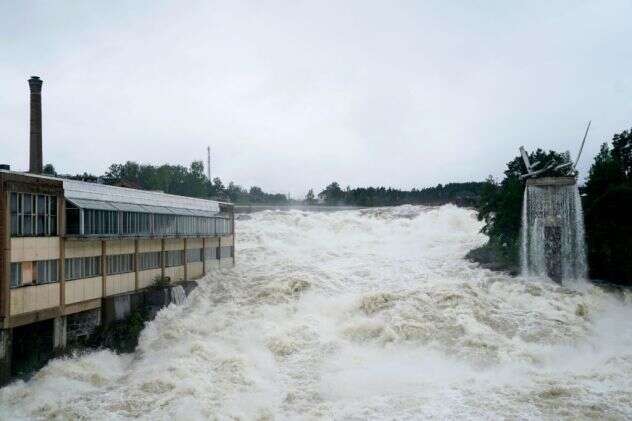
Norway Floods 2023

Also in August of 2023, climate change’s influence on water flow forces caused more severe damage and deaths. AccuWeather reported, “Dam bursts open as deadly flooding washes away homes in Norway. Torrents of water gushed through multiple towns across Norway and landslides cascaded down mountainsides after a deluge drenched Norway.”

Summary

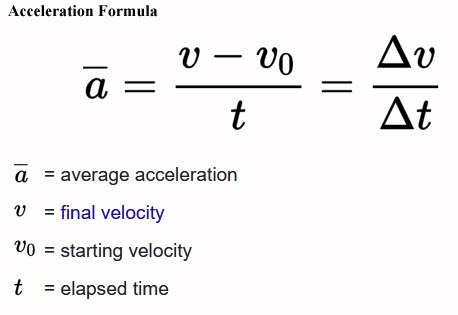
By increasing the energy in the system, humans have increased flow volumes, masses and velocities leading to increased damage (and deaths.)

Newton’s second law: F = m * a
F = force
m = mass of an object
a = acceleration
Acceleration Formula

ALSO SEE
Climate Change: Rate of Acceleration
By 2020, there was enough data to see the “doubling period” of some anthropogenic climate affects had gone from 100 years to 10 years. For instance the rate of sea level rise has gone from about 1.5 millimeters per year to over 3 millimeters. We expect to see the doubling period to continue to shrink raising the possibility of sea levels rising a foot/year by 2050.

Tipping points and feedback loops are parts of an equation that determine the rate of acceleration in climate change.

Climate Change: The End of Times

More articles on Flood Insurance, Rising Sea Levels and Global Warming.

bookmark_borderClimate Denial Part III: The Climate Denier Syndrome

by Daniel Brouse
Climate Scientist

In Part I, A Climate Denier Making a “False Narrative” Political Stand, Darren Wolfe made a host of false and misleading statements about climate change.

In Part II, Freedom of Speech, we explained how making false climate claims is equivalent to telling people to ignore the fire alarm in a crowded theater during a fire.

In Part III, Ken Kaplan explains The Climate Denier Syndrome.

“A survey of 468 international climate scientists published by campaign group Global Witness found that prominent scientists were the most likely to face abuse, with half of those who had published at least 10 papers reporting they had suffered online harassment as a result of their climate work.”

Darren Wolfe had made multiple harassing posts on my page. In addition, Darren had posted a call for others to harass me on his page:

Darren Wolfe encouraging harassment

Sidd said:
Mostly I just shut up… if the weather outside their windows don’t convince them, I got no time for this.

Darren Wolfe said:
Ja wohl Herr Gestapoman! You really need a shrink. I’m merely trying to have a discussion with you. Are you really so weak and insecure that you can’t handle respectful disagreement? I will cease and desist because I’m tired of your dogma. You win and freedom of speech loses. I hope you’re happy now.

Ken V Kaplan:
Darren Wolfe, you are a poster boy for this quote. No amount of reason or evidence means anything to you. None of the periods you spoke of were Global and none registered the hottest month basically since Homo Sapians has been on the planet. If you think this is just a “natural cycle” that won’t intensify, you’re nuts.

“There is a cult of ignorance in the United States, and there has always been. The strain of anti-intellectualism has been a constant thread winding its way through our political and cultural life, nurtured by the false notion that democracy means that ‘my ignorance is just as good as your knowledge.” Isaac Asimov

Fortunately dangerous fools like you will not be driving policy or the discussions on this.

Opinions don’t change people, events do. Climate Change is bringing everyone to their needs, even deep deniers like him. I saw this coming, as many did, years ago. Now we are in it. It will get worse before it gets better.

Sidd said:
Mostly I just shut up… if the weather outside their windows don’t convince them, I got no time for this.

Ken V Kaplan responded:
Daniel Brouse, the problem is they do not respond to facts or evidence. It’s both an emotional and identity issue with them, similar to a religion. This why he gave you a bogus study (1600 scientists sre against CC) when the actual data breakdown says it is not true. This is similar to arguments I had with mask, virus and vaccine deniers who refused to accept the science or empirical evidence of massk-vaccine efficacy, and pushed psuedo research and outright lies.

There have been extensive studies to show that many or most of these people process through the amygdala (emotional center) rather than the frontal cortex (seat of rational thought). This is why culture wars for conservatives have been so successful.

This is like trying to convince a Creationist in Evolutionary theory. Fortunately, (or unfortunately) the ongoing and intensifying climate crisis is waking up the majority of people, especially young people. I believe (belated) action will occur but barring an engineering miracle, we are in for much rougher times.

I do think that in a formal and somewhat legal sense, preparing this material is important because there will be venues more significant than social media and those like these two are “poster boys” for denialism that is significant to highlight. They represent and express attitudes, misrepresentation and deflection of higher ups in the food chain, including GOP Presidential candidates.

I responded:
Ken, true, but so sad. You are correct on “This is why culture wars for conservatives have been so successful.” That is why I am making him the poster child on our next paper:
Climate Denial Part I: A Climate Denier Making a “False Narrative” Political Stand

People often ask why I am so tolerant of climate deniers… why don’t I just delete or block them?
1) I always hold out hope that education will help the ignorant.
2) We are followed by about 300,000,000 climate scientists and warriors. They use our case studies in their own day-to-day combat with climate denying idiots.

What you can do today. How to save the planet.

The Human Induced Climate Change Experiment