bookmark_borderInflation and the Fallacy of Price Gouging and Corporate Greed

Question: Can you actually prove there was “no widespread corporate price gouging”? I’m having trouble wrapping my head around like, Kellogg’s, grocery prices quadrupling in some cases.

Overview
There wasn’t widespread corporate price gouging, which is illegal and has been prosecuted in isolated cases, mainly among small companies. Price rises primarily stemmed from supply and demand dynamics.

Supply issues started with the 2019 drought in Taiwan, which disrupted microchip production and affected various goods like cars and electronics. Climate events like Hurricane Ida caused further supply disruptions, driving up prices of materials like plywood and drywall. Meanwhile, pandemic-era stimulus fueled demand, shifting the demand curve itself. Increased consumer demand led to higher profits, especially in sectors like oil and gas. Government intervention in market pricing could worsen outcomes for both the environment and the economically vulnerable.

Speaking as an independent economist, it’s clear that the dynamics of corporate profits, consumer demand, and energy policy require a level-headed analysis. The trend in corporate profits has been especially pronounced in industries like energy, where high demand and constrained supply have allowed for increased profit margins. However, the deeper issue lies in mass consumption patterns and consumer demand. The reliance on energy and petroleum products not only drives up prices but also intensifies climate change, creating a feedback loop: as energy use increases, so do environmental impacts, which in turn amplify the demand for energy. This escalating cycle adds both economic and environmental challenges.

The solution, from a free-market perspective, is to reduce fossil fuel consumption rather than blaming suppliers. Boycotting fossil fuels is an effective personal strategy.

Macroeconomics
It is complex issue. Basically, price gauging is against the law and has been. I remember in the 70’s when companies were prosecuted for price gauging during the oil embargo. The most recent cases of price gauging occurred at the start of the pandemic and were related to masks and hand sanitizer. These cases were also prosecuted. What happened with Kellogg’s, eggs, and chickens was not price gauging. This was the law of supply and demand. Many farm products were severely impacted by climate and disease on the supply side. Millions of chickens were culled due to bird flu and that was just in Lancaster County resulting in a spike in prices as well as shrink inflation in the size of my rotisserie chickens. All grains were impacted by climate disasters worldwide as well as the war in Ukraine. The droughts and fires in Texas had a significant impact on beef prices. Chocolate prices went up 400% due to drought followed by floods in Africa. On the demand side, consumers spent massive amounts of borrowed money from the government. Not only did this push prices up in the short term, it also resulted in massive government deficits. This happened mostly under Trump. Then, Biden borrowed trillions of dollars for both personal stimulus and infrastructure pushing demand even higher. Both administrations led to massive government debt. This supply and demand worked opposite on interest rates. There was little demand for lending at low interest rates at the same time there was a massive amount of government debt added to the supply of bonds, bills, and notes. The rise in interest rates was passed through to consumers, as well. The end result is the free market behaving exactly as it should. Given the proposed Trump policies you should expect things to get worse, much worse. I’ve written a paper to help people prosper during our decline as this is the best you can do for yourself titled Economic Outlook 2025 – 2035.

Microeconomics

The inflationary pressure on Kellogg’s breakfast cereals can be attributed to a combination of rising costs across several factors:

  1. Grain Prices: Increased costs for grains like corn and wheat, driven by demand fluctuations and climate impacts like droughts, raised raw material expenses.
  2. Sugar Prices: Rising sugar costs, due in part to global supply chain issues and high demand, affected the cost of sweetened cereals.
  3. Energy Costs: Higher energy prices, including those for fuel and electricity, made production and distribution more expensive.
  4. Labor Costs: Wage increases, driven by inflation and labor shortages, affected both production and grocery store wages, adding further cost pressures.
  5. Climate Change: Extreme weather events disrupted supply chains and reduced crop yields, which tightened supply and raised costs for key ingredients.
  6. Global Supply Chain Disruptions: COVID-19 and other global events strained supply chains, leading to increased shipping and logistics costs.

Summary
These cost pressures have led companies like Kellogg’s to raise prices. Many wage contracts, which increase by 10-14% annually over 5-7 years, mean that certain goods and services will likely continue to face inflationary pressure, even as other prices stabilize. Additionally, insurance costs — particularly in areas prone to climate-related disasters — are expected to rise annually, impacting crop, property, real estate and transportation insurance premiums indefinitely. Since inflation can create a feedback loop—especially through factors like energy, wage increases, government spending, and rising interest rates—it is expected to remain a persistent, “sticky” issue in the long term.
Economic Outlook 2025 – 2035

The Age of Loss and Damage

Drill, Baby, Drill (Hate and Ignorance and the Economy)

The National Debt and the Printing of Money

The Trump Trade

The True Costs (and Benefitlessness) of a Trump Economy

Political Overview of Economics

The Decline of Economic Sensibility

bookmark_borderEconomic Outlook 2025 – 2035

During the first Trump administration, tax cuts initially accelerated economic growth but led to increased federal deficit spending, which soon drove up borrowing costs and ultimately slowed the economy. While many attributed the initial supply chain issues and inflationary pressures primarily to the COVID-19 pandemic, the first inflationary event was actually sparked by climate change—the 2019 drought in Taiwan. Taiwan, a global center for microchip production, saw its chip manufacturing severely impacted by this drought, which reduced the water supply crucial for chip fabrication and forced some facilities to shut down temporarily. This disruption marked the beginning of supply chain issues that rippled through multiple sectors, creating shortages and fueling inflation.

The climate-induced inflationary cycle was further amplified by multi-billion dollar climate-related disasters, from severe hurricanes and wildfires to extended droughts. These events impacted insurance costs significantly, leading to spikes in homeowners’ and auto insurance premiums. President Trump’s proposed “Drill, baby, drill” approach, which prioritizes expanding fossil fuel extraction, is likely to exacerbate these issues by accelerating climate change effects, driving further economic instability, and intensifying the inflationary cycle tied to environmental damage.

The impact on health and wellness in the United States is already evident in a significant decline in life expectancy and quality of life. After remaining generally flat between 2014 and 2019, U.S. life expectancy saw a sharp decline, dropping from 78.8 years in 2019 to 77 years in 2020, the largest single-year decline since World War II. This trend continued into 2021, with life expectancy falling further to about 76.1 years. These factors contribute to a worrying trend of early mortality and diminished quality of life, which poses long-term implications for the economy and the healthcare system.

In addition to these factors, climate change is likely to accelerate the decline in life expectancy and increase health risks. Pollution, already the leading contributor to death globally, is expected to worsen with climate change, increasing respiratory issues, cardiovascular diseases, and other pollution-related health conditions. Climate change impacts, such as severe weather events, also disrupt healthcare supplies and logistics, as seen during Hurricane Helene when IV solution shortages spiked. Rising temperatures are anticipated to drive up the rate and transmission of zoonotic diseases, further straining healthcare resources and costs.

While these factors generally point toward increased healthcare demand and costs, the impact on health insurance rates remains complex. On one hand, higher medical needs and treatment costs suggest rising insurance premiums. However, as life expectancy shortens, some individuals may not incur long-term healthcare costs, potentially offsetting some insurance expenses. In any scenario, climate change is a critical factor affecting both personal and public health outcomes.

The proposed economic policies in the next Trump administration would likely include substantial corporate tax cuts along with significant taxes and tariffs, which are expected to primarily impact consumer costs. This approach could lead to a dramatic increase in the federal deficit due to reduced corporate tax revenue and heightened consumer prices. With increased deficit spending, the federal government will likely need to borrow heavily, which could spur inflation and push interest rates higher as the government competes with the private sector for financing.

As inflation and interest rates rise, this could create a “debt spiral” in which the government must borrow even more just to cover mounting interest payments on the national debt. According to projections, if these policies are enacted, federal interest payments could exceed $3 trillion over the next decade, with an estimated $1.7 trillion in annual interest payments by 2034. This feedback loop could lead to further economic strain, as inflation erodes consumer purchasing power and the cost of borrowing increases for businesses and individuals alike. Such policies, if enacted, could thus deepen fiscal instability and exacerbate the ongoing climate-driven inflation pressures impacting essential goods and services.

RECOMMENDATIONS FOR ASSETS
Investors may see an initial stock market surge followed by a period of prolonged decline as the economy faces mounting fiscal and environmental pressures. With this volatility in mind, it may be prudent to prioritize secure, inflation-protected investments. Treasury I-Bonds are a sound choice, offering inflation protection and low risk; however, they are capped at a maximum investment of $10,000 per individual per year. Additionally, 4-week Treasury bills could serve as an effective, low-risk short-term option due to their liquidity and lower exposure to interest rate volatility.

Real estate should be approached cautiously, with a focus on how climate change is affecting property values and insurance availability. Areas with high vulnerability to climate-driven disasters, such as coastal properties and locations in Florida, Louisiana, Mississippi, Georgia, Oklahoma, Texas, Arizona, Arkansas, Alabama, New Mexico, Nevada, Colorado, California, and Washington, may face increased insurance premiums, frequent natural disasters, and dwindling property values. Liquidating properties in these areas may help mitigate financial risk, especially as the insurance industry reassesses coverage availability in high-risk zones. Insurance costs — particularly in areas prone to climate-related disasters — are expected to rise annually, impacting crop, property, real estate and transportation insurance premiums indefinitely.

RECOMMENDATIONS FOR LIABILITIES
Borrowing costs are expected to rise considerably, making it critical to secure fixed-rate loans whenever possible. Investors and homeowners should lock in fixed-rate mortgages sooner rather than later to hedge against future interest rate hikes. Variable-rate financing, including adjustable-rate mortgages (ARMs) and other forms of variable loans, could become unsustainable as rates continue to increase. By opting for fixed-rate options, borrowers can better protect themselves from the uncertainty of future rate fluctuations and potential inflationary pressures on their monthly payments.

Trumpenomics: The Decline of the US

The Human Induced Climate Change Experiment

Climate Change and Insurance: Costs, Availability, and Sustainability

Balancing the Books: How Public-Private Healthcare Models Can Sustain Economic Growth

Taxation in a Changing World: Challenges, Inefficiencies, and Paths to Sustainability

Wealth Taxes Are Illogical

The Cost of Climate Change: Rising Homeowners Insurance Rates

bookmark_borderClimate Change Update: Climate Change Rate of Acceleration

by Daniel Brouse
October 30, 2024

A recent study has verified our thesis on accelerating climate change, aligning closely with the extreme conditions now affecting our area. In 2023, nearly half (48%) of the Earth’s land area experienced at least one month of extreme drought, a sharp increase from the 1980s’ average of just 15%. Notably, these droughts are often followed by extreme rainfall, a pattern identified as compound drought-extreme precipitation events (CDEPs), which are both highly destructive and increasingly common. The study highlights that these events, already on the rise, are expected to intensify as climate change progresses, with rising temperatures contributing to their frequency and severity. Given that our region is currently facing its worst drought on record, it’s reasonable to expect these figures may be climbing even faster than in previous years, emphasizing the urgent need for climate resilience planning.

Sidd and I first formulated the hypothesis of non-linear climate change acceleration in the 1990s. By the early 2000s, this concept evolved into a widely recognized and accepted aspect of climate science. Our work has tracked a notable decrease in the “doubling time” of climate impacts—the period over which the intensity of climate effects doubles. Initially, this doubling time was about 100 years, but it shortened to 10 years and more recently to only 2 years. This rapid acceleration implies that the impacts we experience today are twice as severe as those two years ago, and in two more years, these effects could quadruple.

Disturbingly, this trend does not appear to be an outlier. Recent record-breaking climate events—occurring even during typically cooler La Niña phases—indicate that the acceleration is likely here to stay. If this trajectory continues, it could result in far more devastating impacts than previous models suggested. Our updated climate model, now integrating complex social-ecological factors, shows that global temperatures could rise by up to 9°C within this century — far beyond previous predictions of a 4°C rise over the next thousand years. This kind of warming could bring us dangerously close to the “wet-bulb” threshold, where heat and humidity exceed the human body’s ability to cool itself, leading to fatal consequences.

The 2024 report of the Lancet Countdown on health and climate change: facing record-breaking threats from delayed action

The Human Induced Climate Change Experiment

bookmark_borderClimate Update: Trees and the Carbon Cycle

by Daniel Brouse
October 29, 2024

I’ve been seeing many well-meaning but misinformed memes about trees and carbon. Last year, for the first time in modern history, trees did not reduce atmospheric carbon levels, and the soil carbon sink has entered a positive feedback loop, reversing the natural carbon cycle.

This doesn’t mean we shouldn’t work to protect trees—these efforts are still crucial. However, they will likely be insufficient in the long run. Human activity has caused lasting changes to soil, affecting its ability to support carbon storage. The key difference between fertile soil and desert lies largely in fungi, which is neither plant nor animal but essential for healthy soil ecosystems. The only viable solution is to stop using fossil fuels and petroleum-based products as soon as possible.

Soil-Atmosphere Interaction:

  1. Thermal Energy Exchange:
    • Soil plays a crucial role in the exchange of thermal energy with the atmosphere. The temperature of the soil surface affects the transfer of heat to the atmosphere through processes such as conduction and convection. The thermal properties of soil, including its composition and moisture content, influence this energy exchange.
  2. Carbon Storage and Cycling:
    • Soil acts as a reservoir for carbon in the form of organic matter. This carbon storage is dynamic and involves complex interactions between plants, microorganisms, and the soil matrix. Soil organic carbon contributes to the global carbon cycle, affecting atmospheric CO2 concentrations.
  3. Feedback Mechanisms:
    • Nonlinear feedback mechanisms between soil and atmosphere can influence climate dynamics. For example, changes in temperature and precipitation patterns may impact soil moisture, affecting vegetation growth and altering the surface energy balance.

Soil-Ocean Interaction:

  1. Carbon Storage and Sequestration:
    • Oceans play a crucial role in global carbon storage. Dissolved carbon dioxide is absorbed by the ocean, forming carbonic acid. Additionally, organic matter from marine life contributes to carbon storage in ocean sediments. The exchange of carbon between soil and oceans is interconnected and can influence atmospheric CO2 levels.
  2. Thermal Inertia:
    • Oceans have a high thermal inertia, meaning they can absorb and store large amounts of heat. This property moderates temperature extremes, influencing atmospheric temperature patterns. Changes in ocean temperatures can, in turn, impact regional and global climate dynamics.
  3. Ocean Circulation and Climate:
    • Ocean circulation patterns, such as the Atlantic Meridional Overturning Circulation (AMOC), play a role in redistributing heat around the globe. Changes in ocean circulation can have cascading effects on atmospheric circulation patterns, influencing climate on a large scale.

Atmosphere-Soil-Ocean Coupling:

  1. Teleconnections:
    • Chaos theory recognizes the concept of teleconnections, where seemingly unrelated events in one part of the Earth system influence conditions in another. For instance, changes in sea surface temperatures (linked to ocean dynamics) can affect atmospheric circulation patterns, leading to variations in precipitation and temperature on land.
  2. Climate Variability:
    • The complex interactions between soil, atmosphere, and oceans contribute to climate variability. Chaos theory helps to understand the sensitivity of the climate system to initial conditions and how small perturbations in one component can lead to significant and sometimes unpredictable outcomes.

Chaos theory underscores the intricate, nonlinear, and interconnected nature of the relationships between soil, atmosphere, and oceans in the context of thermal energy and carbon storage. These interactions contribute to the Earth’s climate system’s complexity, and understanding these dynamics is crucial for accurately modeling and predicting climate changes. In addition, thermal energy and carbon are redistributed throughout the world.


Soil Degradation and Desertification

bookmark_borderClimate Change Update: Drought Conditions and Atmospheric Rivers in Philadelphia

By Daniel Brouse
October 27, 2024

The Philadelphia area is currently experiencing a severe drought, which is exacerbating the region’s vulnerability to extreme weather events. Recently, the area has also seen a significant increase in the intensity and frequency of severe rainstorms. This pattern of extended drought followed by intense rainfall events can be particularly harmful to soil health. During prolonged dry periods, soil becomes compacted and loses organic matter, reducing its ability to absorb water. When intense rains finally occur, water tends to run off rather than being absorbed, causing erosion, flooding, and even more severe damage to the soil structure.

The primary drivers of changing climate patterns, intensifying droughts, and increasing atmospheric rivers are the effects of climate change on the jet stream and ocean circulation. Rising global temperatures are disrupting these systems in several ways.

First, the warming Arctic is reducing the temperature difference between the poles and the equator, causing the jet stream to become weaker and more meandering. This leads to more extreme weather as these waves in the jet stream can lock weather patterns in place for longer periods, resulting in prolonged droughts or heavy rainfall over specific areas.

Second, warming oceans alter ocean currents, especially the Atlantic Meridional Overturning Circulation (AMOC), which influences weather patterns across North America and Europe. Changes in ocean temperatures are also fueling stronger atmospheric rivers, which are narrow, moisture-rich air currents that deliver heavy rainfall to areas that are often unprepared for such intense downpours. This combination of changes in atmospheric and oceanic circulation is creating more volatile and unpredictable weather patterns, which can lead to significant regional climate shifts and amplify the frequency and severity of extreme weather events.

Healthy soil plays a critical role in regulating temperatures and reducing atmospheric carbon by acting as a natural carbon sink. However, when soil is degraded by cycles of drought and extreme rainfall, its capacity to sequester carbon decreases, contributing to a feedback loop that accelerates climate change. As soil loses organic matter and structure from extreme weather patterns, it becomes less capable of absorbing carbon and water, increasing runoff and erosion. This degradation not only perpetuates the problem of atmospheric carbon but also amplifies climate-driven soil and ecosystem instability, further impacting biodiversity and agriculture.

Chaos Theory and Climate Systems

Global warming is caused by an increase in thermal energy in the climate system. The Earth is a climate system. Many subsystems make up our climate. Chaos theory emphasizes the complexity and nonlinearity of dynamic systems, and this complexity is inherent in the interactions between soil, atmosphere, and oceans in the Earth’s climate system.

Atmospheric circulation together with ocean circulation is how thermal energy is redistributed throughout the world. Chaos theory offers insights into the complex, nonlinear dynamics of climate systems role in the redistribution of thermal energy. The Earth’s climate is a highly complex and dynamic system, influenced by various factors such as ocean currents, atmospheric circulation, and feedback loops.

General Circulation Models for the earth climate are nonlinear and teleconnected. That means a small change in temperature or pressure or humidity in one small area on the globe can cause _large_ changes in conditions _anywhere_ on the globe. This is sometimes called the Butterfly effect. The complexity of these models can lead to chaotic behavior. Climate science must grapple with these models and extract results in spite of the mathematical difficulties, and there have been remarkable successes in some cases and sad failures in others. Nevertheless we must proceed.

Soil-Atmosphere Interaction:

  1. Thermal Energy Exchange:
    • Soil plays a crucial role in the exchange of thermal energy with the atmosphere. The temperature of the soil surface affects the transfer of heat to the atmosphere through processes such as conduction and convection. The thermal properties of soil, including its composition and moisture content, influence this energy exchange.
  2. Carbon Storage and Cycling:
    • Soil acts as a reservoir for carbon in the form of organic matter. This carbon storage is dynamic and involves complex interactions between plants, microorganisms, and the soil matrix. Soil organic carbon contributes to the global carbon cycle, affecting atmospheric CO2 concentrations.
  3. Feedback Mechanisms:
    • Nonlinear feedback mechanisms between soil and atmosphere can influence climate dynamics. For example, changes in temperature and precipitation patterns may impact soil moisture, affecting vegetation growth and altering the surface energy balance.

Soil-Ocean Interaction:

  1. Carbon Storage and Sequestration:
    • Oceans play a crucial role in global carbon storage. Dissolved carbon dioxide is absorbed by the ocean, forming carbonic acid. Additionally, organic matter from marine life contributes to carbon storage in ocean sediments. The exchange of carbon between soil and oceans is interconnected and can influence atmospheric CO2 levels.
  2. Thermal Inertia:
    • Oceans have a high thermal inertia, meaning they can absorb and store large amounts of heat. This property moderates temperature extremes, influencing atmospheric temperature patterns. Changes in ocean temperatures can, in turn, impact regional and global climate dynamics.
  3. Ocean Circulation and Climate:
    • Ocean circulation patterns, such as the Atlantic Meridional Overturning Circulation (AMOC), play a role in redistributing heat around the globe. Changes in ocean circulation can have cascading effects on atmospheric circulation patterns, influencing climate on a large scale.

Atmosphere-Soil-Ocean Coupling:

  1. Teleconnections:
    • Chaos theory recognizes the concept of teleconnections, where seemingly unrelated events in one part of the Earth system influence conditions in another. For instance, changes in sea surface temperatures (linked to ocean dynamics) can affect atmospheric circulation patterns, leading to variations in precipitation and temperature on land.
  2. Climate Variability:
    • The complex interactions between soil, atmosphere, and oceans contribute to climate variability. Chaos theory helps to understand the sensitivity of the climate system to initial conditions and how small perturbations in one component can lead to significant and sometimes unpredictable outcomes.

Chaos theory underscores the intricate, nonlinear, and interconnected nature of the relationships between soil, atmosphere, and oceans in the context of thermal energy and carbon storage. These interactions contribute to the Earth’s climate system’s complexity, and understanding these dynamics is crucial for accurately modeling and predicting climate changes. In addition, thermal energy and carbon are redistributed throughout the world.

Circulation systems of air and/or water include:
* doldrums, trade winds, horse latitudes, prevailing westerlies, polar front zone, and polar easterlies
* each hemisphere has three cells — Hadley cell, Ferrel cell and Polar cell in which air circulates through the entire depth of the troposphere
* usually each hemispheres has two jet streams — a subtropical jet stream and a polar-front jet stream
* waves, tides, currents, downwelling, upwelling move water
* there are over 24 currents — Benguela Current, California Current, Falkland Current, Labrador Current, Brazil Current, Florida Current, Gulf Stream, West Australian Current, Canary Current, Kuroshio Current, North Pacific Current, Somali Current, Antarctic Circumpolar Current, Antarctica Current, Antilles Current, Mozambique Current, North Atlantic Drift, Norwegian Current, Oyashio Current, West Wind Drift, Agulhas Current, South Equatorial Current, Humboldt or Peruvian Current, Monsoon Current
* five major ocean-wide gyres — the North Atlantic, South Atlantic, North Pacific, South Pacific, and Indian Ocean
* thermohaline (temperature and salinity) circulation systems — Gulf Stream, Atlantic Meridional Overturning circulation (AMOC), Pacific Meridional Overturning Circulation (PMOC)
* ocean-atmosphere oscillations — La Nina / El Nino-Southern Oscillation (ENSO), Antarctic Oscillation (AAO), Arctic Oscillation (AO), Atlantic Multidecadal Oscillation (AMO),
Indian Ocean Dipole (IOD), Madden-Julian Oscillation (MJO), North Atlantic Oscillation (NAO), North Pacific Gyre Oscillation (NPGO), North Pacific Oscillation (NPO), Pacific Decadal Oscillation (PDO), Pacific-North American (PNA) Pattern

What you can do today. How to save the planet.

Create a sustainable and climate-resilient environment in and around your home by providing wind breaks, shade, moisture retention, climate control, and preventing soil degradation.

ADDITIONAL RESOURCES
The Philadelphia Experiment: a Study on the Reign of Violent Rain

Soil Degradation and Desertification

How is All Real Estate at Risk From Climate Change?

bookmark_borderPolitical Insight: The Reverse Psychology of “Trump Derangement Syndrome”

I’ve studied what’s often labeled “Trump Derangement Syndrome” since the 1990s, and I believe the root causes include issues like racism and elements of white supremacy. Supporting someone with such views inevitably supports these ideologies, even indirectly. Some of Trump’s base might not identify as white supremacists but are drawn in due to lack of awareness on these matters. There is also a segment of his supporters motivated by a desire to dismantle government institutions. However, this faction often lacks a foundation in political science, international economics, technology, math, and science, leaving them more susceptible to conspiracy theories and propaganda.

This may also explain why a substantial portion of his supporters are white men without a college education, as they are statistically shown to be more targeted by such messaging.

For more insight into this phenomenon, consider exploring sources on fascism. Former President Donald Trump displays certain elements often associated with fascist ideologies. These features generally align with authoritarian tendencies, disregard for democratic norms, promotion of nationalism, and targeting of perceived enemies. Here are some specific points frequently highlighted in this argument:

1. Authoritarianism and Centralized Power: Fascism typically emphasizes a strong leader who consolidates power by undermining democratic institutions. Trump’s actions often challenged democratic norms, from his comments on judiciary independence to his pressure on the Justice Department to pursue political opponents. During his presidency, he was also criticized for praising and building relationships with authoritarian leaders like Vladimir Putin and Kim Jong-un, which some argued normalized authoritarian governance on the world stage.

2. Nationalism and Xenophobia: Fascist ideologies frequently promote an “us vs. them” mentality, positioning the nation or ethnic majority as superior. Trump’s rhetoric around immigration, particularly his depiction of certain groups as criminals or threats, resonates with this exclusionary nationalism. The proposed border wall and the travel ban targeting predominantly Muslim countries have been cited as examples of policies that foster a nationalistic, exclusionary stance.

3. Disregard for the Media and Facts: Fascist regimes historically have delegitimized the press to stifle opposition and control narratives. Trump’s frequent labeling of the media as “the enemy of the people” and dismissing unflattering reports as “fake news” exemplified a combative approach to the press. This undermining of media credibility can contribute to an environment where only the leader’s narrative is seen as legitimate.

4. Use of Propaganda and Conspiracy: Fascism often relies on propaganda and unfounded narratives to create loyalty and distrust toward institutions. Trump’s promotion of unfounded theories, such as claims of widespread voter fraud and the “Deep State” working against him, have been criticized as attempts to sway public perception and undermine faith in the democratic process. This has parallels to the way fascist leaders use conspiracy theories to justify overreaching power.

5. Cult of Personality: A hallmark of fascism is the elevation of a leader to near-mythical status, promoting loyalty to the leader rather than democratic institutions. Trump’s rallies, the branding of “Trumpism,” and his personal, direct appeal to supporters over traditional party structures created a unique political movement centered on his identity. This “cult of personality” can promote loyalty to an individual rather than to democratic values and systems.

The Original DJT Ticker Symbol: Donald T. Trump

Drill, Baby, Drill (How Hate and Ignorance Distort Economic Perspectives)

The Economic Monsters: Inflation and Interest Rates

bookmark_borderThe Trump Trade

Why have interest rates been going up after the Fed cut rates? Because investors concur that Trump’s economic polices will be harmful to the economy, drive up inflation, and explode the national debt. Investors have been making “Trump Trades” based on this concern. Unfortunately, a large number of investors — approximately 75% — currently expect that Donald Trump will win the election.

One reason many believe Trump’s economic policies, particularly his tariffs, would be detrimental to the economy is their potential to drive up inflation. Tariffs on imported goods increase costs for businesses and consumers, as companies pass on higher import taxes in the form of price hikes. This can stoke inflation, especially if the targeted imports include essential goods or raw materials (like steel and aluminum). Tariffs also raise uncertainty, disrupt global supply chains, and result in retaliatory tariffs from other countries, further driving up costs for U.S. exports.

Another major concern is the national debt. Analysis of Trump’s economic plan suggests that his policies could increase the national debt by an additional $10-20 trillion over the next decade. This is largely due to a combination of aggressive tax cuts, which reduce federal revenue, and increased government spending, particularly on military and infrastructure projects. While tax cuts can stimulate short-term economic growth, they often fail to generate enough revenue to offset the loss, resulting in long-term debt accumulation.
Moreover, Trump’s tariffs and trade wars further burden the economy by reducing international trade, increasing costs for businesses, and weakening the competitiveness of U.S. industries abroad. These trade disruptions can also negatively impact GDP growth, limiting the government’s ability to manage the national debt. With interest payments on the debt projected to rise significantly in the coming years. In fiscal year 2024, the U.S. government is projected to pay approximately $892 billion in interest on the national debt. This figure is expected to rise significantly in the coming years, reaching $1 trillion in 2025 and $1.7 trillion by 2034. Over the next decade, total net interest payments are estimated to amount to $12.9 trillion. These figures do not account for potential changes in debt repayments that could result from a Trump presidency​

The economic strain from Trump’s policies could push the U.S. into an unsustainable fiscal situation.

For historical reference see “The Great Depression.” Tariffs, especially the Smoot-Hawley Tariff of 1930, played a significant role in deepening the Great Depression.

Agricultural Sector Collapse: U.S. farmers were particularly vulnerable to tariffs. They had benefited from international markets, especially after World War I, when European agriculture had been disrupted. The Smoot-Hawley Tariff and the subsequent retaliatory tariffs drastically reduced demand for American agricultural products abroad, leading to falling prices and farm bankruptcies. This deepened rural poverty and unemployment.

Investor and Consumer Confidence: The tariff policy also hurt investor and consumer confidence. Businesses feared the impacts of the trade war, leading them to cut back on production and investment. Consumers, already cautious due to the economic downturn, faced rising prices on imported goods. This further depressed consumption and business activity, worsening the economic contraction.

Business & Economics

bookmark_borderAbout Our Experiment

By Daniel Brouse

Many people ask, “Why does a scientist engage with climate deniers?”

Thanks for the concern! You’re right that, for my mental health, it might be easier to ignore them. However, as an educator, I see these interactions as an opportunity to reach a wider audience. Engaging with climate skeptics—what some might call ‘climate dummies’—gives me the chance to correct misinformation in real time and provide fact-based explanations to others who may be quietly observing the conversation.

By addressing these false claims head-on, I can offer a legitimate, scientifically backed source of information to those seeking clarity in a sea of misinformation. This outreach is critical, especially when so many people are exposed to conflicting or inaccurate claims about climate change. My aim is not to argue for the sake of it, but to ensure that there are trusted voices out there providing clear, evidence-based information on the urgent reality of climate change.

In addition, their opposition is immensely educative in our efforts. In reality, their persistent denial of climate change has forced us to rethink and drastically rebuild our climate models. What were once “worst-case” scenarios have now become the “best-case” outcomes we are seeing today.

Our updated climate models, now integrating complex social-ecological factors, show that global temperatures could rise by up to 9°C within this century—far beyond previous predictions of a 4°C rise over the next thousand years. This kind of warming could bring us dangerously close to the “wet-bulb” threshold, where heat and humidity exceed the human body’s ability to cool itself, leading to fatal consequences.

The reality is, we need these so-called climate “skeptics” to remind us just how urgent and critical the climate crisis is becoming. Ironically, their denial helps highlight the importance of decisive action, as climate change continues to spiral out of control.

The window for meaningful intervention is closing, and the need for action has never been more critical.

The Human Induced Climate Change Experiment

bookmark_borderClimate Change Time Line

by Daniel Brouse
October 11, 2024

What is the past, present and future of climate change?

I originated the hypothesis of the non-linear acceleration of climate change in the 1990s. By the early 2000s, that hypothesis evolved into established climate theory and is now widely recognized as scientific fact. My lab partner, a Doctor of Physics from Ohio State, and I teamed up in the ’90s. He provided crucial evidence to support the hypothesis. Since then, we’ve observed that the doubling time for climate change impacts—how quickly the effects intensify—has dropped dramatically. Initially, the doubling time was around 100 years. However, over the last few decades, it has shortened to 10 years and more recently to just 2 years.

This means the damage from climate change this year is twice as bad as it was two years ago, and in another two years, it could be four times worse. Unfortunately, the sharp decrease in the doubling period doesn’t appear to be an anomaly, especially given the unprecedented events we’re witnessing this year, even during a La Niña phase. If this trend continues, the consequences will be far more devastating than originally anticipated.

Human-induced climate change is a dynamic element of an intricate and chaotic system, accelerating global warming in a complex and exponential manner. Over the period from 1992 to 2023 (update 2024), our climate model has presented evidence, proposed solutions, and engaged millions in understanding this escalating crisis. The data reveals that human activities are rapidly deteriorating our environment.

Our climate model employs chaos theory to assess human impacts. Global warming is driven by increased thermal energy within the climate system, a complex web of interconnected subsystems. Previous models often failed to account for “social-ecological systems,” where human activity significantly alters climate dynamics.

Tipping points are Critical Milestones that directly impact the rate of acceleration in climate change by multiplying the number and intensity of feedback loops. Identifying and understanding these tipping points is crucial for climate science and policymaking. Crossing multiple tipping points has led to the domino effect, resulting in a much more rapid and severe climate change than currently projected.

Push a glass toward the edge of a table and eventually it will fall off on its own. No matter how slowly or meticulously you push… no matter how you weight or fill the glass, it will reach a tipping point and fall off before being pushed completely off the table. No matter whether you believe the glass is half-empty or half-full, when the tipping point is reached it will plummet out-of-control to its end. This is science not fate, faith, nor belief. Human induced climate change has resulted in environmental tipping points being breached.

The Human Induced Climate Change Experiment

bookmark_borderClimate Change’s Impact on Florida Insurance

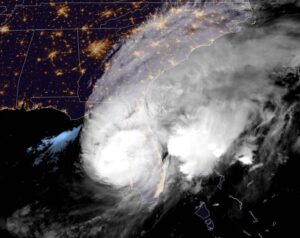
Hurricane Milton is expected to cause over $100 billion in insurance claims, creating even more challenges for Florida homeowners in obtaining insurance. On top of that, the cost to the public and government is projected to exceed an additional $50 billion, adding to the financial strain on taxpayers and the state. Much of the damage from Milton came from the powerful winds and the unprecedented number of tornadoes it spawned. The eastern side of Florida saw the most severe impacts, with over 30 tornadoes causing extensive damage and the highest number of fatalities and potential financial losses.

Citizens Property Insurance Corporation, Florida’s state-backed insurer, has become the largest insurance provider in the state due to the exodus of private insurance companies. Many companies are pulling out due to increasing risks from hurricanes and other extreme weather events driven by climate change. Citizens, however, faces significant financial strain. As hurricane damage grows more frequent and severe, Florida taxpayers are likely to face an unsustainable burden in covering reconstruction costs. The situation highlights the ongoing vulnerability of Florida’s real estate market, and if you haven’t already sold property in the state, it might be a case of better late than never.

The growing frequency and intensity of storms, combined with the financial instability of the insurance industry in Florida, make future investments in the region highly risky. As climate change continues to escalate, the risks are only expected to worsen.

It’s important to note that the degree of risk varies by region and property type. Some areas may experience more immediate and severe impacts, while others may be more resilient. Assessing and mitigating these risks require a comprehensive understanding of local climate vulnerabilities and the implementation of strategies to enhance property resilience. Policymakers, real estate professionals, and property owners are increasingly recognizing the importance of addressing climate risks to ensure the long-term sustainability and value of real estate assets. Thus, our recommendation to evacuate Florida now (i.e. Managed Retreat).

* Our climate model employs chaos theory to comprehensively consider human impacts and projects a potential global average temperature increase of 9℃ above pre-industrial levels.

Hurricane Milton / October 9, 2024

How is All Real Estate at Risk From Climate Change?

Flood Insurance

The Human Induced Climate Change Experiment