One of the most common arguments made by climate-change denialists is that rising atmospheric carbon dioxide (CO₂) is beneficial for the environment. Because plants use CO₂ during photosynthesis, denialists often claim that increasing concentrations will simply make Earth greener and more productive. Many also argue that the current warming trend is merely part of a natural climate cycle that has occurred repeatedly throughout Earth’s history.
While these claims contain fragments of truth in isolation, they become deeply misleading when removed from the broader scientific context of climate systems, atmospheric chemistry, evolutionary biology, ecology, and human physiology.
It is true that Earth experienced greenhouse periods long before humans evolved. During parts of the dinosaur era, atmospheric CO₂ concentrations were far higher than modern levels, and giant organisms such as Nagatitan chaiyaphumensis evolved within those ancient climates. However, those greenhouse transitions occurred gradually over millions of years, allowing ecosystems and species time to adapt through evolution and natural selection.
The modern climate crisis is fundamentally different.
Today’s warming is occurring at an extraordinarily rapid pace due primarily to fossil-fuel combustion, deforestation, industrial agriculture, and large-scale environmental disruption caused by human activity. In geological terms, humanity is injecting greenhouse gases into the atmosphere almost instantaneously.
Equally important, modern emissions are not composed of CO₂ alone. Fossil-fuel combustion also releases methane, ozone precursors, aerosols, particulate pollution, nitrogen compounds, and other chemical by-products that place additional stress on ecosystems and human health. Rising temperatures further amplify climate feedback loops involving drought, wildfire, permafrost thaw, ocean warming, biodiversity collapse, and desertification.
As a result, the simplistic idea that “more CO₂ is good for plants” ignores the destabilizing effects of extreme heat, water scarcity, soil degradation, ozone damage, wildfire smoke, flooding, ecosystem disruption, and rapidly shifting climate zones.
Perhaps most importantly, modern humans evolved during an unusually stable climatic window. Human civilization, agriculture, infrastructure, and global population growth all developed under environmental conditions far cooler and more stable than many ancient greenhouse worlds.
This paper examines the discovery of Nagatitan within the broader context of greenhouse Earth systems, evolutionary adaptation, predator-prey dynamics, human physiological limits, pathogen evolution, and the accelerating risks posed by modern climate change.
At its core, this paper explores a central question:
Could humans biologically adapt to a rapidly intensifying greenhouse world — or will the speed of modern climate change outpace human evolutionary capacity?
Scientists in Thailand have announced the discovery of Nagatitan chaiyaphumensis, the largest dinosaur ever found in Southeast Asia. The colossal long-necked sauropod weighed as much as 27 tonnes — roughly the mass of nine elephants — and stretched nearly 27 meters (89 feet) in length, making it about twice as long as a Tyrannosaurus rex.
The name Nagatitan combines “Naga,” the mythical serpent of Southeast Asian folklore, with chaiyaphumensis, honoring Thailand’s Chaiyaphum province where the fossils were uncovered.
But perhaps the most fascinating part of the discovery is when this giant evolved.
A Dinosaur Born in a Superheated World
Between 100 and 120 million years ago, during the Early Cretaceous period, Earth was locked in an intense greenhouse climate. Atmospheric carbon dioxide levels were far higher than today, global temperatures were extreme, and tropical regions were often hot, dry, and seasonally harsh.
Rather than preventing giant life forms from evolving, these conditions may have accelerated the rise of enormous sauropods like Nagatitan.
The Greenhouse “Super-Buffet”
High atmospheric acted like a planetary fertilizer, stimulating explosive plant growth across much of the world. Forests and open woodlands produced vast quantities of vegetation, including tough, fibrous plants that smaller herbivores struggled to digest efficiently.
For giant sauropods, however, this created an evolutionary advantage.
A massive body allowed Nagatitan to carry an enormous fermentation-based digestive system capable of processing huge amounts of low-quality plant matter. The more vegetation available, the more gigantism paid off. Size became an energy advantage rather than a burden.
Built for Heat Dissipation
At first glance, a 27-meter animal evolving in a hot climate seems counterintuitive. Large animals retain heat more easily, which can become dangerous in extreme temperatures.
But Nagatitan may have turned its immense size into a thermal advantage.
Its extraordinarily long neck and tail dramatically increased surface area, functioning like giant biological radiators. Heat could disperse across the length of the body more effectively than in compact animals, helping regulate internal temperature in a scorching environment.
Internal Air-Conditioning
Like many sauropods, Nagatitan likely possessed a sophisticated air-sac respiratory system similar to that found in modern birds. These internal air sacs continuously circulated air through the body, improving oxygen efficiency while also removing excess heat.
This adaptation may have served three critical functions:
Efficient cooling through continuous airflow
Reduced body weight through hollowed vertebrae
Lower energy costs while moving enormous distances
The result was a giant animal surprisingly well-adapted to a hot, high- world.
A Climate-Era Giant
Nagatitan chaiyaphumensis demonstrates that greenhouse climates can dramatically reshape evolution. Rising temperatures and elevated carbon dioxide did not simply stress ecosystems — they transformed them, creating conditions that favored entirely new biological strategies.
In the case of Nagatitan, the combination of abundant vegetation, advanced respiratory adaptations, and heat-management biology helped produce one of the largest animals ever discovered in Southeast Asia — a true titan forged by a superheated Earth.
Humans in the World of Nagatitan: Prey in a Dinosaur-Dominated Ecosystem
During the Early Cretaceous period, Southeast Asia was home to one of the most dangerous ecosystems in Earth’s history — a world dominated by highly specialized predators perfectly adapted to hunting giant dinosaurs.
If modern humans were suddenly transported into this environment, we would sit firmly at the bottom of the food chain. Without advanced technology, humans would function almost entirely as prey.
The Predators of the Early Cretaceous
The region was ruled by massive theropod carnivores adapted to attacking both armored dinosaurs and giant sauropods.
The Apex Predators: Carcharodontosaurs
Among the most feared hunters was Siamraptor suwati, an enormous predator reaching roughly 8 meters (26 feet) in length. It belonged to the carcharodontosaur family — often called the “shark-toothed dinosaurs” because of their long, serrated teeth.
Unlike predators built to crush bone, these dinosaurs specialized in slashing attacks designed to inflict catastrophic wounds and massive blood loss. Against an unarmored human, a single strike would likely be fatal.
The River Hunters: Spinosaurids
Southeast Asia’s vast river systems and floodplains were patrolled by spinosaurids such as Siamosaurus. These crocodile-snouted predators primarily hunted giant fish and prehistoric sharks, but they were opportunistic ambush predators capable of attacking almost anything near the water’s edge.
Any human attempt to gather water, fish, or cross rivers would involve constant danger.
The Crocodilians
The waterways were also inhabited by giant prehistoric crocodilians such as Sunosuchus, which dwarfed many modern crocodiles and alligators. Rivers and lakes would have been deadly choke points where predators could strike from below with almost no warning.
Why Humans Would Be Outmatched
Modern humans are apex predators today largely because of technology, cooperation, and advanced tools — not because of natural physical superiority.
In the Early Cretaceous, those advantages would largely disappear.
Factor
Modern Humans
Early Cretaceous Predators
Likely Outcome
Body Size
~1.8 meters tall, ~80 kg
Predators exceeding 8 meters and several tons
Humans become easy prey targets
Natural Weapons
Minimal claws, weak bite force
Massive jaws, claws, teeth, armor
Humans lose any direct confrontation
Defenses
Intelligence and tools
Thick hides, powerful muscles, speed
Primitive weapons would be largely ineffective
Environment
Adapted to modern ecosystems
Extreme greenhouse heat and unfamiliar flora
Dehydration and starvation become major threats
Even skilled hunters armed with simple spears would face overwhelming odds against animals evolved specifically to kill giant prey.
Survival Prospects: Hiding Instead of Hunting
In human evolutionary history, early hominins were frequently hunted by much smaller predators such as leopards, hyenas, and saber-toothed cats. Facing massive theropods like Siamraptor, humans would likely survive only by avoiding detection entirely.
The most successful strategy would probably involve:
Nocturnal behavior
Living in trees or caves
Avoiding open floodplains and rivers
Constant group vigilance
Scavenging rather than hunting
Rather than dominating the ecosystem, humans would exist as small, vulnerable omnivores trying to avoid extinction in a world built for giant reptiles.
The Early Cretaceous was not merely a hotter version of modern Earth — it was an alien biosphere where the balance of power overwhelmingly favored enormous predators that had evolved for millions of years in a greenhouse world.
Important Climate Note: Ancient Greenhouse Worlds vs. Modern Climate Change
It is important to understand that today’s rapid rise in atmospheric is fundamentally different from the greenhouse periods that existed millions of years ago.
During the age of dinosaurs, elevated levels developed gradually over millions of years, giving ecosystems time to evolve and adapt. Modern human-driven emissions, however, are occurring over mere decades — an extraordinarily rapid shock in geological terms.
In addition, today’s fossil-fuel emissions include numerous harmful by-products beyond carbon dioxide itself, including ozone-forming pollutants, aerosols, methane, and nitrogen compounds. Ground-level ozone in particular damages plant tissues, reduces photosynthesis, and suppresses crop yields and forest productivity.
As a result, the simplistic idea that “more automatically means more plant growth” is increasingly misleading in the modern world.
Climate feedback loops are now amplifying stress on ecosystems through:
Intensifying heat waves
Severe droughts
Expanding desertification
Soil degradation
Mega-wildfires
Water scarcity
Forest collapse
Extreme rainfall and flooding cycles
Rather than creating lush prehistoric-style greenhouse ecosystems, rapid human-driven warming is more likely to destabilize modern agriculture and natural ecosystems faster than they can adapt.
The dinosaurs evolved within greenhouse climates over immense evolutionary timescales. Humanity, by contrast, is triggering a greenhouse transition at unprecedented speed while simultaneously fragmenting ecosystems through deforestation, pollution, and industrialization.
The result may not resemble the fertile dinosaur world of the Early Cretaceous, but instead a far more unstable and hostile climate defined by ecological disruption, wildfire expansion, collapsing biodiversity, and advancing aridification.
If a modern human were transported to the Early Cretaceous environment of Nagatitan, the body would experience severe physiological shock. While the atmosphere would not be immediately lethal, the combination of chemical and thermal stresses would push human biology to its breaking point.
Humans could not adapt biologically in time through evolution, as genetic adaptation takes thousands of generations. Survival would depend entirely on immediate behavioral and technological coping mechanisms.
How the Human Body Would Behave
1. Severe Cognitive Decline and Acidosis CO2
Atmospheric CO2 during this greenhouse phase peaked between 1,000 to 2,000 parts per million (ppm), compared to modern Earth’s ~420 ppm.
The Body’s Reaction: Breathing this air causes mild hypercapnia (carbon dioxide toxicity).
Symptoms: Your blood pH would drop, triggering respiratory acidosis. You would experience persistent headaches, dizziness, lethargy, and a measurable decline in cognitive function and decision-making capabilities.
2. Suffocation from Normal Oxygen (The “Supercharge” Myth)
While some later parts of the Cretaceous had high oxygen levels, the Early Cretaceous greenhouse spikes often saw oxygen levels close to or slightly below modern levels (~19-21%).
The Body’s Reaction: Because CO2 levels were so high, your lungs would have to work twice as hard to expel waste gas while pulling in oxygen. You would feel perpetually out of breath, as if hiking at high altitudes, making running away from predators physically exhausting.
3. Hyperthermia and Sweating Failure (Extreme Heat)
The region featured open, arid savannas and humid coastal floodplains with global temperatures averaging 3–5°C higher than today.
The Body’s Reaction: Humans thermoregulate via sweat evaporation. In the humid river valleys where Spinosaurids lived, the “wet-bulb temperature” (a measure of heat plus humidity) would frequently breach 31°C to 35°C.
Symptoms: At these thresholds, sweat cannot evaporate off the skin. The body’s core temperature would rise uncontrollably, leading to heat stroke, organ failure, and death within a few hours of prolonged outdoor exposure.
Why Biological Adaptation is Impossible in Time
A single human or even a small colony cannot adapt genetically over a lifetime. Evolution requires selective pressure acting on random mutations across thousands of years. Dropped into the Cretaceous, a human population would face a hard timeline:
The Timeline Mismatch: Significant physical adaptations—such as altering our blood chemistry to handle high CO2 or changing our sweat glands—would take 10,000 to 100,000 years. The immediate environmental stressors would wipe out a human population within weeks.
The Dietary Barrier: Beyond climate, humans would starve. Flowering plants (angiosperms) were only just starting to evolve. The landscape was dominated by toxic cycads, ferns, and conifers that the human digestive tract cannot break down, resulting in fatal nutrient deficiencies or poisoning.
The Only Path to Survival: Technological Adaptation
Instead of biological evolution, humans would have to rely on behavioral adaptation:
Burrowing or Cave Dwelling: Living underground to escape the crushing daytime heat and avoid apex predators like Siamraptor.
Nocturnal Activity: Foraging only at night when temperatures drop below critical wet-bulb thresholds.
Water Filtration: Constructing primitive tools to distill safe drinking water from dinosaur-infested, bacteria-rich waterways.
If a modern human were transported to the Early Cretaceous environment inhabited by Nagatitan, the body would undergo extreme physiological stress. While the atmosphere might not be instantly lethal, the combined effects of elevated greenhouse gases, oppressive heat, humidity, unfamiliar pathogens, and ecological instability would push human biology close to its limits. Humans could not evolve quickly enough to adapt biologically; survival would depend almost entirely on immediate behavioral and technological responses.
How the Human Body Would Respond
1. Elevated CO₂, Air Quality Stress, and Cognitive Decline
Atmospheric CO₂ concentrations during major Cretaceous greenhouse intervals may have ranged from roughly 1,000–2,000 ppm — several times higher than today’s levels. In addition, volcanic activity, wildfire smoke, methane release, ozone chemistry, and airborne particulates likely altered atmospheric composition in ways unfamiliar to modern humans.
The Body’s Reaction: Sustained exposure to elevated CO₂ can impair respiratory efficiency and acid-base balance, producing mild to moderate hypercapnia.
Likely Symptoms: Persistent headaches, dizziness, mental fatigue, reduced concentration, impaired decision-making, elevated heart rate, sleep disruption, and chronic respiratory stress. Combined with heat exposure, these effects could rapidly degrade physical performance and judgment.
2. Heat Stress and Wet-Bulb Temperature Limits
The environment likely consisted of hot floodplains, dense vegetation zones, seasonal drought regions, and humid coastal systems under globally warmer conditions than today.
The Body’s Reaction: Humans rely heavily on evaporative cooling through sweating. In high humidity, however, sweat evaporates poorly. Once wet-bulb temperatures approach roughly 31–35°C, the human body can no longer effectively shed heat.
Likely Symptoms: Severe dehydration, heat exhaustion, confusion, muscle failure, organ stress, heat stroke, and potentially death after prolonged outdoor exposure. Physical activity during daylight hours could become impossible in some regions.
3. Respiratory and Metabolic Strain
Even if oxygen concentrations were near modern values during portions of the Early Cretaceous, high CO₂ levels and extreme heat would still place substantial stress on the lungs and cardiovascular system.
The Body’s Reaction: Breathing would feel continuously labored. The body would expend more energy attempting to regulate temperature, remove waste gases, and maintain hydration.
Likely Symptoms: Chronic fatigue, shortness of breath, reduced endurance, elevated dehydration rates, and impaired recovery from exertion.
Why Biological Adaptation Would Not Occur Fast Enough
Humans cannot genetically adapt within a single lifetime or even a few generations. Evolution operates across thousands of years through natural selection acting on random genetic variation.
A transported human population would instead face an immediate survival timeline:
Inability to sustain agriculture using familiar crops
The environmental pressures would overwhelm a population long before meaningful evolutionary adaptation could occur.
The Dietary and Ecological Barrier
The Early Cretaceous biosphere differed dramatically from the modern world. Flowering plants were only beginning to diversify, while many ecosystems were dominated by conifers, cycads, ferns, horsetails, and other plants that may have been nutritionally poor, fibrous, toxic, or difficult for humans to digest.
Water systems would likely contain unfamiliar microorganisms, parasites, and bacteria. Modern immune systems would have no evolutionary exposure to many ancient pathogens.
Consequences: Malnutrition, poisoning risks, gastrointestinal illness, dehydration, and collapse of long-term survival capacity.
The Only Plausible Survival Strategy: Technological Adaptation
Humans would survive only through intelligence, cooperation, and technology rather than biology.
Possible strategies would include:
Underground or Cave Shelter: Reducing heat exposure and avoiding large predators.
Nocturnal Activity: Operating mainly at night when temperatures and wet-bulb stress decline.
Water Purification: Filtering and boiling water to reduce pathogen exposure.
Protective Clothing & Shade Systems: Limiting solar heating and dehydration.
Controlled Agriculture: Attempting enclosed cultivation of edible plants brought from modern ecosystems.
Fire & Tool Use: Essential for defense, sterilization, and food preparation.
In essence, humans entering a Cretaceous greenhouse world would face not merely dinosaurs, but an entire planetary system operating under climate conditions fundamentally hostile to modern human physiology.
How the Human Body Would Respond
If a modern human were transported to the Early Cretaceous environment inhabited by Nagatitan, the body would undergo extreme physiological stress. While the atmosphere might not be instantly lethal, the combined effects of elevated greenhouse gases, oppressive heat, humidity, unfamiliar pathogens, and ecological instability would push human biology close to its limits. Humans could not evolve quickly enough to adapt biologically; survival would depend almost entirely on immediate behavioral and technological responses.
How the Human Body Would Respond
1. Elevated CO₂, Air Quality Stress, and Cognitive Decline
Atmospheric CO₂ concentrations during major Cretaceous greenhouse intervals may have ranged from roughly 1,000–2,000 ppm — several times higher than today’s levels. In addition, volcanic activity, wildfire smoke, methane release, ozone chemistry, and airborne particulates likely altered atmospheric composition in ways unfamiliar to modern humans.
The Body’s Reaction: Sustained exposure to elevated CO₂ can impair respiratory efficiency and acid-base balance, producing mild to moderate hypercapnia.
Likely Symptoms: Persistent headaches, dizziness, mental fatigue, reduced concentration, impaired decision-making, elevated heart rate, sleep disruption, and chronic respiratory stress. Combined with heat exposure, these effects could rapidly degrade physical performance and judgment.
2. Heat Stress and Wet-Bulb Temperature Limits
The environment likely consisted of hot floodplains, dense vegetation zones, seasonal drought regions, and humid coastal systems under globally warmer conditions than today.
The Body’s Reaction: Humans rely heavily on evaporative cooling through sweating. In high humidity, however, sweat evaporates poorly. Once wet-bulb temperatures approach roughly 31–35°C, the human body can no longer effectively shed heat.
Likely Symptoms: Severe dehydration, heat exhaustion, confusion, muscle failure, organ stress, heat stroke, and potentially death after prolonged outdoor exposure. Physical activity during daylight hours could become impossible in some regions.
3. Respiratory and Metabolic Strain
Even if oxygen concentrations were near modern values during portions of the Early Cretaceous, high CO₂ levels and extreme heat would still place substantial stress on the lungs and cardiovascular system.
The Body’s Reaction: Breathing would feel continuously labored. The body would expend more energy attempting to regulate temperature, remove waste gases, and maintain hydration.
Likely Symptoms: Chronic fatigue, shortness of breath, reduced endurance, elevated dehydration rates, and impaired recovery from exertion.
Why Biological Adaptation Would Not Occur Fast Enough
Humans cannot genetically adapt within a single lifetime or even a few generations. Evolution operates across thousands of years through natural selection acting on random genetic variation.
A transported human population would instead face an immediate survival timeline:
Inability to sustain agriculture using familiar crops
The environmental pressures would overwhelm a population long before meaningful evolutionary adaptation could occur.
The Dietary and Ecological Barrier
The Early Cretaceous biosphere differed dramatically from the modern world. Flowering plants were only beginning to diversify, while many ecosystems were dominated by conifers, cycads, ferns, horsetails, and other plants that may have been nutritionally poor, fibrous, toxic, or difficult for humans to digest.
Water systems would likely contain unfamiliar microorganisms, parasites, and bacteria. Modern immune systems would have no evolutionary exposure to many ancient pathogens.
Consequences: Malnutrition, poisoning risks, gastrointestinal illness, dehydration, and collapse of long-term survival capacity.
The Only Plausible Survival Strategy: Technological Adaptation
Humans would survive only through intelligence, cooperation, and technology rather than biology.
Possible strategies would include:
Underground or Cave Shelter: Reducing heat exposure and avoiding large predators.
Nocturnal Activity: Operating mainly at night when temperatures and wet-bulb stress decline.
Water Purification: Filtering and boiling water to reduce pathogen exposure.
Protective Clothing & Shade Systems: Limiting solar heating and dehydration.
Controlled Agriculture: Attempting enclosed cultivation of edible plants brought from modern ecosystems.
Fire & Tool Use: Essential for defense, sterilization, and food preparation.
In essence, humans entering a Cretaceous greenhouse world would face not merely dinosaurs, but an entire planetary system operating under climate conditions fundamentally hostile to modern human physiology.
If humanity continues accelerating climate change at the current pace, we are likely to face many of the same environmental stresses that shaped ancient greenhouse worlds — including extreme heat, expanding drought, ecosystem disruption, and increasing difficulty sustaining large-scale agriculture and stable civilizations.
Most importantly, the human body has hard biological limits when exposed to extreme wet-bulb temperatures and chronic respiratory stressors. At high humidity and heat levels, sweating becomes ineffective, preventing the body from cooling itself efficiently. Prolonged exposure can quickly lead to heat exhaustion, organ failure, and death, even in otherwise healthy individuals.
At the same time, worsening air quality from wildfire smoke, ozone pollution, dust, and expanding fungal and bacterial growth places increasing stress on the respiratory system. These conditions can weaken immune defenses and increase vulnerability to disease.
Perhaps even more concerning is the likelihood that pathogens will adapt and spread far faster than human biology can respond. Viruses, bacteria, fungi, and parasites evolve on extremely rapid timescales, while human immune adaptation occurs much more slowly across generations. As warming expands tropical and subtropical conditions into new regions, disease vectors such as mosquitoes, ticks, and waterborne pathogens are expected to spread into areas where populations have little natural resistance or infrastructure preparedness.
While the future is uncertain, the highest-probability outcome may be a period of the highest oil prices in history followed by some of the lowest sustained prices in modern history.
In the short term, geopolitical instability, supply disruptions, war risk, and constrained global production capacity are likely to continue pushing prices upward. As the new “forever war” expands and global shipping, refining, and energy infrastructure remain under pressure, oil markets will likely stay extremely volatile and inflationary.
Energy remains the master input cost to the global economy. Rising oil prices feed directly into transportation, food, manufacturing, shipping, aviation, plastics, fertilizers, and virtually every major industrial sector. That creates a cascading inflationary effect across the entire world economy.
But there is a breaking point.
Historically, oil shocks eventually trigger demand destruction. At some point, sustained high energy prices begin crushing consumer spending, slowing industrial activity, weakening trade, and pushing economies into recession. Once that process accelerates globally, oil demand can collapse very quickly.
At the same time, high fossil fuel prices are massively accelerating the transition to renewables, electrification, battery storage, and energy efficiency technologies. Record investment in solar, wind, grid infrastructure, and electric transportation is already reshaping long-term energy demand curves worldwide.
That combination — recession-driven demand destruction plus rapid renewable adoption — creates the possibility that future oil demand may never fully recover to prior growth expectations.
In other words, the world may first experience a final inflationary fossil fuel spike before entering a structurally declining demand era for oil.
For consumers and workers tied to the global economy, that transition could be painful and highly disruptive. But from an environmental and climate perspective, the long-term reduction in fossil fuel dependence could ultimately become one of the few positive outcomes to emerge from the current crisis.
The potato is often unfairly criticized by misinformed individuals who confuse the vegetable itself with the unhealthy ways it is sometimes prepared. In reality, potatoes are among the most nutritious, affordable, and versatile foods on Earth.
For centuries, potatoes have sustained entire populations because they provide an impressive combination of vitamins, minerals, fiber, quality carbohydrates, and even high-quality plant protein. When prepared properly, potatoes can be part of an extremely healthy diet.
One commonly overlooked fact is that the flesh of the potato contains significant nutritional value. While the skin contains a large portion of the fiber, the flesh itself is rich in vitamins, minerals, antioxidants, and protein. The nutritional benefits are not limited to the skin alone. In fact, the skin can sometimes contain naturally occurring toxic compounds. Potatoes that appear green or have sprouting “eyes” may contain elevated levels of solanine, a natural defensive pesticide produced by the plant. Green areas and sprouts should be peeled away or discarded before cooking.
Potassium Powerhouse
A single potato contains more potassium than a banana. Potassium is an essential mineral that helps regulate blood pressure, supports nerve signaling, and maintains healthy muscle and heart function. Many people are deficient in potassium, making potatoes an excellent dietary source.
Excellent Source of Vitamin C
Potatoes are also surprisingly rich in Vitamin C, providing nearly one-third of the average daily requirement in a medium potato. Vitamin C acts as a powerful antioxidant, supports the immune system, and helps the body repair tissues and absorb iron.
Quality Carbohydrates for Sustained Energy
Most calories in potatoes come from complex carbohydrates in the form of starch. Unlike heavily processed sugars, these carbohydrates provide a slower, steadier release of energy. Potatoes are one of the most efficient natural fuel sources for the human body, especially for physically active individuals.
The Fiber Advantage
To maximize fiber intake, potatoes should ideally be eaten with the skin on. Roughly half of the potato’s fiber content is found in the skin. Fiber supports digestive health, helps regulate blood sugar levels, and contributes to a feeling of fullness.
High-Quality Plant Protein
Although potatoes contain only about 3 grams of protein per medium potato, the quality of that protein is exceptionally high for a plant food. Potato protein contains a well-balanced amino acid profile that is surprisingly similar to the protein found in eggs.
This high-quality protein is one reason potatoes have historically sustained populations during times of famine and hardship. In theory, a diet consisting primarily of potatoes could provide enough essential nutrients and amino acids to sustain human life for extended periods, especially when calorie needs are met. Few plant foods can make that claim.
This nutritional efficiency is especially important during periods of global food insecurity, rising food prices, climate-related crop stress, and increasing poverty, where affordable, nutrient-dense staple foods become critical to public health and survival.
The Real Problem: Preparation Methods
The potato itself is not unhealthy. The negative reputation largely comes from how potatoes are commonly prepared.
Deep frying potatoes in heavily processed oils transforms a nutritious vegetable into a high-calorie, high-fat food that may contribute to health problems when consumed excessively. French fries and potato chips are not nutritionally equivalent to baked, boiled, roasted, or lightly sautéed potatoes.
Healthier preparation methods preserve the potato’s nutritional value. Baking, boiling, steaming, air frying, or sautéing potatoes in healthier oils such as olive oil can make potatoes just as nutritious and healthy as other vegetables.
A Nutritional Staple Deserving Respect
Potatoes are inexpensive, widely available, nutrient-dense, and naturally gluten-free. They provide essential nutrients that many modern diets lack, including potassium, fiber, and Vitamin C.
Rather than demonizing potatoes, people should focus on how they are prepared and what they are paired with. A plain baked potato is vastly different from heavily processed fast-food fries cooked in degraded oils.
When viewed objectively and nutritionally, the potato deserves recognition not as a dietary villain, but as one of the world’s most valuable and nourishing foods. In fact, potatoes offer a nutritional solution for global warming and climate change. Potato cultivation has been in existence for thousands of years without having a negative impact on the environment. Actually, proper potato cultivation is a net benefit to the soil and carbon sequestration.
When viewed objectively and nutritionally, the potato deserves recognition not as a dietary villain, but as one of the world’s most valuable and nourishing foods. Potatoes may also play an important role in addressing the growing challenges of global warming, climate change, and food insecurity.
Potato cultivation has sustained civilizations for thousands of years and, when managed responsibly, can be highly efficient in terms of land use, water consumption, and calorie production. Sustainable potato farming practices, including crop rotation, cover cropping, and reduced tillage, can improve soil health, reduce erosion, and contribute to carbon sequestration by increasing organic matter in the soil.
As the world searches for resilient, nutrient-dense crops capable of feeding growing populations under changing climate conditions, the humble potato may prove to be not only one of humanity’s oldest staple foods, but also one of its most important future food sources.
Tropospheric Ozone, Ecosystem Collapse, and the Failure of Biofuel Narratives
Daniel Brouse & Sidd Mukherjee
May 9, 2026
Abstract
Tropospheric ozone has emerged as one of the most underestimated systemic threats within the climate crisis. While carbon dioxide remains the primary driver of anthropogenic warming, ground-level ozone functions as a powerful secondary feedback mechanism capable of weakening ecosystems, reducing agricultural productivity, impairing forest carbon sequestration, and accelerating climate instability. Contrary to prevailing narratives, biofuels are not inherently climate-neutral or climate-positive when analyzed within full atmospheric and ecological contexts. All forms of carbon combustion generate ozone precursors, and many biofuels produce equivalent or greater ozone-forming emissions than fossil fuels due to lower combustion efficiency and elevated volatile organic compound (VOC) emissions.
This paper examines the interconnected relationships among fossil fuel combustion, biofuel combustion, tropospheric ozone formation, ecosystem degradation, wildfire amplification, and declining net primary productivity (NPP). We synthesize recent peer-reviewed findings alongside long-term field observations from Pennsylvania forests demonstrating substantial canopy decline, reduced productivity, and increasing forest mortality consistent with ozone stress and nonlinear climate feedback dynamics.
The evidence suggests that tropospheric ozone is no longer merely an air-quality issue but a central driver of cascading ecological destabilization. The weakening of global carbon sinks—including tropical forests, temperate forests, and boreal systems—may represent one of the earliest indicators of systemic climate tipping behavior.
1. Introduction
Biofuels are widely promoted as a solution to climate change under the assumption that they are “carbon neutral” or even “carbon negative.” This assumption is increasingly inconsistent with observed atmospheric chemistry, ecosystem behavior, and lifecycle analysis.
All forms of carbon combustion produce nitrogen oxides (NOx), volatile organic compounds (VOCs), and other ozone precursors. Under sunlight, these compounds react photochemically to form tropospheric ozone (O₃), a highly reactive phytotoxic pollutant. Unlike stratospheric ozone, which protects life from ultraviolet radiation, tropospheric ozone damages living tissue, impairs plant function, and contributes directly to respiratory and cardiovascular disease.
In many cases, biofuels generate ozone-forming emissions equal to or greater than those produced by fossil fuels due to incomplete combustion characteristics and elevated VOC release. Ethanol-blended fuels are particularly notable for increasing ozone precursor formation under high-temperature atmospheric conditions.
The widespread adoption of ethanol blending in the United States following the Renewable Fuel Standard (RFS) of 2005 coincided with measurable ecological deterioration in several regions, including Pennsylvania. Ethanol blending requirements—commonly 10% in gasoline and substantially higher concentrations in some diesel-related applications—corresponded with observable reductions in plant productivity and increasing forest decline beginning in the early 2000s.
The climate implications extend far beyond local pollution. Tropospheric ozone weakens one of Earth’s most critical climate defense systems: the biosphere itself.
2. Tropospheric Ozone and Ecosystem Degradation
2.1 Ozone as a Phytotoxic Pollutant
Ground-level ozone enters plant leaves through stomata, microscopic openings responsible for gas exchange during photosynthesis. Once inside plant tissue, ozone initiates oxidative stress, damages cellular structures, and triggers stomatal closure.
This process produces several cascading effects:
Reduced photosynthetic efficiency
Lower carbon uptake
Decreased growth rates
Impaired water regulation
Increased susceptibility to drought and heat stress
Greater vulnerability to pests and disease
The result is declining net primary productivity (NPP), reduced ecosystem resilience, and ultimately forest mortality.
Tropospheric ozone therefore acts not merely as a pollutant but as a systemic destabilizer of planetary carbon regulation.
3. Evidence of Declining Forest Productivity
3.1 Tropical Forest Carbon Sink Decline
A landmark 2024 study published in Nature Geoscience (“Reduced productivity and carbon drawdown of tropical forests from ground-level ozone exposure”) found that anthropogenic ozone pollution reduced tropical forest net primary productivity by approximately 17% globally since 2000.
Key findings included:
Up to 10.9% regional productivity losses in Asia
A global reduction of approximately 0.29 petagrams of carbon sequestration annually
Accelerating declines in forest carbon drawdown capacity
These findings indicate that ozone pollution is directly weakening the planet’s natural carbon sinks at a globally significant scale.
Rather than mitigating warming, damaged forests increasingly fail to absorb atmospheric CO₂ efficiently, allowing greenhouse gas accumulation to accelerate.
3.2 Pennsylvania Long-Term Forest Observations
Our own long-term field observations in Pennsylvania illustrate these dynamics with alarming clarity.
Since approximately 2003, old-growth forests monitored across multiple intervals have exhibited:
Roughly 40% foliage loss
Significant canopy thinning
Approximately 33% reductions in canopy height
Increased rates of premature mortality
These observations mirror global findings associated with ozone stress, heat stress, and hydrological disruption.
Importantly, these declines have occurred even in mature forest systems historically considered resilient. The implications are profound: if old-growth forests are destabilizing, then planetary carbon sink reliability may already be deteriorating faster than current climate models assume.
4. Ozone Feedback Loops and Nonlinear Climate Dynamics
4.1 Interconnected Feedback Systems
Tropospheric ozone participates in a series of reinforcing nonlinear feedback loops:
Higher temperatures further accelerate photochemical ozone formation, especially in industrial and transportation-dense regions.
The result is not linear warming but cascading systemic destabilization.
4.2 Wildfire Amplification
Ozone-stressed forests are increasingly vulnerable to wildfire ignition and spread.
Wildfires then:
Release massive quantities of stored carbon
Produce additional ozone precursors
Destroy future carbon sequestration capacity
Accelerate desertification and ecosystem collapse
This relationship creates a dangerous compounding mechanism where forests transition from climate stabilizers into climate accelerators.
Recent observations suggest that global forests may already be shifting from net carbon sinks toward net carbon sources.
5. The Amazon and Large-Scale Carbon Sink Failure
The Amazon rainforest represents one of the clearest examples of ozone-driven systemic vulnerability.
Tropospheric ozone impairs photosynthesis throughout the Amazon basin, weakening tree resilience while warming and deforestation intensify drought frequency and severity.
As forest health declines:
Carbon sequestration weakens
Fire vulnerability rises
Regional rainfall recycling diminishes
Large-scale dieback risk increases
The Amazon’s hydrological system is critically important for South American rainfall generation. Forest degradation therefore compounds both carbon and water-cycle disruption.
If tipping thresholds are crossed, the Amazon could transition irreversibly from one of Earth’s largest carbon sinks into a major carbon emitter.
6. Human Health Implications
Tropospheric ozone is also a major public health threat.
Chronic ozone exposure is strongly associated with:
Asthma
Chronic respiratory disease
Cardiovascular stress
Increased hospitalizations
Premature mortality
Children, the elderly, and vulnerable populations face disproportionate risk.
The same combustion systems driving climate destabilization are simultaneously degrading human health.
Thus, ozone feedbacks represent a dual crisis:
ecosystem destabilization,
and worsening public health outcomes.
7. Rethinking Biofuel Narratives
The assumption that biofuels are inherently sustainable ignores several critical realities:
All carbon combustion generates ozone precursors
Monocrop agriculture often degrades soils and biodiversity
Annual carbon cycling does not create durable carbon sinks
Claims of “carbon-negative” biofuels frequently fail to account for:
full lifecycle emissions,
atmospheric chemistry,
ozone formation,
ecosystem degradation,
and carbon sink impairment.
Replacing one combustion-based system with another does not resolve the underlying atmospheric feedback mechanisms.
8. Conclusion
Tropospheric ozone is emerging as one of the most important yet underrecognized feedback mechanisms in the climate system.
Its impacts extend across:
forests,
agriculture,
hydrology,
biodiversity,
public health,
and atmospheric carbon regulation.
The evidence increasingly suggests that ozone pollution is helping transform global forests from carbon sinks into carbon sources, accelerating climate instability through interconnected nonlinear feedback loops.
This changes the policy discussion fundamentally.
The climate crisis is no longer solely about reducing CO₂ emissions. It is also about preserving the biosphere’s remaining ability to regulate climate through carbon uptake and ecological resilience.
In early May 2026, two striking and very different atmospheric events emerged from fire- and carbon-intensive systems: ash devils in Southern California wildfires and reports of “black rain” in the Black Sea region following industrial strikes. While geographically and causally distinct, both reflect a broader pattern in which human-driven combustion, infrastructure stress, and atmospheric feedbacks are increasingly interacting in extreme ways.
Ash Devils: Fire-Driven Atmospheric Vortices
During active wildfire operations in Southern California, firefighters observed ash devils near the Trinity Fire in the Phelan area.
These are fire-generated vortices formed when:
Extreme wildfire heat rapidly warms surface air
Hot air rises and induces localized rotation
The vortex lifts ash, embers, and debris into the atmosphere
They are a visible expression of how intense combustion events can reorganize local atmospheric dynamics, spreading particulate matter unpredictably.
Black Rain: Industrial Combustion Meets Weather Systems
At the same time, reports from the Black Sea region described “black rain” following drone strikes on oil infrastructure near Tuapse.
The sequence involved:
Explosions and fires at petroleum facilities
Large-scale release of soot, hydrocarbons, and aerosols
Interaction of these emissions with rainfall systems
The result was precipitation contaminated with dark particulates and oily residues, with reported impacts on coastal ecosystems, wildlife, and human health.
A Shared System: Fire, Carbon, and Feedback Acceleration
Although one event is wildfire-driven and the other conflict-driven industrial combustion, both reflect the same underlying system pressure:
Human exploitation of carbon-based energy systems is increasingly feeding back into the climate and atmospheric system itself.
Aerosol loading of the atmosphere (soot, ash, particulate matter)
Extreme heat and drying conditions that amplify fire behavior
Infrastructure vulnerability under stress and conflict conditions
These processes are not isolated—they reinforce each other through feedback loops:
More heat → more fire intensity
More fire → more aerosols and radiative effects
More aerosols and greenhouse gases → further warming and instability
Broader Implication: A Coupled Human–Climate System
What links these events is not just coincidence, but a growing coupling between human systems and climate systems:
Energy extraction and combustion
Industrial and military infrastructure damage
Land-use stress and wildfire expansion
Atmospheric redistribution of pollutants
Together, these contribute to a system in which human activity is no longer external to climate change, but embedded within its accelerating feedback structure.
While individual events are local, the underlying trend is increasingly systemic: amplified extremes emerging from interacting climate, energy, and conflict dynamics.
Conclusion
Ash devils and black rain are different manifestations of the same broader reality: a world where combustion, resource extraction, and environmental stress are increasingly reinforcing atmospheric instability rather than operating independently of it.
The result is not a single cause-and-effect pathway, but a network of accelerating feedbacks linking human activity and climate behavior.
The good news is that, regardless of intent or framing, Trump’s recent policy choices have significantly accelerated investment and deployment in green energy—arguably contributing, in an unintended way, to one of the fastest transitions in energy technology in modern history.
Despite the short-term negative impacts of current geopolitical tensions and energy policy disruptions on climate stability and markets, there is also a striking and underappreciated countertrend: the global clean energy transition is accelerating faster than most projections anticipated.
In particular, China’s rapid expansion of renewable energy—especially solar—has become one of the most powerful forces shaping the global climate trajectory in 2024–2026, often outpacing even the most optimistic forecasts.
China’s Solar Expansion: Scaling at Unprecedented Speed
Record-Breaking Exports
In March 2026, China’s solar exports reached a new record of 68 gigawatts (GW) in a single month—more than double the previous month and nearly 50% higher than the prior record set in August 2025.
This reflects not just demand growth, but an industrial system operating at extraordinary scale.
Massive Domestic Installations
China’s internal deployment has been even more dramatic:
256 GW of solar installed in the first half of 2025 alone
More than the rest of the world combined during the same period
More than double all non-Chinese global installations combined
This level of buildout represents a structural shift in global energy investment.
A 1 Terawatt Milestone
By mid-2025, China became the first country in history to surpass:
1,000 GW (1 terawatt) of installed solar capacity
This marks a scale of deployment previously considered decades away under most global energy scenarios.
Manufacturing Dominance
China now controls:
Over 80% of global solar supply chains
A dominant share of polysilicon, wafers, cells, and finished panels
This vertical integration allows for rapid scaling and continued cost reductions across the entire sector.
Energy System Transformation: Coal vs. Renewables
One of the most significant developments is not just expansion—but displacement.
In the first half of 2025:
Solar and wind growth fully met all new electricity demand
Coal use declined by approximately 3.4%
Power-sector CO₂ emissions fell by roughly 3%
This is a critical inflection point: renewable growth is no longer merely additive—it is beginning to replace fossil generation in net terms.
Why This Matters Globally
1. Collapsing Solar Costs
Between 2015 and 2024, the cost of solar panels fell by roughly 90%, largely driven by Chinese manufacturing scale and supply chain optimization.
As a result, solar has become the lowest-cost source of new electricity generation worldwide.
2. Cushioning Fossil Fuel Shocks
Rapid renewable expansion in 2025 helped offset disruptions in fossil fuel markets by:
Reducing global gas demand growth
Stabilizing electricity prices in several regions
Limiting the inflationary impact of energy shocks
In effect, renewables are increasingly acting as a shock absorber for global energy volatility.
3. Acceleration in Emerging Markets
Perhaps most consequentially, low-cost Chinese exports of solar technology have enabled developing economies to:
Deploy renewable energy faster than historical developed-world timelines
Reduce reliance on imported fossil fuels
In some cases, bypass traditional centralized fossil infrastructure entirely
This “leapfrogging” effect is reshaping global energy development patterns.
The Fossil Fuel Paradox
Even as renewable capacity expands rapidly, China continues to build new coal generation for grid stability and peak demand support. This reflects a dual-track strategy:
Rapid renewable scaling for long-term transition
Coal expansion for short-term reliability
At the same time, total investment in clean energy infrastructure in 2025 exceeded $1 trillion globally, underscoring the magnitude of the transition underway.
Geopolitics and the Acceleration Effect
An often-overlooked driver of this transition is geopolitical instability itself.
Current global conflicts and energy market disruptions are unintentionally:
Increasing energy security concerns
Encouraging diversification away from oil and gas
Accelerating investment in domestic renewable capacity
In this sense, fossil fuel volatility is acting as a structural catalyst for electrification and decarbonization.
Final Thought: A Transition Beyond Policy
While policy debates remain highly polarized, the underlying energy transition is increasingly being driven by economics, industrial scale, and supply chain dynamics rather than ideology alone.
China’s solar expansion demonstrates that when manufacturing capacity, cost declines, and deployment speed align, energy systems can transform far faster than traditional models predict.
And paradoxically, even global instability is now contributing to that acceleration.
The result is a world in which the energy transition is no longer primarily planned—it is increasingly emergent, decentralized, and self-reinforcing.
The United States reached a record-breaking 12.9 million barrels per day (bpd) in total crude oil and petroleum product exports for the week ending April 17, 2026. On paper, this milestone reinforces the narrative of American “energy dominance.” In practice, it reveals a far more complex—and costly—reality.
The Refinery Mismatch: Why the U.S. Imports Oil While Exporting It
Despite being a net exporter of total petroleum (crude + refined products), the U.S. still imports more crude oil than it exports.
This apparent contradiction is driven by what industry experts call a refinery mismatch:
U.S. shale production yields light, sweet crude, which is highly valuable on global markets
Many U.S. refineries were built decades ago to process heavier, sour crude
As a result, it is often more profitable to export domestic light crude and import cheaper heavy crude for refining
As of early 2026, the primary sources of U.S. crude imports include:
Canada (over 60% of imports)
Mexico
Saudi Arabia
Guyana and Colombia
This system maximizes industry profit—but it also ties domestic energy prices more tightly to global markets.
Climate Implications: A High-Emission Backbone
While production and exports surge, the refining process remains one of the most energy-intensive and polluting sectors in the U.S. economy.
Greenhouse Gas Emissions
Refineries are among the largest industrial emitters of carbon dioxide and methane. Globally, they rank as a major contributor to greenhouse gas emissions, reinforcing long-term warming trends.
Decarbonization Challenges
As sectors like electricity generation shift toward cleaner energy, refining is expected to represent a growing share of total emissions unless significant mitigation technologies are deployed.
Energy Intensity
Refining requires extreme heat and pressure, often generated by burning byproducts like refinery fuel gas—creating a self-reinforcing cycle of emissions.
When you account for emissions from both the refining process and the combustion of petroleum products, the United States is the largest contributor to environmental damage and climate change.
Local Pollution and Public Health
The environmental burden is not evenly distributed. Communities located near refineries—often referred to as “fenceline communities”—face elevated health risks.
Toxic Air Pollutants
Refineries emit hazardous chemicals such as:
Benzene (a known carcinogen)
Toluene
Xylene
Recent 2026 data indicates that benzene levels in some Gulf Coast regions remain above recommended safety thresholds.
Respiratory and Cardiovascular Impacts
Emissions of sulfur dioxide and nitrogen oxides contribute to:
Smog formation
Acid rain
Increased rates of asthma, bronchitis, and heart disease
Particulate Matter
Fine particles released during refining can enter the bloodstream, contributing to:
Premature mortality
Cancer risk
Chronic respiratory conditions
The Consumer Impact: Higher Prices at Home
Ironically, record exports can translate into higher costs for U.S. consumers.
Global Price Linkage
By exporting large volumes of oil and refined products, U.S. fuel prices become more tightly linked to volatile global markets, including geopolitical disruptions.
Rising Fuel Costs
In early 2026, American consumers paid an estimated $8.4 billion more for fuel, driven by supply disruptions and strong export demand.
Diesel Squeeze
Global demand for diesel has surged, pushing U.S. retail prices to nearly $5.80 per gallon as of April 2026—adding pressure to transportation, agriculture, and manufacturing costs.
The Bigger Picture: Strength or Exposure?
The U.S. oil boom highlights a fundamental tension:
Economic strength: Record exports, global market influence, and strong industry profits
Systemic exposure: Higher domestic prices, environmental costs, and dependence on global dynamics
What appears to be energy independence is, in reality, a deeply interconnected system—one where domestic outcomes are increasingly shaped by international forces.
The health impacts from the US production, distribution, and combustion of petroleum products are the most significant anthropogenic contributors to premature mortality and reduced quality of life worldwide.
Final Thought
Record export numbers tell only part of the story. Beneath the surface lies a system defined by structural inefficiencies, environmental tradeoffs, and rising costs for consumers.
In that sense, America’s energy dominance may be less about insulation—and more about integration into a volatile global market.
Heat stress is not just uncomfortable—it’s dangerous.
Rising exposure: Over the past four years, the average person has experienced 19 days per year of life-threatening heat, driven almost entirely by human-caused warming.
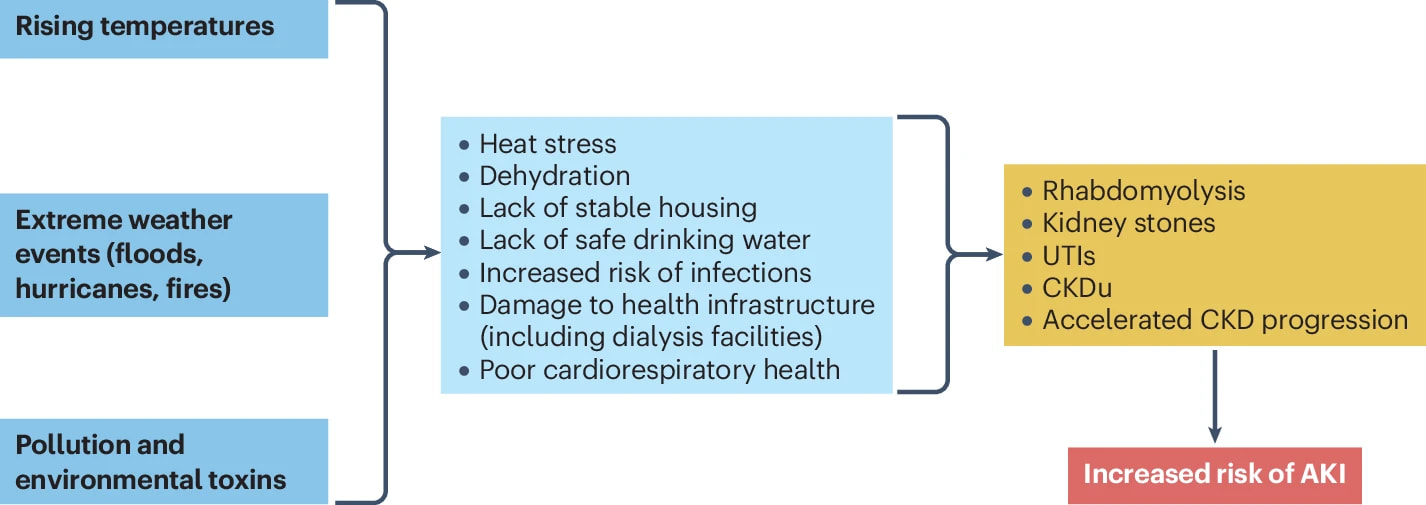
Severe health impacts: Extreme heat can trigger heatstroke, dehydration, and kidney injury, while also worsening existing heart and lung conditions.
Accelerated aging: Prolonged exposure to extreme heat speeds up biological aging—damaging tissues and shortening telomeres at the cellular level.
Chronic disease risk: These changes increase the likelihood of diseases such as cancer, dementia, and diabetes—conditions that are further exacerbated by pollution and infection.
Mental health effects: Heat stress is also linked to higher rates of depression, anxiety, and even suicide.
Epigenetic Changes: The Molecular Convergence of Climate Stressors
A key connection between these risks lies in epigenetic changes—chemical modifications that influence how genes are expressed without altering the DNA itself. Think of them as switches that turn genes on or off.
Extreme heat has been shown to trigger these changes.
Heat—especially humid heat—can trigger epigenetic changes that activate high-risk genes linked to cancer, diabetes, cardiovascular disease, and neurological disorders.
Each time you are exposed to extreme heat , the effects don’t just add up—they compound, increasing long-term vulnerability across multiple organ systems..
This molecular disruption represents a shared pathway linking climate-related health threats. It amplifies feedback loops that drive chronic illness and premature death, and raises concerns about transgenerational effects, where these changes may increase disease risk in future generations.
Many of the extreme weather events now being experienced in the U.S. are linked to a weakening AMOC and an increasingly unstable, “wavier” jet stream. Both are driven by shifting temperature, pressure, and moisture gradients, and they are physically connected through shared feedback processes. As these feedbacks interact, they can amplify one another, accelerating the broader system toward destabilization.
A recent study highlights that the rate—and particularly the acceleration—of these changes may have been underestimated.
Led by Dr. Valentin Portmann at the Inria Centre de recherche Bordeaux Sud-Ouest, the research utilized a statistical method called ridge regression to assess climate models against real-world salinity observations in the South Atlantic.
Underestimated Decline: The study found that previous “average” climate models likely underestimated how quickly the AMOC is weakening.
Realistic Pessimism: Models previously considered “pessimistic” actually align better with observational data, making their severe outcomes more likely to be realistic.
Tipping Point Proximity: Experts now suggest there is a greater than 50% chance of an AMOC shutdown tipping point being reached, possibly as early as the middle of this century (circa 2050).
Dr Valentin Portmann, at the Inria Centre de recherche Bordeaux Sud-Ouest in France and who led the new research, said: “We found that the AMOC is going to decline more than expected compared to the average of all climate models. This means we have an AMOC that is closer to a tipping point.”
Prof Stefan Rahmstorf, at the Potsdam Institute for Climate Impact Research in Germany, said: “This is an important and very concerning result. It shows that the ‘pessimistic’ models, which show a strong weakening of the AMOC by 2100, are, unfortunately, the realistic ones, in that they agree better with observational data. I now am increasingly worried that we may well pass that AMOC shutdown tipping point, where it becomes inevitable, in the middle of this century, which is quite close.”