bookmark_borderAvian Influenza: Lessons from History and the Looming Public Health Threat

by Daniel Brouse

Bird flu, or avian influenza, has been known and circulating for over a century. The first documented outbreak in poultry was in Italy in 1878, described as a “fowl plague.” It wasn’t until the mid-20th century that the disease was recognized as being caused by influenza A viruses. Over time, the virus has evolved, becoming a significant threat to both avian and human populations.

Timeline of Significant Developments

  • 1878: The first recorded description of bird flu as a fowl plague in Italy.
  • 1955: Scientists identified the causative agent as a type A influenza virus.
  • 1997: The H5N1 strain of avian influenza caused the first known human infections in Hong Kong, marking a significant point of concern due to its potential to jump species.
  • 2000s: H5N1 outbreaks spread across Asia, Europe, and Africa, with sporadic human cases reported. Other strains like H7N9 also emerged as threats.
  • 2020s: Bird flu outbreaks, particularly of the H5N1 strain, became more widespread, impacting multiple continents and leading to significant economic and public health challenges.

Thus, avian influenza has been circulating in wild birds and domestic poultry for over 140 years, with heightened awareness and research since the late 20th century due to its zoonotic potential.

Recent Developments: Economic and Public Health Impact

By 2020, H5N1 outbreaks had spread to every continent, leading to the culling of countless chickens. In Lancaster County, Pennsylvania, alone, millions of chickens were culled in just one month. This had a profound economic impact, leading to a significant spike in the price of chicken meat and eggs. The phrase, “What about the price of eggs?” became a colloquial reference to the crisis, highlighting bird flu’s far-reaching consequences.

Zoonotic Diseases: The Same Mistake Twice

Bird flu’s potential to jump species and infect humans has long been a concern. However, recent developments show that this concern is no longer hypothetical. The virus is now spreading in a wide variety of species, including cats, mice, and other mammals. Alarmingly, there has been a noticeable increase in human hospitalizations and deaths attributed to the disease.

The world has faced a similar scenario with COVID-19, another zoonotic disease that made the jump from animals to humans. For COVID-19, governments and health organizations rapidly developed and implemented free testing, which was crucial in determining the extent of human infections and curbing its spread. Vaccinations further helped mitigate the pandemic’s impact. Yet, inexplicably, there is no systematic testing for bird flu, despite its growing threat.

The Case for Immediate Action

An effective bird flu vaccine already exists, but it has not yet been approved for widespread use. This inaction mirrors early missteps in the COVID-19 pandemic and underscores a failure to learn from past experiences. Testing and vaccination are proven strategies for controlling zoonotic diseases, yet bird flu has not received the urgent attention it demands.

The stakes are high. Without systematic testing and the deployment of vaccines, bird flu will continue to spread unchecked, increasing the risk of a global pandemic. Immediate and coordinated action is necessary to:

  1. Implement widespread testing for bird flu in both animals and humans.
  2. Expedite the approval and distribution of the bird flu vaccine.
  3. Enhance surveillance of zoonotic diseases to prevent future pandemics.

In conclusion, the lessons from COVID-19 must not be ignored. The world cannot afford to repeat the same mistakes, especially when the tools to address the threat of bird flu are already within reach. The time to act is now.

Health and Wellness

bookmark_borderWhat is Real?

By Daniel Brouse

What is “for real” depends on the context of your question, but generally, it refers to what is genuine, authentic, or true. In philosophy and science, determining what is “real” often involves asking questions like:

  1. Existential Reality: Does something exist independently of perception or belief? For example, physical objects like trees or mountains exist regardless of human thought.
  2. Subjective Reality: Is something real because it is perceived or experienced by an individual? For instance, emotions and personal experiences are real to the person experiencing them, even if they are not tangible.
  3. Consensus Reality: Is something real because most people agree on its existence or validity? For example, societal constructs like money or laws.
  4. Scientific Reality: Can something be measured, tested, or observed within the framework of scientific methods? For example, gravity and DNA are considered real because they can be studied and confirmed through evidence.

Subjective reality and consensus reality are influenced by feelings, emotions, and beliefs, whether or not they are grounded in truth. In contrast, existential reality and scientific reality are based on objective facts. For example, consider the question, “Which way is down?” From a subjective or consensus perspective, your “down” might be perceived as my “up.” However, from a scientific perspective, down is determined by the direction of gravitational pull, making it consistent and objective—down is down, and up is up.

Heaven, the Soul, and the Meaning of Life
“The soul is metaphysical” — raises an important distinction that needs clarification. Metaphysics deals with fundamental questions such as “What exists?” and “What is the nature of reality?” using reason, logic, and philosophical argumentation. By its nature, metaphysics explores concepts that may not be material or observable but are central to understanding existence.

I am presenting an argument to prove the existence of the soul, bridging the gap between metaphysics and physical science. To say “the soul, which is real in a non-material way, has primacy” inadvertently undermines the argument by implying the soul is simultaneously “real” and “not real.” This contradiction is reminiscent of the phrase “there is a ghost in the machine,” suggesting something intangible or supernatural animates the physical body without providing a coherent explanation.

My perspective seeks to resolve this paradox. I argue that the soul is both metaphysical and physical, existing in the form of DNA. DNA embodies the essence of who we are, containing the information that defines life, carries forward ancestral experiences, and evolves over generations. It connects us to the larger biological framework of life, making it a tangible representation of what we often perceive as the “soul.”

In this view, the soul is not a mystical or purely metaphysical construct. It is grounded in physical reality while carrying profound metaphysical implications. By framing the soul as DNA, we can reconcile philosophical and scientific perspectives, offering a clear, logical basis for its existence. This approach elevates the discussion of the soul beyond abstract speculation, situating it within a framework that respects both metaphysical inquiry and empirical evidence.

Heaven, the Soul, and the Meaning of Life

bookmark_borderHeaven, the Soul, and the Meaning of Life

by Daniel Brouse

The questions “How do I get to go to heaven?” and “What is a soul?” have intrigued humans for millennia. These concepts touch on the deepest aspects of human existence, offering not only spiritual and philosophical contemplation but also a search for purpose in the cosmos. Our understanding of these concepts has evolved over time, shaped by religious beliefs, scientific discovery, and our exploration of the universe.

Humans have been on Earth for about 200,000 years, with our closest evolutionary relatives dating back around 140,000 years. The earliest recordings of human history date to roughly 100,000 years ago, with the story of The Seven Sisters of The Pleiades being one of the first known narratives. This group of stars in the Taurus constellation has been part of various cultures’ mythology, and though there are six stars visible to the naked eye, the seventh has not been visible for over 100,000 years. This symbolizes humanity’s evolving understanding of the cosmos and our place within it.

Throughout history, humans have developed belief systems to explain the world around them—beliefs that often stem from our perception of the unknown. These ideas have manifested in religion, astrology, and other metaphysical systems. Unfortunately, some of these beliefs have led humanity down paths of ignorance, arrogance, and intolerance, as we veered away from scientific discovery. By focusing on metaphysical worlds, we have often squandered the opportunity to understand our true nature, the universe, and the critical importance of our interconnected existence.

Heaven: A Birth on Earth

The concept of heaven, when examined closely, seems less about an afterlife and more about the potential for creating a “heaven on Earth.” Across various religious traditions, heaven is often depicted as a paradise—a place of ultimate peace, fulfillment, and divine presence. However, this idea can be interpreted as a goal for humanity to strive toward during our lives, not just a distant, unattainable state after death.

To “get to heaven,” then, might not require some grand external journey or the fulfillment of certain religious doctrines. Instead, it might be more about how we live on Earth—creating a world that reflects the values of peace, cooperation, and harmony that we associate with heaven. Heaven, in this sense, can be seen as a state of being that we build through our actions, both for ourselves and for future generations.

The Soul: Your DNA and Continuity

The soul is often thought of as an immaterial essence that defines who we are, but a more scientific interpretation can be found in the physical structure of our being. Our soul, in this view, is our DNA. DNA contains the genetic blueprint that passes down traits from one generation to the next, linking us not only to our parents but to all of humanity and life on Earth.

Your soul, then, is not a metaphysical entity that exists outside of your body. Rather, it is the very code that makes up who you are—a code that carries with it the imprints of your evolutionary past. It is the continuity of life, passed down through time, ensuring the survival and progress of your species. Each of us is, in a sense, a living continuation of our ancestors, carrying forward the legacies and experiences encoded within our DNA.

The idea of the soul as DNA helps to anchor this concept in scientific reality. It places our spiritual essence not in some supernatural realm but within the biological processes that sustain life. Our soul’s journey is intricately tied to the survival and evolution of the human species and, by extension, to the health of the entire planet.

The Meaning of Life: Ensuring the Continuity of DNA

The meaning of life, then, can be seen as the pursuit of ensuring that your soul—your DNA—continues to live on through eternity. This is achieved through reproduction, passing your genetic material to future generations, and contributing to the ongoing evolution of humanity. However, this is not a solitary endeavor; for the human species to survive and thrive, other species must also continue to exist in a balanced and sustainable ecosystem.

For life to continue, the survival of biodiversity is essential. Our existence is intertwined with the survival of countless other species, from microorganisms to large mammals. All life must evolve together to ensure the continuation of the genetic code that sustains us. Humanity’s well-being is inextricably linked to the health of the Earth’s ecosystems, making the protection of biodiversity a vital part of ensuring the survival of our DNA—and, by extension, the survival of our souls.

Climate Change and Biodiversity: Existential Threats to Life and Heaven

In light of this, issues like climate change and the loss of biodiversity are not just environmental concerns; they are existential threats to our souls and the possibility of creating a heaven on Earth. Climate change, driven by human activity, is disrupting ecosystems, threatening species with extinction, and causing irreversible damage to the planet’s ability to support life. The loss of biodiversity only accelerates these effects, creating a feedback loop that endangers the survival of humanity itself.

If we are to protect our future and the legacy of our DNA, we must take action to address these threats. It is not enough to rely on metaphysical beliefs or wait for some divine intervention. The survival of our species and the continuity of life depend on our collective ability to change course, reduce our environmental impact, and ensure that future generations inherit a planet capable of sustaining them.

Conclusion

Often when people refer to the soul, it falls within the realm of subjective or consensus reality. In that context, your soul is “real” in the sense that it is shaped by feelings, emotions, and beliefs, whether true or false. However, this doesn’t make it objectively true. In contrast, existential reality and scientific reality are grounded in facts and verifiable information. Your DNA contains genetic material from hundreds or thousands of your ancestors, extending back tens of thousands of years. This is scientifically verifiable information, representing a biological record of your ancestral lineage, which can be thought of as a form of “reincarnation” through genetics.

Heaven, the soul, and the meaning of life are not abstract, distant concepts. They are deeply connected to the physical world and the actions we take to protect it. The soul is our DNA, and the meaning of life is to ensure its continuation through both reproduction and the preservation of the ecosystems upon which all life depends. Climate change and the loss of biodiversity represent direct threats to these fundamental goals, making them existential concerns for humanity’s future.

To create a heaven on Earth, we must embrace the responsibility of caring for the planet, ensuring the survival of all species, and making the changes necessary to reverse the damage we have caused. Only by doing so can we ensure that our souls—our DNA—continue to thrive for generations to come, in a world that reflects the values of peace, sustainability, and harmony.

The Importance of Embracing Science Over Astrology, Religion, and False Beliefs

What is Real?

bookmark_borderThe Importance of Embracing Science Over Astrology, Religion, and False Beliefs

by Daniel Brouse

Astronomy is firmly grounded in science, whereas astrology is not. Advocating astrology undermines scientific understanding and fosters false beliefs. A notable example of the harm caused by astrology was the long-held belief that the Sun revolved around the Earth. Similarly, some Indigenous peoples of the Americas relied on the Moon’s cycle to calculate time. While practical in some contexts, this approach lacked the precision of modern astronomical methods and, more importantly, hindered the transition from a hunter-gatherer lifestyle to an agricultural society.

The Sun and the Moon are the only celestial objects with a significant influence on Earth, though the Moon’s impact pales in comparison to that of the Sun. The Sun’s heliosphere serves as the most critical protector of the solar system. Ultimately, one would benefit far more, both psychologically and socially, by embracing and advancing scientific knowledge.

The real anti-science issue stems from politics and selfishness, with religion also playing a significant role. Ironically, many religions denounce astrology as sorcery or the work of the devil, when in reality, both are rooted in false beliefs. This is where the false belief begins: “The issue with astrology is that the planets, etc., are metaphorical representations of energetic forces within a holistic framework.” The cosmos are not representations of energetic forces. This argument is akin to trying to prove the existence of God. By the logical Law of Identity, God does not “exist” as a definable entity. Similarly, under the same law, so-called “energetic forces” do not exist as tangible realities. These false beliefs—whether in religion, astrology, or other metaphysical constructs—foster ignorance, arrogance, and intolerance.

Humans interact with and experience the fundamental forces of nature, but they do not inherently “possess” them in the sense of generating or controlling them. Here’s how humans relate to the fundamental forces of nature:

  1. Gravity
    • Humans experience gravity as a force that keeps them grounded on Earth. Every object with mass, including humans, exerts gravitational force, but it’s negligible compared to celestial bodies like Earth.
  2. Electromagnetic Force
    • Humans interact with the electromagnetic force in various ways. Our nervous systems use electrical signals for communication, and our bodies generate weak electromagnetic fields. Electromagnetic forces govern the behavior of atoms and molecules in our bodies, enabling chemical reactions and cellular functions.
  3. Strong Nuclear Force
    • This force holds protons and neutrons together in the nucleus of atoms. While humans don’t “possess” this force, it is fundamental to the structure of the atoms that make up our bodies.
  4. Weak Nuclear Force
    • Responsible for certain types of radioactive decay and subatomic processes. Like the strong force, it operates at the atomic level, indirectly influencing humans as part of the natural processes that sustain the universe.

Forces Humans Can Influence:

Humans can harness and manipulate some natural forces, such as:

  • Electromagnetism (e.g., through technology like electricity and magnetism).
  • Mechanical Forces (e.g., applying physical forces for movement or building structures).

While humans don’t “possess” these forces in a direct sense, they are an intrinsic part of the natural world and integral to our existence.

bookmark_borderThe Difference Between Astronomy and Astrology: Perception vs. Reality

by Daniel Brouse
December 27, 2024

In recent times, there has been an increasing surge of posts about planetary alignments, planets in retrograde, and other celestial “phenomena.” These concepts are often popularized in media and social networks, but it’s important to understand the significant difference between astronomy and astrology, which lies in the distinction between perception and reality.

Astronomy is the scientific study of celestial objects, space, and the universe as a whole. It is grounded in rigorous observation, data collection, and mathematical models, aiming to understand the true nature of our universe. Astrology, on the other hand, is a belief system that suggests the positions and movements of celestial bodies can influence human affairs and natural events.

When it comes to planetary alignments, the idea that planets are perfectly lined up in space is a misconception. In reality, planets do not align in a way that has any meaningful or lasting effect. This is because planets in our solar system orbit the Sun at different speeds and on different planes. While from Earth’s perspective, certain alignments may seem visually significant, they are merely optical illusions—temporary and inconsequential arrangements that occur due to the relative positions of Earth and the other planets.

Similarly, the concept of planets going into retrograde is based on the apparent motion of planets across the sky. In reality, planets never truly “go backwards” in their orbit. What we observe as retrograde motion is an illusion that occurs when Earth, in its orbit, passes slower-moving outer planets. It’s the appearance of backward movement, not an actual change in the planet’s orbit. These so-called “mirages” lead to incorrect attributions about their influence on our lives. Astrological claims about these phenomena have no scientific backing and no measurable impact on Earth.

What Does Impact Earth?

While these celestial phenomena may be fascinating from a cultural or astrological perspective, there are much more significant and scientifically relevant events occurring in space that impact Earth. One such event involves the Sun, the most influential celestial body in our solar system.

NASA’s Parker Solar Probe, launched on August 12, 2018, is conducting groundbreaking research into the Sun’s outer atmosphere, known as the corona. On December 24, 2024, the probe achieved a historic milestone by making a close approach to the Sun—within approximately 3.8 million miles (6.1 million kilometers) of its surface. This marks the closest any human-made object has ever come to the Sun.

During this perihelion (the point in its orbit closest to the Sun), the Parker Solar Probe reached speeds of up to 430,000 miles per hour (700,000 kilometers per hour), setting a new record for the fastest human-made object in history. This mission is providing unparalleled data about the Sun, especially regarding the origins of solar wind and the mechanisms behind solar energetic particles.

Solar Wind and Solar Weather: Impacts on Earth

The study of the Sun’s corona and solar wind is crucial for understanding space weather, which can have significant effects on Earth. Solar wind, a continuous flow of charged particles emitted by the Sun, can impact technological systems on Earth and in space. For example, powerful solar storms, or coronal mass ejections (CMEs), can disrupt satellite communications, GPS systems, and power grids on Earth. Understanding the behavior of solar wind is essential for preparing for these potentially harmful events, which can affect everything from navigation to critical infrastructure.

The Parker Solar Probe’s mission is designed to help scientists better understand these space weather phenomena and improve forecasting models, which will help protect Earth’s technology and astronauts in space. The data from the probe will give us greater insight into solar activity and its effects on our planet.

Equipped with an advanced heat shield, the Parker Solar Probe can withstand extreme temperatures exceeding 2,500°F (1,377°C) as it passes through the Sun’s outer atmosphere. This impressive engineering allows the probe to gather vital data without being destroyed by the intense heat and radiation near the Sun.

What’s Next for the Parker Solar Probe?

This recent close approach is part of a series of planned perihelia for the Parker Solar Probe. The mission will continue to bring back data from the Sun’s corona and solar wind, with two more close flybys scheduled for next year. The next major data transmission from the probe is expected on December 27, 2024, which will offer even more insight into the dynamics of solar wind and solar weather.

While astrological beliefs around planetary alignments may be entertaining, the real science lies in understanding the Sun’s powerful influence on our solar system and its potential to shape life on Earth. The Parker Solar Probe is on the cutting edge of solar research, helping us unlock the mysteries of space weather that truly impact our planet.

Solar Weather and Solar Wind

Solar weather refers to the various phenomena originating from the Sun that can impact the space environment in our solar system. It is driven by the Sun’s magnetic activity, including solar flares, coronal mass ejections (CMEs), and solar wind.

Solar wind is a continuous stream of charged particles (plasma) ejected from the Sun’s outer atmosphere, known as the corona. It consists primarily of electrons, protons, and alpha particles, traveling at speeds of 400-800 km/s. While plasma particles move incredibly fast by human standards, they are much slower compared to the speed of light. This difference explains why light from the Sun reaches Earth in about 8 minutes, whereas charged particles from a CME (coronal mass ejections) can take 1 to 3 days to travel the same distance.

Impact of Solar Storms on Earth

Solar storms occur when solar activity intensifies, particularly during periods of increased sunspot activity in the solar cycle. These storms include:

  • Solar flares: Sudden bursts of radiation from the Sun’s surface.
  • Coronal Mass Ejections (CMEs): Massive eruptions of plasma and magnetic fields that can travel outward into the solar system.

Solar storms can have significant effects on Earth:

  1. Geomagnetic Storms: Disturbances in Earth’s magnetic field caused by the interaction of solar wind or CMEs with the magnetosphere.
    • Disruptions to GPS, satellite communications, and radio signals.
    • Damage to power grids, potentially causing blackouts.
  2. Auroras: The interaction of charged particles with Earth’s magnetic field and atmosphere creates spectacular light displays, such as the Northern and Southern Lights.
  3. Increased Radiation: Harmful to astronauts, satellites, and high-altitude flights, particularly near the poles.
  4. Space Weather Effects: Potential damage to spacecraft electronics and increased atmospheric drag, which can alter satellite orbits.

How the Sun Protects the Solar System

The Sun plays a protective role in the solar system through the heliosphere, a vast bubble of solar wind and magnetic field that extends beyond Pluto’s orbit.

  1. Deflection of Cosmic Rays: The solar wind and magnetic field reduce the number of high-energy cosmic rays from outside the solar system that reach the inner planets, including Earth.
  2. Stabilizing Space Environment: The Sun’s gravity and energy output maintain the conditions necessary for the solar system’s structure and life on Earth.

While the Sun’s activity can sometimes be disruptive, its overall influence provides a dynamic yet protective environment for the planets.

Heaven, the Soul, and the Meaning of Life

bookmark_borderHow Risk Management Turns to Crisis Management

by Daniel Brouse
December 23, 2024

I have spent my life in the study and implementation of risk management. I obtained degrees with honors and academic accolades in economics, philosophy, and logic, including becoming the youngest subscriber to the Federal Reserve’s “Beige Book,” the country’s youngest university-level statistics tutor, and an inductee into both the Pi Gamma Mu and Phi Sigma Tau honor societies. This foundation was followed by 40 years of research, development, and real-world experience in risk management.

By the 1990s, it had become clear that the greatest risk to humans is, indeed, humans. First, climate change climbed from a substantial risk to an impending crisis. By the 2000s, the aging population emerged as the leading risk to short-term economic sustainability. Today, these two risks—human-induced climate change and an aging population—have combined and evolved into an existential crisis.

This is not to say that we should give up hope or abandon ship. Quite the contrary. Acknowledging the gravity of our circumstances makes it essential to invoke a robust and effective crisis management plan. What follows is an exploration of these intertwined crises and the paths forward to mitigate them.


The Rise of Human-Induced Climate Change

Climate change represents is the most profound example of a long-ignored risk evolving into a crisis. For decades, scientists and policymakers issued warnings about rising global temperatures, extreme weather events, and the cascading effects of environmental degradation. Despite this, global emissions and deforestation rates surged, driven by short-term economic priorities and political inertia.

The impacts are now undeniable. Wildfires, hurricanes, droughts, and floods have intensified, costing lives and overwhelming economies. Infrastructure built for past climates struggles to withstand today’s conditions, let alone those of the future. Furthermore, climate change disproportionately affects vulnerable populations, exacerbating global inequities and threatening social stability.

Complex feedback loops in climate science refer to interactions between different components of the Earth’s climate system that can amplify or dampen the effects of initial changes, leading to non-linear and often unpredictable outcomes. These feedback loops play a crucial role in shaping the behavior of the climate system and can influence various climate phenomena, including temperature changes, ice melt, and precipitation patterns. Tipping points are Critical Milestones that directly impact the rate of acceleration in climate change by multiplying the number and intensity of feedback loops. Identifying and understanding these tipping points is crucial for climate science and policymaking. Crossing multiple tipping points has led to the domino effect, resulting in much more rapid and severe climate change than previously projected.

Addressing this crisis requires immediate and coordinated action:

  • Transitioning to renewable energy: Fossil fuels must be phased out in favor of sustainable alternatives.
  • Implementing adaptive infrastructure: Cities and communities need to be redesigned to withstand the challenges of a changing climate.
  • Global cooperation: International agreements like the Paris Accord must be strengthened and enforced to meet ambitious targets.
  • Reducing pollution and greenhouse gases: Fossil fuel pollution is the leading cause of death worldwide and the greatest contributor to the climate crisis. Mitigating this requires aggressive policies to limit emissions and promote cleaner technologies.


The Economic Risks of an Aging Population

Parallel to the climate crisis is the demographic challenge of aging populations, particularly in developed nations. By the 2000s, it became clear that declining birth rates and increasing life expectancy were reshaping economic landscapes. Pension systems, healthcare infrastructure, and labor markets are all under strain.

Economic growth slows as the working-age population shrinks relative to retirees. Healthcare costs soar, and governments face mounting fiscal pressures. Wealth disparities exacerbate these challenges, as those without adequate savings face severe hardship in retirement.

Key strategies to address this demographic shift include:

  • Reforming healthcare and pensions: Systems must be made more efficient and sustainable.
  • Encouraging workforce participation: Policies that enable older adults to remain in the workforce longer can help ease economic pressures.
  • Investing in education and technology: Automation and productivity-enhancing technologies can offset labor shortages.
  • Demographic Solutions: Encouraging higher birth rates or increasing immigration can help stabilize the worker-to-retiree ratio. Mass immigration is likely the only viable solution for addressing both short-term and long-term challenges.

Bridging the Crises: An Integrated Approach

The climate and demographic crises are interconnected. Climate change disproportionately affects the elderly, who are more vulnerable to heatwaves, natural disasters, and health impacts. Simultaneously, the economic strain of aging populations limits resources available for climate mitigation and adaptation.

Addressing these crises requires an integrated approach that considers both environmental and economic sustainability. Policymakers, businesses, and individuals must work together to:

  • Redesign tax systems: Taxes should incentivize sustainable practices and ensure equitable contributions from all sectors.  Ideally, taxation should focus primarily on fossil fuel combustion. Pollution from fossil fuels is the leading cause of death globally. While the cost of human life is immeasurable, the associated increase in healthcare expenses places a significant burden on the economy. Additionally, the societal costs of climate change — driven largely by fossil fuel combustion — likely represent an even greater economic and environmental challenge. Redirecting taxation in this way could incentivize cleaner energy alternatives while addressing these critical issues. A 100% tax on a barrel of oil and a 1,000% tax on a ton of coal could significantly reduce wealth inequality while simultaneously fostering a sustainable economy.
  • Reduce wealth disparities: Closing the wealth gap can enhance resilience and provide resources for climate action. Taxing fossil fuel combustion could be the single largest factor in creating a more equitable future.
  • Embrace innovation: Technologies that address both climate and economic challenges must be prioritized.

Conclusion: From Crisis to Opportunity

Acknowledging the dual crises of climate change and an aging population is not a sign of defeat but a call to action. Humanity has faced existential threats before and emerged stronger through innovation, cooperation, and resilience. By transitioning from risk management to effective crisis management, we can not only mitigate these challenges but also build a more sustainable and equitable future.

What follows are detailed papers on the sustainability of our environment and economy, including energy, taxation, debt, healthcare, and wealth disparity. These explorations aim to provide actionable insights and solutions to navigate this critical juncture in human history.

The Human Induced Climate Change Experiment

Climate Change and Insurance: Costs, Availability, and Sustainability

Balancing the Books: How Public-Private Healthcare Models Can Sustain Economic Growth

Taxation in a Changing World: Challenges, Inefficiencies, and Paths to Sustainability

Wealth Taxes Are Illogical

Economic Outlook 2025 – 2035

bookmark_borderWhy Are Rates Rising While the Federal Reserve is Cutting?

by Daniel Brouse
December 21, 2024

At first glance, it seems counterintuitive: the Federal Reserve is cutting interest rates, yet most other interest rates, particularly long-term ones, are rising. To understand this phenomenon, we need to examine the interplay of economic forces shaping the financial landscape.

A Strong Economy Fuels Rising Rates

The current U.S. economy remains robust, marked by strong employment numbers and resilient consumer spending. Wage inflation is another contributing factor, as tight labor markets push wages higher. These dynamics create upward pressure on long-term interest rates because lenders demand higher returns to compensate for the inflationary environment. Investors anticipate continued economic growth, which increases the demand for credit and drives up yields on longer-term bonds.

Long-Term Rates Reflect Uncertainty and Risk

The Federal Reserve’s interest rate cuts primarily influence short-term borrowing costs. However, long-term rates are determined by broader market forces, including expectations about inflation, fiscal policy, and economic stability. With a bleak outlook for fiscal responsibility under the next administration, markets are pricing in higher risks, leading to a rise in long-term interest rates. Concerns about rising deficits and government spending exacerbate this trend, as they fuel fears of inflation and creditworthiness.

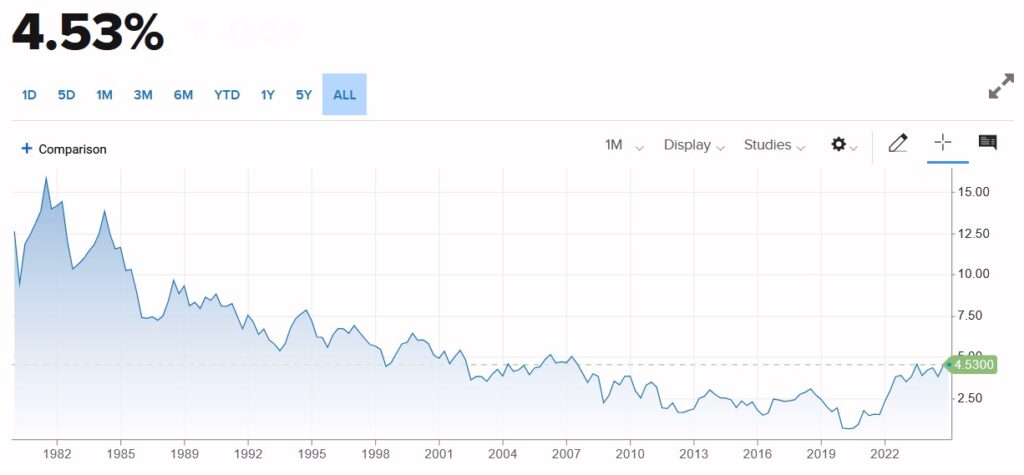
The Highest Rates Since 2007

This dynamic has pushed long-term interest rates, such as those on 10-year Treasury bonds, back to levels not seen since 2007. This rise signals a return to pre-financial-crisis conditions where borrowing costs were higher, reflecting a stronger economy but also heightened financial risks. Higher long-term rates affect mortgages, corporate loans, and consumer credit, making borrowing more expensive across the board.

A Complex Outlook

While the Federal Reserve is attempting to manage short-term economic stability through rate cuts, its actions are counterbalanced by market forces driving long-term rates upward. The disconnect highlights the complexity of today’s financial environment, where strong economic fundamentals coexist with uncertainty about the future.

The key takeaway? Rising long-term rates amidst Fed rate cuts reflect a confluence of economic strength, wage-driven inflation, and fiscal uncertainty. For businesses and consumers, this underscores the importance of cautious financial planning in a period of mixed signals and evolving risks.

10-Year Treasury Yield (2024)

Debunking Economic Myths: Misleading Narratives and the Path to Real Progress

Business and the Economy

bookmark_borderAnthony Fauci: A Case Study in Public-Private Healthcare

by Daniel Brouse
December 19, 2024

The United States arguably has one of the most advanced healthcare systems in the world, a feat achieved despite having one of the least healthy populations globally. The true challenge in improving health, economic stability, and overall well-being in the U.S. lies in individual lifestyle choices and personal responsibility. Many Americans remain undereducated about critical topics such as health, wellness, and financial management. Compounding these challenges are unhealthy habits, such as reliance on fossil fuels, consumption of processed foods, and insufficient physical activity.

Despite these obstacles, the U.S. healthcare system—a unique public-private partnership—continues to stand out. While some advocate for universal healthcare modeled after other nations, many of those systems are struggling under economic pressures. For instance, France has faced years of civil unrest driven partly by the unsustainable costs of its national healthcare system, leading to government instability. Similarly, Canada’s healthcare model is under strain, illustrated by the resignation of its finance minister and calls for the Prime Minister to step down. The UK’s National Health Service (NHS) is also plagued by long treatment delays, nationwide nursing strikes, and reports of patient deaths while awaiting care. Germany, Italy, and Greece, among others, are facing similar demise.  Even China, often viewed as an example of universal healthcare success, is grappling with economic strain from an aging population and has faced public protests over healthcare policies.

An example of the U.S. system’s strength is its response to the COVID-19 pandemic. Pfizer-BioNTech and Moderna, two companies with strong U.S. ties, developed groundbreaking mRNA vaccines with significant financial and logistical support from the U.S. government. Initiatives like Operation Warp Speed accelerated the development and distribution of COVID-19 vaccines, showcasing the efficacy of the public-private partnership. While China’s Sinopharm and Sinovac vaccines were developed earlier, they relied on traditional inactivated virus technology, whereas the U.S.-supported vaccines utilized the innovative mRNA approach, which proved more effective in preventing severe disease and death. Everybody in the U.S. was offered multiple doses of the vaccine free of charge.

Much of this success can be attributed to Dr. Anthony Fauci, who served as the director of the National Institute of Allergy and Infectious Diseases (NIAID) from 1984 to 2022. Throughout his career, Dr. Fauci spearheaded research efforts on infectious diseases like HIV/AIDS, tuberculosis, and malaria, as well as emerging threats like Zika, Ebola, and COVID-19. His leadership and expertise during the COVID-19 pandemic were instrumental in coordinating the largest public-private healthcare initiative in history, leading to the rapid development of revolutionary vaccines that saved millions of lives worldwide.

However, Dr. Fauci’s career has not been without controversy. Critics argued that his early approach to the HIV/AIDS epidemic focused too heavily on vaccine development at the expense of expanding treatment strategies. Antiretroviral therapy (ART), which suppresses the HIV virus to undetectable levels in the blood, has proven highly effective in preventing transmission—a principle summarized by the phrase “Undetectable = Untransmittable” (U=U). ART has transformed HIV from a deadly disease into a manageable condition, but the U.S. lagged behind in championing its widespread adoption during the early years of the epidemic.

Fauci’s reputation shifted dramatically during the COVID-19 pandemic. Amid widespread misinformation and political interference, particularly from then-President Trump, Dr. Fauci became a steadfast advocate for science and public health. His insistence on factual communication and his role in developing the first effective mRNA vaccines solidified his legacy. Under his leadership, Pfizer-BioNTech and Moderna developed the world’s first mRNA vaccines, which not only curbed the pandemic but also laid the groundwork for future medical innovations.

The U.S. healthcare system’s ability to respond to such crises highlights the strength of its public-private model. While individual lifestyle changes remain a critical component of improving health outcomes, the innovative and collaborative nature of the U.S. healthcare system continues to position it as a global leader in medical advancement.

Balancing the Books: How Public-Private Healthcare Models Can Sustain Economic Growth

Health and Wellness

bookmark_borderDebunking Economic Myths: Misleading Narratives and the Path to Real Progress

by Daniel Brouse
December 17, 2024

“In America today, over 60% of our people are living paycheck to paycheck and millions of children are living in poverty.”
— Bernie Sanders, October 4, 2024

Statements like these, made by figures such as Bernie Sanders, Elizabeth Warren, and Robert Reich have likely contributed to a misleading narrative about the U.S. economy. While such claims aim to highlight economic inequality and poverty, they fail to provide a balanced perspective, misrepresenting the broader economic picture and potentially alienating voters.

Breaking Down the Facts

The assertion that “60% of people are living paycheck to paycheck” oversimplifies the economic reality for many Americans. According to recent data, 18.5% of U.S. households report having no discretionary income after paying their bills. This is far from the majority Sanders claims. Furthermore, even within this group, the median household net worth is $193,000, suggesting that many have assets, savings, or home equity providing them with financial stability beyond their monthly income.

Millions of children living in poverty is another claim that deserves scrutiny. While child poverty is a serious issue, programs such as the Child Tax Credit and Supplemental Nutrition Assistance Program (SNAP) have significantly reduced the number of children living in poverty in recent years. By not acknowledging these efforts or providing accurate statistics, such statements paint an overly dire picture that ignores meaningful progress.

Misrepresentation of Economic Realities

The tendency to frame the U.S. economy as wholly failing undermines a more nuanced discussion about its strengths and weaknesses. For example:

  • The U.S. has one of the highest household median incomes in the world.
  • Unemployment rates remain historically low.
  • Despite challenges such as inflation, consumer spending continues to drive economic growth.

These factors demonstrate that the narrative of widespread economic despair does not align with reality. While economic inequality and poverty remain issues to address, claiming that most Americans are struggling misrepresents the complexity of the situation.

The Political Consequences

Overly negative messaging about the economy may have contributed to the Democratic Party’s defeat. Instead of highlighting successes like job growth, reduced unemployment, and targeted social programs, some leaders focused on an exaggerated portrayal of economic hardship. This approach risks alienating moderate voters who feel the economy is performing reasonably well, especially compared to global counterparts facing similar inflationary pressures and post-pandemic recovery challenges.

A Path Forward

To effectively address inequality and poverty, it is crucial to focus on actionable, evidence-based solutions:

  1. Expand Economic Opportunities: Investments in education, job training, and infrastructure can create pathways to upward mobility.
  2. Strengthen Safety Nets: Improving programs like the Earned Income Tax Credit (EITC) and childcare support can directly aid low-income families without distorting the broader economic picture.
  3. Promote Financial Literacy: Educating individuals about saving, investing, and debt management can help mitigate the risks of living paycheck to paycheck.
  4. Incentivize Innovation: A robust private sector fuels job creation and technological advancements, driving economic growth for all.
  5. Taxation and Universal Healthcare: Both are unsustainable in an aging population.  Individuals and governments will need to actively explore and implement alternative solutions.

The focus should shift from divisive rhetoric to practical policies that empower Americans, addressing challenges without resorting to fear-based narratives. Misleading claims not only damage political credibility but also detract from meaningful efforts to strengthen the economy for all citizens.

Balancing the Books: How Public-Private Healthcare Models Can Sustain Economic Growth

Taxation in a Changing World: Challenges, Inefficiencies, and Paths to Sustainability

Wealth Taxes Are Illogical

Social-Ecological Systems and Climate Change

The Age of Loss and Damage

Business and the Economy


bookmark_borderBalancing the Books: How Public-Private Healthcare Models Can Sustain Economic Growth

by Daniel Brouse
December 15, 2024

OVERVIEW
Why is the U.S. the only developed country without a fully universal healthcare system? First, it’s important to note that the U.S. does provide a mix of public and private universal healthcare through programs like Medicare, Medicaid, and the Affordable Care Act. These programs ensure that millions of Americans have access to healthcare, albeit not in the same structure as other nations.

Second, no country has a perfect or completely sustainable universal healthcare system. Nations like the UK, Canada, and Germany face challenges such as funding shortages, long wait times, and the rising costs of care due to aging populations and increasing demand. These issues illustrate that universal healthcare, while offering broad access, is not a one-size-fits-all solution and often requires trade-offs.

While some advocate for universal healthcare modeled after other nations, many of those systems are struggling under economic pressures. For instance, France has faced years of civil unrest driven partly by the unsustainable costs of its national healthcare system, leading to government instability. Similarly, Canada’s healthcare model is under strain, illustrated by the resignation of its finance minister and calls for the Prime Minister to step down. The UK’s National Health Service (NHS) is also plagued by long treatment delays, nationwide nursing strikes, and reports of patient deaths while awaiting care. Germany, Italy, and Greece, among others, are facing similar demise. Even China, often viewed as an example of universal healthcare success, is grappling with economic strain from an aging population and has faced public protests over healthcare policies.

An example of the U.S. system’s strength is its response to the COVID-19 pandemic. Pfizer-BioNTech and Moderna, two companies with strong U.S. ties, developed groundbreaking mRNA vaccines with significant financial and logistical support from the U.S. government. Initiatives like Operation Warp Speed, spearheaded by Dr. Anthony Fauci, accelerated the development and distribution of COVID-19 vaccines, showcasing the efficacy of the public-private partnership. While China’s Sinopharm and Sinovac vaccines were developed earlier, they relied on traditional inactivated virus technology, whereas the U.S.-supported vaccines utilized the innovative mRNA approach, which proved more effective in preventing severe disease and death. Everybody in the U.S. was offered multiple doses of the vaccine free of charge.

Additionally, universal healthcare systems often develop a two-tier structure: while public healthcare is available to all, those with greater financial means can still access faster or more specialized treatment through private care. This dynamic underscores that universal healthcare does not entirely eliminate disparities in access or quality of care.

The private sector plays a critical role in driving innovation, funding research and development, and pioneering advanced medical treatments. For example, the United States, with its mixed healthcare system, leads in medical R&D investment. Many new drugs, technologies, and procedures are developed in the U.S., benefiting other countries that may rely on these advancements without incurring the associated costs of innovation.

A FREE-MARKET ECONOMY
In a free-market economy, the interplay of supply, demand, and competition sets prices, while consumer spending drives growth. These principles foster innovation and efficiency, but universal healthcare systems and shifting demographics, particularly aging populations, present unique challenges.

The Economic Strain of Universal Healthcare

Universal healthcare systems can strain public finances, especially when coupled with an aging population. As the workforce shrinks, fewer people contribute to tax revenues, even as the demand for healthcare services grows. This creates fiscal imbalances that can destabilize economies and increase social unrest.

For instance, France has faced challenges with its extensive welfare programs, including universal healthcare, contributing to slow growth and rising public debt. Similarly, Germany’s aging population places significant pressure on healthcare and pension systems, requiring innovative solutions to maintain fiscal balance. The UK’s NHS, while celebrated, struggles with funding shortages and operational inefficiencies, leading to long wait times and growing public dissatisfaction. Italy, grappling with economic stagnation, also faces mounting healthcare costs tied to its demographic structure.

The Role of Public-Private Partnerships

A mixed model, combining public funding with private-sector efficiency, offers a viable solution. The United States provides several examples of such systems:

      1. Medicare Advantage: This hybrid program allows private insurance companies to manage Medicare benefits, demonstrating the cost-efficiency of private-sector involvement in public services. Private insurers often introduce innovative approaches to care management, resulting in better outcomes at lower costs.
      2. The Affordable Care Act (ACA): This legislation expanded access to healthcare while leveraging private insurance markets. By mandating minimum coverage standards and providing subsidies, the ACA increased the number of insured individuals while fostering competition among private insurers.
      3. COVID-19 mRNA Vaccines:  The U.S. had the highest per capita COVID-19 mortality rate in the world, not because of the quality or cost of our healthcare system, but due to a widespread lack of personal responsibility and poor overall health prior to the virus’s arrival. Despite these challenges, the U.S. remains a global leader in healthcare innovation, investing more in research and development than any other country. This is demonstrated by achievements like the rapid development of highly effective COVID-19 vaccines, which were created in record time and made available to the entire population in multiple doses, free of charge.

    Warning
    However, the perceived superiority of U.S. healthcare, particularly in the context of the COVID-19 response, could be a double-edged sword. Many people expect the healthcare industry to solve problems that stem from neglect of personal health. The growing popularity of treatments like Ozempic and Wegovy highlights a reliance on medical interventions to address preventable conditions, such as obesity, rather than prioritizing healthier lifestyles.

These approaches underscore the potential of combining public oversight with private-sector expertise to deliver quality healthcare efficiently.

Alternative Solutions for Sustainability

Rather than increasing taxes, governments can explore other strategies to make universal healthcare systems more sustainable:

      • Preventative Care: Investing in preventative measures reduces long-term healthcare costs by minimizing the prevalence of chronic diseases.
      • Technology and Innovation: Leveraging telemedicine, artificial intelligence, and data analytics can improve healthcare delivery and reduce inefficiencies.
      • Incentives for Healthy Living: Programs encouraging healthier lifestyles can lower the overall burden on healthcare systems.
      • Privatized Administration: Allowing private entities to manage specific aspects of universal healthcare, such as logistics or non-critical services, can increase cost efficiency.

Conclusion

Universal healthcare systems are a noble goal but require careful design to remain financially sustainable. By integrating private-sector efficiency with public-sector oversight, countries can balance accessibility and cost-effectiveness, ensuring healthcare systems meet the needs of current and future generations. The U.S. model of leveraging public-private partnerships offers valuable lessons for other nations navigating these complex challenges.

Concerns about US healthcare are valid, but they lack actionable solutions to the issues raised. Universal healthcare, as implemented in many countries, has led to significant economic challenges and collapse. For instance, France is grappling with a government in turmoil, partly due to the unsustainable costs of its national healthcare system. Similarly, Canada faces mounting issues with its healthcare model, as evidenced by the resignation of its finance minister, who cited healthcare funding as a contributing factor. The UK’s NHS has faced significant criticism from its users. Nationwide strikes by nurses have further delayed treatments, exacerbating already lengthy wait times for life-saving procedures. The system struggles with inefficiencies, leading to delays that can stretch into months or even years. Is this kind of prolonged wait for “free” treatment truly what you would want?

In contrast, the U.S. has made substantial progress through its public-private healthcare partnership. Programs like Medicare Advantage demonstrate how private insurers can deliver cost-efficient services under government-funded programs. Interestingly, private healthcare companies are experiencing their greatest profits and growth within government-supported programs because the government itself often operates less efficiently. This highlights the strength of a mixed system that leverages private-sector efficiency while maintaining public oversight.

The solution is not to adopt a failing model from other countries or to demand “free” universal healthcare without considering the broader economic implications. Universal healthcare is already the largest expense for taxpayers in the U.S., and expanding it without addressing cost inefficiencies could lead to economic instability. Proposing that the government overextend itself further to provide “free healthcare for all” risks collapsing the very system that supports the most vulnerable populations. Instead, the focus should be on refining the current system — streamlining costs, fostering innovation through the private sector, and ensuring access for those most in need — without jeopardizing the economic stability that sustains healthcare services.

It’s Up to You

The real challenge in improving health, economics, and overall well-being in the U.S. lies in individual lifestyle choices and personal responsibility. Many Americans remain undereducated about critical topics such as health, wellness, and financial management. Compounding this issue are unhealthy habits, such as reliance on fossil fuels, consumption of processed foods, and a lack of physical activity. Here’s a closer look at these challenges and actionable steps you can take to make a difference in your life and the world around you.

1. Are You Educated?

Education is the cornerstone of personal and societal progress. Learning about saving, investing, debt management, wellness, and healthy lifestyle choices can significantly reduce the financial burden of healthcare and insurance costs. By taking the time to educate yourself on these topics, you empower yourself to make informed decisions that improve both your quality of life and long-term financial stability.

2. Do You Burn Fossil Fuels?

The combustion of fossil fuels is the leading cause of death worldwide, contributing to air pollution, climate change, and countless health problems. While systemic changes are necessary, individual choices matter too. Opt for renewable energy sources, carpool, walk or bike when possible, and advocate for cleaner energy policies. Reducing your reliance on fossil fuels not only benefits the planet but also improves your own health and the health of future generations.

3. Do You Eat Processed Foods?

Ultra-processed foods are a significant contributor to global health issues, linked to obesity, heart disease, and diabetes. Minimizing consumption of these foods can have a profound impact on your health. Whenever possible, choose whole foods, cook at home, and consider growing your own fruits and vegetables. This not only ensures better nutrition but also fosters a deeper connection to the food you eat.

4. Do You Have an Active Lifestyle?

Physical inactivity is a leading cause of death and illness, yet adopting an active lifestyle doesn’t have to involve gym memberships or intense workouts. Small, consistent changes can make a significant difference.

For example, having a flight of stairs in your home can naturally encourage physical activity. Climbing stairs is an excellent cardiovascular exercise that integrates seamlessly into daily life, reducing the risk of chronic diseases such as heart disease, diabetes, and certain cancers. It also strengthens muscles, boosts metabolism, and improves cognitive function, potentially delaying the onset of neurodegenerative diseases like dementia.

Research supports these benefits. The Harvard Alumni Study found that men who climbed at least 55 flights of stairs weekly had a 33% lower mortality rate compared to those who did not. Similarly, a 2019 study published in the British Journal of Sports Medicine highlighted the importance of incidental physical activity, including stair climbing, in reducing health risks for individuals unable to maintain formal exercise routines.

Stair climbing also strengthens bones and muscles, reducing the risk of falls—a critical factor for older adults. However, safety is important; features like handrails and non-slip surfaces can mitigate risks for those with mobility challenges.

Small Changes, Big Impact

While stairs provide one example, other simple adjustments can also promote active living: walking more, gardening, or incorporating standing breaks into sedentary routines. Coupled with healthy eating and mindfulness, these steps contribute to a more balanced and fulfilling life.

Final Thoughts

Improving your lifestyle doesn’t just benefit you—it creates ripple effects that influence society as a whole. By focusing on education, making environmentally conscious decisions, prioritizing whole foods, and adopting an active lifestyle, you can take control of your well-being. The path to a healthier and more sustainable future starts with personal responsibility. It’s up to you to make the change.

Anthony Fauci: A Case Study in Public-Private Healthcare
Business and the Economy