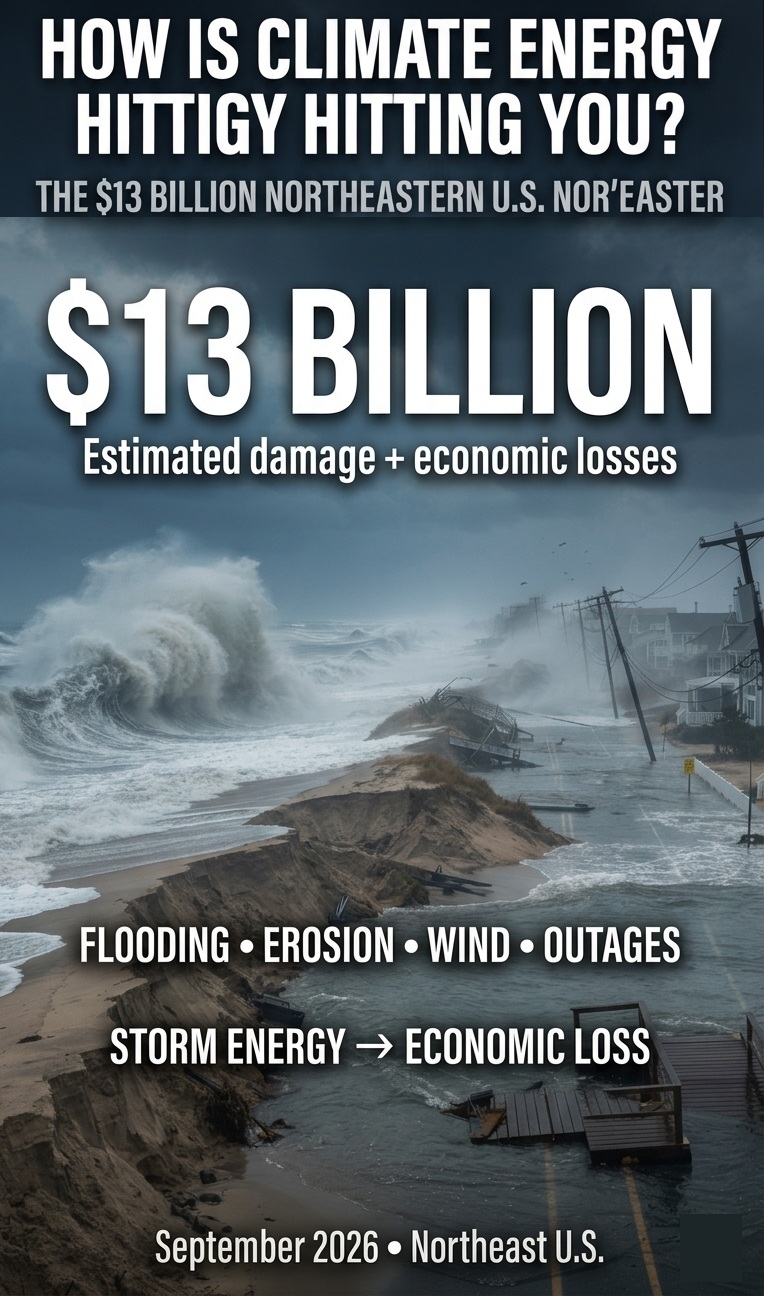
On October 2, 2026, President Trump announced that he had pressed European allies to release diesel reserves in an effort to bring down soaring fuel prices ahead of the November midterm elections.
The effort culminated in a coordinated G7 agreement to release up to 100 million barrels of crude oil and refined fuels from emergency reserves through the International Energy Agency (IEA) over the next four months.
The agreement places particular emphasis on diesel. G7 leaders said a substantial portion of the diesel release will be front-loaded within the first 20 days, providing an immediate increase in available refined-product supplies.
The precise allocation of the entire 100-million-barrel package between diesel and crude is important because crude oil must still be refined before it becomes diesel. Reuters reported that the European Union agreed to release about 50 million barrels of diesel, while IEA members would provide an additional roughly 50 million barrels of crude oil.
Truckers in Trouble
At least 16 American trucking and logistics companies have filed for Chapter 7 or Chapter 11 bankruptcy in just the past month. This rapid wave of insolvencies has directly impacted more than 250 jobs and hundreds of individual drivers.
The primary trigger is a severe margin squeeze from record-high diesel costs. The national average diesel price recently peaked at an all-time high of $6.53 per gallon (up over 70% from $3.71 last year) due to global geopolitical disruptions.
An Immediate Market Reaction
Oil prices initially fell by roughly $2 per barrel following news of the agreement. Brent crude fell to around $100.50 per barrel, while West Texas Intermediate dropped to about $90.85.
But the initial decline proved short-lived, with prices subsequently recovering much of the loss.
That reaction illustrates the central problem: announcing additional emergency supply does not necessarily translate into a sustained reduction in retail diesel prices.
The U.S. labor market is showing another sign of strain: wage growth is slowing while inflation continues to erode purchasing power.
In September 2026, average hourly earnings for private-sector workers increased just 0.1% for the month, or 5 cents, reaching $37.81. Over the previous 12 months, nominal hourly earnings increased 3.0%—the slowest annual wage-growth rate since May 2021 and widely described as a new five-year low.
Nominal wages measure how many dollars workers receive. Real wages measure what those dollars can actually buy after accounting for inflation.
A 3% raise is not necessarily a 3% improvement in living standards. If prices rise faster than wages, workers can receive larger paychecks while simultaneously losing purchasing power.
The Five-Month Squeeze
According to the Bureau of Labor Statistics, real average hourly earnings declined 0.1% from July to August and were 0.3% lower than a year earlier. That meant the purchasing power of the average hourly paycheck was falling even though nominal wages were still increasing.
Other analyses of the BLS wage and inflation series show that private-sector hourly pay growth had fallen behind consumer-price growth for five consecutive months.
In other words:
Paychecks are getting bigger. But prices are getting bigger faster.
September Makes the Problem More Visible
The September employment report reinforces the wage-growth slowdown.
Average hourly earnings rose only 0.1% in September, while the 12-month increase fell to 3.0%. The average workweek remained unchanged at 34.4 hours.
At the same time, employers added only 29,000 jobs in September. BLS also revised July employment downward by 31,000 jobs and August employment downward by 29,000, leaving employment in those two months combined 60,000 lower than previously reported.
The combination is significant:
Job creation is slowing.
Nominal wage growth is slowing.
Inflation remains high enough to absorb much of the nominal wage increase.
Real hourly purchasing power has been weakening.
Wage and price changes vary substantially by occupation, industry, income level, and household circumstances. But the aggregate data indicate that the average private-sector worker is facing increasing difficulty converting nominal wage growth into increased purchasing power.
The Inflation Trap
Consider a simplified example. Suppose a worker earns $50,000 and receives a 3% raise.
Their new nominal income is:
$51,500
That sounds like progress.
But if the prices of the goods and services they purchase rise by 3.4%, the worker’s purchasing power has actually declined. The worker has more dollars, but those dollars buy less.
This is the basic mechanism behind real-wage erosion.
And it can become particularly painful when essential expenses—housing, food, insurance, utilities, transportation, and health care—rise faster than the overall inflation rate.
Why This Matters Beyond the Paycheck
Wage growth is not merely a measure of individual income. It is also an important component of consumer purchasing power.
When workers lose real purchasing power, they may respond by:
reducing discretionary spending;
increasing credit-card or other household debt;
postponing major purchases;
drawing down savings;
working additional hours;
delaying retirement;
or cutting back on goods and services.
Those responses can feed back into the broader economy.
Consumer spending represents a major share of U.S. economic activity. Consequently, a prolonged period in which wages fail to keep pace with prices can create a potentially self-reinforcing economic squeeze:
Inflation → weaker real wages → reduced purchasing power → weaker consumption → slower business demand → weaker hiring → greater household financial pressure.
The wage data provides an important warning signal.
The Bottom Line
As of September 2026, nominal average hourly earnings were rising at just 3.0% annually, their slowest pace since May 2021 — a 5-year low in nominal wage growth.
The latest official real-earnings data show that real average hourly earnings had already fallen 0.3% over the year through August.
In other words, workers are still receiving larger paychecks in dollar terms, but wage growth is no longer keeping pace with the rising cost of living. Persistent inflation is eroding the purchasing power of those additional dollars.
In practical terms, earning more money does not necessarily mean having more purchasing power.
The critical measure is not simply how much a paycheck has increased, but how much that paycheck can actually buy.
Social Media Version
When Paychecks Lose Ground
Your paycheck may be getting bigger.
But is it buying more?
U.S. wage growth is slowing while inflation continues to erode purchasing power.
In September, average hourly earnings rose just 0.1% for the month.
Annual nominal wage growth fell to 3.0% — its lowest level since May 2021.
Meanwhile, real average hourly earnings were already 0.3% lower than a year earlier through August.
And private-sector wage growth has now fallen behind inflation for five consecutive months.
Paychecks are getting bigger. But prices are getting bigger faster.
That creates an economic squeeze:
Inflation → weaker real wages → reduced purchasing power → weaker consumption → slower business demand → weaker hiring
A bigger paycheck does not necessarily mean a better paycheck.
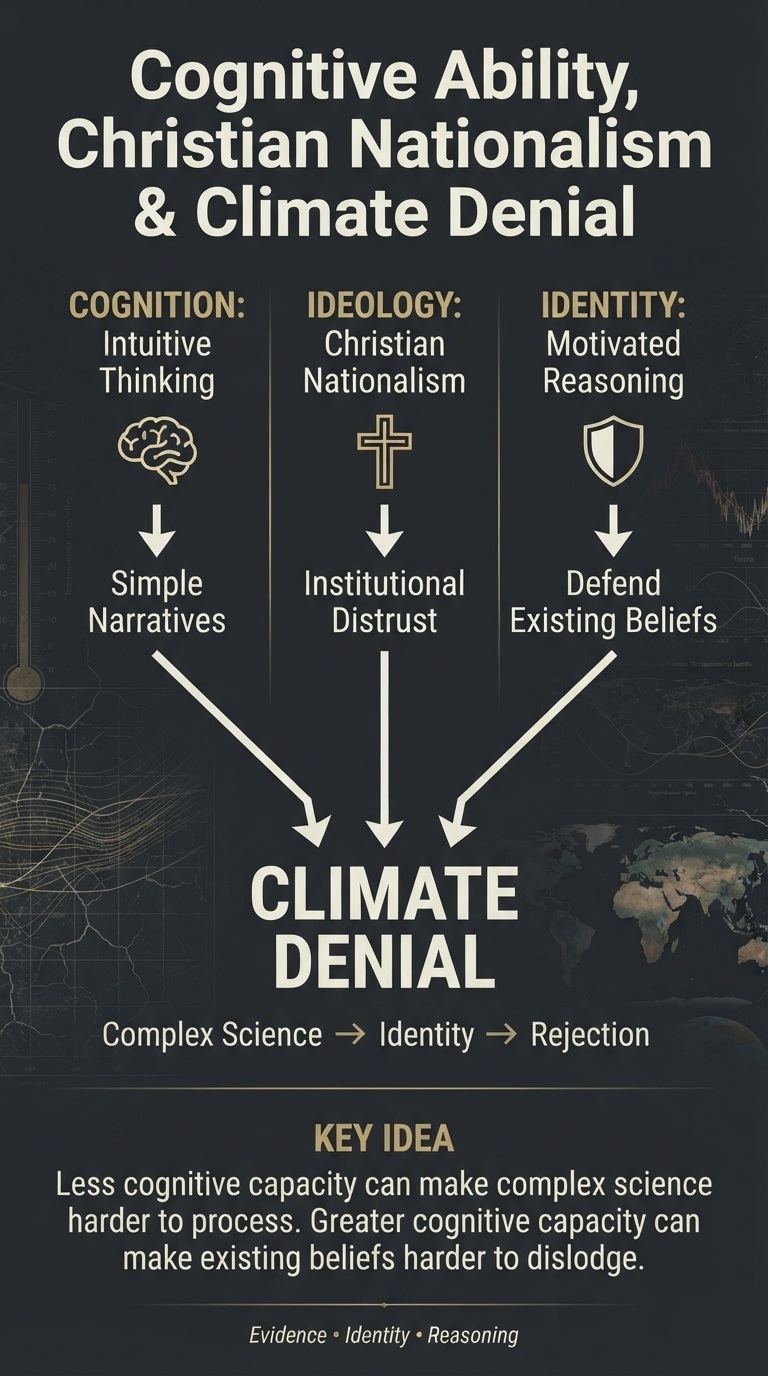
Cognitive Ability, Christian Nationalism & Climate Change Denial
A new 2026 study by sociologist S. L. Perry finds a significant negative association between verbal cognitive ability and Christian nationalist beliefs in the United States.
That finding raises an important question:
What does cognition have to do with climate change denial?
Climate science is extraordinarily complex. Understanding it requires processing interconnected systems, probabilities, feedbacks, long-term trends, and evidence that cannot simply be evaluated through everyday experience.
This creates several pathways toward climate skepticism:
🧠 Intuitive thinking can favor simple narratives over complex scientific evidence.
✝️ Christian nationalist ideology can reinforce distrust of secular scientific and academic institutions.
🛡️ Motivated reasoning can allow people with substantial cognitive ability to construct sophisticated defenses of beliefs that are deeply connected to their political, religious, or cultural identity.
The result is a paradox: Less cognitive capacity can make complex science harder to process. Greater cognitive capacity can make existing beliefs harder to dislodge.
The problem is therefore not simply ignorance.
It is the interaction of cognition, ideology, identity, institutional trust, and reasoning.
Cognitive Ability, Christian Nationalism, and Climate Change Denial
The 2026 study “Cognitive Ability and Christian Nationalism” by sociologist S. L. Perry, published in the Journal for the Scientific Study of Religion, establishes a significant negative association between cognitive ability—specifically verbal intelligence—and Christian nationalist beliefs in the United States.
Perry’s findings intersect directly with the psychology and sociology of climate change denialism through shared cognitive mechanisms, ideological alignments, and patterns of scientific skepticism.
The relationship can be understood through three primary connections.
1. The Common Thread: Lower Cognitive Ability and Intuitive Thinking
Perry’s study establishes that lower cognitive ability, specifically verbal intelligence, is associated with a greater likelihood of adopting Christian nationalist beliefs.
This finding intersects with psychological research on climate change denial, where lower cognitive ability and reliance on intuitive rather than analytical thinking have also been identified as factors associated with rejection of climate science.
Climate science presents an unusually difficult cognitive problem. It is abstract, global, highly interconnected, probabilistic, and dependent on scientific concepts that cannot be directly observed by most people. Atmospheric chemistry, radiative forcing, feedback mechanisms, ocean heat uptake, ice dynamics, and long-term statistical trends are not matters that can be evaluated through everyday intuition alone.
As a result, people with fewer cognitive resources—or those who rely more heavily on intuitive reasoning—may be more likely to substitute simple cognitive shortcuts for complex scientific analysis.
Instead of evaluating atmospheric data, climate models, physical mechanisms, and multiple independent lines of evidence, an individual may rely on a familiar narrative:
“It doesn’t feel warmer.”
“The climate has always changed.”
“Scientists have been wrong before.”
“God controls the weather.”
These shortcuts provide simple answers to a highly complex scientific problem. The important connection is therefore not simply intelligence. It is the interaction between cognitive ability, reasoning style, and the complexity of the information being evaluated.
2. Christian Nationalism as an Ideological Driver of Climate Skepticism
Christian nationalism is not simply a religious belief. It is a cultural and political framework that can overlap with broader anti-science attitudes and distrust of secular institutions.
Sociological research has identified Christian nationalism as an important predictor of climate skepticism. The connection is particularly apparent when environmental and climate issues become associated with secular scientific institutions, universities, government agencies, international organizations, and political movements perceived as threatening traditional cultural values.
The “God Is in Control” Narrative
One mechanism is theological.
Within some Christian nationalist frameworks, there is a strong emphasis on God’s absolute sovereignty over the Earth. This can manifest in the belief that humans cannot fundamentally alter the climate because God controls the weather and ultimately determines the Earth’s fate.
When taken to its logical extreme, such a worldview can conflict directly with climate science. Climate science does not claim that humans control the climate absolutely. It demonstrates that human activities—particularly the emission of greenhouse gases—alter the Earth’s energy balance and therefore alter the climate system.
The conflict is consequently not necessarily between Christianity and climate science. It is between particular interpretations of religious sovereignty and the scientific evidence demonstrating that human activity is a major driver of contemporary climate change.
Anti-System Sentiments
Christian nationalism can also overlap with populist political movements characterized by distrust of secular institutions, academia, government agencies, international organizations, and scientific authorities.
Climate change becomes particularly vulnerable to this form of institutional distrust because accepting the scientific evidence requires trusting multiple scientific institutions and disciplines operating across national boundaries. Consequently, rejecting climate science can become an extension of a broader rejection of the institutions that produce, evaluate, and communicate scientific knowledge.
The result is a powerful ideological feedback:
Distrust the institution → distrust the science → reject the evidence → reinforce the ideology.
3. The Paradox of Motivated Reasoning
There is, however, an important paradox. Lower cognitive ability and intuitive thinking may help explain some forms of initial resistance to complex scientific information. But climate denial on the political right cannot be explained entirely by lower cognitive ability.
For highly complex political issues such as climate change, individuals with higher cognitive ability can sometimes use those cognitive resources not to discover objective truth, but to rationalize and defend conclusions consistent with their existing political or cultural identity.
This is commonly described as motivated reasoning or, in some research, Motivated System 2 Reasoning (MS2R).
The mechanism is straightforward. A person first arrives at a conclusion because it is consistent with the beliefs and values of their social group. The person’s cognitive abilities then become available to defend that conclusion. The more sophisticated the individual, the more sophisticated the defense can become.
This can produce highly elaborate arguments based on selective evidence:
emphasizing isolated periods of cooling while ignoring the long-term warming trend;
selecting individual scientists or studies that challenge the consensus while dismissing the larger body of evidence;
focusing on uncertainty in climate projections while ignoring the underlying physical certainty of greenhouse-gas warming;
demanding impossible standards of proof for climate science;
identifying errors or controversies within individual studies and treating them as evidence against the entire scientific framework.
The issue is therefore not simply whether someone possesses the cognitive ability to understand climate science. It is also what that cognitive ability is being used to accomplish.
If accepting climate change threatens an individual’s political, religious, economic, or cultural identity, sophisticated reasoning can become a tool for protecting that identity rather than challenging it.
Summary of the Relationship
Factor
Christian Nationalism
Climate Change Denialism
Cognitive Profile
Higher correlation with lower verbal intelligence and intuitive cognitive styles.
Higher correlation with lower cognitive ability and intuitive cognitive styles.
Cognitive Shortcuts
Complex social and political questions can be reduced to familiar religious or cultural narratives.
Complex climate science can be reduced to familiar narratives that contradict or dismiss scientific evidence.
Institutional Trust
Greater rejection of secular academic, governmental, and scientific authority.
Greater rejection of mainstream climate science and international scientific institutions.
Core Ideology
Fusion of American identity with conservative Christian cultural and political dominance.
Often reinforced by conservative political identity, distrust of institutions, and religious interpretations of human responsibility for the Earth.
Religious Framework
Divine sovereignty can be interpreted as placing ultimate control of the Earth in God’s hands.
“God is in control” can become an argument against the possibility or significance of human-caused climate change.
Motivated Reasoning
Cognitive resources can be used to defend existing religious and political identities.
Higher cognitive ability can sometimes facilitate sophisticated arguments defending climate skepticism when climate action conflicts with group identity.
The Larger Pattern
Taken together, these relationships reveal a potentially important common structure.
Climate denialism is not necessarily produced by a single cognitive deficiency or a single political ideology. It can emerge from the interaction of cognitive ability, intuitive reasoning, ideological identity, religious worldview, institutional distrust, and motivated reasoning.
At one end of the spectrum, limited cognitive resources and intuitive thinking can make a highly complex scientific problem easier to process through simple ideological narratives.
At the other end, sophisticated cognitive abilities can be deployed to construct increasingly elaborate defenses of those same narratives.
The result is a paradox:
Less cognitive capacity can make complex scientific information harder to understand, while greater cognitive capacity can make an existing ideological conclusion harder to dislodge.
This helps explain why climate change denial persists even as the physical evidence becomes increasingly extensive.
The fundamental conflict is therefore not simply between science and ignorance.
It can become a conflict between evidence and identity.
And when scientific evidence threatens a deeply embedded religious, political, or cultural identity, the human capacity for reasoning can become not merely a mechanism for discovering what is true—but a mechanism for defending what one already believes.
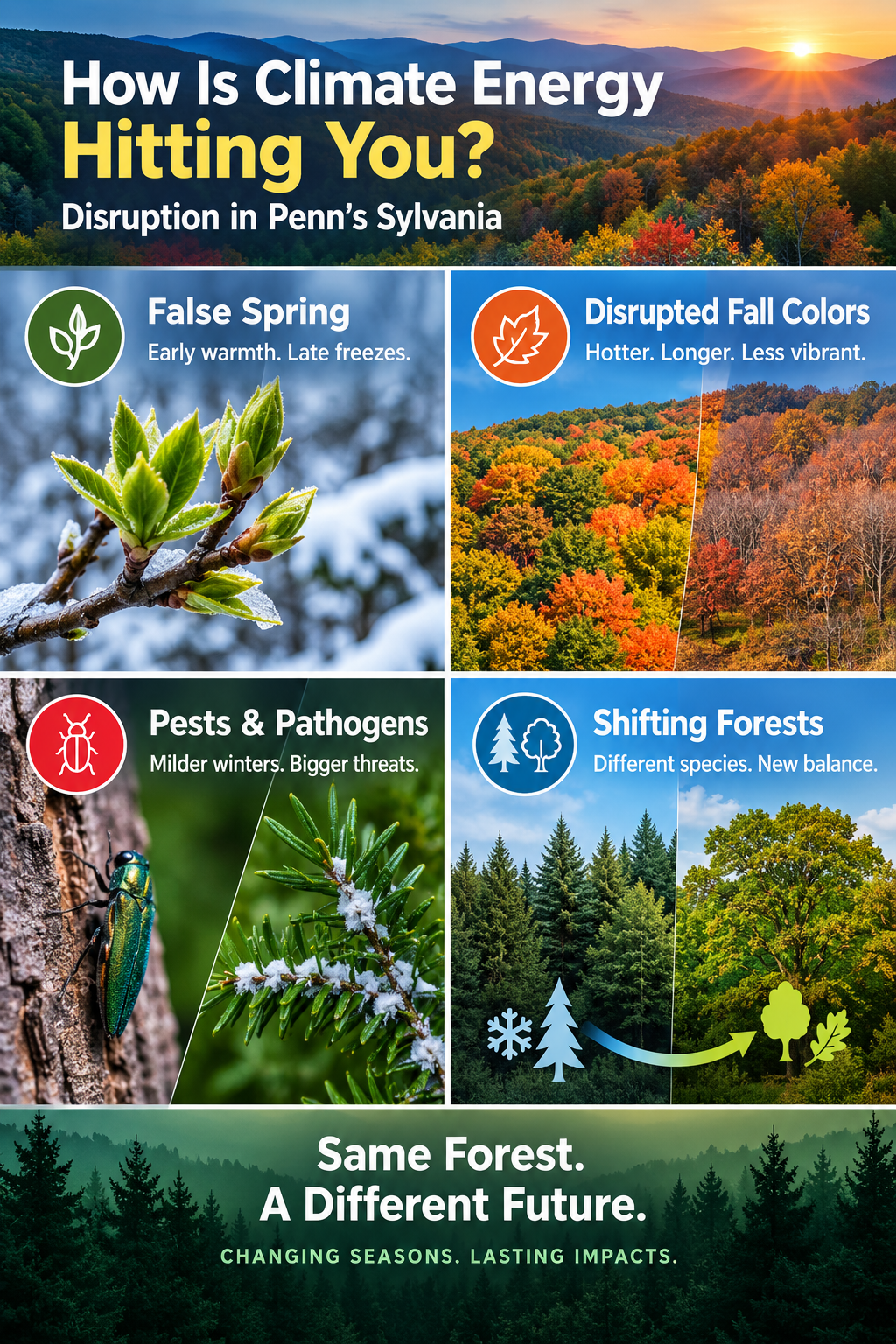
Pennsylvania’s forests are being disrupted by accelerating seasonal expansion—the lengthening of warm-season conditions into spring and autumn. The change is doing more than making individual days warmer. It is altering the timing of tree life cycles, increasing ecological vulnerabilities, and shifting which species can successfully survive and reproduce.
As summer-like conditions expand into early spring and late autumn, biological events known as phenology are increasingly occurring outside the historical weather conditions to which Pennsylvania’s forests evolved.
The result is a cascade of ecological disruptions.
1. The “False Spring” Trap
Warmer late winters and early springs can trigger tree activity prematurely.
The process: Early warmth stimulates sap flow and causes trees to break dormancy and open their buds earlier than their historical timing.
The impact: When freezing temperatures return, newly developed leaves, flowers, and fruit are vulnerable to frost damage. The result can be severe losses to both natural vegetation and agriculture.
Pennsylvania experienced a striking example during the spring 2026 freeze, when unusually early-season warmth was followed by sharp freezes. Some Pennsylvania orchards reported losses of 70% to 90% for certain fruit crops.
The problem is not simply that spring is warmer. It is that spring is becoming less predictable relative to the biological clocks of trees.
2. Disrupted Fall Foliage Cycles
The expansion of summer-like heat into September and October can delay or disrupt the transition to autumn.
The process: Trees respond to shortening day length and cooler temperatures by reducing chlorophyll production. The resulting chemical changes produce the familiar autumn colors.
The impact: When unusually warm conditions persist, particularly when combined with late-summer drought, trees can remain under prolonged heat and water stress.
Instead of a gradual transition from green to brilliant autumn colors, stressed foliage may turn brown, shrivel, or drop prematurely.
Pennsylvania’s famous fall foliage season can therefore become shorter, less synchronized, and more variable from year to year.
3. Pests and Pathogens Thrive
Shorter, milder winters combined with longer, warmer summers can create more favorable conditions for many forest pests.
The eastern hemlock (Tsuga canadensis)—Pennsylvania’s official state tree—is particularly vulnerable. The invasive hemlock woolly adelgid has devastated hemlock populations throughout the eastern United States. Warmer conditions can increase winter survival and permit the insect to expand into areas where historically colder conditions provided greater limitations.
The emerald ash borer presents another example. This invasive beetle has killed millions of ash trees across North America, including Pennsylvania’s native ash species. Longer warm seasons can accelerate insect development and increase the number of generations that can occur during a year.
Climate energy therefore interacts with existing biological threats: warming does not have to create a pest or pathogen to make the damage worse—it can make an existing threat more effective.
4. Shifting Forest Demographics
As Pennsylvania’s growing season lengthens and temperatures rise, the climatic conditions suitable for different tree species are shifting.
The result is not an overnight replacement of Pennsylvania forests. Instead, the competitive balance among species can gradually change as seedlings establish, mature trees experience increasing stress, and disturbances create opportunities for different species to expand.
In some locations, Pennsylvania’s forests may increasingly favor species associated with warmer regions, while cool-adapted species face greater stress.
Cool-Loving Species Under Greater Stress
Heat-Tolerant or More Adaptable Species
Sugar maple
Red oak
American beech
White oak
Yellow birch
Chestnut oak
Eastern hemlock
Hickories
Other northern hardwoods
Some southern Appalachian species
The transition will vary considerably by elevation, soil, moisture, latitude, and local microclimate. Forest composition is therefore likely to change unevenly across the Commonwealth rather than shifting uniformly from one species group to another.
The Larger Pattern
These changes are interconnected.
Earlier spring → premature growth → late-freeze vulnerability
Longer summer → heat and drought stress → weakened trees
Milder winter → greater pest survival → increased forest damage
Pennsylvania’s forests are adapted to seasonal variation. The emerging problem is that the seasons themselves are changing.
Climate energy is reaching Pennsylvania’s forests not simply as higher temperatures, but as changes in timing, duration, intensity, and ecological relationships.
The forest that future generations inherit may therefore look different from the forest Pennsylvania has known for centuries—not because one species suddenly disappears, but because the entire system is being gradually reorganized.
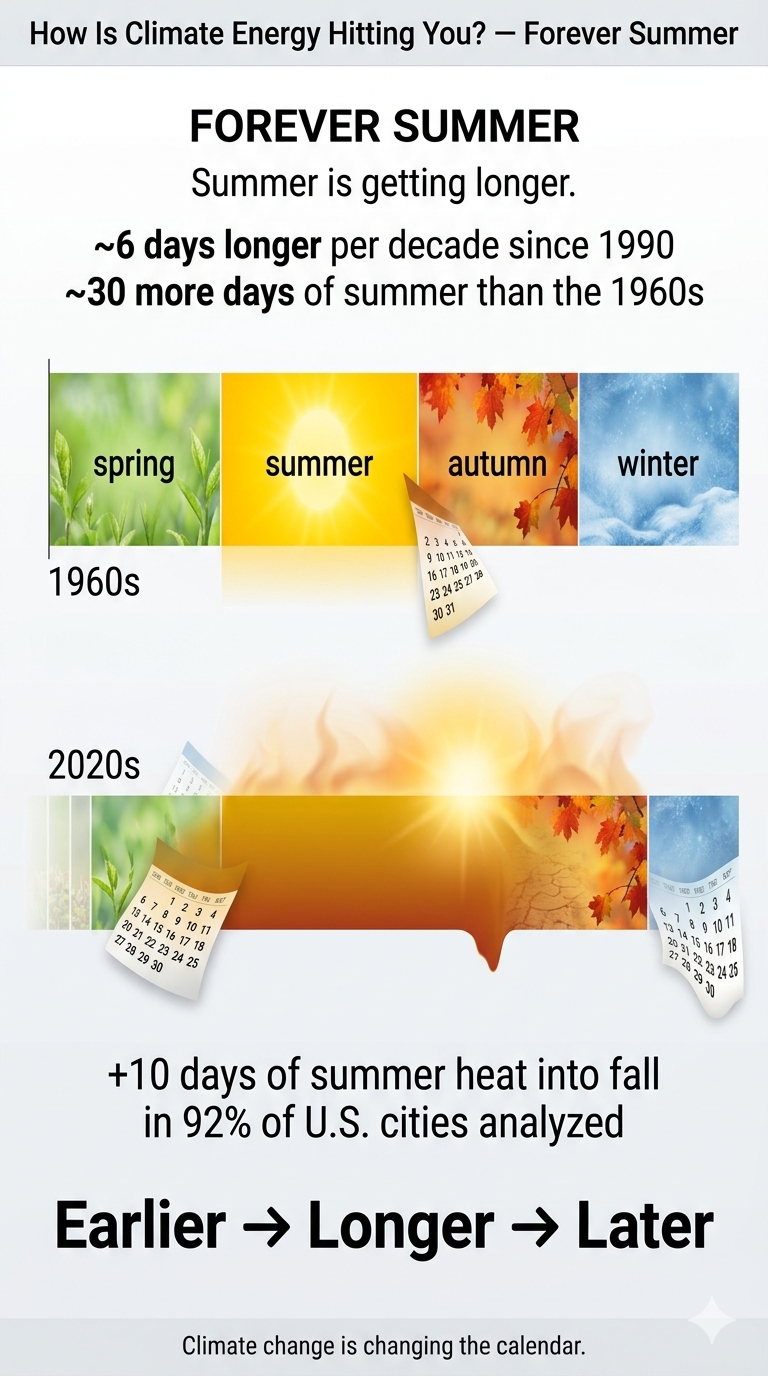
A study by researchers at the University of British Columbia found that, between 1990 and 2023, summer-like conditions across the regions between the tropics and the polar circles expanded by roughly six days per decade. That rate is substantially faster than earlier estimates.
The researchers did not define summer by the calendar. Instead, they identified summer as the period when temperatures rise above a location’s historically typical threshold for the warmest part of the year. Using this temperature-based definition, they found that summers across the midlatitudes now last roughly 30 days longer than they did in the 1960s.
The change is occurring at both ends of summer: warm conditions are arriving earlier in the year and lingering later into autumn. The result is not simply a longer calendar season, but a longer period of accumulated heat.
A Longer Summer
• Accelerating seasonal expansion — The UBC study, published in Environmental Research Letters, found that summer length increased by roughly six days per decade from 1990 to 2023. Across the midlatitudes, summer is now about 20 days longer than it was in 1990 and roughly 30 days longer than in the 1960s.
• Summer heat lingering into fall — Climate Central analyzed temperature records from 246 major U.S. cities and found that summer-like temperatures now extend an average of 10 days later into autumn in 227 cities—92% of those analyzed—compared with the early 1970s.
What Does a Longer Summer Mean?
A longer warm season can affect much more than the calendar.
More days of heat can mean:
Longer periods of air-conditioning demand
Greater heat-related health risks
Longer wildfire seasons
Extended allergy and mosquito seasons
Earlier snowmelt and altered water supplies
Greater stress on agriculture and ecosystems
Climate Central’s analysis notes that later-lasting summer heat can also increase cooling demand and household energy costs.
The seasons are not simply getting warmer. They are changing duration, timing, and intensity.
What once felt like a three-month summer is increasingly becoming something closer to a moving season of heat—arriving earlier, lasting longer, and accumulating more energy along the way.
The loss of glacier ice therefore represents more than a change in scenery. It is a change in the physical infrastructure of the European water cycle.
Swiss glaciers are disappearing at an extraordinary rate.
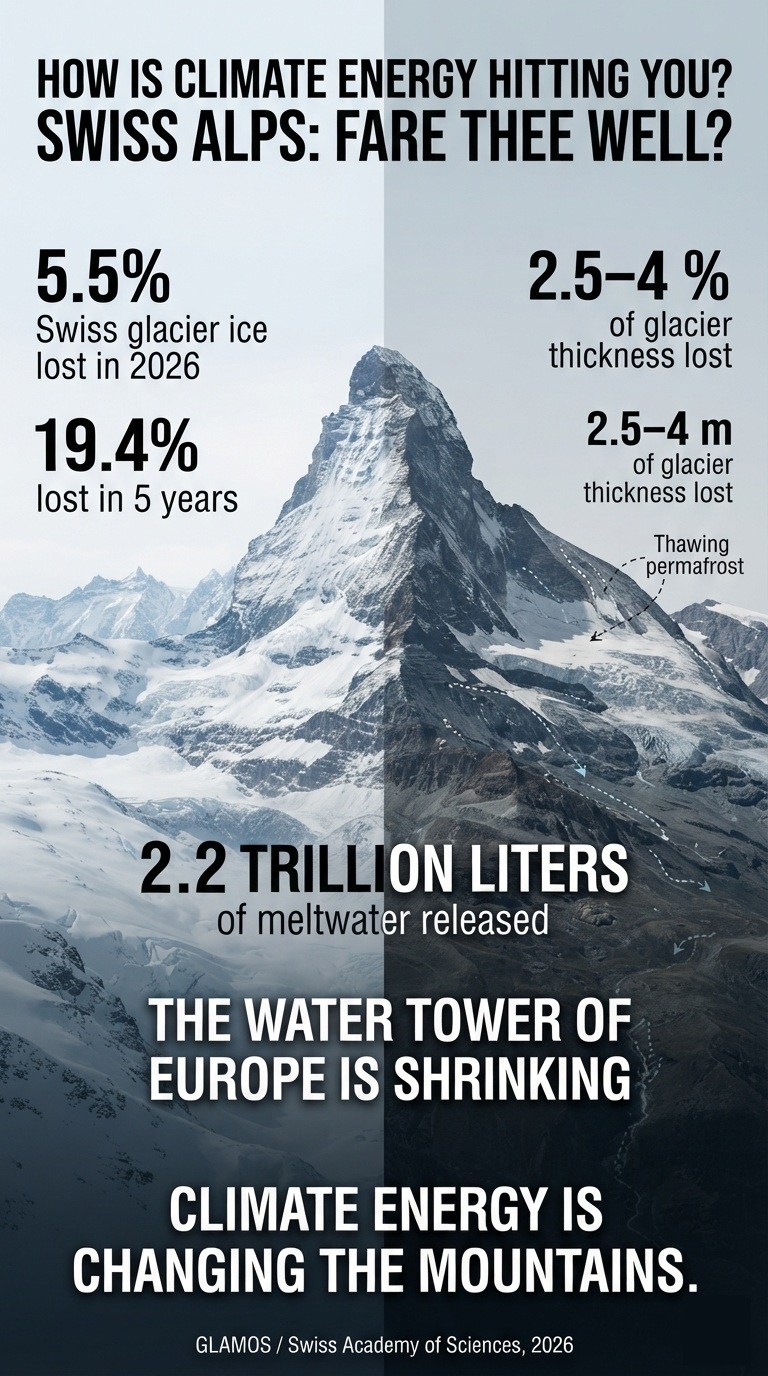
The Glacier Monitoring in Switzerland (GLAMOS) network and the Swiss Academy of Sciences report that Swiss glaciers lost approximately 5.5% of their total ice volume during the first eight months of 2026. That is the second-largest annual percentage loss on record, exceeded only by the exceptional melt of 2022.
The combination of exceptionally low winter snowfall and a record-hot summer has pushed Alpine glaciers into increasingly dangerous territory. Scientists warn that continued warming threatens the long-term survival of many Swiss glaciers.
A Five-Year Avalanche of Ice Loss
The latest measurements reveal how rapidly Switzerland’s frozen water reservoir is shrinking.
Nearly 20% Gone in Five Years Swiss glaciers have lost approximately 19.4% of their ice mass in just five years.
Percentage Losses Are Accelerating Although the absolute volume of ice lost in 2026 was lower than during the infamous 2003 heatwave, the percentage loss was substantially greater. The reason is straightforward: Switzerland’s remaining glacier ice reservoir is now dramatically smaller than it was two decades ago.
Meters of Ice Disappearing Glacier thickness declined by roughly 2.5 to 4 meters (8 to 13 feet) in many areas during 2026, while some glacier tongues retreated by as much as 10 meters (33 feet). Major glaciers, including the Allalin, Clariden, Rhône and Aletsch, experienced severe melting.
The implication is important: as glaciers become smaller, a similar amount of atmospheric heat can produce an increasingly large percentage reduction in the remaining ice.
When the Mountains Begin to Crumble
The damage is not limited to the glaciers themselves.
Extreme warmth is also destabilizing the high Alpine environment by thawing permafrost—the permanently frozen ground and rock that helps stabilize steep mountain slopes.
Bare High Peaks By late September 2026, the Matterhorn, rising 4,478 meters (14,692 feet), was photographed with exceptionally little snow cover. Persistent snow and ice at high elevations are becoming increasingly vulnerable during extreme warm periods.
Thawing Permafrost As permafrost thaws, meltwater can penetrate cracks and fractures in mountain rock. The resulting changes in water pressure, ice bonding and rock strength can increase the risk of rockfalls, landslides and other slope failures.
In some locations, exceptionally rapid ground movement has already been observed. At sites such as Spitzerstein above Kandersteg, slopes have reportedly shifted by as much as 70 centimeters per day, demonstrating how quickly Alpine terrain can respond when its frozen foundations deteriorate.
The Water Tower of Europe Is Shrinking
Glaciers are more than spectacular scenery. They are part of Europe’s water infrastructure.
Between July and September 2026, Swiss glaciers released an estimated 2.2 trillion liters of meltwater. That is roughly four times the annual drinking-water consumption of Switzerland’s approximately 9.1 million residents.
But this enormous pulse of water is not necessarily good news.
Glaciers act as natural reservoirs, storing precipitation as ice and releasing water gradually. Extreme melting provides abundant runoff in the short term—but once the ice reservoir becomes sufficiently depleted, that stored-water contribution can decline dramatically.
The result is a fundamental change from a glacier-fed water system to a system increasingly dependent on rainfall and seasonal snow.
Hydropower Under Pressure
Switzerland obtains more than half of its domestic electricity generation from hydropower, making the timing and reliability of Alpine water flows economically important.
As glaciers shrink, their contribution to river flows will eventually decline. Earlier and more intense melting can also shift the timing of water availability.
That creates a difficult transition:
More meltwater today does not mean more water forever.
The disappearance of the ice reservoir ultimately removes one of Europe’s natural mechanisms for storing winter precipitation and releasing it during warmer, drier periods.
From Switzerland to Europe
The consequences extend far beyond Switzerland.
The Swiss Alps form part of Europe’s great mountain water system, feeding river basins associated with the Rhine, Rhône, Po and Danube.
Those rivers support:
drinking-water supplies
agriculture and irrigation
hydropower
industrial production
ecosystems and wetlands
inland navigation and transportation
As Alpine glaciers retreat, the timing and quantity of downstream water can change.
The loss of glacier ice therefore represents more than a change in scenery. It is a change in the physical infrastructure of the European water cycle.
Climate Energy at Work
Glacier loss provides one of the clearest visible examples of how excess climate energy is redistributed through the Earth system.
More atmospheric and oceanic energy → warmer air → reduced snowfall → accelerated glacier melt → exposed darker surfaces → greater solar absorption → further ice loss
These are not isolated events. They are interacting components of a changing climate system.
The Swiss Alps are effectively losing part of their natural infrastructure in real time.
Fare Thee Well?
Some small, low-elevation Alpine glaciers may already be committed to disappearance under present climate conditions. But the larger question extends far beyond Switzerland.
Every fraction of a degree of additional warming affects glaciers, snowpack, permafrost, water supplies and sea-level rise.
The loss of a glacier is therefore not simply the loss of ice.
It is the loss of a natural reservoir, a climate regulator, a water-storage system and part of the physical infrastructure on which human societies depend.
The Swiss Alps are telling us something important: climate change isn’t just happening around us. It is changing the systems we depend upon.
Tropospheric ozone (O₃) is commonly treated as an air pollutant and short-lived climate forcer. That description is scientifically correct but incomplete.
Ozone occupies an unusual position within the Earth system because it simultaneously functions as a greenhouse gas, atmospheric oxidant, phytotoxic pollutant, ecosystem stressor, and participant in multiple climate feedbacks. Unlike carbon dioxide, ozone is not primarily emitted directly. It is generated through atmospheric chemistry involving nitrogen oxides (NOₓ), volatile organic compounds (VOCs), carbon monoxide, methane, sunlight, temperature, atmospheric transport, and other chemical processes. Its concentration therefore responds not only to human emissions but also to changing climate conditions.
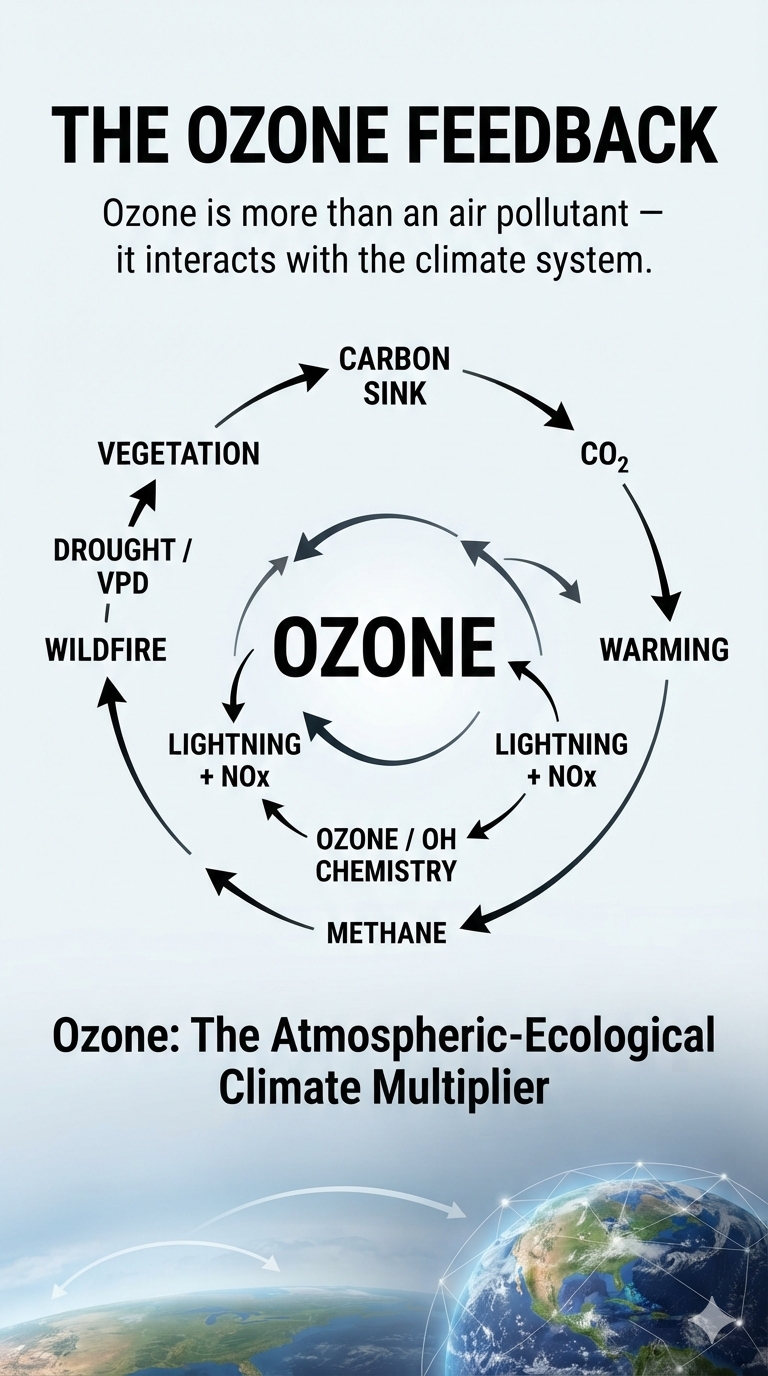
The central proposition of this paper is the Ozone Feedback Theory:
Tropospheric ozone is an atmospheric and ecological climate-forcing agent that can amplify warming by simultaneously contributing to radiative forcing and weakening biological systems that remove carbon from the atmosphere.
The direct greenhouse effect of ozone is well established. The IPCC Sixth Assessment Report estimates total ozone effective radiative forcing from 1750–2019 at approximately 0.47 W m⁻², with the forcing dominated by tropospheric ozone. This is substantially smaller than the forcing from CO₂, and ozone should not be described as the largest direct greenhouse forcing. Its significance lies elsewhere: ozone couples atmospheric chemistry to vegetation, carbon cycling, hydrology, wildfire, agriculture, human health, and other Earth-system processes.
Recent research strengthens this systems-level interpretation. A 2024 Nature Geoscience study estimated that anthropogenic ozone exposure has reduced tropical-forest net primary productivity and resulted in a loss of approximately 0.29 PgC of annual carbon drawdown since 2000, equivalent to about 17% of the contemporary tropical land carbon sink. A 2024 coupled climate–vegetation–chemistry study found that ozone–vegetation interactions can reduce productivity and stomatal conductance while producing regional warming and drying, particularly in the eastern United States and eastern China. A 2026 Science study found that increasing wildfire emissions reversed previously declining U.S. ozone trends during 2015–2024.
These findings support a broader hypothesis: ozone can function as a climate multiplier because warming can increase conditions favorable to ozone formation while ozone can simultaneously damage vegetation, weaken carbon uptake, increase ecosystem vulnerability, and contribute to further warming.
The resulting system is not a single feedback loop but a network:
Additional pathways involving methane, wildfire emissions, drought, hydrology, brown carbon, permafrost combustion, and ecosystem decline can couple to this network.
The scientific challenge is therefore not to establish that ozone is “the” dominant cause of climate change. CO₂ remains the dominant long-lived anthropogenic forcing. The challenge is to determine how much ozone-mediated amplification contributes to the observed trajectory of climate change and whether existing Earth-system models adequately represent these coupled biological and atmospheric processes.
1. Introduction
Climate change is often presented as a relatively simple relationship:
Fossil-fuel combustion → CO₂ → warming.
That relationship is fundamental, but it does not describe the complete atmospheric and biological response to combustion.
Combustion simultaneously changes atmospheric concentrations of CO₂, methane, NOₓ, VOCs, carbon monoxide, aerosols, black carbon, and other chemically reactive substances. Some of these compounds directly influence Earth’s energy balance. Others alter atmospheric chemistry. Still others affect the biological systems that regulate carbon, water, and energy exchange between the atmosphere and the land surface.
Tropospheric ozone is unusual because it intersects all three domains.
It is:
a greenhouse gas;
a short-lived climate forcer;
a highly reactive atmospheric oxidant;
a phytotoxic pollutant;
a respiratory pollutant;
a suppressor of plant productivity;
a modifier of stomatal behavior;
a contributor to agricultural losses;
a participant in wildfire-related atmospheric chemistry; and
a potential amplifier of climate feedbacks.
This paper synthesizes the ozone research developed through the Membrane Institute and related work from 2024–2026.
The objective is not simply to repeat the earlier papers. It is to combine them into a single framework and distinguish:
what is established,
what is strongly supported,
what is emerging,
and
what remains a hypothesis requiring further quantitative testing.
2. Ozone Must Be Divided by Altitude
The first distinction is essential.
Stratospheric ozone
Stratospheric ozone forms the protective ozone layer that absorbs biologically damaging ultraviolet radiation.
Tropospheric ozone
Tropospheric ozone occurs in the lower atmosphere, including at ground level.
It is harmful to human health, damages vegetation, participates in photochemical smog, and contributes directly to atmospheric warming.
The two should therefore never be treated as interchangeable.
This paper concerns tropospheric ozone.
3. Ozone Is a Secondary Pollutant and Climate Forcer
Unlike CO₂, ozone is not primarily emitted directly into the atmosphere.
It is produced through chemical reactions involving precursor gases.
Methane and carbon monoxide also participate in the broader chemistry controlling tropospheric ozone.
The actual chemistry is substantially more complicated. Ozone production depends on the chemical regime, precursor concentrations, sunlight, temperature, humidity, atmospheric transport, aerosols, and oxidant chemistry.
This distinction matters because ozone can increase even when direct ozone emissions do not.
A region can therefore experience worsening ozone conditions because of:
heat;
atmospheric stagnation;
wildfire emissions;
methane oxidation;
transported precursor pollution;
changing vegetation emissions;
lightning-generated NOₓ;
or combinations of these factors.
Ozone is consequently a chemically generated climate pollutant rather than a conventional directly emitted greenhouse gas.
4. The Direct Climate Effect of Ozone
Ozone absorbs outgoing infrared radiation.
It therefore contributes directly to the Earth’s radiative energy imbalance.
The IPCC AR6 assessment estimates the effective radiative forcing associated with total ozone changes between 1750 and 2019 at approximately:
+0.47 W m⁻²
with an assessed range of approximately:
+0.24 to +0.70 W m⁻².
The forcing is dominated by changes in tropospheric ozone.
This establishes an important baseline:
Tropospheric ozone is unquestionably a climate-forcing gas.
The significance of ozone lies in what happens after the molecule interacts with the biosphere.
5. Ozone Is Also a Biological Toxin
Ozone enters plant leaves primarily through stomata. Once inside plant tissues, it participates in oxidative reactions that can damage cellular structures and interfere with photosynthesis.
The consequences include:
oxidative stress;
cellular damage;
reduced photosynthetic efficiency;
altered stomatal conductance;
reduced carbon assimilation;
impaired growth;
reduced productivity;
increased vulnerability to drought;
increased vulnerability to heat;
increased susceptibility to pests and disease;
and increased mortality under sufficiently severe exposure.
This changes the climate significance of ozone. A conventional greenhouse gas adds radiative forcing.
Ozone can add radiative forcing while simultaneously damaging organisms that remove carbon from the atmosphere.
That dual role is the foundation of the Ozone Feedback Theory.
6. The Carbon-Sink Pathway
The basic biological pathway is:
O₃ ↑
↓
Plant injury
↓
Photosynthesis ↓
↓
Carbon assimilation ↓
↓
Net primary productivity ↓
↓
Carbon sequestration ↓
↓
More atmospheric CO₂
↓
Additional warming
The important distinction here is between gross primary productivity (GPP) and actual net carbon sequestration.
GPP is total photosynthetic carbon fixation. Net ecosystem carbon storage depends on photosynthesis minus plant respiration, decomposition, disturbance, mortality, fire, harvest, and other processes. Consequently, ozone-induced reductions in photosynthesis do not automatically translate one-for-one into atmospheric CO₂ increases. Nevertheless, reducing ecosystem productivity and carbon uptake can weaken an important component of Earth’s natural carbon sink.
This is the pathway that transforms ozone from a short-lived pollutant into a potential participant in long-term climate feedback.
7. The Tropical-Forest Evidence
The strongest recent evidence supporting this part of the theory comes from the 2024 Nature Geoscience study by Cheesman and colleagues. The study combined experimental measurements of ozone sensitivity in tropical tree species with a dynamic global vegetation model. Its central result was that anthropogenic ozone has produced substantial reductions in tropical-forest productivity.
The authors estimated:
approximately 5.1% average reduction in tropical-forest NPP under their moderate ozone-sensitivity assumption;
losses reaching approximately 10.9% in Asian tropical forests;
approximately 0.29 PgC per year of lost carbon drawdown since 2000;
approximately 17% of the contemporary tropical annual land carbon sink represented by that lost drawdown.
Anthropogenic ozone is measurably interfering with the productivity of tropical forests and therefore with terrestrial carbon cycling.
This is not merely a theoretical possibility.
It is a modeled estimate grounded in experimentally measured plant sensitivity.
8. Ozone–Vegetation–Climate Coupling
A second major development comes from coupled climate–vegetation–chemistry modeling. Zhou and colleagues (2024) used a climate–vegetation–chemistry model to examine ozone–vegetation interactions.
They found that ozone damage can:
reduce GPP;
suppress stomatal conductance;
reduce transpiration;
alter latent heat flux;
increase sensible heat;
produce warmer and drier conditions in important regions;
and alter surface ozone itself.
The study estimated global GPP reduction of approximately:
1.80 ± 0.61 PgC yr⁻¹
or approximately:
4.69 ± 1.56%.
The modeled effects were considerably larger in certain regions.
In the eastern United States, the study estimated:
~20% GPP reduction under high ozone sensitivity
and approximately:
26% reduction in stomatal conductance.
The modeled ozone–vegetation interaction also produced approximately:
+0.33°C surface-air warming in the eastern United States
during the simulated boreal-summer conditions.
Their importance is mechanistic:
Ozone damage to vegetation can alter water and energy exchange in ways that feed back into climate.
9. A Second Ozone Feedback
The coupled model reveals an especially interesting mechanism.
Ozone damages stomatal function.
↓
Stomatal conductance declines.
↓
Transpiration declines.
↓
Latent heat flux declines.
↓
Sensible heat increases.
↓
Surface temperature increases.
The warmer and drier environment can then increase plant stress.
It is a land-surface energy and hydrology feedback.
That distinction is important to the larger Membrane climate framework because it demonstrates how one atmospheric pollutant can simultaneously influence:
carbon + water + energy + atmospheric chemistry.
10. The Ozone Feedback Theory
The central feedback proposed by this research can therefore be written:
Primary ozone feedback
Warming
↓
Heat + stagnation + photochemical activity
↓
Ozone formation ↑
↓
Vegetation injury
↓
Carbon uptake ↓
↓
Atmospheric CO₂ ↑
↓
Warming ↑
↓
Ozone formation ↑
This is a reinforcing feedback. Its strength depends upon:
ozone precursor emissions;
atmospheric chemistry;
temperature;
sunlight;
moisture;
ecosystem sensitivity;
vegetation recovery;
carbon-cycle dynamics;
fire activity;
and other feedbacks.
How strongly does ozone-mediated coupling amplify warming under different Earth-system conditions?
That is a measurable scientific question.
11. Wildfire Creates a Major Coupling Pathway
Wildfires connect climate warming to ozone formation. Fire emissions contain:
NOₓ;
VOCs;
carbon monoxide;
methane;
particulate matter;
black carbon;
brown carbon;
and other reactive compounds.
These emissions can generate ozone both near the fire and far downwind. The 2026 Science study by Deng and colleagues provides particularly important evidence for the United States. Using a 1-km-resolution daily ozone dataset covering 2003–2024, the researchers found that U.S. policy-relevant ozone trends reversed:
2003–2015: −0.65 ppb/year
versus
2015–2024: +0.13 ppb/year.
The authors attributed the reversal primarily to increasing wildfire emissions. They estimated that wildfire emissions offset approximately 3.9 years of progress in ozone mitigation.
This creates a reinforcing fire–ozone–ecosystem pathway. The ozone component does not operate independently. It becomes coupled to the fire regime.
13. Lightning Adds Another Atmospheric Pathway
Lightning is a major natural source of atmospheric NOₓ. Lightning therefore provides a second potential climate–ozone connection:
Warming
↓
More atmospheric moisture
↓
Stronger convection
↓
More lightning
↓
NOₓ ↑
↓
Ozone production ↑
↓
Additional warming
The relationship is complicated and regionally variable. Lightning also produces hydroxyl radicals (OH), which can accelerate methane oxidation and therefore create a counteracting chemical pathway. Lightning provides an important mechanism through which changing atmospheric dynamics can alter ozone chemistry.
The broader significance is that ozone becomes a coupling molecule connecting atmospheric physics with atmospheric chemistry.
14. Methane Creates a Global Ozone Pathway
Methane represents another important connection. Methane is itself a powerful greenhouse gas. It also participates in atmospheric chemistry that produces tropospheric ozone.
Therefore:
Methane ↑
↓
Ozone production ↑
and
Methane ↑
↓
Direct greenhouse forcing ↑
The interaction does not stop there. Ozone chemistry and hydroxyl-radical chemistry influence methane’s atmospheric lifetime. Thus methane and ozone form part of a coupled atmospheric chemical system.
This means that evaluating a fuel or energy source solely by its CO₂ emissions can omit important atmospheric consequences.
15. Diesel, Natural Gas, and Combustion Pathways
Different combustion systems generate different atmospheric signatures. Diesel combustion tends to generate substantial NOₓ and can therefore contribute strongly to local ozone formation. It can also generate black carbon. Natural gas combustion generally produces less NOₓ than diesel under comparable conditions, but methane leakage and incomplete combustion create another pathway. Methane can persist in the atmosphere long enough to become globally distributed before participating in atmospheric chemistry that contributes to background ozone.
The term “carbon neutral” can be misleading when applied to combustion-based biofuels without accounting for the complete atmospheric and ecological system. Biogenic carbon may be part of a short carbon cycle, but combustion can still produce:
NOₓ;
VOCs;
carbon monoxide;
particulate pollution;
ozone precursors;
and other climate-forcing compounds.
Land-use change, fertilizer use, transportation, processing, combustion efficiency, and ecosystem impacts also affect the overall balance.
Therefore:
carbon cycling ≠ climate neutrality.
A full assessment must include:
CO₂ + CH₄ + NOₓ + VOCs + ozone + aerosols + land use + ecosystem carbon uptake.
The ozone pathway is one reason a narrow CO₂-only accounting framework can miss important climate effects.
17. Pennsylvania Forests as a Long-Term Observation
The Membrane ozone research began partly from long-term observations of Pennsylvania forests.
The observations reported through this research include:
substantial foliage loss;
canopy thinning;
declining canopy height;
premature mortality;
and increasing vulnerability to drought, heat, insects, and disease.
Some observations have been described as approximately:
40% multi-year foliage loss
and approximately:
33% reduction in canopy height
in certain monitored old-growth systems since approximately 2003.
Forest ecosystems are exposed simultaneously to:
ozone;
warming;
drought;
vapor-pressure deficit;
hydrological extremes;
insects;
pathogens;
competition;
storms;
land-use changes;
and other pollutants.
Pennsylvania forest observations provide a long-term case study of compound ecological stress in which ozone is a plausible and independently documented contributor.
18. Ozone and the Amazon
The Amazon illustrates why ozone must be considered within a coupled Earth-system framework.
The Amazon is simultaneously:
a major carbon reservoir;
a biological carbon sink;
a massive source of atmospheric moisture;
a regulator of regional rainfall;
and a fire-sensitive ecosystem.
Ozone damages vegetation.
↓
Carbon uptake declines.
↓
Vegetation becomes less resilient.
↓
Heat and drought produce greater stress.
↓
Fire vulnerability increases.
↓
Forest loss reduces carbon storage and moisture recycling.
↓
Regional drying can increase.
↓
Further forest stress occurs.
This is the type of coupled system in which ozone can act as one component of a larger tipping cascade.
Ozone can increase the stress load on an ecosystem already exposed to warming, drought, fire, deforestation, and hydrological disruption.
When multiple stressors interact, the combined effect can be nonlinear even if no individual stressor is sufficient to cause collapse.
19. Ozone and the Carbon-Sink Transition
The most consequential possibility raised by this research is not simply that ozone reduces plant productivity.
It is that chronic ecological stress could contribute to the weakening of Earth’s natural carbon sinks.
The general transition is:
Strong carbon sink
↓
Reduced productivity
↓
Reduced resilience
↓
Increased mortality
↓
Fire / decomposition / disturbance
↓
Reduced carbon storage
↓
Carbon neutrality
↓
Potential carbon source
This process is not caused by ozone alone. However, ozone can participate in the early stages by reducing productivity and physiological resilience.
That makes ozone potentially important as a precursor to ecosystem destabilization.
20. The Ozone Multiplier
The combined evidence suggests a useful conceptual distinction. A conventional greenhouse gas primarily changes the energy balance. Ozone does that too. But ozone also changes the biological system that helps regulate atmospheric carbon.
That overlap is what makes ozone a climate multiplier.
21. The Expanded Ozone Feedback Network
The entire system can be represented as:
FOSSIL-FUEL / COMBUSTION EMISSIONS
↓
CO₂ + CH₄ + NOₓ + VOCs + CO + PARTICULATES
↓
ATMOSPHERIC CHEMISTRY
Ozone ↑
↓
DIRECT CLIMATE FORCING
Radiative warming
↓
VEGETATION
Photosynthesis ↓
Stomatal conductance ↓
Productivity ↓
Carbon uptake ↓
↓
CARBON CYCLE
Atmospheric CO₂ ↑
↓
CLIMATE
Warming ↑
↓
EXTREME CONDITIONS
Heat + drought + stagnation + fire weather
↓
WILDFIRE
CO₂ + CH₄ + NOₓ + VOCs ↑
↓
Ozone ↑
↓
VEGETATION
Additional stress
↓
ECOSYSTEM RESILIENCE
Decline
↺
This is the central architecture of the Ozone Feedback Theory.
22. Ozone as an Earth-System Coupling Agent
The term climate multiplier is useful because it describes something more specific than simply saying ozone is “important.” Ozone does not need to dominate any individual component of the climate system to have systemic significance. Its importance arises from connectivity.
Ozone connects:
atmospheric chemistry
to
plant physiology
to
carbon cycling
to
hydrology
to
wildfire
to
human health
to
agriculture
to
climate forcing.
This makes ozone a potential Earth-system coupling agent.
That may ultimately be more scientifically useful than ranking ozone against CO₂, methane, or other individual climate agents.
23. The 2026 Copernicus Evidence
The Copernicus Atmosphere Watch 2026 assessment provides a striking contemporary observation.
During the first eight months of 2026, nearly 40% of the global population was exposed to harmful levels of ground-level ozone according to the CAMS analysis. Only approximately 5% of the world’s population experienced ozone conditions classified as “good” in the assessment. Asia experienced the greatest burden, followed by Europe and North America.
The CAMS analysis highlights the interaction of:
extreme heat;
anthropogenic emissions;
wildfire pollution;
transboundary atmospheric transport;
and ozone chemistry.
CAMS has described this interaction as the “ozone-climate penalty.” This terminology is important because it captures a fundamental asymmetry:
warming can worsen ozone pollution,
while
ozone pollution contributes to warming and ecological damage.
The result is a bidirectional relationship rather than a one-way pollution problem.
24. Transboundary Ozone
Ozone also demonstrates that climate and pollution cannot always be managed within political boundaries. Wildfire smoke and ozone precursors can travel hundreds or thousands of kilometers. A wildfire in Canada can affect air quality in the northeastern United States. Methane emitted in one region can contribute to background ozone formation elsewhere. Industrial emissions can undergo atmospheric chemistry far from their source. The climate system therefore converts local emissions into regional and global consequences.
This is another reason ozone belongs in Earth-system analysis rather than being treated solely as a local air-quality issue.
25. Human Health Is Part of the Same System
The same ozone molecule that damages plant cells can damage human respiratory tissues. Ground-level ozone is associated with:
respiratory inflammation;
asthma exacerbation;
reduced lung function;
cardiovascular stress;
hospitalization;
and premature mortality.
This produces an unusual convergence. The same atmospheric chemistry can simultaneously:
damage forests,
reduce crop productivity,
weaken carbon sinks,
increase human health risks,
and
contribute to warming.
Ozone therefore represents a rare intersection of climate, ecological, agricultural, and public-health science.
26. What the Evidence Establishes
Several components of the ozone framework are already strongly established.
27. What Is Strongly Supported but Still Quantitatively Uncertain
The evidence now supports a broader and more quantitatively developed picture of ozone as an atmospheric and ecological climate-forcing agent. Multiple studies and modeling frameworks identify measurable pathways through which tropospheric ozone can alter carbon uptake, land-surface energy exchange, wildfire vulnerability, atmospheric chemistry, and ecosystem resilience. The principal remaining uncertainty is not whether these mechanisms exist, but how large their combined effect is across regions, ecosystems, and timescales.
Ozone → Carbon-Sink Weakening
Tropospheric ozone damages photosynthetic tissues, reduces plant productivity, and alters stomatal function. Current estimates indicate that ozone exposure may reduce the global terrestrial carbon sink by approximately 10% to 25% relative to potential capacity, corresponding to roughly 0.4–0.8 PgC per year of carbon that remains in the atmosphere.
Over longer periods, this represents a potentially substantial additional atmospheric CO₂ burden. Some estimates indicate an additional 15–30 ppm of atmospheric CO₂ over a century attributable to ozone-related reductions in terrestrial carbon uptake.
The exact global magnitude remains uncertain because ozone sensitivity varies among species and ecosystems, while carbon-cycle responses also depend on drought, temperature, nutrient availability, mortality, decomposition, fire, and land-use change.
The mechanism itself, however, is increasingly well established:
Current estimates place the additional global warming associated with this indirect carbon-cycle pathway at approximately 0.05°C to 0.2°C by 2100, depending on assumptions about ozone exposure, vegetation response, and future emissions.
The second is the hydro-climate feedback.
Ozone damages stomatal function and can suppress plant transpiration. Reduced transpiration decreases the transfer of water from vegetation to the atmosphere and reduces evaporative cooling. The resulting redistribution of surface energy can increase sensible heating and alter atmospheric moisture and cloud processes.
In heavily polluted, vegetated regions, modeled ozone–vegetation interactions have produced surface-air-temperature increases of up to approximately 1.5°C under particular conditions.
These regional results should not be interpreted as a global ozone-attributable warming of 1.5°C. They demonstrate that the land-surface response to ozone can be climatically significant where ozone exposure, vegetation, and meteorological conditions interact strongly.
Ozone → Increased Ecosystem Vulnerability
Ozone does not act in isolation.
It interacts with heat, drought, vapor-pressure deficit, pests, disease, and other environmental stresses.
Chronic ozone exposure can damage cellular structures, accelerate foliar senescence, reduce photosynthesis, and impair the ability of plants to regulate water loss.
The result is a reduction in ecosystem resilience.
This creates an important distinction:
Ozone need not directly kill an ecosystem to contribute to ecosystem decline. It can reduce the physiological margin by which an ecosystem withstands other stresses.
This makes ozone particularly important during compound heat-and-drought events.
Ozone ↔ Drought and Vapor-Pressure Deficit
The ozone–drought relationship is not linear.
Under severe soil drought, plants normally close their stomata to conserve water. This can initially reduce ozone uptake and therefore reduce ozone injury.
However, chronic ozone exposure can damage the stomatal apparatus itself.
Under high vapor-pressure deficit (VPD), plants are already under pressure to restrict water loss. Ozone can exacerbate the physiological response, producing larger declines in productivity and vegetation greenness.
The resulting interaction can therefore shift from:
This establishes drought and atmospheric dryness as important modifiers of ozone’s ecological effect.
Ozone → Wildfire Vulnerability
There is not currently a scientifically defensible single percentage describing how much wildfire activity is caused by ozone alone.
Ozone operates as a compounding stressor alongside heat and drought.
Chronic ozone exposure can accelerate foliar senescence, damage vegetation, and increase the availability of dry plant material. When severe ozone exposure coincides with compound heatwave-and-drought conditions, ecosystem vulnerability can increase substantially.
The appropriate formulation is therefore:
Ozone stress + heat + drought → vegetation vulnerability ↑ → available dry fuel ↑ → fire susceptibility ↑
Rather than claiming that ozone directly causes a specific percentage of wildfires, the evidence supports treating ozone as a potential amplifier of fire-season ecosystem stress.
Wildfire → Additional Ozone
The reverse pathway is much more directly measurable.
Wildfires emit large quantities of ozone precursors, including VOCs and NOₓ. When smoke plumes interact with sunlight and urban or industrial emissions, substantial photochemical ozone production can occur.
Observed wildfire smoke events have produced local and regional surface-ozone increases on the order of 20%–30%, with some studies reporting average increases of approximately 21 ppb.
Fire emissions can also make a major contribution to ozone in the remote free troposphere.
The 2026 U.S. evidence provides an important real-world example: increasing wildfire influence was identified as a major factor in reversing previously declining ozone trends.
Climate Change → Lightning NOₓ → Ozone
Lightning is responsible for approximately 10% of the global NOₓ budget, but its atmospheric location makes it particularly important for upper-tropospheric chemistry.
Model projections indicate that lightning-generated NOₓ could increase by approximately 33% under RCP4.5 to 78% under RCP8.5 by 2100.
Projected increases in lightning NOₓ have been associated with additional tropospheric ozone burdens of approximately 29–46 Tg in modeling studies.
This establishes another potential climate–ozone pathway:
The magnitude of this feedback remains sensitive to the response of convection and lightning to future warming and to the complex chemistry of the upper troposphere.
Ozone ↔ Methane and OH Chemistry
Ozone, hydroxyl radicals (OH), and methane form a tightly coupled atmospheric chemical system.
OH is the dominant atmospheric sink for methane and is responsible for removing the majority of atmospheric CH₄.
Ozone chemistry participates in OH production, meaning that changes in ozone can alter the atmosphere’s oxidative capacity and methane lifetime.
This creates an important chemical trade-off.
Changes in ozone pollution can alter OH availability, while wildfire smoke and other pollutants can suppress OH and temporarily slow methane removal.
Consequently:
O₃ ↔ OH ↔ CH₄
represents another atmospheric pathway through which ozone participates in climate forcing.
The direction and magnitude of the net feedback are chemically complex and cannot be reduced to the simple proposition that more ozone always means faster methane removal.
Ozone → Regional Climate Modification Through Vegetation
Ozone-induced changes in stomatal conductance and transpiration can modify:
evapotranspiration;
latent heat flux;
sensible heat flux;
surface temperature;
boundary-layer moisture;
and potentially cloud formation.
The result is a feedback between atmospheric chemistry and land-surface climate.
This is especially important in heavily vegetated regions where transpiration represents a significant component of the surface energy and water budget.
Thus ozone can affect climate not only by absorbing infrared radiation but also by changing how ecosystems exchange heat and water with the atmosphere.
Ozone → Nonlinear Ecosystem Stress
Evidence increasingly indicates that ozone effects become more consequential when exposure occurs simultaneously with other climate stresses.
The relevant system is therefore not:
O₃ → vegetation damage
but:
O₃ + heat + drought + high VPD + fire + biological stress → ecosystem response
This is particularly important because the response to multiple stresses does not necessarily equal the sum of their individual effects.
Once physiological repair capacity, stomatal regulation, or carbon reserves are exceeded, ecosystem responses can become increasingly nonlinear.
Ozone → Earth-System Model Complexity
Modern Earth-System Models increasingly incorporate coupled atmospheric chemistry, vegetation, and land-surface processes.
Frameworks such as DO3SE attempt to represent ozone damage through accumulated phytotoxic ozone dose and stomatal uptake rather than relying solely on ambient ozone concentration.
This represents an important improvement because plant injury depends on the ozone actually entering plant tissues rather than simply the concentration measured in the surrounding atmosphere.
Nevertheless, substantial uncertainty remains in representing:
below-ground carbon cycling;
root and mycorrhizal responses;
species-specific ozone sensitivity;
ecosystem adaptation;
compound heat-and-drought stress;
vegetation mortality;
wildfire interactions;
and long-term carbon-cycle feedbacks.
Therefore, the central uncertainty has shifted.
It is no longer simply:
Does ozone affect vegetation?
It is increasingly:
How much does ozone-mediated biological damage alter the trajectory of the coupled climate system?
28. What Remains a Research Hypothesis
The evidence now supports the individual components of the Ozone Feedback Theory sufficiently well that the central research question can be stated more precisely.
The remaining hypothesis is not whether ozone damages vegetation, contributes to radiative forcing, interacts with wildfire, or participates in atmospheric chemistry.
Those mechanisms have substantial observational, experimental, and modeling support.
The unresolved question is whether the combined interaction of these mechanisms produces a quantitatively significant contribution to climate acceleration and ecosystem destabilization at the global scale.
The Ozone Feedback Theory therefore proposes:
Tropospheric ozone can function as a climate multiplier when its direct radiative forcing interacts with carbon-sink weakening, altered land-surface energy and water exchange, wildfire feedbacks, methane chemistry, lightning-generated NOₓ, drought, and ecosystem stress. Under sufficiently strong compound stress, these interactions may become nonlinear and contribute to broader climate-feedback cascades.
The principal research questions are:
1. Carbon-Sink Feedback
How much additional atmospheric CO₂ results from ozone-induced reductions in terrestrial carbon uptake?
Current estimates suggest approximately 0.4–0.8 PgC per year of reduced carbon sequestration, but the global value remains sensitive to ecosystem sensitivity, ozone exposure, and interactions with drought, heat, fire, and nutrient limitation.
2. Global Temperature Feedback
How much additional global warming results from ozone–vegetation interactions?
Existing estimates suggest approximately 0.05°C–0.2°C of additional warming by 2100 through the carbon-cycle pathway, while regional land-surface effects can be substantially larger.
The global aggregate effect requires further constraint.
3. Fire-Feedback Attribution
How much wildfire activity is attributable to ozone-induced vegetation stress?
No single global percentage is currently justified.
The more tractable question is how much ozone contributes to fuel desiccation, foliar senescence, ecosystem vulnerability, and fire susceptibility under compound heat-and-drought conditions.
4. Wildfire-to-Ozone Feedback
How much additional ozone is produced by climate-driven increases in wildfire activity?
This pathway is directly measurable through atmospheric observations and chemical transport models.
The critical question is how this contribution changes as wildfire frequency, intensity, duration, and geographic distribution change under continued warming.
5. Lightning–Ozone Feedback
How important will increasing lightning-generated NOₓ become as anthropogenic surface NOₓ emissions decline?
Projected increases of approximately 33%–78% by 2100, depending on the emissions scenario, suggest that lightning could increasingly offset some surface-emission reductions.
The magnitude of the resulting ozone feedback remains uncertain because it depends on future convective behavior and upper-tropospheric chemistry.
6. Methane–OH–Ozone Coupling
How does changing ozone chemistry alter OH concentrations and methane lifetime under a changing climate?
This question is particularly important because ozone, OH, methane, wildfire smoke, and atmospheric oxidizing capacity are chemically coupled.
The net climate effect cannot be determined from ozone concentration alone.
7. Ozone–Drought–VPD Interaction
At what combinations of ozone exposure, soil moisture, temperature, and VPD does plant stress become strongly nonlinear?
This may prove more informative than defining a universal ozone threshold because plant response depends on both exposure and environmental conditions.
8. Earth-System Model Representation
Do current Earth-System Models adequately represent ozone’s effects on vegetation, carbon cycling, hydrology, and wildfire?
Particular attention should be given to:
dynamic stomatal uptake;
phytotoxic ozone dose;
below-ground carbon processes;
species-specific sensitivity;
compound heat-and-drought stress;
ecosystem mortality;
wildfire coupling;
and atmospheric chemistry.
9. Nonlinear Exposure Thresholds
At what cumulative ozone doses does plant damage transition from approximately linear physiological stress to nonlinear ecosystem degradation?
Critical ozone-dose thresholds may be more useful than ambient concentration alone because biological damage depends upon uptake, exposure duration, species sensitivity, and environmental conditions.
The frequently observed 40–50 ppb range should therefore be treated as an important exposure regime requiring investigation rather than as a universal tipping-point threshold applicable to every ecosystem.
10. Ecosystem Tipping Cascades
Can chronic ozone stress reduce ecosystem resilience sufficiently to contribute to tipping-point cascades?
The proposed pathway is:
Ozone exposure
↓
Stomatal dysfunction and physiological stress
↓
Reduced productivity and increased water stress
↓
Vegetation mortality / structural degradation
↓
Greater fire vulnerability
↓
Carbon release + ozone-precursor emissions
↓
Additional warming and ozone formation
The critical unresolved question is whether this feedback can become strong enough to shift an ecosystem from a stressed but recoverable state into a persistently degraded state.
The Central Research Problem
The next stage of Ozone Feedback Theory should therefore move beyond asking whether individual ozone mechanisms exist.
The more important question is:
Do the atmospheric, ecological, hydrological, carbon-cycle, wildfire, methane, and lightning pathways combine to produce a measurable nonlinear climate feedback?
If so, the magnitude of that feedback must be quantified.
The research objective is consequently to move from:
Ozone as pollutant
to
Ozone as greenhouse gas
to
Ozone as ecological stressor
to
Ozone as coupled climate feedback
to, ultimately,
Ozone as a potential climate-system multiplier.
The distinction is fundamental.
The existence of the mechanisms is increasingly supported.
Their combined magnitude and potential for nonlinear amplification remain the central research questions.
29. The Central Hypothesis
The research synthesized here leads to the following formal hypothesis:
The Ozone Feedback Hypothesis
Increasing tropospheric ozone contributes to climate-system acceleration through simultaneous direct radiative forcing and indirect ecological forcing, with ozone-induced vegetation stress reducing carbon uptake, altering land-surface energy and water exchange, increasing ecosystem vulnerability, and interacting with wildfire, drought, methane, lightning, and other climate feedbacks. These coupled interactions may amplify climate-system responses beyond the effect of ozone considered as an isolated atmospheric constituent.
The hypothesis predicts that the climate significance of ozone should be evaluated together with interacting Earth-system variables, including:
vegetation productivity and mortality;
terrestrial carbon uptake and carbon-sink strength;
drought and vapor-pressure deficit;
wildfire activity and fire emissions;
temperature and heat stress;
atmospheric stagnation;
methane concentration and atmospheric lifetime;
hydroxyl-radical (OH) chemistry;
lightning and lightning-generated NOx;
atmospheric ozone concentration and burden;
and ecosystem-level physiological stress.
The hypothesis further predicts that ozone effects may operate through multiple interacting feedback pathways rather than through a single linear mechanism. These include:
The central research question is therefore not simply whether these individual mechanisms exist. Increasing evidence supports their physical and ecological basis. The more difficult question is how strongly these mechanisms interact, whether their combined effects are quantitatively significant at regional and global scales, and whether nonlinear interactions can produce climate-system acceleration or ecosystem destabilization.
Ozone should therefore not be analyzed as an isolated atmospheric variable. Its climate significance should be evaluated as part of the coupled atmosphere–vegetation–carbon–water–fire–chemistry system.
30. The Membrane Systems Model
The broader Membrane climate framework describes climate change as a nonlinear redistribution of energy through a coupled Earth system. Within that framework, ozone can be treated as an intermediary variable.
A simplified energy–biosphere pathway becomes:
Excess energy
↓
Warming
↓
Atmospheric instability / heat / drought / fire
↓
Ozone formation
↓
Atmospheric radiative forcing
Vegetation damage
↓
Carbon-sink weakening
↓
Additional greenhouse gases
↓
Additional energy retention
↓
Additional warming
The significance is not simply the magnitude of ozone’s direct forcing.
It is the number of feedback pathways that ozone can connect.
31. From Feedback to Domino Effect
A single feedback loop can remain relatively weak. Several coupled feedbacks can produce a different system behavior.
For example:
Ozone
↓
forest stress
↓
wildfire
↓
CO₂ + ozone precursors
↓
warming
↓
drought
↓
additional forest stress
At the same time:
warming
↓
lightning
↓
NOₓ
↓
ozone
And:
warming
↓
permafrost thaw/fire
↓
CO₂ + CH₄
↓
warming
These systems can interact.
That is the Domino Effect:
One feedback changes the conditions controlling another feedback.
Ozone may therefore function as one of the connecting molecules within a broader climate-feedback network.
32. A Climate Hierarchy
The synthesis suggests a useful hierarchy:
Level 1 — Primary forcing
CO₂ and other long-lived greenhouse gases
↓
Level 2 — Secondary atmospheric forcing
Ozone, methane chemistry, aerosols, black carbon and other short-lived climate forcers
One destabilized system increases the probability of destabilizing another
Ozone occupies an unusual position because it participates across several levels.
33. Conclusions
Tropospheric ozone should no longer be considered solely an air-pollution problem.
It is a climate-forcing gas.
It is a biological toxin.
It is an ecosystem stressor.
It is a contributor to agricultural losses.
It is a public-health hazard.
It is produced through atmospheric chemistry involving human emissions and natural processes.
And increasingly, evidence indicates that it participates in coupled climate feedbacks.
The direct greenhouse effect is established.
The vegetation effect is established.
The carbon-cycle connection is increasingly quantified.
The wildfire connection is increasingly observable.
The ozone–vegetation climate interaction is demonstrated in coupled modeling.
The global-scale importance of the problem is illustrated by the 2026 Copernicus assessment showing widespread ozone exposure under conditions of extreme heat and pollution.
The remaining scientific challenge is quantitative:
How much does ozone amplify climate change beyond its direct radiative forcing?
That question cannot be answered by comparing ozone’s radiative forcing with CO₂ alone.
It requires evaluating the entire coupled system.
Ozone → atmosphere
Ozone → vegetation
Ozone → carbon cycle
Ozone → hydrology
Ozone → wildfire
Ozone → methane chemistry
Ozone → lightning/NOₓ chemistry
Ozone → human health
and ultimately:
Ozone → coupled Earth-system feedbacks
The central conclusion of this synthesis is therefore:
Tropospheric ozone is not the largest direct driver of anthropogenic warming. Its importance is that it can simultaneously add warming and weaken the biological systems that remove carbon from the atmosphere.
That combination makes ozone fundamentally different from a conventional greenhouse gas.
It is both:
an atmospheric forcing agent
and
an ecological forcing agent.
When those pathways interact with heat, drought, wildfire, methane, lightning, and declining ecosystem resilience, ozone becomes a plausible climate multiplier and Earth-system coupling agent.
References
Principal External Scientific Sources
Cheesman, A. W., Brown, F., Artaxo, P., et al. (2024). Reduced productivity and carbon drawdown of tropical forests from ground-level ozone exposure. Nature Geoscience, 17, 1003–1007. DOI: 10.1038/s41561-024-01530-1.
Deng, W., Wang, J., Zhou, M., et al. (2026). Fires reverse progress toward ozone air quality standards in the United States. Science, 392, 1088–1092. DOI: 10.1126/science.aed3197.
IPCC. (2021). Climate Change 2021: The Physical Science Basis. Chapter 7: The Earth’s Energy Budget, Climate Feedbacks, and Climate Sensitivity.
Zhou, X., Yue, X., Tian, C., & Lu, X. (2024). Global assessment of climatic responses to ozone–vegetation interactions. Atmospheric Chemistry and Physics, 24, 9923–9937.
Cao, J., Yue, X., & Ma, M. (2024). Simulation of ozone–vegetation coupling and feedback in China using multiple ozone damage schemes. Atmospheric Chemistry and Physics, 24, 3973–3987.
Sitch, S., Cox, P. M., Collins, W. J., & Huntingford, C. (2007). Indirect radiative forcing of climate change through ozone effects on the land-carbon sink. Nature, 448, 791–794.
Lombardozzi, D., Levis, S., Bonan, G., et al. (2015). The influence of chronic ozone exposure on global carbon cycling. Journal of Climate.
Mills, G., et al. (2018). Tropospheric ozone assessment report: Present-day ozone distribution and impacts on vegetation. Elementa: Science of the Anthropocene.
Copernicus / Atmospheric Evidence
Copernicus Atmosphere Monitoring Service. (2026). Atmosphere Watch 2026. Global analysis of atmospheric composition, ozone exposure, extreme heat, wildfire emissions, and transboundary pollution.
Membrane Institute Research
Brouse, D. (2024). The Dangers of Tropospheric Ozone: A Silent Threat to Health and the Environment.
Brouse, D. (2025). The Silent Unraveling of Pennsylvania’s Forests: Ozone Stress, Climate Change, and Resilient Tree Species.
Brouse, D. & Mukherjee, S. (2025). The Domino Collapse of Earth’s Climate Systems: Amazon Rainforest Dieback and the Ozone Feedback Loop.
Brouse, D. & Mukherjee, S. (2025). Runaway Feedbacks and the Collapse of Natural Carbon Sinks: Emerging Evidence From Forests, Permafrost, and Tropospheric Ozone.
Brouse, D. & Mukherjee, S. (2026). Ozone as a Climate Multiplier: Key Coupling Agent in Chemistry–Climate Feedbacks.
Brouse, D. & Mukherjee, S. (2026). The Ozone Climate Feedback: Fossil Fuel Combustion, Methane Emissions, Wildfires, and Ecosystem Degradation as Drivers of Self-Reinforcing Global Warming.
Brouse, D. & Mukherjee, S. (2026). Lightning-Generated Tropospheric Ozone and Earth-System Feedbacks.
Brouse, D. & Mukherjee, S. (2026). Ozone Feedbacks From Carbon Combustion: Tropospheric Ozone, Ecosystem Collapse, and the Failure of Biofuel Narratives.
Brouse, D. & Mukherjee, S. (2026). The Ozone Feedback Theory: Tropospheric Ozone as a Driver of Ecosystem Decline, Carbon Sink Failure, and Climate Acceleration.
Brouse, D. & Mukherjee, S. (2026). Known Ozone: The Climate Change Agent That Damages the Carbon Sink.
Brouse, D. (2026). Introduction to Tropospheric Ozone and Climate Change.
Brouse, D. (2026). Low-Level Ozone: The Invisible Climate Pollutant Threatening Human Health and Accelerating Global Warming.
The late-September 2026 nor’easter turned atmospheric and oceanic energy into a massive economic event.
$10–13 BILLION in estimated damage and economic losses.
Flooding. Beach and dune erosion. Downed trees. Power outages. Infrastructure damage. Transportation disruption.
The storm demonstrates a simple connection:
STORM ENERGY → FLOODING + EROSION + WIND → DAMAGE → ECONOMIC LOSS
Climate energy does not remain an abstract number measured in joules.
It reaches us through the places where we live, the infrastructure we depend upon, and the economic systems that connect us.
Read the full paper:
The $13 Billion Northeastern U.S. Nor’easter
The late-September 2026 nor’easter delivered a powerful reminder that climate and weather energy ultimately reach people through physical damage, economic disruption, infrastructure losses, and threats to human safety.
A preliminary AccuWeather estimate places the storm’s total damage and economic losses across the Northeast at $10 billion to $13 billion. The estimate includes more than direct property damage, incorporating economic disruption and longer-term impacts.
The Storm’s Major Impacts
Coastal flooding: Repeated high-tide cycles produced significant flooding along the Mid-Atlantic and New England coasts.
Beach and dune erosion: Powerful waves removed large quantities of sand and damaged coastal protective features.
Infrastructure damage: Roads, boardwalks, beach access structures, utilities, and other infrastructure were damaged.
Power outages: More than 100,000 customers across the Northeast were without electricity at the storm’s peak.
Transportation disruption: Hundreds of flights were canceled, while roads, ferries, and other transportation systems were disrupted.
Human impacts: A 56-year-old New York City Housing Authority employee, Leighton Brown, was killed in Brooklyn when a falling tree struck him during the storm.
The Jersey Shore: Erosion, Flooding and Infrastructure Damage
The most concentrated physical damage occurred along exposed coastal communities.
Atlantic City
Atlantic City experienced some of its most severe beach erosion since Superstorm Sandy in 2012. A particularly hard-hit area extended for approximately a half-mile north of Steel Pier.
The storm carved deeply into the dunes, leaving steep sand escarpments and exposing previously buried structures. Atlantic City Beach Patrol officials reported that roughly half of the dunes remained in the affected area after the storm.
This is more than a cosmetic change to the beach. Dunes function as part of the coastal defense system. Removing large quantities of sand reduces the physical buffer between ocean waves and developed areas.
Brigantine
Brigantine also suffered extensive beach and dune erosion. City officials estimated that hundreds of feet of beach were washed away, while approximately 30 feet of dunes were lost in one particularly vulnerable area. Officials said the damage could amount to tens of millions of dollars.
The storm also damaged the city’s promenade. A newly installed beach-access ramp was torn from its foundation and carried approximately 30 blocks down the beach before being recovered. Sections of promenade railing were also damaged.
Mayor Vince Sera described the storm as producing exceptionally powerful ocean conditions, while city officials emphasized that the promenade and seawall helped protect homes and infrastructure from even greater damage.
Repeated Tidal Flooding
The storm’s slow movement and persistent onshore winds produced flooding over multiple high-tide cycles.
In Sea Bright, New Jersey, for example, successive tides repeatedly flooded neighborhoods rather than producing a single isolated flooding event. More than four inches of rain also fell in portions of New Jersey, adding freshwater runoff to the coastal flooding problem.
The combination of heavy rainfall + elevated ocean water + high tides + strong onshore winds created a compound flooding event.
Wind and Power Outages
Strong winds added another layer of damage.
Wind gusts reached 74 mph in Surf City, New Jersey, according to New Jersey officials. More than 22,000 New Jersey power outages were still being reported Sunday afternoon, while the regional outage total exceeded 100,000 customers at the storm’s peak.
Strong winds also brought down trees throughout the region.
In New York City, emergency officials reported more than 1,000 reports of downed trees across the five boroughs.
One of those falling trees killed Leighton Brown, a New York City Housing Authority maintenance worker, in Brooklyn. NYCHA later confirmed that Brown had been working an extra maintenance shift supporting the storm response.
New York City and Long Island
New York City experienced prolonged rain, strong winds, coastal flooding, and extensive tree damage.
From September 25 through September 27, New York City received approximately 2.5 to 3.8 inches of rain, while coastal water levels reached 8.95 feet in Jamaica Bay, 8.31 feet at The Battery, and 11.8 feet at Little Neck Bay. The Rockaways, City Island, and Howard Beach experienced some of the most severe flooding.
The storm therefore affected both the city’s inland infrastructure and its increasingly vulnerable coastal neighborhoods.
New England
The storm continued northward into New England, bringing heavy rainfall, strong winds, and coastal flooding.
In Scituate, Massachusetts, emergency officials estimated 4 to 6 inches of rainfall and warned of wind gusts approaching 55 mph, along with continuing coastal flooding during successive high tides.
Elsewhere in Massachusetts, rainfall totals approached seven inches in some locations, while coastal flooding and strong winds affected communities from the South Coast through Boston and farther north.
What Does a $13 Billion Storm Mean?
The $10–$13 billion preliminary estimate is not simply a bill for damaged houses.
The economic impact includes multiple interconnected losses:
Coastal communities may also face substantial future costs when beaches and dunes must be replenished, damaged infrastructure rebuilt, and protective systems strengthened.
The storm therefore demonstrates how atmospheric energy becomes an economic force.
Climate Energy Hits the Economy
A nor’easter is not itself proof that climate change caused a particular storm.
Nor’easters are natural weather systems, and individual storms arise from complex atmospheric and oceanic conditions. However, the damage produced by a storm depends not only on the storm itself but also on the environmental conditions into which it arrives.
Higher coastal water levels can increase the reach of storm-driven flooding. Heavy rainfall can compound coastal flooding. Loss of beach and dune volume can reduce natural protection. Dense development places more property and infrastructure in harm’s way.
The result is an important climate-energy connection:
Atmospheric and oceanic energy → extreme weather → physical impacts → infrastructure damage → economic losses
The September 2026 nor’easter provides a real-world example of that chain.
The Bottom Line
The preliminary $10–$13 billion price tag illustrates how quickly a few days of atmospheric and oceanic energy can become a massive economic event.
The most visible evidence was along the coast: beaches disappeared, dunes were cut apart, streets flooded, power failed, infrastructure was damaged, transportation was disrupted, and lives were lost.
Climate energy does not remain an abstract number measured in joules.
It reaches people through the places where they live, the infrastructure they depend upon, and the economic systems that connect them.
+4°C → +7°C: From Civilization Crisis to Human Survival Crisis
What happens to humanity if Earth doesn’t stop at +2°C or +3°C—but eventually reaches +4°C and then +7°C?
There is no scientifically established population number for a +7°C Earth.
But the physical constraints are becoming increasingly clear.
At approximately +4°C, humanity could face a civilization-scale crisis:
🔥 Extreme heat 💧 Water shortages 🌾 Agricultural disruption 🏙️ Infrastructure failures 🌍 Mass migration ⚡ Energy-system stress
Over the following centuries, continued warming toward +7°C could transform the question entirely.
The issue would no longer be simply:
How do we adapt civilization to a hotter planet?
It becomes:
How many humans can the planet physically support?
Technology could keep some people alive through underground facilities, controlled environments, hydroponic agriculture, protective equipment and advanced energy systems.
But there is an enormous difference between keeping thousands or millions of people alive in artificial environments and maintaining a civilization of 8+ billion people.
Today’s population depends upon the Earth providing enormous services essentially for free:
☀️ Solar energy 💧 Rainfall and freshwater 🌾 Productive soils 🌳 Ecosystems 🌬️ Breathable air 🌊 Functioning oceans 🌡️ Manageable temperatures 🌱 Outdoor agricultural space
At +7°C, humanity could increasingly have to manufacture artificially what the Earth currently provides naturally.
And that creates a fundamental problem:
Energy requires infrastructure. Infrastructure requires materials. Materials require mining and manufacturing. Manufacturing requires energy and water.
Technology can extend human habitability.
But technology cannot be assumed to recreate the Earth for eight billion people.
The path from +4°C to +7°C could therefore represent a transition from:
Fighting to preserve civilization
to
Fighting to preserve humanity itself.
The Future of Humanity: +4°-7°C
The most likely scenario is for the planet to warm approximately 4°C by 2150, with the potential for +7°C over the longer term.
That raises an unavoidable question:
How many humans could survive on a planet that is +7°C warmer than the preindustrial Earth?
There are no official, peer-reviewed demographic consensus figures projecting an exact human population at +7°C of global warming. A +7°C scenario lies far beyond the temperature range of conventional climate projections for this century, so mainstream climate models do not provide a precise population forecast for such a world.
That does not mean the consequences are unknowable.
Scientists can examine the physical limits of human habitability, agricultural production, water availability, ecosystem function, infrastructure, energy requirements, and planetary carrying capacity. Taken together, these factors point toward a potentially catastrophic contraction of human population.
1. Planetary Carrying Capacity Could Fall Below One Billion
Climate scientists have previously addressed the question of Earth’s carrying capacity under extreme warming.
Hans Joachim Schellnhuber, former director of the Potsdam Institute for Climate Impact Research, has stated that at approximately +4°C, Earth’s sustainable carrying capacity could fall below one billion people.
At +7°C, the situation would be vastly more hostile.
The implied carrying capacity could therefore be a small fraction of today’s eight billion people. Under extreme-risk scenarios, humanity could potentially be reduced to a few million survivors concentrated in the remaining habitable regions, including high-latitude areas and highly protected technological environments.
There is no peer-reviewed demographic model establishing a precise population at +7°C. The absence of such a number should not be confused with evidence that the current population could be maintained.
The fundamental issue is carrying capacity.
A planet capable of supporting more than eight billion people under today’s climatic conditions does not necessarily retain that capacity after the climate system has been pushed several additional degrees beyond the historical range.
2. Physical Limits of Human Habitability
The most fundamental constraint is not economics.
It is thermodynamics.
Sherwood and Huber’s 2010 study examined the physiological limits imposed by extreme combinations of temperature and humidity. Their work established the importance of the 35°C wet-bulb temperature threshold as an approximate upper limit for human heat dissipation under extreme conditions.
At a wet-bulb temperature of 35°C, the human body can no longer effectively shed metabolic heat to the surrounding environment.
Even a healthy, hydrated, unclothed person resting in the shade with adequate air movement eventually becomes unable to maintain a safe core temperature.
A global warming level approaching +7°C would create regions in which these extreme combinations of heat and humidity become increasingly common.
The regions affected would include large portions of the tropics and subtropics, the Middle East, parts of Asia, and other heavily populated regions. This is not simply a matter of discomfort. At sufficiently high heat and humidity, the human body physically loses the ability to cool itself. Protective technology can delay the problem. It cannot eliminate the underlying thermodynamic limit.
3. Abrupt Carrying-Capacity Collapse
Population collapse does not require every human being to suddenly reach a temperature at which survival becomes impossible. It can occur when the systems supporting civilization cross critical thresholds. Mathematical population models have examined what happens when environmental carrying capacity suddenly declines because of severe environmental crises.
One such study published in Chaos, Solitons & Fractals modeled a hypothetical situation in which Earth’s sustainable carrying capacity abruptly fell to approximately two billion people. When carrying capacity suddenly becomes lower than the existing population, the model produces an extremely rapid population decline.
The population can fall by half within only a few decades. This is important because climate change does not operate as a single-variable problem. A collapse in agricultural production can cause food shortages. Food shortages can produce price shocks and famine. Famine can produce migration. Migration can produce political instability. Political instability can disrupt energy production and transportation. Energy shortages can further reduce agricultural production.
The resulting system is nonlinear.
Once multiple critical systems begin failing simultaneously, population decline can accelerate dramatically.
Earth Today vs. Earth at +7°C
Metric
Current Era (~1.3–1.5°C)
Potential Earth at +7°C
Global population
~8.3 billion
Unquantified, but potentially reduced to hundreds of millions or less
Human climate niche
Most humans live within a relatively narrow range of climatic conditions
Large regions experience temperatures and humidity increasingly hostile to human survival
Agriculture
Globalized and heavily dependent on predictable climate, water, fertilizers and energy
Severe disruption of traditional outdoor agriculture, particularly in the tropics and mid-latitudes
Food production
Primarily solar-powered outdoor agriculture
Increasing dependence on artificial environments and technologically controlled agriculture
Water
Large-scale freshwater systems support cities and agriculture
Increasing drought, heat, evaporation and competition for water
Outdoor labor
Possible across most populated regions
Increasingly restricted by dangerous heat and humidity
Infrastructure
Designed around the historical climate
Increasingly stressed by extreme heat, storms, drought, flooding and water shortages
Primary mortality risks
Aging, disease, accidents and conventional disasters
Heatstroke, famine, water shortages, disease, conflict and systemic infrastructure failure
Civilization
Natural ecosystems provide enormous life-support services
Increasing portions of the natural life-support system must be artificially replaced
Ultimately, a +7°C world is not simply a difficult demographic scenario.
It represents an extreme threat to the carrying capacity of Earth and to the technological civilization that currently supports billions of people.
Why Couldn’t Humans Simply Adapt?
A reasonable question is:
Why couldn’t humans simply adapt?
Why not wear protective clothing or cooling suits?
Why not live underground?
Why not grow hydroponic food?
Why not build artificial environments and maintain the current population?
Humans are extraordinarily adaptable.
Technology already allows small populations to survive in environments that would otherwise be extremely hostile.
Humans live in Antarctica.
Humans operate submarines.
Humans live in deserts.
Astronauts survive in space.
The problem is not whether technology can keep some humans alive.
The problem is whether technology can sustain eight billion humans in artificial environments after the natural environment has become hostile to large-scale civilization.
That creates fundamental bottlenecks involving energy, materials, infrastructure, maintenance, food production and thermodynamics.
1. The Hydroponic Energy Paradox
To feed eight billion people entirely indoors, humanity would have to replace much of the free energy currently supplied by the Sun. Traditional agriculture obtains solar energy directly. Millions of square kilometers of agricultural land receive sunlight without humanity having to manufacture the photons.
Indoor agriculture changes the equation. Artificial lighting must be produced. Water must be pumped. Nutrients must be circulated. Temperature and humidity must be controlled. Carbon dioxide must be managed. Air must be circulated. Crops must be harvested. The systems must be maintained continuously.
The Scale
Feeding eight billion people entirely indoors would require an enormous quantity of electricity for lighting, climate control, pumping, ventilation, automation and food processing.
The energy requirement would be many times greater than the amount of energy currently available to the human race for ordinary food production and could approach or exceed the scale of the entire existing global energy system depending on the crops and technologies used.
And food is not merely calories.
Humanity requires carbohydrates, proteins, fats, vitamins, minerals, animal feed, oils and a tremendous diversity of agricultural products.
The Catch-22
If that additional energy comes from fossil fuels, the energy system accelerates climate warming.
If it comes from renewable energy, enormous quantities of solar panels, wind turbines, transmission lines, batteries and other infrastructure must be manufactured and maintained.
If it comes from nuclear energy, enormous quantities of reactors, fuel-cycle infrastructure, cooling systems, transmission systems and industrial capacity must be maintained.
In every case, the artificial food system becomes dependent upon an enormous industrial infrastructure.
And that infrastructure itself must survive a +7°C world.
2. Environmental Degradation of Critical Machinery
Humanity cannot run a global civilization strictly from underground. Resources must still be extracted from the surface. Minerals must be mined. Construction materials must be manufactured. Energy systems must be maintained. Transportation systems must operate. Food-production systems require machinery. Factories require workers. The coolant problem becomes increasingly important. Mechanical and industrial systems must ultimately reject waste heat. Power plants, industrial equipment, refrigeration systems, data centers and other large-scale machinery rely on heat-transfer systems.
As surrounding air and water become hotter, the temperature difference available for rejecting heat becomes smaller. Cooling therefore becomes increasingly difficult and energy intensive. The problem is not that every machine instantly stops working at +7°C.
The problem is that the amount of energy and infrastructure required to keep machines operating rises while the surrounding civilization is simultaneously being subjected to increasing environmental stress.
Protective Suits
Humans can wear cooled protective suits or specialized thermal equipment. Such equipment can allow people to work temporarily in environments that would otherwise be dangerous.
But the suits require:
electricity
cooling
air filtration
communications
maintenance
replacement parts
charging
trained personnel
A protective suit can keep an individual alive.
It cannot make the surface environment normal.
It cannot eliminate the need to mine resources, maintain roads, operate ports, manufacture machinery, repair electrical grids, produce food and maintain global supply chains.
A civilization in which workers can safely operate outdoors only for limited periods becomes fundamentally different from today’s civilization.
3. The Enormous Resource Footprint of Underground Civilization
Housing eight billion people underground would require the largest engineering project in human history. Thousands of subterranean cities would have to be constructed.
The required quantities of:
concrete
steel
copper
electrical equipment
ventilation equipment
pumps
elevators
water systems
sewage systems
air filtration
cooling systems
power generation
energy storage
communications
transportation
food-production equipment
would be enormous.
Excavating underground cities would itself require enormous quantities of energy and heavy machinery. Concrete production would add another major industrial burden. The systems would also require continuous maintenance.
Ventilation and Air
An underground population of billions would require enormous systems for:
supplying breathable air
removing carbon dioxide
controlling humidity
filtering pollutants
managing waste
maintaining pressure
controlling temperature
A single systemic failure in an underground city’s ventilation or power system could produce immediate mass casualties.
The larger and more interconnected the system becomes, the greater the consequences of systemic failure.
4. Underground Civilization Still Depends on the Surface
Moving underground does not eliminate dependence on the natural world.
An underground civilization would still need:
Energy.
Energy requires power plants and transmission systems.
Minerals.
Minerals require mining.
Food.
Food requires agriculture or industrial food-production systems.
Water.
Water must be obtained, transported and treated.
Machinery.
Machines require factories, raw materials and replacement parts.
Human labor.
Workers must maintain the systems.
Waste disposal.
Waste must be processed and ultimately incorporated into material cycles.
Therefore, an underground civilization would not actually be independent of the surface.
It would be more dependent on a functioning industrial system.
5. The Psychological and Biological Reality
Human beings are not genetically adapted to live permanently inside completely artificial environments.
Humans evolved within complex natural ecosystems under natural cycles of sunlight, darkness, temperature, seasons, atmospheric conditions, microbial exposure and biological diversity.
A completely artificial environment would impose enormous psychological and biological stresses.
Long-term confinement, artificial lighting, restricted environments, isolation and separation from natural ecosystems create substantial physiological and psychological challenges.
The problem extends beyond human psychology.
Natural ecosystems provide services that artificial systems would have to replace:
water purification
decomposition
nutrient cycling
pollination
soil formation
carbon storage
atmospheric regulation
biological pest control
The more completely humans isolate themselves from the natural environment, the more of these services must be replaced technologically.
Every replacement system requires energy and maintenance.
6. The Fundamental Problem: Scale
This is the central issue.
Technology could undoubtedly allow a sliver of humanity to survive conditions that would otherwise be fatal.
A few million highly organized people living in underground facilities, protected environments or high-latitude regions could potentially survive conditions under which conventional civilization could not.
The problem is maintaining eight billion people.
There is an enormous difference between:
keeping a few thousand people alive in Antarctica
and
maintaining billions of people inside an artificial global biosphere.
The first has already been demonstrated.
The second has not.
The eight-billion-person civilization exists because the planet provides enormous quantities of environmental services essentially for free. The Sun provides energy. Rain provides water. Soils grow crops. Oceans regulate heat. Forests and wetlands process water and carbon. Natural ecosystems recycle nutrients. The atmosphere provides breathable air. Outdoor agriculture converts sunlight into food without humanity having to construct the entire system artificially.
A +7°C Earth would place increasing portions of those services under extreme stress.
Humanity could replace some of them.
Replacing all of them, for eight billion people, indefinitely is a completely different problem.
The Catch-22 of Technological Survival
The technological solution creates its own dependency chain:
Climate warming
↓
Natural systems become less reliable
↓
Artificial systems replace natural services
↓
Artificial systems require enormous amounts of energy
↓
Energy systems require enormous industrial infrastructure
↓
Industrial infrastructure requires mining, water, transportation and stable ecosystems
↓
Those systems are themselves damaged by climate change
↓
Maintenance becomes increasingly difficult
↓
Artificial life-support systems become increasingly vulnerable
This is the fundamental problem.
Technology does not eliminate environmental carrying capacity.
It extends it by using energy and resources.
But the energy and resources required to extend carrying capacity become increasingly difficult to obtain as the planetary environment deteriorates.
The Real Question
The real question is therefore not:
“Can a human being survive +7°C?”
A human can survive an extraordinary range of environments with sufficient technology.
The real question is:
“Can eight billion humans maintain a technologically advanced global civilization on a planet that is +7°C warmer?”
That is an entirely different question.
The answer depends on whether enough food, water, energy, materials, infrastructure and habitable space remain available to support the enormous interconnected system required to maintain billions of people.
At +7°C, every one of those requirements becomes more difficult.
And the problems interact. Food shortages affect political stability. Political instability affects energy production. Energy shortages affect water systems. Water shortages affect agriculture. Agricultural failures affect food supplies. Infrastructure failures affect everything.
The result is a coupled nonlinear system in which multiple simultaneous stresses can produce consequences far larger than any individual stress alone.
Summary of the Collapse
The path to a +7°C world does not require humanity to suddenly jump from today’s climate into an uninhabitable planet.
It can happen progressively.
The first major threshold is approximately +4°C of global warming over the next century.
At +4°C, humanity would still exist in enormous numbers. Civilization would still operate. Technology would still function. Many regions would remain habitable. But the environmental conditions supporting today’s eight-billion-person civilization would be profoundly degraded. Agriculture would face increasing heat and drought. Freshwater supplies would become increasingly stressed. Extreme heat would restrict outdoor labor across large regions. Coastal regions would face accelerating sea-level rise.
Ecosystems would be increasingly disrupted. Food production, water systems, energy infrastructure and transportation would become increasingly vulnerable to compound climate extremes.
The result would not necessarily be the immediate collapse of civilization.
It would be the beginning of a progressive contraction in Earth’s effective carrying capacity. And +4°C would not necessarily be the end of the warming process.
If greenhouse-gas emissions, climate feedbacks and Earth-system changes continue to push the planet beyond +4°C, warming could continue over the following centuries toward +7°C or more.
That changes the problem fundamentally.
At +7°C, the issue is no longer simply whether humanity can adapt its agriculture, infrastructure and cities to a warmer climate. The issue becomes whether the Earth can continue to provide the environmental foundation required to support billions of people at all.
Technology would undoubtedly allow some portion of humanity to survive a +7°C world. Highly protected underground facilities, high-latitude settlements, artificial environments, hydroponic agriculture, protective equipment and advanced energy systems could preserve human life under conditions that would otherwise be lethal. But that does not demonstrate that eight billion people could be sustained.
The current population of approximately eight billion is supported by a planetary system that provides enormous services essentially for free:
solar energy
rainfall
productive soils
natural ecosystems
breathable air
functioning oceans
manageable temperatures
outdoor agricultural space
natural water cycles
global biological productivity
At +4°C, humanity would increasingly struggle to maintain those services.
At +7°C, humanity could increasingly be forced to manufacture them.
Air would have to be conditioned.
Water would have to be increasingly purified and transported.
Food would increasingly require controlled environments.
Temperature would have to be artificially regulated.
Nutrients would have to be recycled.
Natural ecosystem services would increasingly have to be replaced by industrial systems.
The resource and energy requirements would become enormous. And every artificial replacement creates another dependency.
Energy requires infrastructure.Infrastructure requires materials.Materials require mining and manufacturing.Manufacturing requires energy and water.Energy and water systems depend upon functioning infrastructure and ecosystems.
The result is a civilization increasingly dependent upon an industrial system that is itself operating under increasingly hostile environmental conditions.
This creates a fundamental progression:
Today → +4°C → +7°C
Stable planetary support → severely degraded planetary support → radically reduced planetary carrying capacity
At approximately +4°C, the central problem becomes maintaining civilization under extreme environmental stress.
At approximately +7°C, the central problem becomes maintaining humanity itself at anything approaching today’s population.
The transition would not necessarily be smooth. Climate systems, ecosystems, food systems and human societies are nonlinear. Carrying capacity can decline gradually for a time and then fall rapidly when multiple thresholds are crossed.
A decline in agricultural productivity can trigger food shortages. Food shortages can trigger migration. Migration can destabilize political systems. Political instability can disrupt energy and transportation systems. Energy failures can disrupt water and food production. Those failures can further reduce carrying capacity.
The process can therefore become a positive feedback loop of environmental degradation and societal contraction.
A +7°C world could produce a catastrophic contraction in human carrying capacity, potentially reducing the population by billions.
The exact surviving population cannot be known in advance.
It could be hundreds of millions.
It could be far lower.
Under extreme technological survival scenarios, only a small fraction of today’s population could remain. The critical point is not the precise number.
The critical point is that the carrying capacity of a +7°C Earth could be radically below the population that exists today.
And that creates an important distinction between the next century and the centuries that follow.
The +4°C world is a civilization-scale crisis.
The +7°C world could become a human-survival crisis.
Humanity does not merely inhabit the planet.
Human civilization is a product of the planet’s environmental stability.
The civilization supporting eight billion people was built within a remarkably narrow range of climatic conditions. Push the planet several degrees beyond that range and humanity must increasingly substitute technology for the natural systems that made civilization possible in the first place.
Technology can preserve pockets of humanity. Technology can extend human habitability.
Technology cannot be assumed to reproduce the entire Earth system for eight billion people.
The path from +4°C to +7°C therefore represents more than another three degrees of warming.
It represents a potential transition from adapting civilization to a changing planet to attempting to manufacture an artificial planet capable of sustaining humanity.
That is the ultimate carrying-capacity problem.
At +4°C, humanity may be fighting to preserve civilization.
At +7°C, humanity may be fighting to preserve humanity itself.