The destructive power of both wind and water scales approximately with the square of velocity (v²), meaning relatively small increases in flow speed can lead to disproportionately large increases in force and damage. Density further amplifies these impacts. Because water is approximately 800 times denser than air, a 10 mph flow of water can exert roughly 800 times the force of a 10 mph wind at the same speed. As climate change increases flow velocities, the resulting forces and damages rise nonlinearly.
What does this mean? The physics of extreme events is nonlinear. Wind and water damage do not increase in a simple one-to-one relationship with climate change because destructive force scales with the square of velocity. As climate feedbacks become increasingly coupled, extreme events can become more intense, more frequent, and longer lasting. Climate change is not simply producing more storms or heavier rainfall; it is altering the physical conditions that determine how much energy these events contain and how much damage they can inflict.
Damages — The destructive power of moving water is evident in countless real-world examples. Floodwaters do not simply rise; they become a powerful moving force capable of transporting enormous amounts of mass and energy. Fast-moving water can:
Wash out bridges and roadways by scouring away foundations, eroding support structures, and undermining concrete, asphalt, and other infrastructure.
Carry away trees, vehicles, buildings, and debris, turning ordinary objects into battering rams that multiply destruction downstream.
Destroy homes and infrastructure as flood currents exert immense lateral pressure on walls, foundations, electrical systems, and utilities.
Trigger mudslides, debris flows, and landslides when saturated soils lose strength and entire hillsides collapse under the weight of water.
Cause catastrophic slope failures, where mountainsides, roads, and communities can be buried beneath rapidly moving earth, rock, and water.
Erode riverbanks and coastlines, permanently reshaping landscapes and removing natural protective barriers.
Damage dams, levees, and flood-control systems when water volumes and flow rates exceed engineering design limits.
Scour foundations and expose underground utilities, causing structural failures that can continue long after floodwaters recede.
Destroy agricultural land by stripping away fertile topsoil, depositing contaminated sediments, and altering drainage patterns.
Create deadly debris flows where water, soil, rocks, trees, and other materials combine into a dense, high-speed slurry capable of moving massive boulders and destroying entire neighborhoods.
The danger of extreme flooding is not only the amount of water involved, but the velocity and density of that water. Because water is hundreds of times denser than air, even relatively slow-moving floodwaters can generate forces capable of moving vehicles, uprooting trees, collapsing structures, and reshaping entire landscapes.
The aftermath of extreme flooding can create a second wave of destruction through cascading health impacts. When water treatment facilities fail, sewage systems overflow, and agricultural waste contaminates floodwaters, communities face increased risks from waterborne pathogens, bacterial infections, mold growth, toxic exposures, and disease outbreaks.
Floodwaters can also mobilize a complex mixture of chemical contaminants. Industrial facilities, warehouses, fuel storage tanks, landfills, mining sites, wastewater plants, and commercial properties may release petroleum products, pesticides, herbicides, fertilizers, solvents, heavy metals such as lead, mercury, and arsenic, and other hazardous chemicals into surrounding communities. Floodwaters can transport these contaminants over long distances, depositing them into homes, schools, agricultural fields, rivers, lakes, wetlands, and groundwater supplies.
As floodwaters recede, many contaminants remain behind in sediments, soils, and building materials. Some chemicals can become airborne as contaminated sediments dry, exposing people through inhalation as well as direct contact and ingestion. Certain toxins can persist in the environment for years, accumulate in food chains, contaminate crops and fisheries, and produce long-term ecological and human health consequences, including neurological disorders, respiratory illnesses, liver and kidney damage, developmental problems, reproductive effects, and increased cancer risks.
These cascading failures can overwhelm emergency services, disrupt drinking-water supplies, limit access to medical care, and create long-term public health challenges. The damage is therefore not limited to the immediate destruction caused by floodwaters; it can trigger a chain reaction affecting ecosystems, infrastructure, food systems, economies, and human health for months, years, or even decades afterward.
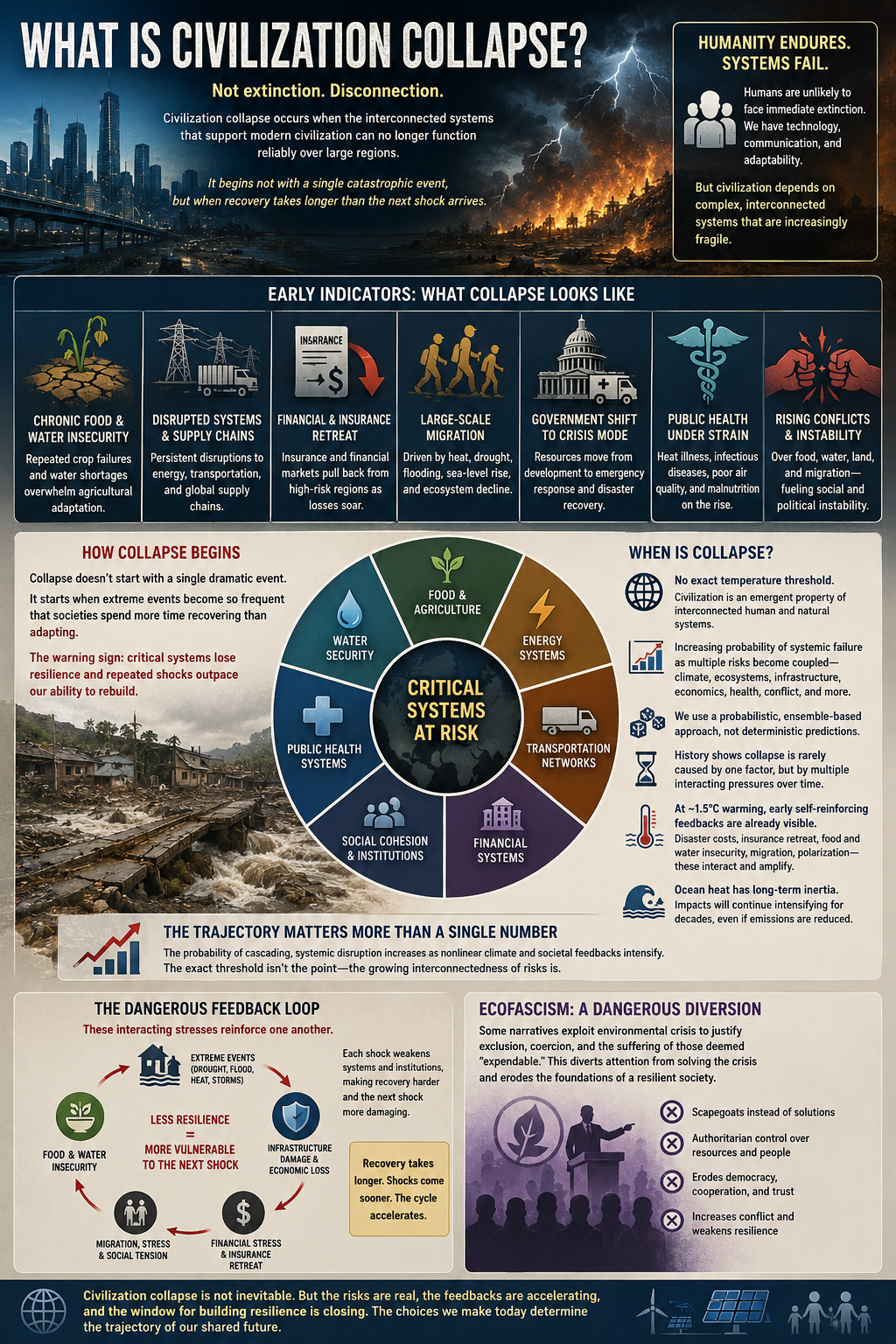
Humans are unlikely to face immediate extinction under foreseeable climate scenarios. Our species possesses technological capabilities, global communication networks, and a remarkable ability to adapt to changing conditions.
Let’s lower the bar then to civilization collapse and define the term. Not talking about timeframes, could you explain what that term means to you? What are some of the things that would happen? How could we recognize the start? What things would fail?
Good question. Civilization collapse does not mean humanity suddenly disappears. It means that the interconnected systems that support modern civilization can no longer function reliably over large regions. Early signs of collapse are already occurring.
Some of these indicators include:
Chronic food insecurity as repeated crop failures and water shortages overwhelm agricultural adaptation.
Persistent disruptions to energy, transportation, and global supply chains.
Insurance and financial markets retreating from high-risk regions because losses become unmanageable.
Large-scale migration driven by heat, drought, flooding, sea-level rise, and ecosystem decline.
Governments increasingly shifting resources from development to emergency response and disaster recovery.
Public health systems struggling with heat illness, infectious diseases, poor air quality, and malnutrition.
Escalating conflicts over food, water, land, and migration.
I don’t think collapse begins with a single dramatic event. It starts when extreme events become so frequent that societies spend more time recovering than adapting. The warning sign is when critical systems lose resilience and repeated shocks outpace our ability to rebuild.
Some of those early indicators are already observable today. The question isn’t whether civilization stops overnight, but whether enough interconnected systems begin failing simultaneously that they reinforce one another. That’s why many researchers focus on cascading risks and coupled feedbacks rather than isolated events.
When Is Collapse?
Signs of disruption and collapse are already becoming visible in many parts of the world.
There isn’t a universally accepted temperature threshold at which civilization “collapses.” Civilization is an emergent property of interconnected human and natural systems, not a single physical variable.
The argument isn’t based on a hard cutoff like “X°C = collapse.” It’s based on the increasing probability of systemic failure as multiple risks become coupled. Climate science provides the physical forcing, while ecology, economics, engineering, public health, and history help us understand how societies respond to repeated, compounding shocks.
That’s why we use a probabilistic, ensemble-based approach rather than deterministic predictions. We aren’t claiming to know the exact year or exact temperature at which civilization fails. We’re evaluating the likelihood that interacting stresses—food and water insecurity, ecosystem degradation, infrastructure failures, migration, financial instability, conflict, and public health crises—begin reinforcing one another faster than societies can adapt.
History shows that civilizations rarely collapse for a single reason. They typically experience multiple interacting pressures that erode resilience over time. Our work extends that systems perspective to a globalized civilization operating within a rapidly changing climate.
In fact, I would argue that we’re already seeing early signs of self-reinforcing societal feedbacks at approximately 1.5°C of warming. Rising disaster costs strain insurance markets, infrastructure, and government budgets. Food and water insecurity contribute to migration and political instability. Repeated extreme events reduce resilience, making recovery from the next disaster more difficult. These interacting pressures don’t constitute “collapse” by themselves, but they are consistent with the early stages of a cascading systemic process.
We also know that the climate system has substantial thermal inertia. The heat already stored in the oceans will continue influencing the climate for decades, even as emissions are reduced. That means many climate impacts will continue to intensify before stabilizing, extending both the duration of environmental stress and the societal challenges associated with adaptation.
So I would frame it less as “civilization collapses at 4°C or 6°C” and more as “the probability of cascading, systemic disruption increases as nonlinear climate and societal feedbacks intensify.” The exact threshold isn’t the point; the trajectory and the growing interconnectedness of the risks are.
Ecofascism
I think we’re already seeing early-stage societal feedbacks emerge. I’m not saying civilization has “collapsed,” but that some of the reinforcing dynamics associated with systemic decline are becoming visible. Financial stress from repeated disasters, insurance retreat, food and water insecurity, migration, political polarization, and declining institutional resilience don’t occur in isolation—they increasingly interact and amplify one another.
One example that concerns me is the emergence of ecofascist narratives. Ecofascism reframes environmental crisis through an authoritarian lens, portraying environmental degradation as justification for exclusion, coercion, or the suffering of groups considered expendable. Rather than focusing on reducing emissions and building resilience, it redirects the conversation toward hierarchy and scapegoating.
Whether we ultimately call this the beginning of “collapse” is partly a matter of definition. What matters to me is recognizing that climate, ecological, economic, and social systems are increasingly coupled. As those feedbacks strengthen, the probability of cascading disruptions rises, even though the exact trajectory remains uncertain.
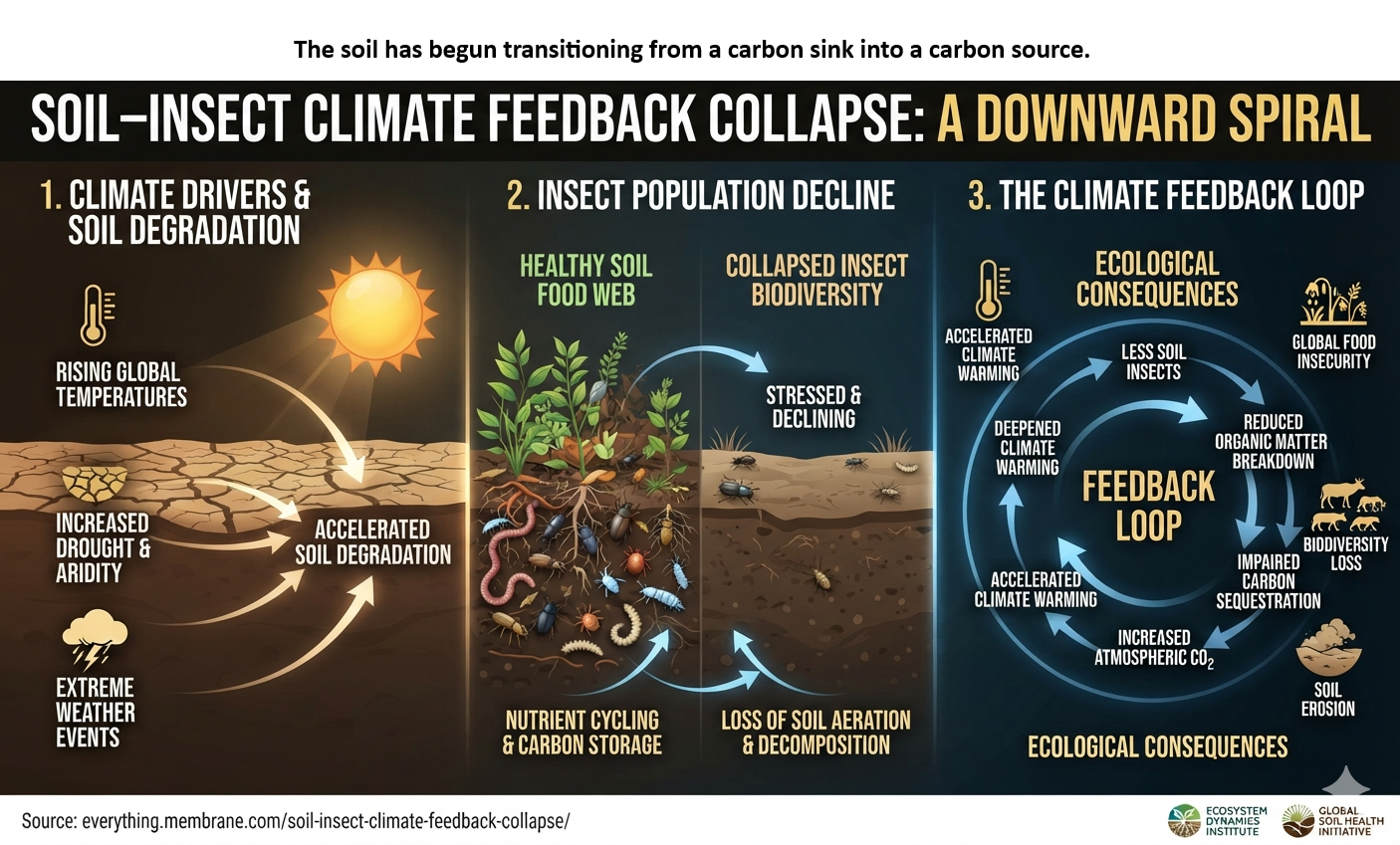
The soil has begun transitioning from a carbon sink into a carbon source.
by Daniel Brouse
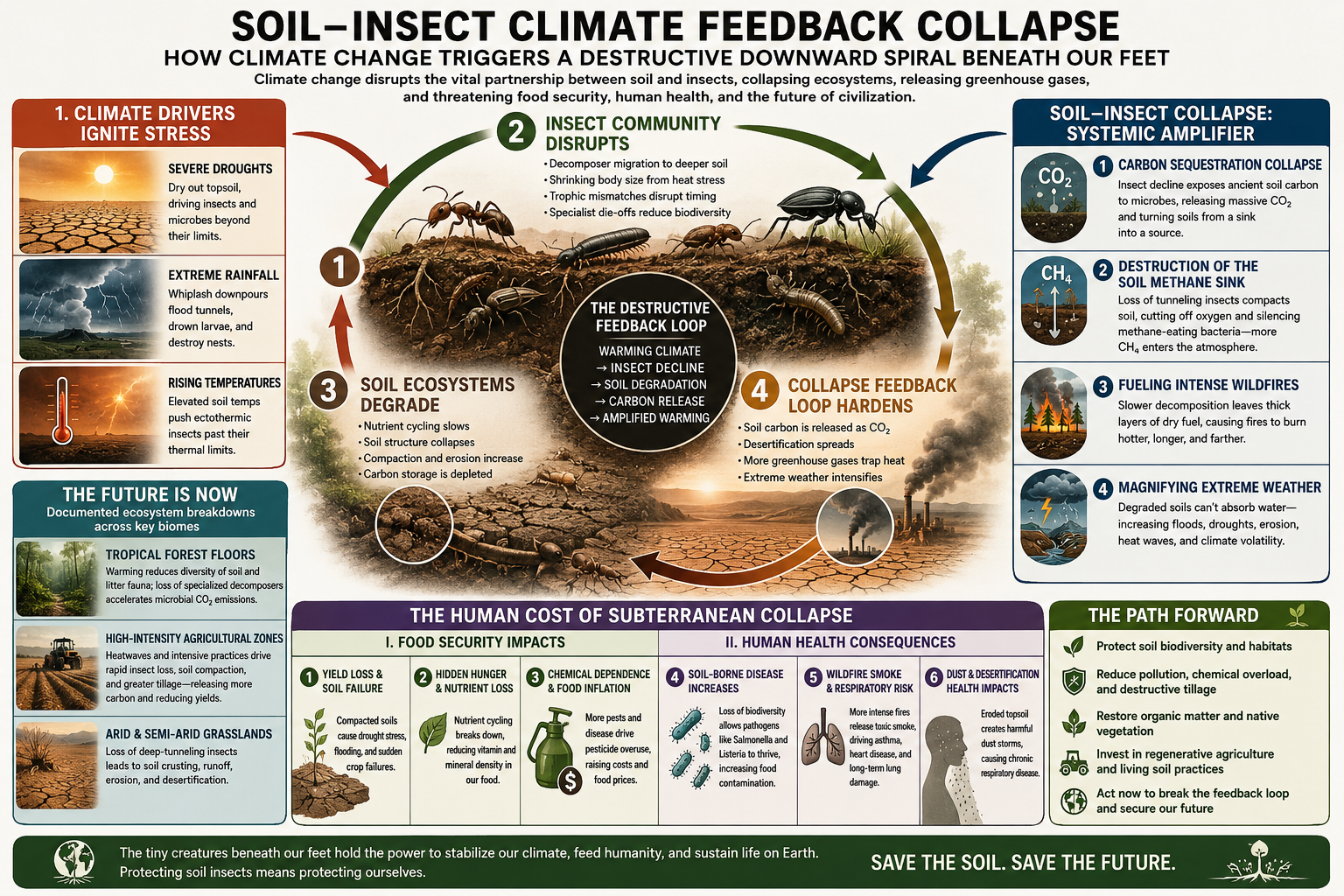
Soil–Insect Climate Feedback Collapse: How Climate Change Is Triggering a Downward Spiral in Earth’s Hidden Ecosystems
Introduction: The Collapse Beneath Our Feet
Climate change is not only transforming the atmosphere, oceans, and visible landscapes of Earth; it is also disrupting one of the planet’s most important hidden systems—the living soil ecosystem beneath our feet. Soil and insects exist in a highly interconnected relationship where insects regulate decomposition, nutrient cycling, carbon storage, water movement, and the physical structure of the ground itself.
As global temperatures rise and extreme weather becomes more intense, this relationship is being pushed beyond its natural limits. Soil insects, particularly ectothermic organisms whose body temperatures are controlled by their environment, are highly vulnerable to rising temperatures, drought, flooding, and ecological instability. At the same time, soil itself becomes increasingly degraded as biological processes that maintain its structure and fertility begin to fail.
The collapse of soil-insect systems represents more than a biodiversity crisis. It is a systemic disruption of one of Earth’s largest carbon reservoirs and one of humanity’s most important life-support systems. As subterranean ecosystems deteriorate, the consequences extend upward into agriculture, wildfire behavior, atmospheric processes, food security, and human health.
1. Climate Drivers Ignite Soil-Insect Stress
Climate change acts as the primary trigger for the collapse of the soil-insect system. Rising temperatures, changing precipitation patterns, drought, and extreme rainfall events place intense pressure on organisms that have evolved within relatively stable environmental conditions.
Severe Drought and Soil Drying
Increasing drought conditions dry out the upper layers of soil, eliminating critical habitat for many soil organisms. Moisture-dependent insects and other decomposers experience increased mortality as soils become too dry to support biological activity.
Dry soils also:
Reduce microbial activity.
Increase compaction.
Limit decomposition.
Reduce nutrient availability.
As moisture disappears, many soil insects are forced deeper underground to escape unfavorable surface conditions, leaving the upper soil layers biologically depleted.
Extreme Rainfall and Flooding
Climate change is also increasing the frequency of intense rainfall events. These sudden floods disrupt underground ecosystems by:
Flooding insect tunnels.
Destroying underground nesting structures.
Drowning eggs and larvae.
Removing surface organic material.
The increasing combination of drought and extreme rainfall creates a climate “whiplash” effect, forcing soil organisms to survive rapidly shifting and increasingly hostile environments.
Rising Soil Temperatures
Elevated soil temperatures place ectothermic organisms under direct physiological stress. Because insects rely on environmental temperatures to regulate metabolism, warming can push them beyond their thermal limits.
The consequences include:
Reduced survival.
Disrupted reproduction.
Altered development cycles.
Increased ecological instability.
The result is a progressive breakdown of the underground biological network that supports healthy soils.
2. The Soil Insect Community Disrupts
As climate pressures intensify, soil insect communities begin experiencing widespread ecological disruption. The impacts are not limited to population decline but include changes in behavior, body size, timing, and species composition.
Decomposer Migration
Macrofauna such as ants, beetles, termites, and other large decomposers are essential for processing organic matter and maintaining soil structure.
Under increasing heat and drought stress:
These organisms migrate deeper into the soil.
Surface decomposition declines.
Organic matter remains exposed rather than being incorporated into deeper layers.
The loss of surface-level decomposer activity weakens the entire soil food web.
Shrinking Body Size
Rising temperatures accelerate insect development rates. However, faster growth often results in smaller adult insects.
This reduction in body size decreases:
Physical efficiency.
Reproductive capacity.
Ecosystem function.
Smaller insects are less capable of performing critical roles such as decomposition, soil mixing, and nutrient movement.
Trophic Mismatches
Climate disruption alters the timing relationships between organisms.
Examples include:
Insect emergence occurring before food resources become available.
Reduced synchronization between decomposers and plant litter cycles.
Disruption of predator-prey relationships.
These mismatches weaken ecosystem stability and reduce the ability of soil communities to adapt.
Specialist Die-Offs
Specialized soil insects are among the most vulnerable organisms during rapid environmental change.
Localized extinctions of sensitive species result in:
Reduced biodiversity.
Loss of ecological functions.
Increased dominance of heat-tolerant generalist species.
As biodiversity declines, the soil ecosystem becomes less resilient and more vulnerable to additional climate stress.
3. Soil Ecosystems Degrade
The decline of soil insect communities causes cascading failures throughout the underground ecosystem. Without healthy insect populations, soils lose many of the biological processes required to maintain fertility, structure, and climate regulation.
Halted Nutrient Cycling
Soil insects are fundamental to the breakdown of organic material.
Without macrofauna:
Plant litter decomposition slows.
Nutrients remain trapped in undecomposed material.
Soil fertility declines.
The biological recycling system that sustains terrestrial ecosystems begins to fail.
Structural Collapse
Burrowing insects act as ecosystem engineers by creating tunnels and channels throughout the soil.
These structures provide:
Soil aeration.
Water infiltration pathways.
Root access.
Microbial habitat.
As tunneling organisms disappear:
Soil becomes compacted.
Water absorption decreases.
Surface erosion increases.
The soil loses its ability to function as a living, dynamic system.
Carbon Depletion
Healthy soils represent one of Earth’s largest carbon reservoirs. Soil insects help protect carbon by shredding organic matter and mixing it into deeper layers where it can become stabilized.
When insect communities collapse:
Organic carbon becomes exposed.
Microbial decomposition accelerates.
Carbon storage capacity declines.
The soil has begun transitioning from a carbon sink into a carbon source.
4. The Collapse Feedback Loop Hardens
Once soil degradation begins, the damage feeds back into the climate system, accelerating the original disruption. The loss of soil insects transforms a biological decline into a broader Earth-system feedback mechanism.
Greenhouse Gas Release
As soil structures fail and organic matter becomes exposed, large quantities of stored soil carbon are released into the atmosphere.
Healthy soils function as long-term carbon storage systems by protecting organic matter within complex soil structures. When insect activity declines:
Soil aggregates break down.
Previously protected carbon becomes accessible to microbes.
Decomposition accelerates.
Carbon dioxide emissions increase.
As more carbon enters the atmosphere, additional warming occurs, intensifying the environmental pressures already affecting soil organisms.
Desertification
The combined loss of soil biodiversity and soil structure can transform productive ecosystems into degraded landscapes.
Without healthy insect communities:
Soil loses its ability to retain moisture.
Vegetation declines.
Organic matter inputs decrease.
Erosion accelerates.
The landscape gradually loses its capacity to support biological productivity, creating conditions favorable for permanent desertification.
Amplified Warming
The release of additional greenhouse gases creates a reinforcing climate feedback.
The original disturbance is therefore amplified through the collapse of a critical biological system.
The Future Is Now: Evidence of Active Soil-Insect Collapse
This destructive feedback loop is no longer only a theoretical projection. It is actively documented across multiple ecosystems worldwide. Field experiments, long-term ecological monitoring, and regional surveys reveal visible breakdowns where insect declines directly affect soil stability, carbon cycling, and ecosystem function.
1. Tropical Forest Floors
Tropical ecosystems contain some of the most biologically diverse soil communities on Earth. However, tropical insects often live close to their maximum thermal tolerance, making them particularly vulnerable to even modest increases in temperature.
The Evidence
Controlled whole-profile soil warming experiments in tropical forests have demonstrated:
Significant reductions in soil and leaf-litter fauna diversity.
Declines in soil organism richness.
Greater vulnerability during dry-season warming.
The Feedback
As specialized macro-decomposers such as larger beetles and millipedes decline:
They are replaced by fewer heat-tolerant and aggressive microarthropod species.
Soil food-web complexity decreases.
Microbial activity becomes less regulated.
Without a diverse insect community controlling microbial processes, microbes can accelerate the breakdown of organic matter, increasing carbon dioxide emissions from tropical soils.
2. High-Intensity Agricultural Zones
Agricultural ecosystems are experiencing a compounding crisis as climate stress combines with intensive land management practices.
Major pressures include:
Synthetic chemical use.
Heavy tillage.
Monoculture farming.
Increasing heat extremes.
The Evidence
Long-term ecological monitoring indicates that heavily managed agricultural regions experience accelerating declines in insect abundance and species richness as climate pressures increase.
The Feedback
When croplands experience extreme heat:
Native soil insects decline.
Natural soil aeration decreases.
Soil compaction increases.
Water retention capacity declines.
As biological soil engineers disappear, farmers increasingly rely on mechanical intervention to break apart hardened soils.
However, increased tillage:
Destroys remaining underground habitats.
Accelerates organic carbon exposure.
Increases agricultural greenhouse gas emissions.
This creates a reinforcing cycle:
Climate stress → soil insect loss → soil degradation → increased tillage → further soil ecosystem destruction
3. Arid and Semi-Arid Grasslands
Dryland ecosystems depend heavily on ecosystem-engineering insects such as ants and termites. These organisms regulate water movement, nutrient distribution, and soil structure in some of the planet’s most water-limited environments.
The Evidence
Increasing temperatures and prolonged drought have altered grassland soil communities, causing significant declines in moisture-sensitive soil organisms.
Deep-dwelling insects are increasingly affected as underground moisture disappears.
The Feedback
Without deep-tunneling insects:
Soil loses internal pathways for water movement.
Surface crusts form.
Rainfall infiltration declines.
Vegetation recovery becomes more difficult.
When intense rainfall events occur, degraded soils cannot absorb water effectively.
Instead:
Water runs across the surface.
Severe erosion occurs.
Topsoil is removed.
Plant communities collapse.
The loss of vegetation further reduces organic matter inputs, reinforcing the decline of soil insects and accelerating desertification.
Soil-Insect Collapse as a Systemic Climate Amplifier
The soil-insect collapse feedback does not occur independently. It connects directly with major Earth-system processes involving carbon storage, methane regulation, wildfire intensity, and extreme weather.
The destruction of subterranean biodiversity transforms a microscopic ecological disruption into a planetary-scale climate amplifier.
1. Collapse of Carbon Sequestration
Soils contain roughly three times more carbon than terrestrial vegetation. Soil insects function as biological gatekeepers that determine how carbon is processed and stored.
Disruption
Healthy soils depend on insects to:
Break down organic material.
Mix plant debris into deeper layers.
Create conditions where carbon binds with minerals.
Build stable soil aggregates.
Global environmental changes reduce the feeding and burrowing activity of soil detritivores, weakening this carbon protection system.
The Feedback
Without insects physically incorporating and protecting carbon:
Organic matter becomes exposed.
Oxygen reaches stored carbon.
Microbial decomposition accelerates.
Long-term warming experiments show that stressed soils can begin consuming persistent, centuries-old organic matter, releasing additional carbon dioxide into the atmosphere.
This converts soils from climate stabilizers into climate amplifiers.
2. Destruction of the Soil Methane Sink
Upland soils represent a major global methane sink because they contain methane-consuming microorganisms called methanotrophs.
Disruption
Methanotroph activity depends on proper soil gas exchange.
This balance is maintained by:
Soil structure.
Oxygen movement.
Insect-created tunnels and macropores.
When heat and drought drive tunneling insects away:
Soil compacts.
Underground airflow decreases.
Methane-consuming microbial communities become impaired.
The Feedback
As the methane sink weakens:
Less methane is removed from the atmosphere.
More CH₄ accumulates.
Atmospheric warming increases.
The soil shifts from actively filtering methane toward becoming a weaker climate-regulating system.
3. Fueling More Intense Wildfires
The collapse of soil decomposer communities fundamentally changes the physical characteristics of forests, grasslands, and other terrestrial ecosystems. When insects responsible for breaking down organic material decline, landscapes accumulate larger quantities of dry, undecomposed biomass.
Disruption
Healthy populations of millipedes, woodlice, beetles, and other macro-insects rapidly process fallen leaves, dead plant material, and organic debris.
When these decomposers decline:
Leaf litter decomposition slows.
Dead vegetation accumulates on the surface.
Organic material remains exposed to drying conditions.
Forest floors and grasslands become increasingly fuel-loaded.
The result is the transformation of biologically active landscapes into increasingly combustible environments.
The Feedback
When climate-driven wildfires ignite these ecosystems:
Fires spread more rapidly.
Burning temperatures increase.
Larger areas are consumed.
More carbon is released into the atmosphere.
Intense fires also damage the remaining plant-soil-microbe relationships that allow ecosystems to recover.
Healthy soils and their insect communities function as a natural climate buffer. Soil organisms help regulate water movement, maintain moisture storage, and reduce the severity of environmental extremes.
When this biological infrastructure collapses, landscapes lose their ability to absorb climate shocks.
Disruption
Without insect-driven bioturbation—the natural mixing and restructuring of soil—the upper layers of soil become increasingly compacted and degraded.
The consequences include:
Reduced soil porosity.
Lower water infiltration.
Increased surface crust formation.
Reduced moisture retention.
The soil becomes hardened and less capable of functioning as a living water-management system.
The Feedback
When extreme rainfall events occur:
Water cannot penetrate degraded soils.
Surface runoff increases.
Flash flooding intensifies.
Mudslides and erosion become more severe.
Topsoil is lost.
The landscape loses its ability to store water, increasing drought stress after storms and creating conditions that intensify future heat waves.
The cycle becomes:
Soil degradation → reduced water storage → stronger drought impacts → greater heat stress → further ecosystem decline
The Human Cost of Subterranean Collapse
The effects of soil-insect collapse extend directly into human systems. Because human civilization depends on productive soils for agriculture, the degradation of underground ecosystems represents a direct threat to food security, economic stability, and public health.
Humans depend on healthy soils for approximately 95% of the food consumed globally. As soil biological systems decline, the consequences move from ecological disruption into human survival systems.
I. Food Security Impacts
1. Declining Crop Yields and Structural Soil Failure
As temperatures rise and insect communities decline, agricultural soils lose critical biological functions.
The Mechanism
When fields lose tunneling macrofauna:
Soil becomes compacted.
Water infiltration decreases.
Plant-accessible water storage declines.
During drought:
Crops experience water stress more rapidly.
Roots cannot access deeper moisture reserves.
During extreme rainfall:
Hardened soils prevent water absorption.
Fields experience increased flooding.
Crops become vulnerable to sudden failure.
The same degraded soil becomes vulnerable to both drought and flooding, creating increasingly unstable agricultural conditions.
2. Hidden Hunger and Nutrient Decline
Food production depends not only on crop quantity but also on nutritional quality.
The relationship between insects, microbes, and plants maintains the movement of essential nutrients through ecosystems.
The Mechanism
Soil insects:
Break down organic material.
Create smaller biological fragments.
Support microbial conversion of nutrients into plant-available forms.
These processes influence the availability of minerals such as:
Crops grown in degraded soils may experience reduced nutrient density, increasing the risk of “hidden hunger”—micronutrient deficiencies that impair human development and immune function.
3. Increasing Chemical Dependence and Food Inflation
As native insect diversity collapses, agricultural ecosystems become increasingly vulnerable to pests and disease.
The Mechanism
The loss of beneficial insects removes important ecological controls over:
Crop pests.
Soil pathogens.
Root-damaging organisms.
To maintain production:
Farmers increase pesticide use.
Synthetic inputs become more necessary.
Production costs rise.
The Impact
Greater chemical dependence contributes to:
Higher agricultural expenses.
Increased food prices.
Greater chemical runoff into freshwater systems.
Additional stress on vulnerable communities.
The agricultural system becomes trapped in a cycle of ecological decline and increasing dependence on external inputs.
II. Human Health Consequences
4. Increased Soil-Borne Disease and Opportunistic Pathogens
A diverse soil ecosystem acts as a biological defense system by limiting the expansion of opportunistic pathogens.
The Mechanism
High biodiversity helps suppress harmful organisms, including pathogens such as:
Salmonella enterica
Listeria monocytogenes
When soil biodiversity declines:
Ecological competition decreases.
Opportunistic organisms gain advantages.
Agricultural contamination risks increase.
The Impact
As soil ecosystems become increasingly disrupted:
Food safety risks rise.
Fresh produce contamination becomes more difficult to control.
Human exposure to soil-associated pathogens may increase.
5. Respiratory Disease and Toxic Wildfire Smoke
The soil-insect feedback loop connects directly to human respiratory health through increased wildfire intensity.
The Mechanism
When insect decomposers decline:
Dead vegetation accumulates.
Forest and grassland surfaces become fuel-loaded.
Fires burn with greater intensity.
These severe fires release:
Fine particulate matter (PM2.5).
Carbon compounds.
Volatile organic compounds.
The Impact
Smoke exposure can contribute to:
Increased asthma attacks.
Cardiovascular stress.
Respiratory illness.
Long-term health consequences.
As wildfire seasons intensify, the loss of soil biodiversity becomes connected to increasingly widespread air-quality threats.
6. Chronic Dust Exposure and Desertification Health Impacts
The final stage of soil collapse occurs when degraded landscapes lose their ability to maintain stable vegetation and soil structure.
The Mechanism
When insect populations decline:
Soil loses biological cohesion.
Root systems weaken.
Topsoil becomes vulnerable to erosion.
Wind can then transport large quantities of fine soil particles across broad regions.
The Impact
Chronic exposure to dust can increase risks of:
Respiratory irritation.
Chronic lung disease.
Silica-related health problems.
Reduced air quality across downwind communities.
The degradation of soil ecosystems therefore creates direct human health consequences far beyond the original affected landscape.
End Synthesis: The Soil-Insect Connection as a Climate Feedback System
The soil-insect relationship represents one of Earth’s most important biological feedback systems. Although insects are small organisms, their collective influence extends across planetary-scale processes involving carbon storage, water regulation, atmospheric chemistry, agriculture, and human health.
Climate change destabilizes this relationship by pushing soil organisms beyond their ecological limits. As insect communities decline, soils lose their ability to function as living ecosystems. Nutrient cycling slows, carbon storage weakens, water regulation declines, and landscapes become increasingly vulnerable to drought, flooding, wildfire, and erosion.
The resulting feedback loop transforms a biological disruption into a climate amplifier:
A warming climate damages insects. Declining insects damage soils. Damaged soils release carbon and lose resilience. Carbon release and ecosystem degradation accelerate climate instability.
The collapse occurring beneath the surface is therefore not separate from global climate change—it is part of the same interconnected Earth-system response.
Protecting soil biodiversity is not only an effort to preserve insects. It is an essential component of protecting carbon storage, food production, ecosystem stability, and human civilization itself.
The future of climate stability depends not only on what happens in the atmosphere above us, but also on whether the living world beneath our feet continues to function.
Q:“Has Earth ever experienced a climate change with this combination of speed, acceleration, and simultaneous disruption across Earth?”
There is no comparison in the geological record. The present is revealing a system changing at a rate that may be outside the range experienced throughout human civilization and perhaps for millions of years.
Q: “What Are the Immediate Impacts?
A: More extreme weather.
Severe weather is becoming more frequent, more intense, and more persistent, with extreme events lasting longer and affecting larger areas.
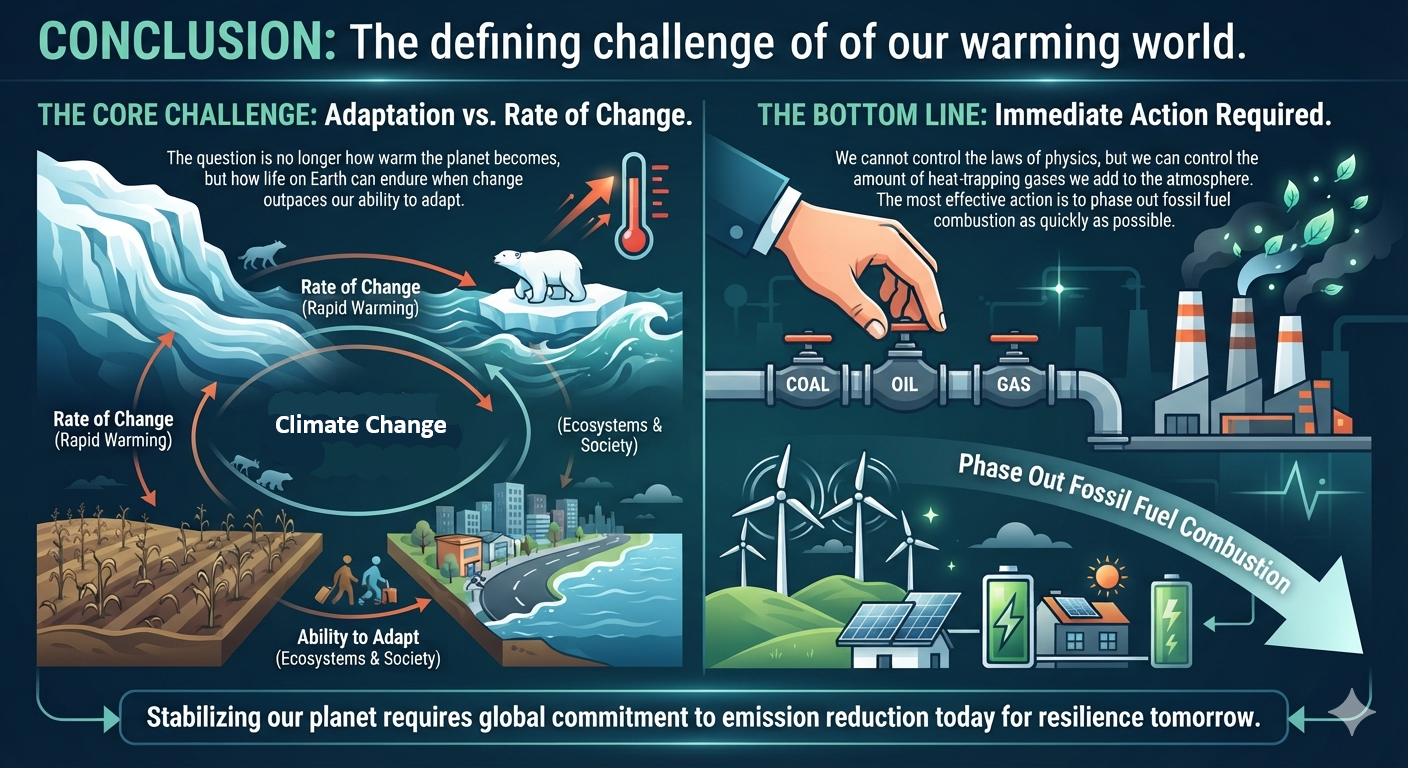
Bottom line: We cannot control the laws of physics, but we can control the amount of heat-trapping gases we add to the atmosphere. The most effective action is to phase out fossil fuel combustion as quickly as possible.
Q: What Causes Climate Change?
A: Human activities.
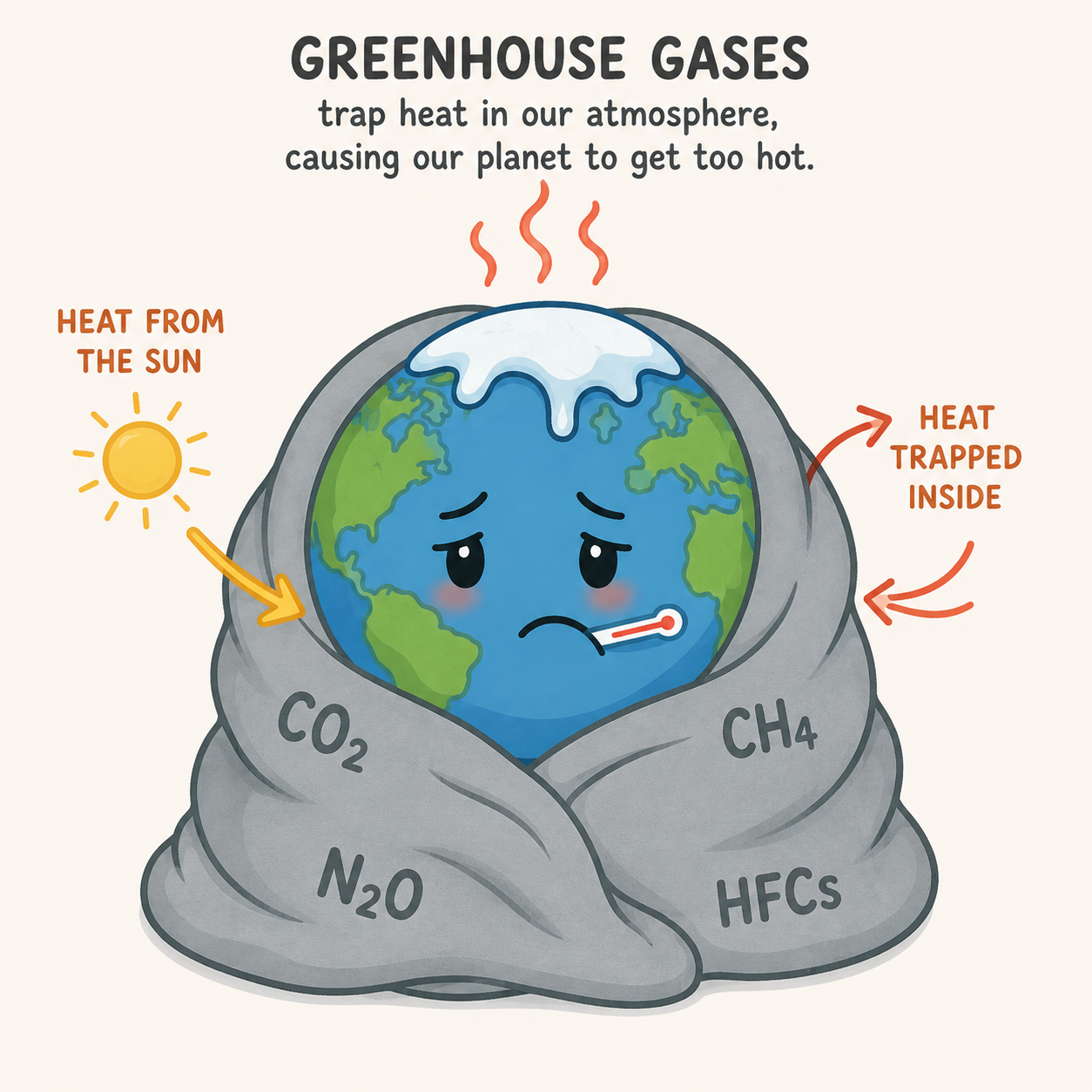
The primary driver of modern global warming is the increase in greenhouse gases released through human activities, especially the burning of fossil fuels. Carbon dioxide (CO2) and other greenhouse gases act like an insulating layer in the atmosphere, absorbing and re-emitting infrared radiation. This slows the loss of heat from Earth to space, creating an energy imbalance that causes the planet to warm.
Q: What Is Climate Change?
A: Climate change is energy transfer.
The phrase “global warming” is often misunderstood. While it correctly describes rising average temperatures, it does not tell the whole story. The real issue is the rapid buildup and movement of extra heat energy throughout Earth’s climate system.
Global warming is the beginning of climate change—not the end of it.
When greenhouse gases trap additional heat, that energy does not simply make the air warmer. It is continually transformed into other forms of energy, including:
Kinetic energy: Stronger winds and more powerful storms.
Gravitational potential energy: Greater vertical motion in the atmosphere and heavier rainfall.
Latent heat: More energy available to fuel hurricanes and atmospheric rivers.
Radiant energy: Increased trapping of infrared heat that amplifies warming.
Chemical energy: Wildfires and other processes that release additional greenhouse gases.
Electrical energy: More lightning in highly energetic thunderstorms.
More than 90% of this excess heat is absorbed by the oceans, not the atmosphere. The oceans act like a giant heat reservoir, storing energy and releasing it slowly over time. Because of this thermal inertia, the climate can continue changing even if emissions begin to decline.
By 2025, global temperatures had exceeded the long-recognized 1.5°C (2.7°F) warming threshold. To many people, an increase of 1.5°C may sound small. In Earth’s climate system, it is not.
Small increases in average temperature can produce much larger changes in temperature differences, air pressure, and atmospheric moisture. These changes alter weather patterns, intensify storms, increase heavy rainfall, and make many extreme events more severe.
What we are witnessing are not simply isolated weather events. They are increasingly extreme energy events occurring within an interconnected Earth system.
To understand climate change, it helps to think not only in terms of degrees of warming, but also in terms of joules of energy and how that energy moves through the atmosphere, oceans, ice, and living ecosystems.
Q: How Fast Is the Climate Changing?
A: The climate appears to be changing at an exceptionally rapid pace—faster than at any time in human history and possibly faster than at any time in the past several million years.
Many past climate transitions unfolded over centuries, thousands of years, or longer. The modern climate system is experiencing simultaneous changes across the atmosphere, oceans, cryosphere, and biosphere over time scales measured in decades.
Climate change is often measured in degrees, but degrees alone cannot describe the full magnitude of the transformation now underway. The defining feature of the modern climate system is not simply that Earth is warmer than it was in the past, but that multiple components of the Earth system are changing simultaneously at rates that challenge the ability of natural systems, ecosystems, and human societies to adapt.
Historical climate records remain essential for understanding how the planet responds to changes in energy balance. However, the current climate trajectory represents a fundamentally different challenge: a rapidly accelerating transition occurring across the atmosphere, oceans, cryosphere, and biosphere within decades rather than centuries or millennia. The question is no longer only how much the climate has changed, but how quickly the rate of change itself is increasing and how those changes interact through a highly connected planetary system.
The past reveals what climate systems can do.
The present is revealing a system changing at a rate that may be outside the range experienced throughout human civilization and perhaps for millions of years.
Beyond Temperature: What Climate Change Really Means
Climate change is often framed around a simple comparison:
How much colder were ice ages than the climate before the Industrial Revolution?
While historical temperature comparisons remain scientifically important, they no longer capture the most significant feature of modern climate change.
The more important question today is:
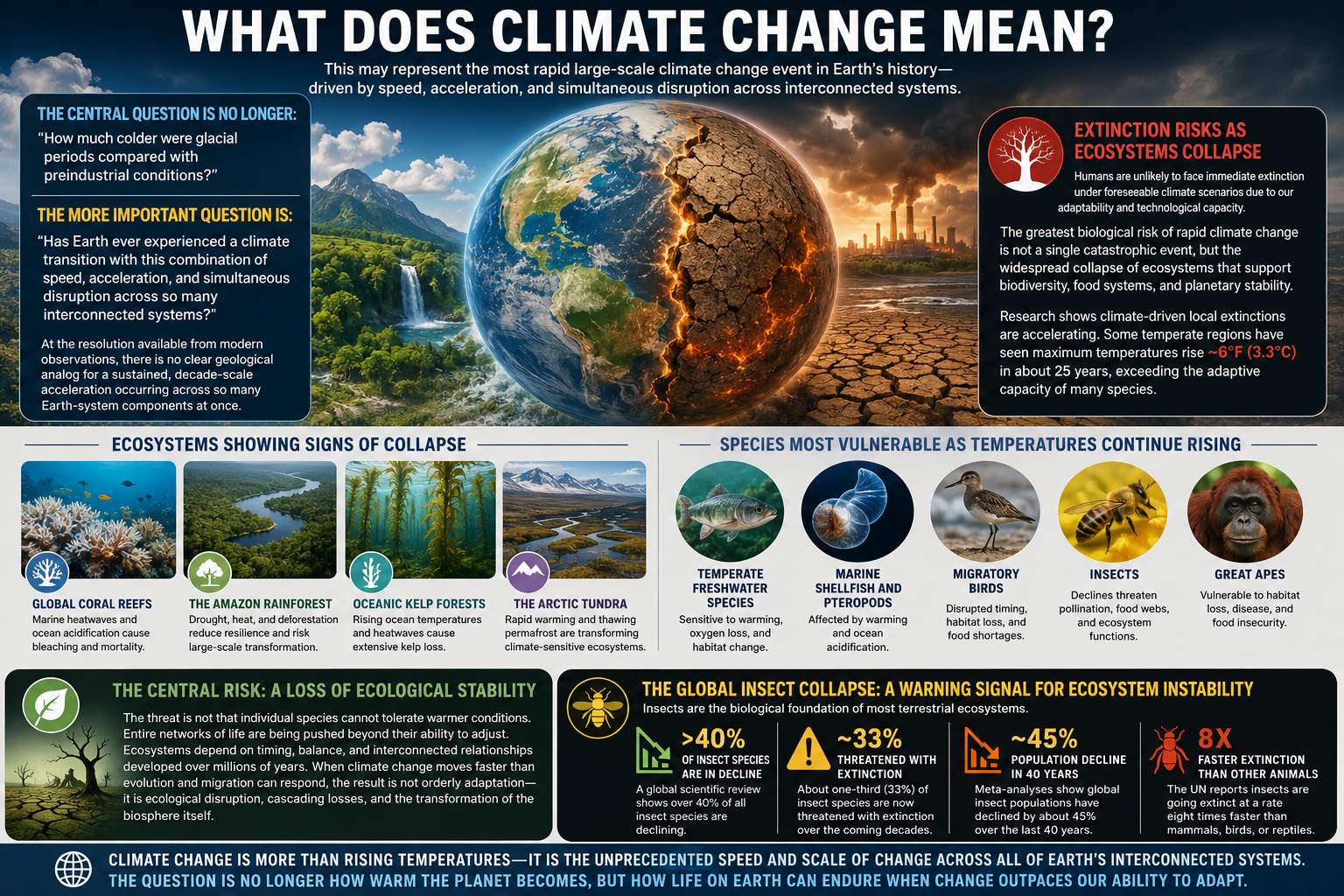
Has Earth ever experienced a climate transition with this combination of speed, acceleration, and simultaneous disruption across so many interconnected systems?
Based on modern observations, there is no clear geological example of a sustained, decade-scale acceleration occurring simultaneously across numerous components of the Earth system. Rising temperatures are occurring alongside accelerating changes in oceans, ice sheets, ecosystems, atmospheric moisture, and extreme weather patterns. It is this convergence of rapid changes—not temperature alone—that defines the modern climate era. This may represent the most rapid large-scale climate change event in Earth’s history, based on the rate and simultaneous disruption now being observed across multiple interconnected Earth systems.
The Growing Risk of Ecosystem Collapse
Humans are unlikely to face immediate extinction under foreseeable climate scenarios. Our species possesses technological capabilities, global communication networks, and a remarkable ability to adapt to changing conditions.
Many other species, however, do not have those advantages.
The greatest biological danger posed by rapid climate change is not a single catastrophic event. It is the gradual breakdown of ecosystems that support biodiversity, food production, and the stability of the biosphere itself.
Research increasingly shows that climate-driven local extinctions are accelerating. Some temperate regions have experienced unexpectedly high biodiversity losses associated with rapidly increasing temperature extremes. In certain areas, maximum temperatures have risen by approximately 6°F (3.3°C) in only about 25 years, creating environmental conditions that exceed the ability of many species to adapt or migrate.
Ecosystems Already Showing Signs of Stress
Several major ecosystems are exhibiting characteristics consistent with ecological disruption and increasing instability:
Global Coral Reefs: Marine heatwaves and ocean acidification are causing repeated mass bleaching events and widespread mortality.
The Amazon Rainforest: Increasing drought, heat, and deforestation are reducing resilience and raising concerns about large-scale ecosystem transformation.
Oceanic Kelp Forests: Rising ocean temperatures and marine heatwaves are causing extensive losses of kelp ecosystems that support diverse marine life.
The Arctic Tundra: Rapid warming, thawing permafrost, and shifting vegetation are fundamentally altering one of Earth’s most climate-sensitive regions.
Species Most Vulnerable to Continued Warming
Some groups of organisms appear particularly vulnerable because they occupy narrow ecological niches or depend on highly synchronized environmental conditions.
Among the most at-risk are:
Temperate freshwater species
Marine shellfish and pteropods
Migratory birds
Insects
Great apes
The loss of these organisms can have consequences far beyond individual extinctions because each species is connected to larger ecological networks.
The Real Threat: Losing Ecological Stability
The defining danger of rapid climate change is not simply that individual species cannot survive warmer temperatures.
The larger threat is that entire networks of life are being pushed beyond their capacity to adjust.
Ecosystems depend on timing, balance, and intricate relationships that evolved over millions of years. Plants flower at specific times to coincide with pollinators. Predators and prey maintain dynamic balances. Migratory species depend on seasonal cues that have remained relatively stable throughout human history.
When climate change occurs faster than evolution, migration, and adaptation can respond, ecosystems do not smoothly transition to new conditions. Instead, they experience disruption, cascading losses, and fundamental reorganization.
The result is not merely a warmer planet. It is the transformation of the biosphere itself.
The Global Insect Collapse: An Early Warning Signal
One of the clearest indicators of accelerating ecological disruption is the worldwide decline of insect populations.
Insects form the biological foundation of most terrestrial ecosystems. They pollinate crops and wild plants, decompose organic material, recycle nutrients, and provide food for countless birds, fish, amphibians, reptiles, and mammals.
Scientific studies paint a concerning picture:
More than 40% of known insect species are experiencing population declines.
Approximately one-third of insect species are considered threatened with extinction over the coming decades.
Long-term analyses suggest that global insect abundance has fallen by roughly 45% over the past 40 years.
The United Nations has reported that insects are disappearing at rates estimated to be eight times faster than mammals, birds, or reptiles.
Because insects support so many ecological processes, their decline serves as an early warning signal of broader ecosystem instability. Reduced pollination, disrupted food webs, and diminished nutrient cycling can trigger cascading effects that extend throughout the biosphere.
Climate Change Is About More Than Degrees
Climate change is often discussed in terms of global average temperature—1°C, 2°C, or 3°C of warming. But the defining characteristic of the modern climate system is not simply how warm the planet becomes.
It is the unprecedented pace of change and the simultaneous disruption occurring across interconnected physical and biological systems.
The central question of climate change is therefore no longer:
“How different is today’s temperature from the past?”
The more consequential question is:
“How do ecosystems and societies respond when multiple Earth systems begin changing faster than they can adapt?”
The answer to that question may determine not only the future of individual species, but the stability of the biosphere upon which human civilization ultimately depends.
Conclusion
The question is no longer how warm the planet becomes, but how life on Earth can endure when change outpaces our ability to adapt.
Bottom line: We cannot control the laws of physics, but we can control the amount of heat-trapping gases we add to the atmosphere. The most effective action is to phase out fossil fuel combustion as quickly as possible.
Feedback Loops → Tipping Points → Acceleration → Domino Effect Feedback loops amplify climate change and can push interconnected Earth systems past critical tipping points. As tipping points are crossed, they can trigger additional feedback loops and destabilize other climate systems. This cascading “Domino Effect” compresses timescales, accelerates change, and increases the risk of rapid, nonlinear climate transformations.
Climate change is often framed around a simple comparison:
How much colder were ice ages than the climate before the Industrial Revolution?
While historical temperature comparisons remain scientifically important, they no longer capture the most significant feature of modern climate change.
The more important question today is:
Has Earth ever experienced a climate transition with this combination of speed, acceleration, and simultaneous disruption across so many interconnected systems?
Based on modern observations, there is no clear geological example of a sustained, decade-scale acceleration occurring simultaneously across numerous components of the Earth system. Rising temperatures are occurring alongside accelerating changes in oceans, ice sheets, ecosystems, atmospheric moisture, and extreme weather patterns. It is this convergence of rapid changes—not temperature alone—that defines the modern climate era. This may represent the most rapid large-scale climate change event in Earth’s history, based on the rate and simultaneous disruption now being observed across multiple interconnected Earth systems.
The Growing Risk of Ecosystem Collapse
Humans are unlikely to face immediate extinction under foreseeable climate scenarios. Our species possesses technological capabilities, global communication networks, and a remarkable ability to adapt to changing conditions.
Many other species, however, do not have those advantages.
The greatest biological danger posed by rapid climate change is not a single catastrophic event. It is the gradual breakdown of ecosystems that support biodiversity, food production, and the stability of the biosphere itself.
Research increasingly shows that climate-driven local extinctions are accelerating. Some temperate regions have experienced unexpectedly high biodiversity losses associated with rapidly increasing temperature extremes. In certain areas, maximum temperatures have risen by approximately 6°F (3.3°C) in only about 25 years, creating environmental conditions that exceed the ability of many species to adapt or migrate.
Ecosystems Already Showing Signs of Stress
Several major ecosystems are exhibiting characteristics consistent with ecological disruption and increasing instability:
Global Coral Reefs: Marine heatwaves and ocean acidification are causing repeated mass bleaching events and widespread mortality.
The Amazon Rainforest: Increasing drought, heat, and deforestation are reducing resilience and raising concerns about large-scale ecosystem transformation.
Oceanic Kelp Forests: Rising ocean temperatures and marine heatwaves are causing extensive losses of kelp ecosystems that support diverse marine life.
The Arctic Tundra: Rapid warming, thawing permafrost, and shifting vegetation are fundamentally altering one of Earth’s most climate-sensitive regions.
Species Most Vulnerable to Continued Warming
Some groups of organisms appear particularly vulnerable because they occupy narrow ecological niches or depend on highly synchronized environmental conditions.
Among the most at-risk are:
Temperate freshwater species
Marine shellfish and pteropods
Migratory birds
Insects
Great apes
The loss of these organisms can have consequences far beyond individual extinctions because each species is connected to larger ecological networks.
The Real Threat: Losing Ecological Stability
The defining danger of rapid climate change is not simply that individual species cannot survive warmer temperatures.
The larger threat is that entire networks of life are being pushed beyond their capacity to adjust.
Ecosystems depend on timing, balance, and intricate relationships that evolved over millions of years. Plants flower at specific times to coincide with pollinators. Predators and prey maintain dynamic balances. Migratory species depend on seasonal cues that have remained relatively stable throughout human history.
When climate change occurs faster than evolution, migration, and adaptation can respond, ecosystems do not smoothly transition to new conditions. Instead, they experience disruption, cascading losses, and fundamental reorganization.
The result is not merely a warmer planet. It is the transformation of the biosphere itself.
The Global Insect Collapse: An Early Warning Signal
One of the clearest indicators of accelerating ecological disruption is the worldwide decline of insect populations.
Insects form the biological foundation of most terrestrial ecosystems. They pollinate crops and wild plants, decompose organic material, recycle nutrients, and provide food for countless birds, fish, amphibians, reptiles, and mammals.
Scientific studies paint a concerning picture:
More than 40% of known insect species are experiencing population declines.
Approximately one-third of insect species are considered threatened with extinction over the coming decades.
Long-term analyses suggest that global insect abundance has fallen by roughly 45% over the past 40 years.
The United Nations has reported that insects are disappearing at rates estimated to be eight times faster than mammals, birds, or reptiles.
Because insects support so many ecological processes, their decline serves as an early warning signal of broader ecosystem instability. Reduced pollination, disrupted food webs, and diminished nutrient cycling can trigger cascading effects that extend throughout the biosphere.
Climate Change Is About More Than Degrees
Climate change is often discussed in terms of global average temperature—1°C, 2°C, or 3°C of warming. But the defining characteristic of the modern climate system is not simply how warm the planet becomes.
It is the unprecedented pace of change and the simultaneous disruption occurring across interconnected physical and biological systems.
The central question of climate change is therefore no longer:
“How different is today’s temperature from the past?”
The more consequential question is:
“How do ecosystems and societies respond when multiple Earth systems begin changing faster than they can adapt?”
The answer to that question may determine not only the future of individual species, but the stability of the biosphere upon which human civilization ultimately depends.
Conclusion
The question is no longer how warm the planet becomes, but how life on Earth can endure when change outpaces our ability to adapt.
Bottom line: We cannot control the laws of physics, but we can control the amount of heat-trapping gases we add to the atmosphere. The most effective action is to phase out fossil fuel combustion as quickly as possible.
Over the past several years, we’ve trained our AI agents on our own climate research to explore new ways of communicating complex scientific concepts. As a result, some of our content reflects the depth of graduate-level research while presenting it in a more accessible visual format. We’ve intentionally experimented with different styles for audiences with varying scientific backgrounds, and somewhat to our surprise, the AI-assisted graphics and visual explanations have consistently generated the highest levels of engagement. That experience has led us to an important conclusion about the role of AI in science communication:
AI-generated images, videos, and memes are already being used at scale to spread misinformation—not just by climate denialists, but also by groups promoting authoritarian and ecofascist narratives. Waiting on the sidelines doesn’t prevent that; it simply cedes the space to those who are willing to misuse the technology.
The question isn’t whether AI should be used. It’s how it’s used.
Our goal is to communicate evidence-based science more effectively. Every graphic we publish is supported by the underlying research, data, and references. The visuals aren’t a substitute for the science—they’re a gateway to it.
Scientists have often been early adopters of new tools, from computer modeling and satellite remote sensing to data visualization and machine learning. I think AI is another step in that progression. If these technologies help people understand nonlinear systems, feedback loops, and complex climate risks, then scientists should be leading by example—demonstrating how they can be used responsibly, transparently, and in service of evidence rather than propaganda.
Ultimately, if a communication tool helps more people understand the science accurately, I think we have an obligation to explore it, especially when misinformation campaigns are already doing the opposite.
How Environmental Stressors Disrupt Gut Health, Sleep, and Systemic Well-Being
By Daniel Brouse
The human gut microbiome is one of the body’s most complex and essential ecosystems, influencing digestion, immunity, metabolism, and even brain function. A growing body of scientific evidence indicates that climate change is emerging as a significant environmental threat to this internal ecosystem.
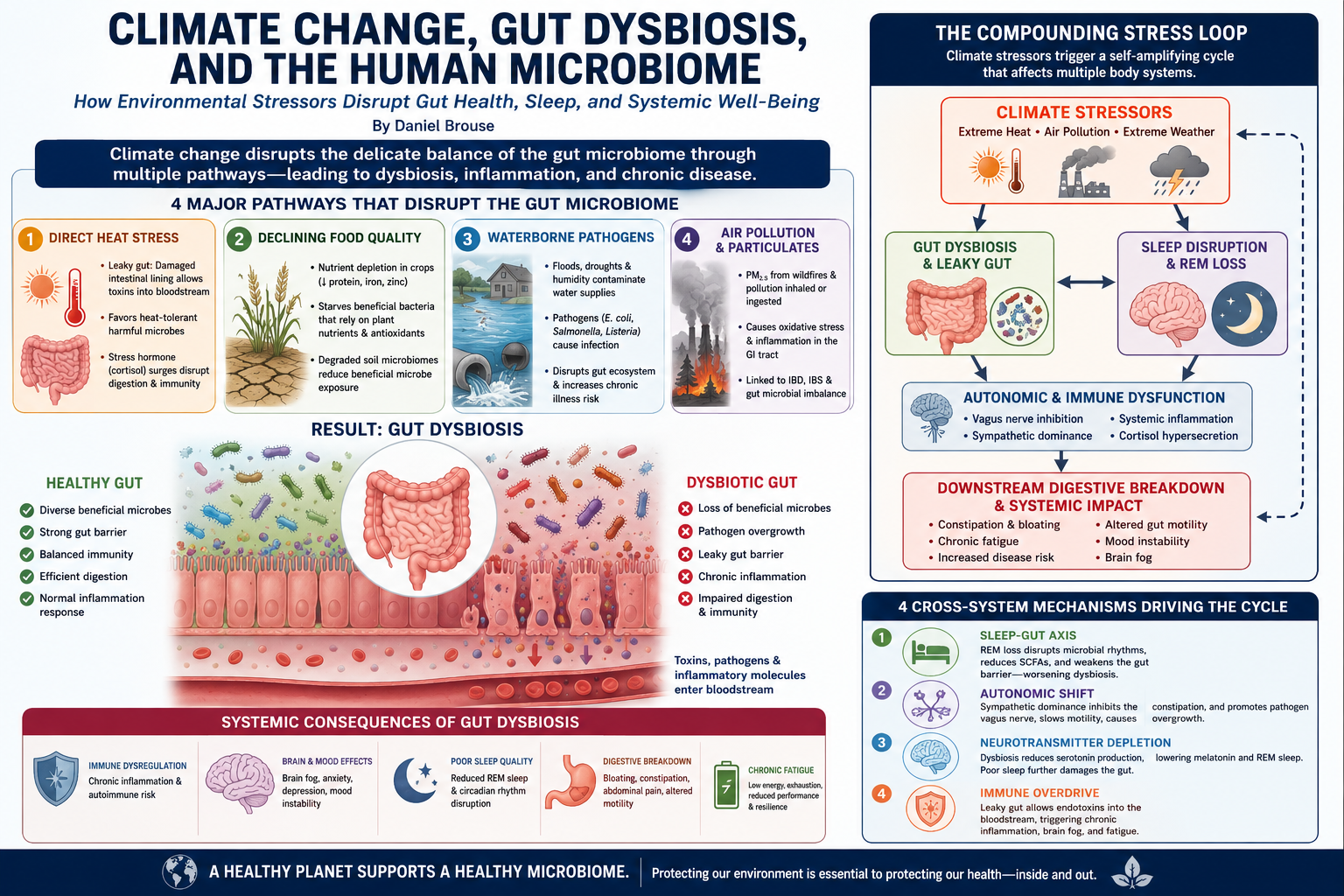
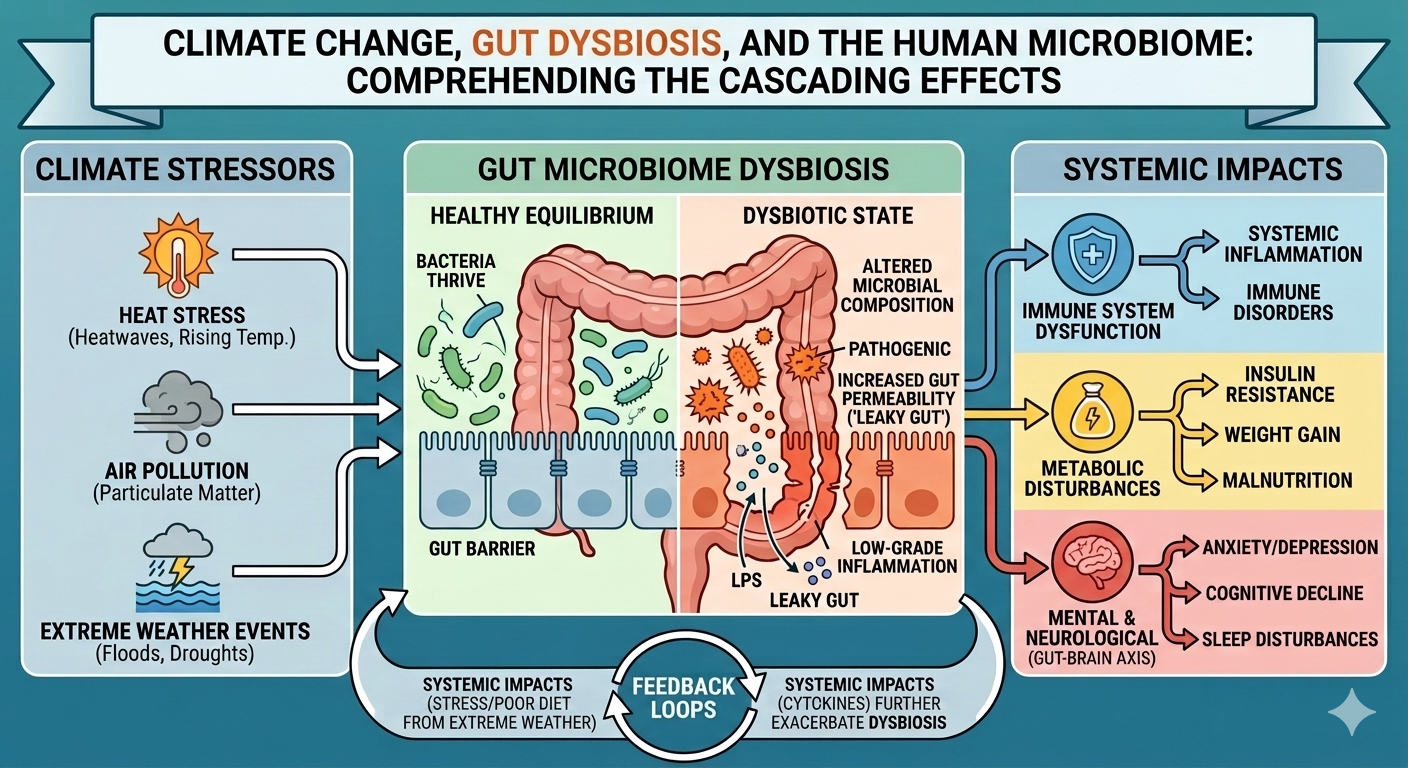
Climate change can induce gut dysbiosis—an imbalance in which beneficial microorganisms decline while opportunistic or pathogenic microbes proliferate. Recent clinical reviews, including research published in The Lancet Planetary Health, suggest that climate-driven environmental changes disrupt the gut microbiome through both direct physiological stress and indirect environmental pathways. The consequences extend well beyond digestive discomfort, affecting immune regulation, sleep quality, mental health, and overall resilience.
How Climate Change Disrupts the Gut Microbiome
Climate change degrades the gut microbiome through several interconnected mechanisms.
1. Direct Heat Stress
Extreme heat affects far more than body temperature. It alters gastrointestinal physiology in ways that directly damage the gut ecosystem.
Increased Intestinal Permeability (“Leaky Gut”)
Heat stress weakens the intestinal barrier, increasing its permeability. This allows bacteria, endotoxins, and inflammatory compounds to enter the bloodstream, triggering systemic inflammation and immune activation.
Shift Toward Heat-Tolerant Microbes
Elevated body temperatures alter the intestinal environment, favoring heat-tolerant microbial populations while reducing beneficial bacteria that regulate metabolism, digestion, and immune function.
Stress Hormone Activation
Exposure to prolonged heat stimulates increased production of cortisol and other stress hormones. Elevated cortisol alters gut oxygen levels, immune signaling, and microbial composition while impairing normal digestive processes.
2. Declining Food Quality
Climate change is also altering the nutritional quality of the global food supply.
These nutritional changes reduce both the quality of human diets and the diversity of nutrients available to gut microbes.
Starvation of Beneficial Microbes
Beneficial bacteria rely on dietary fiber, antioxidants, and complex plant compounds. As these nutrients decline, populations such as Bacteroidetes decrease while pro-inflammatory microbial groups expand.
Degraded Soil Microbiomes
The Biodiversity Hypothesis proposes that biologically rich soils contribute beneficial environmental microbes that help educate the human immune system. Climate-driven degradation of soil biodiversity reduces this microbial exposure, potentially increasing immune dysfunction and inflammatory disease.
3. Expansion of Waterborne Pathogens
Climate change increases flooding, drought, and water-system failures, all of which elevate exposure to enteric pathogens.
Common organisms include:
E. coli
Salmonella
Listeria
These pathogens can produce acute gastrointestinal infections while permanently altering the composition of the gut microbiome, increasing susceptibility to chronic inflammatory diseases.
4. Air Pollution and Wildfire Smoke
Climate change is increasing exposure to airborne pollutants, particularly fine particulate matter (PM₂.₅).
Although inhaled, these particles are also swallowed through mucus clearance and contaminated food or saliva.
Within the gastrointestinal tract they promote:
Oxidative stress
Local inflammation
Microbial imbalance
Increased risk of inflammatory bowel disease (IBD)
Increased risk of irritable bowel syndrome (IBS)
Climate Stressors Create a Compounding Health Loop
The most significant health impacts occur because climate stressors do not operate independently. Instead, they reinforce one another, creating a self-amplifying cycle that affects multiple body systems simultaneously.
                    CLIMATE STRESSORS
      (Heat • Air Pollution • Extreme Weather)
                         │
        ┌────────────────┴────────────────┐
        ▼                                 ▼
  Gut Dysbiosis                     Sleep Disruption
  Leaky Gut                         Reduced REM Sleep
        │                                 │
        └──────────────┬──────────────────┘
                       ▼
        Autonomic & Immune Dysfunction
      • Elevated Cortisol
      • Reduced Vagal Activity
      • Chronic Inflammation
      • Sympathetic Dominance
                       │
                       ▼
         Digestive and Systemic Breakdown
      • Constipation
      • Altered Gut Motility
      • Chronic Fatigue
      • Mood Disorders
      • Brain Fog
Cross-System Mechanisms
1. The Sleep-Gut Axis
The gut microbiome follows a circadian rhythm closely linked to the brain’s sleep-wake cycle.
Microbial “Jet Lag”
Heat waves frequently fragment sleep and reduce REM sleep, disrupting the normal daily oscillations of gut microbial populations.
Reduced Short-Chain Fatty Acid Production
Sleep deprivation decreases beneficial bacteria such as Lactobacillus and Bifidobacterium. These organisms produce short-chain fatty acids (SCFAs), which:
maintain the intestinal barrier,
reduce inflammation,
nourish colon cells, and
support immune regulation.
Reduced SCFA production weakens intestinal integrity and promotes chronic inflammation.
Worsening Leaky Gut
Poor sleep activates stress pathways that further increase intestinal permeability, amplifying the direct damage caused by heat exposure.
2. Autonomic Nervous System Dysfunction
Normal digestion depends upon the parasympathetic nervous system—the body’s “rest and digest” mode.
Heat stress, poor sleep, and pollution shift the body toward chronic sympathetic activation (“fight or flight”).
Reduced Vagus Nerve Activity
Suppression of the vagus nerve disrupts communication between the brain and the gastrointestinal tract.
Slowed Intestinal Motility
Reduced vagal activity decreases intestinal movement while heat diverts blood flow away from digestive organs toward the skin for cooling.
The result is:
constipation,
bloating,
abdominal discomfort, and
impaired digestion.
Pathogen Overgrowth
Slower intestinal transit allows opportunistic bacteria more time to multiply and produce inflammatory metabolites, further worsening dysbiosis.
3. Neurotransmitter Disruption
The gut and brain communicate continuously through the gut-brain axis.
Approximately 90% of the body’s serotonin is produced within the gastrointestinal system, largely under the influence of the gut microbiome.
Serotonin serves as the biochemical precursor to melatonin, the hormone responsible for regulating sleep.
When dysbiosis disrupts serotonin production:
melatonin synthesis declines,
sleep quality deteriorates,
REM sleep decreases,
microbial disruption worsens.
This creates a powerful positive feedback loop in which poor gut health degrades sleep, while poor sleep further damages the gut microbiome.
4. Chronic Immune Activation
Leaky gut allows bacterial endotoxins—particularly lipopolysaccharides (LPS)—to enter the bloodstream.
This condition, known as metabolic endotoxemia, activates chronic systemic inflammation.
Inflammatory molecules can cross the blood-brain barrier, contributing to:
brain fog,
fatigue,
impaired cognition,
anxiety,
depression,
emotional instability.
Conclusion
Climate change is not solely an environmental or atmospheric issue—it is increasingly becoming a public health issue that reaches into the microscopic ecosystems within our own bodies. Heat stress, declining food quality, water contamination, air pollution, and disrupted sleep all converge to reshape the human gut microbiome.
The resulting dysbiosis extends beyond digestion. It contributes to chronic inflammation, weakened immunity, impaired metabolism, sleep disruption, mood disorders, and reduced cognitive performance. Because these physiological systems are tightly interconnected, climate-induced damage to one often amplifies dysfunction in others, creating self-reinforcing cycles that become progressively more difficult to reverse.
Protecting the stability of the Earth’s climate is therefore inseparable from protecting the stability of the human microbiome. As climate change accelerates, preserving environmental health increasingly means preserving human health at its most fundamental biological level.
This summer, I began noticing a significant decline in both my overall sleep quality and, in particular, my REM (Rapid Eye Movement) sleep. After reviewing the data from my sleep tracker, I was able to link much of the disruption to elevated nighttime temperatures. Then, last night, another factor became impossible to ignore: severe thunderstorms, high winds, and frequent lightning repeatedly interrupted my sleep.
The connection became even more compelling when I realized my dog had been experiencing the same restless nights. Heat, noise, and rapidly changing weather were affecting both of us. That realization led me to a broader question: if these environmental changes are disrupting sleep in my own home, how many millions of others are experiencing the same effects?
I woke up inspired to explore the science behind these observations. This paper examines how climate change—through rising nighttime temperatures, increasing humidity, and more frequent extreme weather events—is affecting sleep quality, REM sleep, and ultimately human health and well-being.
Abstract
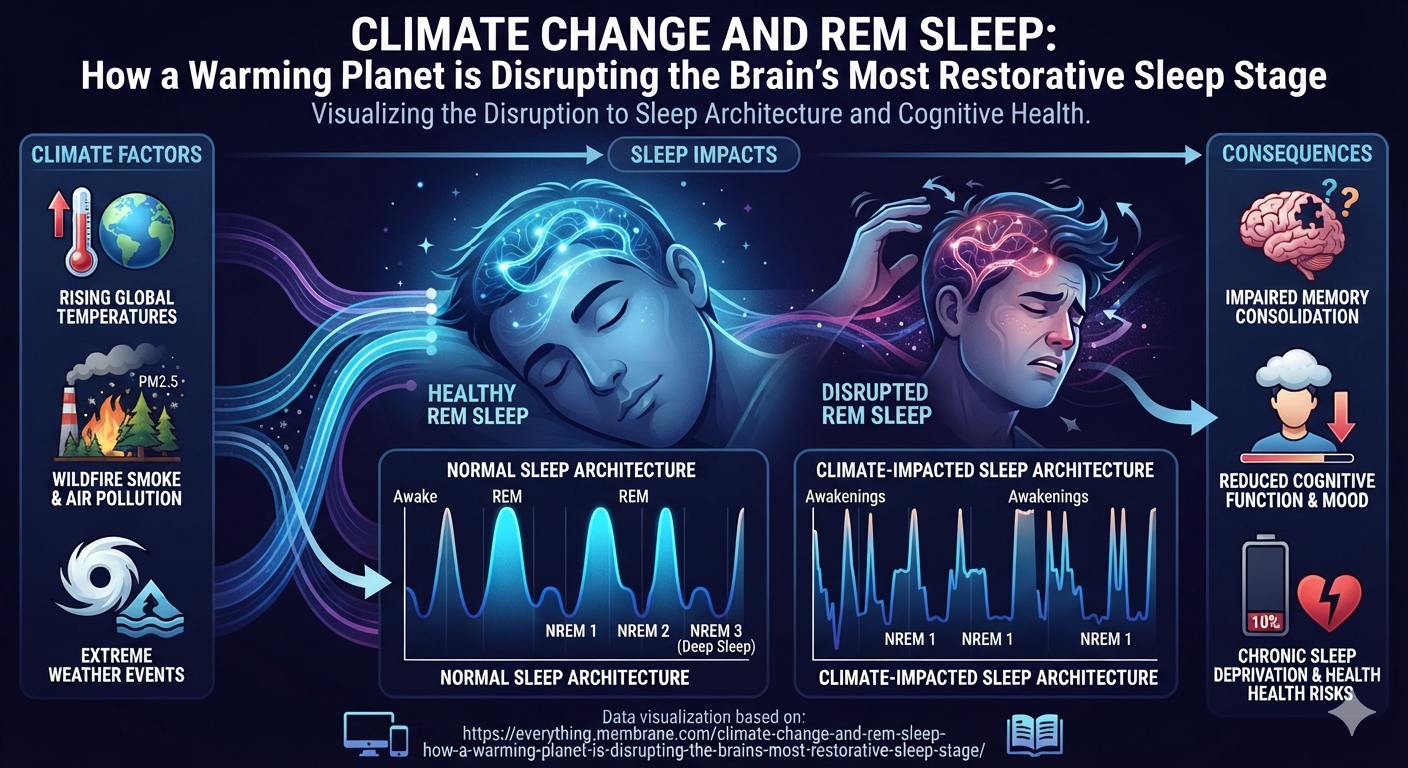
Climate change is increasingly recognized as a public health crisis extending far beyond heat-related mortality and cardiovascular disease. One of its lesser-known but rapidly emerging consequences is the degradation of human sleep, particularly Rapid Eye Movement (REM) sleep. REM sleep is essential for memory consolidation, emotional regulation, learning, creativity, and cognitive performance. A warming climate disrupts REM sleep through multiple interacting mechanisms including elevated nighttime temperatures, increased humidity, wildfire smoke, air pollution, psychological stress, and extreme weather disasters. These impacts are compounded by the increasing frequency, duration, and intensity of heatwaves and the accelerating rise in nighttime minimum temperatures. This review examines the physiological basis of REM sleep, the mechanisms through which climate change disrupts REM architecture, and the broader implications for human health and societal resilience.
Introduction
Sleep represents one of the body’s most critical restorative processes. Among its various stages, Rapid Eye Movement (REM) sleep plays a unique role in maintaining healthy brain function. During REM sleep, memories are consolidated, emotional experiences are processed, neural pathways are strengthened, and learning occurs.
Historically, sleep evolved under predictable environmental conditions characterized by cool nights and stable seasonal temperature cycles. Anthropogenic climate change is fundamentally altering these conditions. Rising greenhouse gas concentrations have increased average global temperatures while disproportionately elevating nighttime minimum temperatures. The resulting loss of nocturnal cooling increasingly prevents the human body from maintaining the thermal conditions necessary for uninterrupted REM sleep.
Climate change therefore represents not only an environmental crisis but also a growing neurological and public health challenge.
Normal REM Sleep
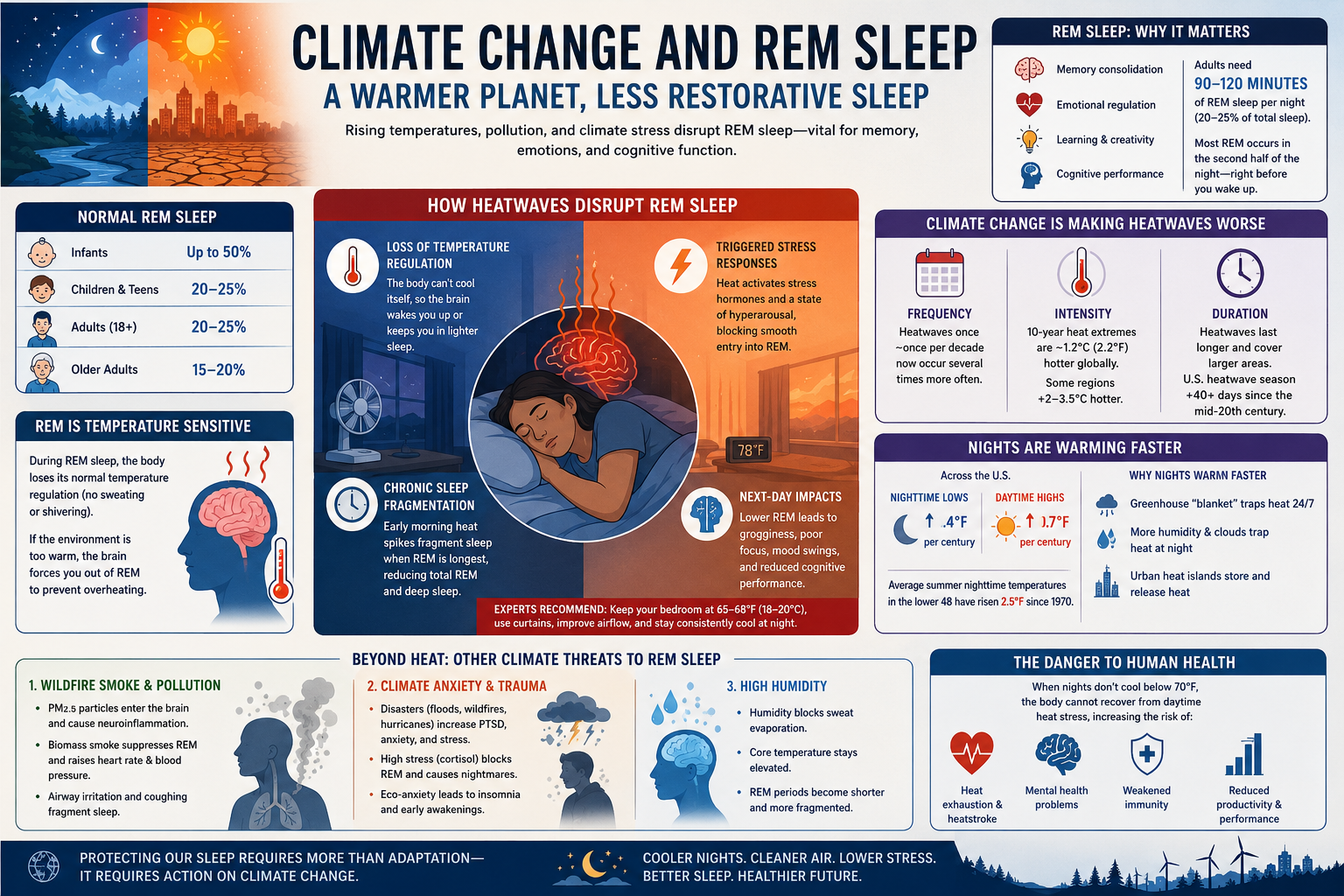
Healthy adults typically require approximately 90 to 120 minutes of REM sleep each night, representing roughly 20–25% of total sleep time. REM sleep supports numerous neurological functions, including:
Memory consolidation
Emotional regulation
Learning
Creativity
Cognitive flexibility
Neural development
REM sleep becomes progressively longer throughout the night, with the largest REM periods occurring during the final third of sleep immediately before awakening.
Age influences REM requirements:
Age Group
Approximate REM Sleep
Infants
Up to 50%
Children & Adolescents
20–25%
Adults
20–25%
Older Adults
15–20%
Because REM occurs predominantly during the second half of the night, disturbances during early morning hours disproportionately reduce total REM sleep.
Thermoregulation During REM Sleep
REM sleep differs fundamentally from every other sleep stage because the body’s normal temperature regulation is largely suspended.
During REM sleep:
sweating is greatly reduced
shivering ceases
metabolic heat production decreases
behavioral temperature regulation becomes impossible
This temporary loss of thermoregulation makes REM sleep particularly vulnerable to elevated ambient temperatures.
If body temperature rises excessively, the brain interprets overheating as an immediate survival threat. Rather than remaining in REM sleep, protective neural circuits trigger arousal, forcing the sleeper into lighter sleep stages or complete awakening.
Consequently, REM sleep becomes the first major casualty of excessive nighttime heat.
Heatwaves and REM Sleep
Heatwaves interfere with sleep architecture through several overlapping physiological mechanisms.
Failure of Core Body Cooling
Normal sleep requires a gradual decline in core body temperature.
When nighttime temperatures remain elevated:
heat dissipation slows
skin temperature remains elevated
the brain struggles to initiate deeper sleep stages
REM duration decreases
Without adequate cooling, REM episodes become shorter and increasingly fragmented.
Activation of Stress Responses
Persistent heat activates multiple stress systems including:
sympathetic nervous system activation
elevated cortisol
increased heart rate
heightened neuronal arousal
Instead of transitioning smoothly into REM sleep, individuals remain trapped in lighter sleep characterized by repeated awakenings.
Sleep Fragmentation
Because REM sleep predominates during the second half of the night, rising early morning temperatures have an especially damaging effect.
Even brief awakenings interrupt REM cycles.
Repeated fragmentation produces:
reduced REM duration
impaired emotional regulation
slower reaction times
diminished concentration
poorer memory formation
Research increasingly shows that elevated nighttime temperatures reduce both REM sleep and slow-wave (deep) sleep, leaving individuals less physically and mentally restored upon waking.
Climate Change Has Intensified Heatwaves
Anthropogenic climate change has dramatically altered the characteristics of extreme heat events.
Increased Frequency
Heatwaves that historically occurred approximately once every decade now occur several times more frequently under approximately 1.2–1.4°C of global warming.
Across the United States, the annual number of extreme heat events has increased substantially since the mid-20th century.
Greater Intensity
Modern heatwaves are significantly hotter.
Globally, heat extremes that historically occurred once every ten years are now approximately 1.2°C (2.2°F) warmer than they would have been without human-caused climate change.
Some regional heatwaves have been intensified by 2–3.5°C due to anthropogenic greenhouse gas emissions.
Longer Duration
Heatwaves now persist for longer periods.
Persistent atmospheric blocking patterns, commonly known as heat domes, allow hot air masses to remain stationary for days or even weeks.
In the United States, the heatwave season has expanded by more than 40 days compared with the mid-twentieth century.
Rising Nighttime Temperatures
Perhaps the most important climate-related threat to REM sleep is the rapid rise in nighttime minimum temperatures.
Across much of the United States:
overnight temperatures are increasing nearly twice as fast as daytime highs
nighttime minimum temperatures have increased approximately 1.4°F per century
daytime maximum temperatures have increased roughly 0.7°F per century
Climate Central reports that average summer nighttime temperatures across the contiguous United States have risen approximately 2.5°F since 1970.
This phenomenon is known as asymmetric warming.
Why Nights Are Warming Faster
Several physical mechanisms contribute to accelerated nighttime warming.
Greenhouse Blanket Effect
Greenhouse gases continuously absorb and re-radiate outgoing infrared radiation.
During daylight hours, incoming solar radiation dominates Earth’s energy balance.
At night, however, greenhouse gases slow radiative cooling by trapping heat near the surface, preventing the Earth from shedding accumulated daytime energy.
Increased Humidity
A warmer atmosphere holds more water vapor.
Water vapor is itself a powerful greenhouse gas.
Higher humidity:
traps additional infrared radiation
slows nighttime cooling
prevents sweat evaporation
keeps body temperature elevated
This directly interferes with the physiological cooling required for REM sleep.
Increased Cloud Cover
Clouds act differently during day and night.
During daytime they reflect some incoming sunlight.
At night they behave like insulating blankets, absorbing outgoing infrared radiation and re-emitting heat back toward the surface.
The result is warmer nights.
Urban Heat Islands
Concrete, asphalt, brick, and other urban materials absorb enormous amounts of solar energy during daylight.
After sunset they slowly release stored heat.
Urban environments therefore remain significantly warmer than surrounding rural areas throughout the night, reducing opportunities for nocturnal cooling.
Wildfire Smoke and REM Sleep
Climate change has substantially increased wildfire frequency and burned area across many regions.
Wildfire smoke contains extremely high concentrations of fine particulate matter (PM₂.₅).
These microscopic particles affect REM sleep through multiple biological pathways.
Neuroinflammation
PM₂.₅ particles can enter the brain through the olfactory system.
Inflammation develops within regions involved in sleep regulation, impairing normal REM transitions.
Suppression of REM Sleep
Experimental studies have demonstrated that inhalation of biomass smoke suppresses paradoxical sleep—the scientific term for REM sleep—while simultaneously increasing nighttime heart rate and blood pressure.
Airway Irritation
Smoke exposure increases:
coughing
airway inflammation
respiratory resistance
These physiological disturbances repeatedly awaken sleepers from deeper sleep stages, fragmenting REM sleep.
Climate Anxiety and REM Sleep
Climate change also affects REM sleep psychologically.
Increasing exposure to floods, hurricanes, wildfires, droughts, and heatwaves elevates rates of:
anxiety
depression
post-traumatic stress disorder (PTSD)
chronic stress
Elevated cortisol levels associated with these conditions interfere with normal REM initiation.
In addition, growing concern about future climate risks—often termed eco-anxiety—can produce intrusive thoughts, nightmares, insomnia, and repeated nighttime awakenings.
Instead of facilitating healthy emotional processing, REM sleep becomes increasingly disrupted by persistent activation of the brain’s threat-detection networks.
Humidity and REM Sleep
Humidity represents another important but often overlooked consequence of climate change.
Successful REM sleep requires efficient evaporative cooling.
When humidity is high:
sweat evaporates poorly
body temperature remains elevated
heat loss slows
REM episodes become abbreviated
Rather than entering long uninterrupted REM periods near morning, sleepers cycle repeatedly through brief periods of lighter sleep.
Public Health Implications
Declining REM sleep carries consequences extending well beyond daytime fatigue.
Chronic REM deprivation has been associated with:
impaired memory
reduced learning capacity
diminished decision-making
slower reaction times
depression
anxiety disorders
impaired emotional regulation
weakened immune function
increased cardiovascular risk
reduced workplace productivity
higher accident rates
Because climate change affects millions of people simultaneously, widespread reductions in REM sleep may have substantial economic and societal consequences.
Sleep loss may become an increasingly important—but largely invisible—component of climate-related disease burden.
Mitigation and Adaptation
Although climate change is driving long-term warming trends, several measures can help preserve REM sleep.
Recommended strategies include:
Maintaining bedroom temperatures between 65–68°F (18–20°C).
Using blackout curtains to reduce daytime solar heating.
Increasing nighttime ventilation and airflow.
Limiting indoor heat accumulation during daytime.
Using air conditioning or evaporative cooling where available.
Reducing exposure to wildfire smoke through high-efficiency filtration.
Maintaining consistent sleep schedules.
Addressing climate-related psychological stress through appropriate mental health interventions.
Ultimately, however, adaptation alone cannot eliminate the problem. Long-term protection of human sleep requires reducing greenhouse gas emissions and slowing global warming.
Conclusion
Climate change is reshaping one of humanity’s most fundamental biological processes: sleep. Rising nighttime temperatures, prolonged heatwaves, increasing humidity, worsening wildfire smoke, deteriorating air quality, and climate-related psychological stress all converge on the same vulnerable target—REM sleep.
Unlike many climate impacts that unfold gradually over decades, sleep disruption is immediate, measurable, and experienced nightly by millions of people. Because REM sleep underpins memory, emotional regulation, learning, cognitive performance, and neurological health, its progressive loss represents a significant but underappreciated consequence of anthropogenic climate change.
As the planet continues to warm, protecting REM sleep will require both personal adaptation and systemic climate mitigation. Ensuring cooler nights, cleaner air, and a more stable climate is not merely a matter of comfort—it is essential for preserving the restorative sleep upon which human health, resilience, and cognitive function depend.
Global warming is often communicated through changes in average surface air temperature. While useful, this framing understates the fundamental driver of climate change: the accumulation and redistribution of excess thermal energy throughout the Earth system. Because more than 90% of anthropogenic excess heat is stored in the oceans, surface temperature alone provides only a partial representation of the climate system’s changing energy balance. We argue that conceptual illustrations of climate change should therefore be interpreted as probability distributions of total climate-system energy rather than simple temperature distributions. As Earth’s energy imbalance increases, the statistical distribution of climate outcomes evolves beyond a simple rightward shift. The distribution becomes increasingly skewed, with a broader and heavier upper tail corresponding to more frequent, more intense, and longer-duration extreme events. Simultaneously, individual hazards increasingly interact through nonlinear feedback coupling, producing compound and cascading extremes. These changes reflect the redistribution of excess thermal energy through atmospheric and oceanic processes rather than isolated changes in weather. Understanding climate change as an evolving probability distribution governed by Earth’s energy imbalance provides a more comprehensive framework for interpreting modern climate extremes.
1. Introduction
Climate change is frequently illustrated using a bell-shaped probability distribution in which warming shifts the distribution toward higher temperatures, increasing the likelihood of extreme heat events. Although this visualization effectively introduces the concept of changing probabilities, it risks oversimplifying the underlying physics.
The Earth’s climate is fundamentally governed by its energy balance. Anthropogenic greenhouse gases reduce outgoing longwave radiation, producing a persistent planetary energy imbalance. Most of this excess energy is not retained in the atmosphere but absorbed by the oceans, which currently store more than 90% of the additional heat accumulating in the climate system (von Schuckmann et al., 2023; IPCC, 2021).
Consequently, a conceptual continuum extending from lower to higher thermal energy more accurately represents climate-system evolution than one depicting air temperature alone. The atmosphere, oceans, cryosphere, biosphere, and land surface collectively exchange this stored energy through complex interactions that manifest as increasingly energetic weather events.
2. Earth’s Energy Imbalance as the Primary Climate Variable
Surface air temperature is an important diagnostic variable but represents only a small fraction of the total energy accumulating within the Earth system.
Recent observations indicate that the planetary energy imbalance has increased substantially over the satellite era (Loeb et al., 2021). Excess energy is partitioned approximately as follows:
Reservoir
Approximate Fraction of Excess Heat
Oceans
>90%
Land
~5%
Ice Melt
~3%
Atmosphere
~1%
Because the oceans dominate planetary heat storage, climate evolution is fundamentally an energetic process rather than merely an atmospheric warming process.
The horizontal axis in conceptual probability diagrams should therefore be interpreted as representing increasing Earth-system thermal energy, encompassing ocean heat content, atmospheric moisture, latent heat, and the energy available to drive weather systems.
3. Evolution of the Probability Distribution
Traditional illustrations depict warming primarily as a rightward shift of a normal distribution.
However, observations increasingly indicate that the distribution itself is evolving.
Rather than simply translating toward warmer conditions, the upper tail is becoming:
longer,
broader,
heavier,
increasingly asymmetric.
Statistically, this reflects increasing positive skewness and changes in higher-order moments of the climate distribution.
The consequence is that events formerly located far within the statistical tail now occur substantially more often than predicted by historical climatology.
This evolution is consistent with attribution studies demonstrating rapidly increasing probabilities for extreme heat, heavy precipitation, marine heatwaves, and compound climate events (IPCC, 2021).
4. From Rare Extremes to Persistent Extremes
A critical consequence of distributional change is that climate extremes are no longer simply more intense.
They also persist longer.
Persistent blocking highs and heat domes illustrate this transition.
Recent heat events across North America and Europe have demonstrated that elevated temperatures sustained over many consecutive days produce disproportionately greater impacts than isolated hot days.
Long-duration heat increases:
cumulative physiological stress,
nighttime heat exposure,
agricultural losses,
wildfire potential,
electrical demand,
ecosystem mortality.
The probability distribution therefore evolves not only along the intensity axis but also along the temporal dimension.
Duration has become an equally important component of climate risk.
5. Probability Distributions Represent Climate Outcomes, Not Individual Weather Variables
The conceptual bell curve should not be interpreted as describing only hot versus cold weather.
Rather, it represents a simplified probability density distribution of climate outcomes.
The horizontal axis encompasses the full spectrum of possible climate states, while the vertical axis represents their relative probability of occurrence.
Individual manifestations include:
heat waves,
atmospheric rivers,
tropical cyclones,
drought,
severe thunderstorms,
flooding,
wildfire weather,
marine heatwaves,
compound events.
Each reflects a different pathway through which excess thermal energy is redistributed throughout the coupled Earth system.
6. Feedback Coupling and Increasing System Connectivity
Perhaps the most important characteristic of the modern climate system is not simply increasing extremes but increasing interdependence among extremes.
Historically, many weather hazards could be treated as relatively independent processes.
As planetary energy accumulates, however, nonlinear interactions become increasingly common.
Warmer oceans provide additional latent heat to tropical cyclones.
Persistent blocking strengthens heat domes.
Elevated instability increases severe convection and lightning.
Drought increases wildfire probability.
Wildfires increase atmospheric aerosols and carbon emissions.
Ice loss reduces albedo, increasing additional heat absorption.
These interactions represent examples of feedback coupling, whereby one climate process amplifies another through interconnected physical mechanisms.
Rather than isolated hazards, modern climate extremes increasingly function as components of a dynamically coupled energetic system.
7. Earth’s Energy Redistribution
The planetary energy imbalance itself cannot be directly perceived.
Its consequences, however, are observable through increasingly energetic transfers of heat within the climate system.
These transfers manifest as:
stronger atmospheric rivers,
larger heat domes,
heavier precipitation,
more intense tropical cyclones,
stronger thunderstorms,
increased lightning,
more persistent drought,
expanded wildfire activity.
Each represents a different mechanism by which excess thermal energy is redistributed throughout the atmosphere-ocean system.
Viewed collectively, these events provide tangible evidence of an increasingly energetic climate.
8. Implications for Climate Communication
Public discussion frequently emphasizes average warming.
While scientifically accurate, averages obscure the statistical transformation occurring within climate variability.
The central message is therefore not simply that the planet is becoming warmer.
Rather, the probability distribution governing climate outcomes is itself evolving.
Extreme events once considered exceptionally rare now occur with increasing frequency, persist for longer durations, and produce substantially greater societal, ecological, and economic impacts.
Communicating climate change through the lens of Earth’s changing probability distribution provides a more complete understanding of modern climate dynamics than average temperature alone.
9. Conclusion
The defining characteristic of contemporary climate change is not simply rising global mean temperature, but the accumulation and redistribution of excess thermal energy throughout the coupled Earth system. Because the oceans absorb the overwhelming majority of this excess heat, Earth’s energy imbalance provides a more physically meaningful framework for understanding climate evolution than atmospheric temperature alone.
As this energy imbalance grows, the probability distribution of climate outcomes undergoes a fundamental transformation. The distribution does not merely shift toward warmer conditions; it becomes increasingly asymmetric, with a broader and heavier upper tail reflecting more frequent, more intense, and more persistent extreme events. At the same time, individual hazards are becoming progressively interconnected through nonlinear feedback coupling, allowing one extreme to amplify another across atmospheric, oceanic, terrestrial, and cryospheric systems.
Heat domes, atmospheric rivers, severe thunderstorms, tropical cyclones, droughts, floods, and wildfires should therefore be viewed not as isolated phenomena, but as diverse expressions of the same underlying energetic imbalance. Each represents a pathway through which excess thermal energy is redistributed across the Earth system. Interpreting climate change through this probabilistic and energetic framework provides a more comprehensive understanding of why extreme events are accelerating, why compound hazards are becoming increasingly common, and why climate impacts are intensifying faster than changes in global mean temperature alone would suggest.
Footnotes
Earth’s Energy Imbalance (EEI) is defined as the difference between incoming absorbed solar radiation and outgoing longwave radiation at the top of the atmosphere. A positive imbalance indicates continued accumulation of heat within the climate system.
Ocean heat content is widely regarded as the most robust measure of long-term planetary warming because it integrates the vast majority of excess thermal energy stored in the climate system.
In statistical terms, a “heavier right tail” denotes an increased probability of extreme positive departures relative to a normal distribution. In climate science, this reflects a greater likelihood of unusually intense events than would be expected under historical climatic conditions.
Feedback coupling refers to the interaction of two or more climate processes in which one process modifies another, producing amplification or attenuation. Positive feedback coupling can generate compound and cascading extremes that exceed the impacts of individual hazards.
Intergovernmental Panel on Climate Change (IPCC). (2021). Climate Change 2021: The Physical Science Basis. Cambridge University Press.
Loeb, N. G., et al. (2021). Satellite and ocean data reveal marked increase in Earth’s heating rate. Geophysical Research Letters, 48(8), e2021GL093047.
Rohde, R. A., & Hausfather, Z. (2020). The Berkeley Earth land/ocean temperature record. Earth System Science Data, 12, 3469–3479.
Trenberth, K. E., Fasullo, J. T., & Balmaseda, M. A. (2014). Earth’s energy imbalance. Journal of Climate, 27(9), 3129–3144.
von Schuckmann, K., et al. (2023). Heat stored in the Earth system 1960–2020: Where does the energy go? Earth System Science Data, 15, 1675–1709.
World Meteorological Organization (2024). State of the Global Climate 2024. Geneva: WMO.
Philadelphia is forecast to experience a critical heat emergency on July 4, with heat index values expected to reach 91–95°F under dangerously humid conditions. Even modest physical exertion outdoors can increase the risk of heat exhaustion, heat stroke, and, in severe cases, death.
Extreme heat is more than uncomfortable—it is one of the deadliest weather hazards. Beyond its immediate health risks, exposure to extreme heat accelerates biological aging by increasing cellular stress, damaging tissues, and contributing to telomere shortening.
What Is FIFA Doing?
Rather than postponing the Round of 16 match, FIFA plans to proceed while implementing heat mitigation measures for players and spectators.
Player Safety Measures
Mandatory Hydration Breaks: FIFA requires official cooling and hydration breaks during matches when heat conditions warrant them to reduce the risk of heat-related illness.
Sideline Cooling: Philadelphia Stadium (Lincoln Financial Field) has installed cooling benches along the sidelines, allowing substituted players and those receiving treatment to lower their body temperature more quickly.
Fan Safety Measures
Outside Water Restrictions: Despite the dangerous heat, FIFA has updated its stadium code of conduct to prohibit spectators from bringing outside or reusable plastic water bottles into the stadium for refilling. Fans must instead obtain drinking water through stadium concessions and designated distribution points.
Weather Monitoring: Organizers are coordinating with the National Weather Service because the combination of extreme heat and the potential for severe Fourth of July thunderstorms could require temporary suspensions of play or crowd sheltering if lightning is detected within FIFA’s safety perimeter.
Cooling Centers: The City of Philadelphia is operating additional medical stations and cooling areas throughout the stadium complex and at the FIFA Fan Festival at Lemon Hill to assist visitors experiencing heat stress.
Heat Is a Serious Public Health Hazard
Hydration, shade, and cooling breaks help reduce risk, but they cannot eliminate it. Anyone attending outdoor events should avoid unnecessary exertion, drink fluids before becoming thirsty, seek shade whenever possible, and recognize the warning signs of heat exhaustion and heat stroke.
Climate change is making extreme heat events more frequent, longer-lasting, and more humid. As temperatures continue to rise, organizers of major outdoor sporting events will increasingly face difficult decisions about balancing competition with public safety.
Regardless of the precautions taken, exposing athletes, officials, and tens of thousands of spectators to unnecessary risk during a critical heat emergency is difficult to justify. Hydration breaks and cooling stations can reduce risk, but they cannot eliminate it. When dangerous heat reaches levels known to threaten human health, the responsible course of action is to postpone play until conditions are safe. No sporting event is worth risking heat-related illness, permanent injury, or loss of life.