bookmark_borderHealth and Quality of Life in Florida

by Daniel Brouse
September 3, 2025

Florida faces mounting challenges in health, education, and climate resilience—each reinforcing the state’s declining quality of life.

Life Expectancy
Florida’s life expectancy has fallen sharply. Recent estimates put it at ~77.5 years, down from 79 in 2019, with COVID-19 and drug overdoses driving much of the decline. The state now lags far behind leaders such as Hawaii and California, which exceed 80 years.

Education
Educational outcomes remain uneven. Florida consistently ranks low in national comparisons, and with the state sitting 50th in overall teacher pay, the quality of instruction is threatened by underfunding and high turnover.

Climate and Insurance Vulnerability
Florida is one of the most climate-vulnerable states in the U.S. Its state-owned insurer, Citizens Property Insurance Corporation, is now the largest taxpayer-funded insurance program in the nation—a bailout many describe as the biggest act of state-level socialism in U.S. history. With the largest coastal population living in low-elevation zones, Florida faces severe flooding risks. More than 590,000 South Florida residents—many socially or medically vulnerable—are directly threatened. Hurricanes and tropical storms bring lethal flooding, prolonged power outages, healthcare disruptions, and cascading long-term effects on mental health, maternal health, and community stability.

Skin Cancer
The Blue Cross Blue Shield Association reports that ~7.1% of Floridians have been diagnosed with skin cancer—including basal cell carcinoma, squamous cell carcinoma, and melanoma. This ranks Florida among the highest in the nation for skin cancer burden, driven by high UV exposure and inadequate protection.

Heat-Related Illness
Between 2005–2012, Florida recorded 23,981 non-work-related emergency department visits, 4,816 hospitalizations, and 139 deaths from heat-related illness (HRI) during the warm season (May–October). Work-related HRI also caused thousands of cases, particularly among outdoor laborers. Pregnant individuals are disproportionately at risk: from 2020–2024, the state averaged 28 pregnancy heat-risk days per year, 19 attributable directly to climate change, raising risks of preterm birth, low birth weight, and long-term health complications. Looking forward, Florida’s annual days with a heat index above 100°F are expected to rise from about 25 today to 105 by 2050, and 141 by 2100—a dramatic escalation that will make outdoor work and daily living increasingly hazardous.
The Human Induced Climate Change Experiment

bookmark_borderFederal Appeals Court Strikes Down Key Trump Tariffs, Deepening Trade Uncertainty

by Daniel Brouse

On August 29, 2025, heading into the Labor Day holiday weekend, the U.S. Court of Appeals for the Federal Circuit in Washington, D.C. delivered a major ruling: most of President Donald Trump’s “reciprocal” tariffs, along with a separate set imposed earlier this year, are illegal. The decision represents both a constitutional challenge to executive authority and a new source of turmoil for an already fragile global economy.

Scope of the Ruling

The court’s decision addressed two major elements of Trump’s trade war:

  • “Reciprocal” tariffs, unveiled in April 2025, which Trump claimed were necessary to “balance” trade by matching foreign tariff rates.
  • A separate set of tariffs imposed in February 2025 against China, Canada, and Mexico, which had immediately escalated tensions with America’s largest trading partners.

The ruling does not impact tariffs issued under other legal authority. For example, Trump’s tariffs on steel and aluminum imports remain intact. This distinction highlights a broader complexity: with a wide variety of tariffs in play, the ruling may not provide relief to many businesses or consumers in the short term. Instead, it complicates the already daunting task of determining which tariff rates apply in specific cases, leaving companies mired in uncertainty.

Constitutional Clash

At its core, the ruling strikes at the legality of Trump’s unilateral approach to trade policy. The court found that the president exceeded his executive authority by imposing tariffs without proper congressional authorization. This confirms long-standing warnings from constitutional scholars that Trump’s trade war strategy was on shaky legal ground.

Economic Fallout

Even though the ruling is limited in scope, the implications are sweeping:

  • Businesses now face greater uncertainty as tariff structures become harder to predict or plan around.
  • Consumers are unlikely to see quick relief, since other tariffs remain in place and global supply chains are still disrupted.
  • Markets may react with volatility, as investors recalibrate expectations for trade flows, corporate profits, and Federal Reserve independence.

Global and Political Consequences

For U.S. trading partners—particularly China, Canada, and Mexico—the ruling offers partial vindication but not full clarity. Global markets will be watching whether Trump doubles down with new measures or is forced to negotiate under congressional oversight. Domestically, the decision reignites debate over the balance of power between Congress and the presidency, especially in matters that directly affect the U.S. and global economies.

A Warning for the Future

The ruling is not the end of tariffs under Trump, but it underscores a deeper truth: trade wars are costly, legally fragile, and economically destabilizing. For businesses and workers, this decision changes little in the immediate term but raises profound questions about the sustainability of America’s current economic path.

Insanity Unleashed

President Trump wasted no time firing back after the ruling, issuing a late-night statement laced with all-caps fury. In part, he declared: “ALL TARIFFS ARE STILL IN EFFECT! Today a Highly Partisan Appeals Court incorrectly said that our Tariffs should be removed, but they know the United States of America will win in the end. If these Tariffs ever went away, it would be a total disaster for the Country.”

He went even further, warning that: “If allowed to stand, this Decision would literally destroy the United States of America.”

For now, the appeals court has allowed the contested tariffs to remain in effect until October 17, giving the Supreme Court time to decide whether to intervene. The unusual delay has left markets and trading partners in limbo.

The Attorney General of Oregon—one of the states that brought the lawsuit—was blunt in his reaction, calling the tariffs “bonkers” and arguing they have done measurable harm to both state economies and global trade.

The ultimate fate of Trump’s tariffs now rests with the Supreme Court, where the outcome remains highly uncertain. Economists warn that if the Court sides with the appeals panel, the administration could be forced to refund billions in ill-gotten tariff revenues. Many believe such a refund would provide overdue relief to businesses and consumers, but in the meantime the uncertainty continues to roil markets at home and abroad.

Trumpenomics: The Decline of the US

bookmark_borderThe Alarming Rise of Political Eugenics in U.S. Public Health Policy

The Trump administration has reignited global concerns about eugenics through its direct interference in science and public health. The latest controversy centers on the firing of the CDC director, followed by the resignation of four senior colleagues in protest. Their departures, citing the politicization of the agency and the deliberate manipulation of scientific data, mark a troubling erosion of trust in one of the world’s most critical health institutions.

Compounding the crisis, Robert F. Kennedy, Jr. has advanced policies that eliminate COVID-19 vaccinations for nearly the entire population, leaving access only for a select few. This decision is widely interpreted by public health experts as an assault on the most vulnerable groups—the elderly, the immunocompromised, and those with chronic illnesses. By stripping away essential protections, these moves are viewed as a calculated attempt at social Darwinism, where the weakest are effectively abandoned to disease.

Such actions reflect a disturbing convergence of politics and ideology with echoes of eugenics. Public health policy is being weaponized not to protect life, but to selectively determine whose lives are valued. The consequences are dire—not only for those directly at risk of COVID-19, but for the precedent it sets in allowing governments to ration care and manipulate science for ideological ends.

We don’t actually know who can get vaccinated right now—it’s not clear who is eligible, and it’s not even clear if insurance will consistently cover the cost. That uncertainty isn’t accidental. The committee responsible for approving the shot has been stacked with liars and frauds and isn’t even scheduled to meet until later in September. Under normal circumstances, the booster would have been approved months ago by a legitimate board.

This eugenics push is designed to create confusion, cast doubt on science, and restrict access to life-saving care. White House Deputy Chief of Staff Stephen Miller’s ultimate aim is to control reproduction and increase the occurrence of traits he and his allies deem “desirable,” with their main thrust being to weed out the “weak” before they breed. Stephen Miller has even defended HHS Secretary Robert F. Kennedy, Jr. after the firing of CDC Director Susan Monarez, calling Kennedy “one of the world’s foremost voices, advocates, and experts on public health,” and praising him as “a crown jewel of this administration” working to “restore the credibility and integrity of the CDC as a scientific organization.”

But the danger extends to the entire population—we already saw the deadly consequences during Trump’s first administration, when millions died needlessly.

This moment demands vigilance. Scientists, health professionals, and the public must recognize the stakes: the erosion of evidence-based policy, the marginalization of vulnerable populations, and the dangerous normalization of eugenic thinking in modern governance.

Trumpenomics: The Decline of the US

bookmark_borderThe Meme Stock Market: Why Wall Street Is Defying Economic Gravity

Why is the stock market still rising when nearly every other economic indicator is flashing red? Bonds are weakening, real estate is cooling, manufacturing is in decline, and employment growth is softening. Yet the stock market continues to show upward momentum, seemingly disconnected from fundamentals.

The answer lies in a fundamental transformation of the market structure itself. Since the pandemic, retail investors—empowered by platforms like Robinhood and fueled by stimulus checks, social media hype, and a near zero-interest-rate environment—have reshaped trading dynamics. This new phenomenon has given rise to what I call the “meme stock market.”

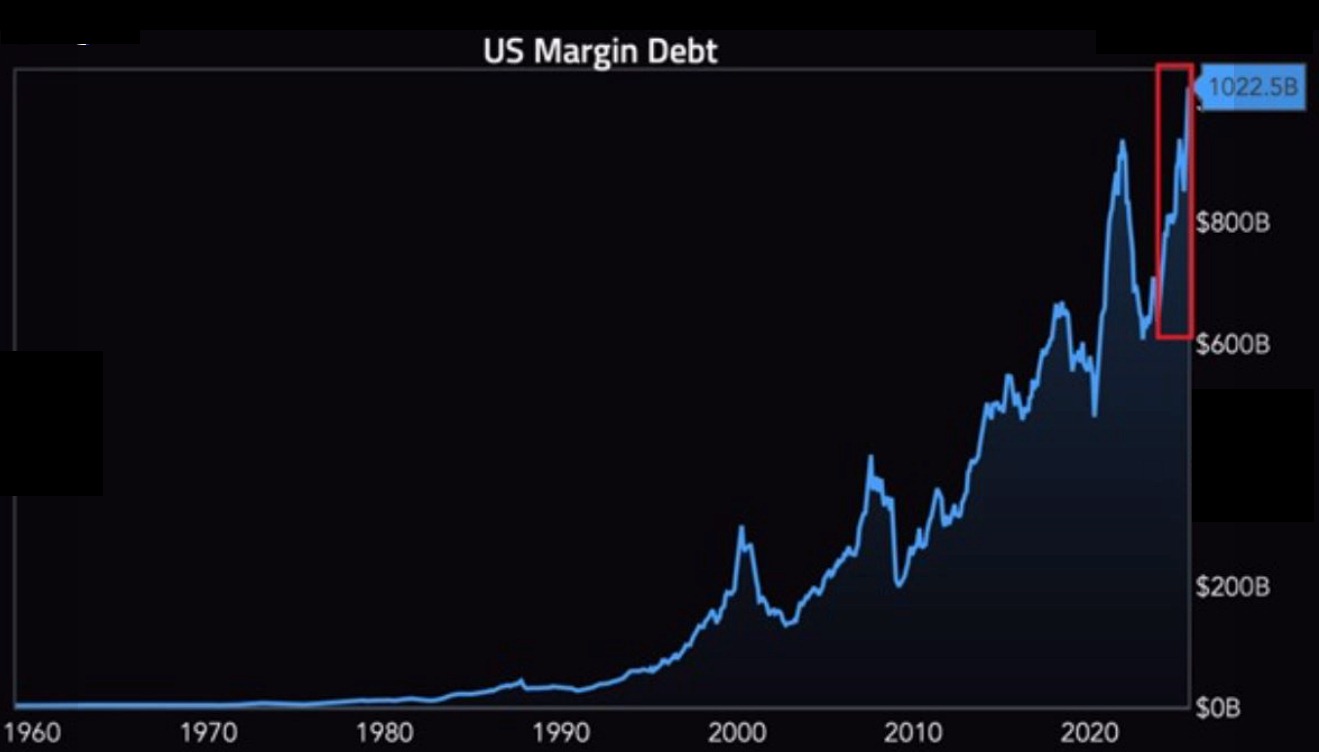
Unlike traditional investors, who rely on fundamentals such as earnings, revenue growth, or long-term sector trends, many retail traders are driven almost entirely by momentum, sentiment, and speculation. The trading models at play are not designed to build wealth over time; they are designed to exploit short-term volatility. This speculation is often amplified by leverage, margin accounts, and options trading, making swings more dramatic and less predictable.

The problem is that momentum-driven markets lack stability. They create the illusion of strength while quietly building fragility beneath the surface. As more money chases speculation rather than fundamentals, valuations drift further from reality, creating a bubble that cannot be sustained.

This bubble will almost certainly burst. And when it does, the unwinding will be severe. Because so many retail traders are using leveraged positions without effective downside protection, the correction will not simply be a normal pullback—it will be a violent contraction with significant ripple effects across the economy.

The stock market’s current behavior is not a sign of resilience but of distortion. It is being propped up by short-term speculation rather than long-term strength. Prudent investors should recognize the risks and approach this market with extreme caution.

Retail Investor’s Impact

Retail investors are individuals trading their own money through brokerage platforms, rather than through institutional structures like mutual funds, pensions, or endowments. While they don’t own the largest share of total market capitalization compared to institutions, their behavioral impact on the market is outsized relative to their percentage of ownership.

Here’s why:

  • Concentration of activity – Retail investors tend to pile into the same “meme” names or high-momentum stocks, amplifying volatility in ways that broad institutional strategies (like index funds) do not.

  • Leverage & options trading – Post-pandemic, we’ve seen an explosion of retail activity in leveraged products, including options and margin trading. For example, options volume is now dominated by contracts with less than 24 hours to expiration (“zero-day options”), and retail traders are a major driver of that activity. This behavior magnifies short-term swings.

  • Market signaling – Even though institutions hold more shares, they often respond to sentiment and volatility triggered by retail traders. In effect, retail flows can act as a spark that ignites much larger institutional moves.

  • High churn – The percentage of total market ownership by retail investors (estimated around 20–25% of U.S. equities) is less important than their trading behavior. Retail traders churn their portfolios at much higher rates than institutional investors, meaning the same dollars are moving in and out of positions far more rapidly. This turnover creates disproportionate price pressure compared to “buy and hold” strategies used by pensions and index funds.

The key issue isn’t retail investors’ overall share of ownership—it’s the outsized impact of their speculative, leveraged trading activity. Their rapid-fire churn has fundamentally reshaped market dynamics, injecting far more instability than their raw ownership percentages suggest.

As of the end of Q2 2025, Microsoft (MSFT), Apple (AAPL), and Nvidia (NVDA) together made up roughly 20% of the entire S&P 500 index. Because the index is market-cap weighted, this unprecedented concentration in just a handful of companies means that movements in these few stocks disproportionately drive the performance of the broader market.

Layer on top the influence of retail traders, whose momentum-driven strategies are detached from fundamentals, and the result is extreme volatility. In fact, on any given trading day, as much as 95% of index swings can be traced back to a combination of two forces: retail churn and the heavy concentration of market cap in a narrow set of tech giants. This creates the illusion of strength while masking deep fragility in the underlying economy.

Trumpenomics: The Decline of the US

US Margin Debt (Buying Stocks With Borrowed Money)

bookmark_borderU.S. Manufacturing Hits Historic Lows: Durable Goods and Philly Fed Data Signal Economic Weakness

The latest economic indicators reveal a troubling slowdown in U.S. manufacturing. Durable goods orders and the manufacturing index both posted their worst levels since the 2020 pandemic, signaling a sharp contraction in industrial activity.

Philadelphia once again made headlines as the Philly Fed reported a historic decline in its new orders index, falling to -1.9. This marks a significant drop, reflecting weakening demand for manufactured products in the region. Economists note that a negative reading in the Philly Fed new orders index often correlates with broader declines in production, employment, and business investment, suggesting that U.S. manufacturing is under mounting stress.

The combination of sluggish durable goods orders and contracting regional manufacturing indicators underscores the potential for a broader economic slowdown. Rising trade tensions, high tariffs, and persistent supply chain disruptions are likely contributing factors, compounding challenges already posed by inflationary pressures and global uncertainty.

Analysts caution that unless consumer demand rebounds and supply chain issues are mitigated, these signals could foreshadow deeper recessional trends in the industrial sector in the months ahead.

Trumpenomics: The Decline of the US

bookmark_borderTrump’s Tariff Gambit Backfires: European Postal Services Halt Shipments to U.S.

Postal services across Europe are suspending parcel shipments to the United States amid mounting uncertainty over Donald Trump’s escalating tariff policies. At the center of the disruption is an executive order Trump signed last month, abolishing the long-standing tax exemption that allowed small packages worth less than $800 to enter the U.S. duty-free. That exemption, widely used by small European businesses, had been critical for maintaining affordable cross-border trade in consumer goods.

The new rule, which takes effect on August 29, removes a vital lifeline for entrepreneurs who relied on low-cost shipping to reach American customers. Without the exemption, even inexpensive goods—from clothing and electronics accessories to specialty foods—face complex customs procedures and potentially punishing tariffs.

The fallout has been swift. Several European postal services announced they would temporarily suspend shipments of small parcels to the U.S., citing both administrative uncertainty and cost concerns. For small exporters, this amounts to a near-total loss of access to one of the world’s largest consumer markets. For American consumers, it means higher prices, longer wait times, and fewer choices.

The move is also drawing sharp criticism for its hypocrisy. Trump and his administration frequently accuse foreign countries of erecting unfair trade barriers against U.S. products, yet this policy places one of the world’s most restrictive trade barriers on imports of everyday goods. While Trump frames the measure as “protecting American workers,” the policy risks doing the opposite—raising consumer prices at home while triggering retaliation abroad that harms American farmers, manufacturers, and exporters.

Trade experts warn that this step is part of a broader strategy of weaponizing tariffs and abandoning long-established trade norms. “The U.S. is setting a precedent that undermines its own credibility,” one European trade analyst noted. “You can’t demand open markets for American goods while shutting your own doors to small-scale imports.”

With the holiday shopping season approaching, the suspension of parcel shipments could prove particularly disruptive for small businesses and consumers on both sides of the Atlantic. Meanwhile, Brazil, China, and other competitors stand ready to fill the void, further eroding U.S. economic influence.

In effect, Trump’s latest tariff gambit risks isolating the U.S. from global supply chains, worsening inflationary pressures, and accelerating the shift of trade alliances away from America. What was once touted as a move to “make America great again” looks increasingly like a strategy to make U.S. consumers and businesses pay the price.

Trumpenomics: The Decline of the US

bookmark_borderTrump’s Tariffs Are Crushing U.S. Soy Farmers While Brazil Gains

by Daniel Brouse
August 20, 2025

Trump’s latest wave of tariffs is already sending shockwaves through the U.S. agricultural sector, with soybean farmers among the hardest hit. The American Soybean Association has warned that many growers may lose their farms this year, as the trade disruptions come at a critical moment in the harvesting season.

Soybean producers were still struggling to recover from Trump’s first trade war with China in 2019. Before that conflict, China accounted for 33% of U.S. soybean exports. That share collapsed after China retaliated with tariffs, and even by 2024, the market had only clawed back to 25% of pre-trade war levels. In other words, farmers were still operating below historical export norms when Trump reignited protectionist battles in 2025.

This year, the damage has been swift and severe. Typically, by this point in the season, about 10% of the U.S. soybean crop would already be under contract with China. Instead, there have been zero new contracts. Buyers in Beijing are turning to Brazil, which has rapidly expanded its agricultural capacity in recent years. Ironically, even though the U.S. has imposed a 50% tariff on Brazilian goods, Chinese buyers are more than willing to pay for Brazilian soy rather than navigate the uncertainty and higher costs of American exports.

The economic fallout extends far beyond the farm. With fewer contracts, rural communities are losing vital income, credit markets that finance farm operations are tightening, and American consumers face the risk of higher food prices. To make matters worse, grain operators in rural areas are refusing to accept soybeans from local farmers unless the crops are already under contract—pushing many small farmers to the brink of collapse. Meanwhile, Brazil is solidifying its position as the world’s dominant soybean exporter, seizing on U.S. trade instability to expand its global market share.

The president of the American Soybean Association summed it up starkly: these tariffs are “destroying U.S. soybean farmers.” Without swift policy changes, this year may mark not just another setback but a permanent loss of market share that America never regains.

Trumpenomics: The Decline of the US

bookmark_borderAmerica’s Quiet March Toward Socialism: Trump’s Golden Share and the State’s Expanding Grip on Industry

The United States—long celebrated as the global champion of free-market capitalism—is drifting toward state-controlled economics at a pace few could have predicted. Recent developments reveal a pattern of government intervention in critical industries that blurs the lines between capitalism, protectionism, and outright socialism.

Trump’s Golden Share in U.S. Steel

Perhaps the clearest example comes from Trump’s move to socialize U.S. Steel, in which the government has secured a “golden share.” This arrangement effectively hands Trump final say over key corporate decisions, giving the government direct control over a private enterprise that has been central to American industrial history. For a nation that once railed against state ownership in places like China, this marks a striking shift.

Taxing Tech Revenues: Nvidia and AMD

In a separate but equally significant move, Nvidia and AMD have reportedly agreed to hand over 15% of their revenue from sales of certain advanced chips to China directly to the U.S. government. While justified as a way to fund national security and counterbalance Beijing, this model effectively amounts to government revenue-sharing on private enterprise—a system more often associated with resource nationalism in petro-states than with American capitalism.

Defense Investments in Critical Minerals

The U.S. Department of Defense has also stepped into the investment space, announcing $400 million in funding for MP Materials, a key rare-earth mining and processing company. The rationale is clear: securing supply chains for critical minerals is essential for both the green energy transition and national defense. Yet this represents another case of direct taxpayer investment into private industry, expanding the government’s footprint in the market.

From Capitalism to Corporatism—and Beyond

Individually, each of these actions could be defended on strategic grounds: protecting national security, ensuring supply chain stability, or countering foreign rivals. But taken together, they signal a profound reordering of the relationship between the U.S. government and the private sector.

  • Golden shares are a hallmark of state capitalism in places like Russia and China.

  • Revenue-sharing agreements resemble socialist taxation structures designed to redistribute corporate profits.

  • Direct government investment in strategic industries pushes the U.S. closer to an industrial policy model that relies heavily on state intervention.

The end result is a creeping hybrid system—part capitalism, part state socialism—that threatens to undermine the very principles of free enterprise that the U.S. has long championed.

The Bigger Picture

Critics warn that once the government establishes itself as a direct stakeholder in industry, it rarely retreats. What begins as a national security measure often morphs into permanent control, stifling innovation and distorting markets. Meanwhile, other nations are watching closely: how can Washington preach free-market values abroad while practicing state control at home?

Conclusion

Whether labeled as protectionism, industrial policy, or socialism, these moves represent a turning point. America is no longer the free-market exemplar it once claimed to be. Instead, it is quietly embracing a model of government-steered capitalism—a path that risks undermining both economic freedom and global credibility.

Trumpenomics: The Decline of the US

bookmark_borderProducer Prices Surge: Tariffs and Protectionism Poised to Push Inflation Higher

The latest Producer Price Index (PPI) figures have been released—and they came in sharply above expectations. This upside surprise suggests that inflationary pressures at the wholesale level are building more quickly than many economists and market participants anticipated.

While the most recent Consumer Price Index (CPI) data showed only a modest uptick—enough to be noticed but not enough to spook markets—the PPI data paints a different picture. Producer prices often serve as a leading indicator for consumer inflation, meaning the higher costs businesses face today are likely to be passed along to consumers in the coming months.

Why This Matters

The spike in PPI isn’t happening in isolation—it’s unfolding against a backdrop of rising tariffs and protectionist trade policies. Recent and proposed tariff measures, especially those targeting imports from China, are expected to directly increase the cost of goods. These increases are compounded by tariff stacking, where multiple tariffs apply to the same product, leading to taxes on top of taxes and magnifying the inflationary impact.

For example:

  • Tariffs on imported steel and aluminum raise manufacturing costs for vehicles, appliances, and infrastructure.

  • Component-specific tariffs increase the price of intermediate goods like semiconductors, batteries, and motors.

  • Reciprocal tariffs from trading partners can disrupt supply chains and force businesses to source from higher-cost markets.

This cost pressure is already visible at the wholesale level in the PPI. As these higher costs work their way through the supply chain, the CPI is likely to follow.

Market Response So Far

Markets initially took the modest CPI increase in stride, but the PPI shock is harder to ignore. Bond yields are likely to rise as investors factor in the possibility that the Federal Reserve could keep interest rates elevated for longer—or even raise them again—to counteract the inflationary effects of protectionism-driven cost increases.

Equities could face renewed pressure, especially in industries reliant on imported goods and materials, such as automotive manufacturing, electronics, and consumer appliances. Retailers and wholesalers may also see margin compression if they are unable to pass along all the added costs to consumers without hurting demand.

The Road Ahead

If tariffs continue to expand and stack across multiple sectors, the PPI could see sustained upward pressure well into next year. This would eventually force the CPI higher, potentially rekindling inflation fears that the Fed has worked hard to tame since the post-pandemic price surge.

The takeaway?
The latest PPI data isn’t just a statistical blip—it’s a warning sign. Inflation may not be finished with us yet, and protectionist policies could be the accelerant that keeps prices climbing.

Trumpenomics: The Decline of the US

bookmark_borderTariffs Fail to Tame Soaring U.S. Budget Deficit as Spending Outpaces Revenue

by Daniel Brouse
August 13, 2025

The U.S. government’s budget deficit surged nearly 20% in July 2025, reaching $291 billion for the month, despite a sharp rise in customs duty collections from President Donald Trump’s aggressive tariff policies. According to Treasury Department data released Tuesday, the deficit increase underscores that tariffs — often touted as a revenue tool — are not offsetting the broader fiscal pressures caused by rising federal spending and mounting debt interest costs.

Compared with July 2024, the deficit swelled by $47 billion, marking a 19% year-over-year jump. Receipts for the month grew modestly, up 2% ($8 billion) to $338 billion, driven in part by a nearly threefold increase in customs duties — from $7 billion a year ago to almost $21 billion in July 2025. This spike reflects the impact of steep tariff hikes on a wide range of imported goods from countries such as China, India, Brazil, and Canada. Tariffs are nothing more than a hidden tax on consumers — and this marks the largest effective tax increase in U.S. history.

However, federal outlays surged even more sharply, climbing 10% ($56 billion) to a record $630 billion for July — the highest monthly spending for that month in U.S. history. A major contributor was the escalating burden of interest payments on the growing national debt, which now consumes an ever-larger share of the budget.

For the fiscal year to date, the budget deficit has already topped $1.6 trillion, putting the U.S. on track for one of its largest annual deficits outside of a recession or major war. Debt servicing costs continue to climb as higher interest rates compound the burden of an already massive national debt.

The July data highlight a core reality of protectionist economic policy: tariffs are a regressive tax on consumers and businesses, raising prices while failing to meaningfully close the deficit gap. Instead of curbing borrowing, the Trump administration’s trade war has added complexity to supply chains, dampened export markets through retaliatory tariffs, and stoked inflationary pressures — all while doing little to address the structural drivers of U.S. debt.

Economists warn that without serious reforms to both revenue generation and spending control, the U.S. risks a cycle of mounting deficits, rising interest costs, and eroding investor confidence — an economic trajectory that could weaken America’s fiscal resilience for decades to come.

Trumpenomics: The Decline of the US