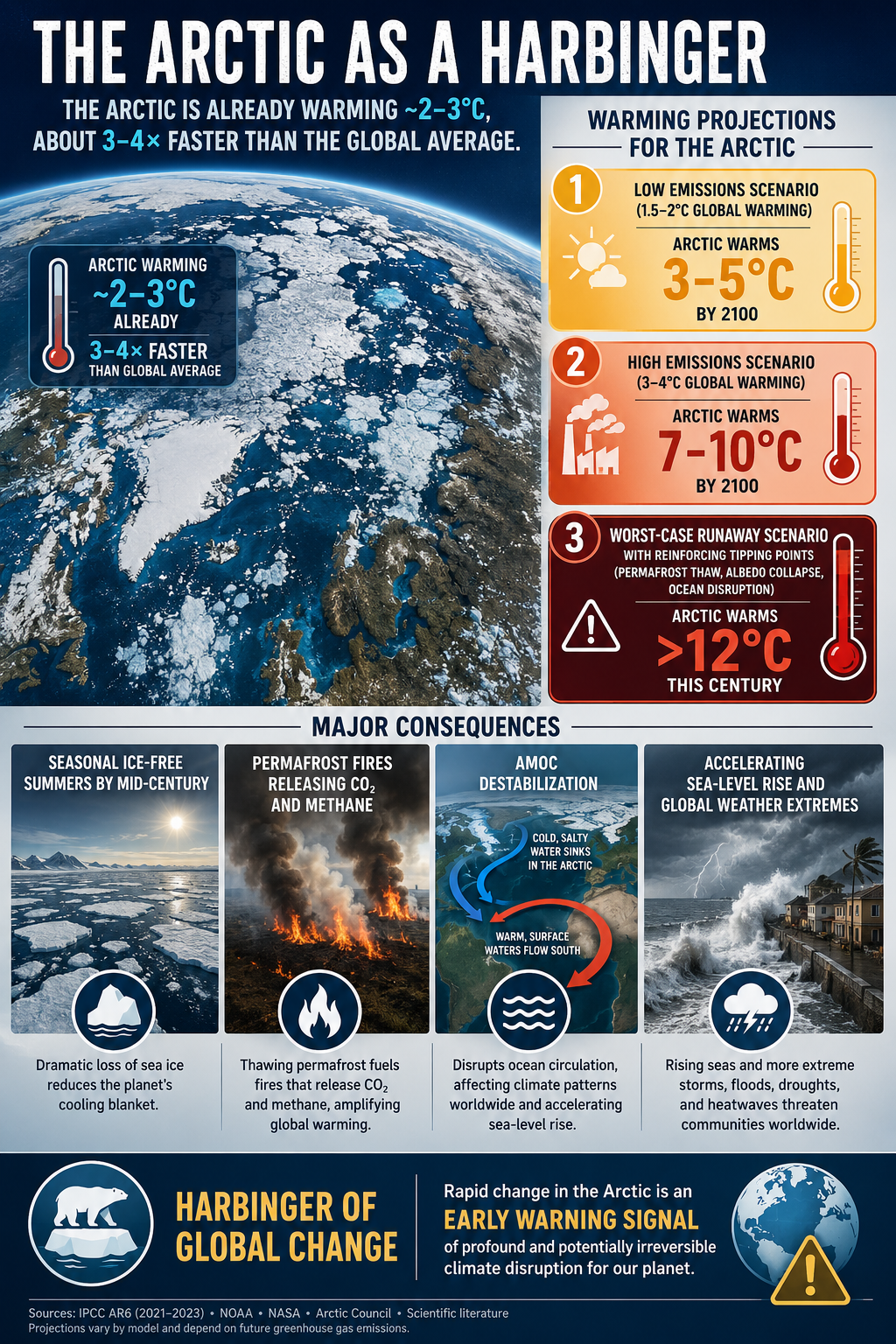
The Arctic is often described as Earth’s “canary in the coal mine” because it is warming dramatically faster than the rest of the planet. Average Arctic temperatures have already risen by approximately 2-3°C above pre-industrial levels, making the region three to four times more sensitive to warming than the global average. This phenomenon, known as Arctic amplification, occurs because multiple feedback mechanisms reinforce one another, causing change to accelerate.
Future warming projections vary depending on global greenhouse gas emissions:
Low-emissions pathway (~1.5-2°C global warming): Arctic temperatures increase by approximately 3-5°C by 2100.
High-emissions pathway (~3-4°C global warming): Arctic warming reaches approximately 7-10°C by 2100, with some regions experiencing substantially larger increases.
Worst-case nonlinear scenario: If major tipping elements reinforce one another—including widespread permafrost thaw, extensive sea-ice loss, and disruptions to ocean circulation—parts of the Arctic could experience more than 12°C of warming this century. The ~12°C figure already appears within mainstream CMIP6/IPCC projections under SSP5-8.5 and does not require invoking additional tipping cascades.
The Arctic’s rapid warming is being driven by several powerful feedback loops. As sea ice disappears, dark ocean water absorbs far more solar energy than reflective ice, intensifying regional heating. Thawing permafrost releases carbon dioxide and methane that have been locked in frozen soils for thousands of years, adding additional greenhouse gases to the atmosphere. Warmer oceans and altered atmospheric circulation patterns further amplify these changes, increasing the probability of abrupt transitions.
The consequences extend far beyond the polar regions. Current projections indicate that the Arctic is likely to experience seasonally ice-free summers by mid-century, fundamentally altering marine ecosystems and atmospheric circulation. Expanding permafrost thaw and increasingly frequent tundra fires could release vast stores of carbon, further accelerating global warming. Large freshwater inputs from melting Greenland ice and changing ocean conditions may also weaken the Atlantic Meridional Overturning Circulation (AMOC), increasing the risk of regional sea-level rise, shifts in precipitation patterns, and more persistent weather extremes.
In this sense, the Arctic functions as an early-warning system for the planet. The region is demonstrating, in compressed form, how reinforcing climate feedbacks can transform gradual warming into rapidly accelerating change. What happens in the Arctic does not stay in the Arctic; it influences ocean circulation, atmospheric dynamics, sea levels, and climate risks across the entire globe.
Straight-line winds are among the most destructive weather hazards on Earth, yet they often receive far less public attention than tornadoes and hurricanes. These powerful, non-rotational winds can flatten forests, rip roofs from buildings, topple power lines, and cause widespread infrastructure failures. In many cases, the damage resembles the aftermath of a tornado or even a hurricane.
Unlike tornadoes, which concentrate damage within a rotating vortex, straight-line winds can devastate broad regions simultaneously. Wind speeds frequently exceed 70–100 mph and, in extreme cases, may surpass 140 mph. Because they can strike with little warning and affect large geographic areas, straight-line wind events represent a growing hazard to communities, transportation systems, utilities, and the insurance industry.
Emerging research indicates that climate change is altering the atmospheric ingredients that produce severe convective storms. As the atmosphere warms and stores more energy, straight-line wind events are becoming more frequent, more destructive, and increasingly widespread. These changes are transforming severe convective storms into one of the fastest-growing sources of weather-related economic losses in the United States.
What Are Straight-Line Winds?
Straight-line winds are powerful horizontal winds that move outward from their source without rotating. They are most commonly produced by the downward plunge and subsequent outward surge of rain-cooled air from severe thunderstorms.
Unlike tornadoes, which draw air inward and rotate violently around a central vortex, straight-line winds push air exclusively outward along the ground. Despite this difference, their destructive potential can rival or even exceed that of weak-to-moderate tornadoes.
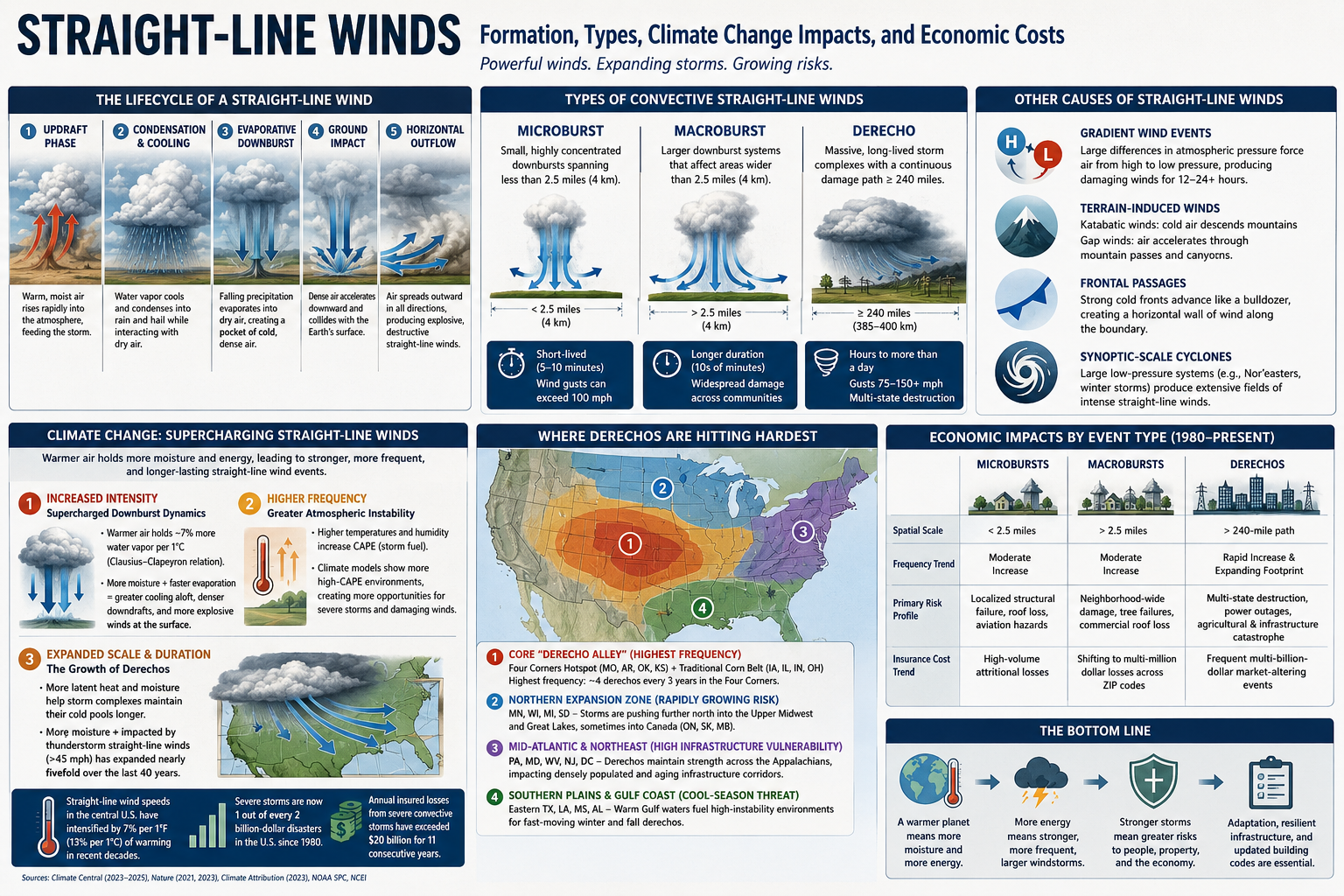
The Lifecycle of a Straight-Line Wind Event
1. Updraft Phase
Warm, moist air rises rapidly into the atmosphere, feeding the development of a growing thunderstorm.
2. Condensation and Cooling
As water vapor ascends, it cools and condenses into rain and hail while interacting with surrounding layers of drier air.
3. Evaporative Downburst Formation
Falling precipitation evaporates into dry air aloft. Because evaporation absorbs heat, it creates a large pocket of extremely cold, dense air.
4. Ground Impact
This dense air mass accelerates downward as a powerful downdraft and collides with Earth’s surface.
5. Horizontal Outflow
Upon impact, the descending air can no longer move downward. Instead, it compresses and surges outward in all directions, producing an explosive burst of destructive straight-line winds.
Classification of Convective Straight-Line Wind Events
Meteorologists classify thunderstorm-generated straight-line winds according to their size and duration.
Microbursts
Microbursts are highly concentrated downbursts spanning less than 2.5 miles (4 km). Although typically lasting only five to ten minutes, they can produce sudden wind gusts exceeding 100 mph and are particularly dangerous because of their intensity and lack of warning.
Macrobursts
Macrobursts are larger downburst systems that spread destruction across areas wider than 2.5 miles (4 km) and often persist significantly longer than microbursts.
Derechos
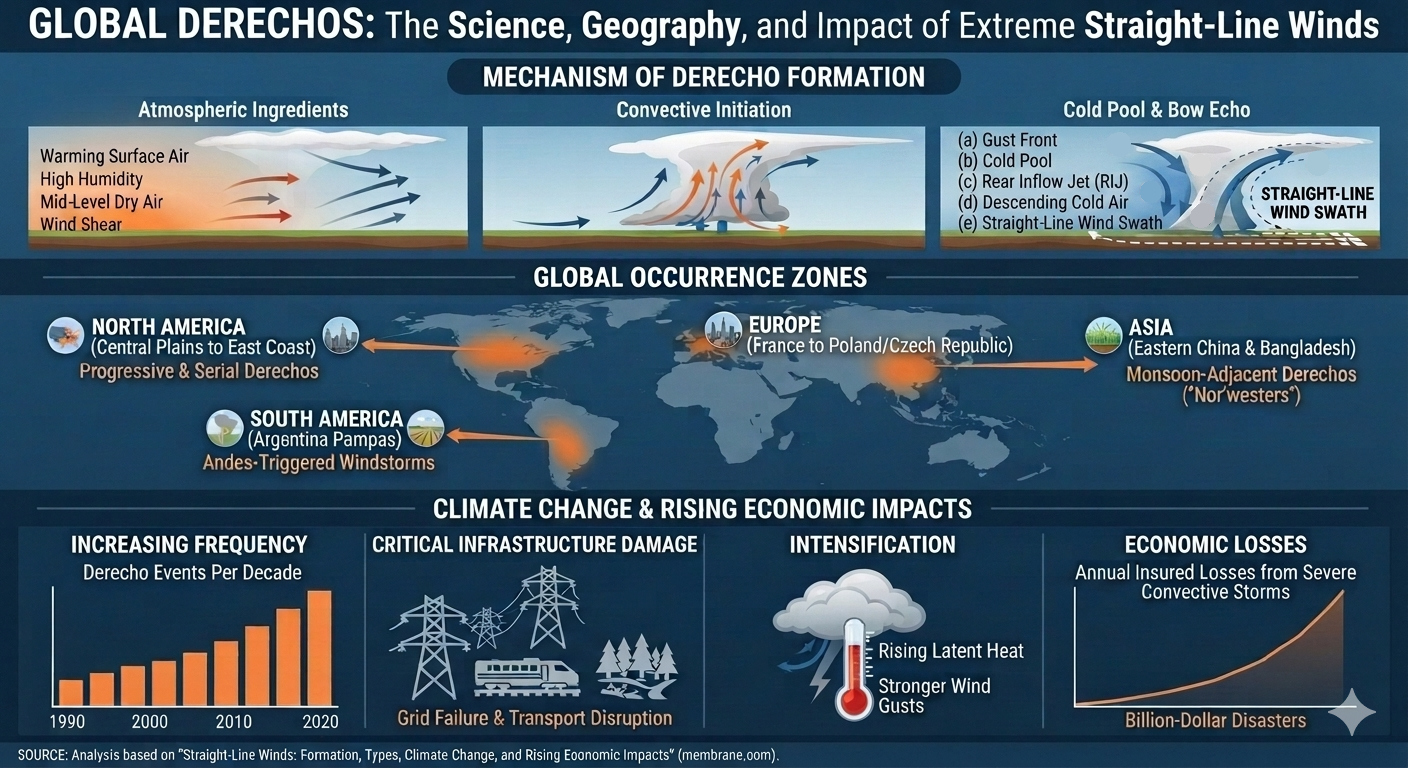
Derechos are massive, long-lived convective storm systems that produce continuous swaths of wind damage extending at least 240–250 miles (385–400 km). By definition, derechos generate sustained winds of at least 58 mph, with gusts commonly ranging between 75 and 150 mph.
Other Causes of Straight-Line Winds
Although convective downbursts are the most common source of straight-line winds, meteorologists classify any non-rotational horizontal wind as a straight-line wind, regardless of its origin.
Gradient Wind Events
These winds arise from large differences in atmospheric pressure. Air naturally flows from areas of high pressure toward low pressure. When powerful pressure systems are positioned close together, the resulting pressure gradient can accelerate air to damaging speeds. Unlike thunderstorm downbursts that last only minutes, gradient wind events can persist for 12 to 24 hours or longer.
Terrain-Induced Winds
Mountain landscapes frequently create severe straight-line winds.
Katabatic Winds: Cold, dense air descends from elevated plateaus or ice sheets under the influence of gravity, accelerating dramatically before spreading across valleys below.
Examples include:
Santa Ana winds in California
Bora winds in southeastern Europe
Gap Winds: Air masses forced through narrow mountain passes and canyons become compressed and accelerated, producing intense horizontal wind speeds.
Frontal Passages
The leading edge of a strong cold front can generate destructive straight-line winds. As dense cold air advances, it acts like an atmospheric bulldozer, forcing warmer air upward and creating a powerful wall of horizontal wind along the frontal boundary.
Synoptic-Scale Extratropical Cyclones
Large non-tropical low-pressure systems, such as Nor’easters and major winter storms, produce extensive fields of intense straight-line winds through tightly packed pressure gradients extending across hundreds of miles.
Climate Change and the Intensification of Straight-Line Winds
Climate change directly influences the atmospheric variables that fuel severe convective storms, causing thunderstorm-generated straight-line winds to become more frequent, intensely destructive, and geographically expanded.
Research synthesized by Climate Central and peer-reviewed studies published in Nature indicates that straight-line wind speeds across portions of the central United States have already intensified by approximately 7% per 1°F (13% per 1°C) of atmospheric warming during recent decades.
Several physical mechanisms are driving these changes.
The fundamental engine behind a straight-line wind event is the evaporative downburst. Climate change amplifies this process in multiple ways.
Higher Atmospheric Moisture Capacity
According to the Clausius-Clapeyron relationship, a warmer atmosphere can hold approximately 7% more water vapor for every 1°C increase in temperature. This additional moisture allows thunderstorms to contain substantially greater amounts of precipitation.
Enhanced Evaporative Cooling
When this larger volume of precipitation falls through relatively dry layers of air, evaporation occurs more rapidly. The evaporation dramatically cools the descending air, making it denser and heavier than its surroundings.
The greater the temperature contrast between the chilled downdraft and the surrounding environment, the faster the air accelerates downward. The result is a more violent impact at the surface and stronger, more destructive straight-line wind speeds.
Severe convective storms require highly unstable atmospheric conditions.
Elevated Convective Available Potential Energy (CAPE)
Warmer temperatures and increased humidity elevate Convective Available Potential Energy (CAPE), a measure of the energy available for thunderstorm development.
More Severe Storm Environments
Advanced climate models consistently project increases in high-CAPE environments under continued greenhouse gas forcing. These environments provide more opportunities for ordinary thunderstorms to intensify into severe systems capable of producing damaging straight-line winds.
3. Expanded Scale and Duration: The Growth of Derechos
Climate change also appears to be altering the longevity and geographic footprint of large convective systems.
Longer-Lived Storm Complexes
A warmer atmosphere contains greater amounts of latent heat and moisture, enabling storm systems to maintain their rain-cooled cold pools for longer periods. Because these cold pools drive storm propagation, straight-line wind events can persist over hundreds of miles.
Fivefold Geographic Expansion
Research summarized by Climate Attribution indicates that the total area affected by thunderstorm-generated straight-line winds exceeding 45 mph has expanded nearly fivefold during the past forty years. Regions farther north and east that historically experienced fewer severe wind events are increasingly experiencing high-intensity derecho systems.
The Severe Convective Storm Crisis
The financial consequences of straight-line winds have fundamentally changed since 1980. Driven by climate change, expanding development patterns, and inflation, severe convective storms have become the most frequent billion-dollar disaster category in the United States.
According to Climate Central, severe storms now account for approximately one out of every two billion-dollar weather disasters recorded since 1980. Annual insured losses from severe convective storms that generally remained below $5 billion during the 1980s have evolved into an eleven-year streak of annual losses exceeding $20 billion.
Comparing Straight-Line Wind Types and Their Economic Impacts
Neighborhood-wide damage and extensive tree failures
Multi-state infrastructure destruction and widespread power outages
Insurance Cost Trend
High-volume attritional losses
Increasing multi-million-dollar localized losses
Frequent multi-billion-dollar catastrophe events
Economic Impacts by Event Type
Microbursts and Macrobursts: The Aggregate Loss Problem
Microbursts and macrobursts generally function as localized “attritional losses” for the insurance industry. Individually, most events do not exceed catastrophe thresholds. However, their increasing frequency means they collectively generate billions of dollars in annual claims.
As residential development has expanded into previously rural areas, localized downbursts increasingly strike populated communities. The financial impact often manifests through:
Roof replacements
Siding damage
Broken windows
Vehicle losses
Fallen tree claims
Localized business interruptions
Although these events rarely dominate national headlines, their cumulative economic impact has become enormous.
Derechos: The Multi-Billion-Dollar Market Shifters
Derechos represent the fastest-growing financial threat among straight-line wind events.
Geographic Expansion
Greater atmospheric moisture allows derecho complexes to maintain their structure over much longer distances. Storms increasingly extend into regions where infrastructure and housing stock were not designed to withstand sustained horizontal winds of 80–110 mph.
Hurricane-Scale Damage
Events such as the 2020 Midwest Derecho, which caused more than $11 billion in damages, demonstrated that a single modern derecho can inflict destruction comparable to that of a major landfalling hurricane.
Consequences frequently include:
Regional power grid failures
Agricultural devastation
Widespread commercial losses
Transportation disruptions
Long-duration business interruptions
Extensive residential destruction
Geographic Shifts in Derecho Risk: Expanding Beyond Traditional Boundaries
The United States Midwest and the Corn Belt are experiencing the most severe impacts and greatest geographic expansion associated with intensifying derechos. Although a climatological “hot zone” for these storms has long existed in the central United States, climate change appears to be altering the environmental conditions that govern their formation and propagation.
Warmer atmospheric temperatures, increased moisture availability, and persistent summer heat domes are creating environments capable of sustaining larger and longer-lived convective systems. As a result, regions that historically experienced relatively infrequent derecho activity are increasingly facing severe straight-line wind events with multi-billion-dollar consequences.
1. The Core “Derecho Alley”: Highest Frequency and Agricultural Exposure
Similar to the nation’s Tornado Alley, a region often referred to as Derecho Alley experiences the highest baseline concentration of derechos in North America, averaging approximately one major event each year.
The Four Corners Hotspot
The area encompassing:
Southwest Missouri
Northwest Arkansas
Northeast Oklahoma
Southeast Kansas
records the highest historical frequency of derechos, averaging roughly four major events every three years.
The Traditional Corn Belt
Immediately east lies the traditional Corn Belt, including:
Iowa
Illinois
Indiana
Ohio
These states possess extensive flat terrain and some of the world’s most productive agricultural land. The lack of significant topographic barriers allows derecho complexes to accelerate and maintain their structure over hundreds of miles with minimal disruption.
The consequences can be enormous. A single derecho may flatten millions of acres of corn and soybeans within hours, producing severe agricultural losses, disrupting supply chains, damaging grain storage and transportation infrastructure, and generating billions of dollars in economic damages.
2. The Northern Expansion Zone: A Rapidly Growing Risk
As atmospheric warming and persistent summer heat increasingly extend farther north, states that once viewed derechos as rare anomalies are experiencing a growing number of severe events.
Impacted States
Minnesota
Wisconsin
Michigan
South Dakota
Emerging Trends
Strengthening high-pressure systems and expanding zones of atmospheric instability are supporting derecho development farther into the Upper Midwest and Great Lakes regions. Some events are now maintaining sufficient intensity to continue into Canada, affecting:
Ontario
Saskatchewan
Manitoba
This northward expansion represents one of the clearest examples of shifting severe weather boundaries in a warming climate.
3. The Mid-Atlantic and Northeast: High Infrastructure Vulnerability
Although derechos occur less frequently in the eastern United States than in the Plains and Midwest, their societal and economic impacts are often disproportionately large.
Impacted States
Pennsylvania
Maryland
West Virginia
New Jersey
Washington, D.C.
Emerging Trends
Historically, the Appalachian Mountains often weakened convective systems moving eastward. However, recent events suggest that increasingly energetic storm complexes are better able to maintain their structural integrity while crossing the mountains.
As a result, damaging straight-line winds are increasingly reaching densely populated metropolitan corridors of the Mid-Atlantic and Northeast.
The consequences include:
Large-scale electrical grid failures
Widespread tree damage
Transportation disruptions
Telecommunications outages
Extensive residential and commercial property losses
Because much of the region’s electrical and transportation infrastructure is decades old and designed for historical wind conditions, vulnerability to major derecho events remains exceptionally high.
4. The Southern Plains and Gulf Coast: The Cool-Season Threat
Approximately 70 percent of all derechos occur during the warm season between May and August. However, a secondary corridor remains active during autumn and winter.
Impacted States
Eastern Texas
Louisiana
Mississippi
Alabama
Emerging Trends
The Gulf of Mexico is supplying increasingly warm and moisture-rich air masses later into the year. These conditions can create highly unstable environments even during winter months, supporting the development of fast-moving cool-season derechos.
Because communities generally associate severe convective storms with spring and summer, winter derechos often arrive with lower public awareness and preparedness, increasing the potential for widespread impacts.
A Global Phenomenon
Although North America experiences some of the world’s most powerful and well-documented derechos, these storms are not unique to the United States. Derecho-like convective systems occur on nearly every continent and are increasingly being recognized in:
Central Europe
Eastern Asia
The subtropical plains of South America
As the global atmosphere continues to warm and store more moisture and energy, researchers are increasingly investigating whether the environmental conditions that support long-lived convective windstorms are becoming more common in regions that historically experienced them only rarely.
The expanding geographic footprint of derechos underscores a central lesson of climate science: severe weather hazards are not remaining stationary. As atmospheric energy increases, the boundaries of extreme events are shifting, exposing new populations, infrastructure, and economic systems to risks that were once considered geographically improbable.
Insurance Industry Responses
Global insured losses from severe convective storms are increasing at an estimated average annual rate of approximately 9%, substantially exceeding the growth rate of losses from other natural catastrophes.
In response, insurers are rapidly restructuring coverage across many regions of the United States.
Traditional policies that once contained flat-dollar wind deductibles are increasingly being replaced by percentage-based wind and hail deductibles ranging from 1% to 5% of a home’s insured value. These changes shift thousands of dollars of immediate disaster costs directly onto homeowners and businesses.
The insurance industry increasingly recognizes straight-line wind events not as isolated weather anomalies but as an emerging systemic risk requiring substantial adjustments in underwriting practices, pricing models, and catastrophe exposure management.
Conclusion: More Energy in the Atmosphere Means More Extreme Winds
Straight-line winds demonstrate a fundamental principle of climate physics: a warmer world is a more energetic world.
As greenhouse gases trap additional heat, the atmosphere stores more moisture and potential energy, creating increasingly favorable conditions for severe convective storms. The result is an environment capable of producing stronger downbursts, more frequent severe thunderstorms, and larger, longer-lived derecho systems.
Climate change does not cause any individual straight-line wind event in isolation. However, it is increasingly altering the environmental ingredients that govern these storms by increasing atmospheric moisture, elevating instability, and supporting more persistent convective systems.
The consequences extend well beyond meteorology. Straight-line winds are becoming a growing challenge for public safety, infrastructure resilience, electrical grid reliability, insurance markets, and building design standards. As the climate system continues to warm, understanding and preparing for these increasingly energetic wind events will become essential for protecting communities and reducing future economic losses.
What are the climate risks where you live?
Many people are surprised to learn that their greatest weather-related risk is often wind damage. Wind and hail damage are among the most common homeowners insurance claims in the United States, accounting for roughly 40% of all property damage claims.
Standard homeowners policies from major insurers generally cover wind damage under dwelling and personal property coverage. These claims can include repairs for roof and shingle damage, siding damage, structural failures, and damage caused by wind-driven debris such as fallen trees.
However, homeowners in high-risk areas—such as coastal regions and “Tornado Alley”—may face separate windstorm deductibles. Unlike a standard fixed deductible (for example, $1,000), these deductibles are often calculated as a percentage of the home’s insured value, typically ranging from 1% to 5%.
On July 11, 2026, four distinct microbursts struck the Philadelphia region simultaneously. Wind gusts approaching 70 mph and torrential downpours ripped roofs from buildings, caused structural collapses, toppled trees, and brought down power lines across the area.
Microbursts develop rapidly and are notoriously difficult to predict. Because they can strike with little or no warning, meteorologists stress that a Severe Thunderstorm Warning should be treated with the same urgency as a Tornado Warning.
What Is a Microburst?
A microburst is a sudden, intense downdraft of air within a thunderstorm that plunges toward the ground and then spreads outward violently in all directions.
Although these events typically last only 5 to 15 minutes and usually affect an area less than 2.5 miles (4 km) wide, they can produce straight-line winds exceeding 100 mph (160 km/h)—strong enough to cause damage comparable to an EF-1 tornado.
How a Microburst Forms
1. Suspension
A powerful thunderstorm updraft lifts and suspends a massive core of rain and hail high within the storm.
2. Evaporative Cooling
Dry air enters the storm, causing raindrops to evaporate. Evaporation rapidly cools the surrounding air, making it denser and heavier.
3. Collapse
The storm’s updraft weakens and can no longer support the heavy precipitation core and the increasingly dense, chilled air.
4. Impact
The entire mass plunges toward Earth like an atmospheric water balloon. Upon reaching the ground, the air has nowhere to go except outward, exploding horizontally and generating destructive straight-line winds.
Wet microbursts are accompanied by blinding rainfall, torrential downpours, and flash flooding. They are particularly common during hot, humid summer conditions.
Dry Microbursts
Dry microbursts occur when precipitation evaporates before reaching the ground. Little or no rain is observed, leaving behind what can seem like an invisible explosion of wind.
Microburst vs. Tornado
Feature
Microburst
Tornado
Wind Movement
Straight-line winds spreading outward
Rotational winds spiraling inward and upward
Damage Pattern
Debris falls in one direction or fans outward
Debris is twisted, swirled, and chaotic
Size & Duration
Usually under 2.5 miles wide and lasts 5–15 minutes
Varying widths; can track for miles and last over an hour
Climate Change and Microbursts
Climate change is expected to increase both the frequency and intensity of microbursts by altering the amount of energy and moisture available in the atmosphere.
Because microbursts are highly localized events, they are difficult to isolate within traditional global climate models. However, advances in atmospheric physics, high-resolution modeling, and machine-learning analyses increasingly indicate that a warming climate is creating environments more favorable for severe thunderstorm downbursts.
1. The 7% Moisture Rule: More Fuel for Storms
For every 1°C (1.8°F) of warming, the atmosphere can hold approximately 7% more water vapor.
The Impact: This additional moisture acts as high-octane fuel for thunderstorms, allowing larger precipitation cores to develop. When these heavier cores collapse, they can generate faster and more powerful downdrafts.
2. Rising DCAPE: More Kinetic Energy
Meteorologists use Downdraft Convective Available Potential Energy (DCAPE) to estimate the potential strength of descending air within a storm.
The Impact: Climate simulations project increases in average DCAPE across many regions under continued greenhouse warming. Higher DCAPE generally translates into stronger descending air and potentially higher straight-line wind speeds.
3. Enhanced Evaporative Cooling
In many regions, warming temperatures create hotter and sometimes drier layers of air beneath thunderstorms.
The Impact: As rain falls into these dry layers, evaporation accelerates. The resulting rapid cooling creates exceptionally dense air that sinks at high speed, intensifying both wet and dry microbursts.
4. Seasonal and Geographic Shifts
The atmospheric ingredients that favor severe thunderstorm winds are changing geographically and seasonally.
The Impact: Research suggests that environments conducive to severe downbursts are shifting poleward, exposing regions farther north to increased risks during seasons when microbursts were historically less common.
Microbursts as Extreme Energy Events
At their core, microbursts are extreme energy events.
Climate change represents an imbalance in Earth’s energy system. As the atmosphere and oceans accumulate additional heat, more energy becomes available to power thunderstorms and other forms of extreme weather.
The destructive potential of wind is highly nonlinear. Kinetic energy increases with the square of wind speed, meaning relatively small increases in velocity can produce disproportionately larger impacts. Consequently, modest increases in storm intensity can translate into dramatically greater damage to homes, infrastructure, forests, and electrical systems.
Microbursts are one example of how additional energy in the climate system can manifest as sudden, localized, and highly destructive weather extremes.
Growing Risks to Aviation and Infrastructure
Microbursts remain among the most dangerous weather phenomena for aviation. A sudden downburst can rapidly alter an aircraft’s airspeed and lift during takeoff or landing, creating life-threatening conditions within seconds.
At the same time, stronger straight-line winds pose increasing challenges for power grids, transportation networks, communication systems, and urban infrastructure.
As the climate system continues to warm, understanding and preparing for these rapidly developing extreme energy events will become increasingly important for both public safety and infrastructure resilience.
Conclusion: More Energy, More Extreme Outcomes
Microbursts illustrate a fundamental principle of climate physics: a warmer world is a more energetic world. As greenhouse gases trap additional heat, the atmosphere holds more moisture, stores more potential energy, and increasingly creates conditions favorable for powerful convective storms.
Not every thunderstorm will produce a microburst, and climate change does not cause any single event in isolation. However, the underlying environmental ingredients that fuel severe downbursts—greater atmospheric moisture, enhanced instability, stronger evaporative cooling, and shifting storm environments—are becoming more favorable in many regions.
Because the relationship between energy and damage is nonlinear, relatively modest increases in storm intensity can lead to disproportionately larger consequences. A short-lived microburst can transform an ordinary summer storm into a destructive event capable of flattening trees, crippling power infrastructure, and threatening lives within minutes.
Microbursts therefore serve as a reminder that climate change is not simply a story of gradually rising temperatures. It is also a story of how additional energy in Earth’s system increasingly manifests through sudden, concentrated, and extreme weather events. Understanding these processes is essential for improving forecasting, strengthening infrastructure resilience, and adapting to a climate system that is becoming progressively more volatile and energetic.
Complex social-ecological feedback loops arise when human systems and natural systems react to climate change in ways that amplify one another. Because Earth’s climate operates as a nonlinear system, these interactions do not unfold gradually — they can accelerate suddenly, compound unpredictably, and push the system toward irreversible shifts.
This nonlinear, cross-regional feedback behavior is something we have been modeling for decades — where climate physics couples directly with economic networks.
In the 1990s we underestimated one variable: human delay. We assumed mitigation would begin in earnest. It did not.
Now we observe potential doubling in the intensity or frequency of certain climate impacts on timescales of 2–10 years rather than centuries. The apparent acceleration has compressed from millennial-scale shifts to multi-decade nonlinear surges.
Denialism and Ecofascism
One factor we drastically underestimated was the influence of organized denialism and emerging ecofascist ideology.
Initially the investigation focused on a straightforward institutional question:
Were challenges to the EPA’s Endangerment Finding and coordinated regulatory rollbacks primarily driven by economic motives — specifically the fossil-fuel industry’s long-documented strategy of financing climate denial narratives?
Organizations such as the CO₂ Coalition and the Department of Energy’s Climate Working Group were key nodes of analysis. The economic motive was clear and well documented: protect fossil capital, delay regulation, and manufacture doubt.
But as correspondence, affiliations, and rhetoric were analyzed, a second pattern emerged.
This was not simply economic denialism. It was the normalization of ecofascist ideology.
Ecofascism reframes environmental collapse as beneficial — even desirable — if it reduces populations deemed inferior, excessive, or expendable. It merges environmental crisis with authoritarian hierarchy, racialized survival logic, and elite domination theory.
This is not speculation. It is visible in the language used by some elite circles revealed through the Epstein files.
Examples include statements attributed to Jeffrey Epstein such as:
“I liked the argument that more CO₂ is good for plants.”
“Maybe climate change is a good way of dealing with overpopulation — the Earth’s forest fire. Potentially a good thing for the species.”
Combined with statements reflecting explicit eugenic ideology:
“Executions of the elderly and infirm make sense.”
“African music has lots of beats and little development — no accident. It mirrors their learning process.”
This is not conventional policy disagreement. This is eliminationist logic.
Where traditional denial protects capital investment, ecofascism rationalizes unequal human survival.
“Climate change is increasing the amount of energy violent rain events contain, amplifying how much damage they can inflict.”
The physics of wind and rain are important to understand: their destructive force increases nonlinearly with velocity and is further amplified by density and mass. Even relatively small increases in wind speed or rainfall intensity can produce disproportionately larger impacts and damage.
This principle applies to all extreme energy events. At its core, climate change is an energy imbalance. As excess heat accumulates within the Earth system, more energy becomes available to drive storms, floods, droughts, heatwaves, and wildfires. As the energy intensifies, so do its manifestations.
We examine how human activities — such as deforestation, fossil fuel combustion, mass consumption, industrial agriculture, and land development — interact with ecological processes like thermal energy redistribution, carbon cycling, hydrological flow, biodiversity loss, and the spread of disease vectors. These interactions do not follow linear cause-and-effect patterns. Instead, they form complex, self-reinforcing feedback loops that can trigger rapid, system-wide transformations — often abruptly and without warning. Grasping these dynamics is crucial for accurately assessing global risks and developing effective strategies for long-term survival.
Climate change is not just changing the planet—it is changing us.
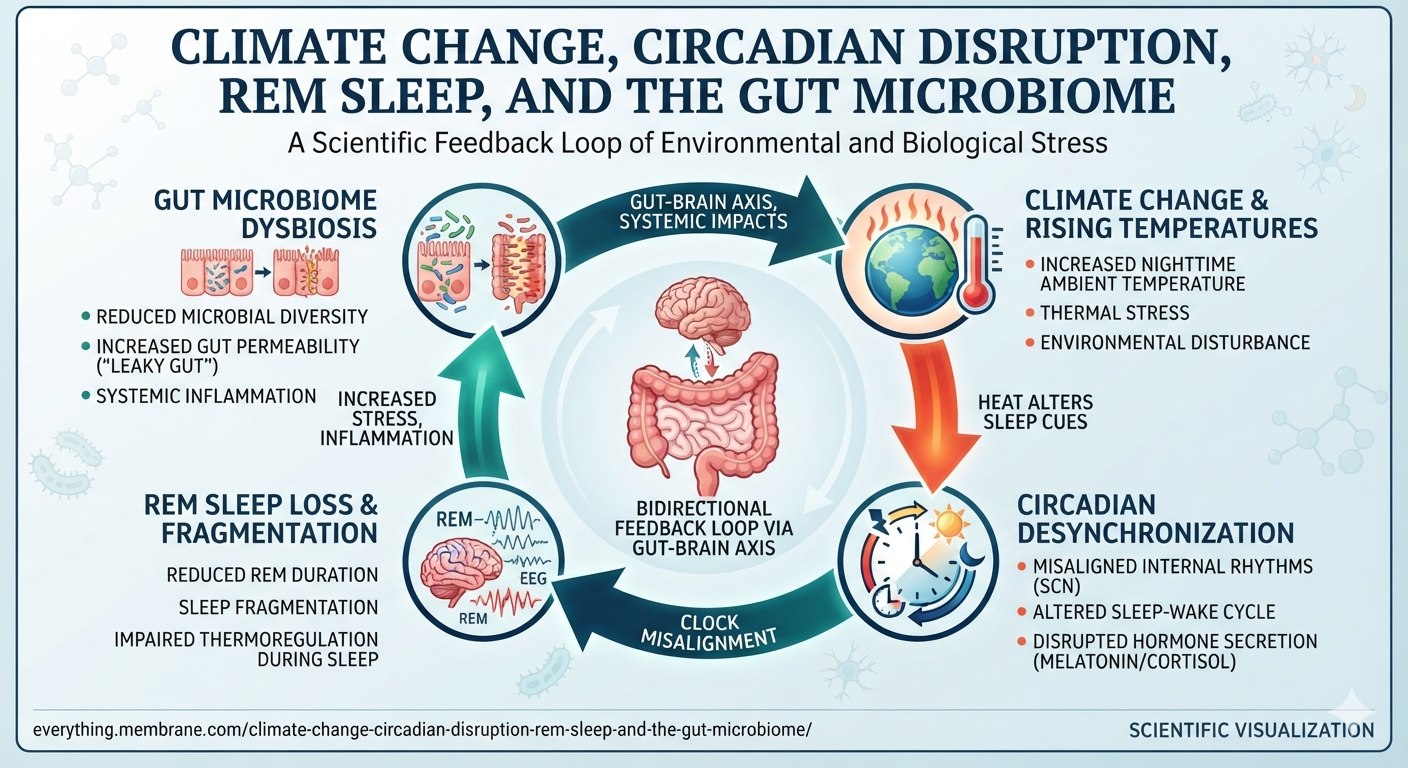
Extreme heat, shifting seasons, storms, and pollution are disrupting our circadian rhythms, damaging sleep, altering the gut microbiome, and destabilizing the gut-brain axis.
Protecting the climate means protecting the systems that keep us alive.
by Daniel Brouse
A Nonlinear Acceleration Pathway in Human Health
Introduction: Climate Change as a Biological Disruptor
One of the most significant and underappreciated health consequences of climate change is the disruption of human circadian rhythms through heat stress, seasonal disruption, and extreme weather events, triggering cascading feedback interactions among sleep, the gut microbiome, the gut-brain axis, immune function, and neurological health.
Climate change is not merely an increase in average temperature. It represents a system-wide environmental destabilization that alters the timing, intensity, and predictability of the natural signals that regulate human biology. The human circadian system evolved under relatively stable patterns of light, temperature, seasons, and environmental cycles. Rapid climate change is now disrupting these biological cues faster than human physiology can adapt.
The Nonlinear Climate Acceleration Hypothesis proposes that climate impacts increasingly emerge through interacting feedback loops rather than simple linear progression. Within the human body, climate-driven stressors can create similar accelerating feedback systems. Rising temperatures, shifting seasons, extreme weather events, and increasing environmental instability disrupt sleep and circadian regulation. Sleep disruption then damages metabolic, immune, and neurological systems, creating additional physiological stress that further reduces resilience.
The result is a climate-driven biological feedback loop:
Climate Stress → Circadian Disruption → Sleep Loss → Gut Dysbiosis → Inflammation → Reduced Adaptation Capacity → Greater Vulnerability to Climate Stress
1. Climate Change Is Disrupting the Environmental Clock
Human biology is synchronized by environmental timing signals known as zeitgebers. The strongest of these are sunlight exposure, temperature cycles, seasonal changes, and predictable daily patterns. Climate change is altering each of these signals.
Rising Nighttime Temperatures and Sleep Loss
One of the most important climate-related sleep disruptions is the rapid increase in nighttime temperatures. Nighttime temperatures are rising faster than daytime temperatures in many regions, reducing the natural cooling period required for restorative sleep.
Human sleep initiation depends on a decline in core body temperature. During heatwaves, elevated nighttime temperatures prevent this cooling process, increasing nighttime awakenings and reducing both deep N3 slow-wave sleep and rapid eye movement (REM) sleep.
Even modest increases in nighttime temperature can produce measurable sleep losses, particularly among older adults, people without climate-controlled environments, and vulnerable populations.
2. Seasonal Disruption: The Loss of the Natural Biological Calendar
While increasing temperatures receive significant attention, the disruption of seasonal cycles represents another major but less recognized climate threat.
For thousands of years, human physiology adapted to predictable seasonal patterns:
Spring warming signaled increasing daylight and biological activation.
Summer conditions established metabolic and reproductive rhythms.
Autumn cooling prepared the body for seasonal transitions.
Winter conditions reinforced changes in sleep duration, hormones, and energy regulation.
Climate change is now altering this biological calendar.
Expanding Warm Seasons
Warmer conditions are extending the length of spring and delaying the onset of autumn. In many regions, growing seasons have expanded by weeks on both ends, creating longer periods of heat exposure and reduced seasonal cooling.
This seasonal compression disrupts:
Melatonin timing
Hormonal cycles
Immune seasonality
Metabolic regulation
Sleep duration patterns
The circadian system does not only operate on a 24-hour cycle. Humans also possess annual biological rhythms that respond to seasonal changes in temperature and daylight. Rapid seasonal shifts create a form of biological “seasonal jet lag,” where internal timing becomes increasingly misaligned with environmental conditions.
3. Extreme Weather Events as Sleep Disruptors
Climate change is also increasing the frequency and intensity of extreme weather events that directly interfere with human sleep.
Severe Storms and Atmospheric Disturbances
More intense storms create multiple pathways for sleep disruption:
Increased nighttime noise from wind, rain, and flooding
Power outages that eliminate cooling systems
Emergency alerts and disaster preparation
Displacement from damaged homes
Chronic stress after repeated extreme events
Floods, hurricanes, tornadoes, and severe thunderstorms can create prolonged periods of psychological stress that activate the sympathetic nervous system and disrupt normal sleep architecture.
Wildfire Smoke and Air Quality
Increasing wildfire activity introduces another sleep-related climate stressor.
Smoke exposure can:
Irritate airways
Increase nighttime coughing
Reduce oxygen exchange efficiency
Increase systemic inflammation
Poor air quality often forces people indoors with reduced ventilation, altered routines, and additional psychological stress.
Drought and Heat Stress
Drought increases heat exposure, reduces nighttime cooling through vegetation loss, and contributes to prolonged periods of environmental stress. Agricultural and economic impacts also increase anxiety and chronic stress, further impairing sleep.
4. The Climate-Sleep-Gut Feedback Loop
Climate-driven environmental instability disrupts the microbiota-gut-brain axis, creating a self-amplifying biological cascade.
Climate-Induced Heat Stress + Seasonal Disruption + Extreme Weather Stress
→ Circadian Disruption
→ REM & Deep Sleep Depletion
→ Elevated Cortisol & HPA Activation
→ Intestinal Permeability ("Leaky Gut")
→ Gut Microbiome Dysbiosis
→ Reduced Neurotransmitter Production (Serotonin, GABA, SCFAs)
→ Further Circadian Disruption
→ ... Amplify and Repeat...
This represents a biological example of nonlinear acceleration: multiple stressors interact and amplify each other rather than producing independent effects.
5. Sleep Loss Accelerates Gut Microbiome Breakdown
Thermal stress, storm-related anxiety, and circadian disruption reduce restorative sleep. Loss of REM and deep sleep activates the hypothalamic-pituitary-adrenal (HPA) axis, increasing cortisol levels.
Chronic cortisol elevation:
Increases systemic inflammation
Alters intestinal microbial diversity
Reduces beneficial bacterial populations
Weakens intestinal barrier function
Because gut bacteria themselves follow circadian rhythms, disrupted sleep directly alters microbial activity and metabolism.
6. Heat Stress and Intestinal Permeability
During extreme heat, the body redirects blood flow toward the skin to support cooling. This reduces blood flow available to internal organs, including the gastrointestinal tract.
Reduced intestinal circulation can weaken the epithelial barrier, increasing intestinal permeability.
The result is:
Heat Stress → Reduced Gut Barrier Integrity → Increased Inflammatory Molecules in Bloodstream → Systemic Inflammation
This inflammatory state further damages sleep quality and neurological regulation.
7. Gut Dysbiosis Disrupts Sleep Chemistry
A healthy microbiome produces compounds essential for neurological balance and sleep regulation.
Short-Chain Fatty Acids (SCFAs)
Beneficial bacteria produce SCFAs such as butyrate, which support:
Intestinal integrity
Reduced inflammation
Brain health
Sleep regulation
Serotonin and GABA
Microbes including Lactobacillus and Bifidobacterium contribute to pathways involved in producing:
Gamma-aminobutyric acid (GABA), which promotes relaxation and sleep initiation
Serotonin, much of which is produced in the gut and serves as a precursor to melatonin
Tryptophan Pathway Disruption
Gut dysbiosis alters tryptophan metabolism, reducing the availability of compounds needed for serotonin and melatonin production.
Loss of microbial rhythms and impaired glucose regulation
Obesity, insulin resistance, Type 2 diabetes
Immune
Increased gut permeability and chronic inflammation
Autoimmune dysfunction, inflammatory disease
Neurological
Reduced REM sleep and neurotransmitter disruption
Anxiety, depression, cognitive decline
Cardiovascular
Elevated cortisol and chronic stress response
Hypertension, cardiovascular disease
Psychological
Repeated disasters and climate anxiety
Chronic stress, reduced resilience
9. Mitigating the Climate-Circadian Threat
Maintain Thermal Sleep Conditions
During heat events, maintain cooler sleeping environments using:
Air conditioning
Fans
Cooling mattresses
Improved ventilation
A cooler bedroom supports natural nighttime temperature decline.
Restore Circadian Anchors
Strengthen biological timing through:
Morning sunlight exposure
Consistent sleep schedules
Reduced nighttime artificial light exposure
Support the Microbiome
Promote microbial diversity through:
High-fiber diets
Diverse plant foods
Fermented foods
Adequate hydration
Stabilize Meal Timing
Time-restricted eating can reinforce peripheral circadian clocks in the liver and gut, helping compensate for environmental disruption.
Conclusion: Climate Change as a Nonlinear Biological Accelerator
Climate change is increasingly affecting human health through pathways that extend far beyond direct heat exposure. By altering temperatures, seasonal cycles, storm patterns, air quality, and environmental predictability, climate instability is disrupting the biological timing systems that regulate human physiology. These disruptions affect not only sleep and circadian rhythms, but also the interconnected networks linking the brain, immune system, metabolism, and the gut microbiome.
The interaction between circadian disruption, REM sleep loss, microbiome deterioration, and impairment of the gut-brain axis represents a self-reinforcing biological feedback system consistent with the principles of the Nonlinear Climate Acceleration Hypothesis. Disrupted sleep can alter microbial diversity and intestinal permeability, while changes in the gut microbiome can influence inflammation, stress regulation, cognition, and neurological function through the gut-brain axis. Together, these processes create cascading effects that may amplify the physiological burden of climate stress.
As climate instability increases, these biological disruptions may not progress in a simple linear manner. Instead, interacting stressors—including extreme heat, seasonal disruption, severe storms, air pollution, and chronic environmental uncertainty—may accelerate one another, progressively reducing human resilience and increasing vulnerability to chronic disease.
A critical concern is the emergence of a biological tipping cascade, in which multiple interconnected systems begin to amplify one another beyond their ability to self-correct. Persistent climate-driven circadian disruption can impair sleep quality, weaken immune regulation, alter the gut microbiome, and destabilize the gut-brain axis. These changes can increase inflammation, stress hormone activation, and neurological vulnerability, creating feedback loops that further reduce the capacity of the human body to adapt. Much like tipping dynamics observed in Earth systems, biological systems may not fail through a single catastrophic event but through the accumulation and interaction of multiple smaller disruptions that collectively push the system toward a less resilient state.
Climate change is therefore not only an environmental crisis or a climate system disruption—it is increasingly becoming a biological timing crisis. By interfering with the rhythms that synchronize human physiology with the natural world, climate change threatens the delicate regulatory systems that allow humans to sleep, heal, adapt, and maintain health. Understanding these nonlinear interactions is essential because protecting climate stability is also a means of protecting the biological systems that sustain human resilience.
One of the most significant and underappreciated health consequences of climate change is the disruption of human circadian rhythms and the resulting feedback interactions between REM sleep and the gut microbiome. Rather than producing isolated health effects, climate change acts as a systemic environmental stressor that destabilizes multiple interconnected biological systems simultaneously. This threat is compounded by the fact that nighttime temperatures are rising approximately twice as fast as average global temperatures, while seasonal patterns are shifting, with warmer conditions extending by weeks into both spring and autumn. Together, these changes increasingly disrupt the environmental cues that synchronize human biological clocks.
According to the Nonlinear Climate Acceleration Hypothesis, climate impacts do not increase in a simple linear fashion. Instead, warming intensifies through interacting feedback loops that amplify one another, producing disproportionate and accelerating consequences. Human physiology exhibits similar dynamics. Circadian disruption, sleep deprivation, and gut dysbiosis form a self-reinforcing feedback system in which relatively small climatic disturbances can trigger cascading biological effects that grow nonlinearly over time.
Climate Change as a Circadian Stressor
Climate change is increasingly altering the environmental cues, or zeitgebers, that synchronize the body’s master biological clock.
Elevated Nighttime Temperatures
Human sleep initiation requires a decline in core body temperature. Rising nighttime temperatures and more frequent heatwaves prevent the physiological cooling necessary for deep and REM sleep stages, fragmenting normal sleep architecture.
Suppressed Melatonin Production
Thermal stress and expanding nighttime light pollution disrupt signaling within the suprachiasmatic nucleus (SCN), the brain’s master clock. This delays melatonin secretion and shifts circadian timing.
Altered Seasonality
Changing seasonal patterns and increasing climatic variability disrupt annual biological rhythms that evolved under relatively stable environmental conditions, reducing the adaptive flexibility of human circadian systems.
Collectively, these stressors produce chronodisruption—the misalignment of internal biological clocks—which has profound consequences for sleep quality, metabolism, immunity, and neurological health.
The Climate-Sleep-Gut Feedback Loop
Climate-induced circadian disruption is rapidly transmitted through the microbiota-gut-brain axis, creating a self-amplifying downward spiral:
This cycle exemplifies the Nonlinear Climate Acceleration Hypothesis. Initial climate stressors initiate physiological disturbances that reinforce one another, causing health impacts to accelerate rather than progress incrementally.
Step 1: Sleep Loss Depletes the Microbiome
Thermal stress and repeated nighttime awakening shorten both REM and N3 deep sleep stages. Sleep fragmentation activates the sympathetic nervous system and the hypothalamic-pituitary-adrenal (HPA) axis, increasing cortisol production.
Chronically elevated cortisol creates an inflammatory gastrointestinal environment that reduces microbial diversity and suppresses populations of beneficial bacteria. Because gut microbial communities possess their own circadian rhythms, sleep loss directly disrupts microbial metabolism and composition.
Step 2: Heat Stress Produces “Leaky Gut”
During extreme heat events, the body diverts blood flow away from internal organs toward the skin to facilitate cooling through evaporation. This redistribution can produce transient gastrointestinal ischemia and compromise the integrity of the intestinal epithelial barrier.
The resulting increase in intestinal permeability, commonly referred to as leaky gut, permits bacterial endotoxins and inflammatory molecules to enter the bloodstream. Systemic inflammation subsequently amplifies oxidative stress, hormonal dysregulation, and neurological dysfunction.
Step 3: Dysbiosis Sabotages REM Sleep and Circadian Regulation
A degraded gut microbiome loses the capacity to synthesize many of the compounds required for restorative sleep and circadian stability.
Short-Chain Fatty Acids (SCFAs)
Beneficial microbes produce butyrate and other SCFAs that support intestinal integrity, reduce inflammation, and help regulate sleep duration and quality.
Neurotransmitter Production
Healthy bacterial populations, including Lactobacillus and Bifidobacterium, participate in producing gamma-aminobutyric acid (GABA) and serotonin. More than 90 percent of the body’s serotonin is synthesized in the gastrointestinal tract. Serotonin is the precursor to melatonin, while GABA promotes neural inhibition necessary for deep sleep transitions.
Tryptophan Metabolism
Dysbiosis alters tryptophan metabolic pathways, reducing the availability of precursors required for serotonin and melatonin synthesis and further impairing REM sleep.
The deterioration of sleep quality subsequently worsens microbial dysfunction, creating a positive feedback loop that mirrors accelerating climate feedback mechanisms.
A Nonlinear Physiological Acceleration Model
The interactions between climate change, circadian rhythms, REM sleep, and the gut microbiome demonstrate the same principles observed in Earth’s climate system:
Warming → Sleep Loss → Dysbiosis → Inflammation → Further Sleep Loss
Each stage amplifies the next. The cumulative health burden therefore grows nonlinearly, meaning that modest increases in nighttime temperatures may eventually produce disproportionately large increases in chronic disease, mental illness, and physiological dysfunction.
As heatwaves become more frequent, longer-lasting, and increasingly severe, this feedback loop may push vulnerable populations beyond biological coping thresholds, resulting in abrupt deterioration in health outcomes rather than gradual declines.
Compounding Health Cascades
Health Domain
Pathological Mechanism
Potential Outcomes
Metabolic
Disrupted SCFA production shifts metabolism toward increased calorie extraction and insulin resistance.
Obesity, Type 2 diabetes, metabolic syndrome
Immunological
Chronodisruption compromises intestinal barrier integrity and promotes chronic inflammation.
Although climate change is intensifying these biological stressors, targeted interventions can strengthen resilience within the gut-brain axis.
Prioritize Thermal Sleep Hygiene
Maintain bedroom temperatures below approximately 68°F (20°C) using fans, cooling systems, or air conditioning whenever possible.
Implement Time-Restricted Eating
Confine food intake to an 8-10 hour daytime window. Meal timing acts as a powerful peripheral zeitgeber capable of helping restore circadian synchronization.
Support Neurotransmitter Production
Consume fiber-rich, plant-based diets and consider probiotic strains such as Bifidobacterium and Lactobacillus to support the production of GABA, serotonin, and beneficial short-chain fatty acids.
Reinforce Morning Light Exposure
Obtain 10-15 minutes of direct morning sunlight daily to strengthen circadian entrainment of the suprachiasmatic nucleus and improve nighttime melatonin regulation.
Conclusion
The disruption of circadian rhythms, REM sleep, and the gut microbiome represents an emerging example of the Nonlinear Climate Acceleration Hypothesis operating within human biology. Climate change is not merely warming the environment; it is destabilizing interconnected physiological systems through cascading feedback loops that amplify one another.
As nighttime temperatures continue to rise and heatwaves become increasingly common, the climate-sleep-gut axis may evolve into one of the most important pathways through which climate change accelerates chronic disease, mental health disorders, and declining human resilience in the twenty-first century.
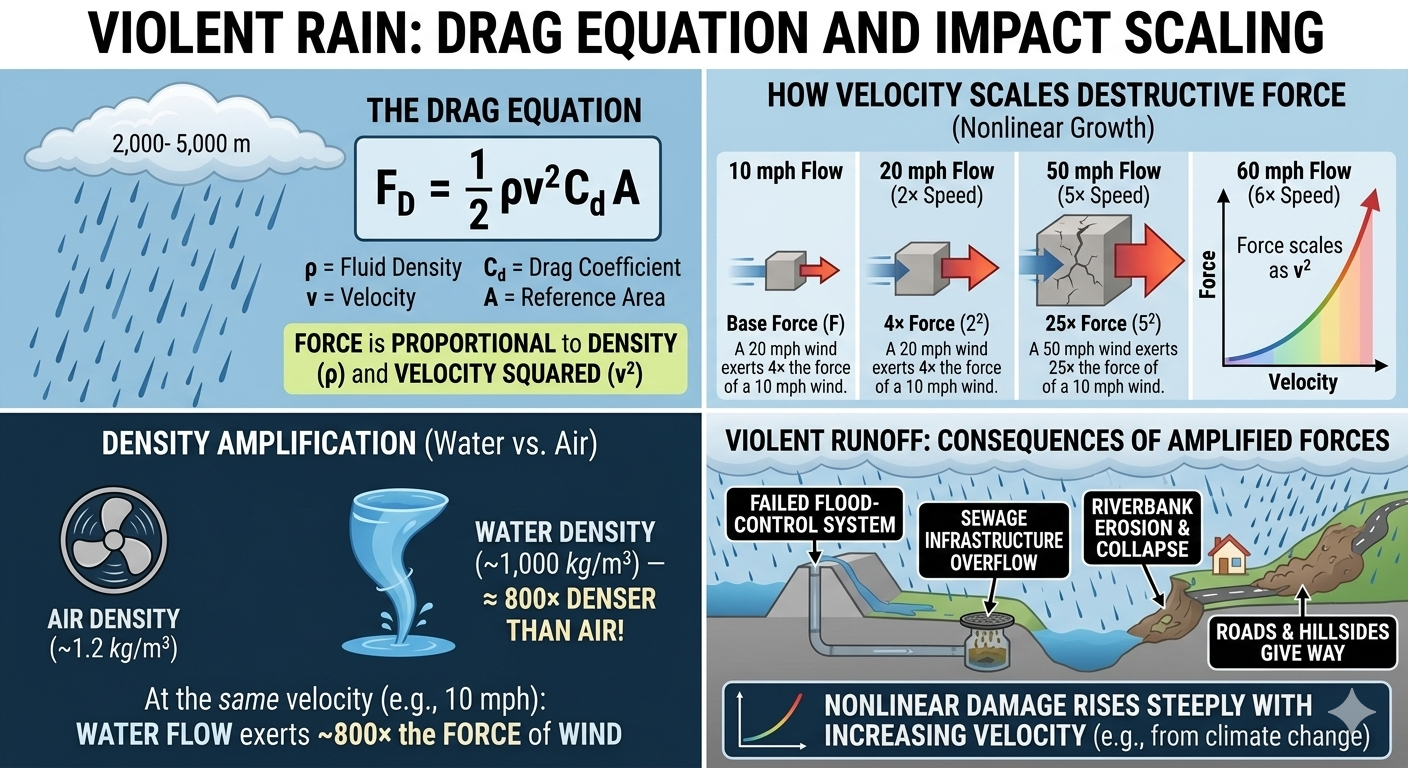
The destructive power of both wind and water scales approximately with the square of velocity (v²), meaning relatively small increases in flow speed can lead to disproportionately large increases in force and damage. Density further amplifies these impacts. Because water is approximately 800 times denser than air, a 10 mph flow of water can exert roughly 800 times the force of a 10 mph wind at the same speed. As climate change increases flow velocities, the resulting forces and damages rise nonlinearly.
What does this mean? The physics of extreme events is nonlinear. Wind and water damage do not increase in a simple one-to-one relationship with climate change because destructive force scales with the square of velocity. As climate feedbacks become increasingly coupled, extreme events can become more intense, more frequent, and longer lasting. Climate change is not simply producing more storms or heavier rainfall; it is altering the physical conditions that determine how much energy these events contain and how much damage they can inflict.
Damages — The destructive power of moving water is evident in countless real-world examples. Floodwaters do not simply rise; they become a powerful moving force capable of transporting enormous amounts of mass and energy. Fast-moving water can:
Wash out bridges and roadways by scouring away foundations, eroding support structures, and undermining concrete, asphalt, and other infrastructure.
Carry away trees, vehicles, buildings, and debris, turning ordinary objects into battering rams that multiply destruction downstream.
Destroy homes and infrastructure as flood currents exert immense lateral pressure on walls, foundations, electrical systems, and utilities.
Trigger mudslides, debris flows, and landslides when saturated soils lose strength and entire hillsides collapse under the weight of water.
Cause catastrophic slope failures, where mountainsides, roads, and communities can be buried beneath rapidly moving earth, rock, and water.
Erode riverbanks and coastlines, permanently reshaping landscapes and removing natural protective barriers.
Damage dams, levees, and flood-control systems when water volumes and flow rates exceed engineering design limits.
Scour foundations and expose underground utilities, causing structural failures that can continue long after floodwaters recede.
Destroy agricultural land by stripping away fertile topsoil, depositing contaminated sediments, and altering drainage patterns.
Create deadly debris flows where water, soil, rocks, trees, and other materials combine into a dense, high-speed slurry capable of moving massive boulders and destroying entire neighborhoods.
The danger of extreme flooding is not only the amount of water involved, but the velocity and density of that water. Because water is hundreds of times denser than air, even relatively slow-moving floodwaters can generate forces capable of moving vehicles, uprooting trees, collapsing structures, and reshaping entire landscapes.
The aftermath of extreme flooding can create a second wave of destruction through cascading health impacts. When water treatment facilities fail, sewage systems overflow, and agricultural waste contaminates floodwaters, communities face increased risks from waterborne pathogens, bacterial infections, mold growth, toxic exposures, and disease outbreaks.
Floodwaters can also mobilize a complex mixture of chemical contaminants. Industrial facilities, warehouses, fuel storage tanks, landfills, mining sites, wastewater plants, and commercial properties may release petroleum products, pesticides, herbicides, fertilizers, solvents, heavy metals such as lead, mercury, and arsenic, and other hazardous chemicals into surrounding communities. Floodwaters can transport these contaminants over long distances, depositing them into homes, schools, agricultural fields, rivers, lakes, wetlands, and groundwater supplies.
As floodwaters recede, many contaminants remain behind in sediments, soils, and building materials. Some chemicals can become airborne as contaminated sediments dry, exposing people through inhalation as well as direct contact and ingestion. Certain toxins can persist in the environment for years, accumulate in food chains, contaminate crops and fisheries, and produce long-term ecological and human health consequences, including neurological disorders, respiratory illnesses, liver and kidney damage, developmental problems, reproductive effects, and increased cancer risks.
These cascading failures can overwhelm emergency services, disrupt drinking-water supplies, limit access to medical care, and create long-term public health challenges. The damage is therefore not limited to the immediate destruction caused by floodwaters; it can trigger a chain reaction affecting ecosystems, infrastructure, food systems, economies, and human health for months, years, or even decades afterward.
The destructive power of both wind and water is governed by the drag equation:
Fd = 0.5 × Cd × ρ × A × v²
where:
Fd = drag force (destructive force)
Cd = drag coefficient (shape and surface effects)
ρ = density of the moving fluid
A = exposed surface area
v = velocity of flow
The most important factor in extreme events is the velocity term (v²). Because force increases with the square of velocity, small increases in wind speed or water flow velocity create disproportionately larger increases in destructive power.
For example:
A 10% increase in velocity produces approximately a 21% increase in force:
(1.10)² = 1.21
A 25% increase in velocity produces approximately a 56% increase in force:
(1.25)² = 1.56
A 50% increase in velocity produces approximately a 125% increase in force:
(1.50)² = 2.25
This nonlinear relationship means that climate-driven increases in wind speed, rainfall intensity, river velocity, and wave energy can create much larger increases in destructive potential than the original increase in speed would suggest.
Density further amplifies the difference between wind and water forces. Water has a density of approximately 1,000 kg/m³, while air has a density of approximately 1.2 kg/m³:
1000 ÷ 1.2 ≈ 833
Therefore, moving water can exert roughly 800 times more force per unit volume than moving air at the same velocity.
A 10 mph flow of water is not simply equivalent to a 10 mph wind. Because water contains far more mass, it carries vastly greater momentum and destructive capability.
Climate change increases these destructive forces through several coupled mechanisms:
1. Warmer air increases atmospheric moisture capacity
The Clausius–Clapeyron relationship shows that the atmosphere can hold approximately 7% more water vapor for every 1°C of warming:
Moisture increase = (1.07)^T
where:
T = warming in degrees Celsius
At 2°C warming:
(1.07)² = 1.145
The atmosphere can hold approximately 14.5% more moisture than the preindustrial climate.
At 3°C warming:
(1.07)³ = 1.225
The atmosphere can hold approximately 22.5% more moisture.
When that additional moisture is released during extreme precipitation events, rainfall intensity and flooding potential increase significantly.
2. Storm intensity compounds through velocity feedbacks
Because destructive force scales as:
Force ∝ density × velocity²
a 20% increase in flow velocity produces:
(1.20)² = 1.44
or approximately a 44% increase in destructive force.
A 40% increase in flow velocity produces:
(1.40)² = 1.96
or nearly a 96% increase in destructive force.
3. Feedback coupling accelerates extreme events
Climate change does not increase only one variable. It simultaneously modifies multiple components of the climate system:
Stronger storms increase wind speeds and precipitation rates.
Increased precipitation increases runoff velocity and flooding.
Flooding damages ecosystems and infrastructure, reducing resilience.
These processes interact and amplify one another.
What does this mean?
The physics of extreme events is nonlinear. Wind and water damage do not increase in a simple one-to-one relationship with climate change because destructive force scales with the square of velocity.
The consequences are:
10% increase in wind or water velocity → ~21% increase in force
25% increase in velocity → ~56% increase in force
50% increase in velocity → ~125% increase in force
As climate feedbacks become increasingly coupled, extreme events can become more intense, more frequent, and longer lasting. Climate change is not simply producing more storms or heavier rainfall; it is altering the physical conditions that determine how much energy these events contain and how much damage they can inflict.