As a climate scientist, I have studied the impact of politics on the climate for decades, and the United States ranks among the least prepared countries globally. It also has one of the highest percentages of climate change deniers. Politicians exacerbate this issue by obstructing necessary efforts to combat climate change. The Republican Party, in particular, often dismisses climate change as a manufactured crisis and advocates for increased fossil fuel production. This stance is ironic, as human industrial activities, which are heavily dependent on fossil fuels, are a primary driver of climate change.
Despite some efforts under President Biden to address these issues, the U.S. continues to be the world’s largest producer of oil, including crude oil, natural gas liquids, and other petroleum products. Both political parties have largely opted to provide unlimited emergency funding for climate disasters rather than investing in preventive measures. In 2023, the United States experienced an unprecedented number of climate-related disasters, with 28 major weather and climate events, each causing over a billion dollars in damages. These ranged from hurricanes and wildfires to severe storms and flooding, with some events costing hundreds of billions of dollars individually.
In June 2024, a significant Supreme Court decision severely restricted the Environmental Protection Agency’s (EPA) authority, limiting its ability to enforce environmental protection laws. This ruling marked a drastic shift, undermining decades of regulatory progress aimed at mitigating environmental damage and climate change. It effectively nullified the EPA’s power to regulate emissions and enforce environmental standards, which is a critical setback in the fight against climate change.
The government’s actions, or lack thereof, reflect a dangerous combination of arrogance and ignorance. This situation makes the worst-case predictions for climate change seem like optimistic scenarios. Revised climate models now suggest that global temperatures could rise by as much as 9°C within this century, compared to earlier projections of a 4°C increase over the next millennium. Such a dramatic temperature rise could push Earth toward a “wet-bulb” temperature threshold, where the combination of heat and humidity makes it impossible for the human body to cool itself through perspiration, leading to potentially fatal heat stress.
*Our climate model uses chaos theory in an attempt to adequately account for humans and forecasts a global average temperature increase of 9 degrees Celsius above pre-industrial levels. Everybody has the responsibility not to pollute. There are plenty of things you can do to help save the planet. Stop using fossil fuels. Consume less. Love more.Here is a list of additional actions you can take.
“Perhaps most importantly is the repeated use of the phrase ‘Drill, Baby, Drill’.”
Economic Update:
If Trump wins, great news for the very few people whose primary income comes from government securities interest! Unfortunately, very, very bad news for everyone else.
Tariffs, protectionism, lack of immigration, and nationalism are all detrimental to the economy. Tariffs and protectionist policies can lead to trade wars, higher consumer prices, and disruptions in the supply chain, which can stifle economic growth. Limiting immigration reduces the labor force and can slow down innovation and productivity, as immigrants often contribute significantly to economic dynamism. Nationalism can lead to isolationist policies that hinder international cooperation and trade, further damaging the economy. Over the last several years, approximately 80% of economic growth can be attributed to immigration.
Should Trump win, there is a concern that the U.S. may face economic decline similar to his six personal bankruptcies. His previous administration’s policies on tariffs, immigration restrictions, and nationalist rhetoric have already shown signs of economic strain. Continued implementation of such policies could exacerbate these issues, leading to a weakened economy and reduced global competitiveness for the U.S. It is crucial to adopt inclusive and cooperative economic strategies to foster sustainable growth and stability.
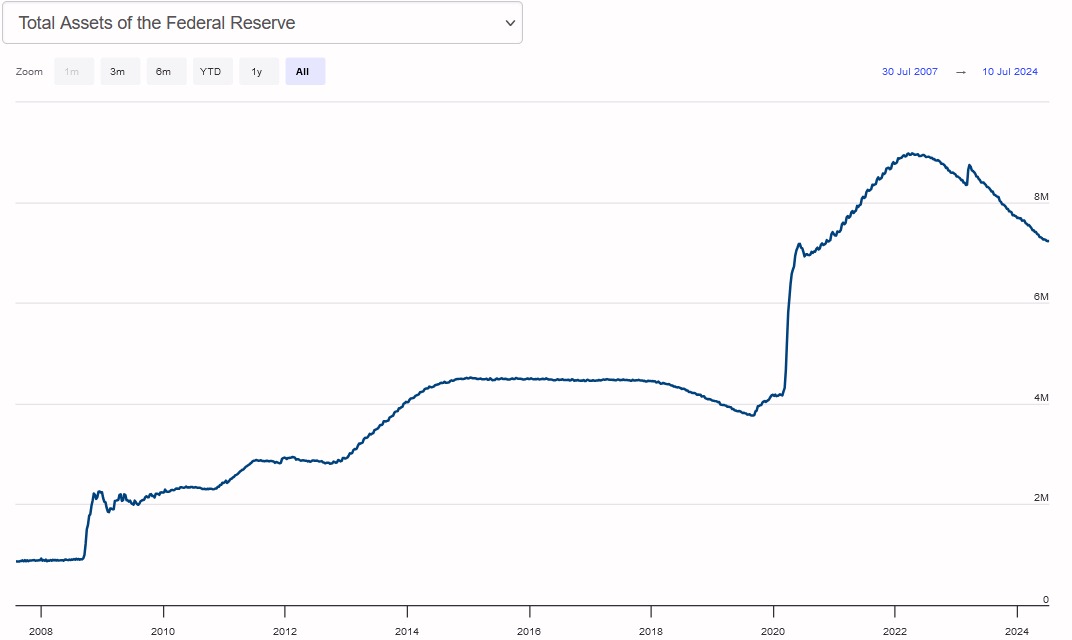
Interest rates are likely to spike and remain high for an extended period. In 2019, under the Trump administration, the Federal Reserve balance sheet saw a massive increase of $4 trillion in a very short period. This unprecedented expansion of the money supply, combined with the administration’s tax cuts and significant government spending, contributed to record inflation levels. The rapid increase in the money supply, aimed at stimulating the economy, led to an oversupply of currency, diminishing its value and driving prices up.
Federal Reserve’s Balance Sheet / Assets
The former President has also made claims that he will lower interest rates if he returns to office. The good news is that he doesn’t have the authority to directly lower rates, as this is the Federal Reserve’s responsibility. However, what used to be reassuring news is now less so. With the rollback of Chevron regulations, potential economic instability could lead to disastrous consequences, including further inflationary pressures and financial market disruptions.
Additionally, the tax cuts, while boosting short-term economic growth, significantly reduced federal revenue, leading to increased borrowing and higher national debt. The substantial government spending further exacerbated this issue, creating a fiscal environment prone to inflation. As a result, the Federal Reserve had to raise interest rates to combat inflation and stabilize the economy.
High interest rates can slow down economic growth by making borrowing more expensive for consumers and businesses, potentially leading to reduced investments and spending. This can create a challenging economic environment, underscoring the need for balanced fiscal policies that promote sustainable growth without leading to excessive inflation.
The former President recently stated that he wants a ‘weaker dollar.’ A devalued dollar on international markets can lead to numerous economic challenges, including significant impacts on inflation and interest rates. A weaker dollar makes U.S. exports cheaper and more competitive abroad, potentially boosting manufacturing and trade. However, it also increases the cost of imports, leading to higher prices for consumer goods and contributing to inflation.
Additionally, a weaker dollar can affect interest rates as the Federal Reserve may adjust monetary policy to manage inflationary pressures, impacting borrowing costs for consumers and businesses. Another concern is the impact on foreign investment. Treasury securities are popular among foreign investors because they are considered a safe investment. However, if the dollar devalues, the return on these investments may decrease when converted back to the investor’s local currency. To attract foreign investment despite the weaker dollar, the U.S. may need to offer higher interest rates on Treasury securities.
These economic landmines highlight the complexities and potential risks associated with currency devaluation.
Perhaps most importantly is the repeated use of the phrase ‘Drill, Baby, Drill’. The phrase encapsulates a harmful approach to energy policy that prioritizes fossil fuel extraction over sustainable practices. Climate change, exacerbated by such policies, poses the most severe threat not only to our environment but also to our economy.
In 2023, the U.S. experienced a record number of climate disasters, each exceeding one billion dollars in damages, with a total of 28 separate weather and climate-related events. Some of these individual events cost the U.S. economy hundreds of billions of dollars. The frequency and severity of these events are alarming, reflecting the accelerating pace of climate change.
The economic impact of climate change is expected to be staggering, with projections indicating it could cost the U.S. economy trillions of dollars. The financial burdens arise from various sources, including the destruction of infrastructure, increased healthcare costs due to climate-related illnesses, disruptions to agriculture and food supply, and the need for extensive disaster relief and recovery efforts. One of the primary drivers of the current inflation spike is the rising cost of homeowners insurance due to climate disaster-related claims. Short sellers anticipate that within ten years, 25% of U.S. properties will be uninsurable. These costs will continue to rise unless significant measures are taken to mitigate climate change and transition to a more sustainable energy system.
Moreover, the long-term economic effects of climate change can hinder economic growth, reduce productivity, and increase social inequalities. Proactive investments in renewable energy, climate resilience, and sustainable practices are essential to curtail the financial and environmental impacts of climate change. These measures are crucial to protect both the environment and the economy from the devastating impacts of climate change.
The Federal Reserve chairman was questioned in Congress today about the potential impacts of the ‘Chevron Decision’ on the Fed. Although he mentioned that it was too early to determine the full effects, he acknowledged that numerous frivolous lawsuits could become a significant hindrance. This uncertainty clearly poses challenges for the future stability of our economy. It was not a reassuring day for economic prospects.
The Chevron Decision refers to the landmark Supreme Court case Chevron U.S.A., Inc. v. Natural Resources Defense Council, Inc. (1984). This decision established the principle of judicial deference to administrative agencies’ interpretations of ambiguous statutes that they administer. The ruling essentially meant that courts should defer to agencies’ expertise unless their interpretations are unreasonable.
However, recent shifts in judicial philosophy and subsequent rulings, often termed “Chevron deference rollback,” seek to limit this deference. This change could significantly impact how agencies, including the Federal Reserve, operate.
Here’s how the erosion of Chevron deference could result in lawsuits every time the Federal Reserve makes a decision:
1. Increased Legal Challenges
Without Chevron deference, every decision or rule made by the Federal Reserve that involves interpreting ambiguous statutes could be more easily challenged in court. Previously, courts would defer to the Fed’s expertise, but now, they might feel more empowered to overrule the Fed’s interpretations. This invites more lawsuits from parties who disagree with the Fed’s decisions.
2. Reduced Predictability and Stability
Chevron deference provided a level of predictability and stability, as agencies knew their interpretations would likely be upheld if reasonable. With this predictability diminished, every decision becomes a potential legal battleground. This can disrupt the consistency and effectiveness of the Fed’s policies, as they could be constantly tied up in litigation.
3. Resource Strain
The Federal Reserve would likely face a significant increase in legal challenges, requiring more resources to defend its decisions in court. This could divert time, money, and effort away from its primary functions of managing monetary policy, regulating banks, and ensuring financial stability.
4. Policy Hesitation
Knowing that decisions could be frequently overturned, the Fed might become more hesitant or conservative in its policy-making. This could stifle innovation and responsiveness in addressing economic issues, as the fear of legal repercussions might outweigh the need for proactive measures.
Example Scenario
Imagine the Federal Reserve decides to implement a new regulation on bank capital requirements based on its interpretation of an ambiguous provision in the Dodd-Frank Act. Without Chevron deference, banks could challenge this interpretation in court, arguing that the Fed overstepped its authority. If the court agrees, the regulation could be struck down, leading to regulatory uncertainty and potentially undermining financial stability.
Conclusion
The potential rollback of Chevron deference could expose the Federal Reserve to frequent lawsuits over its interpretive decisions, hampering its ability to effectively manage the economy. This shift could lead to a more contentious and litigious regulatory environment, challenging the Fed’s authority and efficiency.
Chevron Deference Rollback and the Environment
In June 2024, the Supreme Court significantly expanded its authority and severely curtailed the Environmental Protection Agency’s (EPA) ability to enforce environmental protection laws. This ruling represents a dramatic shift in the balance of power, undermining decades of regulatory progress aimed at mitigating environmental damage and climate change. The court’s decision essentially nullifies the EPA’s mandate to regulate emissions and enforce compliance with existing environmental standards.
This judicial overreach is viewed by many as an act of arrogance and ignorance, resulting in a scenario where “worst-case” predictions for climate change have become the “best-case” expectations. The ramifications of this decision are dire, prompting a revision of climate models to reflect a much grimmer outlook. The new projections indicate a potential maximum global temperature increase of 9°C within this century, a stark rise from the previously estimated 4°C over the next millennium.
Such an unprecedented increase in global temperatures would push Earth toward a wet-bulb temperature threshold that is incompatible with human life. Wet-bulb temperature, which combines heat and humidity, represents a critical limit beyond which the human body can no longer effectively cool itself through perspiration, leading to potentially fatal heat stress.
The report “Looming Deadlines for Coastal Resilience: Rising Seas, Disruptive Tides, and Risks to Coastal Infrastructure” highlights the critical challenges and timelines faced by coastal communities in addressing the impacts of climate change. Key points include:
Rising Sea Levels: Coastal regions are increasingly vulnerable to higher sea levels, which expand floodplains and deepen floodwaters. This intensifies the frequency and severity of coastal flood events.
Infrastructure at Risk: By 2080, major increases in the number of residents and buildings exposed to extreme coastal flooding are projected. For instance, the number of homes exposed to major flooding is expected to rise from 360,000 to 943,000, and annual flood damages could surge from $0.4 billion to $5.1 billion.
Critical Infrastructure: The number of miles of roadways prone to chronic coastal flooding could grow from 500 to nearly 2,800 miles, drastically affecting transportation and emergency response capabilities.
Environmental Impact: Significant loss of tidal wetlands and dunes is anticipated, with nearly 89% of existing tidal wetlands and 38% of dunes expected to be permanently inundated by 2080.
Resilience Strategies: The report emphasizes the need for comprehensive and adaptive strategies to manage and mitigate these risks, including improved coastal planning, investment in resilient infrastructure, and community engagement.
Financial and Policy Support: To support resilience efforts, mechanisms like the Community Flood Preparedness Fund (CFPF) have been established to provide funding and resources for projects aimed at enhancing coastal resilience, particularly prioritizing low-income communities.
The report underscores the urgent need for action and substantial investment to protect coastal regions from the accelerating impacts of climate change.
Climate change has profound effects on both climax and succession forests, altering their composition, structure, and ecological dynamics. Here’s how these impacts unfold:
Climax Forests
Climax forests are stable, mature ecosystems that have reached a late stage of ecological succession. They are characterized by a stable species composition and structure that persists until disrupted by a disturbance. Climate change impacts these forests in several ways:
Temperature Increases: Warmer temperatures can stress species that are adapted to cooler climates, leading to shifts in species composition. For example, in boreal climax forests, species like spruce and fir may decline, while more temperate species like maple and oak may increase .
Altered Precipitation Patterns: Changes in precipitation can affect soil moisture levels, influencing tree growth and survival. In areas experiencing increased drought, such as some temperate and Mediterranean forests, species that are less drought-tolerant may decline, altering the forest structure and function .
Increased Frequency of Disturbances: Climate change can lead to more frequent and intense disturbances, such as wildfires, storms, and pest outbreaks. These disturbances can reset succession processes, pushing climax forests back to earlier successional stages and altering their long-term stability .
Pest and Disease Proliferation: Warmer temperatures can facilitate the spread of pests and diseases. For instance, the mountain pine beetle has devastated large areas of climax forests in North America, leading to widespread tree mortality and changes in forest composition .
Succession Forests
Succession forests are in various stages of recovery following a disturbance. Climate change affects these forests by altering the rates and trajectories of succession:
Altered Growth Rates: Changes in temperature and CO2 levels can influence the growth rates of different species. Some pioneer species may grow faster under higher CO2 concentrations, potentially accelerating early successional stages but also potentially leading to different competitive dynamics later on .
Species Shifts: Climate change can influence which species dominate during different successional stages. For example, increased temperatures and altered moisture regimes can favor different sets of pioneer and mid-successional species, leading to novel successional pathways .
Disturbance Regimes: More frequent disturbances can prevent succession forests from reaching climax stages, maintaining them in earlier stages of succession for longer periods. This can alter the landscape mosaic and the biodiversity it supports .
Seed Dispersal and Establishment: Climate change can affect seed dispersal mechanisms and the establishment success of seedlings. Changes in wind patterns, animal behaviors, and soil conditions can influence which species successfully establish in succession forests .
Ecological and Management Implications
Biodiversity: Changes in species composition and structure can affect biodiversity at multiple levels. Some species may thrive while others decline, potentially leading to losses in overall biodiversity.
Ecosystem Services: The ability of forests to provide ecosystem services, such as carbon sequestration, water regulation, and habitat provision, can be altered. For example, changes in species composition can influence the carbon storage capacity of forests.
Conservation and Management: Adaptive management strategies are needed to address the impacts of climate change on both climax and succession forests. This includes monitoring changes, facilitating species migration, and managing disturbances to maintain forest health and resilience.
These impacts underscore the complex and dynamic nature of forest ecosystems in the face of climate change, highlighting the need for adaptive management and conservation strategies.
by Daniel Brouse
June 25, 2024
Trees “move” through a process of gradual migration, which occurs over generations through the dispersal of seeds. This migration is driven by environmental changes, such as climate change, and can be observed in the expansion of greenery into new areas, such as the tundra, and the invasion of southern species into regions like the Mid-Atlantic USA. Here’s how these processes work:
Expansion into the Tundra
In Arctic and sub-Arctic regions, warming temperatures have led to the expansion of tree lines into previously barren tundra areas. This process involves several steps:
Seed Dispersal: Trees like spruce and birch produce seeds that are dispersed by wind, animals, or water. As temperatures rise, seeds can survive and germinate in areas further north where they previously could not.
Seedling Establishment: Once seeds land in a suitable area, they must germinate and grow. Warmer temperatures and a longer growing season improve the chances for seedlings to establish.
Growth and Maturation: As seedlings grow, they gradually form new tree stands, expanding the forested area northward. This process is slow but cumulative, leading to noticeable changes over decades.
Ecosystem Changes: The establishment of trees in the tundra brings changes to the local ecosystem. Trees provide shade, alter soil composition, and affect the local microclimate, making it more suitable for additional plant and animal species.
Studies and observations have documented this greening effect in regions like Alaska and Siberia, where satellite imagery shows an increase in vegetation cover in the tundra over recent decades (ExelonCorp) (Exelon Corporation).
Invasion of Southern Species in the Mid-Atlantic USA
In the Mid-Atlantic USA, climate change has facilitated the northward movement of species traditionally found in more southern regions. This invasion is marked by several factors:
Temperature Increase: Warmer temperatures allow species that thrive in warmer climates to survive and reproduce in more northern areas.
Seed Dispersal Mechanisms: Southern species, such as the loblolly pine or the southern pine beetle, spread through natural dispersal mechanisms. Birds, wind, and animals carry seeds northward.
Competitive Advantage: These southern species often have competitive advantages in warmer conditions, allowing them to outcompete native species. For example, the southern pine beetle has expanded its range northward, affecting forests in New Jersey and Pennsylvania.
Changes in Phenology: Warmer temperatures can change the timing of life cycle events. For example, earlier springs can favor the growth of southern species over native species, giving them a head start in the growing season.
Research has shown that the ranges of many tree species are shifting northward in response to climate change. For instance, the U.S. Forest Service has observed that species like the sweetgum and the live oak are becoming more common in areas where they were previously rare or absent (ExelonCorp) (Exelon Corporation).
These examples illustrate how trees migrate by gradually expanding their range into new areas as environmental conditions change, driven by factors such as temperature increases, changes in precipitation patterns, and altered ecosystems.
Invasive Tree Species in North America
Several southern tree species have migrated northward in North America due to the impacts of climate change. Here are some notable examples:
1. Loblolly Pine (Pinus taeda)
Description: Native to the southeastern United States, the loblolly pine has been observed moving into more northern regions.
Migration Evidence: Studies have documented its establishment in areas like the Mid-Atlantic and even parts of the northeastern U.S., driven by warmer temperatures and changing precipitation patterns.
Description: Traditionally found in the southeastern U.S., this tree is known for its large, fragrant flowers and evergreen leaves.
Migration Evidence: Its range is expanding northward, and it is increasingly found in areas like the Mid-Atlantic due to milder winters and warmer growing seasons.
Description: Native to the southeastern U.S., sweetgum trees are known for their star-shaped leaves and spiky fruit.
Migration Evidence: They are moving into the northern parts of their range, such as the Mid-Atlantic and even parts of New England, as temperatures rise.
Description: Native to the southeastern coastal plains, live oaks are known for their sprawling branches and long lifespan.
Migration Evidence: There are reports of live oaks being planted and surviving in areas further north than their traditional range, reflecting milder winters.
Warmer Temperatures: As global temperatures rise, the climates of northern regions become more suitable for these southern species.
Changing Precipitation Patterns: Altered rainfall patterns can create conditions more favorable to southern species in northern areas.
Extended Growing Seasons: Longer growing seasons in northern regions due to climate change allow southern species more time to establish and grow.
Ecological Implications
Competition with Native Species: The migration of southern species can lead to increased competition with native northern species, potentially altering local ecosystems.
Biodiversity Changes: The influx of new species can change the composition of forests, affecting biodiversity and ecosystem services.
These examples illustrate the dynamic nature of forest ecosystems in response to climate change, with southern tree species moving into new territories as they seek suitable habitats.
The migration of tree species in temperate zones is significantly impacted by climate change through several mechanisms:
Shifts in Suitable Habitats: As temperatures rise, the suitable habitats for many tree species are moving poleward and to higher elevations. Trees that thrive in cooler climates are finding their current habitats increasingly inhospitable, pushing them to migrate towards cooler areas. However, the speed of climate change often outpaces the natural migration capabilities of many tree species, leading to potential mismatches between trees and their optimal environments.
Changes in Phenology: Climate change alters the timing of biological events such as leaf-out, flowering, and seed dispersal. These changes can affect the success of tree species in establishing themselves in new areas. For instance, if spring arrives earlier, trees that cannot adjust their growth cycles might struggle to compete with species that can, impacting their ability to migrate successfully.
Barrier to Movement: Physical barriers such as mountains, rivers, and human-made structures like roads and urban areas can impede the migration of tree species. Even without these barriers, the fragmented nature of modern landscapes often means that contiguous suitable habitats are rare, complicating the migration process.
Soil and Ecosystem Interactions: Tree species are part of complex ecosystems and their successful migration depends on the migration of associated species like soil microbes, fungi (mycorrhizae), and pollinators. If these organisms do not migrate at the same rate or to the same new areas, tree species may struggle to establish in new habitats.
Competition and Predation: As tree species migrate, they encounter new competitors and predators. These interactions can affect their ability to establish and thrive in new areas. For example, a migrating tree species might be less competitive in its new habitat or might face predation from herbivores that it did not encounter in its original range.
Genetic Diversity: The genetic diversity of tree populations affects their ability to adapt to new conditions. Populations with high genetic diversity are more likely to have individuals that can survive and reproduce in changing conditions. However, many tree species have low rates of natural genetic mutation and long lifespans, which can slow their adaptive responses to rapid climate changes.
Examples and Studies
North American Forests: In North America, studies have shown that tree species such as sugar maple and American beech are migrating northward as temperatures increase. However, this migration is often slower than needed to keep pace with climate change predictions (ExelonCorp).
European Forests: European beech and Norway spruce are also showing signs of northward migration and moving to higher elevations in response to warming climates (Exelon Corporation).
Modeling and Predictions: Various climate models predict significant shifts in tree species distributions. For instance, a study using the Species Distribution Model (SDM) predicts that suitable habitats for many European tree species will shift northwards and upwards by several hundred kilometers over the next century (Exelon Corporation).
These impacts demonstrate the complex interplay between climate change and the migration of tree species, highlighting the challenges and uncertainties faced by forests in temperate zones.
To support the statement “Giving carbon offsets for planting trees and allowing for the continued use of fossil fuels is greenwashing and accelerates the pace of climate change,” here are some references:
Carbon Offsets and Greenwashing:
Kollmuss, A., & Agyeman, J. (2002). “Mind the Gap: Why do people act environmentally and what are the barriers to pro-environmental behavior?” Environmental Education Research. This paper discusses the concept of greenwashing and the ineffectiveness of certain carbon offset schemes.
Gillenwater, M. (2012). “What is Additionality? Part 1: A Long Standing Problem.” Greenhouse Gas Management Institute. This paper critiques the concept of additionality in carbon offset projects, which is crucial for understanding greenwashing.
Ineffectiveness of Tree Planting as Offsets:
Bastin, J.-F., et al. (2019). “The global tree restoration potential.” Science. This study discusses the limitations and potential of tree planting for carbon sequestration.
Houghton, R. A. (2013). “The emissions of carbon from deforestation and degradation in the tropics: past trends and future potential.” Carbon Management. This paper highlights the challenges and limited impact of reforestation projects.
Fossil Fuels and Climate Change:
Intergovernmental Panel on Climate Change (IPCC). (2021). “Climate Change 2021: The Physical Science Basis.” This report provides comprehensive evidence on the impact of fossil fuels on climate change.
International Energy Agency (IEA). (2021). “Net Zero by 2050: A Roadmap for the Global Energy Sector.” This report emphasizes the need to reduce fossil fuel usage to meet climate targets.
Accelerating Climate Change:
Anderson, K., & Peters, G. (2016). “The trouble with negative emissions.” Science. This article discusses the reliance on future technologies, like carbon offsets, and their impact on current fossil fuel use and climate change acceleration.
Harvey, F. (2021). “Climate crisis: the massive impact of global warming on the Arctic.” The Guardian. This article explores how ongoing fossil fuel use exacerbates climate change impacts, particularly in sensitive regions like the Arctic.
These references provide a foundation for understanding how carbon offsets, particularly through tree planting, can be seen as greenwashing when they allow for the continued use of fossil fuels, thus accelerating climate change.
The fossil fuel industry uses carbon offsets as a strategy to maintain and even expand the use of fossil fuels while attempting to address concerns about climate change. Here’s how this works:
Promoting Carbon Offsets: The fossil fuel industry invests in or purchases carbon offsets, which are credits representing reductions in greenhouse gas emissions achieved by others. These offsets can come from various projects such as reforestation, renewable energy, or methane capture.
Continuing Emissions: By purchasing carbon offsets, fossil fuel companies claim to neutralize their own emissions. This allows them to argue that they can continue extracting, refining, and burning fossil fuels without increasing their net carbon footprint.
Public Relations: The industry uses carbon offsets as part of their public relations strategy to portray themselves as environmentally responsible. This helps to counter criticism and regulatory pressure related to their contributions to climate change.
Regulatory Compliance: In some regions, carbon offsets are part of cap-and-trade systems or carbon pricing mechanisms. By using offsets, fossil fuel companies can meet regulatory requirements without reducing their actual fossil fuel production and consumption.
Delaying Transition: By relying on carbon offsets, the fossil fuel industry can delay transitioning to renewable energy sources. Offsets can be cheaper and less disruptive to their current business models compared to investing heavily in clean energy technologies.
Economic Benefits: Investing in carbon offset projects can also bring economic benefits to fossil fuel companies. For instance, they might invest in projects that align with their other business interests or use offsets to enter new markets.
In summary, the fossil fuel industry uses carbon offsets to give the appearance of reducing their environmental impact while continuing to produce and use fossil fuels. This approach helps them meet regulatory requirements, maintain public support, and delay the transition to a low-carbon economy.
THE REAL PROBLEM
The exact amount of O2 contributed and CO2 absorbed is a complicated equation on a daily or yearly basis. Trees both absorb and emit CO2. However, this calculation is relatively meaningless because CO2 has an average lifespan in the atmosphere of 100 years. In contrast, 99% of a tree’s carbon has an average cycle of 7 years. Essentially, 0% of the CO2 causing climate change is stored in a tree. The importance of trees and forests lies in their role within the soil ecosystem. Trees act as caretakers for the CO2 stored in the soil.
For a frightening example, look at the forest fires in Canada. These fires are more intense and frequent due to human CO2 emissions. Last year, Canada’s largest contributor to CO2 emissions was wildfires. While this may not be a significant factor in the long term, as that CO2 would have returned to the atmosphere within 50 years anyway, it creates a feedback loop that accelerates climate change.
But it gets worse. The real feedback loop problem is the permafrost. Forest fires and a warming climate have ignited the permafrost, causing ‘zombie fires’ that burned all winter under the snow and continue to burn this year. Millions of years of CO2 are stored in the permafrost. While we do not know exactly how much carbon is stored in nature, it is reasonable to assume that temperatures could be pushed from 3 degrees to 6 degrees above pre-industrial levels. Humans cannot thrive above a rise of 1.5 degrees. Much of the Earth will be uninhabitable if the temperature rises an additional 6 degrees Celsius. If humans also add 3 degrees Celsius, the temperature and humidity will approach a wet-bulb temperature that will not sustain human life.
CANADIAN WILDFIRE CASE STUDY
For a frightening example, look at the forest fires in Canada. These fires are more intense and frequent due to human CO2 emissions. Last year, Canada’s largest contributor to CO2 emissions was wildfires. While this may not be a significant factor in the long term, as that CO2 would have returned to the atmosphere within 50 years anyway, it creates a feedback loop that accelerates climate change.
But it gets worse. The real feedback loop problem is the permafrost. Forest fires and a warming climate have ignited the permafrost, causing ‘zombie fires’ that burned all winter under the snow and continue to burn this year. Millions of years of CO2 are stored in the permafrost. While we do not know exactly how much carbon is stored in nature, it is reasonable to assume that temperatures could be pushed from 3 degrees to 6 degrees above pre-industrial levels. Humans cannot thrive above a rise of 1.5 degrees. Much of the Earth will be uninhabitable if the temperature rises an additional 6 degrees Celsius. If humans also add 3 degrees Celsius, the temperature and humidity will approach a wet-bulb temperature that will not sustain human life.
A dog panting helps with thermal regulation primarily through evaporative cooling. Here’s how it works:
Evaporative Cooling: When a dog pants, it increases the airflow over the moist surfaces of its tongue and the lining of its upper respiratory tract. This enhances evaporation of moisture from these surfaces, which cools the blood vessels lying just beneath. As the blood circulates through the body, it helps to lower the overall body temperature.
Heat Dissipation: Panting allows the dog to expel heat from its body. Dogs do not sweat through their skin as humans do, except for a minimal amount through their paw pads, so panting is their primary method of cooling down.
As for the wet-bulb temperature, it does impact a dog’s ability to cool itself through panting:
Wet-Bulb Temperature: This measurement takes into account both temperature and humidity. High wet-bulb temperatures indicate high humidity, which reduces the efficiency of evaporative cooling. When the humidity is high, the air already holds a lot of moisture, making it harder for the moisture on the dog’s tongue and respiratory tract to evaporate. This reduces the effectiveness of panting as a cooling mechanism.
In summary, dog panting helps with thermal regulation by facilitating evaporative cooling. However, its effectiveness can be impacted by the wet-bulb temperature, particularly in high-humidity conditions where evaporative cooling is less efficient.
Why is the wet-bulb temperature becoming so important?
The greatest short term climate change risk to human health is deadly humid heat (wet-bulb temperature) caused by a warmer average temperature enabling the air to hold more moisture. Increased moisture leads to higher humidity.
The Water Vapor Feedback Problem
Water vapor is a powerful greenhouse gas. Since the 1970s, its rise likely increased global heating by an amount comparable to that from rising carbon dioxide. We are now seeing the consequences. In the current climate, for average all-sky conditions, water vapour is estimated to account for 50% of the total greenhouse effect, carbon dioxide 19%, ozone 4% and other gases 3%. Clouds make up about a quarter of the greenhouse effect.
The main greenhouse gases — carbon dioxide, methane, nitrous oxide and ozone — don’t condense and precipitate. Water vapor does, which means its lifetime in the atmosphere is much shorter, by orders of magnitude, compared to other greenhouse gases. On average, water vapor only lasts nine days. The increased intensity of precipitation often results in violent rain.
Sidd said, “The biggest feedback loop is water vapor. Humans put CO2 in the air. CO2 is a greenhouse gas, so the earth gets warmer. Warmer air can hold more water vapor soaking up more water vapor from the oceans. Water vapor is a greenhouse gas, so it gets even warmer… rinse (sorry!) and repeat. Another interesting thing is that the precipitation (rain, snow, sleet) intensity is increasing.”
*Our climate model uses chaos theory in an attempt to adequately account for humans and forecasts a global average temperature increase of 9 degrees Celsius above pre-industrial levels. Everybody has the responsibility not to pollute. There are plenty of things you can do to help save the planet. Stop using fossil fuels. Consume less. Love more.Here is a list of additional actions you can take.
The two major contributors to today’s inflation that a President can influence are insufficient immigration and federal budget deficits. Both Trump and Biden administrations have played significant roles in these issues.
Through May of 2024, average hourly wage growth has exceeded inflation for 12 straight months.
Economic Facts on Inflation and Wage Inflation
Current Impacts of Wage Inflation
1. Increased Consumer Prices: Wage inflation leads to higher costs for businesses, which often pass these costs onto consumers in the form of higher prices for goods and services. This contributes to overall inflation, affecting the purchasing power of consumers.
Consumer Price Index (CPI): Rising wages can lead to an increase in the Consumer Price Index, a measure of the average change over time in the prices paid by urban consumers for a market basket of consumer goods and services. When wages increase significantly, the CPI often follows suit.
Examples: Recent data has shown significant price increases in various sectors, including food, housing, and healthcare, driven in part by higher labor costs .
2. Business Profit Margins: Higher wages can squeeze profit margins for businesses, particularly in labor-intensive industries. Companies may face challenges in maintaining profitability if they cannot pass the increased costs onto consumers.
Impact on Small Businesses: Small businesses, which often operate with thinner profit margins, may struggle more than larger corporations to absorb the increased costs associated with wage inflation. This can lead to reduced hiring or even business closures in extreme cases .
Corporate Responses: Larger corporations might respond by investing in automation and technology to reduce dependency on human labor, thereby mitigating the impact of wage inflation on their bottom lines .
3. Employment and Job Market Dynamics: Wage inflation can have mixed effects on the job market. While higher wages can attract more workers and reduce turnover, they can also lead to cost-cutting measures such as layoffs or reduced hiring.
Job Cuts and Automation: Some businesses may reduce their workforce or turn to automation to manage increased labor costs. This can result in job losses or slower job growth in certain sectors .
Labor Force Participation: On the positive side, higher wages can draw more individuals into the labor force, potentially reducing unemployment rates and increasing overall economic productivity .
4. Economic Inequality: Wage inflation can impact income inequality in various ways. While higher wages can improve living standards for low- and middle-income workers, the overall benefits may be unevenly distributed.
Living Wage Increases: Efforts to raise the minimum wage or provide living wages can significantly benefit low-income workers, improving their economic stability and reducing poverty levels .
Disparities: However, wage inflation can exacerbate disparities if high-wage sectors see more significant increases compared to low-wage sectors, potentially widening the gap between high and low earners .
Economics of Immigration and Wage Inflation
1. Wage Inflation as a Driver of Overall Inflation: Wage inflation occurs when wages increase, leading to higher costs for businesses, which often pass these costs onto consumers through higher prices for goods and services. This process contributes to overall inflation, which is the rate at which the general level of prices for goods and services rises.
Impact on Businesses: When wages increase, businesses face higher labor costs. To maintain profitability, they may increase the prices of their products or services, contributing to inflation.
Consumer Purchasing Power: As prices rise, the purchasing power of consumers can decrease unless wage growth keeps pace with inflation. This dynamic can create a cycle where higher wages lead to higher prices, which then necessitate further wage increases.
2. Insufficient Immigration as a Contributor to Wage Inflation: Immigration plays a critical role in the labor market by providing a supply of workers that can help meet demand in various industries. When immigration levels are insufficient, it can lead to labor shortages, which in turn drive up wages as employers compete for a limited pool of workers.
Labor Market Dynamics: A decrease in immigration can exacerbate labor shortages in key industries such as agriculture, construction, and healthcare. This shortage forces employers to offer higher wages to attract and retain workers.
Economic Growth: Insufficient immigration can limit economic growth by restricting the labor force available to support business expansion and innovation. This constraint can lead to increased costs for businesses and higher prices for consumers.
Sources and Further Reading:
Wage Inflation and Its Impact:
Federal Reserve Bank of San Francisco. (2022). “Wage Growth and Inflation: Insights from Economic Research.”
U.S. Bureau of Labor Statistics. (2023). “Wage Growth and Its Implications for Inflation.”
Immigration and Labor Market:
National Bureau of Economic Research. (2021). “The Effects of Immigration on the United States Economy.”
Pew Research Center. (2022). “U.S. Immigration Trends and Workforce Impact.”
Expanded Explanation
Wage Inflation as a Top Driver of Overall Inflation:
Economic Theory: According to the cost-push inflation theory, when wages rise, production costs for companies increase. These companies, in turn, raise prices to maintain profit margins, leading to higher overall inflation.
Historical Context: Historical data shows periods where wage increases have led to significant inflationary pressures, such as during the 1970s in the United States, a time characterized by high inflation and wage growth.
Insufficient Immigration and Its Role in Wage Inflation:
Labor Supply: Immigration contributes to the labor supply, particularly in sectors that rely heavily on immigrant workers. When immigration is restricted, these sectors face labor shortages, pushing wages higher.
Economic Integration: Immigrants often take jobs that are complementary to those held by native-born workers, enhancing productivity and economic growth. Insufficient immigration can disrupt this balance, leading to inefficiencies and higher costs.
Policy Implications: Policies that restrict immigration can have unintended consequences on the labor market and inflation. Understanding the balance between immigration and wage dynamics is crucial for policymakers aiming to manage inflation and economic growth effectively.
By examining these factors, it becomes clear that both wage inflation and immigration policies play significant roles in shaping the economic landscape, influencing both inflation and broader economic performance.
How Federal Budget Deficits Impact Inflation
The federal budget deficit has increased under both Trump and Biden due to a combination of tax cuts, increased spending, and the economic impact of the COVID-19 pandemic. While Trump’s administration saw a significant increase in the deficit due to tax cuts and pandemic relief measures, Biden’s administration has continued high levels of spending on recovery and infrastructure.
1. Increased Aggregate Demand: Federal budget deficits typically occur when government spending exceeds revenue. This increased government spending can boost aggregate demand in the economy, leading to higher prices if the economy is operating near or at full capacity.
Demand-Pull Inflation: When government expenditures increase, it injects more money into the economy. If this additional demand outstrips the economy’s ability to produce goods and services, it can lead to demand-pull inflation, where the overall demand in the economy exceeds the supply, causing prices to rise .
2. Higher Interest Rates: To finance a budget deficit, the government often borrows money by issuing bonds. This increased demand for borrowing can drive up interest rates, as the government competes with the private sector for available funds.
Crowding Out Effect: Higher interest rates can make borrowing more expensive for businesses and consumers, potentially leading to reduced investment and spending in the private sector. This can mitigate some of the inflationary pressures but can also slow economic growth .
3. Money Supply and Monetary Policy: If the central bank (e.g., the Federal Reserve in the United States) accommodates the deficit by increasing the money supply, this can lead to inflation. An increased money supply can reduce the value of money, causing prices to rise.
Monetary Policy Response: Central banks may respond to fiscal deficits by tightening monetary policy, such as raising interest rates to combat inflation. This can help control inflation but may also slow down economic growth .
4. Inflation Expectations: Persistent budget deficits can influence inflation expectations. If businesses and consumers expect higher future inflation due to continued deficit spending, they may adjust their behavior accordingly, such as demanding higher wages or increasing prices.
Expectations and Behavior: Inflation expectations can become self-fulfilling. If workers expect higher inflation, they might demand higher wages, leading businesses to raise prices to cover these higher costs, thus perpetuating inflation .