bookmark_borderU.S. Threatens Tariffs and Sanctions to Undermine U.N. Marine Fuel Emissions Deal

The United States has reportedly warned countries to reject a United Nations–brokered agreement aimed at reducing marine fuel emissions—or face punitive tariffs, visa restrictions, and additional port levies, according to U.S. and European officials familiar with the matter.

The U.N. initiative, designed to curb the shipping industry’s significant contribution to global greenhouse gas emissions, has broad international support. Shipping accounts for nearly 3% of total global emissions, and the deal represents one of the most ambitious multilateral efforts to regulate marine fuels in history.

Instead of cooperating, the Trump administration has chosen confrontation. By pressuring countries with the threat of economic and diplomatic retaliation, the White House is engaging in strong-arm tactics that not only undermine global climate action but also erode U.S. credibility on the world stage.

“This is exactly the type of bully-and-extort approach that permanently damages U.S. exceptionalism, trust, and reliability,” said one European trade official. The move has been described by analysts as a short-sighted attempt to shield U.S. shipping and oil interests from environmental standards—at the cost of international partnerships and long-term global stability.

Critics warn that the Trump administration’s actions jeopardize not just climate progress, but also America’s role as a trusted global leader. By rejecting cooperative frameworks in favor of coercion, the U.S. risks further isolating itself while ceding moral, economic, and environmental leadership to other nations.

Trumpenomics: The Decline of the US

bookmark_borderTexas-Sized Climate Change

by Daniel Brouse
September 3, 2025

The CO₂ Coalition released a report titled “Texas and Climate Change: No Climate Crisis in the Lone Star State,” making a series of sweeping claims: that Texas has experienced no “unprecedented or unusual” warming despite rising atmospheric CO₂, and that current temperatures are comparable to those over a century ago. The report argues that the annual number of 100 °F days in Texas shows an overall decreasing trend, and that precipitation has modestly increased by 0.0245 inches per year from 1850–2023, supposedly indicating no danger of increasing aridity. It further asserts that droughts are not becoming more severe or frequent; tornadoes, hurricanes, and floods are not occurring more often; sea-level rise and coastal subsidence are not threatening Texas’s coast; and wildfires are not becoming more frequent or severe in the United States. According to the report, U.S. air quality is “generally good and getting better,” agriculture in Texas is “thriving,” and carbon dioxide is not only essential to life on Earth but beneficial — enhancing plant growth, increasing food production, and improving drought resistance.

Why the CO₂ Coalition’s Texas Report Is Dangerous and Misleading

The CO₂ Coalition’s claims are scientifically false, cherry-picked, and deliberately misleading. They rely on outdated, selective data while ignoring the overwhelming body of peer-reviewed climate science showing Texas is warming rapidly, experiencing escalating extreme weather, and facing mounting economic fallout.

1. “No unusual warming” – False
Texas has already warmed by ~2.2 °F since 1970 (NOAA data). Heatwaves are becoming longer, hotter, and more humid, driving spikes in hospitalizations and deaths. While the Coalition cherry-picks single metrics like “100 °F days,” this ignores the wet-bulb temperature rise that makes heat more physiologically dangerous even at lower dry-bulb readings.

2. “Precipitation is stable” – Misleading
Yes, Texas has seen slightly higher annual rainfall on average, but what matters is distribution and intensity. Rainfall is increasingly delivered in extreme bursts, fueling flash floods and billion-dollar storm disasters. At the same time, longer dry spells and hotter summers intensify drought risk, hitting agriculture and water supply.

3. “No increase in hurricanes, tornadoes, or floods” – Misleading
While tornado frequency is shifting geographically, hurricanes in the Gulf are becoming more intense and rain-heavy. Hurricane Harvey (2017) alone dumped 50 inches of rain, caused $125 billion in damages, and is widely recognized as a climate-amplified event. Billion-dollar floods in Texas are now commonplace.

4. “No sea-level threat” – False
The Texas Gulf Coast is experiencing one of the fastest rates of relative sea-level rise in the U.S. due to a combination of global sea rise + land subsidence. Galveston, Houston, and Corpus Christi face direct coastal inundation and storm surge risks, putting billions in infrastructure and property at risk.

5. “Wildfires not worse” – False
Texas wildfire seasons are lengthening. In 2011, drought-driven fires burned 4 million acres, destroyed 3,000 homes, and killed 47 people. Rising heat and drought variability mean wildfire risk is climbing across Texas’s grasslands and forests.

6. “Agriculture thriving” – Misleading
While CO₂ fertilization can increase plant growth in controlled conditions, it does not offset climate extremes. Texas farmers are already facing drought losses in the billions. In 2022 alone, drought wiped out ~74% of Texas cotton, costing the state’s economy over $2 billion. Crop failures, livestock stress, and water shortages are accelerating.

Texas: Climate Costs and Collapsing Insurance

Beyond the false claims, the real story is that Texas is already paying some of the highest climate costs in the U.S.

  • Insurance Industry Collapse: Texas has some of the highest homeowners insurance premiums in the country, driven by hurricanes, hail, floods, and wildfires. Insurers are withdrawing or raising rates sharply, putting much of Texas real estate at risk of value collapse as homes become uninsurable.

  • Billion-Dollar Disasters: Texas leads the nation in NOAA billion-dollar climate disasters. Since 1980, Texas has suffered nearly 200 major disasters totaling over $300 billion in losses.

  • Heat & Health: Texas is one of the most vulnerable states for extreme heat deaths, especially as wet-bulb temperatures rise in urban centers like Houston, Austin, and Dallas.

  • Future Threats: By 2050, Texas is projected to experience 30+ additional “dangerous heat days” annually, worsening agricultural collapse, grid stress, and mortality.

Bottom Line

The CO₂ Coalition’s narrative is propaganda, designed to confuse the public and protect fossil fuel interests. The reality is that Texas is already on the frontlines of climate change, facing skyrocketing economic losses, collapsing insurability, and lethal health risks. Far from being “beneficial,” continued CO₂ emissions are putting the state’s economy, real estate, food systems, and population at existential risk.

The Human Induced Climate Change Experiment

bookmark_borderRunaway Climate Feedbacks and Systemic Collapse

Daniel Brouse and Sidd Mukherjee
September 3, 2025


Our probabilistic, ensemble-based climate model — incorporating complex socio-economic and ecological feedback loops within a dynamic, nonlinear system — projects that global temperatures could rise by as much as 9°C (16.2°F) within this century. This far exceeds earlier estimates, which predicted a 4°C rise over the next thousand years, and signals a dramatic acceleration of warming.

Sidd responded: “9°C this century is a stretch. Consensus so far is closer to ~3°C.”

I ask: What do you make of the physics given the observable data?
We’re already at 1.5°C, which makes 3°C this century seem almost unavoidable. I used to think 9°C was a worst-case scenario — now I fear it’s shifting toward the “highly likely” range. In just the last couple of years, I’ve seen at least nine tipping points trigger feedback loops with my own eyes.

What strikes me most is not just that each loop accelerates warming, but that they are now amplifying each other. The interactions are compounding in ways that exceed current models.

So my question is: What do you think about the physics of reaching 9°C this century, given the observed interactions of feedback loops and tipping points, including:

  • Greenland and East Antarctic ice sheet tipping
  • Slowing of the Atlantic Meridional Overturning Circulation (AMOC)
  • Mountain glacier loss
  • Amazon rainforest dieback
  • Arctic sea ice loss
  • Boreal forest degradation and wildfire
  • Permafrost thawing and burning
  • Warm-water coral bleaching
  • West Antarctic Ice Sheet instability

Sidd replied: “I think ~3°C is likely this century, and that estimate already includes tipping points. But of course, I could be wrong. The oceans have the last word — and they take centuries to drive a 9°C+ shift.”


The Arctic as a Harbinger

The Arctic is warming far faster than the global average — ~2–3°C already, about 3–4 times faster than the planet as a whole. Projections vary:

  • Low emissions (~1.5–2°C global): Arctic warms 3–5°C by 2100.
  • High emissions (~3–4°C global): Arctic warms 7–10°C by 2100, with even higher local spikes.
  • Worst-case runaway: With reinforcing tipping points (permafrost, albedo collapse, ocean disruption), Arctic warming could exceed 12°C this century.

Consequences include seasonal ice-free summers by mid-century, permafrost fires releasing CO₂ and methane, and destabilization of AMOC, accelerating sea-level rise and global weather extremes.


Global Runaway Feedbacks

If multiple tipping points reinforce each other, the climate may enter a self-perpetuating heating cycle beyond human control. The main candidates include:

  1. Ice-Albedo Collapse — Ice loss locks in warming.
  2. Permafrost Thaw + Boreal Fires — Gigatons of CO₂/CH₄ released.
  3. Amazon & Rainforest Dieback — Carbon sinks flip to carbon sources.
  4. Ocean Circulation Breakdown — Jet stream chaos, monsoon collapse, food shocks.
  5. Marine Ecosystem Collapse — Coral death and plankton loss undermine food security.
  6. Soil & Crop Failure Feedbacks — Drought, famine, and forced migration.

Temperature outcomes:

  • Linear physics: ~3–5°C by 2100.
  • With feedbacks: 6–9°C this century is plausible.
  • Runaway: A “Hothouse Earth” trajectory of 10°C+ over centuries–millennia.

Feedback-Driven Warming Beyond 1.5 °C

As global mean temperature exceeds 1.5 °C and multiple climate tipping points activate, the critical question is not simply how much warmer the planet becomes, but how quickly feedbacks amplify that warming.

Scientific consensus: Current models suggest that carbon-cycle feedbacks — permafrost thaw, weakening ocean and land sinks, methane release from wetlands, and fire-driven emissions — could add ~0.2–1.0 °C of warming by 2100 on top of direct human emissions. This range reflects assumptions that:

  • Warming is held close to ~2 °C by policy.
  • Tipping points unfold slowly and largely independently.
  • Ecosystems and oceans continue absorbing a significant share of emissions.

Under a high-emissions trajectory, with multiple tipping elements engaged, the upper end of this estimate (or beyond) becomes more plausible.

My concern: These consensus estimates are already lagging reality. Observations suggest that at least nine major tipping points are not only triggered but are now reinforcing each other. Instead of unfolding over centuries or millennia, the pace is measured in years or decades. Models have struggled to keep up with this rapid nonlinearity.


Cascading Feedbacks in Real Time

Regardless of the rise in global mean temperature, cascading feedbacks are already reshaping weather extremes.

In just ten days during July 2025, the U.S. experienced:

  • Hundreds of flash floods nationwide, with hundreds of fatalities and billions in damages.
  • At least five “1-in-1,000-year” rainfall events (Texas, New Mexico, North Carolina, Florida, Illinois).
  • Multiple “500-year floods” across Pennsylvania, Delaware, New Jersey, Maryland, Virginia, and Iowa as extreme rainfall overwhelmed infrastructure.

These events illustrate how tipping feedbacks manifest in human terms — not only as gradual warming, but as sudden escalations in climate volatility and infrastructure failure.


Permafrost: From Slow Thaw to Year-Round Fire

The permafrost is one of the starkest examples of the gap between theory and reality:

  • Old assumption: Permafrost would thaw gradually over thousands of years, steadily releasing CO₂ and CH₄ into the atmosphere.
  • Observed reality: Large regions are no longer “permanently” frozen. Instead, they are catching fire and burning year-round, releasing greenhouse gases on much shorter timescales.

This raises new scientific uncertainties:

  • Fires combust organic matter directly, accelerating CO₂ emissions.
  • If methane is burned in situ during these fires, some fraction may be converted into CO₂ (a less potent but still powerful greenhouse gas) — effectively acting as a “natural flare.”
  • Yet, unburned methane still escapes, and the net balance between flaring vs. direct release remains poorly quantified.

What is clear is that the pace of release is orders of magnitude faster than assumed, and the feedbacks are already active, not hypothetical.


What 9°C Warming Would Mean for Humanity

  • Uninhabitable Tropics — Wet-bulb > 31–35°C renders regions physiologically uninhabitable.
  • Multi-Meter Sea-Level Rise — Coastal megacities drowned.
  • Food System Collapse — Crop yields crash across tropics and mid-latitudes.
  • Oceanic Collapse — Fisheries and reefs vanish.
  • Mass Extinction — 50–70% of species lost.
  • Mass Mortality & Migration — Billions displaced, political collapse, conflict.
  • Refugia Shrink — Only high-latitude/high-altitude zones remain marginally habitable.

At this level, modern civilization likely collapses, with human survival reduced to scattered refugia.


Why “Global Average” Misleads

The idea of a global average temperature obscures human experience. For example, while the average may rise 3°C, some regions (like the Arctic) could see 10°C+ increases. What matters more is regional extremes and wet-bulb thresholds — the real determinants of human survival.


Wet-Bulb Heat: The Real Threat

Wet-bulb temperatures >31°C are already being observed in parts of the U.S. Gulf Coast, Florida, and Mississippi River Valley, with lethal consequences. These levels were once thought “impossible” in the U.S., but climate change is shifting baselines.

This metric — not the global average — is the clearest signal of existential risk to human health and survival.


Conclusion: Humanity’s Chosen Fate

The question is not whether Earth will warm — it is how fast, how far, and how violently feedbacks will accelerate the process. A 9°C rise this century may or may not occur, but even “consensus” outcomes (~3°C) would be catastrophic.

The decisive factor is human action: whether we allow runaway feedbacks to trigger an irreversible “Hothouse Earth,” or whether we cut emissions, restore ecosystems, and adapt quickly enough to keep habitable zones intact.

We are not just modeling the future — we are choosing it.

* Our probabilistic, ensemble-based climate model — which incorporates complex socio-economic and ecological feedback loops within a dynamic, nonlinear system — projects that global temperatures are becoming unsustainable this century. This far exceeds earlier estimates of a 4°C rise over the next thousand years, highlighting a dramatic acceleration in global warming. We are now entering a phase of compound, cascading collapse, where climate, ecological, and societal systems destabilize through interlinked, self-reinforcing feedback loops.

We examine how human activities — such as deforestation, fossil fuel combustion, mass consumption, industrial agriculture, and land development — interact with ecological processes like thermal energy redistribution, carbon cycling, hydrological flow, biodiversity loss, and the spread of disease vectors. These interactions do not follow linear cause-and-effect patterns. Instead, they form complex, self-reinforcing feedback loops that can trigger rapid, system-wide transformations — often abruptly and without warning. Grasping these dynamics is crucial for accurately assessing global risks and developing effective strategies for long-term survival.

The Human Induced Climate Change Experiment

bookmark_borderFederal Appeals Court Strikes Down Key Trump Tariffs, Deepening Trade Uncertainty

by Daniel Brouse

On August 29, 2025, heading into the Labor Day holiday weekend, the U.S. Court of Appeals for the Federal Circuit in Washington, D.C. delivered a major ruling: most of President Donald Trump’s “reciprocal” tariffs, along with a separate set imposed earlier this year, are illegal. The decision represents both a constitutional challenge to executive authority and a new source of turmoil for an already fragile global economy.

Scope of the Ruling

The court’s decision addressed two major elements of Trump’s trade war:

  • “Reciprocal” tariffs, unveiled in April 2025, which Trump claimed were necessary to “balance” trade by matching foreign tariff rates.
  • A separate set of tariffs imposed in February 2025 against China, Canada, and Mexico, which had immediately escalated tensions with America’s largest trading partners.

The ruling does not impact tariffs issued under other legal authority. For example, Trump’s tariffs on steel and aluminum imports remain intact. This distinction highlights a broader complexity: with a wide variety of tariffs in play, the ruling may not provide relief to many businesses or consumers in the short term. Instead, it complicates the already daunting task of determining which tariff rates apply in specific cases, leaving companies mired in uncertainty.

Constitutional Clash

At its core, the ruling strikes at the legality of Trump’s unilateral approach to trade policy. The court found that the president exceeded his executive authority by imposing tariffs without proper congressional authorization. This confirms long-standing warnings from constitutional scholars that Trump’s trade war strategy was on shaky legal ground.

Economic Fallout

Even though the ruling is limited in scope, the implications are sweeping:

  • Businesses now face greater uncertainty as tariff structures become harder to predict or plan around.
  • Consumers are unlikely to see quick relief, since other tariffs remain in place and global supply chains are still disrupted.
  • Markets may react with volatility, as investors recalibrate expectations for trade flows, corporate profits, and Federal Reserve independence.

Global and Political Consequences

For U.S. trading partners—particularly China, Canada, and Mexico—the ruling offers partial vindication but not full clarity. Global markets will be watching whether Trump doubles down with new measures or is forced to negotiate under congressional oversight. Domestically, the decision reignites debate over the balance of power between Congress and the presidency, especially in matters that directly affect the U.S. and global economies.

A Warning for the Future

The ruling is not the end of tariffs under Trump, but it underscores a deeper truth: trade wars are costly, legally fragile, and economically destabilizing. For businesses and workers, this decision changes little in the immediate term but raises profound questions about the sustainability of America’s current economic path.

Insanity Unleashed

President Trump wasted no time firing back after the ruling, issuing a late-night statement laced with all-caps fury. In part, he declared: “ALL TARIFFS ARE STILL IN EFFECT! Today a Highly Partisan Appeals Court incorrectly said that our Tariffs should be removed, but they know the United States of America will win in the end. If these Tariffs ever went away, it would be a total disaster for the Country.”

He went even further, warning that: “If allowed to stand, this Decision would literally destroy the United States of America.”

For now, the appeals court has allowed the contested tariffs to remain in effect until October 17, giving the Supreme Court time to decide whether to intervene. The unusual delay has left markets and trading partners in limbo.

The Attorney General of Oregon—one of the states that brought the lawsuit—was blunt in his reaction, calling the tariffs “bonkers” and arguing they have done measurable harm to both state economies and global trade.

The ultimate fate of Trump’s tariffs now rests with the Supreme Court, where the outcome remains highly uncertain. Economists warn that if the Court sides with the appeals panel, the administration could be forced to refund billions in ill-gotten tariff revenues. Many believe such a refund would provide overdue relief to businesses and consumers, but in the meantime the uncertainty continues to roil markets at home and abroad.

Trumpenomics: The Decline of the US

bookmark_borderSlate Auto: Reinventing the EV With a “Blank Slate” Approach

by Daniel Brouse
August 28, 2025

Founded in 2022, Slate Auto is an American startup with a bold mission: to deliver an affordable, highly customizable electric vehicle that challenges traditional automaking. At the center of its strategy is the company’s first product, the Slate Truck—a modular electric pickup designed to transform seamlessly into an SUV. This dual-purpose design reflects Slate’s vision of giving consumers flexibility and control over how they use and personalize their vehicles.

A Different Kind of Affordability

Unlike established automakers that load vehicles with expensive add-ons, Slate aims to bring the base cost of ownership down to earth. With a starting price of $25,000, the Slate Truck undercuts most competitors in the EV market. Affordability is achieved not by compromising core functionality but by eliminating traditional overheads. For example:

  • No costly paint shop: instead, vehicles come in a neutral molded-gray base designed to be “wrapped” in a wide range of colors, patterns, and finishes.

  • A lean manufacturing model: leveraging a reindustrialized factory in Warsaw, Indiana, Slate avoids the legacy costs that weigh down older automakers.

  • Simplified design: fewer built-in extras mean lower production costs and more room for owner-driven customization.

Customization at the Core

The company brands its philosophy as the “blank slate” approach—a stripped-down, modular vehicle that consumers can personalize through aftermarket kits, accessories, and wraps. Buyers can choose whether they want a rugged work truck, a family-ready SUV, or something entirely unique. This flexibility not only appeals to DIY enthusiasts but also taps into growing consumer demand for products that reflect individual identity and lifestyle.

Manufacturing and Market Timeline

Production is slated to begin at the Indiana facility with the first consumer-ready models expected by late 2026. Slate Auto is positioning itself at the intersection of affordability, sustainability, and personalization—offering a product that could disrupt both the EV market and broader consumer expectations of what a vehicle can be.

A Startup With Big Implications

If Slate succeeds, it could redefine not just EV affordability but the relationship between automaker and consumer. Rather than dictating every feature and finish, Slate is betting that future car buyers want control, creativity, and cost savings. The Slate Truck may not just be another EV—it could be the blueprint for a new era of modular, user-customized vehicles.

The Human Induced Climate Change Experiment

bookmark_borderThe Meme Stock Market: Why Wall Street Is Defying Economic Gravity

Why is the stock market still rising when nearly every other economic indicator is flashing red? Bonds are weakening, real estate is cooling, manufacturing is in decline, and employment growth is softening. Yet the stock market continues to show upward momentum, seemingly disconnected from fundamentals.

The answer lies in a fundamental transformation of the market structure itself. Since the pandemic, retail investors—empowered by platforms like Robinhood and fueled by stimulus checks, social media hype, and a near zero-interest-rate environment—have reshaped trading dynamics. This new phenomenon has given rise to what I call the “meme stock market.”

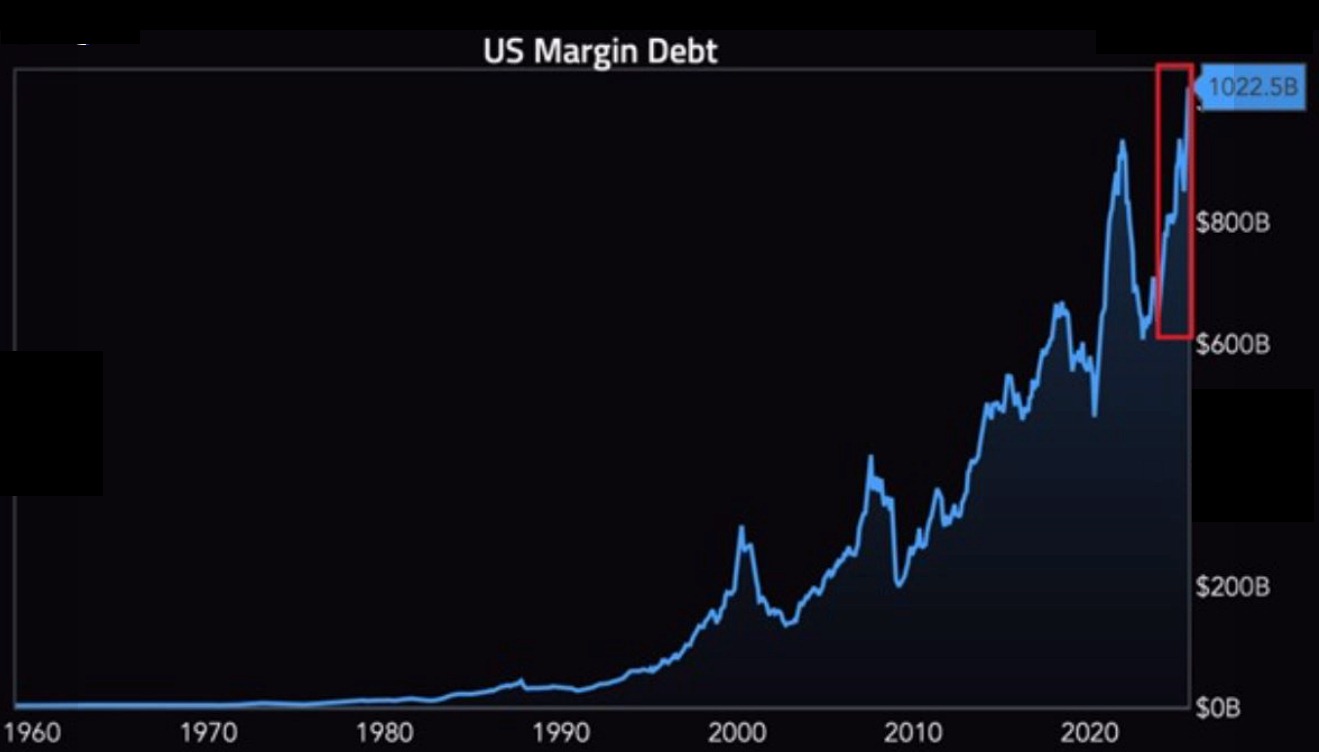
Unlike traditional investors, who rely on fundamentals such as earnings, revenue growth, or long-term sector trends, many retail traders are driven almost entirely by momentum, sentiment, and speculation. The trading models at play are not designed to build wealth over time; they are designed to exploit short-term volatility. This speculation is often amplified by leverage, margin accounts, and options trading, making swings more dramatic and less predictable.

The problem is that momentum-driven markets lack stability. They create the illusion of strength while quietly building fragility beneath the surface. As more money chases speculation rather than fundamentals, valuations drift further from reality, creating a bubble that cannot be sustained.

This bubble will almost certainly burst. And when it does, the unwinding will be severe. Because so many retail traders are using leveraged positions without effective downside protection, the correction will not simply be a normal pullback—it will be a violent contraction with significant ripple effects across the economy.

The stock market’s current behavior is not a sign of resilience but of distortion. It is being propped up by short-term speculation rather than long-term strength. Prudent investors should recognize the risks and approach this market with extreme caution.

Retail Investor’s Impact

Retail investors are individuals trading their own money through brokerage platforms, rather than through institutional structures like mutual funds, pensions, or endowments. While they don’t own the largest share of total market capitalization compared to institutions, their behavioral impact on the market is outsized relative to their percentage of ownership.

Here’s why:

  • Concentration of activity – Retail investors tend to pile into the same “meme” names or high-momentum stocks, amplifying volatility in ways that broad institutional strategies (like index funds) do not.

  • Leverage & options trading – Post-pandemic, we’ve seen an explosion of retail activity in leveraged products, including options and margin trading. For example, options volume is now dominated by contracts with less than 24 hours to expiration (“zero-day options”), and retail traders are a major driver of that activity. This behavior magnifies short-term swings.

  • Market signaling – Even though institutions hold more shares, they often respond to sentiment and volatility triggered by retail traders. In effect, retail flows can act as a spark that ignites much larger institutional moves.

  • High churn – The percentage of total market ownership by retail investors (estimated around 20–25% of U.S. equities) is less important than their trading behavior. Retail traders churn their portfolios at much higher rates than institutional investors, meaning the same dollars are moving in and out of positions far more rapidly. This turnover creates disproportionate price pressure compared to “buy and hold” strategies used by pensions and index funds.

The key issue isn’t retail investors’ overall share of ownership—it’s the outsized impact of their speculative, leveraged trading activity. Their rapid-fire churn has fundamentally reshaped market dynamics, injecting far more instability than their raw ownership percentages suggest.

As of the end of Q2 2025, Microsoft (MSFT), Apple (AAPL), and Nvidia (NVDA) together made up roughly 20% of the entire S&P 500 index. Because the index is market-cap weighted, this unprecedented concentration in just a handful of companies means that movements in these few stocks disproportionately drive the performance of the broader market.

Layer on top the influence of retail traders, whose momentum-driven strategies are detached from fundamentals, and the result is extreme volatility. In fact, on any given trading day, as much as 95% of index swings can be traced back to a combination of two forces: retail churn and the heavy concentration of market cap in a narrow set of tech giants. This creates the illusion of strength while masking deep fragility in the underlying economy.

Trumpenomics: The Decline of the US

US Margin Debt (Buying Stocks With Borrowed Money)

bookmark_borderTrump’s Attacks on the Fed and Economic Institutions Signal Escalating Risks

Last night, President Trump fired Lisa Cook from the board of the Federal Reserve—a move that has sparked widespread concern. Despite her refusal to step down, domestic markets appear relatively unshaken. However, international observers are sounding the alarm: the independence of the Federal Reserve is a cornerstone of global confidence in the U.S. economy.

Trump’s continued and increasingly aggressive efforts to undermine the Fed may be among his most destabilizing economic actions. While protectionist trade policies, tariffs, and nationalist policies already contribute to economic uncertainty, this latest move threatens the very framework that underpins financial stability. A common misunderstanding by Trump is that the Fed controls market interest rates. In reality, the Fed sets rates only for overnight lending between banks; broader market rates are determined independently by supply, demand, and investor expectations. Historically, even when the Fed has cut its short-term rates, long-term market rates have often risen in response—meaning that Trump’s interference is counterproductive to any goal of lowering borrowing costs.

These actions are eroding U.S. credibility, weakening the dollar’s status as the global reserve currency, and undermining the perception of American economic exceptionalism. Simultaneously, Trump is acquiring stakes in private firms such as U.S. Steel and Intel. The Department of Defense recently took a significant position in MP Materials, a U.S.-based rare earth minerals company. Meanwhile, Nvidia and AMD are reportedly remitting 15% of their revenue from certain AI chip sales to China to the U.S. government in exchange for export licenses. Earlier today, the Commerce Secretary signaled that the administration is exploring acquisitions of major defense contractors, including Lockheed Martin.

Together, these moves reflect a troubling shift toward a centralized, corporatist form of control, blurring the lines between government and private enterprise—a trend that many analysts view as a step toward fascism. The combination of undermining independent institutions, aggressive protectionism, and state involvement in private industry signals growing risks not only for the U.S. economy but for global financial stability.

Trumpenomics: The Decline of the US

bookmark_borderU.S. Manufacturing Hits Historic Lows: Durable Goods and Philly Fed Data Signal Economic Weakness

The latest economic indicators reveal a troubling slowdown in U.S. manufacturing. Durable goods orders and the manufacturing index both posted their worst levels since the 2020 pandemic, signaling a sharp contraction in industrial activity.

Philadelphia once again made headlines as the Philly Fed reported a historic decline in its new orders index, falling to -1.9. This marks a significant drop, reflecting weakening demand for manufactured products in the region. Economists note that a negative reading in the Philly Fed new orders index often correlates with broader declines in production, employment, and business investment, suggesting that U.S. manufacturing is under mounting stress.

The combination of sluggish durable goods orders and contracting regional manufacturing indicators underscores the potential for a broader economic slowdown. Rising trade tensions, high tariffs, and persistent supply chain disruptions are likely contributing factors, compounding challenges already posed by inflationary pressures and global uncertainty.

Analysts caution that unless consumer demand rebounds and supply chain issues are mitigated, these signals could foreshadow deeper recessional trends in the industrial sector in the months ahead.

Trumpenomics: The Decline of the US

bookmark_borderTrump’s Tariff Gambit Backfires: European Postal Services Halt Shipments to U.S.

Postal services across Europe are suspending parcel shipments to the United States amid mounting uncertainty over Donald Trump’s escalating tariff policies. At the center of the disruption is an executive order Trump signed last month, abolishing the long-standing tax exemption that allowed small packages worth less than $800 to enter the U.S. duty-free. That exemption, widely used by small European businesses, had been critical for maintaining affordable cross-border trade in consumer goods.

The new rule, which takes effect on August 29, removes a vital lifeline for entrepreneurs who relied on low-cost shipping to reach American customers. Without the exemption, even inexpensive goods—from clothing and electronics accessories to specialty foods—face complex customs procedures and potentially punishing tariffs.

The fallout has been swift. Several European postal services announced they would temporarily suspend shipments of small parcels to the U.S., citing both administrative uncertainty and cost concerns. For small exporters, this amounts to a near-total loss of access to one of the world’s largest consumer markets. For American consumers, it means higher prices, longer wait times, and fewer choices.

The move is also drawing sharp criticism for its hypocrisy. Trump and his administration frequently accuse foreign countries of erecting unfair trade barriers against U.S. products, yet this policy places one of the world’s most restrictive trade barriers on imports of everyday goods. While Trump frames the measure as “protecting American workers,” the policy risks doing the opposite—raising consumer prices at home while triggering retaliation abroad that harms American farmers, manufacturers, and exporters.

Trade experts warn that this step is part of a broader strategy of weaponizing tariffs and abandoning long-established trade norms. “The U.S. is setting a precedent that undermines its own credibility,” one European trade analyst noted. “You can’t demand open markets for American goods while shutting your own doors to small-scale imports.”

With the holiday shopping season approaching, the suspension of parcel shipments could prove particularly disruptive for small businesses and consumers on both sides of the Atlantic. Meanwhile, Brazil, China, and other competitors stand ready to fill the void, further eroding U.S. economic influence.

In effect, Trump’s latest tariff gambit risks isolating the U.S. from global supply chains, worsening inflationary pressures, and accelerating the shift of trade alliances away from America. What was once touted as a move to “make America great again” looks increasingly like a strategy to make U.S. consumers and businesses pay the price.

Trumpenomics: The Decline of the US

bookmark_borderCape Coral’s Collapse: How Climate Risk and Insurance Costs Broke Florida’s Hottest Housing Market

by Daniel Brouse
August 21, 2025

Cape Coral, Florida, has gone from one of the fastest-rising housing markets in the country to arguably the worst real estate market in the United States.

During the early years of the pandemic, the city experienced a frenzy of demand. Median home prices skyrocketed nearly 75% in just three years, climbing to $419,000 and transforming the character of a middle-income community long known as a haven for retirees and small investors. The rapid appreciation brought an illusion of prosperity—until the reality of climate risk and soaring costs set in.

Today, the streets tell a very different story. “For Sale” signs crowd nearly every block. Open houses sit empty for hours. Foreclosures are beginning to tick upward. Even homebuilders—once bullish on Cape Coral’s growth—are cutting their losses, unloading half-finished projects at steep discounts.

The Insurance Crisis Driving the Collapse

At the heart of Cape Coral’s downturn is an insurance crisis that threatens the entire state. Over the past several years, dozens of private insurers have withdrawn from Florida, citing mounting climate risks, skyrocketing reinsurance costs, and devastating losses from hurricanes like Ian and Idalia.

This exodus has left the state-owned Citizens Property Insurance Corporation as Florida’s insurer of last resort—and now its largest provider. But even state-backed coverage is not cheap. The average annual cost of homeowner’s insurance in Florida has exploded from $2,520 to $7,667 in just a few years, and that figure does not include hurricane or windstorm coverage. For many families, this cost alone makes homeownership untenable.

A Market on the Edge

Cape Coral is now emblematic of a broader reckoning. A city once marketed as “affordable paradise” faces a toxic mix of:

  • Soaring insurance costs that outpace incomes.

  • Declining availability of coverage, with exclusions leaving homeowners exposed.

  • Increasing flood and storm risk, magnified by rising seas and violent rain.

  • Eroding investor confidence, as builders and buyers walk away from projects.

In short, Cape Coral is ground zero for the collision between climate change and the housing market. It foreshadows what other coastal communities may face as climate-driven disasters intensify and insurers retreat.

The dream of Florida living—sunshine, affordability, and security—is unraveling. And unless systemic reforms address both climate resilience and insurance affordability, Cape Coral may be just the beginning of a much larger national housing crisis.

The Human Induced Climate Change Experiment