bookmark_borderNeptune Flood IPO: Riding the Rising Tide of Climate Risk

by Daniel Brouse
October 1, 2025

Neptune Flood, the largest private flood insurance company in the U.S., went public today, October 1, 2025, with its initial public offering (IPO) on the New York Stock Exchange under the ticker symbol “NP.” The St. Petersburg, Florida-based company raised $368 million by selling over 18 million shares at $20 per share, pricing at the top of its marketed range.

The IPO underscores the growing intersection between climate change, financial markets, and technological disruption. For decades, the flood insurance sector in the United States has been dominated by the National Flood Insurance Program (NFIP), a government-run system long criticized for outdated risk maps, cross-subsidized premiums, and mounting losses as extreme weather intensifies.

Neptune Flood is positioning itself as a market-based alternative. By leveraging artificial intelligence, machine learning, and big data, the company provides instant, risk-adjusted quotes—a major departure from the slow, bureaucratic processes of traditional insurance systems. Its model appeals to homeowners and businesses seeking coverage in areas where climate-driven flooding has rendered NFIP or private insurers either too slow, too expensive, or unwilling to underwrite risk.

But the company’s growth also highlights a troubling trend: vast regions of the U.S. are becoming increasingly uninsurable due to climate change. Rising sea levels, heavier rainfall, and stronger hurricanes are driving up both the frequency and severity of flood events. Where government-backed programs once absorbed much of the cost, private insurers like Neptune are stepping in with higher-cost policies tailored to high-risk consumers willing to pay for coverage.

While investors are attracted to Neptune’s profitability and data-driven underwriting, critics argue that its model may accelerate inequality in climate resilience. Wealthier homeowners and businesses may be able to afford Neptune’s “climate risk premium,” while middle- and lower-income households are left exposed or priced out of protection entirely. This could widen the gap between those who can adapt financially to climate change and those who cannot.
As Neptune Flood begins its life as a publicly traded company, its trajectory will serve as a bellwether for how private capital navigates the growing risks of climate change. Whether it represents a genuine solution or simply a profitable adaptation to a failing system remains to be seen—but one thing is clear: the tide of climate risk is rising, and financial markets are now deeply invested in who sinks and who swims.

Is this a good stock to short?

Actually, it’s not that simple. Neptune’s AI model incorporates climate risk directly into its premium setting, which gives it a built-in hedge—if people are willing (or forced) to pay the extraordinary premiums, Neptune stays profitable. As FEMA gradually steps back from subsidized coverage and shifts toward managed retreat, the private flood insurance market is only going to grow.

That said, there’s a real wild card here: states like Florida are already socializing homeowners’ insurance with taxpayer money. That creates a distorted market where Neptune may find itself competing not just with other insurers, but with its own state government’s artificially underpriced coverage.

So, shorting them might not be as obvious as it looks. This is one of those stocks where climate, policy, and economics will collide in unpredictable ways. Definitely worth watching.

* Our climate model employs chaos theory to comprehensively consider human impacts and projects a potential global average temperature increase of 9℃ above pre-industrial levels.
Tipping points and feedback loops drive the acceleration of climate change. When one tipping point is breached and triggers others, the cascading collapse is known as the Domino Effect.

The Human Induced Climate Change Experiment

bookmark_borderCape Coral’s Collapse: How Climate Risk and Insurance Costs Broke Florida’s Hottest Housing Market

by Daniel Brouse
August 21, 2025

Cape Coral, Florida, has gone from one of the fastest-rising housing markets in the country to arguably the worst real estate market in the United States.

During the early years of the pandemic, the city experienced a frenzy of demand. Median home prices skyrocketed nearly 75% in just three years, climbing to $419,000 and transforming the character of a middle-income community long known as a haven for retirees and small investors. The rapid appreciation brought an illusion of prosperity—until the reality of climate risk and soaring costs set in.

Today, the streets tell a very different story. “For Sale” signs crowd nearly every block. Open houses sit empty for hours. Foreclosures are beginning to tick upward. Even homebuilders—once bullish on Cape Coral’s growth—are cutting their losses, unloading half-finished projects at steep discounts.

The Insurance Crisis Driving the Collapse

At the heart of Cape Coral’s downturn is an insurance crisis that threatens the entire state. Over the past several years, dozens of private insurers have withdrawn from Florida, citing mounting climate risks, skyrocketing reinsurance costs, and devastating losses from hurricanes like Ian and Idalia.

This exodus has left the state-owned Citizens Property Insurance Corporation as Florida’s insurer of last resort—and now its largest provider. But even state-backed coverage is not cheap. The average annual cost of homeowner’s insurance in Florida has exploded from $2,520 to $7,667 in just a few years, and that figure does not include hurricane or windstorm coverage. For many families, this cost alone makes homeownership untenable.

A Market on the Edge

Cape Coral is now emblematic of a broader reckoning. A city once marketed as “affordable paradise” faces a toxic mix of:

  • Soaring insurance costs that outpace incomes.

  • Declining availability of coverage, with exclusions leaving homeowners exposed.

  • Increasing flood and storm risk, magnified by rising seas and violent rain.

  • Eroding investor confidence, as builders and buyers walk away from projects.

In short, Cape Coral is ground zero for the collision between climate change and the housing market. It foreshadows what other coastal communities may face as climate-driven disasters intensify and insurers retreat.

The dream of Florida living—sunshine, affordability, and security—is unraveling. And unless systemic reforms address both climate resilience and insurance affordability, Cape Coral may be just the beginning of a much larger national housing crisis.

The Human Induced Climate Change Experiment

bookmark_borderClimate-Fueled Insurance and Tax Hikes Are Driving Mortgage Delinquencies

by Daniel Brouse
July 21, 2025

Mortgage delinquencies are climbing across the United States, with southern states like Florida, Georgia, and South Carolina facing the steepest increases. A major driver? Escrow payments — which cover property taxes and insurance premiums — have surged by 62% nationally over the last five years, a spike fueled largely by rising insurance costs and property taxes tied to climate-related disasters.

Climate Disasters Driving Costs

Extreme weather fueled by climate change has become the primary reason for soaring insurance premiums and local government costs. Hurricanes, floods, and severe storms damage infrastructure, triggering higher taxes to fund repairs and resilience projects. Insurers, burdened by record claims, are raising premiums or exiting high-risk markets altogether, forcing homeowners to pay significantly more to protect their properties.

This financial squeeze hits households hard, especially in states vulnerable to climate extremes. Those without conventional mortgages are particularly at risk since conventional loans often require adequate flood and disaster insurance, providing a buffer many lower-income or first-time buyers lack.

Data Snapshot: Where Delinquencies Are Rising Fastest

Here are the top 10 states with the largest year-over-year increases in serious mortgage delinquencies:

State All Loans Conventional FHA Loans VA Loans YOY Change % Escrow Change (2019–2024)
Florida 1.43% 1.05% 3.09% 4.11% 38 bps 62%
South Carolina 1.05% 0.67% 2.55% 3.96% 20 bps 37%
Georgia 1.12% 0.71% 2.66% 3.71% 18 bps 38%
Nebraska 0.81% 0.48% 1.75% 3.68% 16 bps 43%
Texas 1.11% 0.74% 2.54% 3.41% 16 bps 21%
North Carolina 0.83% 0.57% 1.88% 3.18% 15 bps 49%
Louisiana 1.87% 1.25% 3.96% 5.44% 14 bps 52%
Colorado 0.55% 0.41% 1.73% 2.56% 13 bps 62%
Indiana 1.09% 0.66% 2.62% 4.01% 13 bps 49%
Oklahoma 1.24% 0.70% 2.72% 3.53% 13 bps 38%

(Source: Cotality, 2025)

State-Specific Stress Points

Take Florida: Property taxes there have jumped nearly 50% in five years while insurance premiums, particularly in hurricane- and flood-prone regions, have soared. Combined, these increases have driven the average escrow payment up 62% — on top of mortgage principal and interest — leaving many households financially exposed.

South Carolina has seen 14 insurers collapse between 2020 and 2023, leading to higher premiums for the remaining customers. Meanwhile, Georgia’s average property taxes rose by more than $700 in just five years, with median home prices surging 65% since 2019 as the climate-fueled migration and development boom continue.

Mississippi, with the nation’s highest overall delinquency rate, faces the worst of these intersecting crises. It has the lowest median household income in the country while ranking among the top 15 states most at risk for hurricane storm surge damage, making climate resilience and affordability a daily struggle for many residents.

Climate Disasters Compound Payment Challenges

Natural disasters directly disrupt mortgage payments by displacing families and damaging properties, forcing costly repairs before insurance payouts arrive. For example, Hurricane Helene devastated Asheville, NC, in 2024, and within a year, delinquencies in the region rose 1%. Even when homeowners catch up on delayed payments, subsequent premium hikes often increase monthly housing costs permanently, threatening long-term affordability.

Bottom Line: A Climate-Fueled Housing Crisis

The data is clear: climate change is destabilizing the housing market by driving up insurance and tax costs, leading to rising mortgage delinquencies and financial insecurity. Without systemic climate action to curb emissions and build resilient infrastructure, the intersection of climate extremes and the housing market will continue to erode financial stability across the United States.

The Human Induced Climate Change Experiment

bookmark_borderClimate Change, Capitalism, and the Collapse of Insurance: California as a Case Study

by Daniel Brouse
July 19, 2025

California offers a stark preview of what to expect as the U.S. property insurance market begins to unravel under the weight of climate change. Insurers continue to withdraw from wildfire-prone and flood-prone areas, despite recent policy efforts aimed at stabilizing the market. The January 2025 Los Angeles wildfires alone generated billions in claims, leaving insurers scrambling to pay out as damages escalate beyond modeled expectations.

This collapse is visible in the growing number of households nationwide unable to find private property coverage, forcing them into state-chartered “insurers of last resort.” The share of coverage provided by these state-backed plans is a key metric for assessing the health of a state’s insurance market—and the trends are alarming.

In California, the state-chartered FAIR Plan is experiencing unprecedented growth as private insurers exit the voluntary market. Between September 2023 and June 2025, FAIR Plan policies nearly doubled from 330,000 to 610,000, reflecting a growing climate-driven insurance crisis. As climate change drives more destructive wildfires, flash floods, and extreme weather, insurers are dropping policies or refusing to renew coverage, forcing more Californians to turn to the FAIR Plan for basic protection.

Rising Exposure, Rising Risk

By June 2025, the FAIR Plan’s total exposure ballooned to $650 billion, a 42% increase since September 2024 and a staggering 289% increase since Fiscal Year 2021. This exposes the plan—and by extension, the state’s taxpayers and remaining insurers—to massive financial risk should large-scale disasters continue, which is increasingly likely under warming conditions.

In February 2025, following the catastrophic Los Angeles wildfires that caused tens of billions in damages, California Insurance Commissioner Ricardo Lara authorized the FAIR Plan to impose $1 billion in assessments on the state’s insurers to pay wildfire claims. It was the first such assessment since the 1994 Northridge earthquake, highlighting the scale and frequency of modern climate-driven disasters.

Shifting Policy Under Pressure

To address the growing crisis, Commissioner Lara has launched a new strategy aimed at stabilizing the insurance market. A key policy change now allows insurers to use forward-looking climate models to set rates—a practice previously barred under Proposition 103, the landmark consumer protection law passed in 1988.

“This is about reforming the limits of Proposition 103 and delivering on the promise of insurance access for every Californian,” Lara stated.

The decision has sparked intense debate. Consumer groups oppose the policy, warning that it allows insurers to use opaque, proprietary climate models to justify higher rates without accountability. Conversely, insurers and environmental advocates argue that this shift is necessary, enabling the use of science-based risk projections rather than backward-looking claims data in a rapidly changing climate.

A Harbinger for the Nation

California’s insurance turmoil is not an isolated incident but a leading indicator for the broader U.S. market. As climate change accelerates, states like Florida, Louisiana, and Texas are witnessing similar patterns of insurance withdrawal and reliance on last-resort state insurers, driven by increasing hurricane, flood, and wildfire risks. This trend signals a growing incompatibility between capitalism’s risk pricing mechanisms and the systemic, accelerating risks of climate change.

The collapse of private insurance markets under climate stress is not merely a financial problem but a systemic threat to housing stability, municipal solvency, and economic resilience. As disasters become more frequent and severe, the cost of maintaining insurance will skyrocket, pushing millions into underinsurance or complete uninsurance.

Conclusion

California’s experience is a warning: climate change is already breaking the assumptions underpinning private insurance, and capitalism’s profit models are proving incompatible with a destabilizing climate system. While policy adjustments such as allowing climate modeling for rate-setting may temporarily slow the collapse, they are insufficient to address the root cause—continued fossil fuel emissions and land-use practices that exacerbate climate risks.

Unless systemic mitigation efforts are accelerated and adaptation plans are implemented at scale, California’s insurance crisis will become the norm across the nation, with devastating consequences for homeowners, local economies, and the financial stability of states.

The Human Induced Climate Change Experiment

bookmark_borderHydroclimate Whiplash: America’s Flood Disaster Signals Accelerating Climate Chaos

by Daniel Brouse
July 9, 2025

Hydroclimate whiplash describes the extreme swings between severe droughts and catastrophic floods, a phenomenon intensified by climate change. Another term, Drought-Flood Abrupt Alternation (DFAA), highlights how these sudden shifts compound the vulnerability of communities already stretched thin by recurring climate disasters.

In the past week alone, the United States has experienced a cascade of what were once considered “100- to 1,000-year floods,” devastating communities in Texas, New Mexico, North Carolina, New Jersey, Pennsylvania, and Illinois.

In Chapel Hill, North Carolina, the remnants of Tropical Storm Chantal dumped 8–12 inches of rain in just a few hours, producing what is being described as a “1,000-year flood event.” Streets turned into rivers, homes and businesses were inundated, and emergency crews scrambled to conduct water rescues as flash floods swept through the area.

In Texas, over 100 people died during a catastrophic flooding event classified as a “500-year flood.” Entire neighborhoods were swallowed by rapidly rising waters, and the damage to infrastructure, homes, and livelihoods will be felt for years to come.

Events like these, once deemed exceedingly rare, are now disturbingly common in our rapidly warming world. In the 1990s, we first hypothesized the non-linear acceleration of climate change. By the early 2000s, this hypothesis evolved into an established climate theory, now widely recognized in scientific circles. My lab partner, a Doctor of Physics from Ohio State, and I provided key evidence underpinning this theory, documenting the dramatic reduction in the doubling time of climate impacts—the rate at which these effects intensify. Initially, the doubling time was around 100 years; it has since shrunk to 10 years, and more recently to as little as 2 years.

This means that the climate-driven damage we see today is double what it was just two years ago, and if trends continue, it will be four times worse in another two years, eight times worse in four years, and potentially 64 times worse within a decade. These are conservative estimates, assuming the doubling period does not shrink further. If the trajectory holds, the consequences will be far more catastrophic than previously anticipated.

The physics of a warming planet explains why this is happening. For every 1°C (1.8°F) increase in global temperatures, the atmosphere can hold about 7% more water vapor, fueling heavier rainfall and violent downpours. What was once a “1,000-year flood” is now a 10-year event in many regions, as we witnessed this week.

Violent rain, however, is just one aspect of the escalating climate crisis. Warming oceans, disrupted jet streams, and intensified atmospheric rivers are sharply increasing the frequency and severity of extreme weather globally. Communities across Texas, North Carolina, and beyond are already living with the reality of these mounting human and economic costs as the climate crisis transforms once-rare “freak events” into the new normal.

It is no longer a question of if these impacts will worsen, but how fast. The window to prepare and adapt is rapidly closing, while the storms—and their consequences—are arriving faster than our systems can handle.

We face an accelerating climate emergency that threatens to overwhelm not just our economy, but the physical conditions required for human survival. Our  climate model —  incorporating complex social-ecological feedback loops within a dynamic, nonlinear system–projects that global temperatures could rise by up to 9°C (16.2°F) within this century. This far exceeds earlier projections, which estimated a 4°C rise over the next thousand years, and signals a dramatic acceleration of planetary warming.

At this level of heating, vast regions of the Earth will become uninhabitable due to a combination of extreme temperatures, sea level rise, agricultural collapse, and mass migration. Crucially, parts of the United States are already experiencing wet-bulb temperatures approaching or exceeding 31°C (87.8°F)–a physiological threshold beyond which the human body can no longer regulate internal temperature, even in the shade with unlimited access to water. This makes extended outdoor exposure potentially fatal.

This is no longer a distant or theoretical threat. The climate system is now entering a phase of compound risk and cascading collapse, where disruptions in one area–such as crop failure–can trigger a domino effect across health systems, infrastructure, food security, and civil stability. We are already witnessing the early stages of this unraveling.

Immediate, radical action is now essential–not only to mitigate future emissions but also to adapt our societies, preserve habitable zones, safeguard food systems, and protect public health. The longer we delay, the higher the cost–economically, socially, and in terms of human life.

The Reign of Violent Rain Brouse and Mukherjee (2023-2024)

Florida’s Real Estate Collapse: Climate Physics, Soaring Costs, and the End of Coastal Wealth Brouse (2025)

Texas Flood Disaster: 500-Year Floods Become Regular Events Brouse (2025)

The Converging Collapse: AMOC, Jet Streams, and Deadly Wet-Bulb Temperatures Brouse (2025)

Polar Vortex Disruptions, Rossby Waves, and a New Threats to the Stratosphere: Why Our Jet Streams Are Becoming Unrecognizable Brouse (2025)

The Philadelphia Experiment: a Study on the Reign of Violent Rain Brouse (2024)


bookmark_border“1,000-Year Flood” Hits Chapel Hill: Another Warning Sign of a Warming World

by Daniel Brouse
July 7, 2025

Yesterday, Chapel Hill, North Carolina, experienced what is being described as a “1,000-year flood event” as the remnants of Tropical Storm Chantal unleashed between 8–12 inches of rain in just a few hours. Streets turned into rivers, homes and businesses were inundated, and emergency crews conducted multiple water rescues as flash floods swept through the region.

Events like these, once considered rare, are becoming disturbingly common in our rapidly warming world. A “1,000-year flood” does not mean such a flood happens only once every thousand years; it means there is a 0.1% chance of it occurring in any given year under past climate conditions. But with warming oceans, a destabilized jet stream, and an atmosphere that holds more moisture, the probability of these extreme rain events is increasing sharply.

As climate change accelerates, what was once a 1,000-year flood can become a 100-year, or even a 10-year event. Chapel Hill’s devastating flood is not just a local disaster; it is a warning signal of a global system under increasing stress, where violent rain, flash flooding, and catastrophic water events are rewriting what we once thought of as “normal.”

URGENT CLIMATE WARNING
Our most recent climate model — now incorporating economic and social feedback loops — projects up to 9°C global warming by 2100. This far exceeds prior estimates and indicates we are entering a phase of compound, cascading collapse.

At this level of heating, many regions will become uninhabitable due to heat stress, sea-level rise, food system failure, and forced migration. Wet-bulb temperatures in the U.S. are already nearing 31°C (87.8°F) — a physiological limit beyond which human life cannot be sustained outdoors for long, even with water and shade.

This is not hypothetical. The climate system is tipping now.

Immediate mitigation and adaptation are essential to preserve habitable zones and public health—and to avoid collapse on both ecological and economic fronts.

Florida’s Real Estate Collapse: Climate Physics, Soaring Costs, and the End of Coastal Wealth Brouse (2025)

Texas Flood Disaster: 500-Year Floods Become Regular Events Brouse (2025)

Tipping points and feedback loops drive the acceleration of climate change. When one tipping point is breached and triggers others, the cascading collapse is known as the Domino Effect.

The Climate Crisis: Violent Rain | Deadly Humid Heat | Extreme Weather Events | Insurance | Trees Deforestation | Air Pollution | Rising Sea Level | Food and Water | Updates

The Human Induced Climate Change Experiment

bookmark_borderTrump’s FEMA Cutbacks: Disaster for Homeowners or Wake-Up Call on Climate Policy?

by Daniel Brouse
June 11, 2025

In a recent statement, President Donald Trump declared, “We want to wean off of FEMA, and we want to bring it down to the state level. A governor should be able to handle it, and frankly, if they can’t handle the aftermath, then maybe they shouldn’t be governor.” He added that the federal government would begin scaling back disaster recovery aid, with funding instead coming directly from the president’s office—signaling a major shift in how emergency response may be handled going forward.

This announcement comes as the National Oceanic and Atmospheric Administration (NOAA) projects an unusually intense and potentially deadly Atlantic hurricane season, which officially runs through November 30. With warmer oceans and atmospheric instability driven by climate change, stronger and more frequent storms are becoming the norm.

The implications of Trump’s remarks—and the broader policy direction they suggest—are both alarming and potentially transformative.

The Bad News: Soaring Risk for Homeowners

For homeowners in vulnerable areas such as Florida, California, and Louisiana, the move could trigger a crisis. Insurance premiums in disaster-prone zones are already rising dramatically. Some homeowners are being dropped altogether by private insurers and forced into state-run programs that are under increasing financial strain. If FEMA’s support is withdrawn or reduced, many states may be unable to shoulder the burden alone.

Flood insurance is especially concerning. Almost all flood insurance in the United States is currently underwritten by FEMA through the National Flood Insurance Program (NFIP). If the federal government pulls out, coverage may become unaffordable or unavailable, making it impossible for homeowners in flood zones to obtain mortgages. The result could be a collapse in property values and a surge in foreclosures—effectively rendering entire neighborhoods economically unviable.

The Potential Silver Lining: A Long-Overdue Climate Reckoning

Yet, there could be an upside. If the federal government stops subsidizing climate denial—by rebuilding homes and infrastructure in increasingly dangerous areas—it might finally push individuals and governments to take serious climate action. Repeatedly rebuilding in high-risk zones, with taxpayer dollars, has long enabled reckless development and delayed the need for difficult conversations around managed retreat.

Redirecting disaster relief funds toward proactive climate measures—such as transitioning off fossil fuels, upgrading infrastructure, restoring natural buffers like wetlands, and supporting voluntary relocation—could help slow the pace of global warming and increase long-term resilience.

But this transformation must be guided thoughtfully. Abrupt cuts to FEMA without a corresponding increase in state capacity and investment in resilience will disproportionately harm the poor, elderly, and marginalized communities—those least responsible for climate change but most vulnerable to its effects.

Conclusion: A Defining Moment in Climate and Disaster Policy

President Trump’s proposal to devolve disaster response to the states represents a radical rethinking of federal responsibility. It could either catalyze long-overdue changes in climate and land-use policy—or unleash widespread chaos in the wake of increasingly destructive disasters.

The real test will be whether this shift leads to smarter, more sustainable approaches—or whether it simply abandons millions of Americans to face growing climate threats with shrinking support. As the 2025 hurricane season intensifies, the answer may soon become painfully clear.

Trumpenomics: The Decline of the US

The Human Induced Climate Change Experiment

bookmark_borderClimate Risk: The Sixth ‘C’ Transforming Credit and Mortgage Markets

The First Street Foundation’s report, “Climate, the Sixth ‘C’ of Credit,” introduces climate risk as a critical factor in credit assessments, alongside the traditional five Cs: character, capacity, capital, conditions, and collateral. This addition reflects the growing impact of climate-related events on mortgage markets and financial stability.

Key Findings

1. Climate Risk as a Credit Factor

The report emphasizes that climate-related hazards—such as floods, wildfires, and hurricanes—are increasingly influencing mortgage defaults and loan viability. This necessitates the inclusion of climate risk in credit evaluations to accurately assess potential losses.

2. Rising Financial Losses

Projections indicate that climate-driven foreclosures could result in $1.21 billion in bank losses by 2025, escalating to $5.36 billion by 2035 during severe weather years. These figures represent a significant portion of total foreclosure losses, highlighting the financial risks posed by climate change.

3. Insurance Market Strain

The increasing frequency and severity of natural disasters have led to higher insurance premiums and reduced availability of coverage in high-risk areas. This shift places a greater financial burden on homeowners, increasing the likelihood of mortgage defaults.

4. Flooding as a Primary Driver

Flood events, particularly in areas outside FEMA’s Special Flood Hazard Areas (SFHAs), are identified as the leading cause of climate-related foreclosures. Properties in these regions often lack mandatory flood insurance, exacerbating financial vulnerabilities.

5. Historical Precedents

The aftermath of Hurricane Sandy in 2012 serves as a case study, where unaccounted flood risks led to unexpected credit losses of approximately $68 million. This example underscores the need for incorporating climate risk into credit models.

Implications for Stakeholders

  • Lenders and Financial Institutions: Integrating climate risk assessments can enhance the accuracy of credit evaluations and mitigate potential losses.

  • Homeowners and Buyers: Awareness of climate risks can inform property decisions and preparedness measures.

  • Policymakers and Regulators: Developing policies that address climate-related financial risks can strengthen economic resilience.


For a comprehensive understanding, you can access the full report here: Climate, the Sixth “C” of Credit.

The Human Induced Climate Change Experiment

bookmark_borderClimate Change and Policy Shifts Threaten U.S. Housing Market Stability

by Daniel Brouse
February 20, 2025

Projected Devaluation of U.S. Homes Due to Climate Change

Recent analyses indicate that climate change poses a significant threat to the U.S. housing market. Over the next five years, it’s projected that at least 20% of U.S. homes will experience devaluation due to climate-related impacts. In certain vulnerable markets, property values could decline by up to 30% within this period. By 2055, approximately 84% of all U.S. homes may suffer devaluation, resulting in an estimated $1.47 trillion in losses. This timeline aligns with the typical 30-year mortgage term, underscoring the long-term financial risks for homeowners and lenders.

Insurance Market as an Indicator of Real Estate Vulnerability

The availability and cost of homeowners insurance are critical factors influencing mortgage approvals and, consequently, home valuations. Insurance is often considered the ‘canary in the coal mine’ for real estate, signaling emerging risks associated with climate change. High-vulnerability regions, particularly coastal areas in states like Florida, Louisiana, and California, are confronting a compounded crisis. The convergence of escalating insurance premiums, frequent natural disasters, and declining property values is placing immense strain on both homeowners and insurance systems. In Florida, for instance, the state-owned Citizens Property Insurance Corporation has become the largest insurer, reflecting the significant withdrawal of private companies from the market due to unmanageable risks.

Historical Context and Accelerating Climate Change Impacts

Traditionally, real estate has been regarded as a stable and appreciating investment, often outpacing general inflation rates. Since 1963, while inflation has risen by 896%, housing prices have surged by more than 2,350%. However, climate change is disrupting this paradigm. Scientific observations have documented a non-linear acceleration of climate change impacts, with the doubling time of these effects shrinking from approximately 100 years to just a few years. This rapid acceleration suggests that the adverse consequences of climate change on real estate are intensifying at an unprecedented rate.

Policy Changes and Their Potential Exacerbation of Climate Risks

Recent policy shifts under the Trump administration may further exacerbate these challenges. The administration has rescinded numerous environmental regulations and executive orders aimed at mitigating climate change. Notably, President Trump signed 26 executive orders on January 20, 2025, which included the repeal of approximately 80 prior executive actions focused on energy, environmental, and natural resource agendas. These actions reflect a strategic shift towards promoting domestic fossil energy production and reducing regulatory oversight, potentially accelerating environmental degradation.

Additionally, the administration has proposed reforms to key entities in the U.S. housing finance system, specifically Fannie Mae, Freddie Mac, and the Federal Housing Administration (FHA). The proposed privatization of Fannie Mae and Freddie Mac could lead to increased mortgage rates, adversely affecting housing affordability. Furthermore, the potential elimination of the Consumer Financial Protection Bureau (CFPB) may reduce oversight in the housing market, increasing the risk of predatory practices. These reforms could introduce significant uncertainty into the housing market, influencing home prices and overall economic stability.

The Trump administration has also announced plans to dismantle the Federal Emergency Management Agency (FEMA) and rescind all updates to floodplain maps. Homeland Security Secretary Kristi Noem supports reallocating FEMA’s responsibilities to state and local authorities, citing operational inefficiencies and flawed responses to recent disasters.  President Trump has signed an executive order revoking the Federal Flood Risk Management Standard, effectively halting enforcement of updated floodplain maps.  Critics argue that these actions could leave states unprepared for natural disasters and increase vulnerability to flooding leaving homeowners and lenders underwater.

Conclusion

The intersection of accelerating climate change impacts and recent policy shifts presents a formidable challenge to the U.S. housing market. Homeowners, investors, and policymakers must recognize and address these converging threats to safeguard the stability and value of real estate assets in the face of an evolving environmental and regulatory landscape.

Sources:

The Human Induced Climate Change Experiment

bookmark_borderClimate Change’s Impact on Florida Insurance

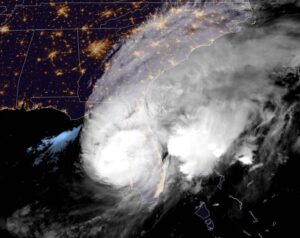
Hurricane Milton is expected to cause over $100 billion in insurance claims, creating even more challenges for Florida homeowners in obtaining insurance. On top of that, the cost to the public and government is projected to exceed an additional $50 billion, adding to the financial strain on taxpayers and the state. Much of the damage from Milton came from the powerful winds and the unprecedented number of tornadoes it spawned. The eastern side of Florida saw the most severe impacts, with over 30 tornadoes causing extensive damage and the highest number of fatalities and potential financial losses.

Citizens Property Insurance Corporation, Florida’s state-backed insurer, has become the largest insurance provider in the state due to the exodus of private insurance companies. Many companies are pulling out due to increasing risks from hurricanes and other extreme weather events driven by climate change. Citizens, however, faces significant financial strain. As hurricane damage grows more frequent and severe, Florida taxpayers are likely to face an unsustainable burden in covering reconstruction costs. The situation highlights the ongoing vulnerability of Florida’s real estate market, and if you haven’t already sold property in the state, it might be a case of better late than never.

The growing frequency and intensity of storms, combined with the financial instability of the insurance industry in Florida, make future investments in the region highly risky. As climate change continues to escalate, the risks are only expected to worsen.

It’s important to note that the degree of risk varies by region and property type. Some areas may experience more immediate and severe impacts, while others may be more resilient. Assessing and mitigating these risks require a comprehensive understanding of local climate vulnerabilities and the implementation of strategies to enhance property resilience. Policymakers, real estate professionals, and property owners are increasingly recognizing the importance of addressing climate risks to ensure the long-term sustainability and value of real estate assets. Thus, our recommendation to evacuate Florida now (i.e. Managed Retreat).

* Our climate model employs chaos theory to comprehensively consider human impacts and projects a potential global average temperature increase of 9℃ above pre-industrial levels.

Hurricane Milton / October 9, 2024

How is All Real Estate at Risk From Climate Change?

Flood Insurance

The Human Induced Climate Change Experiment