bookmark_borderHow to Protect Your Kids from Hidden Chemical Exposures

by Daniel Brouse
July 7, 2025

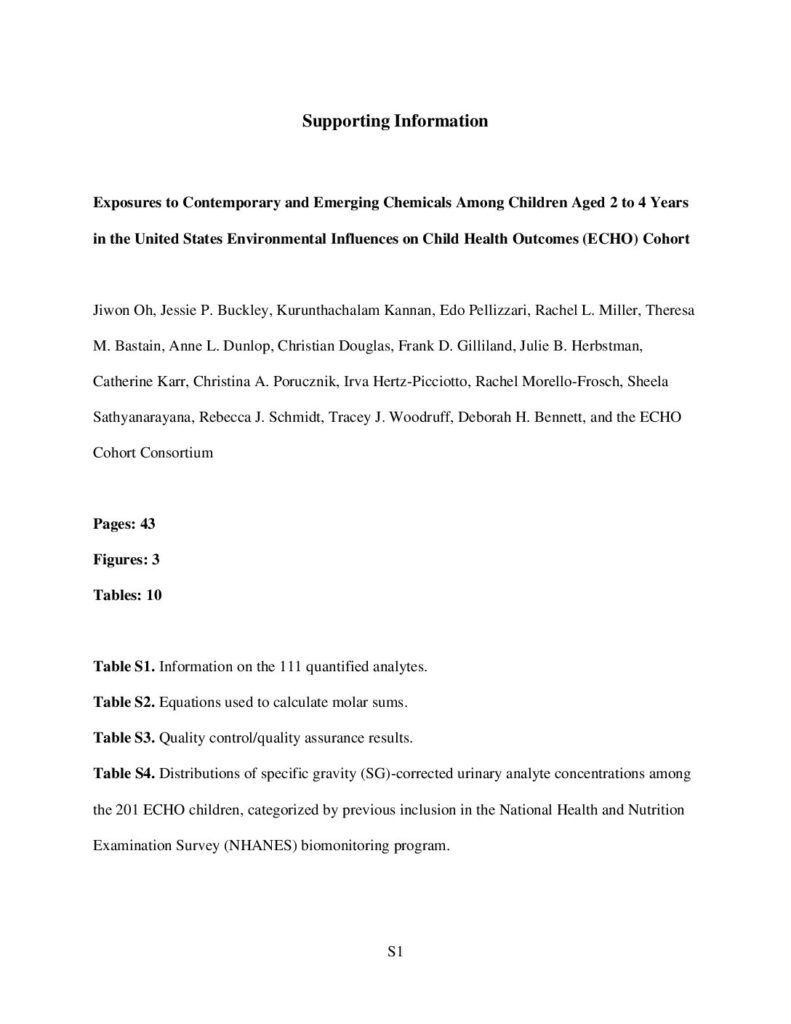
The study, “Exposures to Contemporary and Emerging Chemicals among Children Aged 2 to 4 Years in the United States Environmental Influences on Child Health Outcome (ECHO) Cohort,” reveals that U.S. preschoolers are routinely exposed to dangerous levels of toxic chemicals. This landmark research shows that children are absorbing a complex mix of both legacy and emerging chemicals—many of which are not currently tracked in national surveys. Exposure levels are especially high among more vulnerable subgroups, with substitutes like DINCH and newer pesticides increasingly found in children’s bodies. The findings underscore the urgent need for expanded monitoring and stronger environmental protections focused on children’s health.

Air fresheners and scented candles may seem harmless, but they can release a range of harmful chemicals into your home’s air, including phthalates, volatile organic compounds (VOCs), and formaldehyde. These chemicals can irritate the eyes, nose, and throat, trigger asthma attacks, and may interfere with hormone function, especially in young children whose bodies are still developing. Some scented products also release ultrafine particles that can penetrate deep into the lungs, increasing the risk of respiratory problems over time. Choosing fragrance-free cleaning products and using fresh air ventilation or natural options like baking soda for odor control can help reduce your family’s exposure to these hidden dangers while keeping your home safer and healthier.

Practical Takeaways for Parents:

  • Choose products labeled “phthalate-free,” “paraben-free,” and “fragrance-free.”

  • Avoid plastics with recycling codes #3, #6, and #7.

  • Maintain hygiene through frequent handwashing, good ventilation, and regular dust cleaning.

  • Reduce pesticide exposure by washing produce thoroughly or choosing organic when possible.

Exposures to Contemporary and Emerging Chemicals Among Children Aged 2 to 4 Years in the United States Environmental Influences on Child Health Outcomes (ECHO) Cohort

bookmark_borderFlorida’s Condo Collapse: Climate Physics, Soaring Costs, and the End of Coastal Wealth

by Daniel Brouse
July 6, 2025

Insurance: The First Casualty of Climate Collapse in Florida and Beyond

Check out the powerful physics explained below — Wind and water forces scale with the square of velocity (v²)

Yesterday, we discussed the failing insurance markets in Texas. Today, we turn to Florida, where the insurance industry is buckling under the accelerating impacts of climate change. Insurance companies are the canaries in the coal mine of capitalism, the first to feel the collapse of markets as the climate crisis intensifies. Since the 1990s, we have been writing papers warning of this trajectory, hoping to help avert systemic collapse. Sadly, those warnings went unheeded.

Now, Allianz SE board member Gunther Thallinger has sounded the alarm: the rising costs of climate-driven disasters are threatening to break the financial sector’s ability to function—beginning with insurance.
Speaking as both a top executive at Allianz and chair of its investment board, Thallinger warns that the world is rapidly approaching temperature thresholds beyond which many climate risks will simply become uninsurable. And without insurance, the machinery of modern finance—mortgages, real estate, infrastructure, and industry—grinds to a halt.

“Heat and water destroy capital,” Thallinger wrote in a widely discussed LinkedIn post. “Flooded homes lose value. Overheated cities become uninhabitable. Entire asset classes are degrading in real time.”

FLORIDA

Florida is on the front lines of the climate crisis—and its collapsing condo market is the latest casualty. Once seen as an affordable path to homeownership, condos across the state are rapidly becoming unaffordable, unsellable, and on the path to worthlessness.

The reasons are stark:

  • Skyrocketing insurance premiums that have doubled or tripled following increasingly destructive hurricanes.

  • Special assessments for building upgrades and resilience that can reach $7,200 or more per unit, with little warning.

  • HOA fees rising 25% or higher, pushing monthly costs beyond what many owners can bear.

  • Limited financing as lenders flee risky flood zones, making it harder for buyers to close on purchases.

What looks like an “affordable” $320,000 condo quickly becomes a financial trap. One owner saw their HOA fee soar to nearly $800 per month while facing a sudden $7,200 assessment, all while insurance doubled. Now, they can’t sell at anywhere near the purchase price—and may be forced to walk away.

Florida is also unique in that its largest insurer is now its own socialized state-run system (Citizens Insurance), a sign of a broken private insurance market unable to price climate risk in a rapidly changing environment.

The Physics Behind the Crisis

The non-linear acceleration of climate change is multiplying the rate of sea level rise, violent rain, storm surge, and the destructive power of wind and water. These forces are not increasing gradually but exponentially, as global heating accelerates the hydrological cycle, intensifies storms, and raises baseline sea levels.

Here’s why this matters physically:

  • Wind and water forces scale with the square of velocity (v²).

    • A 20 mph wind exerts 4x the force of a 10 mph wind.

    • A 40 mph wind exerts 16x the force of a 10 mph wind.

    • A 60 mph wind exerts 36x the force of a 10 mph wind.

  • Water is 800 times denser than air, so a 10 mph flow of water exerts 800x the force of a 10 mph wind.

As climate change increases storm intensities and rainfall rates, these forces compound damage at an exponential scale. For example:

  • Heavier rainfall collapses drainage and sewage systems.

  • Storm surges from rising seas undermine foundations.

  • Hillsides fail under violent rain.

  • Wind intensifies beyond design limits of existing structures.

This is not theoretical. We are witnessing it now:

  • Hurricanes that were once “500-year events” are now “5-year events.”

  • Rainfall rates that dump a foot of water in an hour are destroying infrastructure.

  • Florida’s flood maps are outdated, leaving properties exposed to uninsured and uninsurable risks.

A Systemic Economic Risk

Florida’s condo collapse is a warning for all coastal and river-adjacent economies. As climate change accelerates, insurance and maintenance costs will outpace property value gains, leading to:

  • Mass sell-offs and plunging property values.

  • Local tax base erosion, making community resilience investments harder.

  • Banking and mortgage system stresses as collateral loses value.

The dream of coastal living is colliding with the physics of climate change and the arithmetic of exponential risk. Without a massive rethinking of urban planning, insurance structures, and climate mitigation, Florida’s condo collapse is only the first domino in a cascading series of economic failures driven by climate physics.

This is not about politics—it is about physics, finance, and the survival of communities in a rapidly heating world.

* This climate model employs chaos theory

The Human Induced Climate Change Experiment

bookmark_borderTrump’s “Big and Brutally Ugly Bill” Triggers Fossil Fuel Expansion, Ends Solar and Wind Support, and Risks Climate, Economic, and Infrastructure Collapse

by Daniel Brouse
July 4, 2025

President Donald Trump’s One Big Beautiful Bill Act marks a seismic shift in U.S. energy, climate, and economic policy, ending decades of federal support for solar and wind while unleashing a massive expansion of oil, gas, and coal production.

The House passed the megabill on Thursday following a narrow Senate approval on Tuesday, after Trump set a hard deadline to clear the bill before the July recess. It is set to be signed into law today, July 4, 2025.

Fossil Fuels Win, Renewable Energy Loses

Trump’s priorities are clear: the U.S. will double down on fossil fuels to meet its energy needs while dismantling renewable energy progress. In a Fox News interview on June 29, Trump stated:

“I don’t want windmills destroying our place. I don’t want these solar things where they go for miles and they cover up a half a mountain that are ugly as hell.”

The law delivers nearly every wish of the oil and gas sector, as noted by Mike Sommers, president of the American Petroleum Institute:

“This bill will be the most transformational legislation that we’ve seen in decades in terms of access to both federal lands and federal waters. It includes almost all of our priorities.”

The act:

  • Ends tax credits and subsidies for solar and wind that fueled their exponential growth.

  • Mandates 30 offshore oil and gas lease sales in the Gulf of Mexico over 15 years.

  • Requires over 30 lease sales annually on public lands across nine states, expanding into Alaska.

  • Slashes royalties paid by fossil fuel producers for drilling on federal lands, incentivizing increased extraction.

Climate Consequences: A System in Nonlinear Collapse

The timing of this fossil fuel expansion could not be worse. As a climate scientist and economist, I can confirm the climate system is in a state of nonlinear acceleration:

  • The shrinking climate doubling period means climate impacts are arriving exponentially faster than models previously predicted.

  • The collapse of the Atlantic Meridional Overturning Circulation (AMOC) is weakening the jet stream, fueling persistent deadly heatwaves, floods, and tornadoes across North America.

  • Sudden Stratospheric Warming (SSW) and Rossby wave disruptions are destabilizing weather systems, making extreme weather the norm.

  • The expansion of fossil fuel burning increases atmospheric CO₂, while low-level ozone pollution reduces plants’ ability to capture CO₂ by up to 30%, worsening the crisis.

Meanwhile, stratospheric ozone depletion from reentering low orbit satellites threatens to further destabilize the polar vortex, increasing the frequency and severity of extreme weather events.

Economic and Infrastructure Backfire

This fossil fuel push aligns with fiscal policies that are already backfiring:

  • The dollar has experienced its worst performance in 40 years, undermining U.S. global economic stability.

  • PMI data reveals contracting U.S. manufacturing and the slowest services growth in a year, indicating a weakening economic foundation.

  • U.S. infrastructure is collapsing under the weight of climate-fueled extreme weather, with roads, bridges, and grids failing amid rising repair costs and insurance market collapse.

Trump’s policies risk accelerating fiscal collapse before climate collapse, or vice versa—either outcome will dismantle the illusion of U.S. exceptionalism.

Ignoring the Warning Signs

By prioritizing short-term fossil fuel profits over systemic risk management, the “One Big Beautiful Bill” ignores overwhelming evidence:

  • More fossil fuel burning will increase deadly wet-bulb temperatures, leading to mass mortality during humid heatwaves.

  • Expanding extraction accelerates feedback loops between brown carbon, wildfires, lightning, and permafrost melt, creating uncontrollable global warming.

  • Climate extremes are already causing uninsurable zip codes in Florida, California, and coastal states, with entire property markets on the verge of collapse.

Conclusion: A Short-Sighted Gamble

Trump’s “One Big Beautiful Bill” is not a strategy for energy independence; it is a short-sighted gamble that trades long-term planetary and economic stability for the illusion of short-term gains.

If the U.S. wants to remain globally competitive while safeguarding human life, it must align energy, fiscal, and infrastructure policies with climate-integrated risk management, as leaders like NOAA’s Sarah Kapnick advocate. Anything less will accelerate the collapse of both the climate system and the economy, leaving future generations to pay the ultimate price for the fossil-fueled delusion of today.

The Great Race Against Time: Trump vs. Mother Nature

Trumpenomics: The Decline of the US

The Human Induced Climate Change Experiment

bookmark_borderThe “Big and Brutally Ugly Bill” Just Passed—and Many Voters Don’t Even Realize They’re the Ones Getting Crushed

by Daniel Brouse
July 4, 2025

The “Big and Brutally Ugly Bill” being signed into law today will hit many Americans hard—especially those who don’t even realize it. Ironically, many of the voters who supported these cuts are the same ones who will feel the pain most directly in their daily lives.

One overlooked detail is that many states, including Pennsylvania, don’t call their Medicaid programs “Medicaid.” In Pennsylvania, the program is referred to as “Medical Assistance,” and you may also see or hear names like HealthChoices, Behavioral HealthChoices, and Community HealthChoices, which represent different branches of the program and services offered.

Adding to the confusion, the insurance plans under Medical Assistance are often administered by private insurers with familiar names like Blue Cross, UPMC, Aetna, and others. To many recipients, it may look and feel like they are covered by a “regular” health insurance plan, without realizing that these plans are funded by the state’s Medical Assistance program.

Under the new bill, thousands of Pennsylvania households are expected to lose all medical coverage, including prescription assistance for life-saving medications, nursing care, and other critical services. These cuts will disproportionately harm elderly residents, people with disabilities, low-income working families, and children—many of whom are unaware that their health plans are tied to the Medicaid system now being gutted.

The most tragic irony is that the vast majority of these households voted for Trump and support these cuts without realizing they are supporting policies that will destroy their lives. They may cheer the bill’s passage without understanding it will take away the medications and care they or their children need to survive.

While politicians celebrate “big wins” with catchy slogans and social media posts, the reality is that the “Big and Brutally Ugly Bill” is a massive rollback of healthcare for the most vulnerable Americans, disguised under layers of branding and confusion that will leave many voters shocked when they show up for a doctor’s appointment only to find out they no longer have coverage.

If you or someone you know uses “HealthChoices” or “Medical Assistance” in Pennsylvania, or a similarly named program in another state, it is critical to check your eligibility immediately and prepare for potential disruptions in your care and prescriptions as the impacts of this bill take effect.

Trumpenomics: The Decline of the US

bookmark_borderThe Hidden Economic Collapse Behind Cutting Healthcare for Mass Deportations

by Daniel Brouse
July 2, 2025

There is a devastating economic ripple effects of cutting healthcare for millions, but what many still miss is how these cuts are directly tied to funding mass deportations and “border security.” This is not an abstract policy shift; it is a deliberate redistribution of more than $2 trillion from healthcare systems to deportation machinery, accelerating what is already a fragile economic trajectory into a cascading collapse.

The loss of healthcare for 17 million people will cause a surge in hospital closures, nursing home instability, and increased bankruptcies as families face unaffordable medical bills. Hospitals rely on patient volume to keep their doors open, and mass disenrollment from healthcare insurance will erode that base, pushing facilities in rural and urban communities alike to shut down. This also reduces local employment and tax revenue, while increasing the burden of charity care on hospitals that remain.

Worse yet, mass deportation and anti-immigration policies will further decimate the economy. Immigration has accounted for nearly 80% of GDP growth over the last five years, and immigrants are essential for sustaining the Medicare and Social Security systems. Removing millions of workers from the economy will leave critical industries—from healthcare to agriculture—understaffed, slowing growth while reducing the number of workers paying into the very systems we rely on to support an aging population.

These combined policies do not stabilize the economy; they actively hasten the collapse of U.S. economic sustainability while stripping away healthcare from the most vulnerable populations, including children with special needs, people with disabilities, and single-parent families. The loss of a healthy workforce will further damage productivity, while wage stagnation among healthcare workers and rising pharmaceutical costs will deepen economic inequality.

All of this is done under the guise of “border security” while simultaneously providing tax breaks to the wealthy, redirecting funds away from essential services and toward short-term political optics. The voters did not ask for an economic death spiral that trades the stability of healthcare, workforce strength, and elder care for the illusion of control at the border.

If policymakers truly cared about long-term security and prosperity, they would prioritize investment in healthcare, education, and an immigration system that supports economic growth. Instead, these policies undermine America’s economic foundations while creating avoidable suffering for millions.

This is not simply a moral crisis; it is an economic one. If left unchecked, the combination of healthcare defunding, mass deportation, and anti-immigration measures will accelerate the collapse of Medicare, Social Security, and the broader U.S. economy, making recovery more difficult, if not impossible, for decades to come.

Trumpenomics: The Decline of the US

bookmark_borderPolar Vortex Disruptions, Rossby Waves, and a New Threats to the Stratosphere: Why Our Jet Streams Are Becoming Unrecognizable

by Daniel Brouse
July 2, 2025

Recent severe weather across North America—record-breaking tornado outbreaks, prolonged flooding, and deadly heat domes—are not random. They are tied to deep disruptions in the polar vortex and jet stream, driven by interconnected climate processes that are accelerating in a nonlinear way.

The Role of Rossby Waves and SSW Events

Rossby waves, the large-scale meanders in high-altitude winds, are critical in shaping weather patterns. Under normal conditions, they help distribute heat across the planet. However, as the Arctic warms faster than the equator, the jet stream weakens and these waves become more amplified and sluggish, leading to stuck weather patterns—like prolonged droughts or rain events.

Sudden Stratospheric Warming (SSW) events, where polar stratospheric temperatures can rise by 50°C (90°F) within days, also play a critical role. These events weaken and displace the polar vortex, often sending lobes of cold air far south while warm air surges into the Arctic. This winter and spring, two significant SSW events (February and April) contributed to polar vortex instability, creating pathways for extreme weather, including the tornado outbreaks and historic flooding that swept through the Midwest and South.

Stratospheric Ozone: A New Threat from Reentering Satellites

While climate-induced circulation changes are a well-known driver of stratospheric instability, an emerging concern is the rising impact of low Earth orbit satellites burning up on reentry. As we increase satellite launches for global internet and other services, thousands of small satellites will reenter Earth’s atmosphere, burning up and releasing aluminum oxide and other particulates into the stratosphere.

These particulates can catalyze reactions that deplete stratospheric ozone, weakening the protective layer that shields life from harmful ultraviolet radiation. Loss of stratospheric ozone also alters the temperature gradients in the stratosphere, which further destabilizes the polar vortex and influences jet stream behavior.

Nonlinear Acceleration and Underestimated Risks

Most climate models still underrepresent the combined effects of Rossby wave amplification, frequent SSW events, and stratospheric ozone depletion on atmospheric circulation. These feedbacks are now interacting with warming oceans, melting Arctic ice, and a weakening Atlantic Meridional Overturning Circulation (AMOC), creating compounding effects that accelerate the climate system’s instability.

This is not just an academic observation: these disruptions are directly linked to the intensification and persistence of extreme weather events, impacting food security, economic stability, and public health across the globe.

Why This Matters Now

  • Polar vortex disruptions are increasing, leading to more extreme cold surges and heat domes.
  • Jet stream elongation and stagnation are fueling floods, droughts, and heatwaves.
  • Stratospheric ozone loss from reentering satellites could accelerate these processes further.
  • We are crossing tipping points faster than predicted, while many still underestimate how quickly these interconnected systems can collapse.

If we fail to understand these dynamics, adaptation will be reactive and inadequate. As a climate scientist focusing on the interplay between the AMOC, jet stream instability, and wet-bulb thresholds under nonlinear system collapse, I see this as one of the most urgent threats facing the stability of societies worldwide.

Read: Solutions to the Fossil Fuel Economy and the Myths Accelerating Climate and Economic Collapse

The Converging Collapse: AMOC, Jet Streams, and Deadly Wet-Bulb Temperatures Brouse (2025)

Philadelphia’s Heat Dome: Wet-Bulb Temperatures Signal a Climate Tipping Point Brouse (2025)

Burning to Stay Cool: How Our Fight Against Heat Is Fueling Climate Collapse Brouse (2025)

Weakened Atlantic Meridional Overturning Circulation causes the historical North Atlantic Warming Hole Kai-Yuan Li & Wei Liu (2025)

The Reign of Violent Rain Brouse and Mukherjee (2023-2024)

Climate Change, the Jet Stream, and East Coast Atmospheric Rivers Brouse (2024)

Climate Change and Deadly Humid Heat Brouse (2023)

Climate Change: Rate of Acceleration Brouse and Mukherjee (2023-2024)

Tipping points and feedback loops drive the acceleration of climate change. When one tipping point is breached and triggers others, the cascading collapse is known as the Domino Effect.

The Human Induced Climate Change Experiment

bookmark_borderThe Deadly Cost of Defunding Global Health: Why Trump’s Cuts Could Be the Most Lethal in U.S. Presidential History

A Lancet study warns that more than 14 million additional deaths could occur globally by 2030 due to significant funding cuts to USAID and global health programs , with over 4.5 million of these preventable deaths among children under 5. USAID-funded programs alone prevented over 91 million deaths between 2001 and 2021, delivering vaccines, maternal and child health services, malaria and HIV treatments, and critical emergency interventions.

These cuts are not isolated. The current Trump administration is dismantling the very foundation of public health and scientific infrastructure within the United States and globally, expanding the damage begun in Trump’s first term. Cuts to the CDC, NIH, and NOAA are undermining disease surveillance, pandemic preparedness, vaccine development, and climate-related health early warning systems. NOAA, which tracks climate and weather patterns critical for disease vector monitoring, faces defunding precisely when climate change is driving the spread of mosquito-borne and zoonotic diseases. The CDC’s syndromic surveillance systems, which track outbreaks in real time, are being dismantled, leaving the U.S. blind to emerging health threats.

Defunding the NIH threatens the future of medical research, halting the development of lifesaving treatments for cancer, diabetes, infectious diseases, and neurological disorders. The erosion of these institutions under Trump’s anti-science policies will cost lives domestically and globally, reducing life expectancy and reversing decades of progress in health and medical research.

Equally concerning is the dangerous role of RFK Jr. within the Trump administration, further accelerating this public health crisis:

Vaccine Recommendations Removed: RFK Jr. is pushing to remove all federal vaccine recommendations, undermining childhood immunization and risking the return of polio, measles, and other preventable diseases.

Fluoride Removal from Water: Despite decades of evidence showing fluoride prevents tooth decay safely, RFK Jr. is working to remove fluoride from public water systems, which will increase preventable dental disease, particularly among children in low-income communities.

Science Denial: RFK Jr.’s spread of vaccine misinformation and conspiracy theories has fueled distrust in public health, making Americans more vulnerable to disease outbreaks. His efforts align with Trump’s broader anti-science agenda, dismantling trust in the CDC, FDA, NIH, and the scientific process itself.

All of this is happening while climate change, dismissed by Trump and RFK Jr. as “bullshit,” is exponentially increasing the probability of emerging zoonotic diseases like COVID-19. Dismantling climate and health monitoring during this crisis ensures the next pandemic will arrive with even less preparedness and a weakened ability to respond.

When these cascading harms are added to the millions of preventable deaths and chronic illnesses resulting from Trump’s catastrophic COVID-19 mismanagement, it is clear that Trump will likely be responsible for more deaths than any president in U.S. history. This is not rhetoric; it is the logical, data-driven consequence of systematically defunding science, dismantling public health, and denying reality in the face of clear and present dangers.

The Bottom Line:
Slashing global health funding, dismantling scientific institutions, and promoting anti-science conspiracies are not cost-saving measures—they are decisions that will be measured in millions of preventable deaths. These policies undermine America’s health, security, and moral standing globally, ensuring future crises will be deadlier and harder to control.

Leadership matters. Science matters. We ignore this reality at the cost of our future—and the lives of millions who will suffer the consequences of deliberate, avoidable neglect.

Trumpenomics: The Decline of the US

bookmark_borderFrom Mathematics to Climate Leadership: Sarah Kapnick’s Vision for Climate-Integrated Finance and Infrastructure Resilience

by Daniel Brouse
July 1, 2025

Sarah Kapnick’s journey—from a Goldman Sachs analyst to NOAA’s chief scientist and now global head of climate advisory at JPMorgan Chase—reflects a career spent aligning climate science with financial and infrastructure decisions. She has long recognized the urgent intersection of climate risk and financial planning, an urgency that has only grown as U.S. infrastructure crumbles under the accelerating impacts of climate change.

The Climate Threat to U.S. Infrastructure

A recent CNBC investigation highlights that U.S. infrastructure is barely getting a passing grade, with climate change emerging as one of its fastest-growing threats. Historic rainfall at Fort Lauderdale/Hollywood International Airport in 2023 turned runways into rivers, shutting down operations and stranding passengers. In New York City, extreme heat caused metal on the Harlem River bridge to expand so severely it became stuck open.

The American Society of Civil Engineers (ASCE) has given U.S. infrastructure a “C” grade, warning that every category—from airports and bridges to power and telecommunications—is increasingly vulnerable to extreme weather, drought, floods, heat, hurricanes, and wildfires. According to First Street’s climate risk analytics, 19% of all power infrastructure, 17% of telecommunications infrastructure, and 12% of airports face major risks from flood, wind, or wildfire.

As ASCE’s executive director Tom Smith puts it, “We have to design for all of that, and we have to anticipate not just where the puck is now, but where we think it’s going.”

The Investor Shift: Climate Resilience as a Financial Imperative

For Kapnick, these threats are not abstract—they are shaping how capital markets, insurers, and investors must approach infrastructure financing.

“How should I change and invest in my infrastructure? Should I think about different types of insurance? How should I access the capital markets to do this type of work?” are questions Kapnick increasingly hears from clients who now recognize that most U.S. infrastructure was designed for a climate that no longer exists.

The risks extend beyond engineering challenges to capital allocation, bond ratings, and municipal finance, particularly as extreme weather events increase the likelihood of infrastructure failures and costly repairs.

Science Under Attack and the Data Challenge

Both Kapnick and Smith emphasize that resilient infrastructure investment must be rooted in science. Yet, this science has faced systemic attacks. During the Trump administration, deep cuts and staff firings at NOAA, FEMA, and NIST undermined agencies vital for advancing climate science, and funding for critical resilience programs like FEMA’s $1 billion Building Resilient Infrastructure and Communities initiative was slashed.

“There’s going to be this adjustment period as people figure out where they’re going to get the information they need,” Kapnick noted, emphasizing that market and financial decisions depend on data sets many assumed would always be there.

A $3.7 Trillion Gap, A Climate Opportunity

The ASCE estimates a $3.7 trillion spending gap over the next decade just to bring U.S. infrastructure up to a “state of good repair.” For Kapnick, this represents not only a colossal challenge but an opportunity: to reimagine how capital markets, insurance frameworks, and municipal investments integrate climate risk into infrastructure planning and funding.

Integrating climate risk isn’t simply about avoiding losses—it’s about unlocking more resilient, efficient, and forward-looking investments that protect public health, safety, and welfare.

The Path Forward

Kapnick’s vision is clear: finance, science, and engineering must align to future-proof infrastructure, ensuring the systems Americans rely on are ready for the realities of climate change.

As she told her clients and policymakers: “Climate and science is something that we take very, very seriously, working with the science, connecting it with the engineering to protect the public health, safety and welfare.”

Bridging the gap between climate science and financial decision-making is no longer optional; it is the cornerstone of protecting communities, investors, and the broader economy from the climate realities that are already here.


* Our climate model employs chaos theory — incorporating complex social-ecological feedback loops within a dynamic, nonlinear system to comprehensively consider human impacts and projects a potential global average temperature increase of 9℃ above pre-industrial levels.

Edge of Chaos: Chaos Theory Basics Brouse (2025)
bookmark_borderClimate Crisis Casts Shadow Over FIFA Club World Cup in the U.S., Raising Alarms for 2026

by Daniel Brouse
June 30, 2025

The FIFA Club World Cup group stage, currently underway in the United States as a test run for next year’s World Cup, has drawn global attention to the escalating climate crisis on U.S. soil. Severe weather has already disrupted the tournament, with six matches postponed due to climate-related extreme events including supercells, violent rainfall, and record-breaking heat.

Even when matches proceed, safety concerns are mounting. In San Francisco, extreme heat during match days led to widespread heat stress among fans, many of whom were not permitted to bring water into the stadium, while water inside was expensive and not readily accessible. Medical teams reported a spike in heat-related illnesses, with some fans requiring hospitalization.

The disruptions are more than logistical hiccups; they are symptoms of a worsening climate emergency impacting public safety, infrastructure, and event viability. The United States is experiencing increasing heatwaves, more intense storms, and rainfall extremes fueled by the accelerating climate crisis. These events not only threaten the safety of players and fans but also challenge the planning and insurance structures behind global sporting events.

Critics are now calling on FIFA to consider moving the 2026 World Cup out of the peak summer months, similar to the decision made for the Qatar World Cup, where matches were shifted to cooler months to protect players and fans from extreme heat. Some are even questioning whether the United States is a viable host for the World Cup at all, drawing uncomfortable comparisons between the U.S. climate and the heat challenges faced in desert states and sub-Saharan regions.

FIFA is reportedly reassessing heat protocols, infrastructure resilience, and even venue suitability ahead of the 2026 World Cup. There is growing concern within FIFA leadership that the U.S. may not be prepared to ensure fan and player safety in the face of intensifying climate impacts.

The situation highlights the intersection between global sports and the climate crisis, demonstrating that no sector is immune to the cascading disruptions of climate change. For FIFA, players, and millions of fans around the world, the question is no longer whether climate change will affect global tournaments, but how soon and how severely—and whether host nations can adapt in time to protect the safety and dignity of the sport.

The Human Induced Climate Change Experiment

bookmark_borderThe Converging Collapse: AMOC, Jet Streams, and Deadly Wet-Bulb Temperatures

by Daniel Brouse
June 28, 2025

Climate Change Is System Collapse, Not Just Warming

The narrative of “climate change as gradual warming” is dangerously outdated. We are witnessing the destabilization of the Earth’s core regulatory systems, driving abrupt, non-linear climate acceleration:

1. The Atlantic Meridional Overturning Circulation (AMOC) is weakening at 1–3 Sv per century, disrupting global heat transport, altering weather patterns, and expanding the North Atlantic Warming Hole (NAWH).

2. Jet streams are slowing and becoming wavier due to Arctic amplification, leading to persistent, severe weather events.

3. Wet-bulb temperatures are increasing, pushing regions toward thresholds where human survival without artificial cooling is impossible.

How the Jet Stream Fits In

As our Jet Stream and Atmospheric Rivers analysis details, Arctic amplification reduces the polar-equator temperature gradient, weakening the jet stream. This:

  • Stalls weather systems, creating prolonged heatwaves, floods, and droughts.

  • Fuels atmospheric rivers, which repeatedly drench the same regions, overwhelming infrastructure and agriculture, as well as increase the frequency of violent rain events.

  • Drives heat domes, as seen in the Pacific Northwest and Southern Europe, turning “rare” extremes into annual events.

The weakening AMOC amplifies these effects by:

  • Altering North Atlantic sea surface temperatures and pressure systems.

  • Influencing storm tracks, Nor’easter behavior, and hurricane paths.

  • Further destabilizing the jet stream, creating a feedback loop between ocean and atmospheric breakdown.

The Wet-Bulb Threat: A Direct Human Health Crisis

As our Wet-Bulb Temperature research explains:

  • For every 1°C (1.8°F) of warming, the air holds ~7% more moisture, increasing humidity.

  • Wet-bulb temperature—when heat and humidity combine to prevent effective sweating—crossing 35°C (95°F) becomes lethal within hours to humans without artificial cooling.

  • Cities like Miami are already regularly crossing dangerous thresholds, while India, the Persian Gulf, and parts of the U.S. South surpass these limits with increasing frequency.

Because water vapor is itself a potent greenhouse gas, this creates another feedback loop, trapping more heat and further accelerating warming.

Doubling Periods: Exponential Acceleration

Our findings on the shrinking climate doubling period (from 100 years to as little as 2–5 years) are critical:

  • Heatwaves are now 5x more likely, projected to become 10x within 5 years and 20x within a decade.

  • This acceleration is driven by non-linear system collapses in the AMOC, jet streams, and hydrological cycles, which traditional models underestimate.

  • These shifts are not just theoretical; they are being measured now.

Why This Matters

The convergence of:

  • A weakening AMOC

  • A wavering jet stream

  • Rising lethal wet-bulb temperatures

  • Exponential climate acceleration

is driving:

  • Mass migration (climate refugees fleeing heat, floods, and drought)

  • Food and water insecurity (crops failing under heat stress, floods destroying infrastructure, aquifers depleted)

  • Economic instability (insurance collapse, supply chain disruptions, rising disaster recovery costs)

  • Health crises (heatstroke, waterborne diseases, mosquito-borne diseases expanding range)

The public, media, and policymakers consistently underestimate these compounding risks, assuming linear changes in a non-linear system.

What We Must Do

  • Rapidly decarbonize, particularly by taxing fossil fuels at 100%+ rates rather than productivity or income, aligning incentives with planetary survival.

  • A managed retreat from non-climate-resilient infrastructure, especially for cooling, flood defenses, and water conservation.

  • Monitor AMOC, jet stream, and wet-bulb thresholds closely for early warnings of catastrophic shifts.

  • Communicate clearly that these systems are interconnected, and collapse in one accelerates collapse in others. Most importantly, multiple tipping points have already been crossed, making systemic collapse no longer a distant threat but an inevitable trajectory we are now on.

Final Thought

The AMOC, jet stream, and wet-bulb crises are not distant warnings; they are active drivers of today’s accelerating climate collapse. Understanding their interplay is essential for any serious discussion on climate, economics, or human survival.

The Human Induced Climate Change Experiment