bookmark_borderTrump, Debt, and the Art of Losing Other People’s Money
Company Profile

Donald J. Trump (DJT) Hotels & Casinos was an entertainment company that owned and operated the Trump Plaza Hotel and Casino, Trump Taj Mahal Casino Resort, Trump’s Castle Casino Resort and Trump Indiana.

Besides revenues from gambling, the properties offered other forms of entertainment. The Taj Mahal was an experience unto itself. Just the entrance had $1 million in 24-karat gold leaf… and, millions of dollars worth of German crystal chandeliers sparkled over the lobby’s Carrera marble-floor.

I’m an economist. In the 1990s, I conducted a moral and ethics experiment involving the stock DJT for a widows and orphans fund, during which Trump misappropriated the funds. A business bankruptcy impacts more people than a personal bankruptcy and is seen as a more significant violation of business ethics and morals.

The original stock with the ticker symbol DJT belonged to Trump Hotels & Casino Resorts (THCR), a company founded by Donald Trump in the 1990s. It operated various casinos and resorts, including Trump Plaza, Trump Taj Mahal, and Trump Marina in Atlantic City. THCR faced ongoing financial difficulties, which eventually led to four major bankruptcies. In 1995, the company went public under the ticker DJT, aiming to raise funds to refinance debts and expand its casino ventures. However, the company quickly became over-leveraged with high-interest debt, which plagued its operations.

The first bankruptcy in the timeline occurred in 1991, before DJT went public, when Trump’s Taj Mahal casino filed for Chapter 11 bankruptcy after failing to generate enough revenue to service its over $1 billion debt from junk bonds. Trump had to give up half of his ownership in the Taj Mahal but retained control of the casino. In 2004, Trump Hotels & Casino Resorts (by then public under DJT) filed for bankruptcy a second time due to its massive debt load and struggling casino operations. During this bankruptcy, Trump gave up more control of the company to creditors, though he stayed on as chairman.

In 2009, the company, rebranded as Trump Entertainment Resorts, filed for Chapter 11 again, marking the third bankruptcy. Trump resigned as chairman and left the board of directors, maintaining only a small ownership stake. Despite these efforts, the financial situation worsened, and in 2014, the company filed for bankruptcy a fourth time, leading to the closure of the Trump Plaza and Trump Taj Mahal casinos. This final bankruptcy signaled the end of Trump’s casino ventures, though his name remained on some properties through branding agreements.

The successive bankruptcies decimated the value of DJT stock, and Trump’s stake in the company dwindled over time. By the time of the 2014 bankruptcy, Trump had little control over the company. Eventually, DJT stock ceased to exist as the company’s assets were sold off. The bankruptcies are often cited as part of Trump’s controversial financial history, where he used bankruptcy laws to restructure debts, often at the cost of shareholders and creditors.

Conclusion

It’s difficult to determine the exact number of corporate bankruptcies associated with Donald Trump’s business ventures, in part because of how some analysts count them. In this particular case, there were four separate bankruptcy filings, though many analysts count them collectively as a single event. Broadly, most sources agree that Trump’s companies have filed for bankruptcy at least six times, with some estimates — depending on how repeat filings by the same entity are treated — placing the total closer to 12 to 14.

In each instance, critics have argued that Trump personally profited despite the financial losses borne by shareholders, lenders, and employees. These allegations typically focus on patterns of aggressive debt use, questionable fiscal management, and the transfer of risk from Trump to investors and creditors.

Now, he is doing it worldwide.

As one economist put it:

“Trump didn’t just pick a trade war — he picked one with the entire planet.”

A Crisis of This Magnitude Has Not Been Seen in Nearly 100 Years

While past recessions were driven by financial collapses (such as 2008’s mortgage crisis or the dot-com bubble in 2000), this economic crisis is entirely policy-driven. The sheer scale of the tariffs, combined with global retaliation and the isolation of the U.S., has created a trade collapse not seen since the 1930s. If history is any guide, the consequences could be severe, with prolonged economic hardship, market instability, and lasting damage to U.S. credibility in global trade.

Capital Preservation During Trumpenomics

Trumpenomics: The Decline of the US

bookmark_borderEconomic Survival 101: Liquidity & Long-Term Strategy

by Daniel Brouse

Capital Preservation is Survival Rule #1

Capital preservation has always been important — but in today’s economic environment, it has become absolutely critical. The phrase dominating Wall Street has been “The Wealth Effect.” Normally, the stock market and the real economy are loosely connected — the ups and downs of stock prices don’t immediately ripple through everyday life. But these aren’t normal times.

The sharp contraction in wealth is not just a stock market story anymore — it’s spreading. It’s affecting real people, real spending, and real businesses.

This is The Wealth Effect in action.

Why It Matters

When people feel poorer, they spend less — not just on luxuries, but on everything. Airline stocks, hotel chains, cruise lines, car companies, and even high-end retailers are feeling the squeeze. Discretionary spending is collapsing.

Remember: the stock market is often called a “leading indicator” — it signals where the economy is heading, not where it’s been. But right now, it’s more like a real-time broadcast of wealth destruction.

Preserving capital was the first step.

Now comes step two:

Liquidity Testing: What Good Are Assets If You Can’t Use Them?

Liquidity is a word investors throw around, but in times of crisis, liquidity becomes survival.

Liquidity simply means: How fast — and with how little friction — can you turn something into usable cash?

But here’s the catch: liquidity isn’t just theoretical. You need to test it.

Practical Liquidity Drills

  1. Bank Accounts:
    Can you access your money digitally (debit card, online transfer)?
    Can you physically withdraw it (ATMs, branch visits)?

  2. Brokerage Accounts:
    Sell a single share of stock.
    Move that money to your checking account.
    Then, physically withdraw it.

See how long that takes. Time every step. Note every fee. Every delay. Every “unexpected problem.” This is your liquidity test.

  1. Retirement Accounts:
    Try withdrawing $1. Even if there’s a penalty, learn the process now — not when you’re desperate.

  2. Alternative Assets:
    Gold: Can you sell an ounce and get cash today? Where? How?
    Bitcoin or Crypto: Can you convert $1 worth to local currency — and then get that in your hand?

  3. Physical Cash:
    Do you have enough for at least 2-4 weeks of emergency needs — but not so much that it creates storage and theft risk?

This is not paranoia. This is rehearsal. When you’re hungry, the person with practice will eat first.

Long-Term Economic Survival Planning

Liquidity is for short-term survival. But what about the long-term?

There’s an uncomfortable possibility investors need to consider: If current economic policies — particularly those championed by Trump and his allies — stay in place, we could be heading toward intentional dollar devaluation.

Trump has openly said he favors a weaker dollar to juice exports and reduce debt burdens. That sounds fine on cable news. But in the real world, a falling dollar means your savings buy less and less — possibly very quickly.

What Happens If The Dollar Weakens Dramatically?

In that environment, capital preservation shifts from holding dollars to holding value — and that’s a very different skillset.

But each alternative comes with its own risks:

Asset Challenge
Gold Heavy, hard to store, risk of theft
Bitcoin Not physical, depends on electricity/internet, no intrinsic value
Real Estate Illiquid, maintenance costs, tax exposure
Commodities (Food/Fuel) Perishable, storage issues, not scalable
Foreign Currencies Complex, geopolitical risks
Precious Metals (Silver, Platinum) Similar to gold, but less portable

Bottom Line: Adapt or Lose

→ First, protect your assets. Preserve what you have.
→ Second, test your liquidity. Don’t assume. Verify.
→ Third, begin developing an exit strategy from the dollar — not out of fear, but out of discipline.

This is Economic Survival 101.

The people who survive economic storms are not always the richest. They’re the most prepared, the most adaptable, and the most liquid.

Are you?

RESOURCES:

Capital Preservation

Trumpenomics: The Decline of the US

bookmark_borderTariff Theater: Trump’s Economic War on the World — Including Penguins

by Daniel Brouse
April 5, 2025

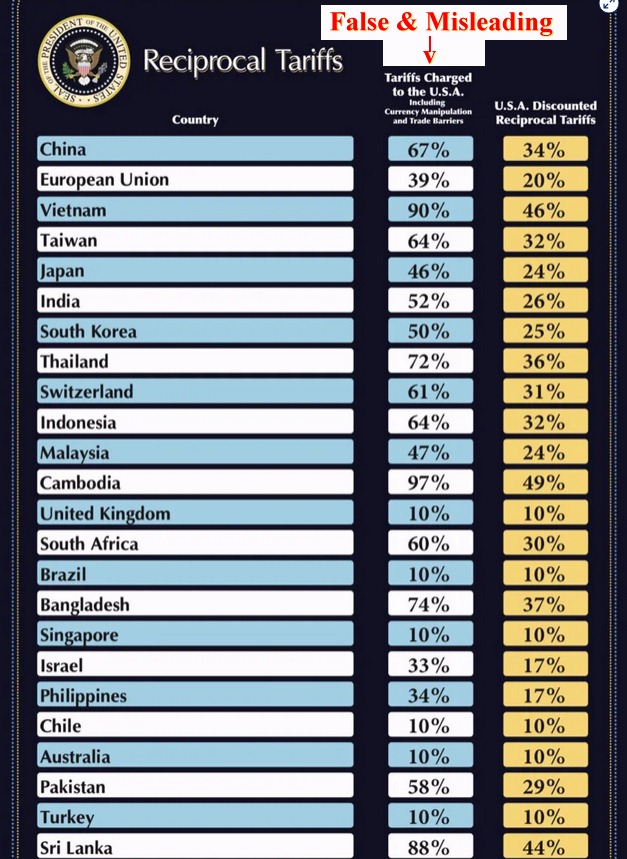
The tariffs announced on what Trump dubbed “Liberation Day” featured a chart titled Tariffs Charged to the U.S.A., purporting to show the crushing rates foreign countries supposedly impose on American goods. But these numbers were completely fabricated — not grounded in trade data or economic principles. Instead, Trump’s team appears to have confused tariffs with trade deficits, using the size of the U.S. trade deficit with each country to create a fictional “tariff rate.”

This fundamental misunderstanding is emblematic of much of Trump’s economic worldview — one that runs counter to decades of established economic theory.

In reality, U.S. trade deficits have long benefited American consumers by allowing access to cheaper foreign goods, while the strength of the dollar fuels domestic spending. The U.S. essentially trades inexpensive paper money for real goods — raw materials, finished products, and even luxury items — while foreign countries often recycle those dollars back into U.S. Treasuries, helping finance America’s debt.

Yet Trump continues to argue that trade deficits equal theft.

Trump’s Trade Narrative: Economic Victimhood

In speeches and social media posts in April 2025, Trump has claimed:

“For too long, corrupt foreign leaders — even from the poorest countries — have slapped massive tariffs on American products while flooding our markets with their goods, often duty-free. It’s been a one-sided scam — they’ve taken our jobs, stolen our industries, and destroyed entire American communities.”

Trump alleges that:

  • Foreign tariffs make U.S. farmers and manufacturers uncompetitive.

  • The U.S. has been the “piggy bank” of the world.

  • New tariffs will “level the playing field” and force “fair deals.”

Supporters call this economic justice. Critics call it economic vandalism.  Wall Street has already rebranded “Liberation Day” as The Big Mistake.

Tariff Theater: Trump’s Economic War on the World — Including Penguins

Lesotho: Targeting One of the World’s Poorest Nations

Among the most striking examples of Trump’s tariff policy is Lesotho — a tiny, landlocked kingdom in southern Africa and one of the poorest nations in the world. The U.S. has imposed a staggering 50% tariff on its exports — the highest tariff applied to any sovereign country.

Lesotho’s economy depends heavily on textiles exported under the African Growth and Opportunity Act (AGOA), and diamond exports to the U.S. are another vital revenue source. In 2024, Lesotho exported about $237 million in goods to the U.S.

The 50% tariff threatens to devastate Lesotho’s fragile economy, potentially wiping out thousands of jobs in a country where nearly half the population already lives below the poverty line.

Tariffs on Penguins: Heard and McDonald Islands

In perhaps the most surreal example of Trump’s trade war, a 10% tariff was imposed on the Heard and McDonald Islands — an uninhabited Australian territory in the sub-Antarctic populated only by penguins and seals.

With no human population and no meaningful exports, the islands became a global punchline. Memes exploded online mocking Trump’s “penguin tariff” as the ultimate symbol of policy absurdity.

Economic Isolation — and Global Backlash

Trump’s tariff strategy has triggered a wave of retaliatory measures, trade disruptions, and diplomatic backlash. Analysts warn that the U.S. is rapidly isolating itself from global supply chains, allies, and markets.

The economic damage has been swift and severe — not just abroad but at home, as higher consumer prices, supply shortages, and market instability ripple through the U.S. economy.

As one critic put it:

“Trump didn’t just pick a trade war — he picked one with the entire planet.”


RESOURCES:

Dumbfoundingly Dumb Tariffs

China Hits Back: 84% Tariff Targets U.S. Farmers First

Protectionism 101: Trump Economics

Capital Preservation During Trumpenomics

bookmark_borderFighting a Mean Bear Market in a Trade War

by Daniel Brouse
April 3, 2025

Today, one of the stock market indices officially entered into bear market territory. A bear market is typically defined as a decline of 20% or more from recent highs in a broad market index, such as the Russell 2,000 Small-cap stocks. This downturn signals a shift in investor sentiment, where pessimism takes hold, and uncertainty about the future of the economy can lead to widespread selling.

Bear markets are often triggered by a combination of factors, including economic slowdowns, tightening monetary policy, rising interest rates, or geopolitical instability. These market conditions can cause investors to lose confidence in the future earnings potential of companies, leading to a sell-off in stocks. During a bear market, investors may be more risk-averse, seeking safer investments like bonds or cash.

While bear markets can be unsettling, they are a normal part of the market cycle, and historically, markets have eventually recovered. However, the duration and severity of a bear market can vary, and it is difficult to predict when the downturn will end.

This bear market is likely to be different from any in the last 100 years, largely due to the unique circumstances surrounding the ongoing trade war and its ripple effects throughout the global economy.

  1. Global Supply Chain Disruptions: Unlike past bear markets, this one is heavily influenced by the disruption of global supply chains caused by tariffs, trade restrictions, and geopolitical tensions. The trade war, particularly between the U.S. and China, has led to higher costs for many goods, impacting not only international trade but also domestic industries. Many companies that rely on cheap imported goods, materials, or components are seeing increased costs, which is affecting profitability and, in turn, stock prices. This is something we’ve rarely seen on such a global scale in previous bear markets.

  2. Tariffs and Inflationary Pressures: The trade war has imposed significant tariffs on goods, especially in industries like technology, automotive, and agriculture. These tariffs can increase the price of consumer goods and production costs, leading to inflationary pressures. While inflation is a typical concern during economic slowdowns, the added complexity of tariffs exacerbates these pressures and could delay or hinder any potential recovery. The impact of tariffs on key industries, such as tech, also adds a new layer of uncertainty to the market.

  3. Longer Recovery Period: In past bear markets, the recovery often came when the economy and investor confidence began to rebound. However, in this case, the ongoing trade war and the potential for further escalations suggest that the recovery might be slower and more prolonged. Trade wars can create lasting disruptions in markets, and tariffs can remain in place for an extended period, creating an environment of uncertainty and volatility that may delay the return to positive growth.

  4. Unprecedented Economic and Political Uncertainty: The combination of economic factors, such as the tariffs imposed under the trade war, with political instability and tensions, makes this bear market distinct. Past bear markets, such as those caused by the 2008 financial crisis, were primarily driven by financial imbalances and market speculation. The current bear market, however, is being heavily influenced by trade policies that have widespread geopolitical implications, adding a layer of complexity that investors have not faced before on such a scale.

  5. Global Impact of Protectionism: The trade war has led to a rise in protectionist policies around the world, which could lead to a reshaping of international trade relationships. Unlike previous bear markets, the trade war could result in long-term shifts in global trade patterns, with countries looking to secure more self-sufficiency or diversify their supply chains away from traditional partners. This can create added volatility as industries adapt to new market dynamics.

In conclusion, while bear markets are a natural part of economic cycles, the ongoing trade war adds unprecedented complexity to the situation. The disruption of global trade, inflationary pressures, and extended uncertainty may make this bear market more unique and prolonged compared to those seen in the past 100 years. The outcome will likely depend on how governments and businesses adapt to this new era of trade tensions, protectionism and most importantly — a trade war.

Trade War!

Over the past 24 hours, a diverse group of world leaders has voiced concerns about the tariff policies and united to isolate the U.S. on the global stage. Countries from around the world, including some of America’s closest allies such as Australia, Canada, Japan, New Zealand, Taiwan, South Korea, and other major U.S. partners, have condemned President Donald Trump’s actions. European Commission President Ursula von der Leyen stated, “The consequences will be dire for millions of people around the world. We are ready to respond.”

The Great Depression vs. The Climate Crisis: Why the Stock Market May Never Recover


Trump’s Sector-Specific Tariffs

Trumpenomics: The Decline of the US

bookmark_borderFinancial Ethics and Legal Controversies: Trump, Musk, and Conflicts of Interest

Financial Disclosure and Conflict of Interest Regulations for U.S. Presidents and Officials

When a U.S. president takes office, they—as well as their cabinet members, high-ranking officials, and anyone with substantial influence in the administration—are generally required to disclose all financial activities. This process is designed to ensure transparency, prevent conflicts of interest, and uphold ethical standards in governance.

Typically, this includes the public release of their tax returns, which provides insight into their financial history, sources of income, and potential conflicts of interest. Additionally, officials are expected to divest from any assets or positions that could create conflicts, either by selling them outright or placing them into a blind trust managed independently to prevent undue influence over policy decisions.

A broad set of federal laws and regulations, including the Ethics in Government Act and various conflict-of-interest statutes, exist to prevent public officials from using their positions for personal financial gain. These laws prohibit actions such as insider trading, self-dealing, and preferential treatment in policymaking or government contracts. Violations can lead to legal consequences, loss of office, or significant reputational damage.

While past presidents have largely adhered to these ethical norms, there have been exceptions and controversies, highlighting the ongoing debate about the adequacy of existing laws and enforcement mechanisms.

Donald Trump’s Lack of Transparency and Authenticity

President Donald Trump’s adherence to financial disclosure and conflict of interest regulations has been a subject of extensive scrutiny and debate.​

Financial Disclosures:

As a candidate and officeholder, President Trump was required to submit financial disclosure reports detailing his assets, income sources, and business interests. While he did file these disclosures, organizations like Citizens for Responsibility and Ethics in Washington (CREW) have raised concerns about the completeness and transparency of these reports. For instance, CREW obtained and analyzed Trump’s 2023 financial disclosures, highlighting potential gaps and ambiguities.

Conflicts of Interest:

Unlike his predecessors, President Trump chose not to divest from his extensive business holdings upon assuming office. This decision led to numerous allegations of conflicts of interest. CREW documented over 3,400 instances where the line between the Trump Organization and the Trump administration appeared blurred, raising questions about whether policy decisions were influenced by personal financial interests.

Specific concerns include the promotion of personal business ventures and the intertwining of official duties with private interests. For example, events and initiatives that involved both governmental roles and private business promotions have been criticized as potential violations of ethical standards. ​

Legal and Ethical Considerations:

It’s important to note that the President is exempt from certain federal conflict of interest laws that apply to other executive branch employees. However, ethical norms and the Constitution’s Emoluments Clauses are intended to prevent undue influence and ensure that presidential decisions are made in the public interest, free from personal financial considerations. Critics argue that President Trump’s actions challenged these principles, leading to legal challenges and calls for greater accountability.

Concerns have been raised regarding potential conflicts of interest and ethical standards involving President Donald Trump, his family, and Elon Musk. Key issues include:​

Tesla Event on the White House Lawn

On April 1, 2025, Elon Musk hosted an event on the White House lawn alongside President Trump to promote Tesla vehicles. This event drew criticism for potentially using public office for private gain, as it appeared to leverage the presidential platform to benefit Musk’s private enterprise. The event also sparked global protests, with demonstrators targeting Tesla showrooms to express opposition to Musk’s partnership with President Trump. ​

Trump Organization’s Ventures in Vietnam

The Trump Organization announced plans for multi-billion-dollar investments in Vietnam, including golf courses, hotels, and real estate projects. The first project, valued at $1.5 billion near Hanoi, is set to break ground in May 2025. These developments proceed amid potential U.S. tariffs on Vietnam due to trade imbalances. Critics argue that such foreign ventures by a sitting president’s business could lead to conflicts of interest, especially when intertwined with international trade policies. ​

Starlink Contracts and Tariff Relief

Elon Musk’s Starlink secured contracts to provide satellite internet services in Vietnam, coinciding with Vietnam’s efforts to mitigate U.S. tariffs by increasing imports from the U.S. This arrangement has raised questions about potential quid pro quo dealings and the ethical implications of a government official’s private company benefiting from international agreements influenced by U.S. trade policies. ​

Elon Musk’s Role in Government and Business Interests

Elon Musk’s appointment as co-lead of the Department of Government Efficiency (DOGE) under President Trump has been scrutinized due to potential conflicts of interest. As a “special government employee,” Musk is subject to less stringent conflict-of-interest rules, allowing him to maintain leadership roles in his private companies while influencing government operations. This dual role has prompted calls for investigations into whether Musk has used his government position to benefit his businesses, particularly concerning the cancellation of a $2.4 billion FAA contract with Verizon in favor of Starlink.

Legal Actions and Investigations

In March 2025, a U.S. judge ruled that Elon Musk must face a fraud lawsuit alleging he delayed disclosing his significant stake in Twitter (now X), potentially misleading investors and violating securities laws. Additionally, leading Democrats have called for investigations into Musk’s activities, focusing on his influence over federal agencies and the financial benefits his companies have received from government contracts. ​

These instances highlight ongoing concerns about the intersection of public duties and private interests among high-ranking officials and their associates, emphasizing the need for stringent ethical standards and transparency in government operations.

Senators Launch Investigation into Trump’s Crypto Corporation, Urge SEC to Preserve Documents

​Senator Elizabeth Warren, along with Representative Maxine Waters, has requested that the Securities and Exchange Commission (SEC) preserve records related to President Donald Trump’s cryptocurrency venture, World Liberty Financial. They are investigating potential conflicts of interest stemming from the Trump family’s financial ties to this crypto business. ​

In a separate initiative, Senator Warren, joined by four other Democratic senators, expressed concerns about conflicts of interest regarding World Liberty Financial’s plans to issue a stablecoin named USD1. They sent a letter to U.S. financial regulators seeking clarification on how they intend to oversee this venture.

Additionally, Senator Warren has called on David Sacks, President Trump’s Special Advisor for AI and Crypto, to publicly disclose his financial records. She aims to address potential conflicts of interest related to the administration’s cryptocurrency policies.

These actions reflect ongoing concerns among Democratic lawmakers about the intersection of President Trump’s official duties and his family’s business interests in the cryptocurrency sector.

TRUMP’S HISTORY OF CRIMINALITY AND UNETHICAL BEHAVIOR

President Donald Trump and his associated entities have been involved in numerous legal proceedings, encompassing civil and criminal cases, impeachments, bankruptcies, defamation suits, sexual assault allegations, and controversies surrounding both non-profit and for-profit ventures. Below is an overview:

Criminal Indictments and Convictions:

  • 2023-2024 Criminal Cases: Between 2023 and 2024, Trump faced four criminal indictments on charges including fraud, election subversion, and obstruction. These marked the first instances of a former U.S. president facing criminal charges.
  • 2025 Conviction: In early 2025, Trump was convicted on 34 felony counts related to concealing a “hush money” transaction intended to hide a sex scandal from voters. Despite the conviction, he was sentenced to no penalty, making him the first individual convicted of a felony to assume the office of president.

Civil Lawsuits and Investigations:

  • New York Civil Fraud Lawsuit: In September 2022, New York Attorney General Letitia James filed a civil lawsuit against Trump, his three eldest children, and the Trump Organization, alleging over 200 instances of fraud and misrepresentation. The suit sought $250 million in penalties and aimed to restrict future business activities in New York. In February 2024, a judge ordered Trump to pay a penalty exceeding $450 million and barred him from leading any New York company for three years.

Defamation and Sexual Assault Cases:

  • E. Jean Carroll Case: In 2019, writer E. Jean Carroll accused Trump of raping her in a department store dressing room in the 1990s. Trump denied the allegation, leading Carroll to file a defamation lawsuit against him. In May 2023, a jury found Trump liable for sexual abuse and defamation, awarding Carroll $5 million in damages. Subsequent appeals by Trump were rejected, and in a later ruling, he was ordered to pay an additional $83.3 million in damages.
  • Other Allegations: Multiple women have accused Trump of sexual misconduct over the years. While he has denied these allegations, they have led to various legal challenges and public scrutiny.

Impeachments:

  • First Impeachment (2019): The House of Representatives impeached Trump on charges of abuse of power and obstruction of Congress related to his dealings with Ukraine. The Senate acquitted him in early 2020.
  • Second Impeachment (2021): Following the January 6 Capitol riot, Trump was impeached again, this time for incitement of insurrection. The Senate acquitted him in February 2021.

Bankruptcies:

While Donald Trump has never filed for personal bankruptcy, several of his business ventures have — repeatedly. The exact number of corporate bankruptcies tied to Trump is difficult to pin down, largely because of how they are counted. For example, Trump’s casino empire — operating under Donald J. Trump (DJT) Hotels & Casinos — filed for bankruptcy four separate times, though some analysts group those together as a single event.

Most sources agree that Trump-related companies have filed for bankruptcy at least six times. However, when counting repeat filings by the same entities, some estimates place the total closer to 12 to 14.

In every case, a familiar pattern emerges: Trump personally profited while shareholders, lenders, and employees absorbed the losses. His playbook centers on aggressive debt, questionable financial management, and systematically transferring risk away from himself and onto investors and creditors.

Now, he’s applying the same strategy on a global scale.

Legal Issues Involving Non-Profit and For-Profit Entities:

  • Trump University: Established in 2005, Trump University offered real estate training programs. It faced multiple lawsuits alleging fraudulent practices, including a significant case in which plaintiffs accused the institution of misleading students about the quality of education provided. In 2018, a federal judge finalized a $25 million settlement to resolve these lawsuits, allowing former students to receive compensation for their financial losses.
  • Donald J. Trump Foundation: Founded in 1988, the Trump Foundation came under scrutiny for alleged misuse of funds, including accusations of self-dealing and advancing Trump’s political interests. In 2019, the New York Supreme Court ordered Trump to pay $2 million in damages for improperly using charitable assets to intervene in the 2016 presidential primaries and further his own political interests.

​Jail

Both Allen Weisselberg, the former Chief Financial Officer (CFO) of the Trump Organization, and Michael Cohen, President Donald Trump’s former personal attorney and “fixer,” were convicted and served prison sentences due to their involvement in financial crimes related to their roles within the Trump Organization.​

Allen Weisselberg:

Weisselberg was implicated in a tax fraud scheme involving the Trump Organization. He pleaded guilty to 15 felony charges, including grand larceny, criminal tax fraud, and falsifying business records. These charges stemmed from his failure to pay taxes on $1.7 million in indirect compensation, which included benefits such as a rent-free luxury apartment, private school tuition for his grandchildren, and leased Mercedes-Benz vehicles. In January 2023, Weisselberg was sentenced to five months in jail and began serving his sentence at Rikers Island.

Michael Cohen:

Cohen pleaded guilty to multiple charges, including tax evasion, bank fraud, and campaign finance violations. The campaign finance violations were particularly notable, as they involved orchestrating hush money payments to women alleging affairs with Donald Trump during the 2016 presidential campaign. These payments were intended to influence the election by suppressing potentially damaging information. In December 2018, Cohen was sentenced to three years in federal prison.

Profit Over Patriotism: How Trump’s Second Term Blurred the Line Between Presidency and Personal Gain
Donald Trump’s second term in office marked a sharp escalation in the merger of political power and personal profit. From crypto schemes and cell service ventures to corporate-sponsored parades and questionable foreign deals, Trump turned the presidency into a revenue-generating enterprise, prioritizing his brand and wallet over democratic norms and military integrity.

Trump’s Crimes, Illegal Activities, and Immorality: A Record of Corruption

Trumpenomics: The Decline of the US

bookmark_borderTrump’s Sector-Specific Tariffs

March 27, 2025

Since January 2025, the United States has implemented several sector-specific tariffs in an effort to protect domestic industries. These tariffs are in addition to any existing country-specific tariffs and represent a continuation of protectionist trade policies. However, historical data suggests that such high sector-specific tariffs often fail to achieve their intended goals. Instead of revitalizing domestic production, they tend to result in a net job loss across affected industries due to increased input costs, supply chain disruptions, and retaliatory measures from trade partners. In many cases, the cost to consumers and businesses far outweighs any economic benefits, with each job “saved” coming at an exorbitant price to taxpayers and the broader economy.

  • Steel and Aluminum: Effective March 12, 2025, a 25% tariff was imposed on all steel and aluminum imports, eliminating previous country exemptions. ​

  • Automobiles and Auto Parts: Announced on March 26, 2025, a 25% tariff on all imported cars and car parts will take effect on April 2, 2025. This measure aims to bolster domestic manufacturing but raises concerns about increased consumer prices and potential disruptions in global supply chains. ​

Additionally, the administration has proposed tariffs on other sectors:​

  • Pharmaceuticals: Plans to impose a 25% tariff on imported pharmaceuticals have been signaled, though specific details and implementation dates are yet to be announced. ​

  • Lumber: A Section 232 investigation into timber and lumber imports has been initiated, potentially leading to future tariffs. ​

  • Copper: The administration has threatened to impose a tariff of up to 25% on all copper imports, aiming to increase U.S. production.

These measures reflect the administration’s strategy to protect domestic industries, though they have sparked concerns about escalating trade tensions and potential retaliatory actions from trading partners.

Trumpenomics: The Decline of the US

bookmark_borderClimate Change and Policy Shifts Threaten U.S. Housing Market Stability

by Daniel Brouse
February 20, 2025

Projected Devaluation of U.S. Homes Due to Climate Change

Recent analyses indicate that climate change poses a significant threat to the U.S. housing market. Over the next five years, it’s projected that at least 20% of U.S. homes will experience devaluation due to climate-related impacts. In certain vulnerable markets, property values could decline by up to 30% within this period. By 2055, approximately 84% of all U.S. homes may suffer devaluation, resulting in an estimated $1.47 trillion in losses. This timeline aligns with the typical 30-year mortgage term, underscoring the long-term financial risks for homeowners and lenders.

Insurance Market as an Indicator of Real Estate Vulnerability

The availability and cost of homeowners insurance are critical factors influencing mortgage approvals and, consequently, home valuations. Insurance is often considered the ‘canary in the coal mine’ for real estate, signaling emerging risks associated with climate change. High-vulnerability regions, particularly coastal areas in states like Florida, Louisiana, and California, are confronting a compounded crisis. The convergence of escalating insurance premiums, frequent natural disasters, and declining property values is placing immense strain on both homeowners and insurance systems. In Florida, for instance, the state-owned Citizens Property Insurance Corporation has become the largest insurer, reflecting the significant withdrawal of private companies from the market due to unmanageable risks.

Historical Context and Accelerating Climate Change Impacts

Traditionally, real estate has been regarded as a stable and appreciating investment, often outpacing general inflation rates. Since 1963, while inflation has risen by 896%, housing prices have surged by more than 2,350%. However, climate change is disrupting this paradigm. Scientific observations have documented a non-linear acceleration of climate change impacts, with the doubling time of these effects shrinking from approximately 100 years to just a few years. This rapid acceleration suggests that the adverse consequences of climate change on real estate are intensifying at an unprecedented rate.

Policy Changes and Their Potential Exacerbation of Climate Risks

Recent policy shifts under the Trump administration may further exacerbate these challenges. The administration has rescinded numerous environmental regulations and executive orders aimed at mitigating climate change. Notably, President Trump signed 26 executive orders on January 20, 2025, which included the repeal of approximately 80 prior executive actions focused on energy, environmental, and natural resource agendas. These actions reflect a strategic shift towards promoting domestic fossil energy production and reducing regulatory oversight, potentially accelerating environmental degradation.

Additionally, the administration has proposed reforms to key entities in the U.S. housing finance system, specifically Fannie Mae, Freddie Mac, and the Federal Housing Administration (FHA). The proposed privatization of Fannie Mae and Freddie Mac could lead to increased mortgage rates, adversely affecting housing affordability. Furthermore, the potential elimination of the Consumer Financial Protection Bureau (CFPB) may reduce oversight in the housing market, increasing the risk of predatory practices. These reforms could introduce significant uncertainty into the housing market, influencing home prices and overall economic stability.

The Trump administration has also announced plans to dismantle the Federal Emergency Management Agency (FEMA) and rescind all updates to floodplain maps. Homeland Security Secretary Kristi Noem supports reallocating FEMA’s responsibilities to state and local authorities, citing operational inefficiencies and flawed responses to recent disasters.  President Trump has signed an executive order revoking the Federal Flood Risk Management Standard, effectively halting enforcement of updated floodplain maps.  Critics argue that these actions could leave states unprepared for natural disasters and increase vulnerability to flooding leaving homeowners and lenders underwater.

Conclusion

The intersection of accelerating climate change impacts and recent policy shifts presents a formidable challenge to the U.S. housing market. Homeowners, investors, and policymakers must recognize and address these converging threats to safeguard the stability and value of real estate assets in the face of an evolving environmental and regulatory landscape.

Sources:

The Human Induced Climate Change Experiment

bookmark_borderMass Federal Layoffs Jeopardize Essential Services and National Security

The recent mass layoffs of tens of thousands of federal employees, including specialized personnel in critical sectors such as nuclear safety, are poised to have significant economic and security repercussions.

Disruption of Essential Services

The termination of specialized personnel can lead to interruptions in critical public services. For instance, the firing of 3,400 U.S. Forest Service workers has raised concerns about the maintenance and safety of national parks, with potential hazards including uncleaned facilities and unattended emergencies.

In an even more alarming development, the dismissal of over 300 employees from the National Nuclear Security Administration (NNSA) has raised significant national security concerns. The NNSA is responsible for overseeing the United States’ nuclear weapons stockpile, and the abrupt termination of its staff has led to fears about the safety and reliability of the nation’s nuclear arsenal. Compounding the issue, efforts to reinstate these critical employees have been hampered by difficulties in reestablishing contact, as their access to official communication channels was revoked upon termination.

Privatization and Automation

The reduction in the federal workforce is expected to pave the way for increased privatization and automation of government services. Private companies, including those owned by influential figures like Elon Musk, may benefit from lucrative contracts to fill the void left by public sector reductions. This shift could lead to concerns about conflicts of interest and the erosion of public accountability.

Economic and Social Consequences

The influx of displaced federal employees into the private job market may increase competition for positions, potentially driving down wages and leading to higher unemployment rates. Additionally, former federal workers facing prolonged unemployment might rely more heavily on public assistance programs, further straining state and local resources.

Minimal Impact on Deficit Reduction

Despite the scale of the layoffs, the anticipated effect on reducing the federal deficit appears limited. The government allocates approximately $270 billion annually for civilian federal employee compensation, and even substantial workforce reductions would not offset a deficit exceeding $1 trillion.

In summary, the mass dismissal of specialized government employees, including those in nuclear safety roles, is likely to disrupt essential services, prompt a shift toward privatization, and exert adverse effects on the broader economy and national security, all while achieving minimal progress in deficit reduction.

bookmark_borderFederal Funding Cuts and the Emerging Republican Backlash

Federal Funding Cuts: Disproportionate Impacts on Red States and Emerging Republican Backlash

Red states, which often receive more in federal funding than they contribute in taxes, are disproportionately impacted by federal fund reductions. This dependency means that cuts in federal funding can significantly affect their budgets and economies.

Federal Funding Dependency in Red States:

  • Higher Federal Aid Reliance: Many red states rely heavily on federal aid to support various programs and services. For instance, in 2021, Montana received 31.8% of its budget from federal funding, while Kentucky received 30.1%.

  • Fiscal Imbalance: On average, red states receive $1.24 for every dollar they contribute to the federal government, indicating a net gain from federal allocations.

Impact of Federal Funding Reductions:

  • Budgetary Strain: Reductions in federal funds can lead to significant budget shortfalls in these states, affecting essential services such as healthcare, education, and infrastructure. For example, proposed cuts to Medicaid expansion funding could result in a 31% decline in federal spending for expansion states, disproportionately affecting states with higher reliance on these funds.

  • Economic Challenges: Federal funding cuts can shift financial burdens onto state governments, many of which already face budget constraints. This shift can lead to reduced public services and increased financial pressure on residents.

Cracks in the Foundation

Recent federal funding cuts have sparked significant backlash from Republican constituencies, particularly in rural farming communities and states heavily reliant on research funding.

1) Rural Farmers Protest the Elimination of USAID’s “Food for Peace” Program

The dismantling of the U.S. Agency for International Development (USAID) has led to the abrupt termination of the “Food for Peace” program, a critical initiative that purchased approximately $2 billion annually in agricultural commodities such as rice, wheat, lentils, and peas from American farmers. This program not only provided food aid to countries in need but also served as a vital market for U.S. agricultural producers.

The sudden cessation of “Food for Peace” has left many rural farmers without a significant buyer, exacerbating existing financial strains caused by low commodity prices and trade uncertainties. In response, farmers have organized protests, voicing their concerns over the loss of this essential program and urging lawmakers to intervene. Senator Jerry Moran of Kansas has introduced legislative proposals to transfer the responsibilities of “Food for Peace” from the defunct USAID to the Department of Agriculture, aiming to preserve the program and protect farmers’ interests.

2) Alabama’s Backlash Due to NIH Funding Cuts Impacting the University of Alabama

In Alabama, the National Institutes of Health (NIH) announced significant reductions in funding, particularly targeting indirect cost reimbursements to research institutions. The University of Alabama at Birmingham (UAB), a leading biomedical research hub and one of the state’s largest employers, relies heavily on NIH grants, with an indirect cost rate previously set at 48.5%.

The proposed cuts, capping indirect cost rates at 15%, threatened to slash UAB’s research funding by hundreds of millions of dollars, jeopardizing ongoing projects and employment. This potential financial blow prompted widespread concern among university officials, researchers, and local communities. In response, a coalition of 22 states filed a lawsuit challenging the legality of the NIH’s funding cuts. A federal judge temporarily blocked the changes, acknowledging the potential “devastating” impact on research institutions. The situation has also led to public demonstrations, including billboards in Birmingham criticizing the funding cuts and urging political leaders to take action to protect the state’s vital research infrastructure.

These instances highlight the unintended consequences of federal funding reductions on Republican-leaning states, prompting backlash from communities that heavily depend on such programs for economic stability and growth.

bookmark_borderReal Estate in the Face of Economic and Environmental Challenges

Real Estate in the Face of Economic and Environmental Challenges: Inflation, Currency Devaluation, and Climate Change Impacts

by Daniel Brouse
February 16, 2025

Real estate has traditionally been viewed as a hedge against inflation and currency devaluation, often maintaining or increasing in value during such periods. However, the escalating impacts of climate change and shifting insurance landscapes are introducing new risks that could lead to significant losses in property values, particularly in high-risk areas.

Inflation:

  • Asset Appreciation: Over time, real estate values tend to rise faster than the general inflation rate. Since 1963, while inflation has increased by 896%, housing prices have surged by more than 2,350%.

  • Rental Income Growth: Inflation often leads to higher rents, boosting cash flow for property owners. This increase in rental income can offset the rising costs associated with inflation.

Currency Devaluation:

  • Increased Foreign Investment: A weaker dollar makes U.S. real estate more affordable for foreign investors, potentially driving up demand and property values.

  • Inflationary Pressures: Currency devaluation can lead to imported inflation, raising the cost of goods and services, which may, in turn, push real estate values higher as replacement costs increase.

Climate Change Impacts
The impact of human-induced climate change is becoming an increasingly critical factor in the residential real estate market. The rising frequency and severity of natural disasters, such as wildfires and floods, have led to heightened insurance premiums and decreased property values in high-risk areas. Recent studies project that climate change could erase approximately $1.47 trillion from U.S. home values over the next 10-30 years.

Moreover, the insurance landscape is shifting dramatically. As climate-related risks escalate, insurance companies are reassessing their coverage policies. In California, for instance, more than 80% of new properties built between 2020 and 2022 are located in high fire-risk areas, leading insurers to reduce coverage offerings in the state. This trend raises concerns that a significant portion of U.S. real estate could become uninsurable in the coming decades, posing substantial challenges for homeowners and investors.

The financial implications extend beyond immediate property devaluation. As insurance costs rise and coverage becomes scarce, homeowners may face increased mortgage defaults, and municipalities could experience shrinking tax bases. These factors contribute to a complex and evolving real estate landscape, where climate change plays a pivotal role in shaping future property values and market stability.

Conclusion
The interplay of fiscal policies and the accelerating climate crisis is poised to significantly impact real estate investments. Certain regions may experience market destabilization or even collapse due to increased climate-related risks, while others could see heightened demand and escalating prices. Investors should carefully assess these evolving factors when making real estate decisions.