bookmark_borderFUD (Fear, Uncertainty and Doubt)

By Daniel Brouse
For Widgette / Private Business

Has America turned into a giant Tupperware Party?

The field of consumer behavior is a social science that studies the psychology of consumerism. There are five basic psychological tactics to marketing:
* emotional and psychological appeals
* optimize credibility by highlighting your flaws
* re-position your competition
* promote exclusivity
* introduce fear, uncertainty, and doubt (FUD)

Fear, Uncertainty, And Doubt (FUD)

The "Daisy Ad" Video
The “Daisy Ad” Video (Click for Video and Audio)

Fear is very powerful in marketing. An example of fear advertising happened when Lyndon Johnson ran against Barry Goldwater in 1964. Johnson wanted to stoke public fear that Goldwater would cause a nuclear war. The “Daisy ad” or “Peace, Little Girl” ran only one time. It showed a little girl picking petals from a daisy, followed by a nuclear explosion and Johnson ominously stating, “These are the stakes. To make a world in which all of God’s children can live, or to go into the dark.” Johnson won, carried 44 states, and took 61% of the vote in a landslide victory.

One of the first companies to use FUD as its business model is Tupperware. They pioneered the direct marketing strategy made famous by the Tupperware party. “A Tupperware party is run by a Tupperware ‘consultant’ for a host who invites friends and neighbors into his or her home to see the product line. Tupperware hosts are rewarded with free products based on the level of sales made at their party. Parties also take place in workplaces, schools, and other community groups.”

When friends and neighbors attend a Tupperware party, the host introduces fear, uncertainty, and doubt to the participants. The consumer is made to worry what their friends and neighbors will think of them if they don’t make a purchase. There is fear of being publicly humiliated and doubt whether you will be un-friended.

The most disturbing use of FUD is Donald J. Trump. The Donald has used every trick in the book when it comes to using fear, uncertainty and doubt to motivate people. The current atmosphere makes one wonder — “Has America turned into a giant Tupperware party?”

bookmark_borderTrump Security Breach

For months, the security community has known that both the DNC and GOP were hacked. The DNC hack was used to undermine Hillary. The GOP / Trump hacks were meant for blackmailing Trump. No surprises here.

U.S. security agencies were aware of Donald Trump’s security breaches since last summer. The information was in the public domain by August of 2016. The Donald was given a copy of the report long before the story appeared in the New York Times.

In a hearing before the Senate Select Committee on Intelligence, FBI director James Comey said attackers penetrated GOP organizations and stole Republican National Committee emails. “There was evidence that there was hacking directed at state-level organizations and the RNC…. Information was harvested from there, but it was old stuff. None of that was released”, Comey said.

Back in August of 2016 digital security firm ThreatConnect said, “We believe DC Leaks is another Russian-backed influence outlet.” DC Leaks had released 300 stolen emails from Republican targets including the staffs of Sen. John McCain, Lindsey Graham, Michele Bachmann and party officials in several states.

In October of 2016, Richard Andres, a cybersecurity and national security strategy expert with the U.S. military’s National War College said, “What we’ve been seeing here in the U.S. so far is mild by comparison to what they do in their own backyard. If they continue to escalate, we should expect to increasingly see false flag operations designed to implicate various political actors, falsified leaks, blackmail, false calls to their opponents’ political supporters and more

The Russians have gained accessed to the DNC and GOP mainly through “spearphishing.” Spearphishing is when a hacker gets someone to click on an email, attachment, link or photo. Malware is then installed on the victim’s computer that allows hackers to exploit the network. “Essentially people are opening their front door and letting them in,” said Toni Gidwani, a former Defense Intelligence Agency official whose ThreatConnect cybersecurity firm has investigated many of the hacks. “It’s something they keep coming back to because it works.”

It is not a matter of politics. It is a matter of national security. All sides need people to go to jail over the security breaches — Republicans, Democrats and Russians.

On January 11, Donald Trump tried to skirt the issue during a press conference and said he didn’t have any business in Russia. These statements were very misleading, if not an out-an-out lie. Donald Trump has substantial investment from Russians for businesses in other countries. After Trump went bankrupt 6 times, he was unable to readily borrow money from any reputable institution. Instead, he took money from Russian oligarchs and Russian mobs.

In 2008, Donald Trump Jr. attended a real estate conference and stated, “Russians make up a pretty disproportionate cross-section of a lot of our assets. We see a lot of money pouring in from Russia.”

Bayrock is a Russian backed business that has been implicated in money laundering. The Financial Times reported, “The Republican presidential nominee and Bayrock were both based in Trump Tower and they joined forces to pursue deals around the world — from New York, Florida, Arizona and Colorado in the US to Turkey, Poland, Russia and Ukraine. Their best-known collaboration — Trump SoHo, a 46-storey hotel-condominium completed in 2010 — was featured in Mr Trump’s NBC television show The Apprentice.”

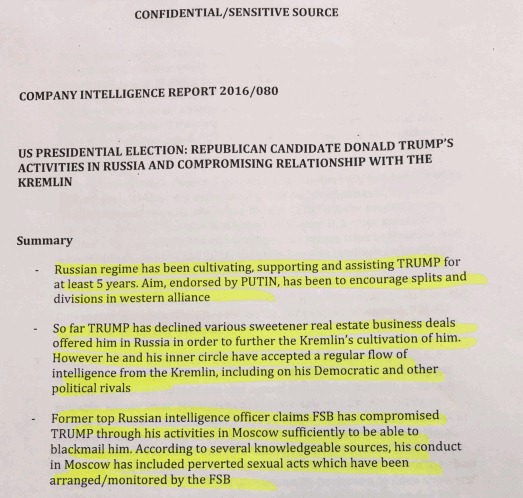
THE REPORT:
Trump Intelligence Allegations

Trump Intelligence Allegations

MORE

Russia Attempts to Hack Electric Grid
Malware associated with a Russian hacking operation, Grizzly Steppe, was found on a Burlington Electric computer. It appears as though Russia was trying to access the power grid; however, the infected computer was not connected to the network. “Vermonters and all Americans should be both alarmed and outraged that one of […]

Russia And Cybersecurity
Cozy Bear and Fancy Bear are two hacking organizations from Russia. Cozy Bear (classified as advanced persistent threat APT29) are believed to be associated with Russian intelligence. Fancy Bear (also known as APT28, Pawn Storm, Sofacy Group, Sednit and STRONTIUM) is a cyber espionage group believed to be sponsored by the […]

bookmark_borderU.S. Security-clearances Hacked

by Daniel Brouse for Membrane Domain Cybersecurity

In 2014 and 2015, there were two major breaches of U.S. government databases holding personnel records and security-clearance files of at least 22.1 million people, including Social Security numbers and some fingerprints, of not only federal employees and contractors but their families and friends.

U.S. officials have privately said the hacks were traced to the Chinese government.

“It is a very big deal from a national security perspective and from a counterintelligence perspective,” FBI Director James B. Comey said. “It’s a treasure trove of information about everybody who has worked for, tried to work for, or works for the United States government.”

The “new number is staggering,” said William R. Dougan, president of the National Federation of Federal Employees. “It is not yet clear how OPM can handle this massive increase, when they were already struggling with the initial 4.2 million. Now, not only do federal employees have to worry about their own personal information being exposed – but they must also worry about their spouse and children having their information compromised.”

“If you have my SF 86, you know every place I’ve lived since I was 18, contact people at those addresses, neighbors at those addresses, all of my family, every place I’ve traveled outside the United States,” Comey said. “Just imagine if you were a foreign intelligence service and you had that data.”

bookmark_borderUS Bans North Ocean Oil Exploration

United States-Canada Joint Arctic Leaders’ Statement
THE WHITE HOUSE
Office of the Press Secretary

In March, President Obama and Prime Minister Trudeau announced a new partnership to embrace opportunities and confront challenges in the changing Arctic, with Indigenous and Northern partnerships, and responsible, science-based leadership. Over the past year, both countries have engaged a range of partners and stakeholders, including Indigenous peoples and Northern communities, state, provincial and territorial governments, nongovernmental organizations and businesses. Those consulted have expressed a strong desire for real and long-term opportunities to build strong families, communities, and robust economies. Today, President Obama and Prime Minister Trudeau are proud to launch actions ensuring a strong, sustainable and viable Arctic economy and ecosystem, with low-impact shipping, science based management of marine resources, and free from the future risks of offshore oil and gas activity. Together, these actions set the stage for deeper partnerships with other Arctic nations, including through the Arctic Council.

Science-based approach to oil and gas:

In March, the United States and Canada committed that commercial activities will occur only if the highest safety and environmental standards are met, and if they are consistent with national and global climate and environmental goals. Today – due to the important, irreplaceable values of its Arctic waters for Indigenous, Alaska Native and local communities’ subsistence and cultures, wildlife and wildlife habitat, and scientific research; the vulnerability of these ecosystems to an oil spill; and the unique logistical, operational, safety, and scientific challenges and risks of oil extraction and spill response in Arctic waters – the United States is designating the vast majority of U.S. waters in the Chukchi and Beaufort Seas as indefinitely off limits to offshore oil and gas leasing, and Canada will designate all Arctic Canadian waters as indefinitely off limits to future offshore Arctic oil and gas licensing, to be reviewed every five years through a climate and marine science-based life-cycle assessment.[i]

Supporting strong Arctic communities:

In March, both countries committed to defining new approaches and exchanging best practices to strengthen the resilience of Arctic communities and continuing to support the well-being of Arctic residents, in particular respecting the rights and territory of Indigenous peoples.

Recently, in direct response to requests from Alaska Native communities, President Obama created the Northern Bering Sea Climate Resilience Area protecting the cultural and subsistence resources of over 80 tribes as well as one of the largest seasonal migrations of marine mammals in the world of bowhead and beluga whales, walrus, ice seals, and sea birds. The United States also launched an interagency Economic Development Assessment Team in the Nome region of Alaska to identify future investment opportunities, with other regions to follow. In addition, the Arctic Funders Collaborative (AFC), a group of 11 U.S., Canadian, and international philanthropic foundations, announced the coordination and mobilization of an estimated $27 million in resources for programs across the Arctic over the next three years.

Today, for its part, Canada is committing to co-develop a new Arctic Policy Framework, with Northerners, Territorial and Provincial governments, and First Nations, Inuit, and Métis People that will replace Canada’s Northern Strategy. The Framework will include priority areas identified by the Minister of Indigenous and Northern Affairs’ Special Representative, such as education, infrastructure, and economic development. The Framework will include an Inuit-specific component, created in partnership with Inuit, as Inuit Nunangat comprises over a third of Canada’s land mass and over half of Canada’s coast line, and as Inuit modern treaties govern this jurisdictional space. In parallel, Canada is reducing the reliance of Northern communities on diesel, by deploying energy efficiency and renewable power. Canada will also, with Indigenous and Northern partners, explore how to support and protect the future of the Arctic Ocean’s “last ice area” where summer ice remains each year.

Low impact shipping corridors:

In March, the United States and Canada committed to working together to establish consistent policies for ships operating in the region. Today, both countries are launching the first processes ever to identify sustainable shipping lanes throughout their connected Arctic waters, in collaboration with Northern and Indigenous partners. The U.S. Coast Guard is launching a Port Access Route Study (PARS) in the Beaufort and Chukchi Seas.[ii] Results from this analysis may be used to establish vessel routing measures including traffic separation schemes, recommended routes, Areas To Be Avoided, or other instruments such as fairways where no structures may be erected. The Canadian Coast Guard and Transport Canada is implementing Northern Marine Transportation Corridors, determining what infrastructure and navigational and emergency response services are needed. Canada is also launching a new program to support training curriculum for Northerners, particularly Indigenous peoples, to join the marine field, as well as programming to support marine infrastructure and safety equipment for communities.

In addition, the U.S. Coast Guard, in consultation with industry, Indigenous communities, and the State of Alaska, has begun a strategy to phase down the use of Heavy Fuel Oil (HFO) in the Arctic. The Canadian Coast Guard is conducting similar outreach and consultations to develop proposals to phase down the use of HFO in 2017. The United States and Canada will each, or jointly, propose a plan for consideration at the International Maritime Organization’s spring 2017 meeting.

Science-based management of Arctic fisheries:

In March, the United States and Canada called for a binding international agreement to prevent the opening of unregulated fisheries in the Central Arctic Ocean and to build on a precautionary, science-based approach to commercial fishing that both countries have put in place in their Arctic waters. Today, the United States commits to supporting and strengthening existing commercial fishing closures in the Beaufort and Chukchi Seas, and to conducting scientific research to improve our understanding of the Arctic. Canada commits to working with Northern and Indigenous communities to build world-leading and abundant Arctic fisheries – based on science – that firstly benefit Northern communities. Together, the United States’ and Canada’s actions will create the largest contiguous area of well-regulated fisheries in the world.

Both countries reaffirm their commitment to a legally binding agreement to prevent unregulated commercial fisheries in the Arctic High Seas until an internationally recognized Regional Fishery Management Organization is in place to provide effective management. Both countries are working towards such an agreement in the coming months.

[i] Taking into account the respective obligations of the United States and Canada under international law to protect and preserve the marine environment, these steps also support the goals of various international frameworks and commitments concerning pollution, including those reflected in the 1990 International Convention on Oil Pollution Preparedness, Response, and Cooperation, the 2013 Agreement on Cooperation on Marine Oil Pollution Preparedness and Response in the Arctic, and the U.S.-Canada Joint Marine Pollution Contingency Plan. Furthermore, with respect to areas of the Beaufort Sea where the U.S.-Canada maritime boundary has not yet been agreed, these practical arrangements are without prejudice to either side’s position and demonstrate self-restraint, taking into account the principle of making every effort not to jeopardize or hamper reaching a final maritime boundary agreement.

[ii] In conducting this study, and consistent with existing authorities, the Coast Guard will consider traditional knowledge from local communities, the effects of shipping and vessel pollution on the marine environment, marine mammal migratory pathways and other biologically important areas, subsistence whaling, hunting, and fishing, and the needs of maritime safety and commerce.

bookmark_borderTrump to Trash the Environment

United States of America — The world watches in dismay as Donald Trump appoints Myron Ebell, a professional climate change denier, to head his EPA transition team. During his campaign, Trump said that climate change is a hoax. Slate magazine reports, “Trump had tweeted in 2012 that global warming “was created by and for the Chinese in order to make U.S. manufacturing non-competitive.” He has also has previously called it a ‘hoax.'”

During his campaign, Trump also threaten to pull out of the Paris Climate Pact (which the US has already signed.) The Paris Accord is meant to prevent the world from reaching “the point of no return” — limit the temperature increase to 1.5 degrees Celsius. 2016 is already forecast to be the hottest year on record with the global average temperature 1.75°F above the 20th century average of 57.4°F.

Diplomats from around the world have voiced their concern. “A carbon tariff against the United States is an option for us,” Rodolfo Lacy Tamayo, Mexico’s under secretary for environmental policy and planning, said in a New York Times interview. He added, “We will apply any kind of policy necessary to defend the quality of life for our people, to protect our environment and to protect our industries.”

“I renew my offer to President-elect Trump to come to Fiji and see the effects of climate change,” said the island nation’s prime minister, Frank Bainimarama.

Now, Trump has appointed a professional climate change denier to dismantle the EPA (Environmental Protection Agency). Activists at the United Nations’ Paris talks depicted Myron Ebell, a climate contrarian, as one of seven “climate criminals” wanted for “destroying our future.” Now, Trump has appointed Ebell as head of the EPA transition team.

Municipalities throughout the U.S. are scrambling to take action prior to Trumps’ inauguration. The Baltimore Sun reports:
he Hogan administration’s petition filed this week urging the U.S. Environmental Protection Agency to crack down on 19 out-of-state, upwind coal-fired power plants that pollute Maryland’s air is certainly a welcome development. Maryland’s environment secretary had more or less promised such action earlier this year when he declined to join a multi-state lawsuit seeking similar enforcement by the federal agency.

The strategy might even prove productive if action is taken in the waning days of the Obama administration, which has expressed concern not only about toxic pollutants like sulfur dioxide that can be particularly harmful to people with asthma or other breathing problems, but carbon dioxide and other greenhouse gases that contribute to climate change. Maryland is imperiled by all of the above and needs federal authorities to act given that as much as 70 percent of the state’s air pollution can be traced to upwind sources.

So why does it sound like Maryland is asking for Marquess of Queensbury rules in the face of a street brawl? Most likely because Donald Trump was elected president last week and, in his first act of environmental stewardship named Myron Ebell, a professional climate change denier, to head his EPA transition team. The appointment came as no surprise given how often Mr. Trump attacked EPA’s efforts to protect public health and safety during the campaign, but it surely set the stage for what is coming next.

Here’s another clue: Those offending coal-burning plants are located in Indiana, Kentucky, Ohio, Pennsylvania and West Virginia. What else do they all have in common besides dirty air? They all supported Mr. Trump. How did Maryland do in this regard? Hillary Clinton won 60.5 percent of the vote, one of her best showings in the nation.

More on Climate Change

bookmark_borderViolation Of The Constitution

WEST CHESTER, PENNSYLVANIA — Civil rights violations and hate crimes have been occurring within the borough of West Chester, PA. An existing noise ordinance was used by corrupt cops and a few businesses (Penn’s Table, Malena’s, and Malcolm Johnstone of the West Chester Business Improvement District) to commit crimes of hate. After the civil rights violations, a conspiracy to cover-up the illegal activities ensued. When that failed, a new ordinance was adopted that further violates the First and Fourteenth Amendments of the Constitution of the United States of America:

Street Performing — Includes, but is not limited to, the following activities: acting, singing, playing musical instruments, pantomime, juggling, magic, dancing, reading aloud, puppetry and reciting.

West Chester Passes Unconstitutional Law October 18th, 2016

Dan Truitt Vs. Carolyn Comitta for PA State Representative October 13th, 2016

HATE CRIMES AND CIVIL RIGHTS VIOLATIONS
(most recent)

Anthony Marion (Penn’s Table Restaurant) Right To Know
Anthony Marion Criminal Complaint #1
Anthony Marion Criminal Complaint #2
Anthony Marion Criminal Complaint #3

Chronological Order of Crimes in West Chester Against Street Musicians in 2016 (Partial List)

More information about the Busking / Street Performance Law
Boycott-Malena's, West Chester, Gay Church

Updated Hate Crimes and Ordinance from August

August 2016

bookmark_border20 Dead in Pygmy Caterpillar Tax Protests

20 people are dead in the Congo after Pygmies and Bantu ethnic groups clashed over a new caterpillar collection tax.

Caterpillars are a food staple of the hunter-gatherer people. A local official said the civil war was cause by a disagreement over the harvest of the insects.

“The attacks since Sunday left four (Bantu) Lubas and 16 Pygmies dead in a row over the tax traditionally paid to the Bantus by the Pygmies,” said local official Kalunga Mawazo.

A priest (who asked not to be identified) said that “the Pygmies believe they now have the same rights as citizens as the others. They refused to pay this illegal tax and shot two Luba people dead with arrows when they demanded payment.”

bookmark_borderBiloxi-Chitimacha-Choctaw Indians Climate Change Refugees

by Daniel Brouse

The Biloxi-Chitimacha-Choctaw Indians have lived on the Isle de Jean Charles off the coast of Louisiana for generations. The Native Americans were originally forced to flee to the island as refugees from the Indian Removal Act in the 1830’s. Now, these indigenous people are being forced to flee due to human induced climate change. Their island is disappearing.

“There’s a lot of changes that happened on the island in my lifetime,” says tribal Chief Albert Naquin. “We could walk to our next town to the east and we could walk to the next town to the west… Where my dad and I used to trap, now they go there in boats to fish crabs. With each hurricane, there’s less and less protection.”Back when I was a child, we used to ride out the hurricane on the island and not worry about flooding. We didn’t have to worry about the winds either, because there were a lot of trees… And now it’s basically an open field. So when a hurricane comes, it’s like here we are, come and get us.” Now, it is too late to save the island. “It’s like you have a cancer and you don’t do nothing about it, and then by the time you do something about it it’s too late… we’ve basically lost all our land. It’s basically gone.”

Up through the 1960’s, the oil and and gas industry built canals and pipelines that allowed salt water intrusion to destroy the wetlands. Steady erosion, extreme weather events and rising sea level has been a recipe for disaster. The result has been the loss of a football field size piece of ground every hour.

The government has announced a climate change refugee relocation plan:
The Isle de Jean Charles (IdJC) Band of Biloxi Chitimacha Choctaw and the Lowlander Center are pleased to announce the receipt of a $48 million grant from the U.S. Department of Housing and Urban Development (HUD).

HUD and the Rockefeller Foundation announced the winners of the $1 billion National Disaster Resilience Competition (NDRC) this past week, including an award to the State of Louisiana that will provide $48 million towards the resettlement of Isle de Jean Charles.

“The people of the Isle de Jean Charles Band of Biloxi-Chitimacha-Choctaw tribe are situated on the front line of Louisiana’s coastal land loss disaster and their ancestral home is sinking into the marsh,” Pat Forbes, Executive Director of the Louisiana Office of Community Development, said. “This $48 million grant will allow the state to help them resettle their entire community to a safer place with a minimum of disruption to livelihoods and lifestyles. Together, we’ll be creating a model for resettlement of endangered coastal communities throughout the United States.”

This Tribe’s historic home in Isle de Jean Charles is facing extreme coastal land loss and will soon be unable to serve as a viable home for tribal members. “This award will allow our Tribe to design and develop a new, culturally appropriate and resilient site for our community, safely located further inland,” according to Chief Albert Naquin.

The Lowlander Center, along with a team of nationally recognized indigenous and non-indigenous professionals are implementing the resettlement process in partnership with the Tribe. The resettlement will become a living model of community cultural resilience, disaster and climate change mitigation, green building practices, environmental stewardship, and sustainable economic development.

More

bookmark_borderUS Corporate Taxes

By Daniel Brouse

The United States is the only country that taxes domestic corporations on their worldwide income at the federal and state levels. “The IRS reminds you to report your worldwide income on your U.S. tax returns.”

The United States has the highest corporate tax rate in the world. Federal tax rates on corporate taxable income vary from 15% to 39%.

The United States imposes double taxation on corporate dividends. The IRS says, “The profit of a corporation is taxed to the corporation when earned, and then is taxed to the shareholders when distributed as dividends. This creates a double tax.”

The non-competitive corporate tax rate inhibits businesses from starting in the USA, as well, as encourages business to move out of the USA.

An analysis by the Center for Data Analysis (CDA) of a reduction in the corporate income tax rate to 25 percent shows substantial growth for the U.S. economy:

  • The number of jobs in the U.S. would grow
  • U.S. real gross domestic product would rise
  • A typical family of four’s after-tax income would rise on average by $2,484 per year
  • U.S. capital stock would grow; and Gross private domestic investment would increase

bookmark_borderDisappearing Islands (Climate Change Refugees)

By Daniel Brouse

THE MARSHALL ISLANDS — If your home is going underwater, you have no doubt about human induced climate change. This is the case for Bikini islanders. In the 1940’s, Bikini island was used for atomic bomb tests. The United States conducted at least 23 nuclear tests including the Bravo hydrogen bomb (the largest weapon of mass destruction at that time.) In 1946, the US relocated residents of Bikini island to another of the Marshall Islands and set up a trust fund. However, by 2011 floods, high tides and encroaching salt water began threatening their existence.

“The people of Bikini came back to us and asked us to take this proposal to the US, to request the resettlement trust fund be used to settle people in the US not just the Marshall Islands,” said Tony de Brum, Foreign Minister of the Marshall Islands. “We have not seen the final text of the legislation but the request that went in was on the basis of Kili being uninhabitable because of climate change.”

This could be the first wave of climate change refugees. It is possible that coastal cities worldwide will need to relocate during this century.

Atomic Bomb Test at Bikini Island