Introduction
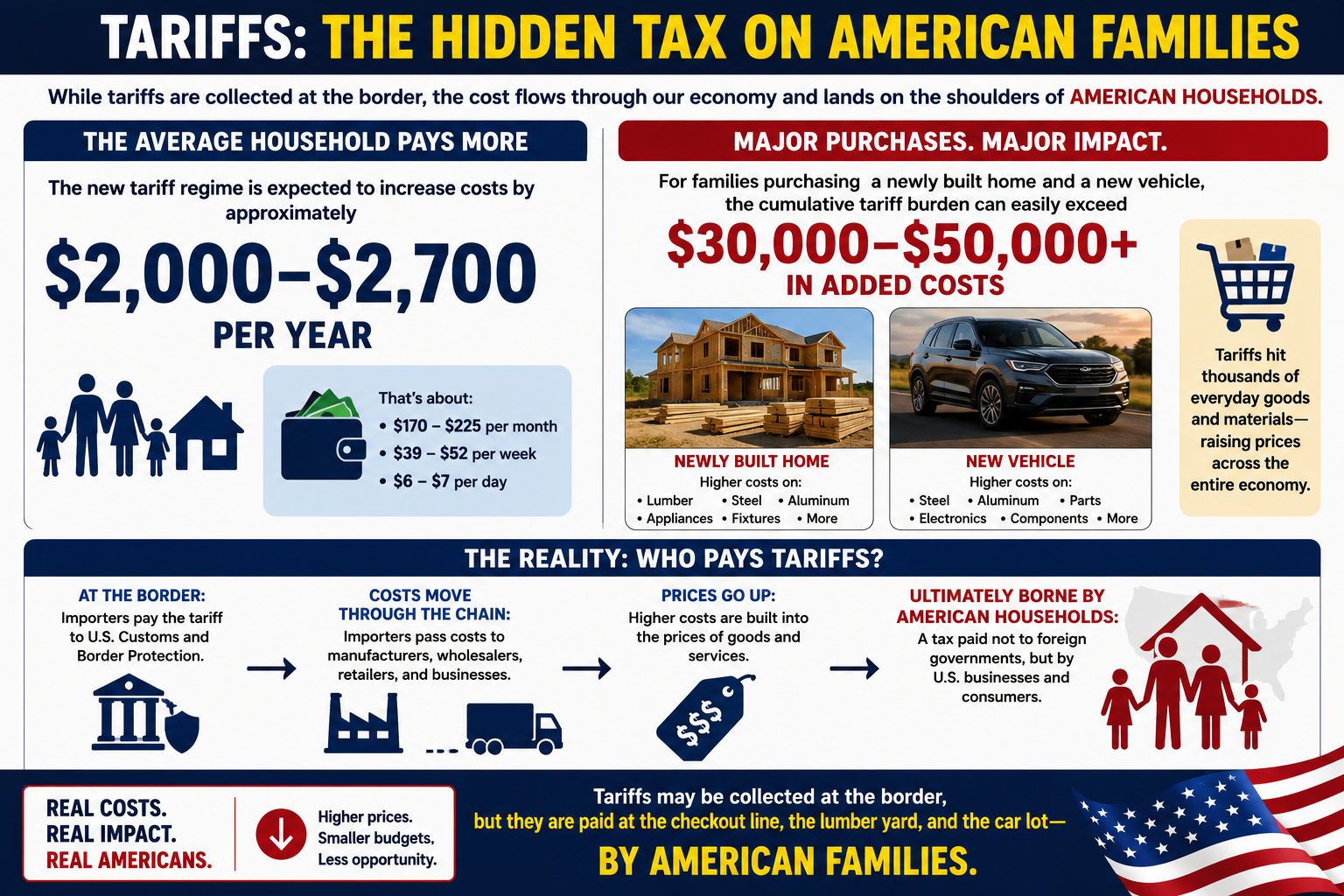
The latest U.S. tariff framework is now in place, and while tariffs are collected at the border, it’s American families who ultimately pay most of the bill.
📊 Highlights:
• Average household: +$2,000–$2,700 per year
• Buying a new home and a new car? The added cost from tariffs on steel, aluminum, lumber, vehicles, appliances, and other goods could exceed $30,000–$50,000.
• New tariffs now cover nearly 99.4% of U.S. imports from 60 trading partners, while additional 50% tariffs on many Canadian products are scheduled to begin in August.
The article explains what changed, which goods are affected, who legally pays the tariff, and who ultimately bears the economic burden.
Read the full analysis and decide for yourself: Are tariffs protecting American industry, or are they becoming one of the largest hidden taxes on American consumers?
1. Newly Enacted Tariffs: Section 301 Forced Labor Framework
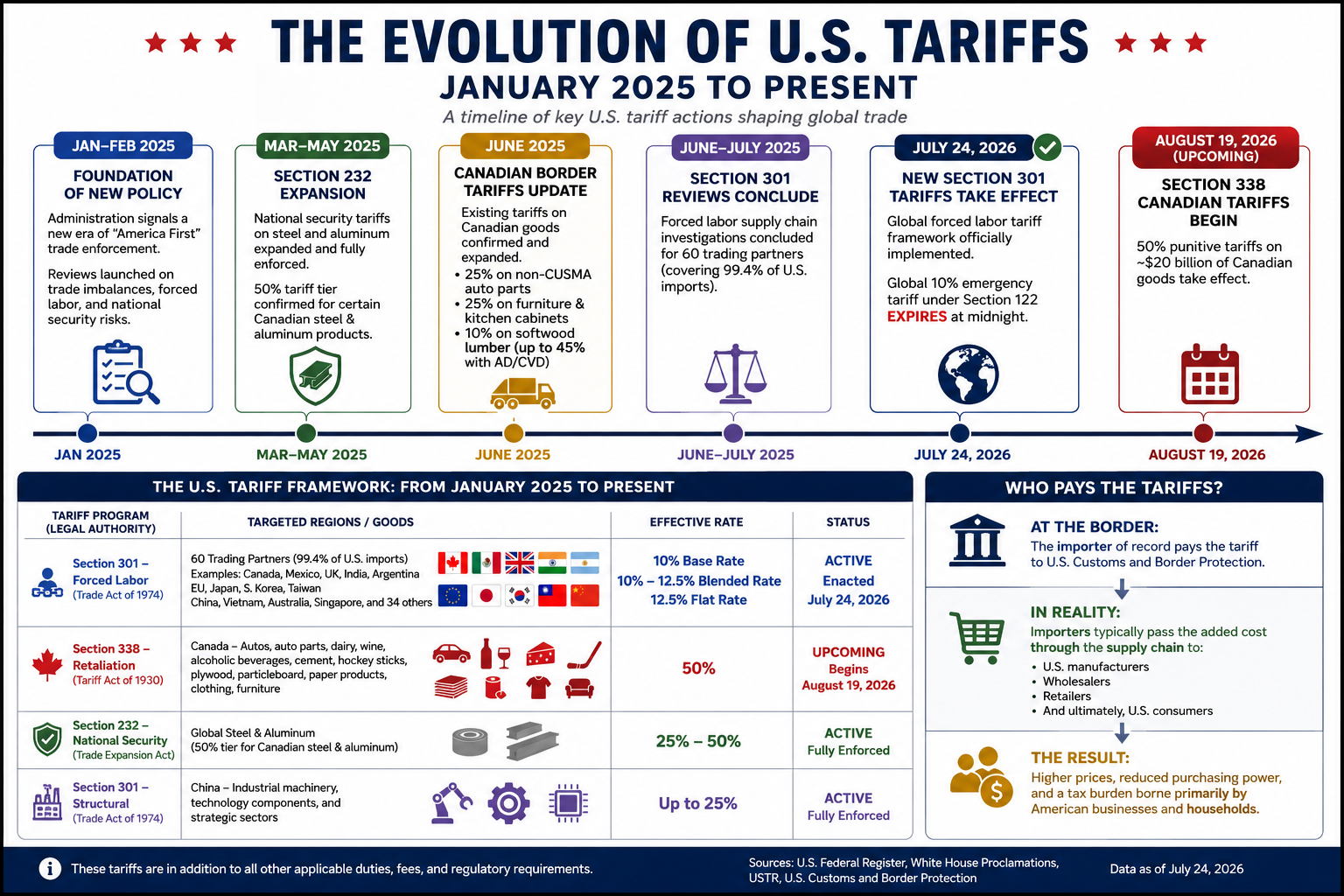
Effective July 24, 2026, the United States implemented a new tariff regime targeting imports from approximately 60 trading partners, representing 99.4% of all U.S. imports. The tariffs are based on supply-chain forced labor investigations.
Tariff Rates
- 10% Base Rate
- Canada
- Mexico
- United Kingdom
- India
- Argentina
- 10%–12.5% Blended Rate
- European Union
- Japan
- South Korea
- Taiwan
- 12.5% Flat Rate
- China
- Vietnam
- Australia
- Singapore
- 34 additional economies under investigation
Exemptions
Several strategically important commodities remain exempt, including:
- Crude oil
- Natural gas
- Fertilizer
- Selected primary food products
These tariffs also do not stack with existing Section 232 national security duties.
2. Upcoming Canadian Tariffs: Section 338
Beginning August 19, 2026, the United States is scheduled to impose 50% retaliatory tariffs on approximately $20 billion of Canadian imports under Section 338 of the Tariff Act of 1930.
Products Subject to the 50% Tariff
- Dairy products
- Wine and other alcoholic beverages
- Automobiles
- Auto parts
- Cement
- Hockey equipment
- Plywood
- Particleboard
- Paper products
- Clothing
- Furniture
These tariffs bypass normal CUSMA (USMCA) preferential treatment.
Exemptions
The following Canadian exports are excluded:
- Energy products
- Potash
- Fish
- Critical minerals
3. Existing Tariffs That Remain in Effect
Several major tariff programs adopted during 2025 and 2026 continue unchanged.
Section 232 National Security Tariffs
These duties continue to apply to steel and aluminum imports, including tariffs reaching 50% on certain Canadian steel and aluminum products.
Existing Canadian Import Tariffs
Additional tariffs remain in place on:
- 25% on non-CUSMA-compliant auto parts
- 25% on upholstered furniture and kitchen cabinets
- 10% tariff on Canadian softwood lumber, with combined anti-dumping and countervailing duties pushing the effective rate to approximately 45%
Section 301 China Tariffs
Long-standing tariffs on Chinese imports also remain active, with rates reaching 25% on numerous products, including:
- Industrial machinery
- Technology equipment
- Electronic components
- Strategic manufacturing inputs
Current U.S. Tariff Framework
| Tariff Program | Primary Target | Rate | Status |
|---|---|---|---|
| Section 301 – Forced Labor | 60 trading partners | 10%–12.5% | Active (July 24, 2026) |
| Section 338 – Canada | Autos, dairy, wine, cement, consumer goods | 50% | Begins August 19, 2026 |
| Section 232 – National Security | Steel & aluminum | 25%–50% | Active |
| Section 301 – China | Industrial & technology products | Up to 25% | Active |
Who Really Pays Tariffs?
Legally, tariffs are paid by the U.S. importer when goods enter the country through Customs and Border Protection.
Economically, however, that is only the beginning of the story.
Importers generally recover those additional costs by increasing the prices they charge wholesalers, retailers, manufacturers, and ultimately consumers. Numerous economic studies of recent U.S. tariffs have found that most of the cost is passed through to American businesses and households rather than absorbed by foreign exporters.
In some industries, foreign suppliers may reduce prices to remain competitive, meaning they share part of the burden. But the overall trade data and pricing evidence show that the majority of tariff costs are ultimately borne within the United States through higher prices, reduced business margins, or both.
In other words, while tariffs are collected at the border from importers, they function much like a domestic consumption tax. The final bill is usually paid by American businesses and consumers—not by foreign governments.
Conclusion
For the average American household, the new tariff regime is expected to increase costs by approximately $2,000–$2,700 per year. For families purchasing a newly built home and a new vehicle, the cumulative tariff burden can easily exceed $30,000–$50,000 through higher prices on construction materials, automobiles, appliances, and other imported goods. While tariffs are collected at the border from importers, they are ultimately borne by American businesses and consumers in the form of higher prices—a tax paid not to foreign governments, but by U.S. households.