bookmark_borderAir Pollution and Cognitive Decline, Dementia

In a UK study, a causal relationship has been established between air pollution and cognitive decline / dementia. The primary cause is a decline in blood flow to the brain.

Cognitive decline, dementia and air pollution

COMEAP reviewed nearly 70 studies in human populations (epidemiological studies) which looked at possible links between air pollution and a decline in mental ability and dementia in older people. They also considered studies which investigated how air pollution might affect the brain.

From this review, it can be concluded that it is likely that air pollution does contribute to these effects. The most likely way this occurs is through effects on the circulation. It is known that air pollutants, particularly small particles, can affect the heart and blood vessels, including to the brain.

POLLUTION OVERVIEW
Morgantown, Philadelphia-Reading-Camden, PA, New York/Newark, Pittsburgh-New Castle-Weirton, PA rank in the worst pollution for the Northeastern USA.

The worst in Pennsylvania include Emsworth, Forest Hills, Freedom, Ben Avon, Edgewood, Braddock, Millvale, Carnegie, North Braddock, Sewickley, McKeesport, Bristol, Chester, Norristown, Harrisburg, Hershey, Lancaster, Kutztown, York, Allentown, Freemansburg, Swiftwater, Wilkes-Barre, Altoona, Montoursville, State College, Tioga, Kittanning, Farrel, and Erie.

WORST CITIES FOR OZONE POLLUTION
#1: Los Angeles-Long Beach, CA
#2: Bakersfield, CA
#3: Visalia, CA
#4: Fresno-Madera-Hanford, CA
#5: Phoenix-Mesa, AZ
#6: San Diego-Chula Vista-Carlsbad, CA
#7: Denver-Aurora, CO
#8: Houston-The Woodlands, TX
#9: Sacramento-Roseville, CA
#10: Salt Lake City-Provo-Orem, UT
#11: Las Vegas-Henderson, NV
#12: El Paso-Las Cruces, TX-NM
#13: San Jose-San Francisco-Oakland, CA
#14: New York-Newark, NY-NJ-CT-PA
#15: El Centro, CA
#16: Chicago-Naperville, IL-IN-WI
#16: Dallas-Fort Worth, TX-OK
#18: Fort Collins, CO
#19: San Luis Obispo-Paso Robles, CA
#20: Chico, CA
#21: Reno-Carson City-Fernley, NV
#22: Albuquerque-Santa Fe-Las Vegas, NM
#23: Redding-Red Bluff, CA
#24: Detroit-Warren-Ann Arbor, MI
#25: San Antonio-New Braunfels-Pearsall, TX

WORST CITIES FOR PARTICLE POLLUTION
#1: Bakersfield, CA
#2: Fresno-Madera-Hanford, CA
#2: Visalia, CA
#4: San Jose-San Francisco-Oakland, CA
#5: Los Angeles-Long Beach, CA
#6: Medford-Grants Pass, OR
#7: Fairbanks, AK
#8: Phoenix-Mesa, AZ
#9: Chico, CA
#10: El Centro, CA
#11: Sacramento-Roseville, CA
#12: Cincinnati-Wilmington-Maysville, OH-KY-IN
#13: Indianapolis-Carmel-Muncie, IN
#14: Pittsburgh-New Castle-Weirton, PA-OH-WV
#15: Bend-Prineville, OR
#16: Detroit-Warren-Ann Arbor, MI
#16: Redding-Red Bluff, CA
#18: McAllen-Edinburg, TX
#18: Philadelphia-Reading-Camden, PA-NJ-DE-MD
#18: Eugene-Springfield, OR
#21: Yakima, WA
#22: Chicago-Naperville, IL-IN-WI
#22: Houston-The Woodlands, TX
#24: St. Louis-St. Charles-Farmington, MO-IL
#25: Augusta-Richmond County, GA-SC
#25: Shreveport-Bossier City-Minden, LA
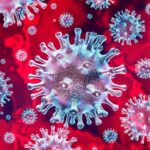
bookmark_borderCOVID-19: Chronic Conditions

COVID=19

By Daniel Brouse
help@membrane.com

“I describe it as a bit like somebody throwing a hand grenade into our immune system, that all the populations [of immune cells] are completely topsy turvy and unsettled for years. And, that’s a guess, but we’ve got the technology to look at that in quite a lot of detail,” said Professor Danny Altmann, from the Department of Immunology and Inflammation at Imperial.

In September of 2023, The Lancet Respiratory Medicine reported, “Long-standing multiorgan impairment following SARS-CoV-2 infection has been a major concern for individuals recovering from severe disease and is thought to be caused by a multitude of factors, including direct viral cytotoxicity, chronic inflammation, ischaemic injury, acute reactivation of other viruses, metabolic derangements, and acute treatment effects (especially invasive ventilation). Numerous reports of delayed organ complications such as myocarditis, stroke, and pulmonary emboli have led to speculations that the multiorgan dysfunction caused by COVID-19 might be responsible for impaired recovery and ongoing symptoms in individuals, a condition referred to as long COVID.”

We know COVID causes long term health and wellness impacts, such as:
* Permanent Organ Damage
* Persistent SARS-CoV-2 RNA in multiple organs and throughout the brain
* Destruction of Good Gut Bacteria Resulting in a Compromised Immune System
* Epigenetic Modifications (Changes to DNA)
* Change in Cell Fate
* Tryptophan Deficiency
* Dysfunctional Kynurenine Pathway
* Neurological Damage
* New-Onset Alzheimer’s Disease
* Exertional Intolerance, Oxygen Extraction, Reduced Exercise Capacity
* Down Regulating NAD+
* Up Regulating IDO
* Rogue Antibodies
* Insulin Reduction, Diabetes, High Cholesterol, Heart Disease and Stroke
* Increased Risk of Cancer
* Blood Clots
* Hypertension, Vascular Disorders, Myocarditis and Heart Disease
* Multisystem Inflammatory Syndrome in Children (MIS-C)
* Dysregulation of the innate immune system, i.e. “cytokine storm”

It is important to note that the severity of disease in humans is not determined only by virus replication but also by the host immune response to the infection, which may lead to dysregulation of the innate immune system, i.e. “cytokine storm” (Omicron SARS-CoV-2 can infect faster and better)

These are some of the causes of long-COVID symptoms that have been identified. There are likely many more.

Everybody’s response to COVID is unique; however, most people are likely to develop several of these disorders. For instance, the genetic abnormalities were found in 1-3% of the prepandemic population. In the population of COVID survivors, 50-75% of individuals exhibit these genetic abnormalities. Currently, there is no cure for any of these ailments. Another example is the loss of taste and/or smell. In the study UGT2A1/UGT2A2 locus is associated with COVID-19-related loss of smell or taste people that are genetically predisposed to have problems with taste and smell genes are more likely to lose their senses to COVID. Of those people that lose their sense of taste or smell, 20% will not recover their senses.

COVID causes negative feedback loops. COVID appears to cause the most damage to the weakest or most vulnerable parts of the body. If you were predisposed to a condition prior to COVID, you will likely develop the condition after COVID. An example would be people with type II diabetes. If you have diabetes prior to COVID, then you are at high risk of dying from COVID. If you are prediabetic, COVID will likely make you diabetic. If you are not inclined to develop diabetes, COVID will likely increase the probability of developing diabetes. The same holds true with NAD+, IDO, P53 tumor suppression genes, and all the other conditions listed above.

Vaccination is the best method for preventing all of these conditions. Unvaccinated people are 8x’s more likely to contract COVID. Vaccinated people that contract COVID are 50% less likely to develop long-COVID. Get vaccinated; however, vaccination alone is not enough. One should also wear an N95 mask and socially distance.

bookmark_borderThe BRAIN Initiative

Brain Research through Advancing Innovative Neurotechnologies (BRAIN) Initiative

What is the NIH BRAIN Initiative?

The NIH Brain Research through Advancing Innovative Neurotechnologies (BRAIN) Initiative is part of a new Presidential focus aimed at revolutionizing our understanding of the human brain. By accelerating the development and application of innovative technologies, researchers will be able to produce a revolutionary new dynamic picture of the brain that, for the first time, shows how individual cells and complex neural circuits interact in both time and space. Long desired by researchers seeking new ways to treat, cure, and even prevent brain disorders, this picture will fill major gaps in our current knowledge and provide unprecedented opportunities for exploring exactly how the brain enables the human body to record, process, utilize, store, and retrieve vast quantities of information, all at the speed of thought.

A map of overall task-fMRI brain coverage from the seven tasks used in the Human Connectome Project.

A map of overall task-fMRI brain coverage from the seven tasks used in the Human Connectome Project. Yellow and red represent regions that become more active in most participants during one or more tasks in the MR scanner; blue represents regions that become less active. Source: D.M. Barch for the WU-Minn HCP Consortium.

bookmark_borderBrain Music: Improving Emergency Response Through Music

Every brain has a soundtrack. Its tempo and tone will vary, depending on mood, frame of mind, and other features of the brain itself. When recorded and played back to an emergency responder, say a firefighter, it may sharpen their reflexes during a crisis, and calm their nerves afterward.

Over the past decade, the influence of music on cognitive development, learning, and emotional well-being has emerged as a hot field of scientific study. To explore music’s potential relevance to emergency response, the Science & Technology Directorate (S&T) has begun a study into a form of neurotraining called “Brain Music” that uses music created in advance from listeners’ own brain waves to help them deal with common ailments like insomnia, fatigue, and headaches stemming from stressful environments.

“Because of the strains that come with an emergency response job, we are interested in finding ways to help these workers remain at the top of their game when working and get quality rest when they go off a shift,” said Department of Homeland Security (DHS) Program Manager Robert Burns. “Our goal is to find new ways to help first responders perform at the highest level possible, without increasing tasks, training, or stress levels.”

If the brain “composes” the music, the first job of scientists is to take down the notes. Each recording is converted into two unique musical compositions designed to trigger the body’s natural responses, for example, by improving productivity while at work, or helping adjust to constantly changing work hours. The compositions are clinically shown to promote one of two mental states in each individual: relaxation – for reduced stress and improved sleep; and alertness – for improved concentration and decision-making.

Each 2–6 minute track is a composition performed on a single instrument, usually a piano. The relaxation track may sound like a “melodic, subdued Chopin sonata,” while the alertness track may have “more of a Mozart sound,” according to Burns. (It seems there’s a classical genius—or maybe two genii—in all of us.) Listen to an example of an instrumental alert track.

After their brain waves are set to music, each person is given a specific listening schedule, such as once an hour for four hours each day, personalized to their work environment and needs. After an extended length of time, people may be able to listen to the music more sporadically. If used properly, the music can boost productivity and energy levels, or trigger a body’s natural responses to stress. A selected group of firefighters will be the first emergency responders taking part in the project.

The music is created by Human Bionics LLC, with the project conducted through the TechSolutions Program, in conjunction with the Human Factors Behavior Sciences Division. It is being tested as part of the Readiness Optimization Program (ROP), a wellness program that combines nutrition education and neurotraining to evaluate a cross population of first responders, including federal agents, police, and firefighters.

Since the ROP is supposed to help them sleep more soundly and eat healthier, the benefits should extend beyond the work environment and ultimately improve one’s entire life.

The nutrition component of the ROP has grown out of numerous clinical studies on nutrition and brain development, sleep, and aging, as well as from the fields of military and sports medicine. The Brain Music component is derived from patented technology developed at Moscow University to use brain waves as a feedback mechanism to correct physiological conditions.

The concept of Brain Music is to use the frequency, amplitude, and duration of musical sounds to move the brain from an anxious state to a more relaxed state. In British philosopher John Locke’s terms, Brain Music brings new meaning to his famous phrase: “A sound mind in a sound body, is a short, but full description of a happy state in this World.”

To request more information about this story, please e-mail st.snapshots@hq.dhs.gov.