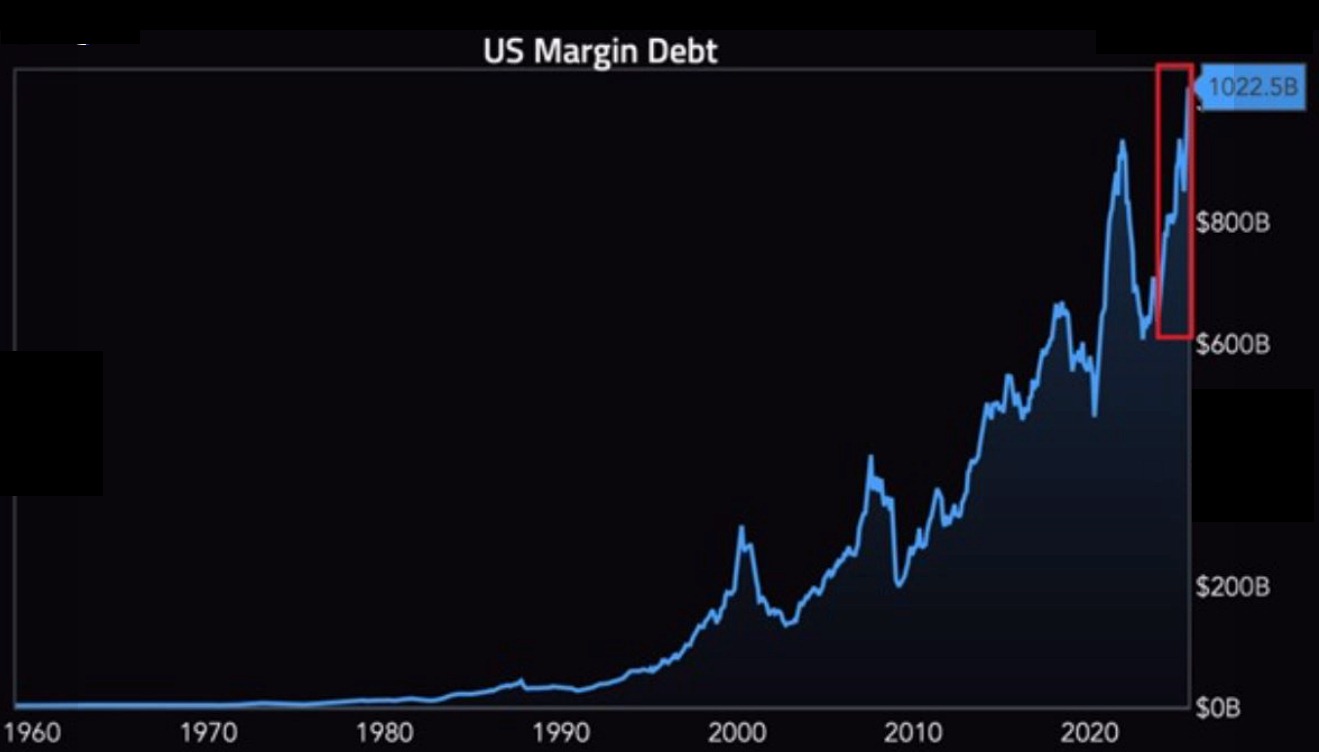
Why is the stock market still rising when nearly every other economic indicator is flashing red? Bonds are weakening, real estate is cooling, manufacturing is in decline, and employment growth is softening. Yet the stock market continues to show upward momentum, seemingly disconnected from fundamentals.
The answer lies in a fundamental transformation of the market structure itself. Since the pandemic, retail investors—empowered by platforms like Robinhood and fueled by stimulus checks, social media hype, and a near zero-interest-rate environment—have reshaped trading dynamics. This new phenomenon has given rise to what I call the “meme stock market.”
Unlike traditional investors, who rely on fundamentals such as earnings, revenue growth, or long-term sector trends, many retail traders are driven almost entirely by momentum, sentiment, and speculation. The trading models at play are not designed to build wealth over time; they are designed to exploit short-term volatility. This speculation is often amplified by leverage, margin accounts, and options trading, making swings more dramatic and less predictable.
The problem is that momentum-driven markets lack stability. They create the illusion of strength while quietly building fragility beneath the surface. As more money chases speculation rather than fundamentals, valuations drift further from reality, creating a bubble that cannot be sustained.
This bubble will almost certainly burst. And when it does, the unwinding will be severe. Because so many retail traders are using leveraged positions without effective downside protection, the correction will not simply be a normal pullback—it will be a violent contraction with significant ripple effects across the economy.
The stock market’s current behavior is not a sign of resilience but of distortion. It is being propped up by short-term speculation rather than long-term strength. Prudent investors should recognize the risks and approach this market with extreme caution.
Retail Investor’s Impact
Retail investors are individuals trading their own money through brokerage platforms, rather than through institutional structures like mutual funds, pensions, or endowments. While they don’t own the largest share of total market capitalization compared to institutions, their behavioral impact on the market is outsized relative to their percentage of ownership.
Here’s why:
-
Concentration of activity – Retail investors tend to pile into the same “meme” names or high-momentum stocks, amplifying volatility in ways that broad institutional strategies (like index funds) do not.
-
Leverage & options trading – Post-pandemic, we’ve seen an explosion of retail activity in leveraged products, including options and margin trading. For example, options volume is now dominated by contracts with less than 24 hours to expiration (“zero-day options”), and retail traders are a major driver of that activity. This behavior magnifies short-term swings.
-
Market signaling – Even though institutions hold more shares, they often respond to sentiment and volatility triggered by retail traders. In effect, retail flows can act as a spark that ignites much larger institutional moves.
- High churn – The percentage of total market ownership by retail investors (estimated around 20–25% of U.S. equities) is less important than their trading behavior. Retail traders churn their portfolios at much higher rates than institutional investors, meaning the same dollars are moving in and out of positions far more rapidly. This turnover creates disproportionate price pressure compared to “buy and hold” strategies used by pensions and index funds.
The key issue isn’t retail investors’ overall share of ownership—it’s the outsized impact of their speculative, leveraged trading activity. Their rapid-fire churn has fundamentally reshaped market dynamics, injecting far more instability than their raw ownership percentages suggest.
As of the end of Q2 2025, Microsoft (MSFT), Apple (AAPL), and Nvidia (NVDA) together made up roughly 20% of the entire S&P 500 index. Because the index is market-cap weighted, this unprecedented concentration in just a handful of companies means that movements in these few stocks disproportionately drive the performance of the broader market.
Layer on top the influence of retail traders, whose momentum-driven strategies are detached from fundamentals, and the result is extreme volatility. In fact, on any given trading day, as much as 95% of index swings can be traced back to a combination of two forces: retail churn and the heavy concentration of market cap in a narrow set of tech giants. This creates the illusion of strength while masking deep fragility in the underlying economy.
Trumpenomics: The Decline of the US