bookmark_borderInternet Privacy

The information on how the Trump campaign obtained and exploited citizens’ privacy should serve as an example to your personal responsibility in maintaining internet security.

Do not use any Facebook game, IQ test, quiz or other third-party APP’s (applications). Never give permission allowing a third party access to your personal information. Shame on you if you allow your friends information to be accessed!

The BBC reported, “In 2014, Facebook invited users to find out their personality type via a quiz developed by Cambridge University researcher Dr Kogan called This is Your Digital Life.”

The personality quiz was used to exploit users personal information, as well as, all your friends’ personal information. Your (and your friends’) information was then sold through Cambridge Analytica to the Trump campaign and used to exploit you.

WHAT CAN YOU DO TO HELP PROTECT YOUR PRIVACY?

Privacy suggestions:
1) change your default Facebook settings (make sure you never share your friends info. by default)
2) clear your web browser’s cookies on a regular basis
3) install an ad blocker
For example, using FireFox web browser with the AdBlock Add-on
https://addons.mozilla.org/en-US/firefox/addon/adblock-plus/
OR
1) just use TOR browser Download the Tor browser (free)

MORE: Virtual Private Network and Internet Privacy

bookmark_borderHuge Credit Agency Data Breach

by Daniel Brouse and Sidd Mukherjee for Membrane Domain Security

Equifax is one of the largest credit reporting agencies in the world. Ironically, Equifax provides “identity protection tools with daily monitoring and alerts today!”

From May to July, 2017, Equifax allowed a cybersecurity breach to steal 143 million people’s identity. The stolen information includes social security numbers, birthdays, addresses and driver’s license numbers.

On September 7, Equifax released a statement via Twitter: “We recently discovered a cybersecurity incident involving consumer information. Once discovered, we acted immediately to stop the intrusion. We apologize to our consumers and business customers for the concern and frustration this causes. Learn more: .”

The data breach compromised about half the population of the United States.

Cyber security specialist Sidd Mukherjee said, “The main issue not addressed is the collection of the data in the first place. There would be no target if there were no centralized database. If the data were maintained in a distributed mechanism, with strict privacy guarantees and guaranteed update (such as blockchain/bittorent/tor allows) we would not be in this situation.

‘But that’s so hard and we need to make money this quarter’

OK, that is actually quite a cruel summary, so let me expand. Back in the day, centralized was the only way to go. The Internet made a lot of things possible and mathematics did as much. Companies like Equifax began in response to a need. They
glommed on to a need twenty years before the Internet and made big databases because they watched ATT and SABRE and railroads, and such. The Internet came along and they lumbered over. And now, they find they are in a strange and terrible land beset with pitfall and with snare.

Equifax makes money through collection and controlled distribution of data. Both those avenues and control are threatened in this brave new world, as Mr. Assange pointed out some time ago.

Don’t get me wrong. I actually think assaults on privacy have done the evolution thing, selected for those schemes which resist assault. And as such, the centralized databases will get selected out of the game. It will take a while, though.”

In other news, until you had many to many communication with latency lower than human attention span, which seems to be about 20 seconds, you can’t really do hive intelligence like the kids are doing with the cell phones. Watch the kids. Demographic is destiny, as someone said.”

bookmark_borderVPN: Virtual Private Network and Internet Privacy

by Daniel Brouse and Sidd Mukherjee

Your Internet service provider (ISP) knows where you live, your address and billing info. They also know:

  • all the IPs and domain names you visit and when
  • all the content of your unencrypted traffic in and out, as well as, the timing

The federal government now allows your ISP to sell the information.

VPN: Virtual Private Network
VPN stands for virtual private network. A VPN builds an encrypted connection from your computer to your VPN provider and routes all your traffic through it. All your traffic now appears on the net through the IP of your VPN provider.

If you use a VPN, the only thing others can see is you making an encrypted connection to one IP that relays your traffic. If that IP is at the same location as you, you are still subject to a geolocation threat.

In addition to using a VPN, the following is recommended:

TURN OFF Cookies And Java
The easiest way to start protecting your privacy is turning off cookies and java in your browser. Cookies allow remote servers access to your internet activities. Your browser history is also subject to privacy violations. Only allow access to your cookies and browser history when you are confident of the websites you visit. If a site forces you to use cookies, clear your cookies and browser history after each visit.

Java and Java script allow remote servers to run programs on your computer. Java script is how most malware is downloaded onto your computer. Avoid Java at all costs.

AdBlock – Chrome
Advertisement blocking software can be added to most web browsers. AdBlock for Google’s Chrome is one of the highest rated. Google says, “AdBlock. The #1 ad blocker with over 200 million downloads. Blocks YouTube, Facebook and ads everywhere else on the web. The original AdBlock for Chrome works automatically. Choose to continue seeing unobtrusive ads, whitelist your favorite sites, or block all ads by default. Just click “Add to Chrome,” then visit your favorite website and see the ads disappear!”

IP Anonymizer
Protecting the privacy of your unique IP is the most important aspect of protecting your privacy. It is also fairly difficult. A VPN does not conceal your IP on the Internet.

The easiest and cheapest way to conceal your identity is with an IP Anonymizer. “This anonymizer will hide your IP address from the websites you access as well as protect you from tracking with cookies and other means.”

You can go to a site, such as, http://webanonymizer.org/ and enter the website you want to visit. WebAnonymizer will automatically mask your IP for free.

TOR
A Tor browser is free software for enabling anonymous communication. The Tor name is an acronym for the original software project name “The Onion Router”. Tor routes Internet traffic through a free, worldwide, volunteer network of more than seven thousand relays. A users location and usage is concealed from anyone conducting network surveillance or traffic analysis. Tor makes it very difficult for Internet activity to be traced including “visits to Web sites, online posts, instant messages, and other communication forms”.

The Tor project states, “The Tor software protects you by bouncing your communications around a distributed network of relays run by volunteers all around the world: it prevents somebody watching your Internet connection from learning what sites you visit, it prevents the sites you visit from learning your physical location, and it lets you access sites which are blocked. Tor Browser lets you use Tor on Windows, Mac OS X, or Linux without needing to install any software. It can run off a USB flash drive, comes with a pre-configured web browser to protect your anonymity, and is self-contained (portable).”

Download the Tor browser (free)

Comments
A reader asked: So is there still a place for a VPN on our mobile devices? When using public wifi for example?
A: Yes. Almost all public wifi’s are a private network. You just have to worry about the other people who are on the private network with you. A device on the private network is easily hacked by someone in close proximity (e.g. hackers can use a Pringles can as an antenna and gain access within several hundred yards http://www.lifehack.org/articles/lifehack/extend-your-wifi-range-using-diy-antenna-from-pringles-can.html)

From The Membrane Domain’s Cybersecurity Center

bookmark_borderRussia Hacked 500 Million Yahoo Accounts

The Membrane Domain: Cybersecurity

by the Department of Justice
Office of Public Affairs

A grand jury in the Northern District of California has indicted four defendants, including two officers of the Russian Federal Security Service (FSB), for computer hacking, economic espionage and other criminal offenses in connection with a conspiracy, beginning in January 2014, to access Yahoo’s network and the contents of webmail accounts. The defendants are Dmitry Aleksandrovich Dokuchaev, 33, a Russian national and resident; Igor Anatolyevich Sushchin, 43, a Russian national and resident; Alexsey Alexseyevich Belan, aka “Magg,” 29, a Russian national and resident; and Karim Baratov, aka “Kay,” “Karim Taloverov” and “Karim Akehmet Tokbergenov,” 22, a Canadian and Kazakh national and a resident of Canada.

The defendants used unauthorized access to Yahoo’s systems to steal information from about at least 500 million Yahoo accounts and then used some of that stolen information to obtain unauthorized access to the contents of accounts at Yahoo, Google and other webmail providers, including accounts of Russian journalists, U.S. and Russian government officials and private-sector employees of financial, transportation and other companies. One of the defendants also exploited his access to Yahoo’s network for his personal financial gain, by searching Yahoo user communications for credit card and gift card account numbers, redirecting a subset of Yahoo search engine web traffic so he could make commissions and enabling the theft of the contacts of at least 30 million Yahoo accounts to facilitate a spam campaign.

The charges were announced by Attorney General Jeff Sessions of the U.S. Department of Justice, Director James Comey of the FBI, Acting Assistant Attorney General Mary McCord of the National Security Division, U.S. Attorney Brian Stretch for the Northern District of California and Executive Assistant Director Paul Abbate of the FBI’s Criminal, Cyber, Response and Services Branch.

“Cyber crime poses a significant threat to our nation’s security and prosperity, and this is one of the largest data breaches in history,” said Attorney General Sessions. “But thanks to the tireless efforts of U.S. prosecutors and investigators, as well as our Canadian partners, today we have identified four individuals, including two Russian FSB officers, responsible for unauthorized access to millions of users’ accounts. The United States will vigorously investigate and prosecute the people behind such attacks to the fullest extent of the law.”

“Today we continue to pierce the veil of anonymity surrounding cyber crimes,” said Director Comey. “We are shrinking the world to ensure that cyber criminals think twice before targeting U.S. persons and interests.”

“ The criminal conduct at issue, carried out and otherwise facilitated by officers from an FSB unit that serves as the FBI’s point of contact in Moscow on cybercrime matters, is beyond the pale,” said Acting Assistant Attorney General McCord. “Once again, the Department and the FBI have demonstrated that hackers around the world can and will be exposed and held accountable. State actors may be using common criminals to access the data they want, but the indictment shows that our companies do not have to stand alone against this threat. We commend Yahoo and Google for their sustained and invaluable cooperation in the investigation aimed at obtaining justice for, and protecting the privacy of their users.”

“This is a highly complicated investigation of a very complex threat. It underscores the value of early, proactive engagement and cooperation between the private sector and the government,” said Executive Assistant Director Abbate. “The FBI will continue to work relentlessly with our private sector and international partners to identify those who conduct cyber-attacks against our citizens and our nation, expose them and hold them accountable under the law, no matter where they attempt to hide.”

“Silicon Valley’s computer infrastructure provides the means by which people around the world communicate with each other in their business and personal lives. The privacy and security of those communications must be governed by the rule of law, not by the whim of criminal hackers and those who employ them. People rightly expect that their communications through Silicon Valley internet providers will remain private, unless lawful authority provides otherwise. We will not tolerate unauthorized and illegal intrusions into the Silicon Valley computer infrastructure upon which both private citizens and the global economy rely,” said U.S. Attorney Stretch. “Working closely with Yahoo and Google, Department of Justice lawyers and the FBI were able to identify and expose the hackers responsible for the conduct described today, without unduly intruding into the privacy of the accounts that were stolen. We commend Yahoo and Google for providing exemplary cooperation while zealously protecting their users’ privacy.”

Summary of Allegations

According to the allegations of the Indictment:

The FSB officer defendants, Dmitry Dokuchaev and Igor Sushchin, protected, directed, facilitated and paid criminal hackers to collect information through computer intrusions in the U.S. and elsewhere. In the present case, they worked with co-defendants Alexsey Belan and Karim Baratov to obtain access to the email accounts of thousands of individuals.

Belan had been publicly indicted in September 2012 and June 2013 and was named one of FBI’s Cyber Most Wanted criminals in November 2013. An Interpol Red Notice seeking his immediate detention has been lodged (including with Russia) since July 26, 2013. Belan was arrested in a European country on a request from the U.S. in June 2013, but he was able to escape to Russia before he could be extradited.

Instead of acting on the U.S. government’s Red Notice and detaining Belan after his return, Dokuchaev and Sushchin subsequently used him to gain unauthorized access to Yahoo’s network. In or around November and December 2014, Belan stole a copy of at least a portion of Yahoo’s User Database (UDB), a Yahoo trade secret that contained, among other data, subscriber information including users’ names, recovery email accounts, phone numbers and certain information required to manually create, or “mint,” account authentication web browser “cookies” for more than 500 million Yahoo accounts.

Belan also obtained unauthorized access on behalf of the FSB conspirators to Yahoo’s Account Management Tool (AMT), which was a proprietary means by which Yahoo made and logged changes to user accounts. Belan, Dokuchaev and Sushchin then used the stolen UDB copy and AMT access to locate Yahoo email accounts of interest and to mint cookies for those accounts, enabling the co-conspirators to access at least 6,500 such accounts without authorization.

Some victim accounts were of predictable interest to the FSB, a foreign intelligence and law enforcement service, such as personal accounts belonging to Russian journalists; Russian and U.S. government officials; employees of a prominent Russian cybersecurity company; and numerous employees of other providers whose networks the conspirators sought to exploit. However, other personal accounts belonged to employees of commercial entities, such as a Russian investment banking firm, a French transportation company, U.S. financial services and private equity firms, a Swiss bitcoin wallet and banking firm and a U.S. airline.

During the conspiracy, the FSB officers facilitated Belan’s other criminal activities, by providing him with sensitive FSB law enforcement and intelligence information that would have helped him avoid detection by U.S. and other law enforcement agencies outside Russia, including information regarding FSB investigations of computer hacking and FSB techniques for identifying criminal hackers. Additionally, while working with his FSB conspirators to compromise Yahoo’s network and its users, Belan used his access to steal financial information such as gift card and credit card numbers from webmail accounts; to gain access to more than 30 million accounts whose contacts were then stolen to facilitate a spam campaign; and to earn commissions from fraudulently redirecting a subset of Yahoo’s search engine traffic.

When Dokuchaev and Sushchin learned that a target of interest had accounts at webmail providers other than Yahoo, including through information obtained as part of the Yahoo intrusion, they tasked their co-conspirator, Baratov, a resident of Canada, with obtaining unauthorized access to more than 80 accounts in exchange for commissions. On March 7, the Department of Justice submitted a provisional arrest warrant to Canadian law enforcement authorities, requesting Baratov’s arrest. On March 14, Baratov was arrested in Canada and the matter is now pending with the Canadian authorities.

An indictment is merely an accusation, and a defendant is presumed innocent unless proven guilty in a court of law.

The FBI, led by the San Francisco Field Office, conducted the investigation that resulted in the charges announced today. The case is being prosecuted by the U.S. Department of Justice National Security Division’s Counterintelligence and Export Control Section and the U.S. Attorney’s Office for the Northern District of California, with support from the Justice Department’s Office of International Affairs.

Defendants: At all times relevant to the charges, the Indictment alleges as follows:

Dmitry Aleksandrovich Dokuchaev, 33, was an officer in the FSB Center for Information Security, aka “Center 18.” Dokuchaev was a Russian national and resident.

Igor Anatolyevich Sushchin, 43, was an FSB officer, a superior to Dokuchaev within the FSB, and a Russian national and resident. Sushchin was embedded as a purported employee and Head of Information Security at a Russian investment bank.

Alexsey Alexseyevich Belan, aka “Magg,” 29, was born in Latvia and is a Russian national and resident. U.S. Federal grand juries have indicted Belan twice before, in 2012 and 2013, for computer fraud and abuse, access device fraud and aggravated identity theft involving three U.S.-based e-commerce companies and the FBI placed Belan on its “Cyber Most Wanted” list. Belan is currently the subject of a pending “Red Notice” requesting that Interpol member nations (including Russia) arrest him pending extradition. Belan was also one of two criminal hackers named by President Barack Obama on Dec. 29, 2016, pursuant to Executive Order 13694, as a Specially Designated National subject to sanctions.

Karim Baratov, aka “Kay,” “Karim Taloverov” and “Karim Akehmet Tokbergenov,” 22. He is a Canadian and Kazakh national and a resident of Canada.

Victims: Yahoo; more than 500 million Yahoo accounts for which account information about was stolen by the defendants; more than 30 million Yahoo accounts for which account contents were accessed without authorization to facilitate a spam campaign; and at least 18 additional users at other webmail providers whose accounts were accessed without authorization.

Time Period: As alleged in the Indictment, the conspiracy began at least as early as 2014 and, even though the conspirators lost their access to Yahoo’s networks in September 2016, they continued to utilize information stolen from the intrusion up to and including at least December 2016.


Crimes:

Count(s) Defendant(s) Charge Statute                 18 U.S.C. Conduct Maximum Penalty
1 All Conspiring to commit computer fraud and abuse § 1030(b) Defendants conspired to hack into the computers of Yahoo and accounts maintained by Yahoo, Google and other providers to steal information from them.


First, Belan gained access to Yahoo’s servers and stole information that allowed him, Dokuchaev, and Sushchin to gain unauthorized access to individual Yahoo user accounts.

Then, Dokuchaev and Sushchin tasked Baratov with gaining access to individual user accounts at Google and other Providers (but not Yahoo) and paid Baratov for providing them with the account passwords. In some instances, Dokuchaev and Sushchin tasked Baratov with targeting accounts that they learned of through access to Yahoo’s UDB and AMT (e.g., Gmail accounts that served as a Yahoo user’s secondary account).

10 years
2 Dokuchaev

Sushchin

Belan

Conspiring to engage in economic espionage § 1831(a)(5) Starting on Nov. 4, 2014, Belan stole, and the defendants thereafter transferred, received and possessed the following Yahoo trade secrets:

  • the Yahoo UDB, which was proprietary and confidential Yahoo technology and information, including subscriber names, secondary accounts, phone numbers, challenge questions and answers;
  • the AMT, Yahoo’s interface to the UDB; and
  • Yahoo’s cookie “minting” source code, which enabled the defendants to manufacture account cookies to then gain access to individual Yahoo user accounts.
15 years
3 Dokuchaev

Sushchin

Belan

Conspiring to engage in theft of trade secrets § 1832(a)(5) See Count 2 10 years
4-6 Dokuchaev

Sushchin

Belan

Economic espionage §§ 1831(a)(1), (a)(4), and 2 See Count 2 15 years (each count)
7-9 Dokuchaev

Sushchin

Belan

Theft of trade secrets §§ 1832(a)(1), and 2 See Count 2 10 years (each count)
10 Dokuchaev

Sushchin

Belan

Conspiring to commit wire fraud § 1349 The defendants fraudulently schemed to gain unauthorized access to Yahoo’s network through compromised Yahoo employee accounts and then used the Yahoo trade secrets to gain unauthorized access to valuable non-public information in individual Yahoo user accounts. 20 years
11-13 Dokuchaev

Sushchin

Belan

Accessing (or attempting to access) a computer without authorization to obtain information for the purpose of commercial advantage and private financial gain. §§ 1030(a)(2)(C), 1030(c)(2)(B)(i)-(iii), and 2 The defendants gained unauthorized access to Yahoo’s corporate network and obtained information regarding Yahoo’s network architecture and the UDB. 5 years

(each count)

14-17 Dokuchaev

Sushchin

Belan

Transmitting code with the intent to cause damage to computers. §§ 1030(a)(5)(A), 1030(c)(4)(B), and 2 During the course of their unauthorized access to Yahoo’s network, the defendants transmitted code on Yahoo’s network in order to maintain a persistent presence, to redirect Yahoo search engine users and to mint cookies for individual Yahoo accounts. 10 years (each count)
18-24 Dokuchaev

Sushchin

Belan

Accessing (or attempting to access) a computer without authorization to obtain information for the purpose of commercial advantage and private financial gain. §§ 1030(a)(2)(C), 1030(c)(2)(B)(i)-(iii), and 2 Defendants obtained unauthorized access to individual Yahoo user accounts. 5 years

(each count)

25-36 Dokuchaev

Sushchin

Belan

Counterfeit access device fraud §§ 1029(a)(1), 1029(b)(1), and 2 Defendants used minted cookies to gain unauthorized access to individual Yahoo user accounts. 10 years (each count)
37 Dokuchaev

Sushchin

Belan

Counterfeit access device making equipment §§ 1029(a)(4) Defendants used software to mint cookies for unauthorized access to individual Yahoo user accounts. 15 years
38 Dokuchaev

Sushchin

Baratov

Conspiring to commit access device fraud §§ 1029(b)(2) Defendants Dokuchaev and Sushchin tasked Baratov with gaining unauthorized access to individual user accounts at Google and other Providers and then paid Baratov for providing them with the account passwords. In some instances, Dokuchaev and Sushchin tasked Baratov with targeting accounts that they learned of through access to Yahoo’s UDB and AMT (e.g., Gmail accounts that served as a Yahoo user’s secondary account). 7 ½ years.
39 Dokuchaev

Sushchin

Baratov

Conspiring to commit wire fraud § 1349 See Count 38 20 years
40-47 Dokuchaev

Baratov

Aggravated identity theft § 1028A(a)(1) See Count 38 2 years

bookmark_borderFormer Employees Sue Microsoft For PTSD

By Daniel Brouse for The Membrane Domain Cybersecurity

Two former Microsoft employees have filed a lawsuit against Microsoft claiming PTSD. Their job as part of the security team was to review users content that had been flagged by automated software. For instance, pictures sent through Hotmail or other Microsoft services that appeared suspicious were then reviewed by humans.

The two ex-employees, Henry Soto and Greg Blauert, jobs were to uphold Microsoft’s legal obligation to inform authorities of illegal images. Mr. Soto’s and Mr. Blauert’s primary responsibility was to report pictures of child abuse to the US National Center for Missing and Exploited Children.

Mr. Soto viewed “many thousands of photographs and videos of the most horrible, inhumane and disgusting content one can imagine,” the lawsuit stated. “Many people simply cannot imagine what Mr. Soto had to view on a daily basis as most people do not understand how horrible and inhumane the worst people in the world can be.”

Microsoft disputed the claims. “Microsoft takes seriously its responsibility to remove and report imagery of child sexual exploitation and abuse being shared on its services, as well as the health and resiliency of the employees who do this important work.”

bookmark_borderTrump Security Breach

For months, the security community has known that both the DNC and GOP were hacked. The DNC hack was used to undermine Hillary. The GOP / Trump hacks were meant for blackmailing Trump. No surprises here.

U.S. security agencies were aware of Donald Trump’s security breaches since last summer. The information was in the public domain by August of 2016. The Donald was given a copy of the report long before the story appeared in the New York Times.

In a hearing before the Senate Select Committee on Intelligence, FBI director James Comey said attackers penetrated GOP organizations and stole Republican National Committee emails. “There was evidence that there was hacking directed at state-level organizations and the RNC…. Information was harvested from there, but it was old stuff. None of that was released”, Comey said.

Back in August of 2016 digital security firm ThreatConnect said, “We believe DC Leaks is another Russian-backed influence outlet.” DC Leaks had released 300 stolen emails from Republican targets including the staffs of Sen. John McCain, Lindsey Graham, Michele Bachmann and party officials in several states.

In October of 2016, Richard Andres, a cybersecurity and national security strategy expert with the U.S. military’s National War College said, “What we’ve been seeing here in the U.S. so far is mild by comparison to what they do in their own backyard. If they continue to escalate, we should expect to increasingly see false flag operations designed to implicate various political actors, falsified leaks, blackmail, false calls to their opponents’ political supporters and more

The Russians have gained accessed to the DNC and GOP mainly through “spearphishing.” Spearphishing is when a hacker gets someone to click on an email, attachment, link or photo. Malware is then installed on the victim’s computer that allows hackers to exploit the network. “Essentially people are opening their front door and letting them in,” said Toni Gidwani, a former Defense Intelligence Agency official whose ThreatConnect cybersecurity firm has investigated many of the hacks. “It’s something they keep coming back to because it works.”

It is not a matter of politics. It is a matter of national security. All sides need people to go to jail over the security breaches — Republicans, Democrats and Russians.

On January 11, Donald Trump tried to skirt the issue during a press conference and said he didn’t have any business in Russia. These statements were very misleading, if not an out-an-out lie. Donald Trump has substantial investment from Russians for businesses in other countries. After Trump went bankrupt 6 times, he was unable to readily borrow money from any reputable institution. Instead, he took money from Russian oligarchs and Russian mobs.

In 2008, Donald Trump Jr. attended a real estate conference and stated, “Russians make up a pretty disproportionate cross-section of a lot of our assets. We see a lot of money pouring in from Russia.”

Bayrock is a Russian backed business that has been implicated in money laundering. The Financial Times reported, “The Republican presidential nominee and Bayrock were both based in Trump Tower and they joined forces to pursue deals around the world — from New York, Florida, Arizona and Colorado in the US to Turkey, Poland, Russia and Ukraine. Their best-known collaboration — Trump SoHo, a 46-storey hotel-condominium completed in 2010 — was featured in Mr Trump’s NBC television show The Apprentice.”

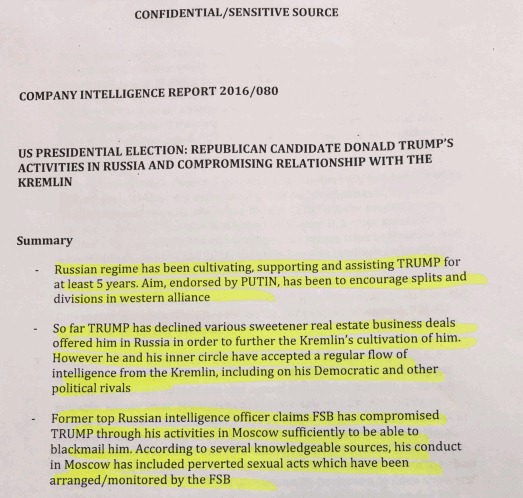
THE REPORT:
Trump Intelligence Allegations

Trump Intelligence Allegations

MORE

Russia Attempts to Hack Electric Grid
Malware associated with a Russian hacking operation, Grizzly Steppe, was found on a Burlington Electric computer. It appears as though Russia was trying to access the power grid; however, the infected computer was not connected to the network. “Vermonters and all Americans should be both alarmed and outraged that one of […]

Russia And Cybersecurity
Cozy Bear and Fancy Bear are two hacking organizations from Russia. Cozy Bear (classified as advanced persistent threat APT29) are believed to be associated with Russian intelligence. Fancy Bear (also known as APT28, Pawn Storm, Sofacy Group, Sednit and STRONTIUM) is a cyber espionage group believed to be sponsored by the […]

bookmark_borderU.S. Security-clearances Hacked

by Daniel Brouse for Membrane Domain Cybersecurity

In 2014 and 2015, there were two major breaches of U.S. government databases holding personnel records and security-clearance files of at least 22.1 million people, including Social Security numbers and some fingerprints, of not only federal employees and contractors but their families and friends.

U.S. officials have privately said the hacks were traced to the Chinese government.

“It is a very big deal from a national security perspective and from a counterintelligence perspective,” FBI Director James B. Comey said. “It’s a treasure trove of information about everybody who has worked for, tried to work for, or works for the United States government.”

The “new number is staggering,” said William R. Dougan, president of the National Federation of Federal Employees. “It is not yet clear how OPM can handle this massive increase, when they were already struggling with the initial 4.2 million. Now, not only do federal employees have to worry about their own personal information being exposed – but they must also worry about their spouse and children having their information compromised.”

“If you have my SF 86, you know every place I’ve lived since I was 18, contact people at those addresses, neighbors at those addresses, all of my family, every place I’ve traveled outside the United States,” Comey said. “Just imagine if you were a foreign intelligence service and you had that data.”

bookmark_borderRussia Attempts to Hack Electric Grid

by Membrane Domain Cybersecurity

Malware associated with a Russian hacking operation, Grizzly Steppe, was found on a Burlington Electric computer. It appears as though Russia was trying to access the power grid; however, the infected computer was not connected to the network.

“Vermonters and all Americans should be both alarmed and outraged that one of the world’s leading thugs, Vladimir Putin, has been attempting to hack our electric grid, which we rely upon to support our quality-of-life, economy, health, and safety,” Vermont Governor Shumlin said in a statement. “This episode should highlight the urgent need for our federal government to vigorously pursue and put an end to this sort of Russian meddling.”

Senator Patrick J. Leahy said, “This is beyond hackers having electronic joy rides — this is now about trying to access utilities to potentially manipulate the grid and shut it down in the middle of winter,” Leahy said in a statement. “That is a direct threat to Vermont and we do not take it lightly.”

Representative Peter Welch said, “It’s systemic, relentless, predatory.They will hack everywhere, even Vermont, in pursuit of opportunities to disrupt our country. We must remain vigilant, which is why I support President Obama’s sanctions against Russia and its attacks on our country and what it stands for.”

According to the Department of Homeland Security:

GRIZZLY STEPPE: Russian Malicious Cyber Activity

Russia’s civilian and military intelligence services engaged in aggressive and sophisticated cyber-enabled operations targeting the U.S. government and its citizens. The U.S. Government refers to this activity as GRIZZLY STEPPE. These cyber operations included spearphishing campaigns targeting government organizations, critical infrastructure entities, think tanks, universities, political organizations, and corporations, and theft of information from these organizations. This stolen information was later publicly released by third parties.

In operations targeting other countries, including U.S. allies and partners, Russian intelligence services (RIS) have undertaken damaging or disruptive cyber-attacks, including on critical infrastructure—in some cases masquerading as third parties or hiding behind false online personas designed to cause the victim to misattribute the source of the attack.

How Do Russian Intelligence Services Operate in Cyberspace?

RIS often uses spearphishing to gain access to targeted systems (see Figure 1 below). In one 2015–16 operation (detailed in our Joint Analysis Report (JAR)), Russian cyber actors conducted a spearphishing campaign to establish presence and persistence on a target network, obtain higher-level privileges, and steal (or “exfiltrate”) information.

These actors tricked recipients into changing their passwords through a fake website that was designed by the Russians cyber actors to appear legitimate. The actors then used those credentials—the username and password—to access the network as if they were legitimate users. They installed other malicious files, moved freely throughout the target network, gathered data and information, and exfiltrated it from the target network. Russian cyber actors continue to conduct spearphishing campaigns, including one launched as recently as November 2016, just days after the U.S. election.

What is the U.S. Government Doing?

The Department of Homeland Security (DHS) and Federal Bureau of Investigation (FBI) released a Joint Analysis Report (JAR), which provides details of the tools and infrastructure used by Russian intelligence services (RIS) to compromise and exploit networks and infrastructure associated with the recent U.S. election, as well as a range of U.S. government, political, and private sector entities. The JAR also arms network defenders with the tools they need to identify, detect, and disrupt Russia’s global campaign of malicious cyber activity. We urge users and administrators to use this information to better protect your networks.

What Is Spearphishing?

Spearphishing is the use of forged emails, texts, and other messages to manipulate users into opening malware or malicious software or clicking on malicious links.

Spearphishing attacks can lead to credential theft (e.g., passwords) or may act as an entry point for threat actors into an organization to steal or manipulate data and disrupt operations.

For more information, see the US CERT Tip on Avoiding Social Engineering and Phishing Attacks.

Screenshot of email that states: Incoming eFax: Elections Outcome could be revised [Facts of Elections Fraud]. Sent by Taylor Fax <securefaxsolutions@gmail.com> on Wednesday, November 9, 2016 at 10:39 To undisclosed-recipients. Attachment: election-headlines-FTE2016.docm (1.1 MB). Preview. eFax Solution. You have received a secure message from eFax Solution Corp. Please open the attachment election-headlines-FTE2016 in this email and enter PIN CODE: 3209. SUBJECT: ELECTIONS OUTCOME CUOLD BE REVISED [FACTS OF ELECTIONS FRAUD]. Please note: if you have trouble opening the message, please try the following 1. In your web browser, delete the temporary internet files and cookies. 2. Close the web browser. 3. Open the election-headlines-FTE2016 file in your secure email. End of screenshot.

Figure 1: Sample of Russian Post-Election Spearphishing

Lifecycle of Successful Spearphishing Operation. Starts on the left in Adversary Space, Russian Intelligence Services. Grizzly Steppe 1.) Leverages Operational Infrastructure (Neutral Space, in the middle) 2.) Crafts email with malicious link 3. ) Sent to Recipient (in Victim Space, on the right) 4.) Clicks on link and enters credentials into Website that looks legitimate (in Neutral Space), 5.) Gathers credentials in operational infrastructure, 6.) Uses credentials to Access Targeted System (in Victim Space) 7.) Install malicious files and 8.) Move through targeted systems and 9.) Gather Data of interested which is 10.) Exfiltrated to Operational Infrastructure (in Neutral Space).

Figure 2: Lifecycle of Successful Spearphishing Operation

What Information is in the JAR?

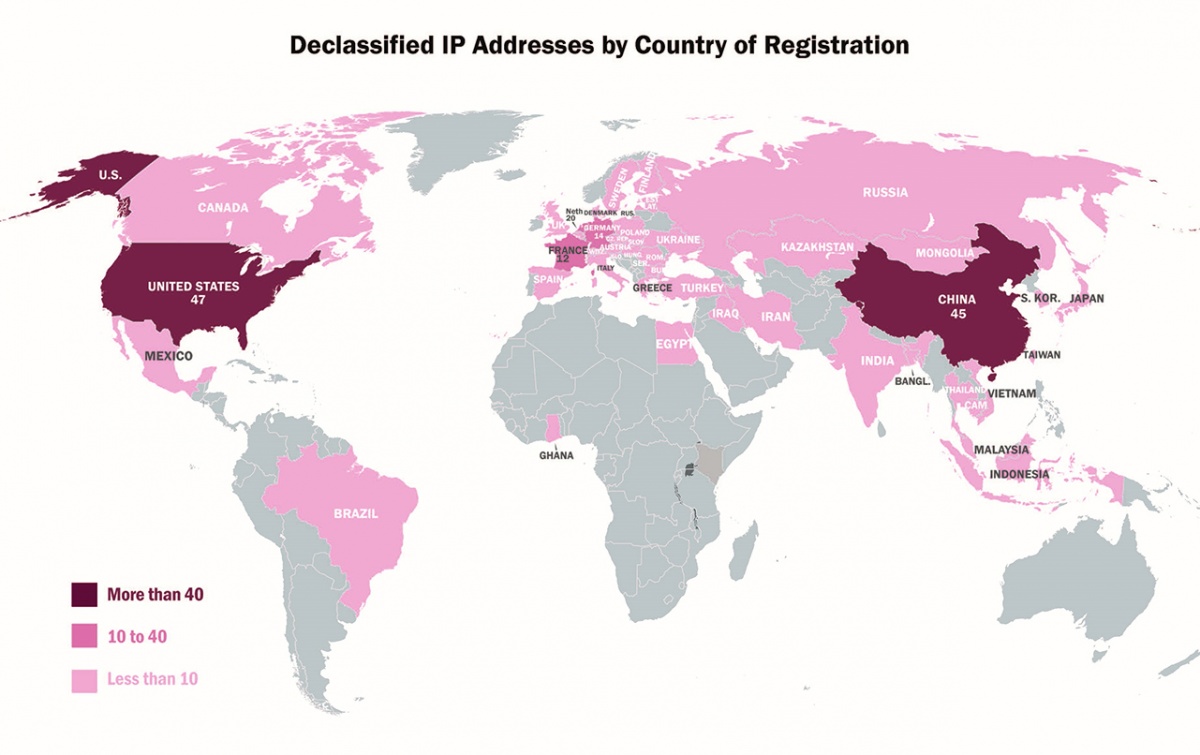
The JAR includes information on computers, servers, and other devices around the world that RIS uses to conduct command-and-control activity between compromised devices, send spearphishing emails, and steal credentials. The JAR identifies these devices by each one’s Internet Protocol (IP) address, which is a set of numbers that serves as an “address” for each computer and is used to transmit data between computers. Because RIS is using other people’s networks without their owners’ knowledge to hide their malicious activity, the computers at these IP addresses typically also host legitimate websites or other Internet services. In some cases, the cybersecurity community was aware of this infrastructure. In other cases, this information has been newly declassified by the U.S. government. The map in Figure 3 shows the 60 countries in which newly declassified IP addresses are located. The JAR also includes information on how RIS typically conducts their activities. This information can help network defenders understand how this adversary operates and can help identify new activity or disrupt ongoing intrusions by RIS.

Declassified IP Addresses by Country of Registration. United States: 47. Canada, Mexico, India, Iraq, Egypt, Turkey, Greece, Russia, Kazakhstan, Mongolia, Thailand, Cambodia, Malaysia, Indonesia, Vitenam, South Korea, Japan, Taiwan, Ukraine, Sweden, Finaldn, Poland, Slove, UK, Spaine, Italy, Austria, Poland, and Ghana: Less than 10. France: 12. Germany: 14. Netherlands: 20. China: 45.

Figure 3: Declassified Worldwide Infrastructure Co-Opted by Russian Intelligence Services

How You Can Protect Yourself and Your Networks

A commitment to good cybersecurity and best practices is critical to protecting networks and systems. Here are some questions you may want to ask of your organization to help prevent and mitigate against attacks.

  • Backups: Do we backup all critical information? Are the backups stored offline? Have we tested our ability to revert to backups during an incident?
  • Risk Analysis: Have we conducted a cybersecurity risk analysis of the organization?
  • Staff Training: Have we trained staff on cybersecurity best practices?
  • Vulnerability Scanning and Patching: Have we implemented regular scans of our networks and systems? Do we appropriately patch known system vulnerabilities?
  • Application Whitelisting: Do we allow only approved programs to run on our networks?
  • Incident Response: Do we have an incident response plan? Have we practiced it?
  • Business Continuity: Are we able to sustain business operations without access to certain systems? For how long?
  • Penetration Testing: Have we attempted to hack into our own systems to test the security of our systems and our ability to defend against attacks?

What to Do If You See Signs of Malicious Cyber Activity

If you find signs of malicious cyber activity, we encourage you report it to DHS’s National Cybersecurity and Communications Integration Center (NCCICCustomerService@hq.dhs.gov or 888-282-0870) or the FBI through your local field office or the FBI’s Cyber Division (cywatch@ic.fbi.gov or 855-292-3937).

bookmark_borderRussia And Cybersecurity

by Membrane Domain Cybersecurity

Cozy Bear and Fancy Bear are two hacking organizations from Russia. Cozy Bear (classified as advanced persistent threat APT29) are believed to be associated with Russian intelligence. Fancy Bear (also known as APT28, Pawn Storm, Sofacy Group, Sednit and STRONTIUM) is a cyber espionage group believed to be sponsored by the Russian government.

According to the Christian Science Monitor: “Traditionally, Cozy Bear targets potential victims with phishing attacks – email messages that appear to be from a legitimate, trusted friend or associate. Those messages may contain malicious software that scans a machine for antivirus software, then plants malware on the target machine that make it possible for attackers to monitor keystrokes, communications, documents and other sensitive material on target computers. Fancy Bear is known for stealing targets’ usernames and passwords by setting up dummy websites that appear real enough to convince users to input their email and password information.”

In September of 2015, Special Agent Adrian Hawkins of the Federal Bureau of Investigation called the Democratic National Committee to inform them of a security breech. The FBI referred to Cozy and Fancy Bears as “The Dukes”. Since that time 17 U.S. intelligence agencies have implicated Russia in the hack of the DNC.

It is believed that Putin used the information to undermine the Democrats in the election process. It is also believed that the Russian hackers breached the Republicans. The stolen Republican data will be used to blackmail the new President.

“No one should really be surprised they’d go after the DNC,” said Jason Healey, a senior research scholar at Columbia University. “It’s not really that different from going after the political and military information we suspect the US is also going after.”

bookmark_borderYahoo Hacked

by Membrane Domain Cybersecurity

In September, Yahoo disclosed that 500 million user accounts had been hacked. In December 2016, Yahoo announced that an additional one billion accounts had been hacked.

“What’s most troubling is that this occurred so long ago, in August 2013, and no one saw any indication of a breach occurring until law enforcement came forward,” said Jay Kaplan, the chief executive of Synack, a security company. “Yahoo has a long way to go to catch up to these threats.”

In what could be the biggest hack ever, the Yahoo user accounts included passwords, phone numbers, birth dates, and security questions.

Verizon is in the process of buying-out Yahoo. Verizon is also known for its lackadaisical cybersecurity and has had breeches of their customer data, as well.