by Daniel Brouse
July 29 , 2025
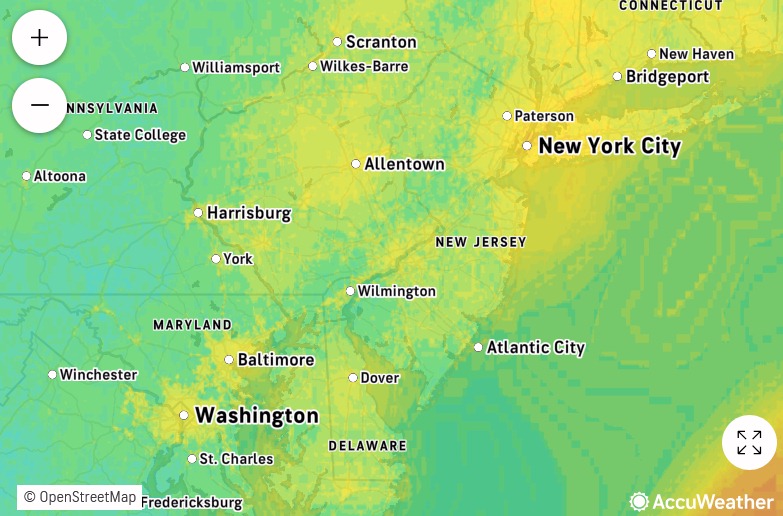
Today’s air quality map tells a story most people still fail to fully grasp: air pollution is not just a big-city problem. While it’s true that Philadelphia’s air quality is once again rated “unhealthy” today, the issue is far more widespread. Regions across Pennsylvania and surrounding states are also suffering—State College, Harrisburg, and even the Jersey Shore are experiencing poor air quality. Morgantown, West Virginia, consistently ranks among the worst in the nation, highlighting how rural and small-town America are not exempt from the invisible threat.
Air pollution is now the leading environmental cause of death in the United States. Fine particulate matter (PM2.5), ozone, nitrogen dioxide, and other airborne toxins contribute to heart disease, stroke, lung cancer, asthma, diabetes, and neurodegenerative disorders. These pollutants infiltrate the lungs, enter the bloodstream, and trigger systemic damage.
But what often gets overlooked is how air pollution initiates a health feedback loop. Exposure to chronic air pollution weakens the immune system, making the body more susceptible to both infectious and non-infectious diseases. It also causes epigenetic changes—altering how genes are expressed without changing the DNA itself—which can lead to lifelong health effects and be passed on to future generations. These changes reduce not just life expectancy, but the quality of life across one’s lifespan.
Worse still, this health feedback loop doesn’t exist in isolation—it interacts with climate-related feedback loops. For instance, warmer temperatures increase the formation of ground-level ozone and worsen wildfires, which dump more particulate pollution into the atmosphere. Simultaneously, climate-driven disruptions in agriculture and ecosystems compound the toll on human health through food insecurity and new disease vectors. The result is an accelerating cycle of harm that is exponentially shortening human lives.
What’s happening today on the air quality map is not a one-off event—it’s part of a long-term systemic crisis. The air we breathe is silently but powerfully eroding public health, disproportionately impacting children, the elderly, and frontline communities. Unless serious interventions are made at every level—from fossil fuel phase-outs to public health reforms—we are headed toward a future where the simple act of breathing becomes a daily health risk for millions.
Conclusion
Health feedback loops, violent rain, and deadly humid heat are fueling an exponential rise in climate-related deaths. This lethal triad — disease, extreme heat, and intense rainfall — demonstrates that climate change is not a distant threat but a rapidly accelerating public health emergency. These stressors interact and amplify one another, creating a cascade of compounding impacts that demand urgent intervention.
All 50 U.S. states — including Alaska — are already experiencing deadly humid heat advisories. Large regions of the country are becoming uninhabitable for weeks or even months each year due to extreme heat. Wet-bulb temperatures are approaching 31°C (87.8°F) in multiple states — a physiological threshold beyond which sustained outdoor survival is impossible, even with water and shade. Meanwhile, violent rain events are killing hundreds and causing billions in annual damage. Climate-driven health feedback loops have become the leading cause of mortality in the United States — fueled by systemic interactions between temperature extremes, air quality degradation, disease vectors, and infrastructure collapse. Addressing climate change is no longer just an environmental imperative — it is a public health necessity.
Our climate model — which incorporates complex socio-economic and ecological feedback loops within a dynamic, nonlinear system — projects that global temperatures could rise by up to 9°C (16.2°F) within this century. This far exceeds earlier estimates of a 4°C rise over the next thousand years, highlighting a dramatic acceleration in global warming. We are now entering a phase of compound, cascading collapse, where climate, ecological, and societal systems destabilize through interlinked, self-reinforcing feedback loops.
We examine how human activities — such as deforestation, fossil fuel combustion, mass consumption, industrial agriculture, and land development — interact with ecological processes like thermal energy redistribution, carbon cycling, hydrological flow, biodiversity loss, and the spread of disease vectors. These interactions do not follow linear cause-and-effect patterns. Instead, they form complex, self-reinforcing feedback loops that can trigger rapid, system-wide transformations — often abruptly and without warning. Grasping these dynamics is crucial for accurately assessing global risks and developing effective strategies for long-term survival.