by Daniel Brouse
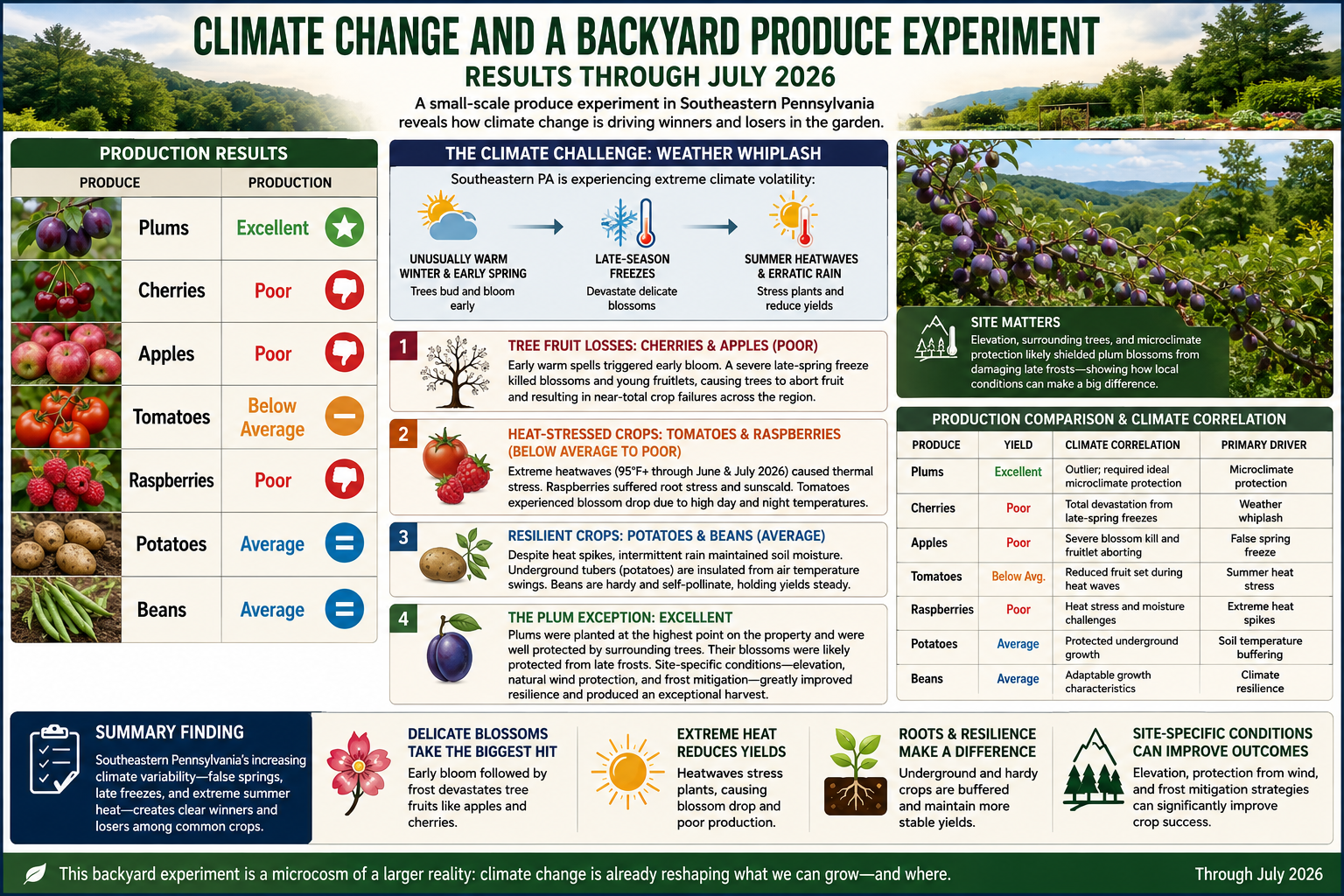
Climate Change and a Backyard Produce Experiment: Results Through July 2026
Production Results
| Produce | Production |
|---|---|
| Plums | Excellent |
| Cherries | Poor |
| Apples | Poor |
| Tomatoes | Below Average |
| Raspberries | Poor |
| Potatoes | Average |
| Beans | Average |
Introduction
The results of this backyard produce experiment closely reflect the climate-related agricultural challenges affecting Southeastern Pennsylvania through July 2026. The region has experienced increasing climate volatility, often described as “weather whiplash”—a pattern characterized by unusually warm winter and early spring conditions followed by damaging late-season freezes, summer heat waves, and increasingly erratic precipitation.
The observed performance of each crop corresponds closely with the climatic stresses documented throughout the region.
Analysis by Crop Type
1. Tree Fruit Losses: Cherries and Apples
Both cherries and apples produced poor yields, mirroring the severe losses reported by many Pennsylvania fruit growers.
Climate Driver:
Warmer winters and early springs are causing fruit trees to break dormancy and bloom earlier than historical averages.
The False Spring Effect:
Following an unusually warm early spring, a significant late-season freeze struck Pennsylvania. Because many cherry and apple trees had already reached vulnerable flowering stages, blossoms were damaged or destroyed. Trees subsequently aborted damaged fruitlets, resulting in dramatically reduced harvests.
Observed Result: Poor production.
2. Heat-Stressed Crops: Tomatoes and Raspberries
Tomatoes and raspberries showed substantial sensitivity to elevated summer temperatures.
Climate Driver:
Repeated heat waves during June and July 2026 produced prolonged periods with temperatures exceeding 95°F (35°C).
Botanical Impacts:
- Raspberries possess shallow root systems that are highly vulnerable to heat stress and soil moisture fluctuations. Prolonged high temperatures can reduce berry size, quality, and overall production.
- Tomatoes often experience blossom drop when both daytime and nighttime temperatures remain elevated. Flowers fail to pollinate successfully, reducing fruit set and overall yield.
Observed Results:
- Raspberries: Poor
- Tomatoes: Below Average
3. Resilient Crops: Potatoes and Beans
Potatoes and beans demonstrated greater resilience despite challenging weather conditions.
Climate Driver:
Although extreme heat occurred, the season also included intermittent rainfall events that helped maintain soil moisture.
Botanical Impacts:
- Potatoes benefit from underground tubers that remain insulated from extreme air temperatures.
- Beans are generally adaptable and capable of maintaining stable production across a wider range of environmental conditions.
Observed Results:
- Potatoes: Average
- Beans: Average
4. The Plum Exception
Plums were the clear standout of the experiment, producing an excellent harvest despite widespread challenges affecting other fruit crops.
Climate Driver:
Most stone fruit in the region faced significant frost damage. However, localized factors can substantially alter outcomes.
Possible Explanations:
- Favorable microclimate conditions
- Higher-elevation planting sites where cold air drains away
- Natural frost protection from surrounding terrain
- Orchard management practices that reduced freeze damage
The plums were planted at the highest point on the property and were well protected by surrounding trees. Their elevated location likely reduced frost exposure, while the surrounding trees helped moderate temperature fluctuations and wind. Together, these conditions likely protected the blossoms from the damaging late-spring frosts that devastated many other fruit trees. The exceptional performance of the plum crop suggests that site-specific conditions—including elevation, natural wind protection, and frost mitigation—can significantly improve a crop’s resilience to climate-related stresses.
Observed Result: Excellent production.
Production Comparison and Climate Correlation
| Produce | Yield | Climate Correlation | Primary Driver |
|---|---|---|---|
| Plums | Excellent | Localized success despite regional stress | Microclimate protection |
| Cherries | Poor | Severe blossom losses from spring freeze | Weather whiplash |
| Apples | Poor | Frost-damaged blossoms and fruitlets | False spring freeze |
| Tomatoes | Below Average | Reduced fruit set during heat waves | Summer heat stress |
| Raspberries | Poor | Heat stress and moisture challenges | Extreme temperatures |
| Potatoes | Average | Protected underground growth | Soil temperature buffering |
| Beans | Average | Adaptable growth characteristics | Climate resilience |
Conclusions
This small-scale produce experiment provides a useful illustration of how climate change is increasingly influencing agricultural outcomes in Southeastern Pennsylvania.
The results reflect a broader regional pattern:
- Early warming followed by hard freezes disproportionately impacts tree fruits such as apples and cherries.
- Extreme summer heat reduces yields of temperature-sensitive crops such as tomatoes and raspberries.
- Root crops and legumes generally demonstrate greater resilience to short-term temperature extremes.
- Microclimate advantages can sometimes offset regional climate pressures, as demonstrated by the exceptional plum harvest.
Key Finding
The experiment suggests that Southeastern Pennsylvania’s increasing climate variability—particularly the combination of false springs, late freezes, and extreme summer heat—is creating clear winners and losers among common food crops. Delicate flowering fruit trees experienced the greatest losses, while more resilient crops maintained average production levels despite challenging conditions.