bookmark_borderVPN: Virtual Private Network and Internet Privacy

by Daniel Brouse and Sidd Mukherjee

Your Internet service provider (ISP) knows where you live, your address and billing info. They also know:

  • all the IPs and domain names you visit and when
  • all the content of your unencrypted traffic in and out, as well as, the timing

The federal government now allows your ISP to sell the information.

VPN: Virtual Private Network
VPN stands for virtual private network. A VPN builds an encrypted connection from your computer to your VPN provider and routes all your traffic through it. All your traffic now appears on the net through the IP of your VPN provider.

If you use a VPN, the only thing others can see is you making an encrypted connection to one IP that relays your traffic. If that IP is at the same location as you, you are still subject to a geolocation threat.

In addition to using a VPN, the following is recommended:

TURN OFF Cookies And Java
The easiest way to start protecting your privacy is turning off cookies and java in your browser. Cookies allow remote servers access to your internet activities. Your browser history is also subject to privacy violations. Only allow access to your cookies and browser history when you are confident of the websites you visit. If a site forces you to use cookies, clear your cookies and browser history after each visit.

Java and Java script allow remote servers to run programs on your computer. Java script is how most malware is downloaded onto your computer. Avoid Java at all costs.

AdBlock – Chrome
Advertisement blocking software can be added to most web browsers. AdBlock for Google’s Chrome is one of the highest rated. Google says, “AdBlock. The #1 ad blocker with over 200 million downloads. Blocks YouTube, Facebook and ads everywhere else on the web. The original AdBlock for Chrome works automatically. Choose to continue seeing unobtrusive ads, whitelist your favorite sites, or block all ads by default. Just click “Add to Chrome,” then visit your favorite website and see the ads disappear!”

IP Anonymizer
Protecting the privacy of your unique IP is the most important aspect of protecting your privacy. It is also fairly difficult. A VPN does not conceal your IP on the Internet.

The easiest and cheapest way to conceal your identity is with an IP Anonymizer. “This anonymizer will hide your IP address from the websites you access as well as protect you from tracking with cookies and other means.”

You can go to a site, such as, http://webanonymizer.org/ and enter the website you want to visit. WebAnonymizer will automatically mask your IP for free.

TOR
A Tor browser is free software for enabling anonymous communication. The Tor name is an acronym for the original software project name “The Onion Router”. Tor routes Internet traffic through a free, worldwide, volunteer network of more than seven thousand relays. A users location and usage is concealed from anyone conducting network surveillance or traffic analysis. Tor makes it very difficult for Internet activity to be traced including “visits to Web sites, online posts, instant messages, and other communication forms”.

The Tor project states, “The Tor software protects you by bouncing your communications around a distributed network of relays run by volunteers all around the world: it prevents somebody watching your Internet connection from learning what sites you visit, it prevents the sites you visit from learning your physical location, and it lets you access sites which are blocked. Tor Browser lets you use Tor on Windows, Mac OS X, or Linux without needing to install any software. It can run off a USB flash drive, comes with a pre-configured web browser to protect your anonymity, and is self-contained (portable).”

Download the Tor browser (free)

Comments
A reader asked: So is there still a place for a VPN on our mobile devices? When using public wifi for example?
A: Yes. Almost all public wifi’s are a private network. You just have to worry about the other people who are on the private network with you. A device on the private network is easily hacked by someone in close proximity (e.g. hackers can use a Pringles can as an antenna and gain access within several hundred yards http://www.lifehack.org/articles/lifehack/extend-your-wifi-range-using-diy-antenna-from-pringles-can.html)
From The Membrane Domain’s Cybersecurity Center

bookmark_borderTrump Security Breach

For months, the security community has known that both the DNC and GOP were hacked. The DNC hack was used to undermine Hillary. The GOP / Trump hacks were meant for blackmailing Trump. No surprises here.

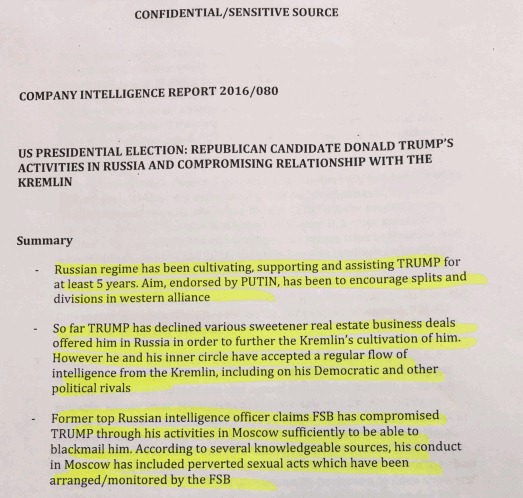
U.S. security agencies were aware of Donald Trump’s security breaches since last summer. The information was in the public domain by August of 2016. The Donald was given a copy of the report long before the story appeared in the New York Times.

In a hearing before the Senate Select Committee on Intelligence, FBI director James Comey said attackers penetrated GOP organizations and stole Republican National Committee emails. “There was evidence that there was hacking directed at state-level organizations and the RNC…. Information was harvested from there, but it was old stuff. None of that was released”, Comey said.

Back in August of 2016 digital security firm ThreatConnect said, “We believe DC Leaks is another Russian-backed influence outlet.” DC Leaks had released 300 stolen emails from Republican targets including the staffs of Sen. John McCain, Lindsey Graham, Michele Bachmann and party officials in several states.

In October of 2016, Richard Andres, a cybersecurity and national security strategy expert with the U.S. military’s National War College said, “What we’ve been seeing here in the U.S. so far is mild by comparison to what they do in their own backyard. If they continue to escalate, we should expect to increasingly see false flag operations designed to implicate various political actors, falsified leaks, blackmail, false calls to their opponents’ political supporters and more

The Russians have gained accessed to the DNC and GOP mainly through “spearphishing.” Spearphishing is when a hacker gets someone to click on an email, attachment, link or photo. Malware is then installed on the victim’s computer that allows hackers to exploit the network. “Essentially people are opening their front door and letting them in,” said Toni Gidwani, a former Defense Intelligence Agency official whose ThreatConnect cybersecurity firm has investigated many of the hacks. “It’s something they keep coming back to because it works.”

It is not a matter of politics. It is a matter of national security. All sides need people to go to jail over the security breaches — Republicans, Democrats and Russians.

On January 11, Donald Trump tried to skirt the issue during a press conference and said he didn’t have any business in Russia. These statements were very misleading, if not an out-an-out lie. Donald Trump has substantial investment from Russians for businesses in other countries. After Trump went bankrupt 6 times, he was unable to readily borrow money from any reputable institution. Instead, he took money from Russian oligarchs and Russian mobs.

In 2008, Donald Trump Jr. attended a real estate conference and stated, “Russians make up a pretty disproportionate cross-section of a lot of our assets. We see a lot of money pouring in from Russia.”

Bayrock is a Russian backed business that has been implicated in money laundering. The Financial Times reported, “The Republican presidential nominee and Bayrock were both based in Trump Tower and they joined forces to pursue deals around the world — from New York, Florida, Arizona and Colorado in the US to Turkey, Poland, Russia and Ukraine. Their best-known collaboration — Trump SoHo, a 46-storey hotel-condominium completed in 2010 — was featured in Mr Trump’s NBC television show The Apprentice.”

THE REPORT:
Trump Intelligence Allegations

Trump Intelligence Allegations

MORE

Russia Attempts to Hack Electric Grid
Malware associated with a Russian hacking operation, Grizzly Steppe, was found on a Burlington Electric computer. It appears as though Russia was trying to access the power grid; however, the infected computer was not connected to the network. “Vermonters and all Americans should be both alarmed and outraged that one of […]

Russia And Cybersecurity
Cozy Bear and Fancy Bear are two hacking organizations from Russia. Cozy Bear (classified as advanced persistent threat APT29) are believed to be associated with Russian intelligence. Fancy Bear (also known as APT28, Pawn Storm, Sofacy Group, Sednit and STRONTIUM) is a cyber espionage group believed to be sponsored by the […]

bookmark_borderFrance Ups Cybersecurity

France said the number of cyber attacks against the defence ministry have doubled each year. 24,000 attacks had been thwarted in 2016.

Security services have warded off attacks aimed at “tarnishing the image of the ministry as well as strategic attacks – harassment, surveillance, espionage – and even attempts to disrupt our drone systems,” Defence Minister Jean-Yves Le Drian said. “Thankfully, our defences were sufficient and none of these attacks were successful.”

“France reserves the right to respond by all means it deems appropriate,” he said. “That could be through the cyber arsenal at our disposal but also by conventional means. Everything would depend on the effects of the attack.”

“If there was an attempt to influence or manipulate the US presidential election, it would be a very serious incident. If it were led by a state government, it would be an intolerable interference. Targeting a country’s electoral process is an attack on its democratic foundations and its sovereignty, he added. Of course our services have discussed the issue, if only to learn lessons for the future,” said Le Drian

France plans to deploy 2,600 “digital soldiers” by 2019.

bookmark_borderRussia Attempts to Hack Electric Grid

by Membrane Domain Cybersecurity

Malware associated with a Russian hacking operation, Grizzly Steppe, was found on a Burlington Electric computer. It appears as though Russia was trying to access the power grid; however, the infected computer was not connected to the network.

“Vermonters and all Americans should be both alarmed and outraged that one of the world’s leading thugs, Vladimir Putin, has been attempting to hack our electric grid, which we rely upon to support our quality-of-life, economy, health, and safety,” Vermont Governor Shumlin said in a statement. “This episode should highlight the urgent need for our federal government to vigorously pursue and put an end to this sort of Russian meddling.”

Senator Patrick J. Leahy said, “This is beyond hackers having electronic joy rides — this is now about trying to access utilities to potentially manipulate the grid and shut it down in the middle of winter,” Leahy said in a statement. “That is a direct threat to Vermont and we do not take it lightly.”

Representative Peter Welch said, “It’s systemic, relentless, predatory.They will hack everywhere, even Vermont, in pursuit of opportunities to disrupt our country. We must remain vigilant, which is why I support President Obama’s sanctions against Russia and its attacks on our country and what it stands for.”

According to the Department of Homeland Security:

GRIZZLY STEPPE: Russian Malicious Cyber Activity

Russia’s civilian and military intelligence services engaged in aggressive and sophisticated cyber-enabled operations targeting the U.S. government and its citizens. The U.S. Government refers to this activity as GRIZZLY STEPPE. These cyber operations included spearphishing campaigns targeting government organizations, critical infrastructure entities, think tanks, universities, political organizations, and corporations, and theft of information from these organizations. This stolen information was later publicly released by third parties.

In operations targeting other countries, including U.S. allies and partners, Russian intelligence services (RIS) have undertaken damaging or disruptive cyber-attacks, including on critical infrastructure—in some cases masquerading as third parties or hiding behind false online personas designed to cause the victim to misattribute the source of the attack.

How Do Russian Intelligence Services Operate in Cyberspace?

RIS often uses spearphishing to gain access to targeted systems (see Figure 1 below). In one 2015–16 operation (detailed in our Joint Analysis Report (JAR)), Russian cyber actors conducted a spearphishing campaign to establish presence and persistence on a target network, obtain higher-level privileges, and steal (or “exfiltrate”) information.

These actors tricked recipients into changing their passwords through a fake website that was designed by the Russians cyber actors to appear legitimate. The actors then used those credentials—the username and password—to access the network as if they were legitimate users. They installed other malicious files, moved freely throughout the target network, gathered data and information, and exfiltrated it from the target network. Russian cyber actors continue to conduct spearphishing campaigns, including one launched as recently as November 2016, just days after the U.S. election.

What is the U.S. Government Doing?

The Department of Homeland Security (DHS) and Federal Bureau of Investigation (FBI) released a Joint Analysis Report (JAR), which provides details of the tools and infrastructure used by Russian intelligence services (RIS) to compromise and exploit networks and infrastructure associated with the recent U.S. election, as well as a range of U.S. government, political, and private sector entities. The JAR also arms network defenders with the tools they need to identify, detect, and disrupt Russia’s global campaign of malicious cyber activity. We urge users and administrators to use this information to better protect your networks.

What Is Spearphishing?

Spearphishing is the use of forged emails, texts, and other messages to manipulate users into opening malware or malicious software or clicking on malicious links.

Spearphishing attacks can lead to credential theft (e.g., passwords) or may act as an entry point for threat actors into an organization to steal or manipulate data and disrupt operations.

For more information, see the US CERT Tip on Avoiding Social Engineering and Phishing Attacks.

Screenshot of email that states: Incoming eFax: Elections Outcome could be revised [Facts of Elections Fraud]. Sent by Taylor Fax <securefaxsolutions@gmail.com> on Wednesday, November 9, 2016 at 10:39 To undisclosed-recipients. Attachment: election-headlines-FTE2016.docm (1.1 MB). Preview. eFax Solution. You have received a secure message from eFax Solution Corp. Please open the attachment election-headlines-FTE2016 in this email and enter PIN CODE: 3209. SUBJECT: ELECTIONS OUTCOME CUOLD BE REVISED [FACTS OF ELECTIONS FRAUD]. Please note: if you have trouble opening the message, please try the following 1. In your web browser, delete the temporary internet files and cookies. 2. Close the web browser. 3. Open the election-headlines-FTE2016 file in your secure email. End of screenshot.

Figure 1: Sample of Russian Post-Election Spearphishing

Lifecycle of Successful Spearphishing Operation. Starts on the left in Adversary Space, Russian Intelligence Services. Grizzly Steppe 1.) Leverages Operational Infrastructure (Neutral Space, in the middle) 2.) Crafts email with malicious link 3. ) Sent to Recipient (in Victim Space, on the right) 4.) Clicks on link and enters credentials into Website that looks legitimate (in Neutral Space), 5.) Gathers credentials in operational infrastructure, 6.) Uses credentials to Access Targeted System (in Victim Space) 7.) Install malicious files and 8.) Move through targeted systems and 9.) Gather Data of interested which is 10.) Exfiltrated to Operational Infrastructure (in Neutral Space).

Figure 2: Lifecycle of Successful Spearphishing Operation

What Information is in the JAR?

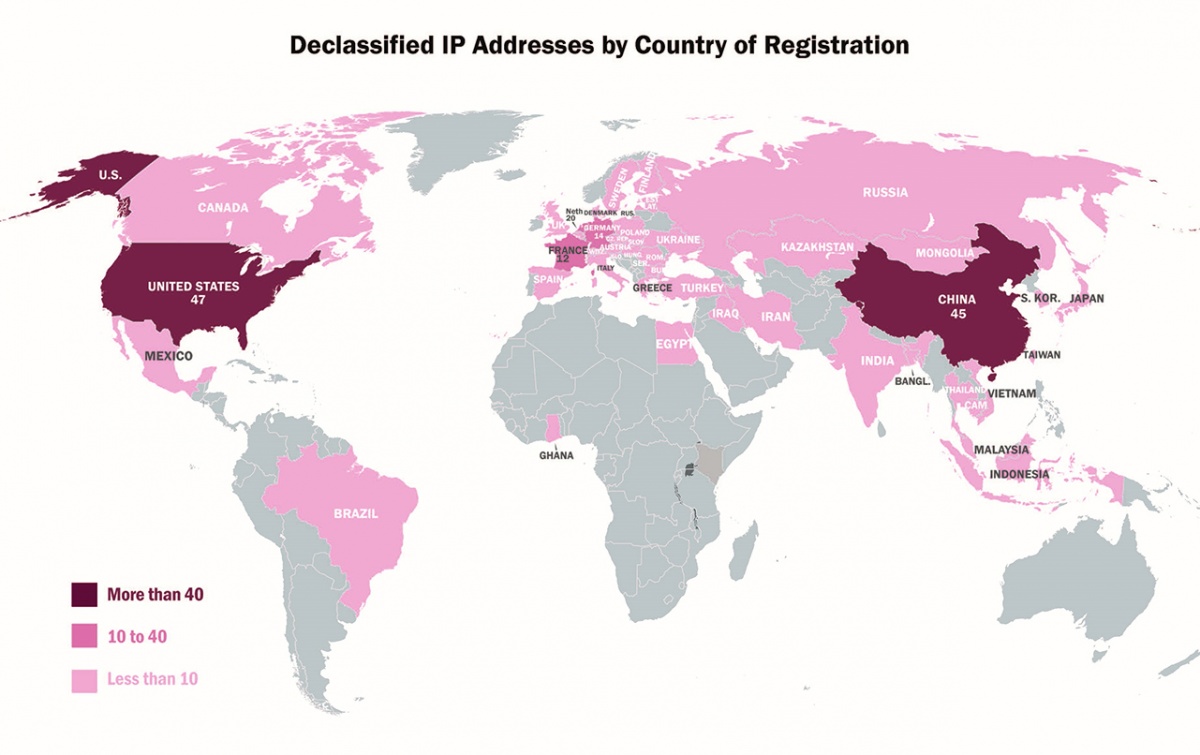
The JAR includes information on computers, servers, and other devices around the world that RIS uses to conduct command-and-control activity between compromised devices, send spearphishing emails, and steal credentials. The JAR identifies these devices by each one’s Internet Protocol (IP) address, which is a set of numbers that serves as an “address” for each computer and is used to transmit data between computers. Because RIS is using other people’s networks without their owners’ knowledge to hide their malicious activity, the computers at these IP addresses typically also host legitimate websites or other Internet services. In some cases, the cybersecurity community was aware of this infrastructure. In other cases, this information has been newly declassified by the U.S. government. The map in Figure 3 shows the 60 countries in which newly declassified IP addresses are located. The JAR also includes information on how RIS typically conducts their activities. This information can help network defenders understand how this adversary operates and can help identify new activity or disrupt ongoing intrusions by RIS.

Declassified IP Addresses by Country of Registration. United States: 47. Canada, Mexico, India, Iraq, Egypt, Turkey, Greece, Russia, Kazakhstan, Mongolia, Thailand, Cambodia, Malaysia, Indonesia, Vitenam, South Korea, Japan, Taiwan, Ukraine, Sweden, Finaldn, Poland, Slove, UK, Spaine, Italy, Austria, Poland, and Ghana: Less than 10. France: 12. Germany: 14. Netherlands: 20. China: 45.

Figure 3: Declassified Worldwide Infrastructure Co-Opted by Russian Intelligence Services

How You Can Protect Yourself and Your Networks

A commitment to good cybersecurity and best practices is critical to protecting networks and systems. Here are some questions you may want to ask of your organization to help prevent and mitigate against attacks.

  • Backups: Do we backup all critical information? Are the backups stored offline? Have we tested our ability to revert to backups during an incident?
  • Risk Analysis: Have we conducted a cybersecurity risk analysis of the organization?
  • Staff Training: Have we trained staff on cybersecurity best practices?
  • Vulnerability Scanning and Patching: Have we implemented regular scans of our networks and systems? Do we appropriately patch known system vulnerabilities?
  • Application Whitelisting: Do we allow only approved programs to run on our networks?
  • Incident Response: Do we have an incident response plan? Have we practiced it?
  • Business Continuity: Are we able to sustain business operations without access to certain systems? For how long?
  • Penetration Testing: Have we attempted to hack into our own systems to test the security of our systems and our ability to defend against attacks?

What to Do If You See Signs of Malicious Cyber Activity

If you find signs of malicious cyber activity, we encourage you report it to DHS’s National Cybersecurity and Communications Integration Center (NCCICCustomerService@hq.dhs.gov or 888-282-0870) or the FBI through your local field office or the FBI’s Cyber Division (cywatch@ic.fbi.gov or 855-292-3937).