bookmark_borderHawaii Wildfires Increased Flow Volumes, Damage, and Deaths

By Daniel Brouse
August 13, 2023

Physicist Sidd Mukherjee said, “Wind and water flow forces scale as the square of velocity, so as flow speeds increase (say due to more intense heating or heavier rain) the damage scales as the square of the velocity. That force is proportional to density times square of velocity (v^2).”

The hall of historic Waiola Church in Lahaina and nearby Lahaina Hongwanji Mission are engulfed in flames along Wainee Street on Tuesday, Aug. 8, 2023, in Lahaina, Hawaii. (Matthew Thayer/The Maui News via AP)

In the Hawaii wildfires of August 2023, both wind and water flow forces contributed to the devastation. Hurricane Dora was at least 500 miles from Hawaii yet the wind forces impacted the fire in Maui. The winds were so strong that before the fire reached Lahaina extremely hot air blew over the town. The streets were so hot they burnt people’s feet trying to flee. The surface of everything became hot. Even after people jumped into the ocean, they said the debris in the water was too hot to float on.

The blast of hot air over Lahaina created the conditions for a flashpoint. A flashpoint is the temperature at which a particular organic compound gives off sufficient vapor to ignite in air. The entire town ignited so quickly that warning sirens could not be activated and people did not have time to escape.

In an unexpected twist, water flow forces also contributed to the chaos. How could water flow add to the fire emergency conditions? When people fled the heat and fire, they jumped into the sea. ABC news reported: Shawn Dougherty, of Lahaina, was among the hundreds of residents forced to flee the resort city when the wildfire began engulfing their homes.

Like others, Dougherty said his only means of survival was to jump into the ocean with his girlfriend, but while some found safety in nearby jetties, the rocks and coral tore up Dougherty’s body.

“At one point, it seemed like I might drown,” he told ABC News. “I’m a good swimmer, but the water was just really rough because of the wind and the turbulence.”

“By increasing the energy in the system, humans have increased flow volumes, masses and velocities leading to increased damage (and deaths.)” — Brouse and Mukherjee

From: Climate Change: The Equation / Brouse and Mukherjee (2023)
What you can do today. How to save the planet.

Climate Change: The End of Times

The Human Induced Climate Change Experiment

bookmark_borderClimate Change: Increasing the Energy

by Daniel Brouse and Sidd Mukherjee

Technically Speaking, It’s Not the Momentum That Kills You

It’s not the fall that kills you; it’s the sudden stop at the end.

Technically speaking it is the impact from the momentum that causes damage and deaths. Global warming causes an increase in mass and/or velocity (momentum) of things that are mass flow driven by heat, like wind and flood.

The burning of fossil fuels and other human released emissions have impacted momentum’s impact. A warmer atmosphere can hold more moisture. Warmer air allows for the creation of more massive raindrops. Warmer ocean temperatures create stronger hurricanes. Hail and tornadoes form in strong thunderstorm clouds with intense updrafts, high liquid-water content, and large water droplets.

Sidd added: It’s worse than that. Wind and water flow forces scale as the square of velocity, so as flow speeds increase (say due to more intense heating or heavier rain) the damage scales as the square of the velocity.

About “square of the velocity”, I asked Sidd: is this Bernoulli’s Equation?

Sidd replied:

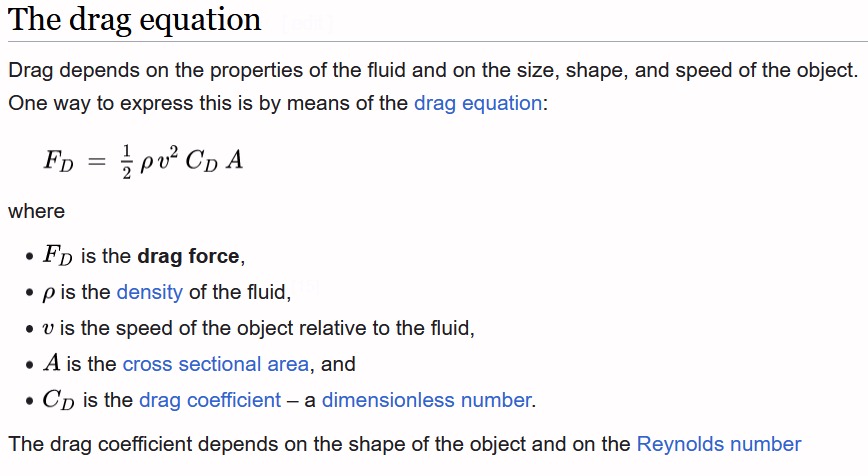
look at Wikipedia: Drag (Physics)
you will see that force is proportional to density times square of velocity (v^2)

The Drag Equation
So a twenty mile an hour wind exerts four times as much force as a ten mile an hour wind. And a forty mile an hour wind exerts sixteen times as much force as a ten mile an hour wind. A wind of fifty miles an hour exerts twenty five times and a wind of sixty miles an hour exerts thirty six times as much force as one of ten miles an hour. Then you have the density term. Water is about eight hundred times denser than air, So the force exerted by a ten mile an hour flow of water is eight hundred times that of a ten mile an hour wind. So as flow velocities go up due to climate change, force and damage scale as square of the velocities. What is not clear is how much these velocities increase with climate change. But in a sense we are seeing this already as, for example, flood and sewage systems succumb and hillsides fall down, and so on.

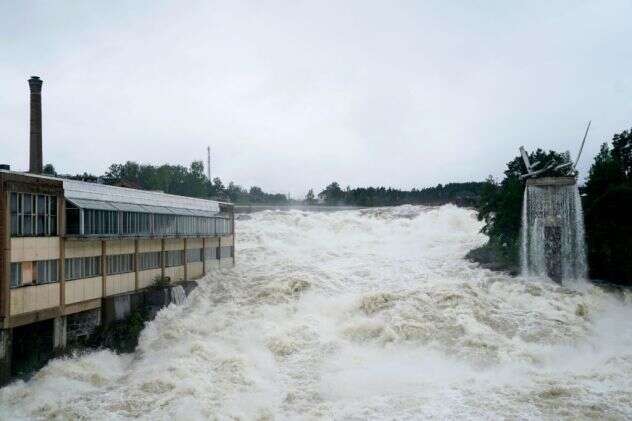
Norway Floods 2023

Update — Climate change’s influence on wind flow forces caused more severe damage and deaths. The Maui wildfire of August 2023 is an example. What would have been a fairly routine wildfire was fanned out-of-control by hurricane force winds. One headline read, “Maui fires: Hawaii blazes fanned by Hurricane Dora”. Another headline read, “Hawaii wildfires kill as ‘apocalypse’ hits Maui island”. The New York Times reported, “Gov. Josh Green of Hawaii said on Thursday that the devastating wildfires that swept through western Maui and killed at least 55 people, and possibly many more, were ‘likely the largest natural disaster in Hawaii state history.'”

Also in August of 2023, climate change’s influence on water flow forces caused more severe damage and deaths. AccuWeather reported, “Dam bursts open as deadly flooding washes away homes in Norway. Torrents of water gushed through multiple towns across Norway and landslides cascaded down mountainsides after a deluge drenched Norway.”

Summary

Summary

By increasing the energy in the system, humans have increased flow volumes, masses and velocities leading to increased damage (and deaths.)

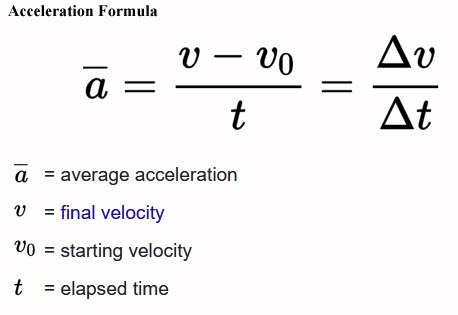
Newton’s second law: F = m * a
F = force
m = mass of an object
a = acceleration

Acceleration Formula

From: Climate Change: The Equation / Brouse and Mukherjee (2023)
What you can do today. How to save the planet.

Climate Change: The End of Times

The Human Induced Climate Change Experiment

bookmark_borderClimate Change: A Hard Rain Is Falling

by Daniel Brouse and Sidd Mukherjee

In a vacuum, everything falling to earth accelerates at 9.8 m/s^2 (32ft/s^2) [the downward speed increases at 9.8 m/s (32 ft/s) every second.]

Rain accelerates down to earth initially at 9.8 m/s^2, but air resistance slows the drops to a constant speed called the terminal velocity which depends on the size of the drop. “When all the parameters are considered the terminal velocity of a typical raindrop is calculated to be about 9 meters per second or 20 mph. A smaller raindrop of radius 0.15 cm has a terminal velocity of about 7 meters per second or 16 mph.” (1)

Velocity is only one factor in calculating the momentum of rain. The mass of rain also factors into the momentum.
p = mv
p = momentum
m = mass
v = velocity

“Climate change can affect the intensity and frequency of precipitation. Warmer oceans increase the amount of water that evaporates into the air. When more moisture-laden air moves over land or converges into a storm system, it can produce more intense precipitation — for example, heavier rain and snowstorms.” (2)

Part of the increasing momentum is transferred to the sides and upward increasing wind turbulence, as well as updrafts.

Most of the momentum is transferred upon impact. You may notice the rain bouncing higher off the streets and sidewalks. As rain becomes more massive, it will have greater momentum when it hits the ground. Ground without groundcover will be hit harder causing more damage. The groundcover will also be hit harder causing more damage.
* Concrete and asphalt will sustain more damage.
* Solar panels and roofs will sustain more damage.
* Trees and plants will sustain more damage.
* Food crops will sustain more damage.

1. “What is the speed of falling raindrops?” Kyle Hathcox, Glenn Marsch, David Ward (2001)
2. “Climate Change Indicators: Heavy Precipitation” EPA (2021)

The Human Induced Climate Change Experiment