The Rhine River has fallen to historic low levels at several critical measuring stations, disrupting one of Europe’s most important transportation corridors. At Lobith, near the Dutch border, the river dropped to 6.47 meters above NAP, surpassing the previous record set during the severe 2022 drought. River discharge has also plunged to approximately 692 cubic meters per second as prolonged drought and depleted Alpine snowpacks sharply reduce water flowing downstream.
Shipping and Economic Impacts
The Rhine carries hundreds of millions of tons of cargo each year, making low-water events a major economic concern.
Cargo restrictions: Freight vessels are operating at only 20% of normal capacity in some locations to avoid grounding on the riverbed.
Critical bottlenecks: Water levels at the key shipping gauge at Kaub, near Koblenz, have fallen to around 25 centimeters, matching the record lows experienced in 2018.
Rising costs: Reduced shipping capacity has significantly increased transportation costs, disrupted supply chains, and threatens economic growth across Central Europe.
Outlook
Forecasts indicate that river levels could continue falling if hot, dry conditions persist through the coming weeks.
Although authorities report no immediate threat to municipal drinking water supplies, voluntary water conservation measures are being encouraged as drought conditions intensify.
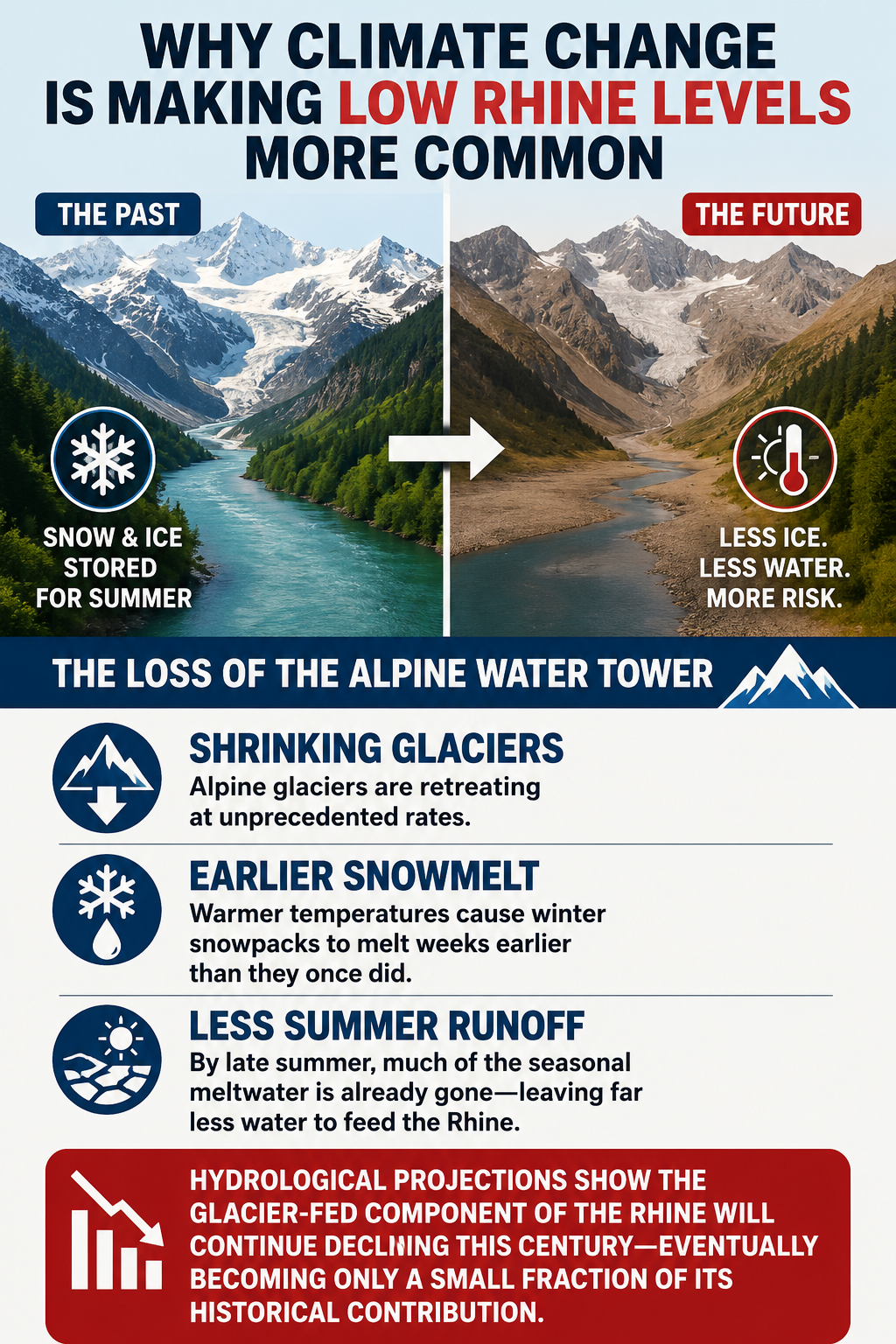
Why Climate Change Is Making Low Rhine Levels More Common
While the Rhine has experienced low-water periods throughout history, climate change is fundamentally altering the river’s hydrology. Research from European hydrological agencies shows that rising temperatures and accelerating glacial retreat are removing the natural systems that historically sustained river flows during dry summers.
The Loss of the Alpine Water Tower
The Alps have long acted as Europe’s natural water reservoir, storing winter snowfall and glacier ice that gradually melted throughout the summer.
That natural buffer is rapidly disappearing.
Shrinking glaciers: Alpine glaciers are retreating at unprecedented rates.
Earlier snowmelt: Warmer temperatures cause winter snowpacks to melt weeks earlier than they once did.
Less summer runoff: By late summer, much of the seasonal meltwater has already been exhausted, leaving far less water to feed the Rhine during periods of peak demand.
Hydrological projections indicate that the glacier-fed component of the Rhine will continue declining throughout this century, eventually becoming only a small fraction of its historical contribution.
A River Increasingly Dependent on Rainfall
As glacier and snowmelt decline, the Rhine is transitioning from a stable, meltwater-supported river into one increasingly dependent on rainfall.
This shift produces much greater variability:
Wetter winters with more intense precipitation.
Longer, hotter summer droughts.
More frequent and severe low-water events.
Increasing disruptions to commercial navigation and regional economies.
Without the stabilizing influence of Alpine snow and glacier melt, prolonged summer droughts now cause the Rhine to reach critical shipping thresholds far more quickly than in the past.
The Rhine’s record-low water levels are more than a short-term drought story—they illustrate how accelerating climate change is transforming Europe’s water resources. As glaciers continue to retreat and heatwaves become more frequent, extreme low-water events are expected to become increasingly common, posing growing risks to transportation, industry, agriculture, and water management across the continent.
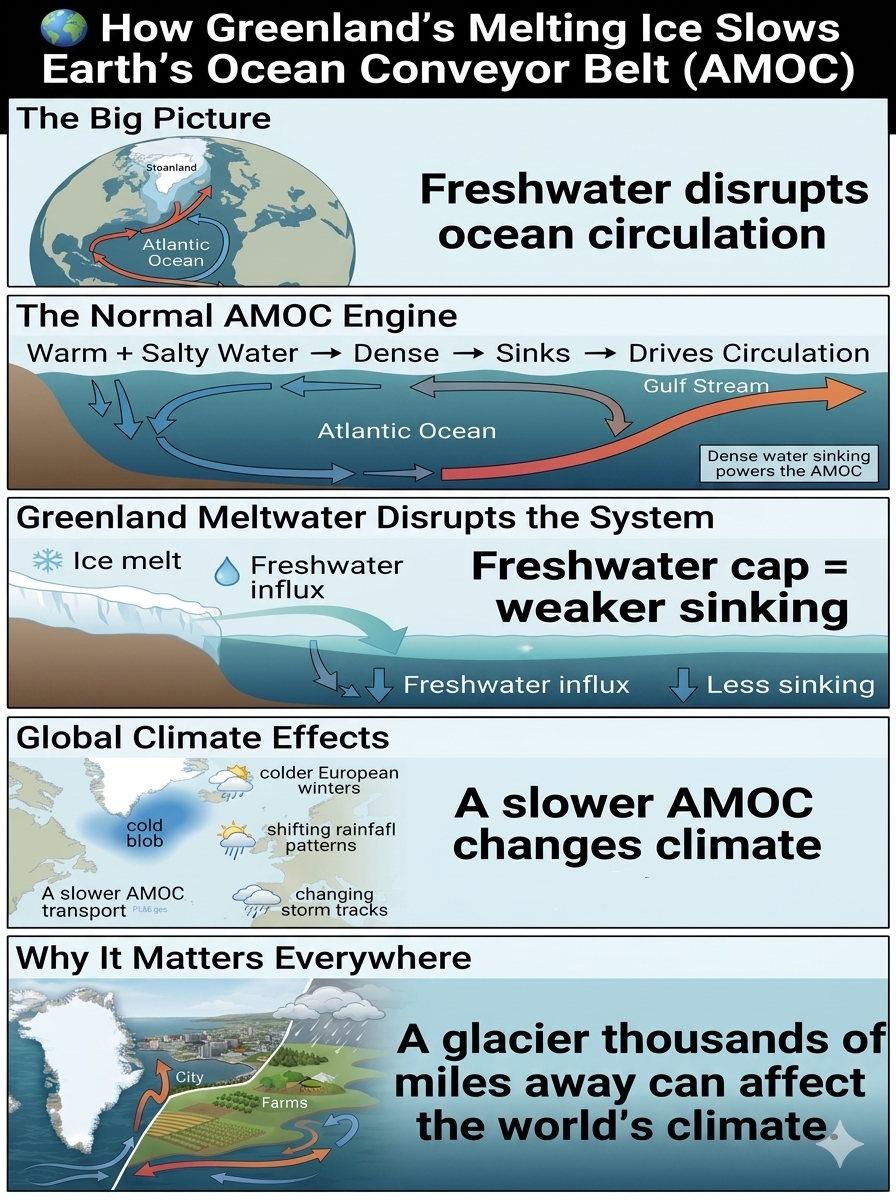
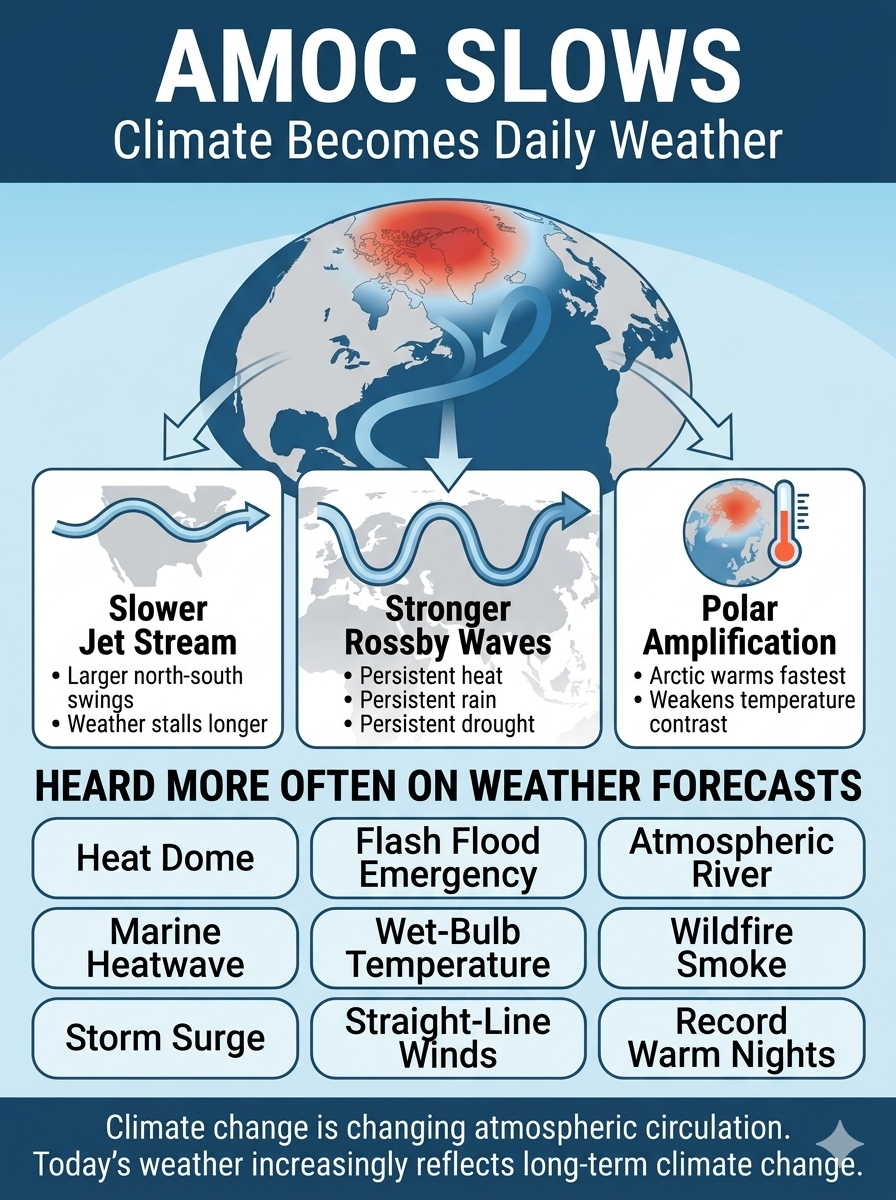
Glacial retreat is weakening the Atlantic Meridional Overturning Circulation (AMOC) by injecting enormous amounts of freshwater into the North Atlantic. This disrupts the natural “ocean conveyor belt” that redistributes heat around the planet and plays a critical role in regulating global climate patterns.
The Mechanics of the Slowdown
The AMOC depends on a delicate balance between temperature and salinity to maintain its circulation. Greenland’s accelerating ice loss is disturbing this balance through a chain reaction:
The Normal Engine: Sinking Water
Under normal conditions, warm, salty tropical water flows northward through the Gulf Stream into the North Atlantic. As this water reaches the subpolar regions near Greenland, it cools. Because cold, salty water is extremely dense, it sinks rapidly into the deep ocean.
This sinking motion acts like the engine of the AMOC, pulling more warm surface water northward while sending colder deep water back toward the tropics. This continuous cycle helps transport heat around the globe.
The Freshwater Cap
The accelerating retreat of the Greenland Ice Sheet is adding vast quantities of freshwater directly into these critical deep-water formation zones.
Unlike salty ocean water, freshwater is less dense. As meltwater accumulates at the surface, it creates a buoyant freshwater layer — sometimes described as a “cap” — that makes it more difficult for surface waters to sink.
Loss of Density: A Slower Conveyor
When surface waters cannot sink efficiently, the downward circulation weakens. The reduced sinking disrupts the entire AMOC system, slowing the transport of heat and altering ocean circulation patterns across the Atlantic basin.
Compounding Regional Feedbacks
The Atlantic “Cold Blob”
One of the most visible signs of AMOC weakening is a persistent region of unusually cold water south of Greenland and near the North Atlantic subpolar gyre, often called the Atlantic Cold Blob.
As the AMOC slows, less tropical heat is transported northward, creating a localized cooling pattern within an otherwise warming planet. This cold region acts as a fingerprint of changing ocean circulation.
Glacial Changes Beyond Greenland
The AMOC is not isolated from the rest of the planet. Research suggests that melting glaciers and ice sheets in other regions can influence global ocean salinity patterns.
Freshwater entering the Pacific Ocean from retreating glaciers and melting icebergs can alter large-scale ocean circulation pathways, potentially affecting the Atlantic system thousands of miles away.
Current Impact and Future Outlook
Observations indicate that the AMOC has weakened compared with conditions in the mid-20th century, although the exact magnitude of the slowdown remains an active area of scientific research because direct measurements of the full system only began recently.
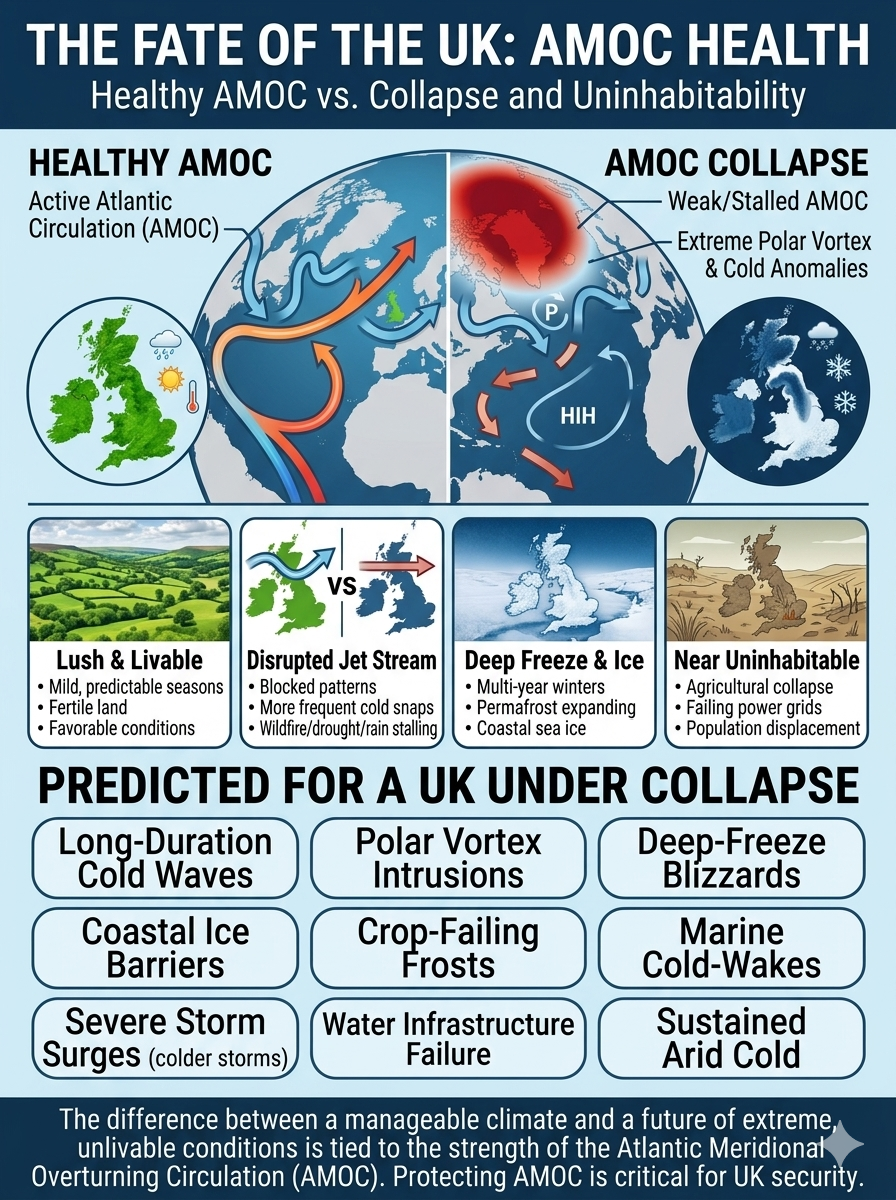
Earlier climate discussions often focused on the possibility of a sudden, abrupt AMOC collapse. More recent high-resolution climate simulations generally suggest that Greenland meltwater is more likely to contribute to a progressive weakening rather than an immediate shutdown.
However, a substantial long-term slowdown would still have major consequences:
🌊 Changes in Atlantic heat transport
❄️ More extreme winter patterns in parts of Europe
🌧️ Shifts in tropical rainfall and monsoon systems
🌪️ Altered storm tracks and regional weather extremes
🌍 Greater disruption of Earth’s climate balance
The AMOC is a reminder that Earth’s climate system is not a collection of isolated parts. A glacier melting thousands of miles away can influence ocean currents, weather patterns, and societies around the world.
The fate of Greenland’s ice is not just an Arctic issue — it is a global climate signal.
The overwhelming interest in Greenland’s dramatic iceberg rollover has raised an important question: Why should people who live thousands of miles from a glacier care?
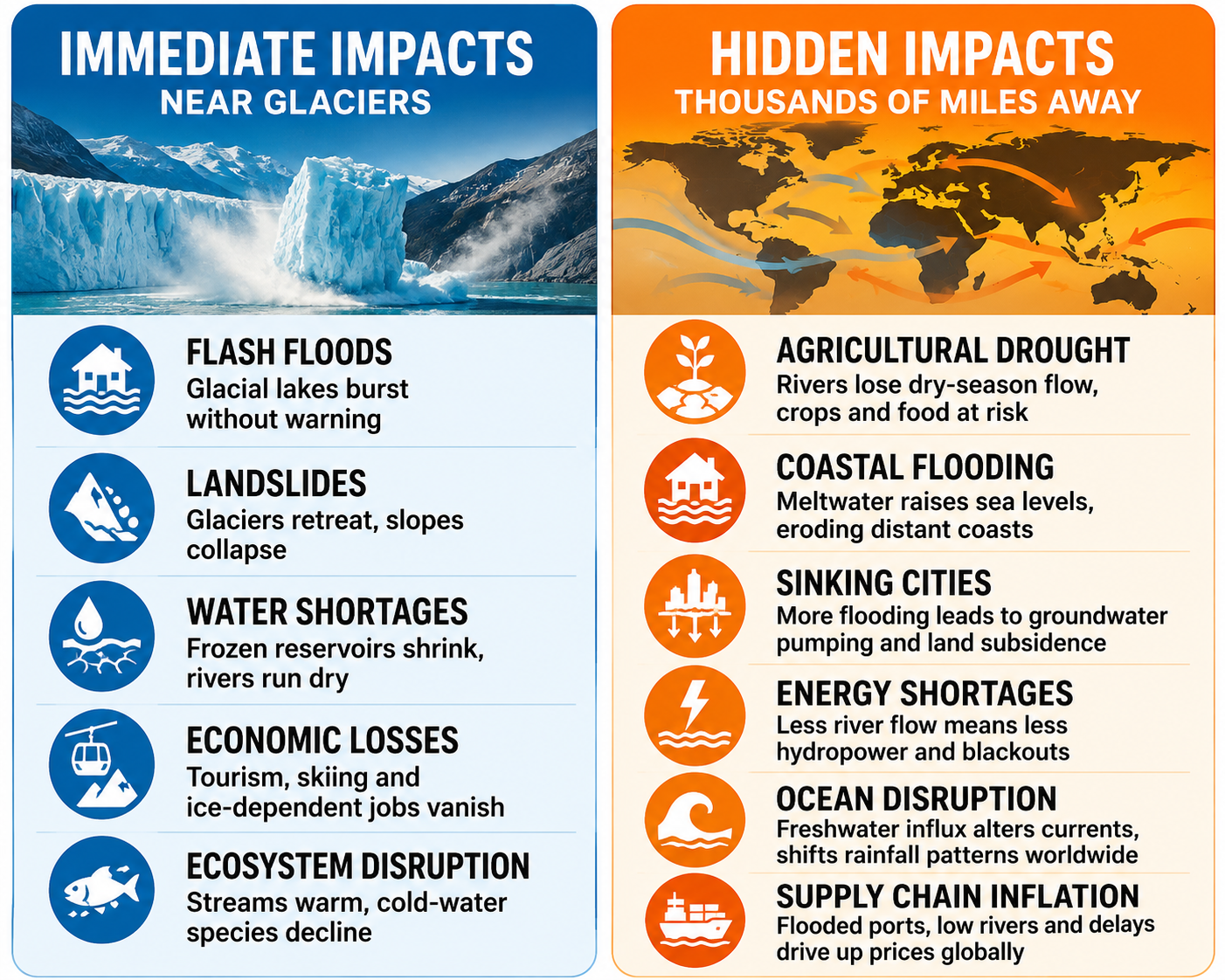
Glacial retreat reshapes nearby landscapes almost immediately, but its most significant impacts extend far beyond the Arctic. As glaciers disappear, the effects ripple through water supplies, food production, energy systems, coastlines, and the global economy.
Immediate Impacts Near Glaciers
Flash floods: Melting ice forms unstable glacial lakes that can burst without warning, devastating downstream communities.
Landslides: As glaciers retreat, they remove the support that stabilizes steep mountain slopes, increasing the risk of massive rockfalls.
Water shortages: Many communities lose the frozen reservoirs that supply rivers during the dry summer months.
Economic losses: Glacier tourism, skiing, and other ice-dependent industries decline as glaciers disappear.
Ecosystem disruption: Cold-water species, including trout and salmon, struggle as streams warm and habitats shrink.
Hidden Impacts Thousands of Miles Away
Agricultural drought: Rivers fed by glaciers lose their dry-season flow, reducing irrigation water for farms far downstream.
Coastal flooding: Meltwater from Greenland and other glaciers raises global sea levels, increasing flooding and shoreline erosion worldwide.
Sinking cities: More frequent coastal flooding often leads to increased groundwater pumping, accelerating land subsidence in vulnerable urban areas.
Energy shortages: Hydroelectric systems that depend on glacier-fed rivers face declining water supplies and reduced power generation.
Disrupted ocean circulation: Large freshwater inputs can alter ocean currents, shifting weather patterns and rainfall across continents.
Higher prices: Lower river levels, flooded ports, and damaged transportation infrastructure disrupt global supply chains, increasing the cost of food, energy, and consumer goods.
Glacial retreat is far more than the loss of scenic ice. It is a global chain reaction that affects freshwater, agriculture, infrastructure, ecosystems, economies, and the stability of the climate system. What begins with melting ice in Greenland ultimately influences the lives of billions of people around the world.
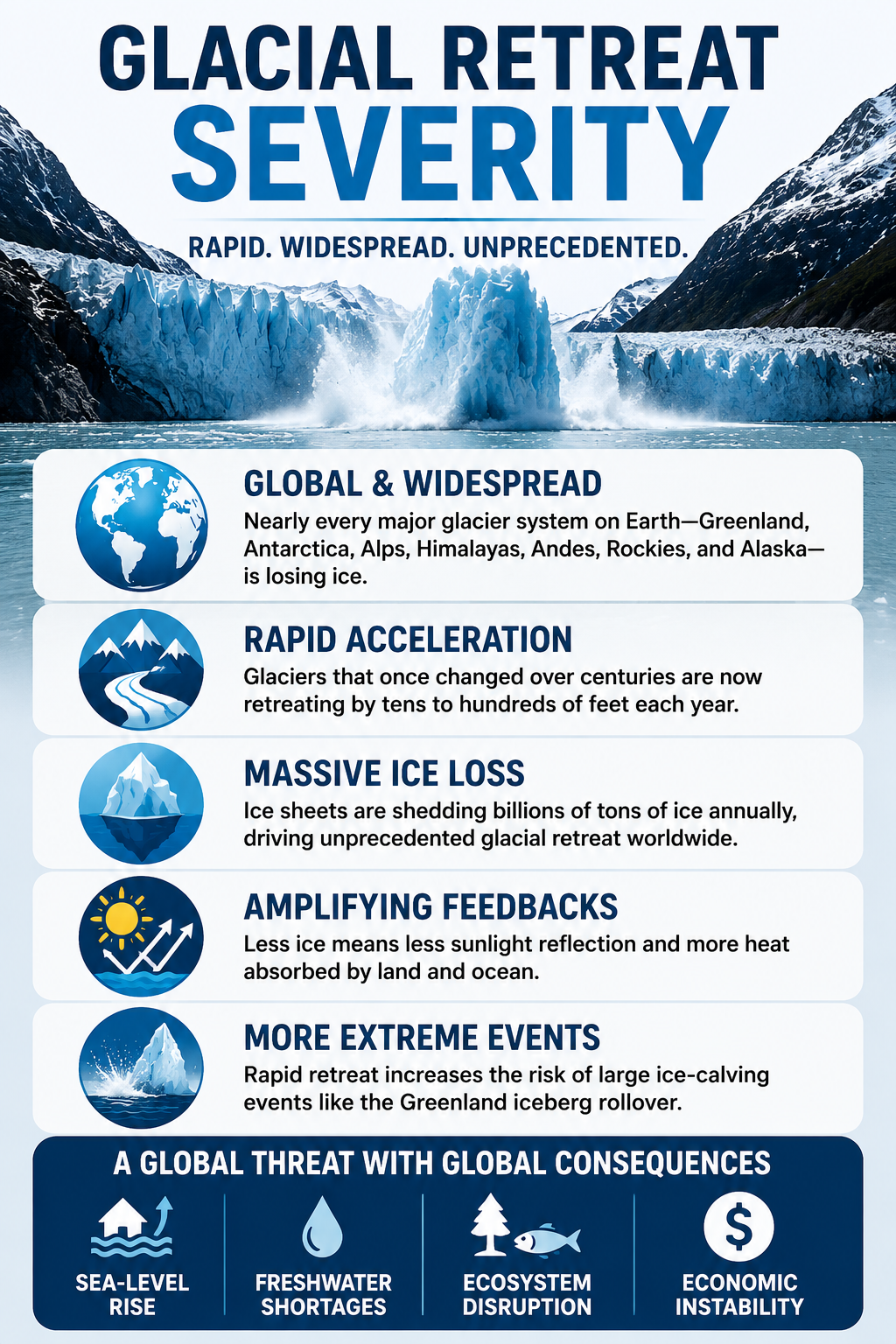
Glacial Retreat Severity
Glacial retreat is accelerating at an unprecedented rate as rising global temperatures drive record levels of melting. Nearly every major glacier system on Earth—from Greenland and Antarctica to the Alps, Himalayas, Andes, Rockies, and Alaska—has experienced sustained ice loss over recent decades. In many regions, glaciers that once changed slowly over centuries are now retreating by tens to hundreds of feet each year, while ice sheets are shedding billions of tons of ice annually. This rapid loss reduces Earth’s ability to reflect sunlight, exposes darker land and ocean surfaces that absorb more heat, and increases the likelihood of large ice-calving events like the recent Greenland iceberg rollover. As these feedback loops intensify, glacial retreat is no longer just a regional environmental issue—it has become a global driver of sea-level rise, freshwater shortages, ecosystem disruption, and economic instability.
On July 25, 2026, a massive iceberg near Ilulissat, Greenland, dramatically rolled over in the ocean, sending a powerful surge of waves and mist toward the coastline. The spectacular event occurred near the UNESCO-listed Ilulissat Icefjord on Greenland’s western coast, where enormous icebergs regularly break away from one of the most active glacier systems on Earth.
As the giant block of ice rotated with tremendous force, it revealed a jagged, ancient underside that had been hidden beneath the ocean surface. Fortunately, no injuries or property damage were reported from the resulting waves.
Why Do Giant Icebergs Flip?
Icebergs are naturally unstable structures. They float with roughly 90% of their mass hidden below the waterline, and their shape changes continuously as they melt.
1. Uneven Melting Shifts the Center of Gravity
Icebergs often become unstable because melting does not occur evenly. Warmer ocean water can erode the submerged portion of the iceberg, while sunlight and warmer air melt the upper surface.
As the underwater shape changes, the iceberg’s center of gravity shifts. Eventually, the enormous ice mass becomes unstable and violently rotates until it reaches a new equilibrium.
2. The Ilulissat Region Is an Iceberg Hotspot
The event occurred near the terminus of Sermeq Kujalleq Glacier, one of the fastest-moving glaciers in the world.
This glacier feeds the Ilulissat Icefjord and has historically produced some of Greenland’s largest icebergs. Its rapid flow and frequent calving make the region one of the most dramatic locations on Earth to witness glacier change.
Why This Matters for Climate Change
Iceberg flips are a natural part of the iceberg life cycle, but climate change is altering the conditions that create and accelerate these events.
A Warmer Arctic Means Faster Ice Loss
The Arctic is warming much faster than the global average, causing:
Faster glacier flow: Warmer temperatures increase ice loss and can accelerate glacier movement toward the ocean.
More frequent calving: As glaciers lose mass, more large icebergs break away.
More rapid underwater melting: Warmer ocean waters attack the submerged portions of icebergs, destabilizing them more quickly.
Greater instability of ice structures: Rapid melting creates unusual shapes that are more likely to roll over.
Greenland’s ice sheet is now losing hundreds of billions of tons of ice each year, contributing to rising global sea levels. The surrounding Arctic Ocean is also warming rapidly, intensifying the processes that reshape Greenland’s glaciers and icebergs.
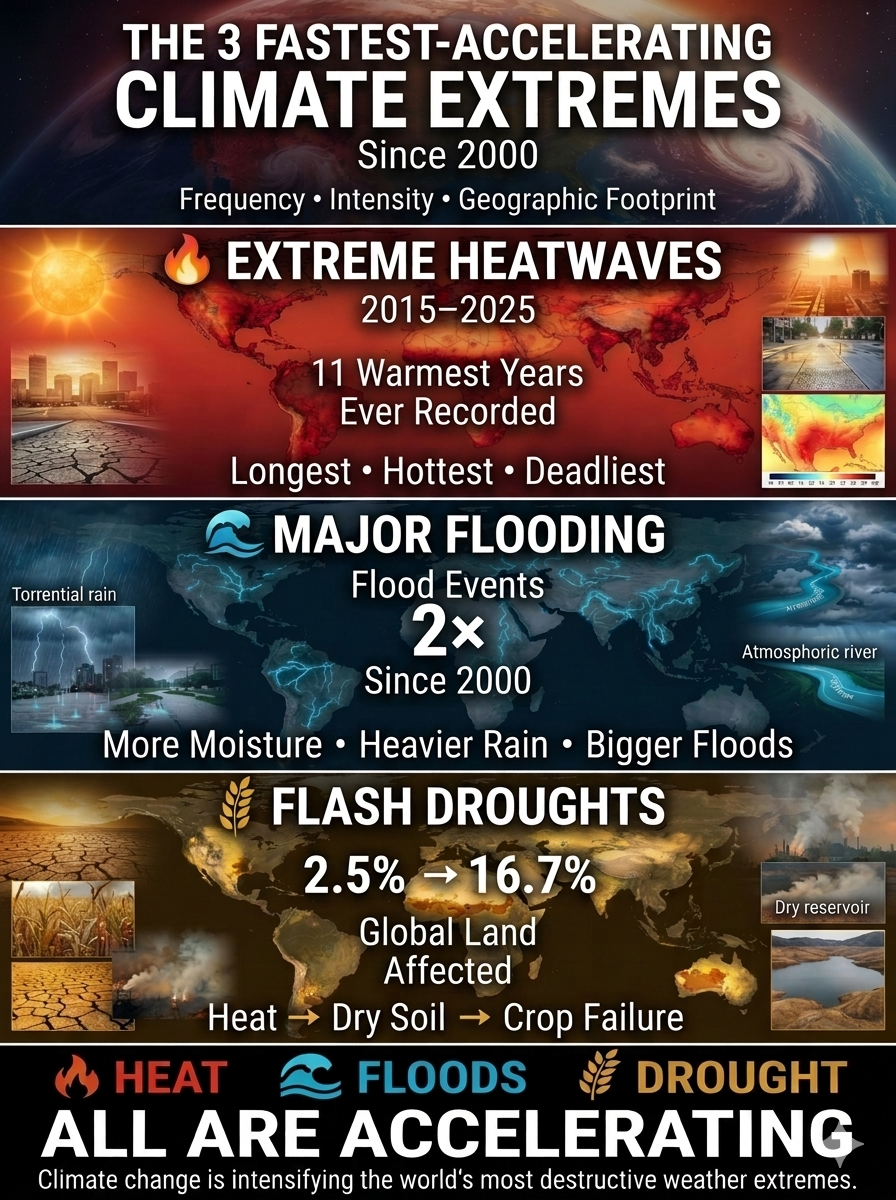
Since 2000, three climate extremes have accelerated faster than all others in their frequency, intensity, and geographic reach: extreme heatwaves, major flooding, and heat-triggered flash droughts.
1. Extreme Heatwaves The Trend: The years 2015–2025 were the 11 warmest years ever recorded globally. The Impact: Heatwaves have become dramatically longer, hotter, and more widespread, producing record-breaking temperatures on every continent. They now account for the largest share of climate-related deaths worldwide and increasingly strain power grids, agriculture, water supplies, and public health systems.
2. Major Flooding & Extreme Rainfall The Trend: According to United Nations disaster records, major flood events have more than doubled since 2000, increasing from approximately 1,389 events to more than 3,254. The Impact: As the atmosphere warms, it holds significantly more water vapor, intensifying the global water cycle. The result is a sharp rise in short-duration, high-intensity rainfall that overwhelms drainage systems, dams, rivers, and urban infrastructure.
3. Heat-Triggered Flash Droughts The Trend: The share of global land affected by heat-driven drought has expanded from 2.5% in the 1980s to 16.7% in recent years, with the rate of increase accelerating roughly eightfold since 2000. The Impact: Unlike traditional droughts that develop over months, flash droughts can emerge within weeks. Extreme heat rapidly strips moisture from soils and vegetation, triggering sudden crop failures, water shortages, wildfire risk, and severe agricultural losses before communities have time to respond.
Bottom Line: These three extremes—extreme heat, extreme flooding, and flash droughts—are no longer isolated events. They are accelerating simultaneously, amplifying one another, and reshaping climate risk across the globe. Together, they represent the clearest evidence that climate change is driving a new era of increasingly frequent, intense, and widespread extreme weather.
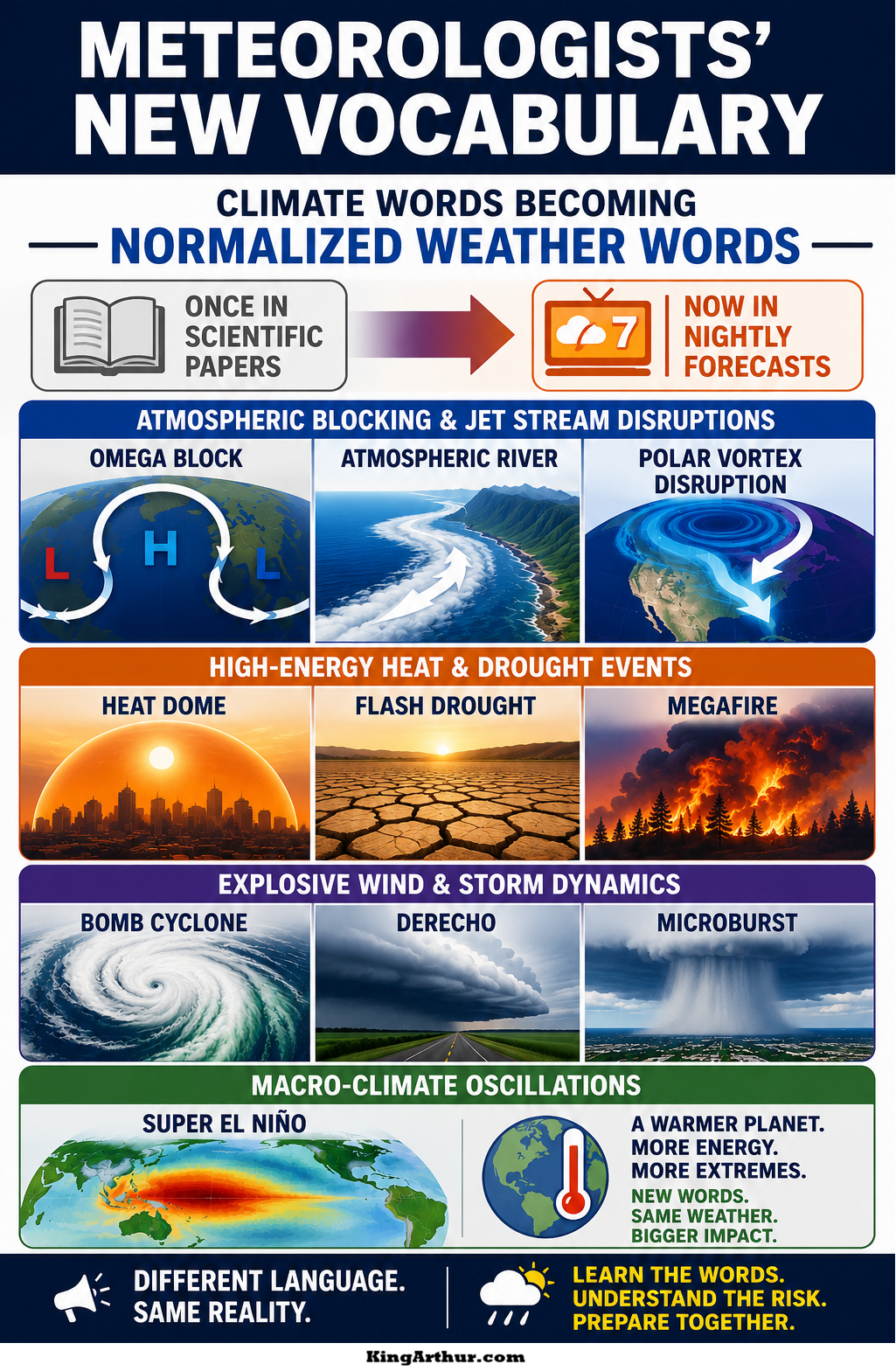
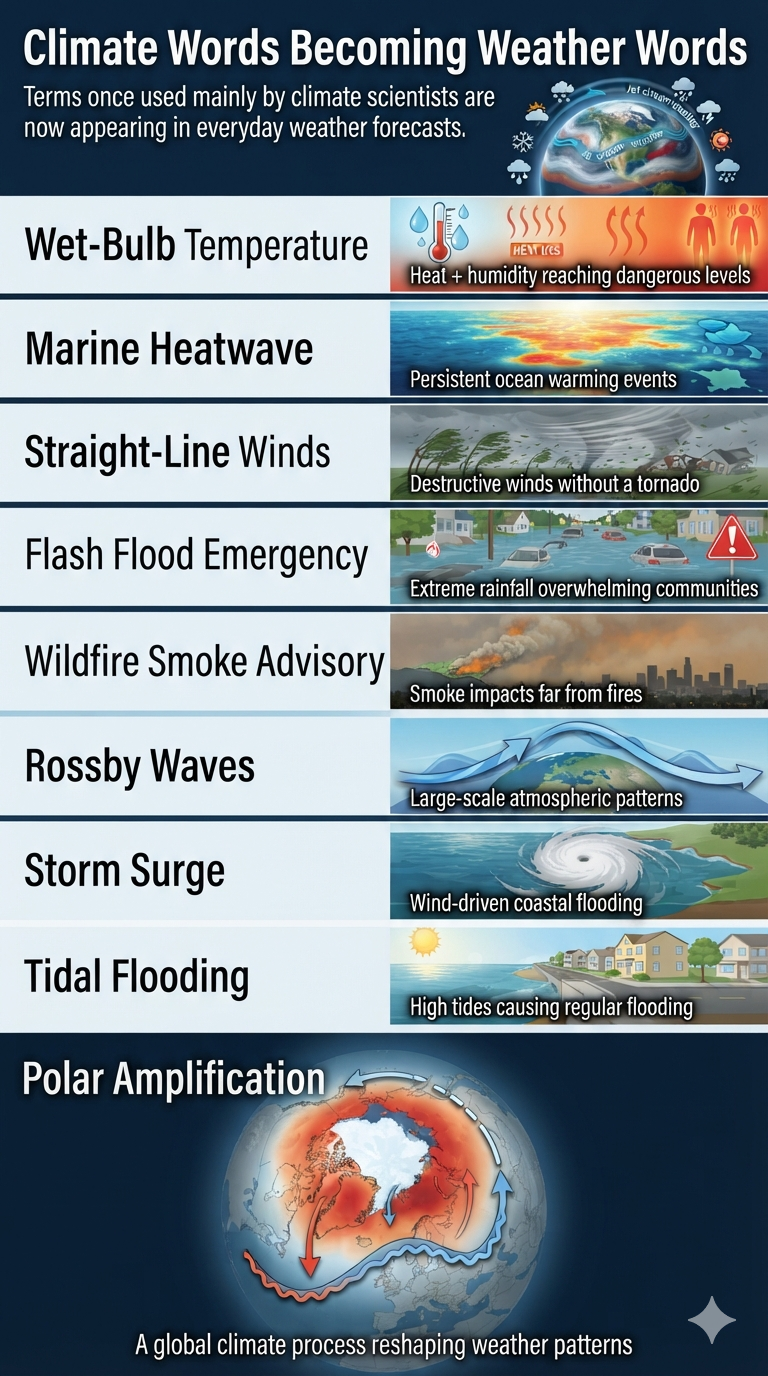
As Earth’s climate warms, meteorologists and climate scientists are increasingly relying on specialized terminology to describe weather events that were once considered rare but are now becoming more frequent and more intense. Rising global temperatures have added energy to the atmosphere, while changes in the jet stream have altered weather patterns across much of the world. As a result, many scientific terms have moved from research journals into everyday weather forecasts.
Understanding these terms provides insight into how climate change is reshaping the atmosphere and why weather is becoming more extreme.
Atmospheric Blocking and Jet Stream Disruptions
Omega Block
An Omega Block is a large, persistent high-pressure system positioned between two low-pressure systems, creating a pattern that resembles the Greek letter Ω. These blocking patterns can remain nearly stationary for days or even weeks, preventing normal weather systems from moving. The result is prolonged heatwaves beneath the high-pressure ridge while neighboring regions experience extended periods of heavy rain, flooding, or severe storms.
Atmospheric River
An Atmospheric River is a long, narrow corridor of highly concentrated water vapor that can stretch for thousands of miles across the ocean. Often called “rivers in the sky,” these systems transport enormous quantities of moisture ahead of approaching storms. When atmospheric rivers encounter mountain ranges or cooler air masses, they release intense rainfall or snowfall, frequently causing catastrophic flooding, mudslides, and landslides.
Polar Vortex Disruption
The Polar Vortex is a band of powerful winds that normally circles the Arctic, keeping frigid air confined near the North Pole. As Arctic warming weakens this circulation, the vortex can become distorted or displaced, allowing bitterly cold Arctic air to surge southward into North America, Europe, or Asia. These outbreaks can produce severe winter storms and prolonged cold waves despite the long-term warming of the global climate.
High-Energy Heat and Drought Events
Heat Dome
A Heat Dome develops when a strong, persistent ridge of high pressure traps hot air beneath it like a lid on a pot. The sinking air compresses and warms while preventing cooler air from entering the region. As the event persists, soils dry, vegetation becomes stressed, and temperatures climb far above seasonal averages, often producing dangerous heatwaves and worsening wildfire conditions.
Flash Drought
Unlike traditional droughts that develop gradually over months, a Flash Drought can emerge within only a few weeks. Extreme heat, low humidity, persistent sunshine, and strong winds rapidly remove moisture from soils and vegetation. Agriculture can suffer severe losses before many communities even recognize that drought conditions have developed.
Megafire
A Megafire is an exceptionally large and intense wildfire, typically exceeding 100,000 acres. These fires generate enormous amounts of heat, allowing them to create their own localized weather. Towering smoke columns can produce pyrocumulonimbus clouds, generating lightning, powerful winds, and erratic fire behavior that makes suppression extremely difficult.
Explosive Wind and Storm Dynamics
Bomb Cyclone (Bombogenesis)
A Bomb Cyclone, or Bombogenesis, occurs when the central pressure of a mid-latitude storm drops by at least 24 millibars within 24 hours. This rapid intensification dramatically increases the storm’s energy, often producing hurricane-force winds, heavy snowfall, coastal flooding, and blizzard conditions.
Derecho
A Derecho is a widespread, long-lived windstorm associated with a fast-moving line of severe thunderstorms. To qualify as a derecho, damaging straight-line winds of at least 58 miles per hour must extend continuously for more than 400 miles. Although they lack the rotating circulation of tornadoes, derechos can produce destruction over areas much larger than many hurricanes.
Microburst
A Microburst is an intense column of sinking air that descends rapidly from a thunderstorm before striking the ground and spreading outward in all directions. Wind speeds can exceed those found in many tornadoes, causing extensive damage to buildings, forests, aircraft, and electrical infrastructure despite affecting a relatively small area.
Large-Scale Climate Oscillations
Super El Niño
A Super El Niño represents an exceptionally strong phase of the El Niño–Southern Oscillation (ENSO). During these events, unusually warm ocean water spreads across the central and eastern tropical Pacific, releasing vast amounts of heat and moisture into the atmosphere. The additional energy alters global circulation patterns, increasing the likelihood of record-breaking temperatures, extreme rainfall, severe droughts, and compound weather disasters across multiple continents.
A New Climate, A New Language
Not long ago, many of these terms appeared primarily in scientific journals or university textbooks. Today they are routinely used in television weather reports because the atmosphere is producing these events with increasing frequency and intensity.
The expanding vocabulary of modern meteorology reflects more than advances in science—it reflects a changing climate. As greenhouse gases continue to warm the planet, the atmosphere stores more heat and moisture, providing additional energy for weather systems. The result is a world where once-unusual phenomena are becoming familiar features of daily forecasts.
Learning this new language helps us better understand the physical processes driving today’s extreme weather and prepares us for the increasingly energetic climate of the future.
Other Climate and Extreme Weather Terms You Will Hear More Often
As extreme weather becomes more common, meteorologists continue to introduce terms that describe increasingly complex atmospheric and oceanic conditions. While not every term requires a detailed explanation, many have become part of the modern vocabulary of weather forecasting. These include:
Air Mass Thunderstorm
Atmospheric Instability
Back-Building Thunderstorms
Blizzard Warning
Cold-Air Outbreak
Compound Extreme Event
Convective Available Potential Energy (CAPE)
Convective Complex (MCS)
Dry Lightning
Dust Storm
Enhanced Risk
Extreme Heat Warning
Fire Weather Warning
Fire Whirl (Fire Tornado)
Flash Flood Emergency
Flood Watch
Freeze-Thaw Cycle
Fujita (EF) Scale
Graupel
Haboob
Heat Advisory
Heat Burst
Heat Index
Hurricane Rapid Intensification
Ice Storm Warning
Lake-Effect Snow
La Niña
Marine Heatwave
Mesocyclone
Mesoscale Convective System (MCS)
Nor’easter
Outflow Boundary
Permafrost Thaw
Pluvial Flooding
Polar Amplification
Pyrocumulus Cloud
Pyrocumulonimbus (PyroCb)
Rain-on-Snow Event
Red Flag Warning
Ridge Pattern
Rossby Waves
Severe Thunderstorm Warning
Straight Line Winds
Storm Surge
Supercell Thunderstorm
Surface Temperature Anomaly
Tidal Flooding
Tornado Emergency
Tropical Disturbance
Tropical Wave
Urban Heat Island
Wet-Bulb Temperature
Wildfire Smoke Advisory
Wind Chill
Winter Storm Warning
Many of these terms were once used almost exclusively by atmospheric scientists and emergency managers. Today, they appear regularly in weather broadcasts because the atmosphere is producing more persistent, energetic, and complex weather systems. As climate change continues to reshape Earth’s weather patterns, the public is becoming fluent in a vocabulary that previous generations rarely encountered.
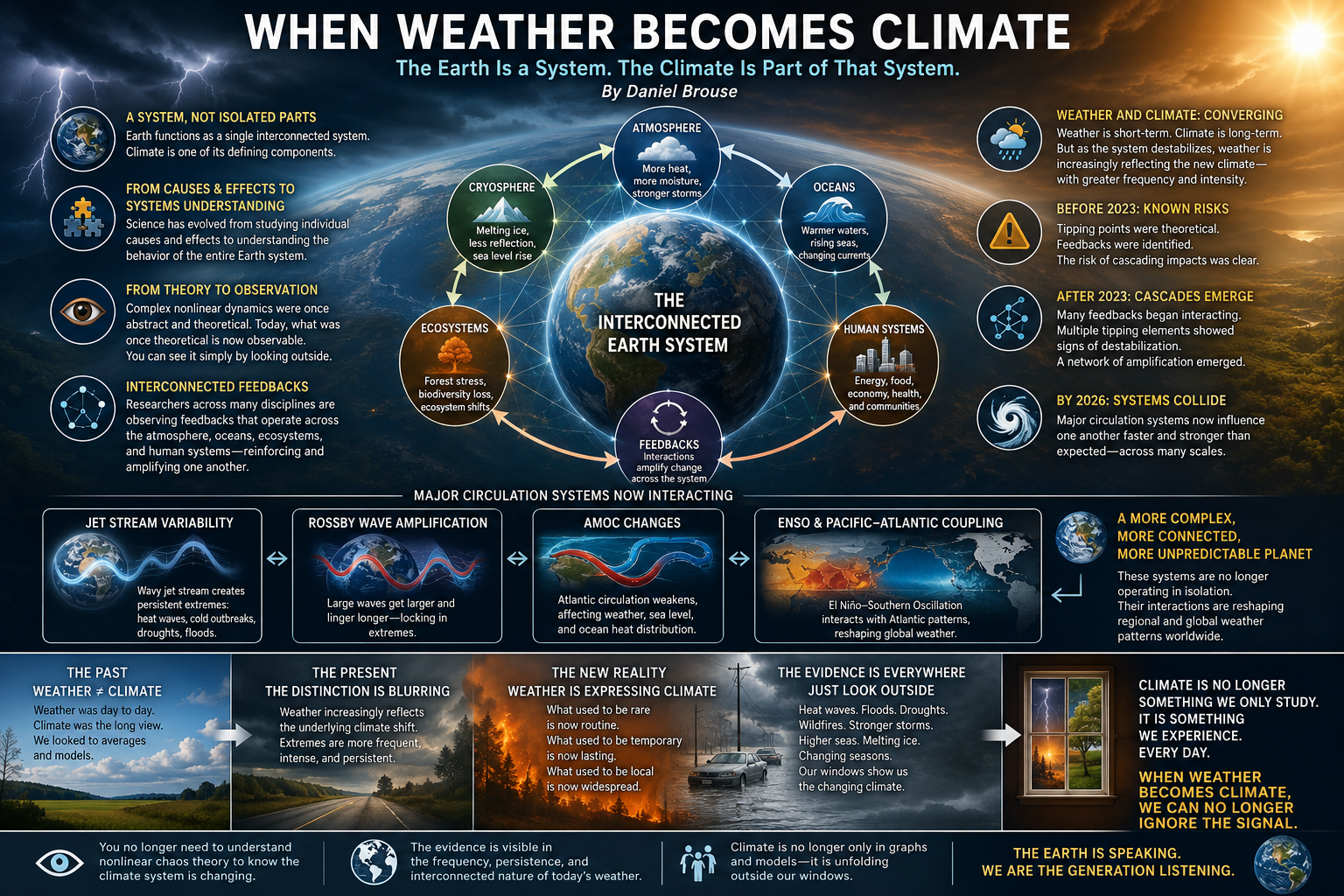
Earth functions as a single interconnected system, and climate is one of its defining components. For much of modern science, climatology focused primarily on identifying individual causes and effects. Today, that focus has expanded toward understanding the behavior of the entire Earth system.
The dynamics of complex nonlinear systems were once considered highly abstract, requiring sophisticated mathematical models to visualize their behavior. That is no longer the case. What was once theoretical has become increasingly observable. In many respects, the behavior of the climate system can now be seen simply by looking outside.
Climatologists, economists, ecologists, and other researchers are increasingly observing climate feedbacks operating across the entire Earth system. Rather than isolated events or independent variables, we are witnessing interconnected processes that reinforce one another across atmospheric, oceanic, ecological, and human systems.
Historically, weather and climate were treated as distinct concepts. Weather described short-term atmospheric conditions, while climate represented long-term statistical patterns. As the climate system becomes increasingly unstable, however, weather is reflecting those long-term changes with growing frequency and intensity. The distinction remains scientifically valid, but climate change is becoming visible through the character of everyday weather.
Before 2023, scientists understood that climate tipping points were possible, and numerous positive feedback mechanisms had already been identified. After 2023, evidence increasingly suggested that many of these feedbacks were interacting simultaneously, with multiple tipping elements showing signs of destabilization. Instead of isolated feedback loops, researchers began observing a network of interconnected processes capable of amplifying one another.
By 2026, many of Earth’s major circulation systems appear to be influencing one another in ways that are faster, stronger, and more interconnected than previously anticipated. These interactions are occurring across multiple scales, increasing the complexity of the global climate response.
Examples include the interaction between jet stream variability, Rossby wave amplification, and changes in the Atlantic Meridional Overturning Circulation (AMOC). Likewise, large-scale ocean-atmosphere interactions involving ENSO and Pacific–Atlantic climate coupling continue to reshape regional weather patterns around the globe.
Understanding the mathematics of nonlinear dynamics and chaos theory remains valuable, but it is no longer necessary to appreciate that the climate system is behaving differently. The evidence is increasingly visible in the frequency, persistence, and interconnected nature of the weather people experience.
In that sense, one of the defining characteristics of our time is that climate is no longer perceived only through long-term averages and scientific graphs. It is increasingly recognized through the weather unfolding outside our windows.
Why Weather Is Becoming Climate
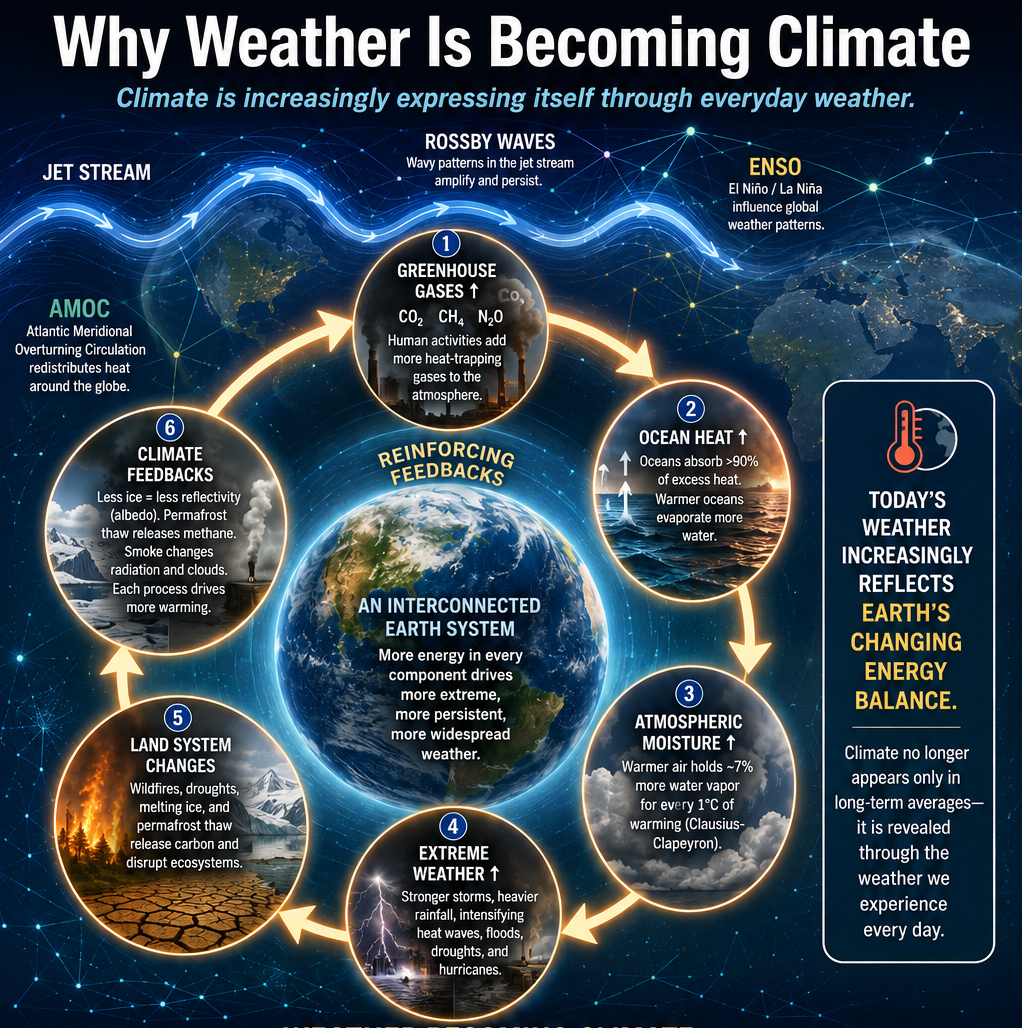
The distinction between weather and climate has not disappeared. Weather remains the day-to-day state of the atmosphere, while climate describes long-term averages and the underlying behavior of the Earth system. What has changed is the degree to which climate is now shaping weather in real time.
As greenhouse gases accumulate and the planet stores more heat, every component of the climate system contains more energy. Warmer oceans evaporate more water, the atmosphere holds more moisture, and circulation patterns are increasingly disrupted by changes in temperature gradients between the tropics and the poles. These changes alter not only the intensity of individual weather events but also the persistence and interaction of entire weather patterns.
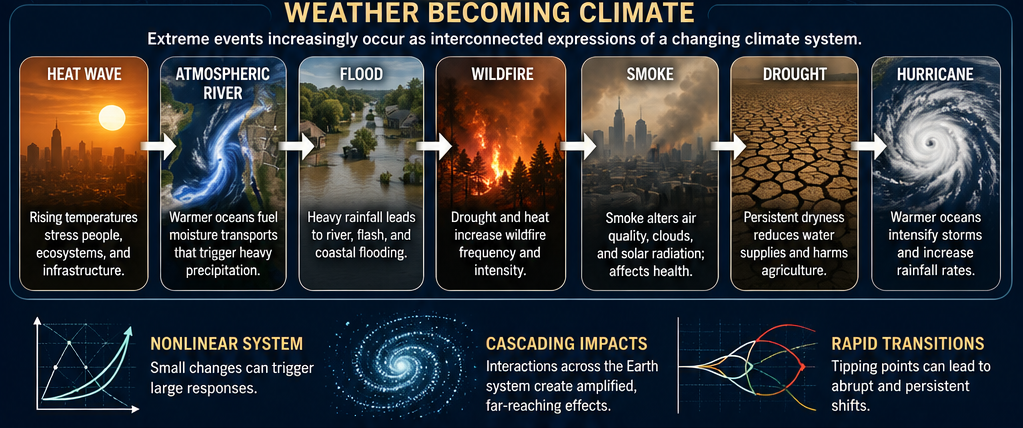
The result is a network of reinforcing feedbacks. A warming ocean fuels stronger atmospheric rivers and hurricanes. Droughts increase wildfire activity, while wildfire smoke alters atmospheric chemistry and solar radiation. Reduced snow and ice decrease Earth’s reflectivity, allowing additional warming. Permafrost thaw releases greenhouse gases that contribute to further warming. Each process influences others, producing cascading effects across the Earth system.
These interactions also affect the planet’s major circulation systems. Changes in the jet stream, Rossby wave amplification, ENSO, the Atlantic Meridional Overturning Circulation (AMOC), and other large-scale patterns increasingly influence one another. Rather than operating as largely independent phenomena, they are becoming components of an interconnected global system whose behavior is nonlinear and capable of rapid transitions.
This systems perspective helps explain why extreme weather events are becoming more persistent, widespread, and synchronized. Heat waves, floods, droughts, wildfires, and severe storms are no longer viewed simply as isolated disasters. They are increasingly understood as different expressions of the same underlying climate dynamics.
In this sense, weather has become one of the most visible indicators of climate change. The climate system is no longer revealing itself only through decades of averaged temperature records or scientific models. It is increasingly expressing itself through the weather that people experience every day. As nonlinear feedbacks continue to strengthen, weather is becoming the language through which climate communicates its changing state and at what rate.
What Fascinates You?
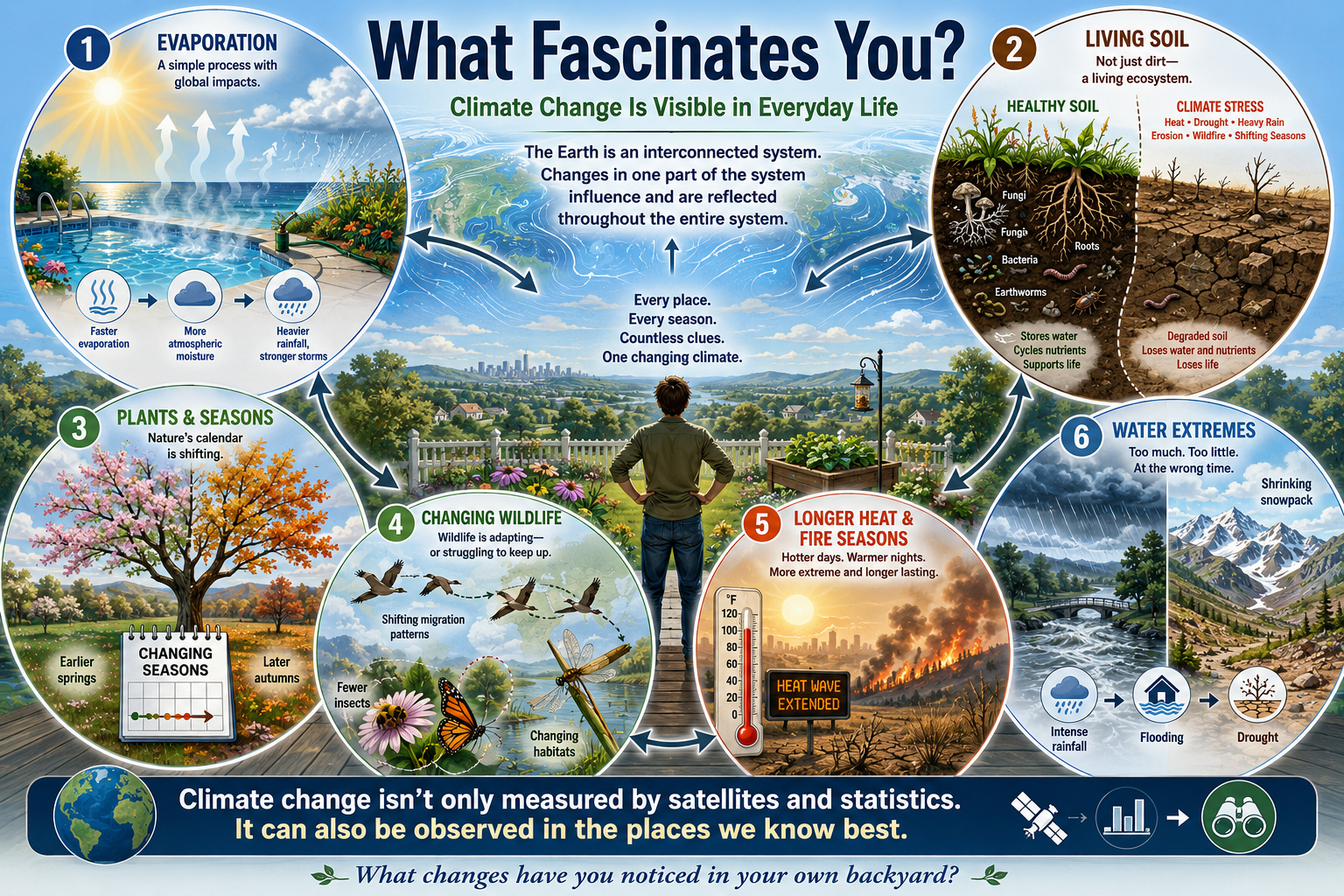
One of the remarkable aspects of climate change is that it no longer exists only in scientific journals or satellite imagery. It can be observed in countless ways during everyday life. Once you begin looking at the Earth as an interconnected system, signs of change seem to appear everywhere.
I find evaporation especially fascinating. It is one of the simplest processes to observe, yet it connects directly to the global climate system. I notice how quickly water disappears from a swimming pool after a hot, humid day. I see gardens requiring more frequent watering. At the global scale, the same process is evident in warmer oceans that transfer more water vapor into the atmosphere, fueling heavier downpours, stronger storms, and atmospheric rivers that are becoming increasingly familiar in regions where they were once uncommon.
I am equally fascinated by soil. Healthy soil is not simply dirt—it is a living ecosystem filled with fungi, bacteria, earthworms, insects, roots, and organic matter. It stores water, cycles nutrients, and supports nearly all terrestrial life. Yet I also see soil under stress. Extended heat, drought, intense rainfall, erosion, wildfire, and changing seasons are degrading soils in many places. The ground beneath our feet is quietly telling the story of a changing climate.
Others may notice different changes. Some watch the timing of blossoms in the spring or leaves in the autumn. Others observe declining insect populations, shifting bird migrations, warmer nights, disappearing snow cover, longer wildfire seasons, or increasingly persistent heat waves. Farmers may recognize changing growing seasons, while anglers notice warmer streams and changing fish populations. Every landscape offers its own clues.
Climate change is often discussed in terms of global averages and long-term statistics, but it is also a collection of countless local observations. The Earth system expresses itself through the places we know best.
So, what fascinates you?
What changes have you noticed in your own backyard, neighborhood, or community? The answers to that question may be among the most compelling evidence that weather is increasingly revealing the changing character of our climate.
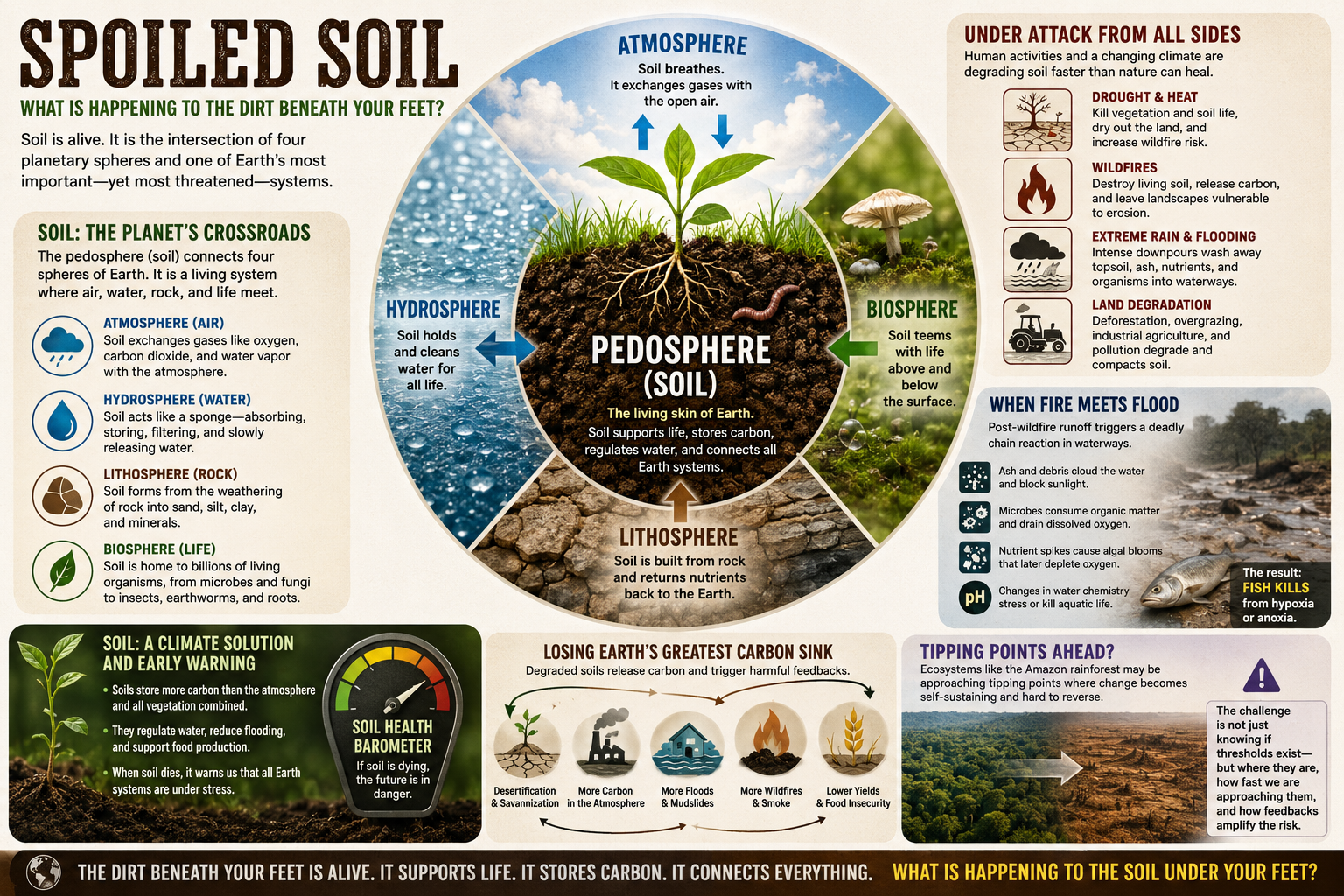
Most people think of soil as nothing more than dirt. In reality, healthy soil may be one of the most important—and overlooked—parts of Earth’s climate system. Unlike the atmosphere, oceans, or glaciers, soil is alive.
A single handful of healthy soil contains billions of living organisms: bacteria, fungi, insects, earthworms, and countless other forms of life. Together, they recycle nutrients, store carbon, filter water, and support nearly every plant on Earth. Without healthy soil, there is no healthy ecosystem.
The Planet’s Crossroads
Soil is unique because it lies at the intersection of Earth’s major systems. Scientists classify it as its own domain, the pedosphere (from the Greek pedon, meaning soil or earth).
The pedosphere connects four planetary spheres:
Atmosphere (Air): Soil constantly exchanges oxygen, carbon dioxide, methane, and water vapor with the atmosphere.
Hydrosphere (Water): Soil absorbs, stores, filters, and slowly releases water, acting like a giant natural sponge.
Lithosphere (Rock): Soil forms from the weathering of rock into sand, silt, clay, and minerals.
Biosphere (Life): Soil is home to an astonishing diversity of plants, fungi, microbes, insects, and animals.
Because every one of these systems depends on healthy soil, changes in soil often reveal changes occurring throughout the entire Earth system.
Soil: A Living Climate Indicator
Healthy soil stores enormous amounts of carbon—more than the atmosphere and all vegetation combined. It also regulates water, reduces flooding, supports agriculture, and provides habitat for countless organisms.
When soil begins to deteriorate, it serves as an early warning that multiple environmental systems are under stress.
Unfortunately, human activities are placing unprecedented pressure on soils worldwide. Climate change, deforestation, intensive agriculture, pollution, and urban development are accelerating soil degradation faster than many ecosystems can recover.
Hydroclimatic Whiplash
One of the clearest examples is hydroclimatic whiplash—rapid swings between severe drought and intense rainfall.
Extended drought weakens vegetation, dries out soils, kills soil organisms, and greatly increases wildfire risk.
Then the weather often swings in the opposite direction.
Atmospheric rivers, microbursts, and other extreme rain events produce intense runoff that washes away the already damaged landscape. Instead of soaking into healthy soil, the water carries ash, sediment, nutrients, and debris into streams, rivers, and lakes.
This creates a cascade of environmental damage.
When Fire Meets Flood
Scientists refer to these events as post-wildfire runoff or rain-on-wildfire events.
The chain reaction can be devastating:
Ash and debris cloud the water and block sunlight.
Microorganisms rapidly consume the incoming organic material, using up dissolved oxygen.
Nutrients such as nitrogen and phosphorus trigger algal blooms that later consume even more oxygen as they decay.
Changes in water chemistry stress or kill aquatic organisms.
The result is often a fish kill, caused by hypoxia (dangerously low oxygen) or anoxia (complete oxygen depletion).
What began as a wildfire on land becomes an ecological disaster throughout an entire watershed.
Losing One of Earth’s Greatest Carbon Sinks
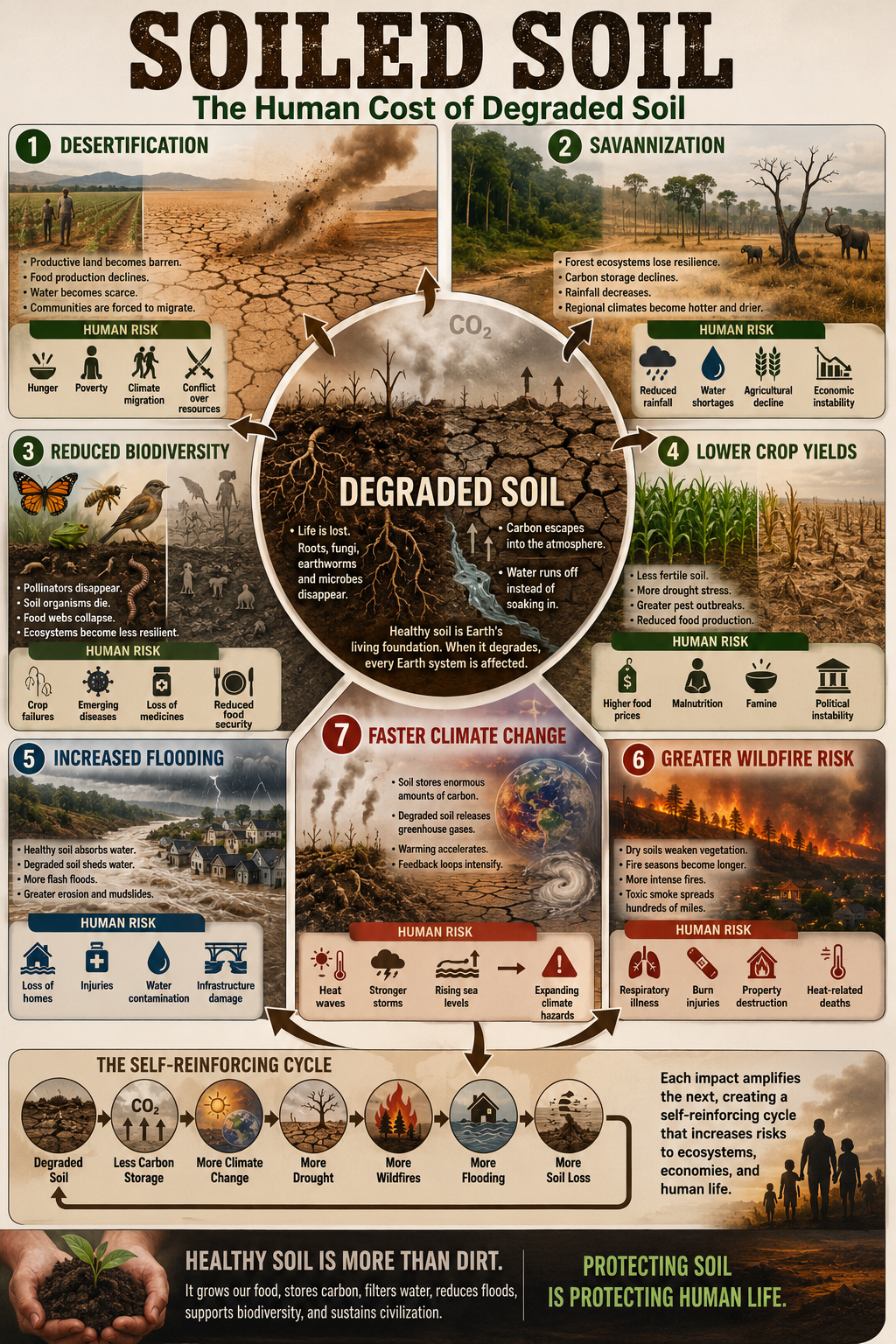
Healthy soils are among Earth’s largest natural carbon sinks. As soils degrade, they lose their ability to store carbon and instead may release additional greenhouse gases into the atmosphere.
The consequences extend far beyond agriculture.
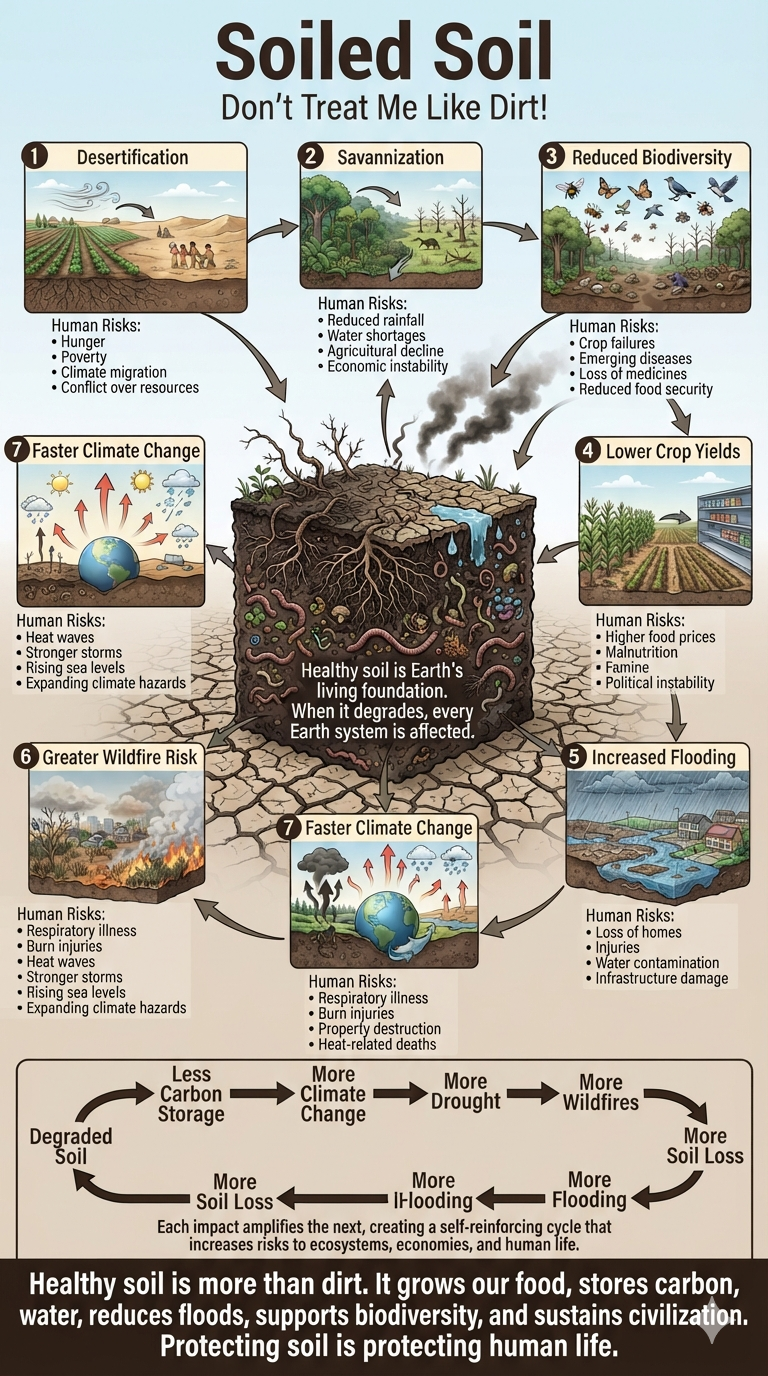
Degraded soils contribute to:
Desertification
Savannization
Reduced biodiversity
Lower crop yields
Increased flooding
Greater wildfire risk
Faster climate change
Each of these impacts can reinforce the others, creating self-amplifying feedback loops that become increasingly difficult to reverse.
Why Scientists Are Concerned
Many scientists are studying whether some of Earth’s major ecosystems are approaching critical tipping points.
One of the most closely watched examples is the Amazon rainforest. Continued warming, drought, deforestation, and fire could reduce parts of the forest’s ability to sustain itself, transforming sections into a drier, more open landscape. While considerable uncertainty remains about exactly where these thresholds lie, growing evidence suggests that several Earth systems are becoming less resilient.
The challenge is no longer simply determining whether tipping points exist.
It is identifying where they are, how quickly we are approaching them, and how multiple feedback loops may interact to accelerate change.
We often look to melting glaciers, rising seas, stronger storms, or record-breaking temperatures as signs of climate change.
But one of the clearest indicators may be much closer.
The dirt beneath your feet is not just dirt.
It is a living ecosystem, a massive carbon reservoir, a water filter, the foundation of agriculture, and the meeting place of Earth’s atmosphere, water, rock, and life.
If the soil is becoming less healthy, it is a warning that the entire planetary system is under increasing stress.
The next time you stand on the ground, consider this question:
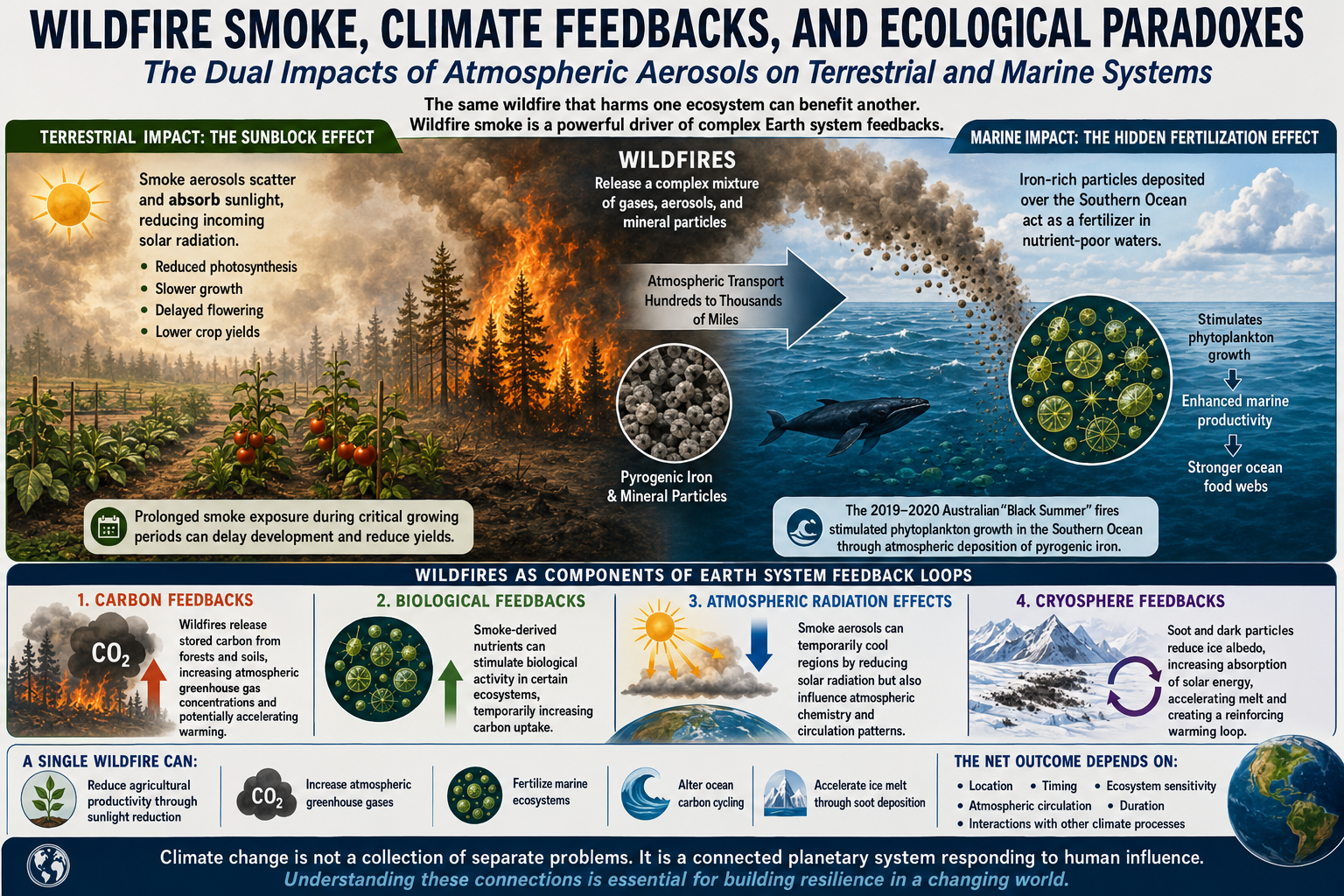
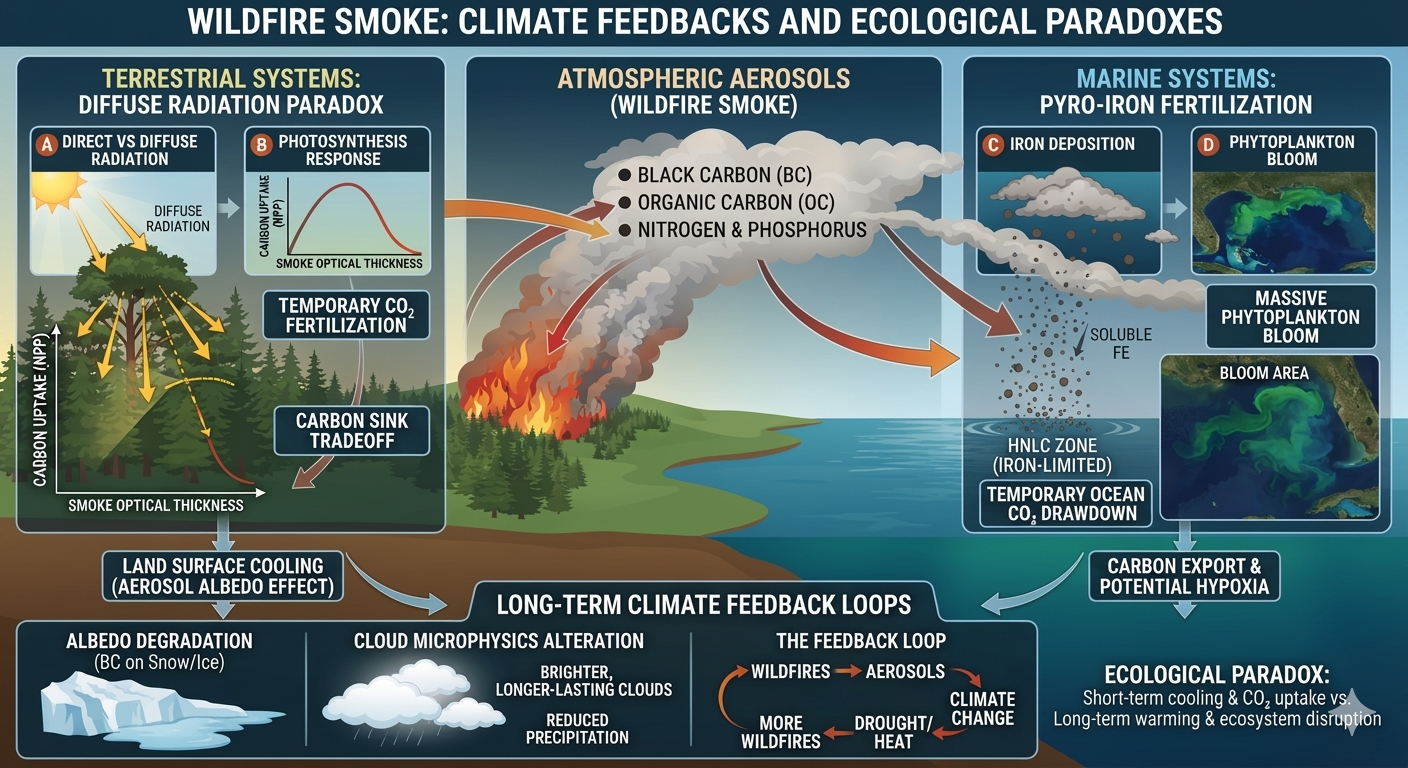
Wildfire Smoke, Climate Feedbacks, and Ecological Paradoxes: The Dual Impacts of Atmospheric Aerosols on Terrestrial and Marine Systems
Abstract
Wildfire smoke is an increasingly important variable in understanding climate impacts, ecosystem responses, and agricultural productivity. Prolonged smoke exposure can significantly reduce incoming solar radiation, creating a “sunblock” effect that suppresses photosynthesis, delays plant development, and reduces agricultural yields. However, wildfire emissions also generate complex ecological interactions that can produce unexpected secondary effects.
The same wildfire event that damages terrestrial ecosystems through heat, smoke, and carbon emissions can stimulate biological productivity in distant marine environments through nutrient deposition. The 2019–2020 Australian “Black Summer” wildfire season provides a striking example: enormous quantities of pyrogenic iron contained within smoke and ash aerosols were transported over the Southern Ocean, triggering significant phytoplankton growth. These contrasting effects demonstrate that wildfire impacts cannot be understood through a single-variable framework.
Wildfire aerosols represent a component of a broader Earth system feedback network involving atmospheric chemistry, biological productivity, carbon cycling, and cryospheric changes. Understanding these interactions is essential for accurately assessing future climate trajectories.
1. Introduction
Climate change is altering the frequency, intensity, and geographic distribution of wildfire activity. Rising temperatures, prolonged droughts, and changing atmospheric circulation patterns are contributing to longer fire seasons and more extreme fire behavior.
Wildfires are often evaluated primarily through their immediate destructive impacts:
carbon dioxide emissions,
habitat loss,
human health effects,
infrastructure damage,
agricultural disruption.
However, wildfire smoke is not merely a pollutant. It is a complex atmospheric mixture containing gases, organic compounds, black carbon, minerals, and nutrients that can interact with ecosystems thousands of miles away.
These interactions reveal an important principle of Earth system science:
A climate disturbance can simultaneously create damaging effects in one system while stimulating biological activity in another.
2. The Agricultural Impact of Wildfire Smoke
One of the most direct effects of wildfire smoke on agriculture is the reduction of incoming solar radiation.
Smoke particles suspended in the atmosphere scatter and absorb sunlight, reducing the amount of photosynthetically active radiation reaching plants. During critical growing periods, this reduction can have measurable consequences:
slower plant growth,
delayed flowering,
reduced fruit development,
lower crop yields.
Backyard gardens and small-scale agricultural systems can be particularly sensitive because they often rely on seasonal sunlight thresholds. Extended periods of smoke exposure during June through August, for example, can interrupt peak growing conditions and delay maturation until clearer atmospheric conditions return.
This effect represents a climate-related agricultural stressor that may become increasingly important as wildfire seasons expand.
3. The Hidden Fertilization Effect of Wildfires
Despite these negative impacts, wildfire emissions can also create unexpected ecological benefits in specific environments.
A notable example occurred during Australia’s Black Summer wildfire season (2019–2020). These fires were among the largest recorded in modern Australian history, releasing enormous quantities of carbon, smoke aerosols, and mineral particles into the atmosphere.
Researchers observed a major increase in phytoplankton productivity in portions of the Southern Ocean following the fires.
The mechanism was not the carbon itself, but rather pyrogenic iron contained within wildfire smoke and ash.
Iron is a limiting nutrient in many ocean regions. When wildfire-derived iron particles were transported over the ocean and deposited into nutrient-poor waters, they acted as a fertilizer, stimulating the growth of phytoplankton—microscopic marine algae that form the foundation of ocean food webs.
This created a paradox:
The wildfire released massive quantities of greenhouse gases.
The same wildfire also temporarily enhanced marine biological productivity.
4. Wildfires as Components of Earth System Feedback Loops
The wildfire example demonstrates why climate systems cannot be evaluated through isolated cause-and-effect relationships.
Wildfires interact with multiple feedback mechanisms:
4.1 Carbon Feedbacks
Wildfires release stored carbon from forests and soils, increasing atmospheric greenhouse gas concentrations and potentially accelerating warming.
4.2 Biological Feedbacks
Smoke-derived nutrients can stimulate biological activity in certain ecosystems, temporarily increasing carbon uptake.
4.3 Atmospheric Radiation Effects
Smoke aerosols can temporarily cool regions by reducing solar radiation but can also influence atmospheric chemistry and circulation patterns.
4.4 Cryosphere Feedbacks
One of the most important long-term concerns is the effect of wildfire soot and dark particles deposited onto snow and ice.
Normally, snow and ice reflect a large portion of incoming solar radiation through the ice albedo effect. When dark particles accumulate on these surfaces:
Reflectivity decreases.
More solar energy is absorbed.
Melting accelerates.
Darker surfaces are exposed.
Additional warming occurs.
This creates a reinforcing feedback loop that can accelerate ice loss.
5. The Challenge of Modeling Nonlinear Climate Systems
Wildfire impacts highlight a fundamental challenge in climate science: Earth is not a collection of independent systems.
Atmosphere, oceans, land ecosystems, and the cryosphere are interconnected through feedback mechanisms.
A single wildfire can:
reduce agricultural productivity through sunlight reduction,
increase atmospheric greenhouse gases,
fertilize marine ecosystems,
alter ocean carbon cycling,
accelerate ice melt through soot deposition.
The net outcome depends on:
location,
timing,
ecosystem sensitivity,
atmospheric circulation,
duration,
and interactions with other climate processes.
These nonlinear interactions make climate prediction challenging because small changes in one part of the system can produce unexpected consequences elsewhere.
6. Conclusion
Wildfire smoke represents a powerful example of the complexity of climate change impacts. While smoke exposure can reduce sunlight, harm crops, and threaten human health, wildfire aerosols can also transport nutrients that stimulate biological productivity in distant ecosystems.
The Australian Black Summer fires demonstrate that climate impacts are rarely purely positive or negative. They are part of a dynamic Earth system where destructive processes can simultaneously trigger secondary effects across continents and oceans.
Understanding these interactions requires moving beyond simple cause-and-effect thinking and recognizing climate change as an interconnected system of feedbacks.
The challenge ahead is not merely predicting individual climate events. It is understanding how thousands of interacting processes combine to reshape the stability of Earth’s environmental systems.
Climate change is not a collection of separate problems. It is a connected planetary system responding to human influence.