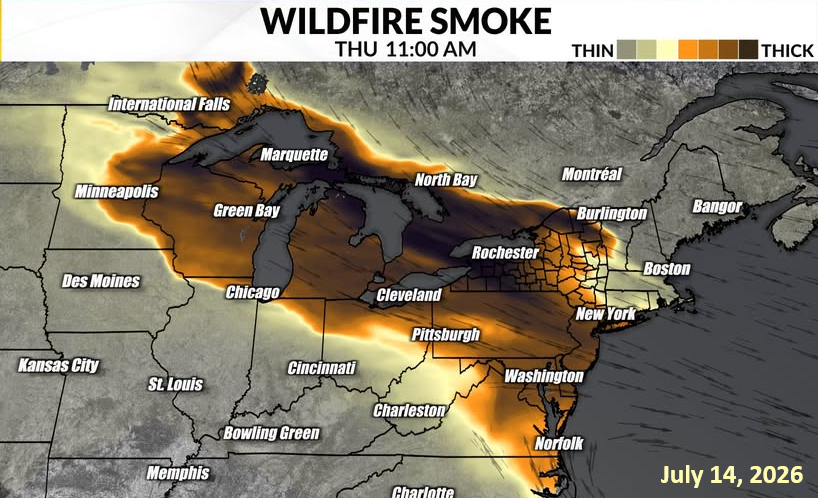
by Daniel Brouse
Wildfire smoke does more than reduce air quality—it can fundamentally alter local temperature patterns by changing how solar radiation and thermal energy interact with the atmosphere. Dense smoke layers can create a counterintuitive effect: cooler daytime temperatures but warmer nighttime conditions.
This disruption of the normal day–night temperature cycle can significantly increase air conditioning demand, strain electrical grids, and reduce HVAC efficiency.
Why Wildfire Smoke Lowers Daytime Temperatures
During the day, wildfire smoke acts as an atmospheric shield that reduces the amount of sunlight reaching Earth’s surface.
Blocks Incoming Solar Radiation
Thick smoke plumes contain millions of tiny aerosol particles that scatter and reflect incoming shortwave solar radiation back into space. This reduces the amount of direct sunlight reaching the ground.
Reduces Surface Heating
With less solar energy absorbed by land surfaces, buildings, roads, and vegetation receive less daytime heating. As a result:
- Maximum daytime temperatures may be lower than forecast.
- Surface heating is reduced.
- The normal buildup of daytime thermal energy is weakened.
However, this cooling effect does not mean the overall energy balance has improved. Instead, the smoke changes when and where heat is stored and released.
Why Wildfire Smoke Increases Nighttime Temperatures
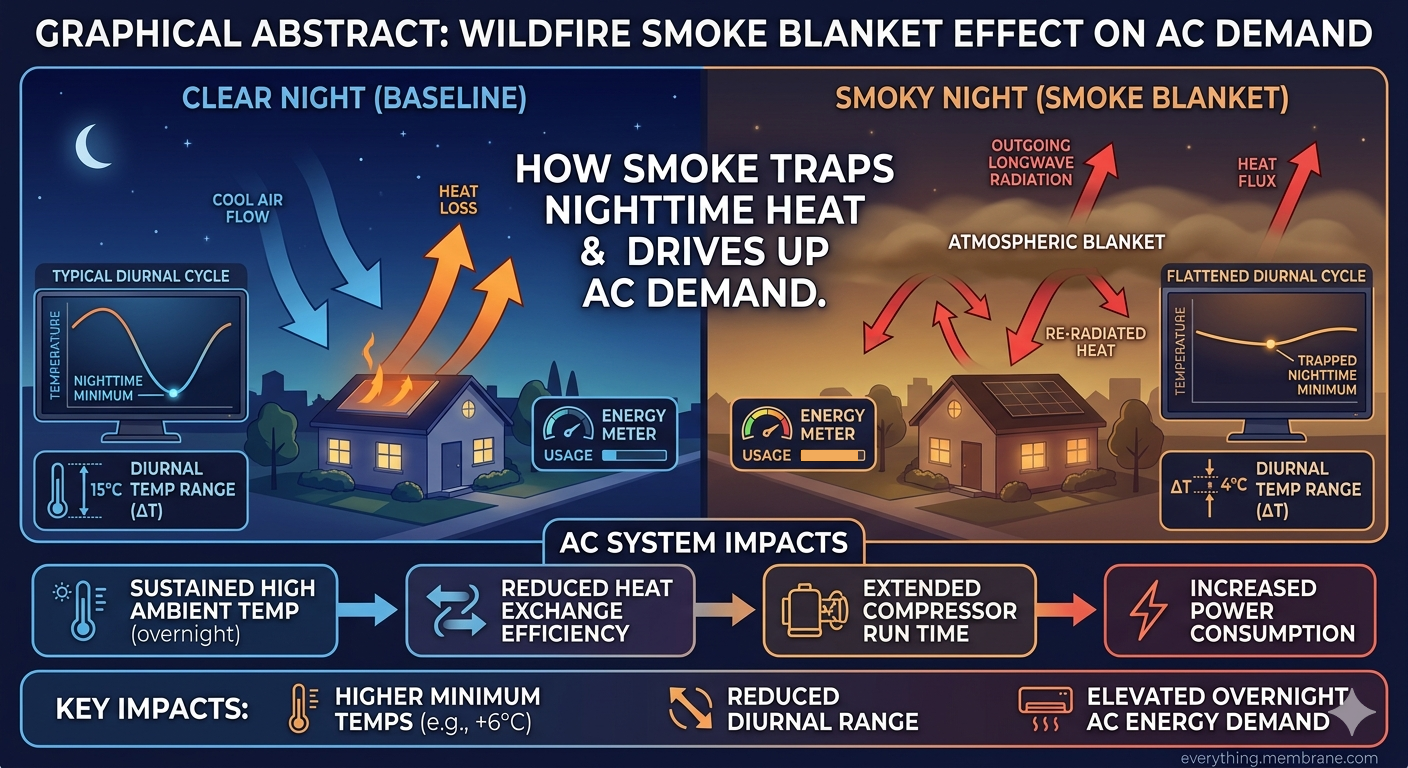
After sunset, the same smoke layer that blocked sunlight during the day can act like an insulating blanket.
Traps Outgoing Thermal Energy
Normally, the Earth’s surface cools at night by releasing stored heat as longwave infrared radiation into space.
A dense smoke layer interferes with this process:
- Smoke particles absorb outgoing thermal radiation.
- The absorbed energy is re-emitted in all directions.
- Some of that thermal energy is radiated back toward the surface.
The result is a warmer nighttime environment with reduced radiational cooling.
The “Atmospheric Blanket” Effect
This process is similar to the greenhouse effect:
- Less heat escapes to space.
- More heat remains trapped near the surface.
- Overnight temperatures stay elevated.
Instead of providing the normal nighttime recovery period, wildfire smoke can flatten the daily temperature cycle by lowering daytime peaks while preventing nighttime cooling.
How Wildfire Smoke Thermal Trapping Increases Air Conditioning Demand
The nighttime warming effect from wildfire smoke can significantly increase local cooling requirements by eliminating the period when buildings and HVAC systems normally recover.
1. Eliminates Nighttime “Compressor Rest”
Under normal conditions, outdoor temperatures drop after sunset, allowing air conditioners to cycle less frequently or shut off for extended periods.
With smoke-enhanced nighttime heat:
Continuous Operation
- Outdoor temperatures remain elevated.
- Indoor heat removal continues throughout the night.
- Compressors operate longer and more frequently.
Instead of recovering overnight, HVAC systems may begin the next day already under stress.
Increased Mechanical Wear
Extended compressor operation can accelerate:
- Electrical component fatigue.
- Capacitor failures.
- Motor overheating.
- Refrigerant system stress.
A hot afternoon followed by a smoke-trapped warm night creates a longer continuous period of thermal stress.
2. Flattens and Extends Electricity Demand Peaks
Power grids depend on nighttime cooling periods to recover after daytime heat waves.
Wildfire smoke can disrupt this pattern.
No Overnight Demand Drop
When thousands or millions of homes continue running air conditioning overnight:
- Utility demand remains elevated.
- Transformers and transmission equipment receive less recovery time.
- Grid operators lose the normal nighttime reduction in load.
Increased Infrastructure Stress
The combination of:
- Extreme daytime temperatures,
- Reduced nighttime cooling,
- Persistent HVAC operation,
creates a sustained demand pattern that pushes electrical systems closer to their limits.
3. Reduces HVAC Efficiency
Air conditioners remove heat by transferring indoor thermal energy to the outdoor environment through condenser coils.
When outdoor conditions remain hot, this process becomes less efficient.
Poorer Heat Exchange
Higher outdoor temperatures mean:
- The condenser must work harder.
- More electricity is required to move the same amount of heat.
- Cooling capacity decreases during peak demand periods.
Wildfire smoke can worsen this problem by extending the number of hours when outdoor temperatures remain unfavorable.
4. Smoke Particulates Increase Filter and Airflow Problems
Wildfire smoke introduces large amounts of fine particulate matter (PM2.5) into the air.
Many homeowners respond by running HVAC systems continuously to improve indoor air quality.
However, this creates additional challenges.
Filter Loading
Smoke particles accumulate rapidly on filters, causing:
- Reduced airflow.
- Increased blower motor workload.
- Higher electricity consumption.
- Reduced cooling performance.
A severely clogged filter can force HVAC equipment to work significantly harder while moving less air.
Balancing Cooling and Filtration
During wildfire smoke events:
- Use high-quality filters rated for fine particles when compatible with the HVAC system.
- Replace filters more frequently.
- Avoid unnecessarily restricting airflow with filters beyond the system’s design capability.
- Use portable HEPA air cleaners when possible to reduce the burden on central HVAC systems.
The Bigger Climate Connection
Wildfire smoke demonstrates that climate impacts are not limited to simple temperature increases. Climate change is altering the physical processes that regulate Earth’s energy balance.
A warmer atmosphere, longer fire seasons, and more intense wildfire events create cascading effects:
- Smoke changes radiation patterns.
- Radiation changes temperature patterns.
- Temperature changes energy demand.
- Energy demand increases stress on infrastructure.
The result is a feedback loop where extreme climate events amplify economic and technological pressures.
Understanding these interactions is increasingly important as communities adapt to a changing climate where heat, smoke, energy demand, and infrastructure resilience are becoming interconnected challenges.
Canadian Wildfire Smoke Returns: A Growing Summer Threat to Philadelphia’s Air Quality