by Daniel Brouse
Much of the public discussion of climate change still focuses on historical trends and older climate models. Since 2023–2024, however, our understanding of the climate system has advanced significantly as scientists increasingly examine real-time observations, accelerating changes, feedback loops, and complex Earth system behavior.
Understanding climate acceleration no longer requires multiple advanced degrees or an extensive background in nonlinear chaos theory. The evidence is increasingly visible in the world around us. In many ways, you can begin by simply looking out your window.
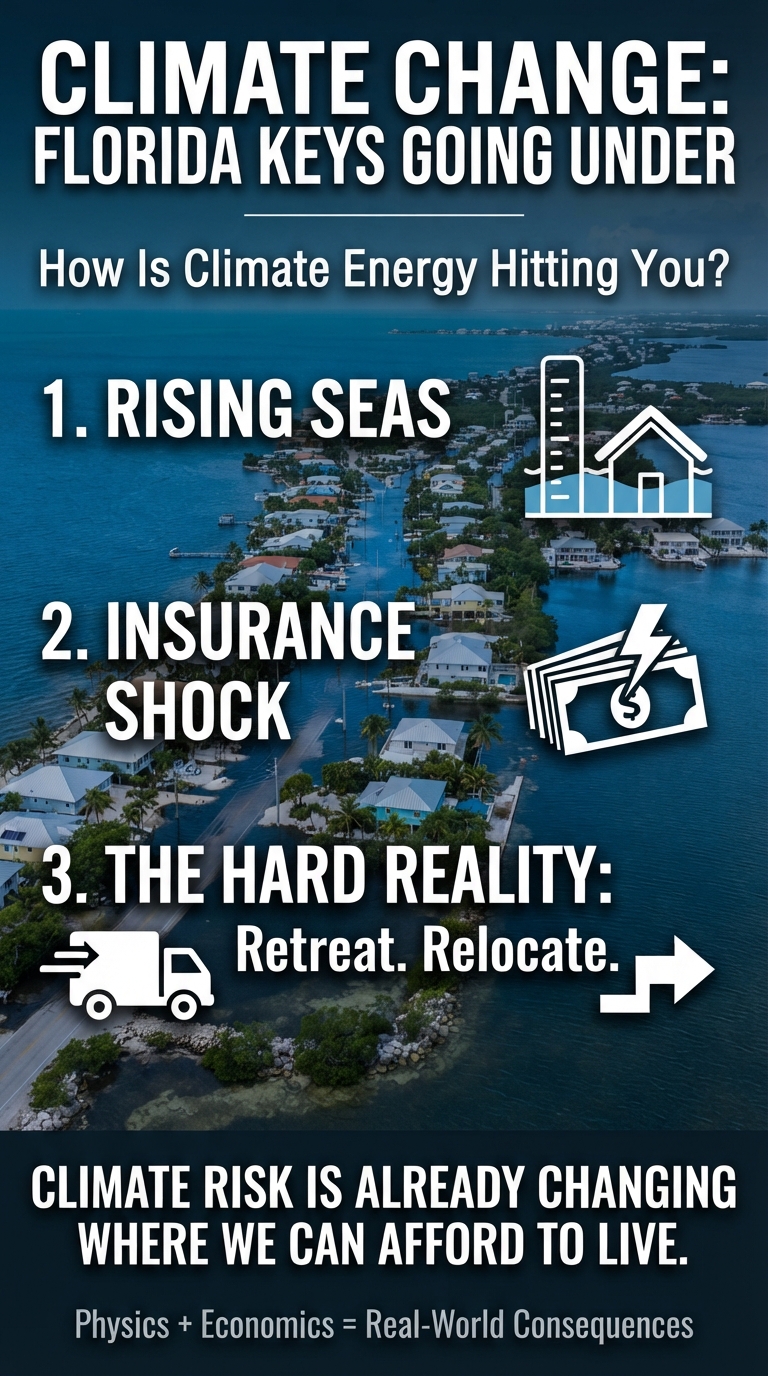
Florida Keys: Going Under
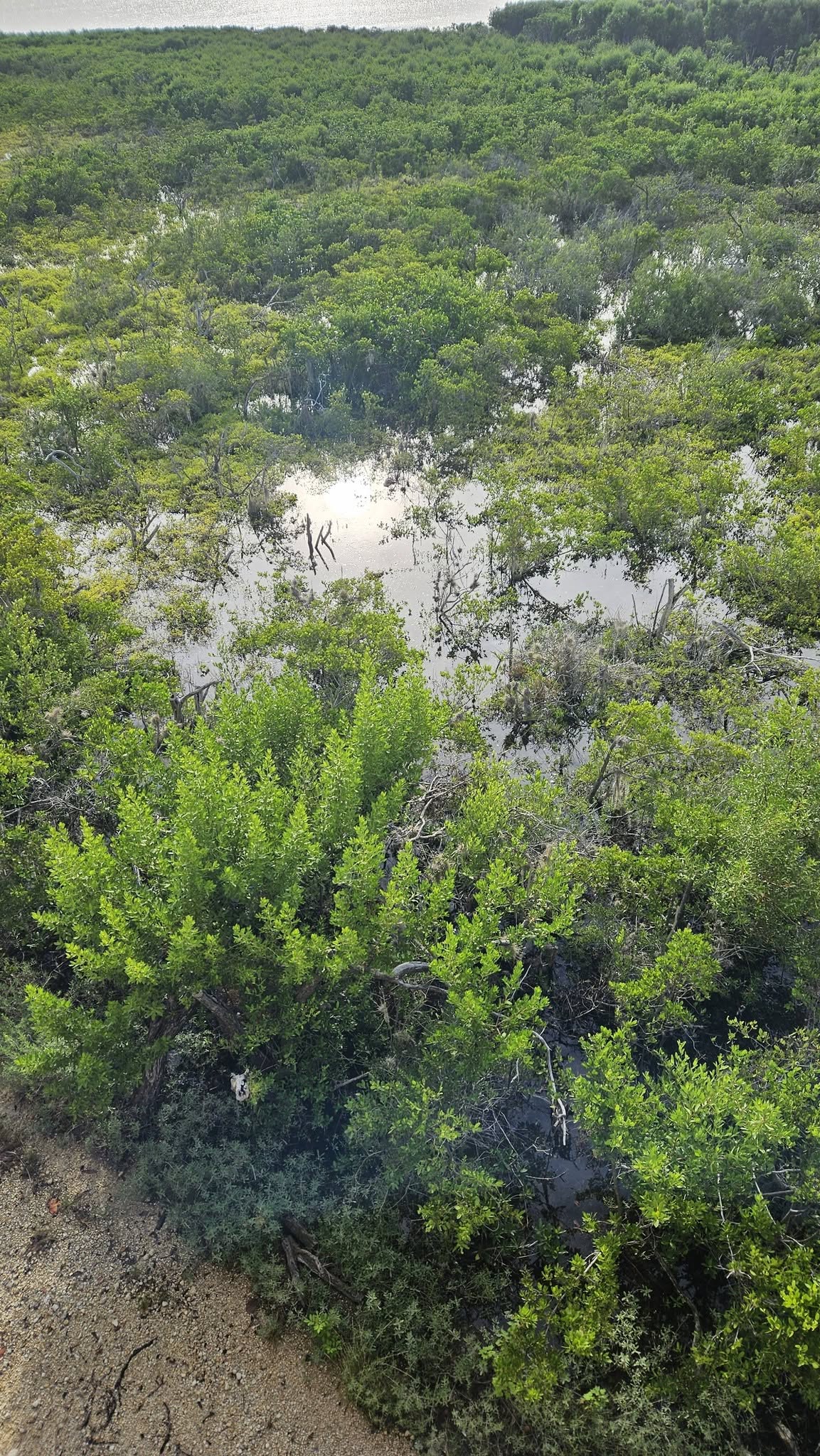
Dave Darlington Sr. shared this observation from Tavernier, Florida:
“Our last morning here in Tavernier, I wanted to speak to climate change. Some say it’s a hoax, but as the planet warms, glaciers and ice melt and salt water rises. Change is needed or future generations won’t enjoy what we have. Fran and I have come to this area since 1986 and seen profound change here. I wanted to share it with you. Until this administration cast off the ecologic safeguards there was hope. Will everyone do something? Now we are at a crucial point, vote carefully. Or throw it all away.”
Going Under
The photograph captures the ongoing threats of coastal flooding, tidal inundation, and saltwater intrusion driven by sea-level rise in this low-lying Florida Keys community.
Because these islands sit on highly porous limestone, rising seas threaten them from two directions: seawater can inundate the shoreline and push inland through the ground beneath it. These growing risks have prompted multimillion-dollar infrastructure projects in Tavernier and surrounding communities to protect homes, roads, and other critical infrastructure.
Unfortunately, much of this investment risks becoming a losing battle against accelerating sea-level rise. Over the next decade, protecting the most vulnerable areas will become increasingly difficult and expensive as rising seas intensify the threats facing coastal infrastructure. Managed retreat—planning for the relocation of people, homes, and infrastructure away from areas that can no longer be defended—is the only realistic long-term solution in the most vulnerable locations.
The underlying problem is physical: infrastructure can be elevated, drainage improved, and seawalls strengthened, but these measures cannot permanently overcome rising seas.
Insurance: When the Economics No Longer Work
Given the extent of climate damage already locked into the system, insurance prices serve a purpose beyond determining the cost of coverage. They increasingly reveal where the risks of homeownership are becoming economically unsustainable.
When homeowners insurance becomes unaffordable, it signals that the financial risks of owning property in that location may no longer justify the investment. Premiums, deductibles, coverage restrictions, and the growing difficulty of obtaining insurance all reveal the economic consequences of physical climate risks.
This is the interaction of physics and economics: as climate hazards intensify, the costs of protecting property rise. Eventually, the expense of maintaining and insuring a home can exceed what the property is worth owning.
Ironically, Florida became a prime example of how government intervention can subsidize homeowners insurance and delay the financial recognition of growing climate risks. Such subsidies may temporarily reduce costs for property owners, but they do not eliminate the underlying physical hazards. They shift the financial burden to taxpayers.
Dave responded: “Makes sense to me, that is one reason we left south Florida after Hurricane Andrew.”
His experience illustrates a difficult reality: people who recognize escalating risks and leave vulnerable areas may make their decisions long before the broader housing and insurance markets fully reflect those risks.
The bottom line: Climate change is not just a distant environmental problem. It is reshaping coastlines, threatening infrastructure, increasing insurance costs, and changing the economics of where people can safely and affordably live. The evidence is already visible. The challenge is recognizing what it means—and acting before the costs become overwhelming.