by Daniel Brouse
Climate change is pushing many species toward extinction, but those at greatest risk share several common traits: highly specialized habitats, narrow temperature tolerances, limited geographic ranges, and dependence on disappearing ice, forests, or other fragile ecosystems. As global temperatures continue to rise, these species have little ability to adapt or relocate.
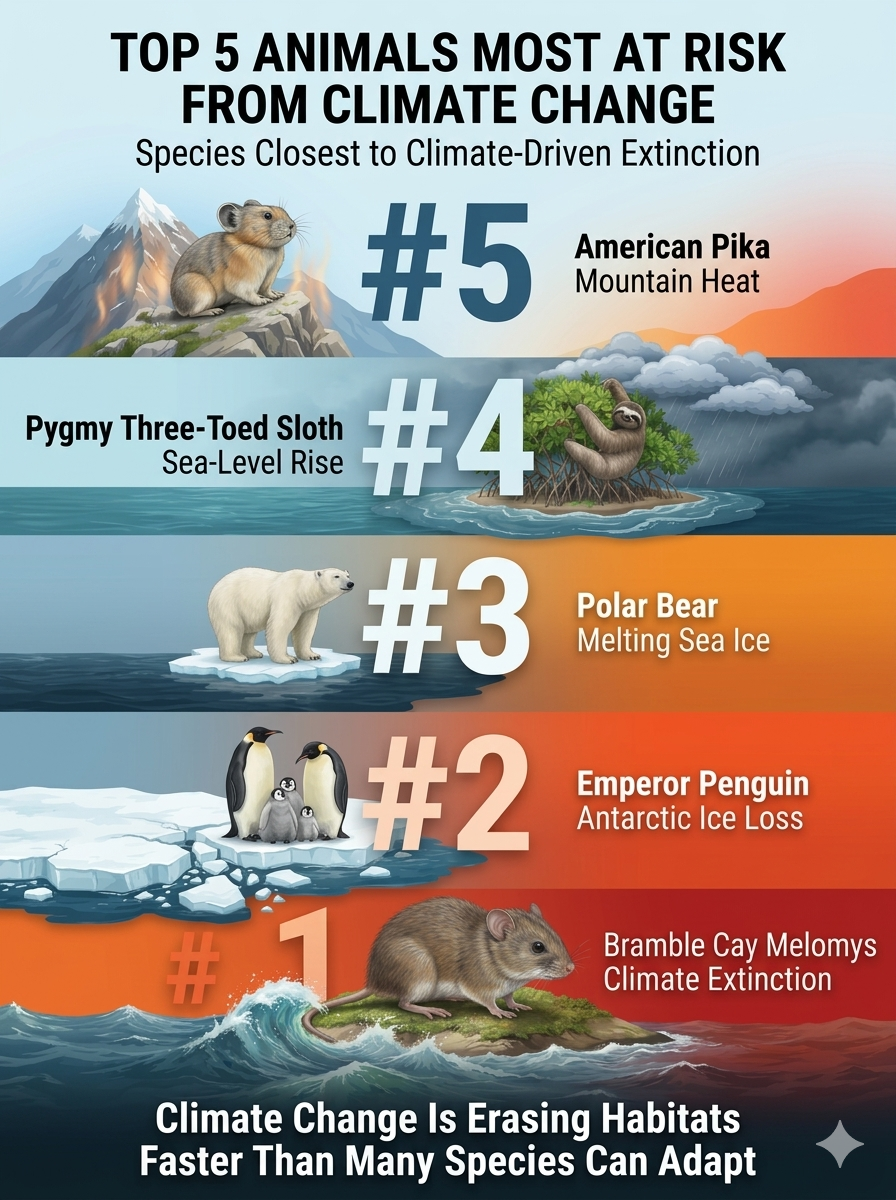
Among the animals facing the most immediate climate-related threats are the Bramble Cay melomys, Emperor penguin, Polar bear, Pygmy three-toed sloth, and American pika.
Emperor Penguin
Rapid Antarctic sea-ice loss is causing widespread breeding failures. When sea ice breaks apart before chicks develop waterproof feathers, the young penguins often drown or die from exposure before reaching adulthood.
Polar Bear
Arctic warming is shrinking the sea ice that polar bears rely on to hunt seals. Shorter hunting seasons leave many bears malnourished, forcing them onto land where food is scarce and survival becomes increasingly difficult.
Pygmy Three-Toed Sloth
Found only on a single small island off the coast of Panama, the pygmy three-toed sloth faces an uncertain future. Rising sea levels, stronger tropical storms, and habitat loss threaten its already tiny population with extinction.
American Pika
This small alpine mammal is highly sensitive to heat and cannot survive prolonged exposure to warm temperatures. As mountain climates warm, pikas are forced to higher elevations where suitable habitat becomes increasingly limited, leaving them with nowhere else to go.
Bramble Cay Melomys
The Bramble Cay melomys, a small rodent native to a tiny island in the Torres Strait, is considered the first mammal documented to have become extinct primarily as a result of human-driven climate change. Rising sea levels, repeated storm surges, and saltwater inundation destroyed the island’s vegetation and habitat, leading to its disappearance.
These species illustrate how climate change is reshaping ecosystems across the globe. Whether through melting sea ice, rising oceans, extreme weather, or rapidly warming mountain environments, climate change is eliminating the habitats that many specialized species need to survive. Without significant reductions in greenhouse gas emissions and stronger conservation efforts, many more animals could follow the same path toward extinction.