A Quarter-Century Drought Milestone
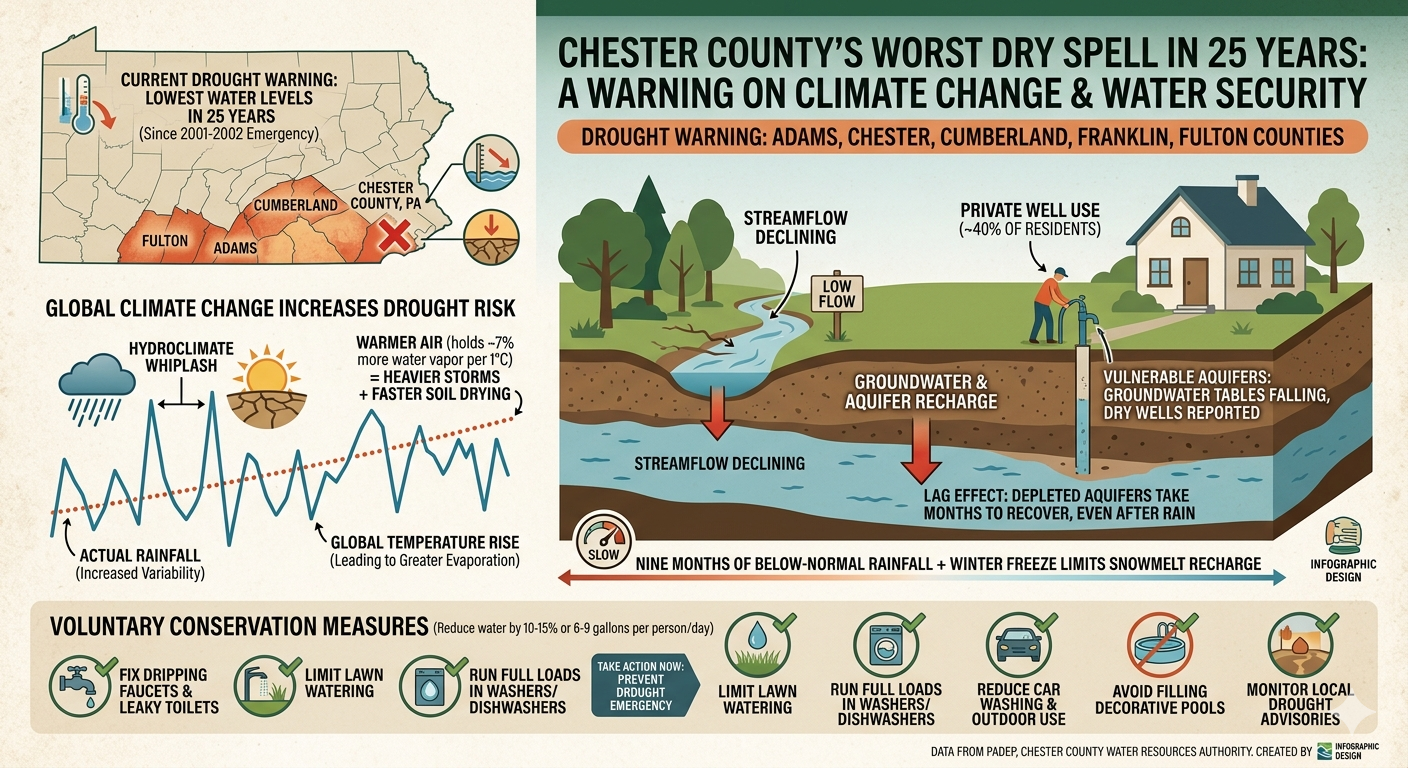
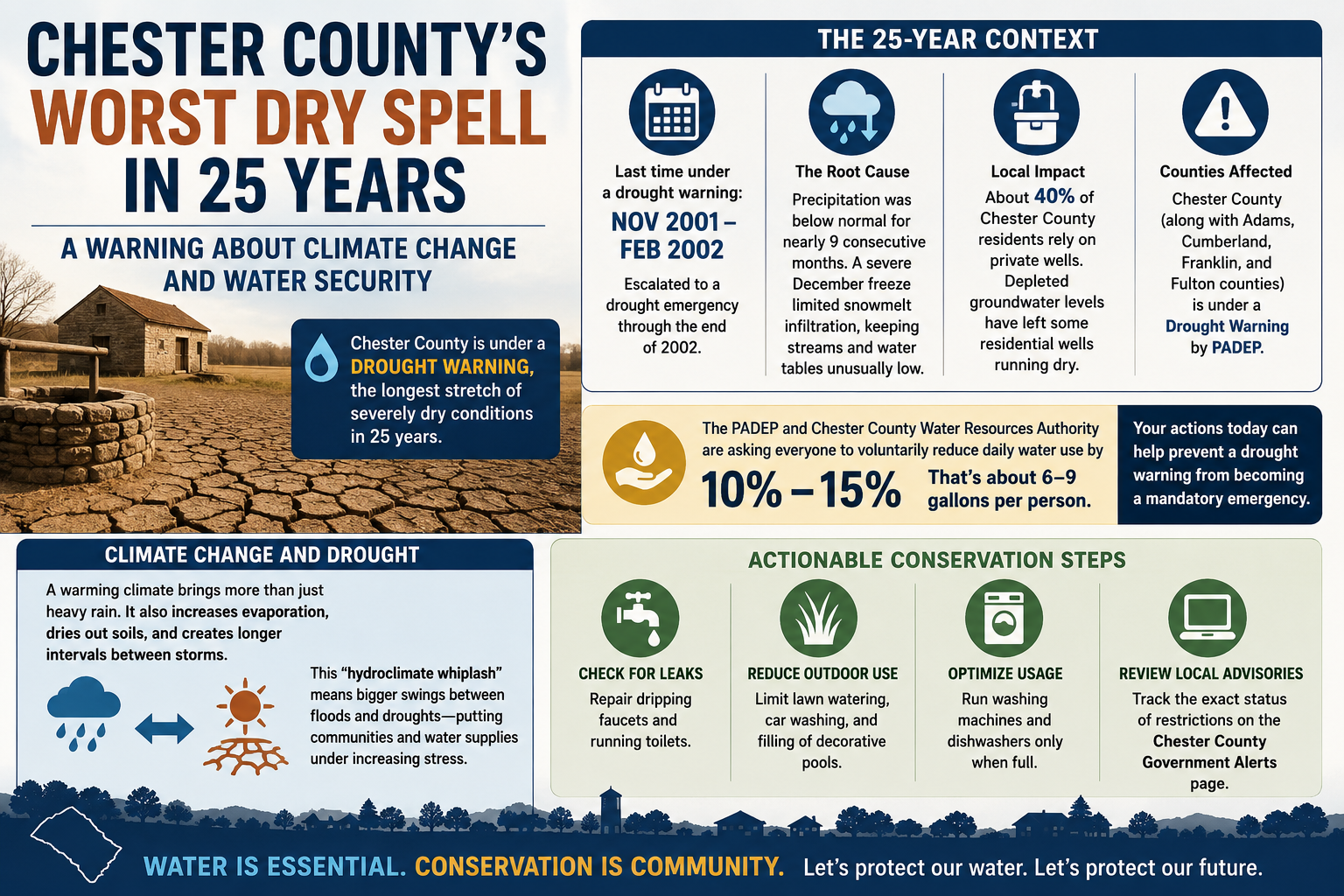
Chester County is currently experiencing its most significant drought conditions in 25 years, prompting the Pennsylvania Department of Environmental Protection (PADEP) to place the county under a Drought Warning. Chester County joins Adams, Cumberland, Franklin, and Fulton counties in the warning designation as groundwater levels, stream flows, and water reserves continue to decline.
The last time Chester County experienced comparable conditions was from November 2001 through February 2002. That drought ultimately intensified into a declared drought emergency that persisted through the end of 2002. Today’s warning serves as a reminder that prolonged water shortages remain a serious threat, even in regions traditionally known for abundant rainfall.
Nine Months of Below-Normal Rainfall
The current drought developed after nearly nine consecutive months of below-average precipitation. Compounding the problem, a severe winter freeze limited snowmelt infiltration into the ground, preventing aquifers from receiving the recharge they normally depend upon during the colder months.
As a result, groundwater levels have steadily declined, stream flows have dropped, and reservoirs have struggled to recover. The impacts are particularly severe for the approximately 40 percent of Chester County residents who rely on private wells for their water supply. Some homeowners have already reported wells running dry as water tables continue to fall.
Climate Change and the Growing Risk of Drought
While droughts are a natural part of Pennsylvania’s climate, climate change is increasing the likelihood of both extreme wet and extreme dry conditions.
A warming atmosphere can hold approximately 7 percent more water vapor for every 1°C increase in temperature. This additional moisture often results in heavier downpours and more intense storms. However, the same warming also increases evaporation from soils, vegetation, streams, and reservoirs. The result is a growing tendency toward what scientists call “hydroclimate whiplash”—rapid swings between flooding and drought.
The Mid-Atlantic region has already experienced a rise in extreme precipitation events, but these periods of intense rainfall are increasingly separated by longer dry intervals. Heavy storms may temporarily replenish rivers and reservoirs, yet much of the water can run off quickly rather than soaking deeply into the ground where it can recharge aquifers.
For groundwater-dependent communities like Chester County, this pattern presents a growing challenge. Even when annual rainfall totals appear near normal, the timing and intensity of precipitation can leave water supplies vulnerable.
Why Groundwater Matters
Groundwater serves as a critical buffer during dry periods. It sustains private wells, supports stream flows, and helps maintain ecosystem health when rainfall is scarce.
When drought persists, groundwater levels decline more slowly than surface water, but they also recover more slowly. This lag effect means that even after rainfall returns, water tables may remain depressed for months or longer.
The current drought demonstrates how vulnerable groundwater systems can become after extended periods of below-normal precipitation.
What Residents Can Do
The PADEP and the Chester County Water Resources Authority are asking residents, businesses, and farmers to voluntarily reduce water consumption by 10 to 15 percent, equivalent to approximately six to nine gallons per person per day.
Simple conservation measures can make a meaningful difference:
- Repair dripping faucets and running toilets.
- Limit lawn watering and other outdoor irrigation.
- Reduce car washing and unnecessary outdoor water use.
- Avoid filling decorative pools and water features.
- Run dishwashers and washing machines only when fully loaded.
- Monitor local drought advisories and conservation recommendations.
These voluntary actions can help prevent conditions from deteriorating into a mandatory drought emergency.
A Glimpse of the Future
The current drought warning is more than a temporary weather event. It offers a glimpse into the challenges communities may increasingly face as climate change alters precipitation patterns and intensifies hydrological extremes.
Chester County’s longest severe dry spell in a quarter century underscores the importance of protecting groundwater resources, improving water conservation, and preparing for a future in which both floods and droughts become more disruptive.
The lesson is clear: climate change is not simply making wet places wetter or dry places drier. It is increasing variability itself, creating larger swings between extremes and placing greater stress on the water systems that communities depend upon every day.