by Daniel Brouse
Overview
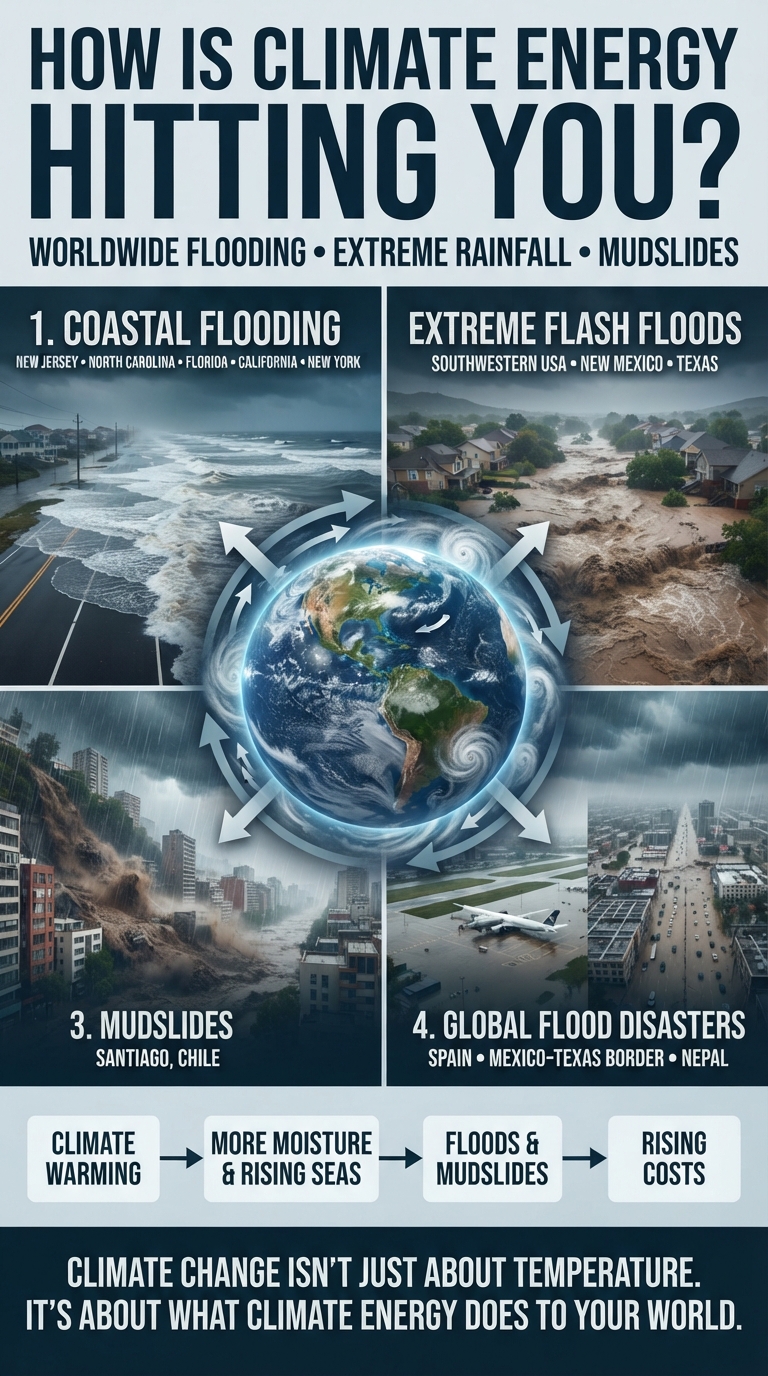
HOW IS CLIMATE ENERGY HITTING YOU? 🌎🌊
EXTREME FLOODING IS HITTING COMMUNITIES WORLDWIDE.
The latter part of 2026 has brought devastating flooding, coastal inundation, flash floods, and mudslides across multiple continents.
UNITED STATES: New Jersey, North Carolina, South Carolina, Florida, California, New York, New Mexico, and El Paso, Texas.
🌎 WORLDWIDE: Ciudad Juárez, Mexico • Santiago, Chile • Ibiza, Spain • Nepal.
From flooded coastal streets and submerged highways to record river crests and destructive mudslides, the consequences reach far beyond rising temperatures.
CLIMATE WARMING → ATMOSPHERIC MOISTURE + RISING SEAS → FLOODING → PROPERTY DAMAGE + ECONOMIC LOSSES
The oceans absorb more than 90% of the excess heat accumulating in the climate system. That energy influences ocean levels, atmospheric moisture, and weather patterns, increasing the risks communities face.
This is about more than extreme weather. It’s about your home, your community, your insurance costs, and your financial future.
THE CLIMATE CRISIS ISN’T JUST ABOUT TEMPERATURE. IT’S ABOUT WHAT CLIMATE ENERGY DOES TO YOUR WORLD.
#ClimateChange #ExtremeWeather #Flooding #ClimateScience #ClimateRisk
Worldwide Flooding, Coastal Inundation, Flash Floods, and Mudslides
Climate change is intensifying the water cycle, increasing the atmosphere’s capacity to hold moisture, raising sea levels, and increasing the risks associated with extreme precipitation. The consequences are devastating: flooded streets, damaged homes, overwhelmed drainage systems, eroding coastlines, disrupted transportation, and communities forced to evacuate.
From high-tide flooding along the U.S. coastline to destructive flash floods and mudslides around the world, these events demonstrate how excess energy accumulating in the climate system translates into immediate, local consequences.
Climate change, El Niño, ocean conditions, atmospheric circulation, and individual weather systems interact to shape extreme weather. Rising sea levels increase coastal flood risks, while intense precipitation can overwhelm drainage systems, rapidly raise rivers, and trigger destructive mudslides.
1. Worldwide Coastal Flooding
Coastal communities are experiencing flooding from the combination of rising sea levels, high King Tides, supermoons, onshore winds, and powerful coastal weather systems. King Tides occur when astronomical conditions produce exceptionally high tides. Supermoons can coincide with these conditions, while nor’easters and other coastal storms drive additional water and powerful waves ashore.
Recent examples of coastal flooding and erosion include:
- New Jersey: Ocean County’s back bays, including streets experiencing tidal flooding associated with Subtropical Storm Josephine and lingering weather systems, and North Wildwood experienced recurrent street and back-bay flooding.
- North Carolina: The Outer Banks faced severe overwash as ocean water washed across Highway 12, damaging pavement and protective dunes.
- South Carolina: Charleston experienced significant flooding driven by seasonal King Tides and high onshore winds.
- Florida: Key Biscayne experienced severe high-tide and King Tide flooding, forcing people to seek cover.
- California: Southern California communities, including Newport Beach and areas around The Wedge in Orange County, faced damaging waves, beach erosion, and high-tide flooding.
- New York: Parts of the Northeast and New York area, including Brooklyn, experienced flooding and other impacts from a relentless nor’easter.
Sea-level rise compounds these hazards. As the baseline ocean level rises, high tides and storm-driven water reach farther inland, increasing the frequency and severity of coastal flooding. Communities that once experienced occasional nuisance flooding increasingly face disruptions to roads, homes, businesses, and essential infrastructure.
2. New Mexico and the Four Corners Region
A barrage of severe storms struck the American Southwest, triggering widespread water rescues, evacuations, and severe property damage. Intense rainfall overwhelmed local drainage systems and drove rivers to extraordinary levels.
- Historic river crests: The San Juan River surged to 21–23 feet, its highest level since 1935, submerging neighborhoods and playgrounds in Shiprock and across the Navajo Nation.
- Widespread evacuations: Severe flash floods forced families from their homes near the Rio San Jose in Cibola and Valencia counties. Rare, heavy downpours inundated roads around Acoma Pueblo.
- Tornado damage: A rare tornado touched down in Santa Fe, leaving infrastructure damage alongside the rising floodwaters.
- Cross-border impacts: Upstream in Pagosa Springs, Colorado, the river reached levels unseen in more than a century. Farther downstream, storms also triggered severe flooding in Amarillo and Lubbock, Texas.
These events demonstrate how intense atmospheric moisture and concentrated rainfall can rapidly overwhelm watersheds, destroy property, and threaten lives. Climate warming intensifies the atmosphere’s capacity to hold moisture, increasing the potential for extreme precipitation. When intense rainfall strikes vulnerable terrain and communities, the resulting floods can become catastrophic.
3. Santiago, Chile
Driven by a powerful El Niño pattern, Chile’s capital endured its deadliest and most destructive October on record, as torrential rainfall, mudslides, tornadoes, hail, and flash flooding battered the metropolitan region.
- Destructive mudslides: Torrential rain in early October triggered a massive mudslide in the Las Condes municipality, damaging more than 2,000 homes, injuring residents, and burying urban intersections.
- Tornado and hail events: A subsequent mid-October electrical storm produced Santiago’s first officially confirmed tornado, dumping intense rain and hail that completely blanketed roads.
- Infrastructure collapse: Severe floodwaters rapidly inundated underground parking garages, storefronts, residential structures, and major highway tunnels. Chile’s disaster response agency, SENAPRED, declared maximum Red Alerts as the emergency escalated.
These events illustrate the destructive interaction of extreme rainfall, atmospheric instability, urban development, and vulnerable infrastructure. When intense precipitation overwhelms drainage systems, streets can become torrents, underground facilities can fill rapidly, and mudslides can bury entire sections of urban neighborhoods.
El Niño alters Pacific Ocean temperatures and atmospheric circulation, influencing precipitation patterns across parts of South America. Combined with a warming climate and intense storm systems, these conditions can contribute to dangerous flooding and severe weather.
4. Other Global Flooding Hotspots
Ciudad Juárez, Mexico, and El Paso, Texas
An intense hailstorm and flash flood overwhelmed municipal drainage systems on October 23, flooding a major hospital basement, sweeping vehicles down hillsides, and forcing more than 300 emergency rescues.
The event illustrates the danger of concentrated rainfall in urban environments. When precipitation exceeds the capacity of storm drains and channels, floodwaters can rapidly inundate buildings, sweep vehicles away, damage transportation networks, and place residents and emergency personnel in immediate danger.
Ibiza, Spain
Driven by Storm Adam, parts of Spain received an extraordinary 25 inches of rain within 36 hours. The deluge transformed the Ibiza Airport tarmac into a lake and stranded thousands of travelers.
Such extreme rainfall demonstrates how rapidly atmospheric moisture can become a destructive force. Flooding can overwhelm drainage infrastructure, disrupt aviation, damage property, and bring regional transportation to a standstill.
Nepal: Catastrophic Glacier-Related Flooding
A monumental glacier collapse sent a 100-meter-high wall of water ripping through valleys at 180 km/h, causing catastrophic destruction. United Nations officials categorized the disaster as a defining global climate event.
Mountain communities face increasing risks from glacier instability, ice and rock avalanches, glacial lake outburst floods, and sudden releases of water and debris. These hazards can send destructive surges through narrow valleys, destroying homes, roads, bridges, and entire communities.
Climate warming is accelerating glacier retreat and destabilizing high-mountain environments. As glaciers change and some glacial lakes expand, communities downstream face growing exposure to potentially catastrophic floods and related hazards.
5. The Bigger Picture: Climate Energy Becomes Local Damage
These examples reveal a central principle of climate science: changes in the global climate system can produce immediate and devastating consequences at the local level.
Excess heat does not remain confined to a thermometer reading. The oceans absorb more than 90% of the excess heat accumulating in the climate system. That energy affects ocean temperatures, sea levels, evaporation, atmospheric moisture, and weather patterns.
The consequences extend across interconnected Earth systems:
Climate warming → changing ocean and atmospheric conditions → intensified climate hazards → infrastructure damage → economic losses and community disruption.
Rising sea levels increase the reach of coastal flooding. A warmer atmosphere can hold more water vapor, providing additional moisture for intense precipitation. Powerful storms can then unleash that moisture over short periods, overwhelming rivers, drainage systems, and urban infrastructure. In steep terrain, intense rainfall can trigger destructive mudslides. In mountain regions, warming contributes to glacier retreat and changing ice-related hazards.
These effects interact. Flooding can damage roads and electrical systems, interrupt supply chains, contaminate water supplies, destroy homes, increase insurance costs, and impose substantial financial burdens on families and communities.
The impacts are not limited to distant coastlines or remote mountain valleys. They reach neighborhoods, businesses, public infrastructure, household budgets, and local economies.
Conclusion: Climate Change Is Hitting Communities Now
Climate change is not merely a projection about the future. Its consequences are increasingly felt through flooding, coastal erosion, extreme precipitation, destructive mudslides, and other hazards that threaten homes, transportation, public services, and household finances.
The central issue is the growing amount of energy accumulating in the Earth system and how that energy interacts with oceans, the atmosphere, ice, land, and human infrastructure. These connections can amplify the effects of individual weather events, turning intense rainfall or elevated coastal water into widespread destruction.
Understanding these connections is essential to protecting lives, reducing economic losses, strengthening infrastructure, and preparing communities for escalating climate risks.
The climate crisis is not just about rising temperatures. It is about how the energy accumulating in the Earth system is changing the world around you—and how those changes are affecting your home, your community, and your financial future.