by Daniel Brouse
The Rhine River has fallen to historic low levels at several critical measuring stations, disrupting one of Europe’s most important transportation corridors. At Lobith, near the Dutch border, the river dropped to 6.47 meters above NAP, surpassing the previous record set during the severe 2022 drought. River discharge has also plunged to approximately 692 cubic meters per second as prolonged drought and depleted Alpine snowpacks sharply reduce water flowing downstream.
Shipping and Economic Impacts
The Rhine carries hundreds of millions of tons of cargo each year, making low-water events a major economic concern.
- Cargo restrictions: Freight vessels are operating at only 20% of normal capacity in some locations to avoid grounding on the riverbed.
- Critical bottlenecks: Water levels at the key shipping gauge at Kaub, near Koblenz, have fallen to around 25 centimeters, matching the record lows experienced in 2018.
- Rising costs: Reduced shipping capacity has significantly increased transportation costs, disrupted supply chains, and threatens economic growth across Central Europe.
Outlook
Forecasts indicate that river levels could continue falling if hot, dry conditions persist through the coming weeks.
Although authorities report no immediate threat to municipal drinking water supplies, voluntary water conservation measures are being encouraged as drought conditions intensify.
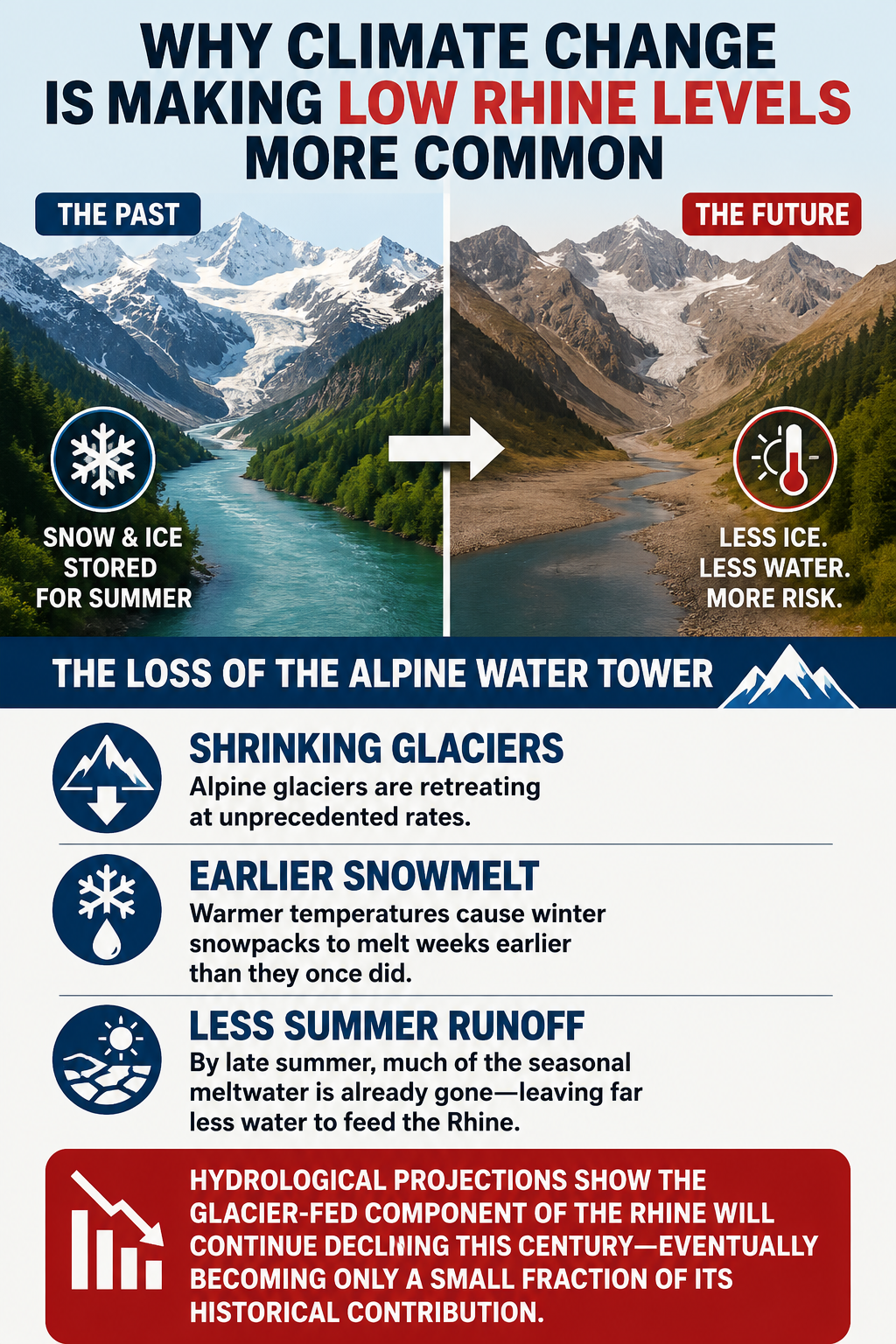
Why Climate Change Is Making Low Rhine Levels More Common
While the Rhine has experienced low-water periods throughout history, climate change is fundamentally altering the river’s hydrology. Research from European hydrological agencies shows that rising temperatures and accelerating glacial retreat are removing the natural systems that historically sustained river flows during dry summers.
The Loss of the Alpine Water Tower
The Alps have long acted as Europe’s natural water reservoir, storing winter snowfall and glacier ice that gradually melted throughout the summer.
That natural buffer is rapidly disappearing.
- Shrinking glaciers: Alpine glaciers are retreating at unprecedented rates.
- Earlier snowmelt: Warmer temperatures cause winter snowpacks to melt weeks earlier than they once did.
- Less summer runoff: By late summer, much of the seasonal meltwater has already been exhausted, leaving far less water to feed the Rhine during periods of peak demand.
Hydrological projections indicate that the glacier-fed component of the Rhine will continue declining throughout this century, eventually becoming only a small fraction of its historical contribution.
A River Increasingly Dependent on Rainfall
As glacier and snowmelt decline, the Rhine is transitioning from a stable, meltwater-supported river into one increasingly dependent on rainfall.
This shift produces much greater variability:
- Wetter winters with more intense precipitation.
- Longer, hotter summer droughts.
- More frequent and severe low-water events.
- Increasing disruptions to commercial navigation and regional economies.
Without the stabilizing influence of Alpine snow and glacier melt, prolonged summer droughts now cause the Rhine to reach critical shipping thresholds far more quickly than in the past.
The Rhine’s record-low water levels are more than a short-term drought story—they illustrate how accelerating climate change is transforming Europe’s water resources. As glaciers continue to retreat and heatwaves become more frequent, extreme low-water events are expected to become increasingly common, posing growing risks to transportation, industry, agriculture, and water management across the continent.
- Greenland’s Melting Ice Is Slowing Earth’s Ocean Conveyor Belt (AMOC)
- Greenland’s Melting Glaciers: Why Their Retreat Affects Everyone
- Greenland’s Giant Iceberg Flip: A Dramatic Sign of a Rapidly Changing Arctic