by Daniel Brouse
The overwhelming interest in Greenland’s dramatic iceberg rollover has raised an important question: Why should people who live thousands of miles from a glacier care?
Glacial retreat reshapes nearby landscapes almost immediately, but its most significant impacts extend far beyond the Arctic. As glaciers disappear, the effects ripple through water supplies, food production, energy systems, coastlines, and the global economy.
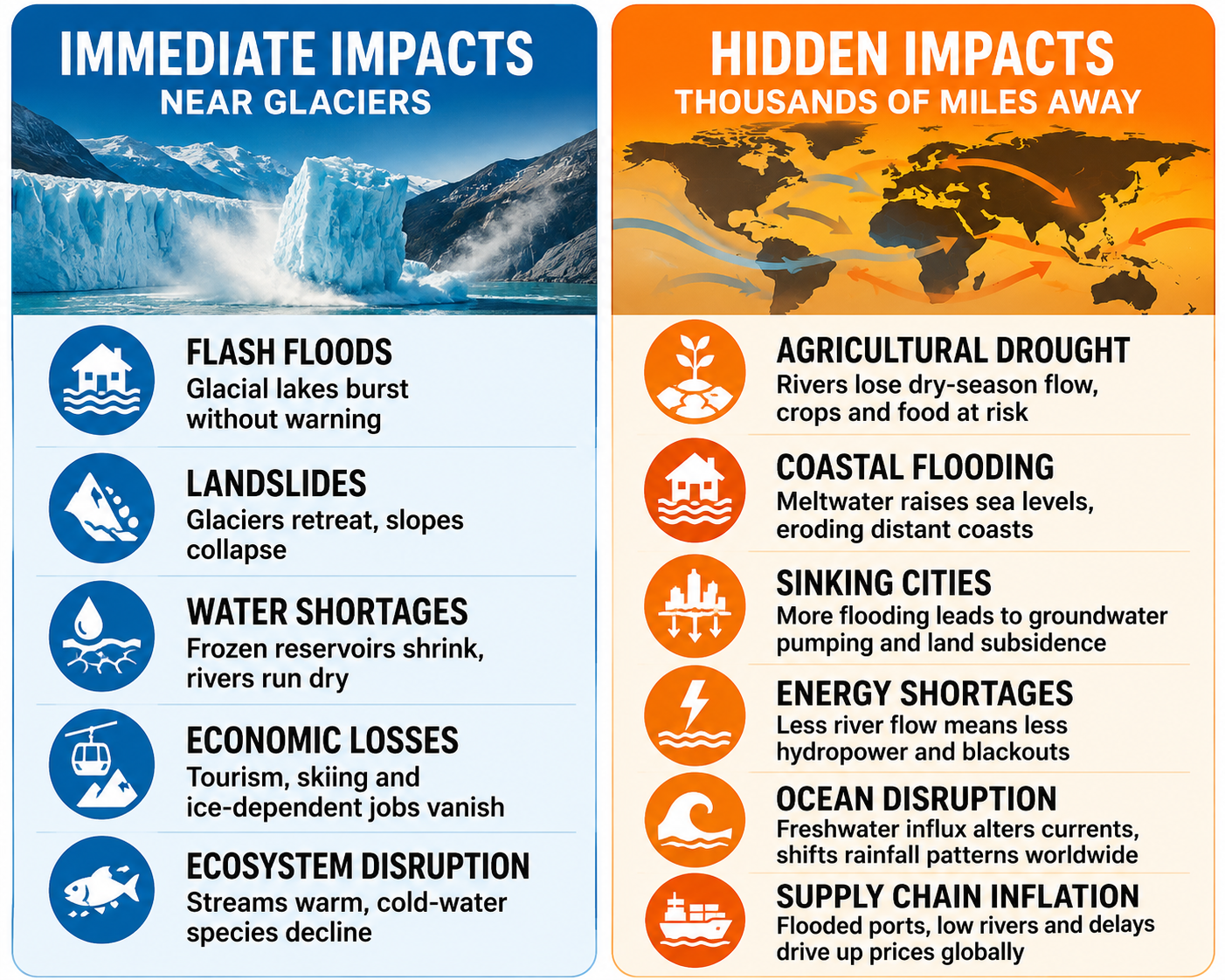
Immediate Impacts Near Glaciers
- Flash floods: Melting ice forms unstable glacial lakes that can burst without warning, devastating downstream communities.
- Landslides: As glaciers retreat, they remove the support that stabilizes steep mountain slopes, increasing the risk of massive rockfalls.
- Water shortages: Many communities lose the frozen reservoirs that supply rivers during the dry summer months.
- Economic losses: Glacier tourism, skiing, and other ice-dependent industries decline as glaciers disappear.
- Ecosystem disruption: Cold-water species, including trout and salmon, struggle as streams warm and habitats shrink.
Hidden Impacts Thousands of Miles Away
- Agricultural drought: Rivers fed by glaciers lose their dry-season flow, reducing irrigation water for farms far downstream.
- Coastal flooding: Meltwater from Greenland and other glaciers raises global sea levels, increasing flooding and shoreline erosion worldwide.
- Sinking cities: More frequent coastal flooding often leads to increased groundwater pumping, accelerating land subsidence in vulnerable urban areas.
- Energy shortages: Hydroelectric systems that depend on glacier-fed rivers face declining water supplies and reduced power generation.
- Disrupted ocean circulation: Large freshwater inputs can alter ocean currents, shifting weather patterns and rainfall across continents.
- Higher prices: Lower river levels, flooded ports, and damaged transportation infrastructure disrupt global supply chains, increasing the cost of food, energy, and consumer goods.
Glacial retreat is far more than the loss of scenic ice. It is a global chain reaction that affects freshwater, agriculture, infrastructure, ecosystems, economies, and the stability of the climate system. What begins with melting ice in Greenland ultimately influences the lives of billions of people around the world.
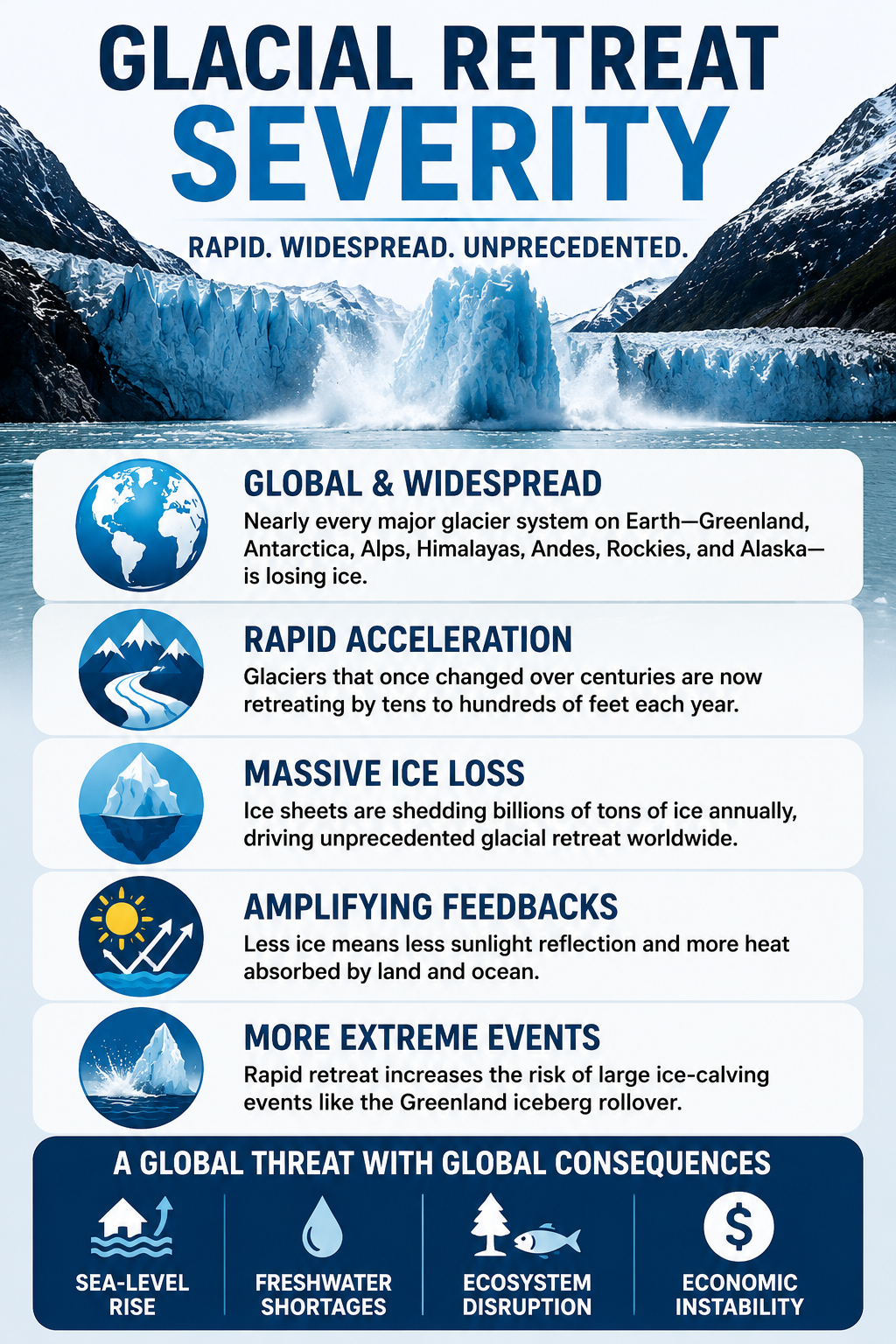
Glacial Retreat Severity
Glacial retreat is accelerating at an unprecedented rate as rising global temperatures drive record levels of melting. Nearly every major glacier system on Earth—from Greenland and Antarctica to the Alps, Himalayas, Andes, Rockies, and Alaska—has experienced sustained ice loss over recent decades. In many regions, glaciers that once changed slowly over centuries are now retreating by tens to hundreds of feet each year, while ice sheets are shedding billions of tons of ice annually. This rapid loss reduces Earth’s ability to reflect sunlight, exposes darker land and ocean surfaces that absorb more heat, and increases the likelihood of large ice-calving events like the recent Greenland iceberg rollover. As these feedback loops intensify, glacial retreat is no longer just a regional environmental issue—it has become a global driver of sea-level rise, freshwater shortages, ecosystem disruption, and economic instability.