DIY Climate Control: Save Money, Reduce Waste, and Cut Greenhouse Gas Emissions
by Daniel Brouse
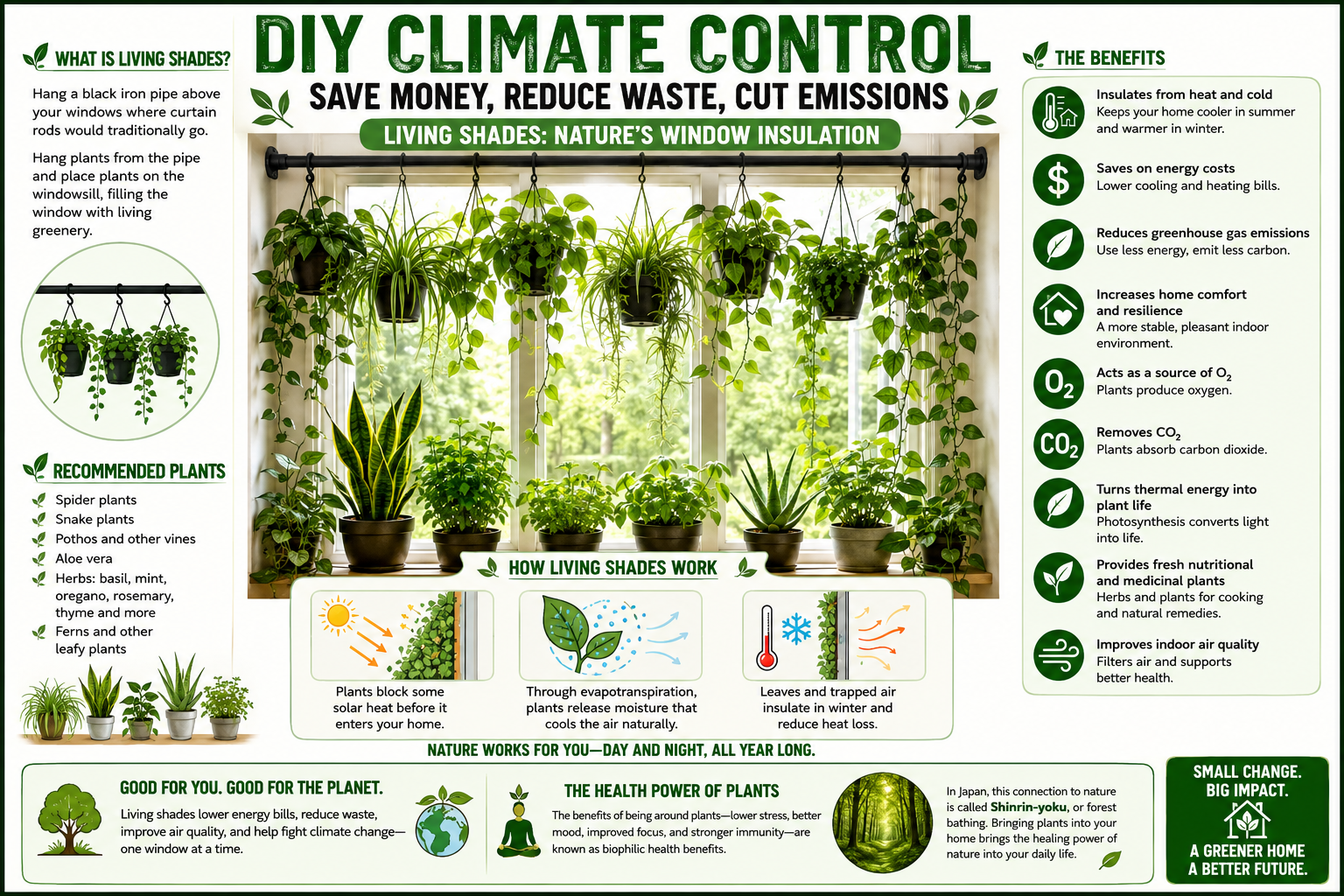
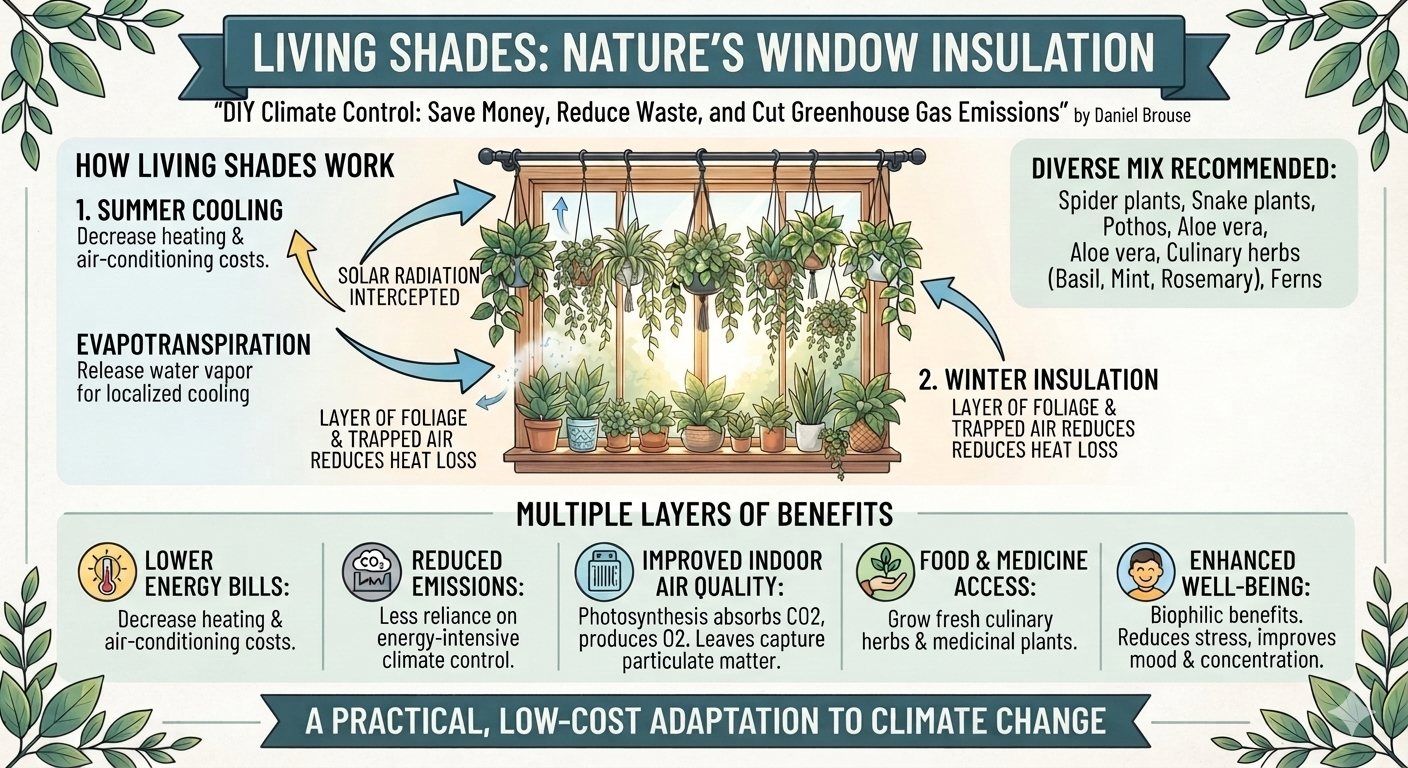
One of the simplest and most affordable ways to improve your home’s energy efficiency is to create living shades. Instead of installing traditional curtains or blinds, mount a sturdy black iron pipe above each window and suspend a collection of houseplants from it. Complement the hanging plants with additional plants on the windowsill, creating a dense layer of living vegetation between the window and the room.
A diverse mix of plants works best. Excellent choices include:
- Spider plants
- Snake plants
- Pothos and other trailing vines
- Aloe vera
- Culinary herbs such as basil, mint, oregano, rosemary, and thyme
- Ferns and other leafy houseplants
As the plants mature, they naturally form a living curtain that performs several useful functions simultaneously.
How Living Shades Work
Plants intercept a portion of incoming solar radiation before it enters the room. Through evapotranspiration, they also release water vapor that provides localized evaporative cooling around windows. During winter, the layer of foliage and trapped air provides modest insulation that helps reduce heat loss.
Unlike synthetic window coverings, living shades continuously improve indoor environmental quality while producing no waste and requiring very little energy to operate.
Benefits
Living shades can help:
- Lower indoor temperatures during sunny weather.
- Reduce winter heat loss through windows.
- Decrease heating and air-conditioning costs.
- Improve household energy efficiency.
- Reduce greenhouse gas emissions associated with home energy use.
- Increase indoor humidity during dry winter months.
- Capture small amounts of airborne particulate matter on leaf surfaces.
- Absorb carbon dioxide while producing oxygen through photosynthesis.
- Improve indoor air quality and occupant comfort.
- Provide fresh culinary herbs and medicinal plants.
- Increase household resilience by producing small quantities of food year-round.
- Create a calming, attractive indoor environment.
While individual houseplants should not be viewed as major carbon sinks, a home filled with vegetation contributes to a healthier indoor ecosystem while reducing reliance on energy-intensive climate control.
Beyond Energy Savings: The Health Benefits of Indoor Nature
The benefits of living plants extend beyond lower utility bills.
A growing body of research shows that exposure to vegetation can reduce stress, improve mood, enhance concentration, and promote psychological well-being. Collectively, these effects are known as biophilic health benefits, reflecting humanity’s innate connection to the natural world.
In Japan, the practice of intentionally immersing oneself in nature is known as Shinrin-yoku, or forest bathing. Research has shown that spending time around plants and trees can lower stress hormones, reduce blood pressure, improve immune function, and promote relaxation. While a living room cannot replace a forest, incorporating abundant indoor vegetation brings many of these restorative qualities into everyday life.
Living shades therefore provide multiple layers of value:
- Lower energy bills.
- Reduced greenhouse gas emissions.
- Improved indoor air quality.
- Increased food and medicinal plant production.
- Enhanced physical comfort.
- Better mental health and overall well-being.
As climate change drives higher temperatures and rising energy costs, living shades represent a practical, low-cost adaptation strategy that transforms ordinary windows into productive, energy-saving ecosystems.