by Daniel Brouse
Reducing Exposure to Smoke, Ozone, and Fine Particulate Pollution
Climate change, air pollution, and human health are becoming increasingly intertwined in a self-reinforcing feedback system. Rising temperatures accelerate the formation of ground-level ozone, while hotter, drier conditions fuel larger and more frequent wildfires that release enormous quantities of smoke and toxic gases. These pollutants damage human health, weaken forests and ecosystems that normally absorb carbon dioxide, and further accelerate climate change.
Protecting yourself from air pollution is no longer just a concern during isolated pollution events—it has become an essential part of climate resilience.
1. Avoid Exposure Whenever Possible
The most effective protection against air pollution is to avoid breathing polluted air whenever possible.
Monitor local air quality forecasts daily, especially during:
- Wildfire events
- Heat waves
- Temperature inversions
- High ozone alerts
- Dust storms
- Heavy traffic periods
Air quality is commonly reported using the Air Quality Index (AQI), which primarily measures particulate pollution (PM₂.₅ and PM₁₀). However, harmful pollutants such as ground-level ozone (O₃), nitrogen dioxide (NO₂), sulfur dioxide (SO₂), and numerous volatile organic compounds (VOCs) can fluctuate rapidly and may not always be reflected by a single AQI number.
Ground-level ozone deserves special attention because it is largely invisible. Peak ozone concentrations often occur on warm, sunny afternoons when ultraviolet (UV) radiation drives chemical reactions between nitrogen oxides (NOₓ) and volatile organic compounds released from vehicles, power plants, industrial facilities, and wildfire smoke.
Clear skies do not necessarily mean clean air. Even when the AQI appears acceptable, hot, sunny, and stagnant conditions can rapidly generate dangerous levels of ground-level ozone. If these conditions are present, use your best judgment and limit outdoor activity.
2. Wear Appropriate Respiratory Protection
Sometimes avoiding outdoor exposure is impossible. When you must be outside, proper respiratory protection becomes essential.
Particulate Pollution
For wildfire smoke and airborne particles:
- N95 respirators
- KN95 respirators
- P100 respirators
These masks are highly effective at filtering fine particulate matter (PM₂.₅) when they fit properly.
Ozone and Toxic Gases
Particulate masks alone do not protect against gases.
Ground-level ozone, formaldehyde, benzene, and many wildfire gases pass directly through standard N95 and HEPA filters.
Protection from gaseous pollutants requires:
- Activated carbon filters
- Activated charcoal cartridges
- Combination particulate/carbon respirators
Activated carbon chemically adsorbs many gaseous pollutants before they reach your lungs.
3. Improve Indoor Air Quality
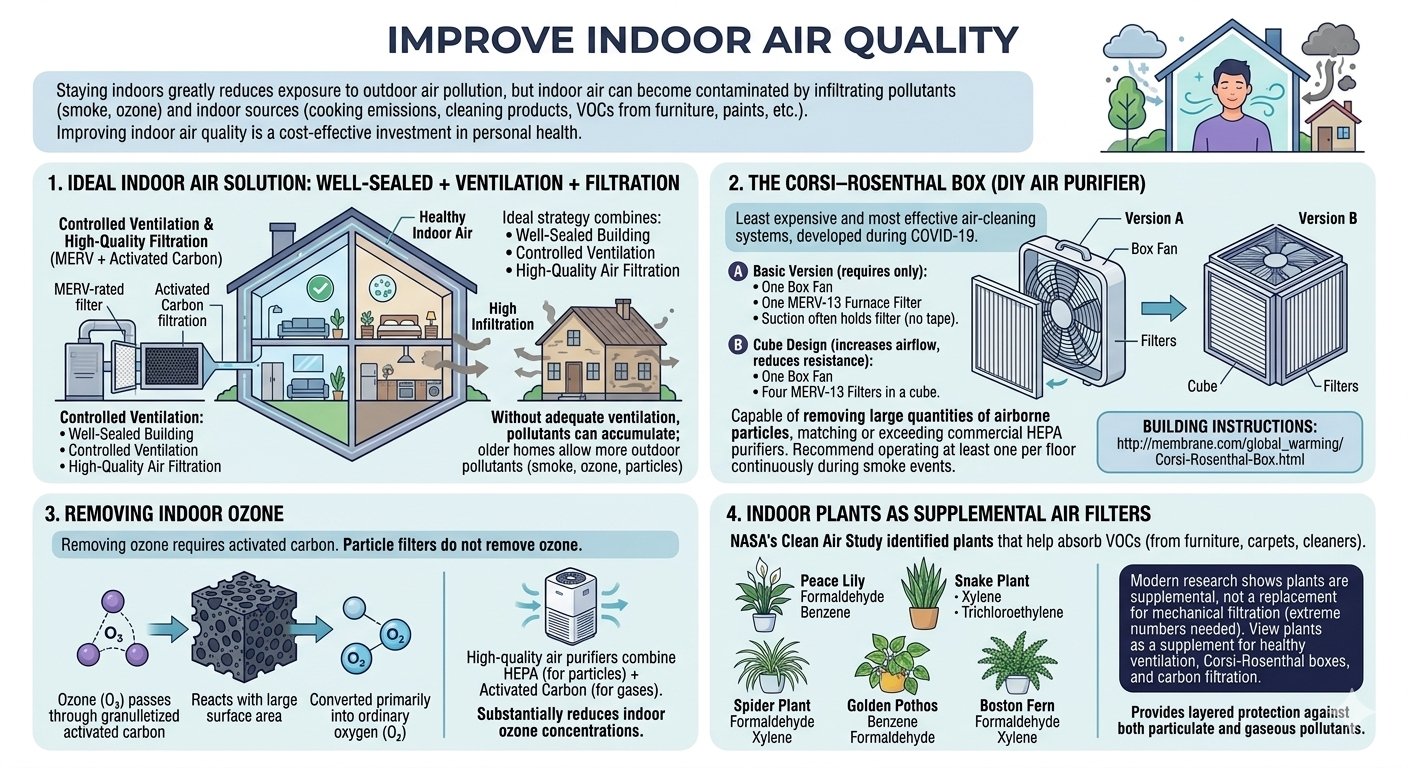
Staying indoors greatly reduces exposure to outdoor air pollution, but indoor air can still become contaminated by infiltrating smoke, ozone, and other outdoor pollutants, as well as indoor sources such as cooking emissions, cleaning products, and volatile organic compounds (VOCs) released from furniture, flooring, paints, adhesives, and building materials.
Improving indoor air quality is one of the most cost-effective investments in personal health. However, there is an important trade-off. Better insulation and tighter building construction improve energy efficiency by reducing heating and cooling losses, but they also reduce the natural exchange of indoor and outdoor air. Without adequate ventilation and air filtration, pollutants generated indoors can accumulate to unhealthy levels. Conversely, older or less airtight homes provide greater natural ventilation but also allow more outdoor pollutants—including wildfire smoke, ozone, pollen, and fine particulate matter—to enter the living space.
The ideal solution is to combine a well-sealed, energy-efficient building with controlled ventilation and high-quality air filtration. Mechanical ventilation systems equipped with MERV-rated filters and activated carbon filtration, along with portable air cleaners such as Corsi–Rosenthal Boxes, can maintain healthy indoor air while minimizing the infiltration and buildup of harmful pollutants.
The Corsi–Rosenthal Box
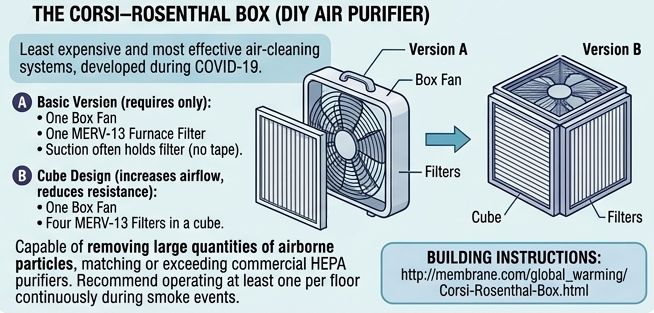
One of the least expensive and most effective air-cleaning systems is the Corsi–Rosenthal Box.
Developed during the COVID-19 pandemic, this simple do-it-yourself air purifier combines:
- A standard box fan
- One to five high-efficiency furnace filters (typically MERV-13)
Together they create an air filtration system capable of removing large quantities of airborne particles, often matching or exceeding the performance of many commercial HEPA air purifiers costing hundreds of dollars.
A basic version requires only:
- one box fan
- one MERV-13 furnace filter
The fan’s suction often holds the filter securely in place without tape.
Adding four filters in the familiar cube design increases airflow while reducing resistance, producing an exceptionally efficient whole-room air cleaner.
For homes experiencing recurring wildfire smoke, many experts recommend operating at least one Corsi–Rosenthal Box continuously during smoke events on each floor.
Removing Indoor Ozone
Particle filters—including fiberglass filters, MERV filters, and HEPA filters—do not remove ozone.
Removing ozone requires activated carbon.
Granular or pelletized activated carbon filters are particularly effective because they provide large surface areas for chemical reactions.
As ozone (O₃) passes through activated carbon, it reacts with the carbon surface and is converted primarily into ordinary oxygen (O₂), substantially reducing indoor ozone concentrations.
Many high-quality air purifiers now combine:
- HEPA filtration for particles
- Activated carbon for gases
This combination provides protection against both wildfire smoke and ozone.
For more information about building a Corsi–Rosenthal Box, see:
http://membrane.com/global_warming/Corsi-Rosenthal-Box.html
4. Use Indoor Plants as Supplemental Air Filters
Indoor plants can improve local air quality while providing numerous psychological and environmental benefits.
NASA’s landmark Clean Air Study identified several plants that help absorb volatile organic compounds (VOCs) released from furniture, carpets, paints, adhesives, and household cleaners.
Among the most effective are:
- Peace Lily
- Snake Plant
- Spider Plant
- Golden Pothos
- Boston Fern
These plants can reduce concentrations of compounds such as:
- formaldehyde
- benzene
- xylene
- trichloroethylene
However, modern research has shown that although plants are helpful in small spaces, extremely large numbers of plants would be required to equal the air-cleaning capacity of a modern HVAC system.
Indoor plants should therefore be viewed as a supplement—not a replacement—for mechanical air filtration.
The best strategy combines:
- healthy ventilation
- Corsi–Rosenthal Boxes
- activated carbon filtration
- indoor plants
Together these provide layered protection against both particulate and gaseous pollutants.
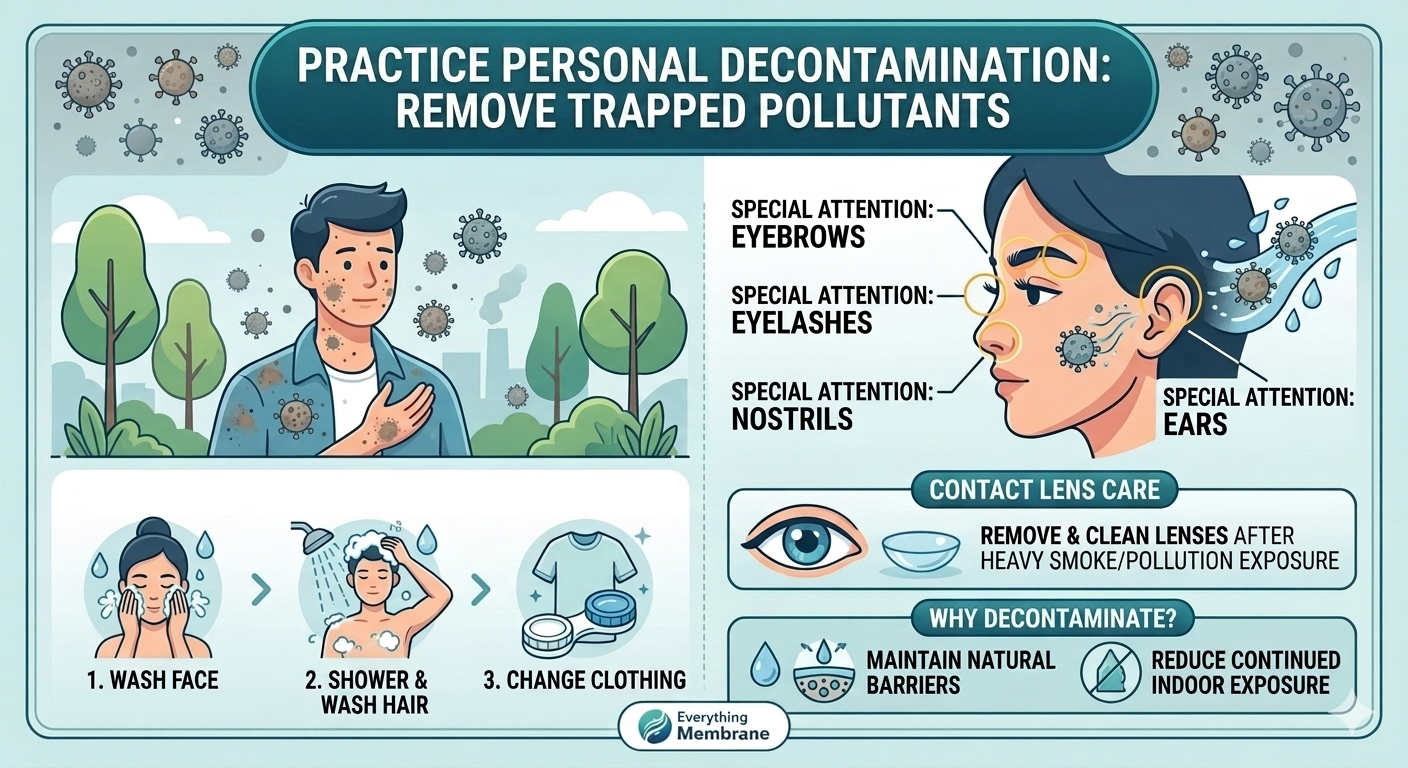
5. Practice Personal Decontamination
Air pollution does not only enter the body through the lungs.
Smoke particles, soot, pollen, heavy metals, and chemical residues accumulate on the skin, hair, clothing, and facial features throughout the day.
After returning indoors following exposure:
- Wash your face thoroughly.
- Shower if exposure was prolonged.
- Wash your hair.
- Change contaminated clothing.
- Rinse exposed skin with soap and water.
Special attention should be given to:
- eyebrows
- eyelashes
- nostrils
- ears
These areas naturally trap airborne particles before they enter deeper into the respiratory system. Removing accumulated contaminants helps maintain the effectiveness of these natural protective barriers while reducing continued exposure indoors.
People who wear contact lenses may also benefit from removing and cleaning them after heavy smoke or pollution exposure, as pollutants can irritate the eyes and adhere to lens surfaces.
6. Long-Term Protection
While personal protective measures reduce individual exposure, they cannot eliminate the growing threat posed by worsening air pollution.
Long-term protection requires reducing the underlying causes of pollution by limiting greenhouse gas emissions, improving energy efficiency, reducing fossil fuel combustion, preventing catastrophic wildfires, and protecting forests and wetlands that naturally filter the atmosphere.
As climate change accelerates, episodes of dangerous air quality are expected to become more frequent, longer-lasting, and geographically widespread. Preparing homes with effective air filtration, maintaining appropriate respiratory protection, and staying informed about local air quality conditions are becoming essential components of climate adaptation.
Conclusion
The atmosphere is changing rapidly, bringing with it increasing levels of wildfire smoke, ground-level ozone, fine particulate matter, and other airborne pollutants. These hazards threaten respiratory health, cardiovascular function, neurological well-being, and overall quality of life.
Fortunately, many of the most effective protective measures are simple and affordable. Monitoring air quality, minimizing outdoor exposure during pollution events, using properly fitted respirators, improving indoor air filtration with systems such as the Corsi–Rosenthal Box, incorporating activated carbon filtration, maintaining indoor plants, and practicing thorough personal hygiene can dramatically reduce daily exposure.
As climate-driven air pollution becomes an increasingly common reality, proactive protection is no longer optional—it is an essential part of safeguarding both individual health and community resilience.