by Daniel Brouse
How Is Climate Energy Hitting You?
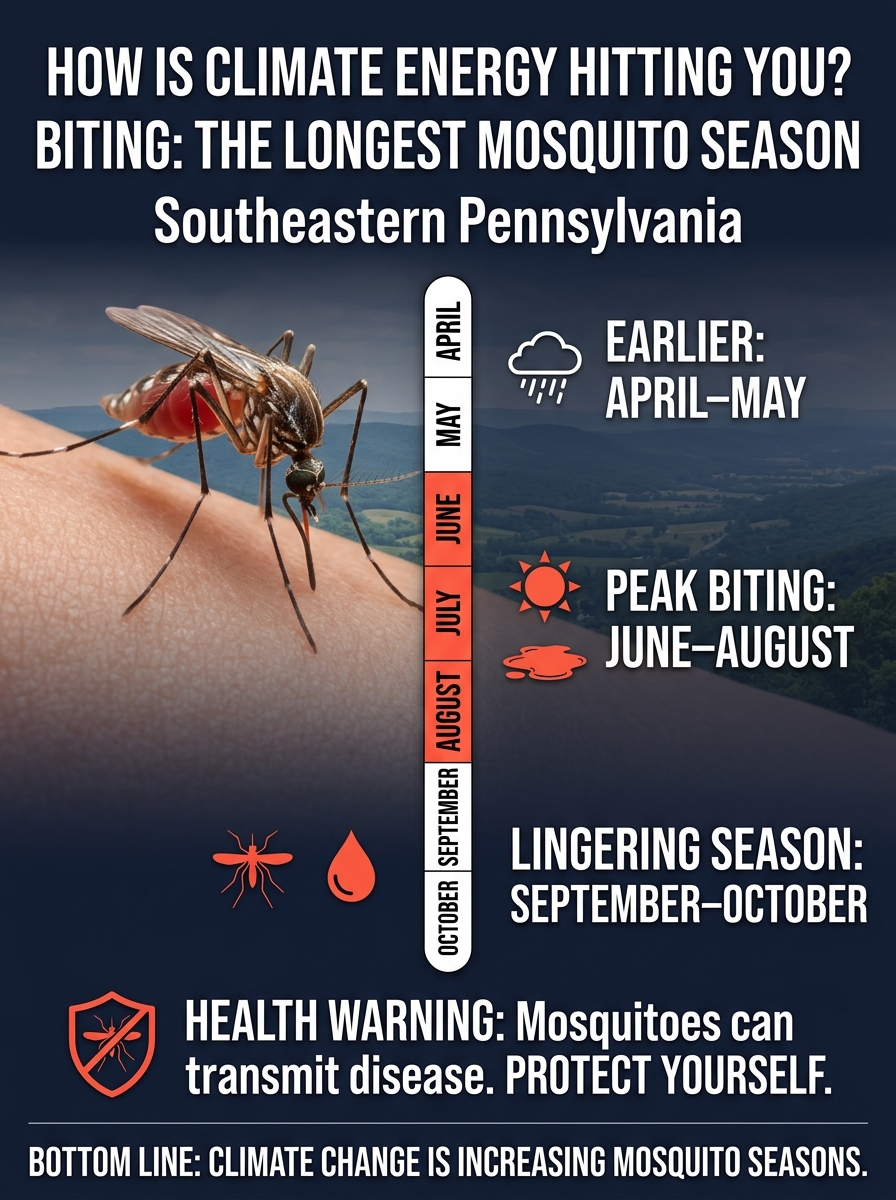
Biting: The Longest Mosquito Season
Southeastern Pennsylvania’s 2026 mosquito season has been prolonged, with mosquito activity extending into October. A combination of spring rainfall, warm temperatures, standing water, and persistent humidity can create favorable conditions for mosquito breeding and survival, potentially extending the season beyond its traditional peak.
The extended season is another example of how changing weather patterns can affect everyday life, from outdoor comfort to public health. However, confirming that 2026 is the region’s longest mosquito season would require historical surveillance data and consistent year-to-year comparisons.
The 2026 Mosquito Season: A Timeline
Early Start (April–May)
Warmer spring temperatures and rainfall can accelerate mosquito development and bring earlier seasonal activity. Standing water in yards, storm drains, and other locations provides breeding habitat. Establishing the precise start of the 2026 season requires local monitoring records.
Peak Season (June–August)
Summer heat can speed up mosquito development, while rainfall and persistent moisture can replenish breeding sites. Some mosquito species can complete their life cycle in as little as several days under favorable conditions. Urban drainage systems, containers, and low-lying areas can provide recurring sources of standing water.
Extended Autumn (September–October)
Mosquitoes can remain active well into autumn when temperatures and moisture levels remain favorable. Activity generally declines as temperatures fall, although the timing varies by species and local conditions. A hard frost can sharply reduce activity, but it does not necessarily eliminate all mosquitoes or their eggs.
Health Risks and Regional Hotspots
An extended mosquito season can prolong opportunities for exposure to mosquito-borne diseases, including West Nile virus (WNV). Actual risk, however, depends on local mosquito surveillance, virus detection, species distribution, and human exposure—not simply the length of the season.
The Vectors
Culex pipiens, commonly known as the northern house mosquito, is an important West Nile virus vector in Pennsylvania. It can thrive in urban environments, including storm drains and catch basins.
Aedes albopictus, the Asian tiger mosquito, is another important species in the region. It breeds in small collections of standing water, including water trapped in containers, and can remain active during suitable autumn weather.
West Nile Virus Surveillance
Pennsylvania and the Centers for Disease Control and Prevention monitor mosquito populations and mosquito-borne disease activity. Positive mosquito samples indicate that the virus is circulating in a particular area, but they do not, by themselves, establish the level of risk to residents.
Claims about early-season positive samples in Bucks County or other Southeastern Pennsylvania locations should be verified against the relevant 2026 surveillance records before publication.
What You Can Do
Residents can reduce mosquito breeding and exposure by taking a few practical steps:
- Empty standing water from containers, flowerpots, buckets, and outdoor equipment.
- Clean clogged gutters and maintain drainage around the property.
- Use screens on windows and doors.
- Apply an EPA-registered insect repellent according to its label.
- Wear long sleeves and long pants when mosquitoes are active, particularly around dawn and dusk.
The Bottom Line
A longer mosquito season is more than an outdoor nuisance. It is a direct, increasingly visible consequence of a warming climate. Rising temperatures extend the period when mosquitoes can survive, reproduce, and remain active, pushing seasonal biting activity further into autumn and prolonging opportunities for exposure to mosquito-borne diseases.
Climate change is the primary long-term driver of warming temperatures and increasingly favorable conditions for extended mosquito seasons. Rainfall, humidity, standing water, mosquito species, and public-health interventions influence the severity of individual seasons, but a warming climate shifts the underlying conditions in favor of longer periods of mosquito activity.
The question is not just how much energy is accumulating in the climate system. It is how that energy translates into consequences we experience in our own backyards. In Southeastern Pennsylvania, a mosquito still biting in October offers a tangible reminder that climate change is not a distant threat. It is changing the conditions of everyday life—one bite at a time.