by Daniel Brouse
July 17, 2025
26,000 Lightning Strikes Yesterday
Lightning is an escalating concern in climate science. On July 16, 26,000 lightning bolts were recorded in our region, resulting in the death of an archery instructor and multiple injuries to children during an activity in New Jersey.
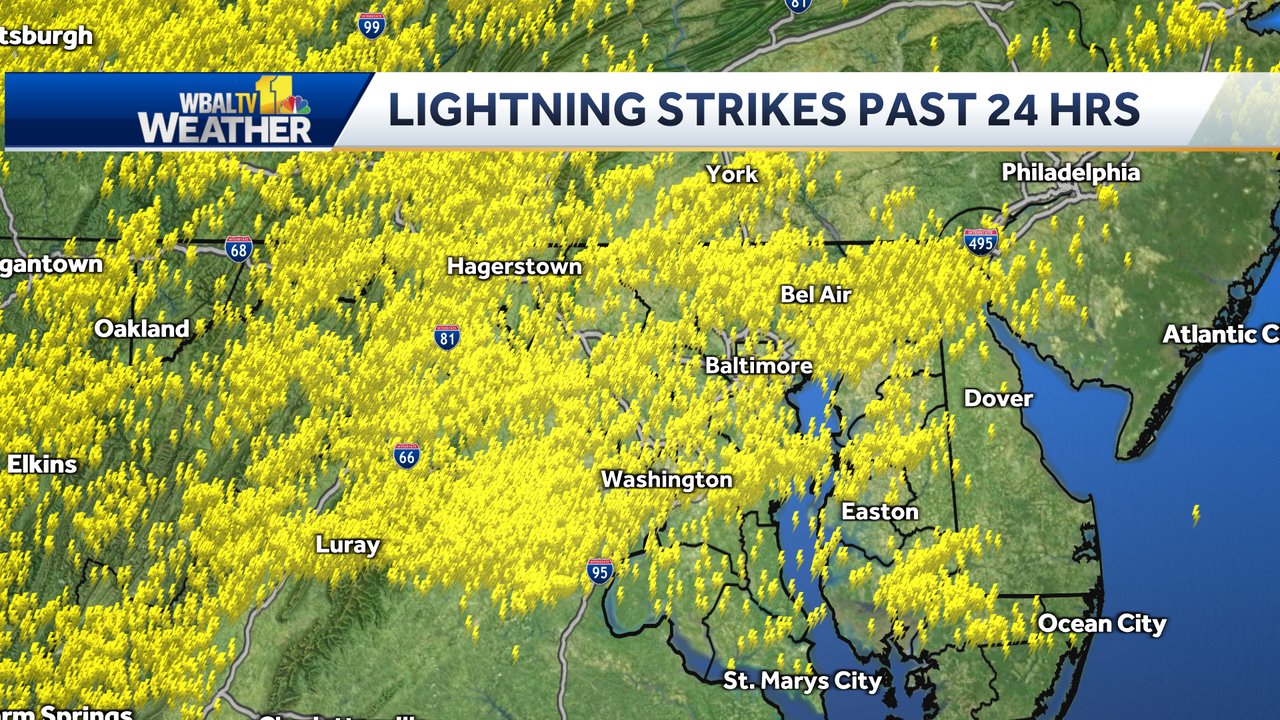
Lightning is the leading cause of wildfires in North America, including those in Canada that are driving unhealthy air quality across large parts of both Canada and the U.S.
There is an escalating climate feedback loop: increasingly intense and frequent wildfires release vast amounts of carbon dioxide and black carbon into the atmosphere, accelerating climate change. This, in turn, creates hotter, drier, and stormier conditions that increase both lightning frequency and wildfire risk. The cycle is self-reinforcing—each wildfire not only worsens the climate crisis but also sets the stage for more fires.
While the striking sunsets during wildfire season may appear beautiful, they are the visible scars of a system in distress. Wildfires devastate ecosystems, degrade air quality, and threaten human health on a massive scale. The Canadian wildfires offer a particularly stark example. Many began with lightning strikes, but they are burning through old-growth boreal forests rooted in permafrost that was once snow-covered year-round. Now, some smolder beneath the snow as “zombie fires” through the winter, reigniting in spring.
These fires are releasing more carbon dioxide than all of Canada’s human activities combined—along with vast amounts of methane, an even more potent greenhouse gas. The permafrost that once locked away both CO₂ and methane has passed a tipping point; it will not return in our lifetimes. The warmer it gets, the faster the permafrost melts, releasing more greenhouse gases, which accelerates warming even further.
This is no longer a single feedback loop but a chain reaction: melting permafrost, methane release, intensified lightning, and expanding wildfires all feed into each other. The result is a vicious, accelerating cycle that makes each year more dangerous than the last.
The Physics of Lightning — and How Climate Change Fuels It
Lightning formation is driven in part by strong updrafts within storm cells. Climate change is altering both the frequency and intensity of these updrafts. Several physical principles explain this shift, including the Clausius–Clapeyron relation and the drag equation, both of which directly influence climate dynamics.
As the atmosphere warms, it can hold about 7% more water vapor per degree Celsius. This increase produces larger raindrops and a greater number of them per square foot. Since momentum is defined as p = m × v (mass × velocity), heavier raindrops carry more momentum. When the rain falls, part of this momentum is transferred to the surrounding air, intensifying wind turbulence and strengthening updrafts—conditions that can further amplify lightning activity.
Mass and velocity are just part of the equation; density also plays a key role. The combination of these variables increases the intensity of flow forces. Wind and water forces scale with the square of velocity, meaning that as flow speeds increase — due to more intense heating or heavier rainfall — the damage scales accordingly. According to drag physics, force is proportional to density times the square of velocity.
For example, a 20-mile-an-hour wind exerts four times the force of a 10-mile-an-hour wind, while a 40-mile-an-hour wind exerts 16 times the force of a 10-mile-an-hour wind. At 50 miles an hour, the force is 25 times greater, and at 60 miles an hour, it’s 36 times greater than at 10 miles an hour. Now, add the density factor: water is about 800 times denser than air, so a 10-mile-an-hour water flow exerts 800 times the force of a 10-mile-an-hour wind.
As flow velocities increase due to climate change, the forces — and thus the damage — scale with the square of the velocities. While we may not know precisely how much velocities will rise with climate change, we’re already seeing the effects: overwhelmed flood and sewage systems, collapsing hillsides, and more.
Try This at Home
This is one of those “do-it-at-home” citizen science observations you can make for yourself. During heavy rainfall, the friction between the falling raindrops and the surrounding air can generate powerful updrafts, fueling the formation of supercells. These storms reveal themselves through the rapid growth of massive, darkening, and increasingly ominous clouds—towering higher and blacker with each passing minute. Known as Cumulonimbus clouds (Cb), often called thunderheads,, they build the immense energy that is ultimately released as lightning.
You’ve likely seen this formation before.
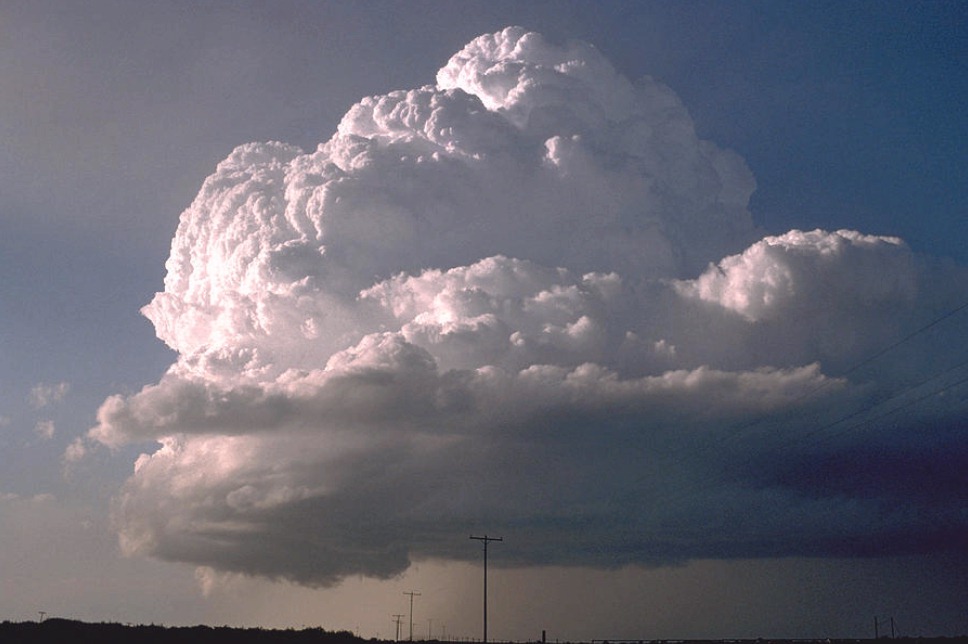
- A supercell is a highly organized, long-lived thunderstorm with a deep, persistent, rotating updraft. This rotating updraft is called a mesocyclone.
- Supercells are the most intense and potentially dangerous type of thunderstorm, responsible for most strong tornadoes, large hail, damaging winds, and flash flooding.
- The rotating updraft, or mesocyclone, is what distinguishes a supercell from a regular thunderstorm. Wind shear causes horizontal vorticity, which is then tilted into a vertical column by the updraft, creating the rotation.
Conclusion
That old saying, “You have better odds of being struck by lightning,” is becoming truer by the day.
On the bright side, the same momentum transfer from friction that helps create supercells and other deadly, extreme storm systems also keeps rain from killing you. This upward transfer of energy causes raindrops to reach terminal velocity, preventing them from accelerating endlessly—and eventually penetrating your roof and skull.
Learn more about the physics of Violent Rain
Tipping points and feedback loops drive the acceleration of climate change. When one tipping point is breached and triggers others, the cascading collapse is known as the Domino Effect.
The Climate Crisis: Violent Rain | Deadly Humid Heat | Extreme Weather Events | Insurance | Trees Deforestation | Air Pollution | Rising Sea Level | Food and Water | Updates