By Daniel Brouse
July 29, 2025
While researchers continue to unravel the long-term effects of COVID-19, a growing body of evidence suggests the virus — and even the global pandemic experience itself — may be accelerating brain aging.
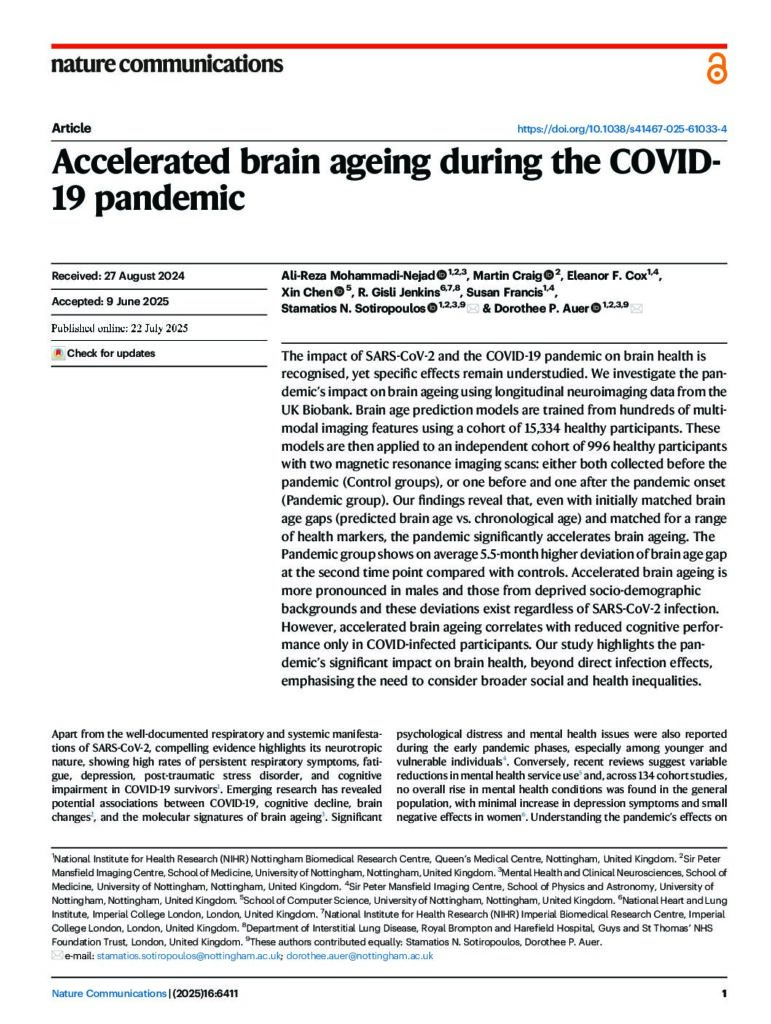
One particularly striking study, published in Nature Communications and titled “Accelerated Brain Ageing During the COVID-19 Pandemic”, reveals that the pandemic may have aged our brains by nearly six months — even in individuals who never tested positive for the virus.
Gut-Brain Connection: A Lasting Impact?
Though the precise biological mechanism remains unclear, other studies have found that SARS-CoV-2 can linger in the gut long after acute infection, triggering disruptions to the microbiome — the community of microbes in our digestive system. These microbiome shifts are now being linked to neurological symptoms, cognitive decline, and even mood disorders. The emerging science points to a possible gut-brain axis disruption that may help explain persistent symptoms like brain fog and memory issues reported in long-COVID cases.
The Study: Brain Aging and Cognitive Decline
The UK Biobank study analyzed longitudinal neuroimaging data from 15,334 healthy individuals to train brain age prediction models. These models were then applied to a smaller group of 996 participants who had undergone two MRI scans — one before the pandemic and one after.
Participants were divided into two groups:
-
Control Group: Two MRIs conducted before the pandemic.
-
Pandemic Group: One MRI before and one after the pandemic began.
Despite being matched for age, sex, and general health, the results were sobering:
On average, individuals scanned after the pandemic onset showed a 5.5-month increase in brain age compared to controls.
Even more concerning, this effect was observed regardless of whether a participant had contracted COVID-19. However, among those who had been infected, the brain aging also correlated with measurable declines in cognitive performance.
Who Is Most at Risk?
The study also found that men and individuals from lower socio-economic backgrounds were more likely to exhibit greater signs of accelerated brain aging. This underscores the pandemic’s disproportionate toll on vulnerable populations and points to the long-term consequences of social inequality on health — even at the neurological level.
Why This Matters
These findings raise urgent questions about how pandemics — and public health crises in general — affect our brains and long-term cognitive health. With growing evidence that COVID-19 can persist in the body, especially the gut, and cause systemic effects, researchers are calling for greater awareness, ongoing monitoring, and expanded health support — not just for those with long COVID, but for the broader public as well.
“Our study highlights the pandemic’s significant impact on brain health, beyond direct infection effects,” the authors write, “emphasizing the need to consider broader social and health inequalities.”
Final Thought
Whether through viral persistence, social stressors, or a complex interplay of both, the pandemic has left a measurable mark on our brains. As we move forward, protecting brain health will require not just treatment of acute infections, but also long-term strategies for cognitive support, mental health care, and addressing systemic disparities.
Destruction of Good Gut Bacteria Resulting in a Compromised Immune System
COVID-19 and Long-COVID