by Daniel Brouse
Tonight’s homework assignment: Tipping Point Season.
Now that we’re deep into Tipping Point Season, my first assignment was to identify the most observable tipping points emerging this season and compare them with what we were seeing last season.
Tonight’s publishing is Permafrost Thaw: The Sequel.
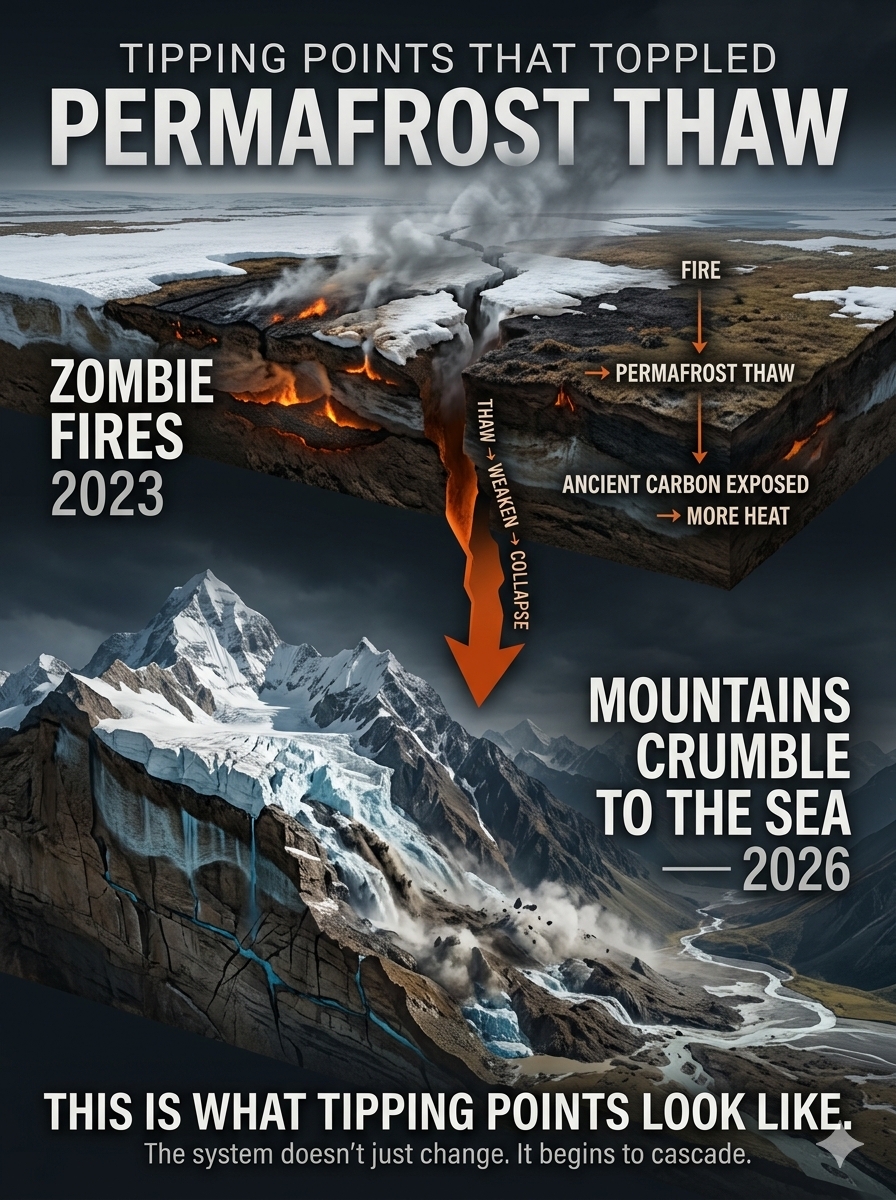
The first chapter was the 2023 warning signal: zombie fires—wildfires that persisted underground through winter and re-emerged as the frozen landscape thawed. 🔥
The sequel is 2026: mountains crumble to the sea. 🏔️🌊
This is the “Second Derivative of the Problem”—when permafrost thaw moves beyond a change in temperature and begins changing the physical stability of the landscape itself.
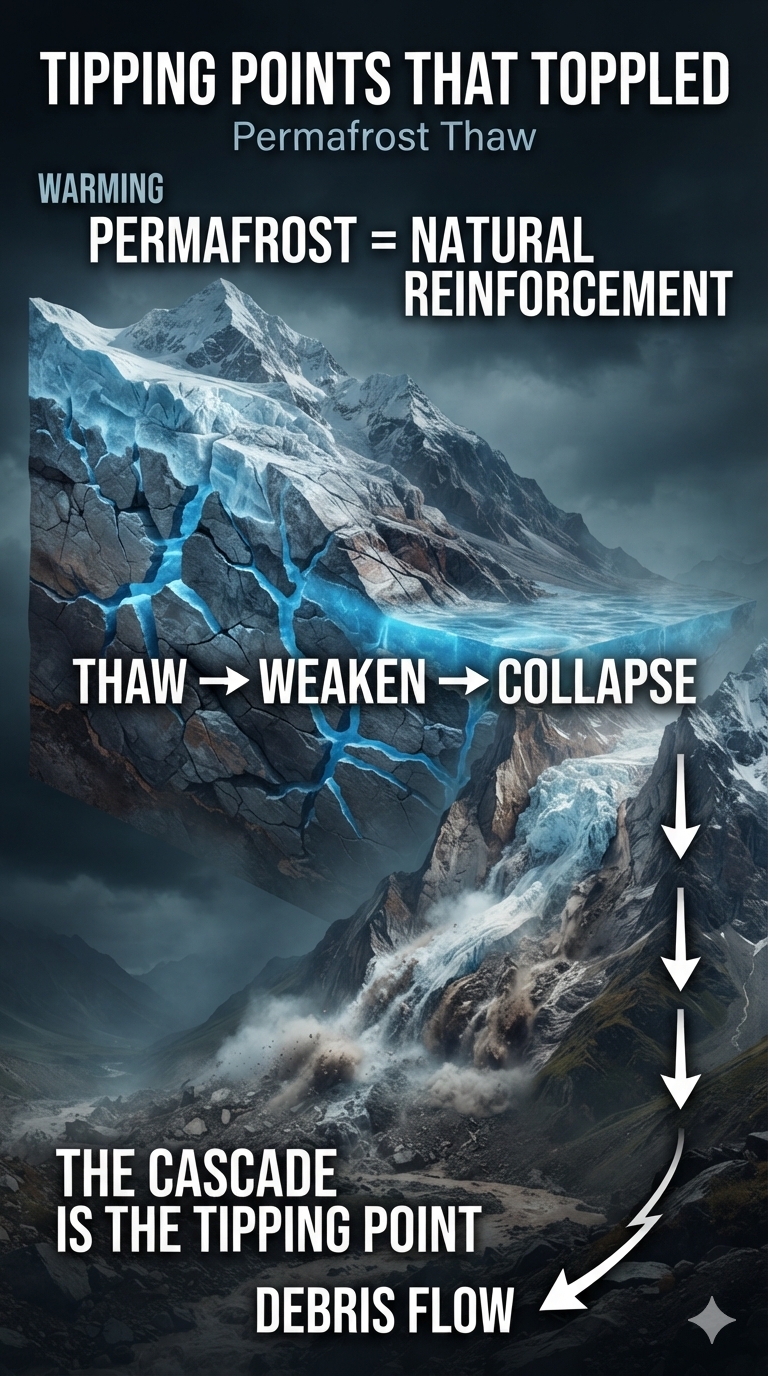
As frozen ground loses its structural strength, rock fractures, slopes destabilize, and glacier ice, rock, water, sediment, and permafrost can become part of the same cascading failure.
The graphic tells that story in two acts:
🔥 2023 — ZOMBIE FIRES STARTED
Permafrost and carbon-rich ground begin releasing stored heat and carbon. A serious positive feedback.
🏔️ 2026 — MOUNTAINS CRUMBLE TO THE SEA
Frozen ground loses its reinforcing function, contributing to slope instability and enormous cascading flows of ice, rock, water, and sediment. The loss of snow, ice, and other reflective surfaces also reduces albedo across large areas, creating another serious positive feedback.
The first warning was underground.
The second became impossible to miss.
This is what tipping points look like—not isolated events, but cascading failures where one destabilization can help trigger another, and each new failure feeds back into the system, accelerating and amplifying the next.